
Quick Take
- Bats are far more common than most people realize, and the actual number might make you rethink how much of the animal world is hiding in plain sight. Explore bat diversity →
- A full moon isn't just eerie backdrop for bats. It actually changes their behavior in a specific, documented way. See lunarphobia explained →
- Bats don't just vanish at sunrise. Where they go depends on a surprisingly flexible set of choices that adapts to human development. See their daytime hideouts →
- Some bat species broke the cardinal rule of nocturnality, and the reason why reveals something unexpected about predators and island life. Meet the daytime foragers →
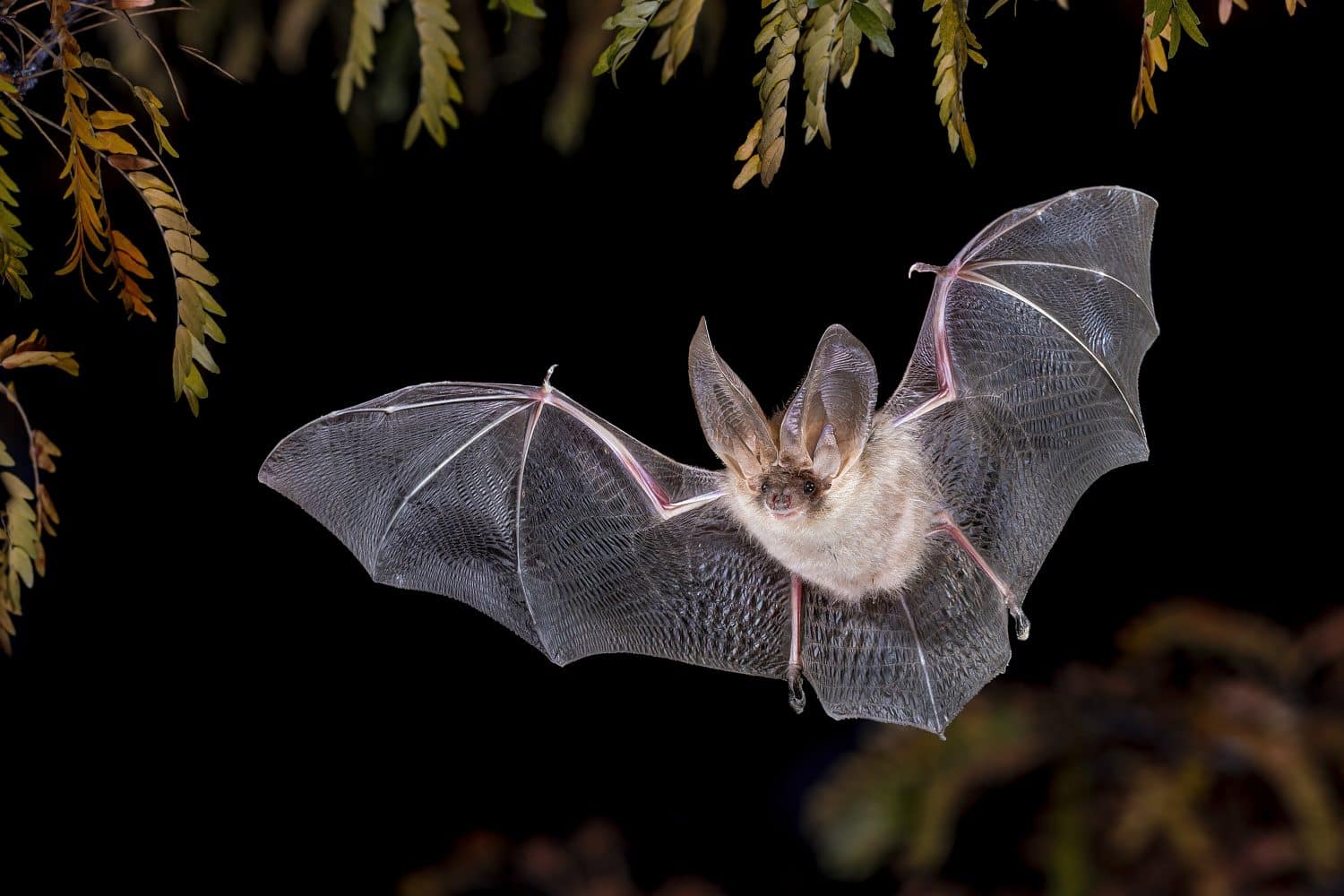
There are not many creatures out there as elusive as bats. Most people only see them as flashes of shadow, racing overhead through the light of the setting sun before disappearing again. Even then, they move so fast that it’s hard to tell what you saw. The rest of bat knowledge seems confined to dark stories — tales of intrigue, hauntings, and even vampires. But the legends surrounding bats paint a very different picture from the reality of how these creatures spend their days. Nocturnal, striking-looking, and elusive, bats have captivated the human imagination for centuries.
Being nocturnal, bats are most active at night. This makes much of their life invisible to people and only leads to more questions. Yet they serve crucial roles in ecosystems, emerging under the cover of darkness to eat insects and even pollinate plants. Perhaps more than any other mammal, bats have intriguing life cycles marked by contrasts: strict routines but flexible shelter choices, inactivity during daylight, and bursts of activity at night. Let’s learn more about bats and how they engage in ecosystem maintenance and form long-lasting social bonds, all while operating mostly under the cover of night.
Bat Background
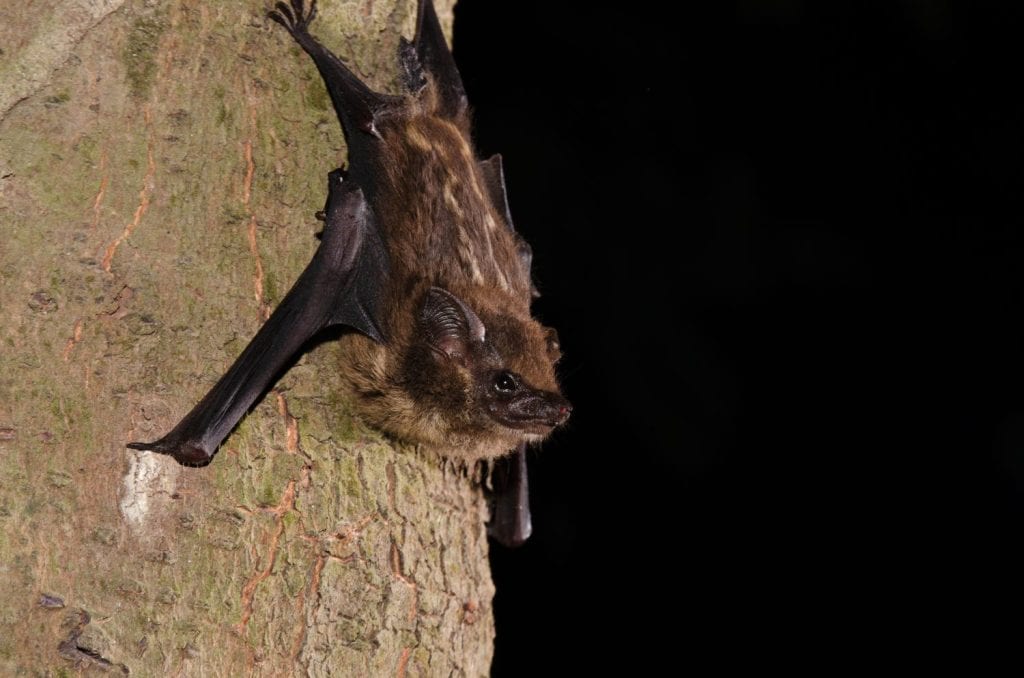
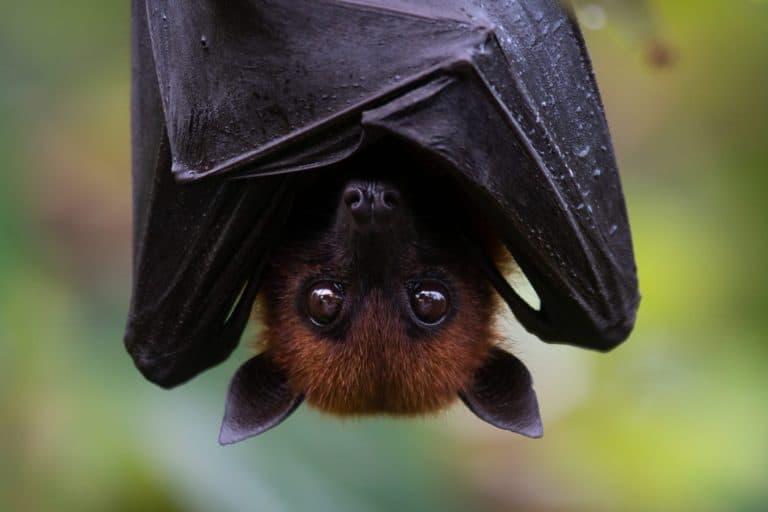
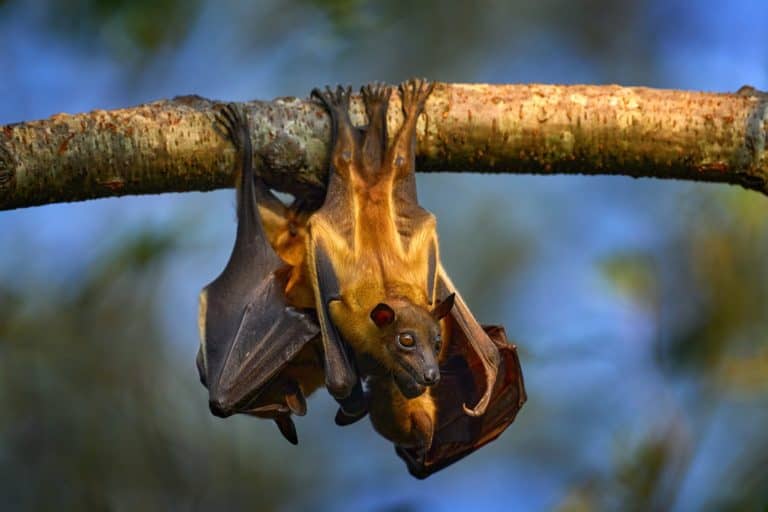
Bats account for about 20% of all species classified as mammals worldwide.
©Mendesbio/Shutterstock.com
Before we delve into the details of bat routines, it is important to emphasize just how unique these creatures are. You may hardly ever see them, but bats make up about 20% of all species classified as mammals worldwide. The term ‘bat’ encompasses at least 1,500 known species. They are the only mammals capable of true and prolonged flight. They are also more skilled at flying than most birds.
In terms of size, bats range from just over an inch in length (Kitti’s hog-nosed bat) to over five feet in wingspan (giant golden-crowned flying fox). About 70% of bat species are insectivores, while the rest include fruit-eaters, nectar-eaters, and other dietary groups. A select few species even feed on the blood of other creatures, such as vampire bats. And no matter where you go in the world, you will probably find bats, as they are distributed in nearly all regions.
The relationship between bats and humans is a bit of a trade-off. Bats provide us with some direct benefits, such as insect management. The agricultural industry also relies on bat dung for fertilizer. However, bats are also natural reservoirs of dangerous pathogens, including rabies. Their ability to spread these pathogens is accelerated by just how mobile and social bats can be.
Waking Up
For most bat species, the day begins at dusk. The actual start of a bat’s activity varies depending on the region and species, but most wake up and get moving once the sun sets. Bats are fundamentally built for the dark. Bats living in regions with long summer days adjust their activity to fit into the brief periods of darkness.
Scientists believe that bats keep this nocturnal schedule to avoid predators, regulate temperature, and reduce hunting competition. Falcons prey on them, and diurnal birds compete with them for insects if bats are out too early. Some species even exhibit something called lunarphobia. As you can guess, this means they will reduce their activity considerably if a full moon is in the nighttime sky.
Duty Calls
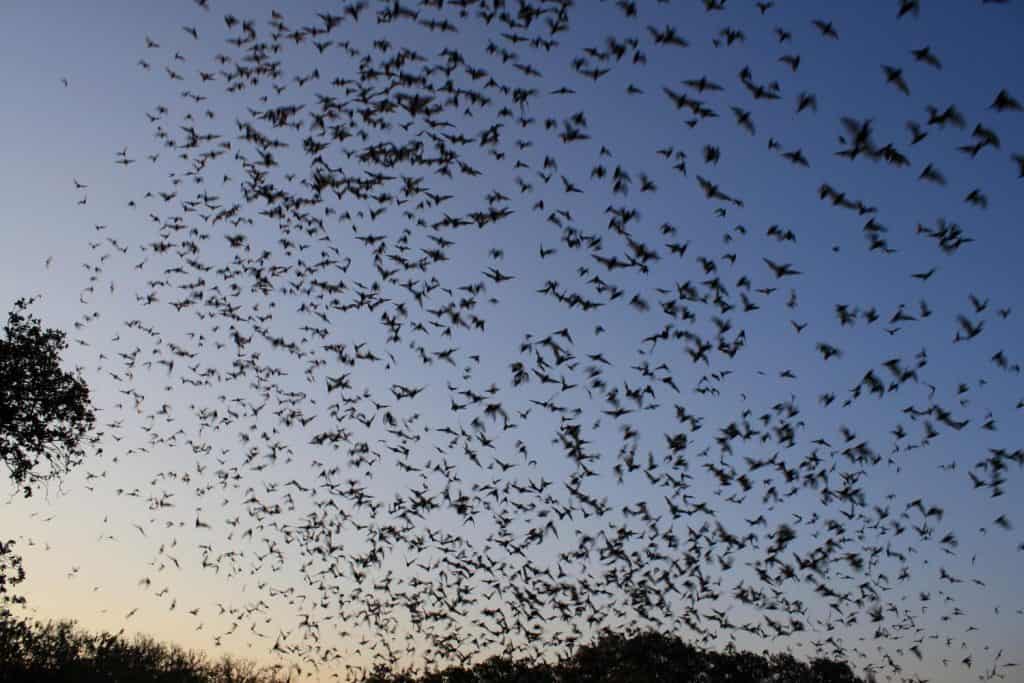
Bats often leave their roosts in waves as the sun begins to set.
©freelancerChrisSobalvarro/Shutterstock.com
The night may be a quiet time for humans, but it is full of duties for bats. They head out from their shelters starting at dusk in waves. Using echolocation, they bounce high-frequency sound waves off objects to detect insects. The same goes for nectar- and fruit-eating bats. Both of these activities are vital for ecosystem health, providing insect control and aiding in forest regeneration.
Interestingly, bats don’t fly uninterrupted all night long. Instead, they often take breaks in temporary shelters such as rock crevices, bridges, and cave entrances. This gives them time to rest, regain energy, and digest their food. Bats are highly social animals, and these pit-stop locations provide opportunities for social interaction and temperature regulation.
Winding Down
As previously mentioned, bats often rest at temporary shelters during their nighttime hunting missions. When the sun begins to rise, however, bats seek out their day roosts. The type of roost depends on the species of bat and regional climate.
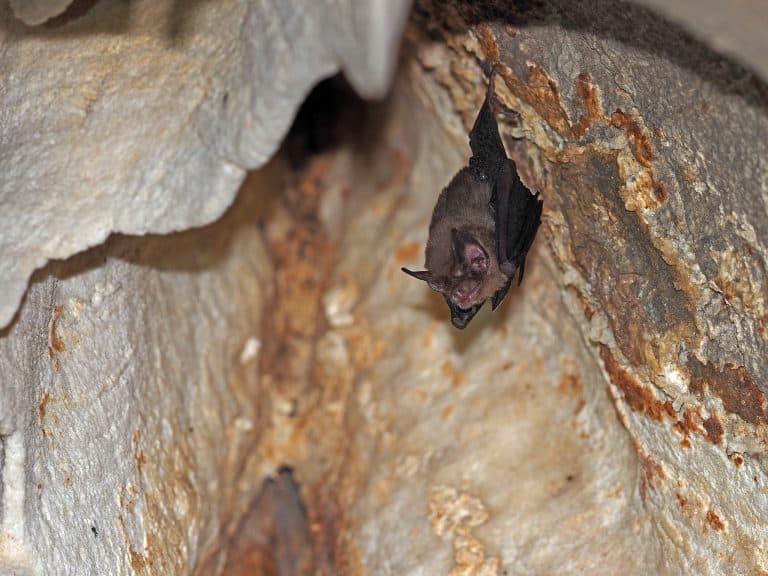
Many colonial species use caves, as they provide a perfect sanctuary of pitch darkness and high humidity. In some places, like Bracken Cave outside San Antonio, Texas, more than 15 million bats roost, often closely huddled together for warmth and protection. Others, like red bats, use trees and thick foliage to roost through the day, where they can easily be mistaken for dead leaves. However, bats are adaptable, and as many lose their natural habitats to human expansion, they adapt to living in human-made structures. Many bats will trade caves and hollowed-out trees for abandoned barns and drainage tunnels.
Exceptions to the Rule
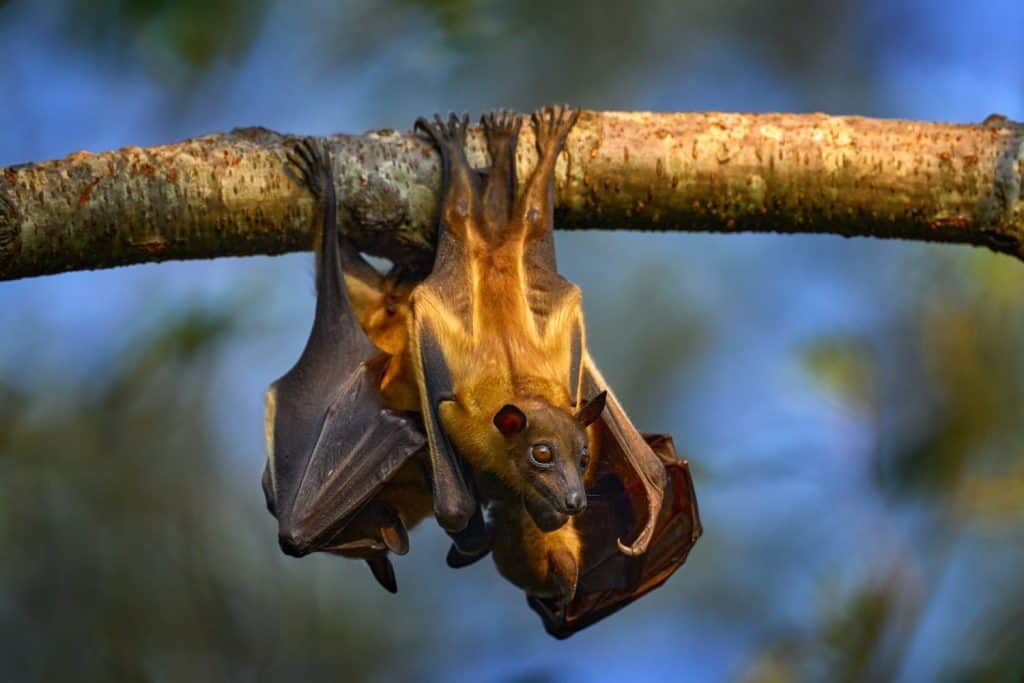
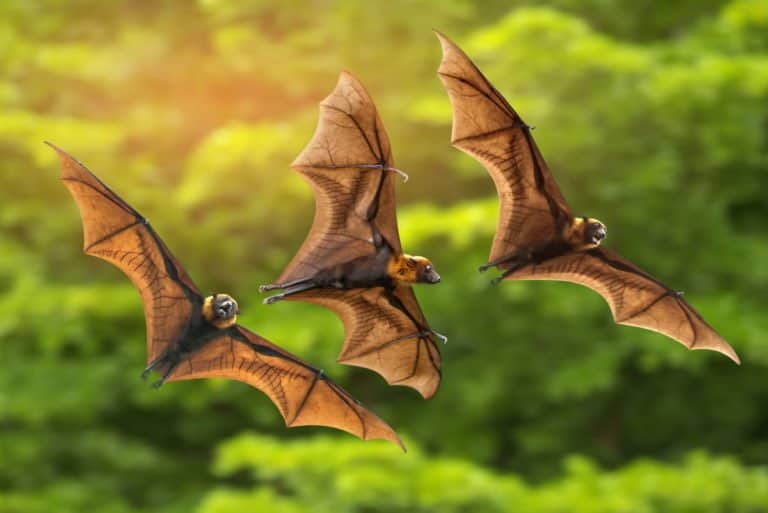
Some bats even forage in the daytime, owing to a lack of natural predators.
©Ondrej Prosicky/Shutterstock.com
While the majority of bat species are nocturnal, and often to an extreme degree, some can handle the daylight. Most of these bats, sometimes referred to as ‘daylight savings bats,’ inhabit islands where there are no natural predators. The Azorean bat, for example, regularly flies and forages during the day. This is also true for the Noack’s roundleaf bat, which is found on São Tomé Island in the Gulf of Guinea.
Some mainland bats engage in daylight foraging as well, including Soprano pipistrelles and Horsfield’s Bat. Whether active during the day or night, bats play a crucial role in ecosystems and are distinguished from other mammals by their adaptability and exceptional flying skills.