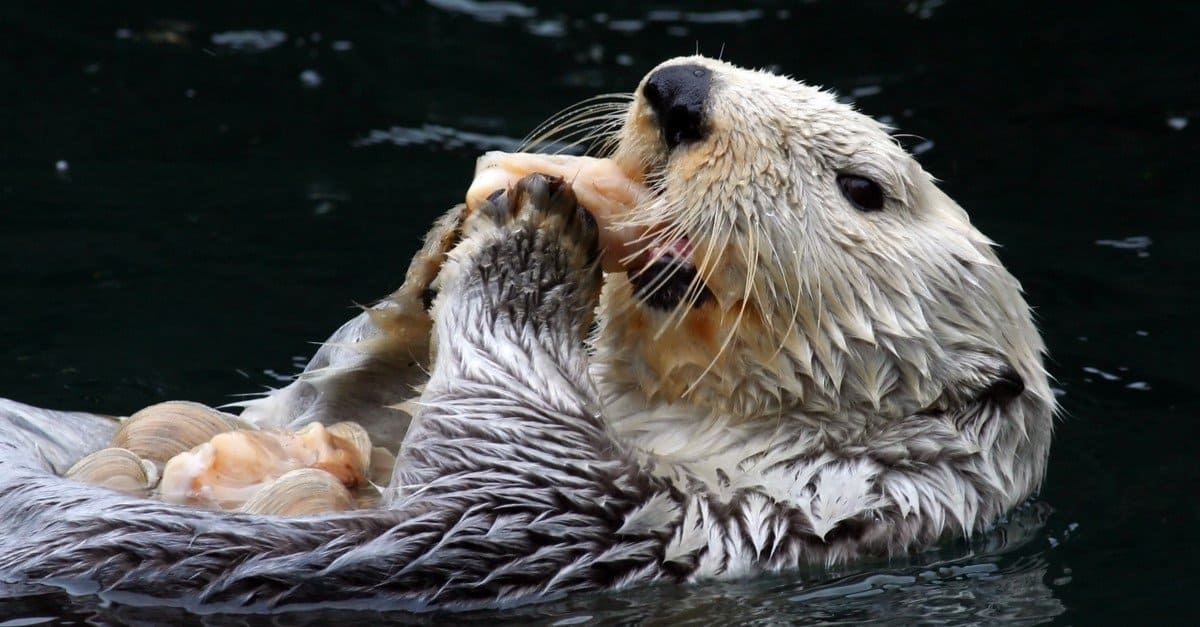

Sea otters are often portrayed as lovable and relaxed animals that spend their time goofing around. Or, simply floating on their backs in the water with their special rock. While this image is undeniably sweet, it is highly misleading. There is much more to this animal than fun and games. Sea otters are highly intelligent and clever hunters with a voracious appetite. This species has a full arsenal of skills and adaptations, and its diet has a profound effect on the ecosystem within its chosen environment.
What Does The Sea Otter Eat?
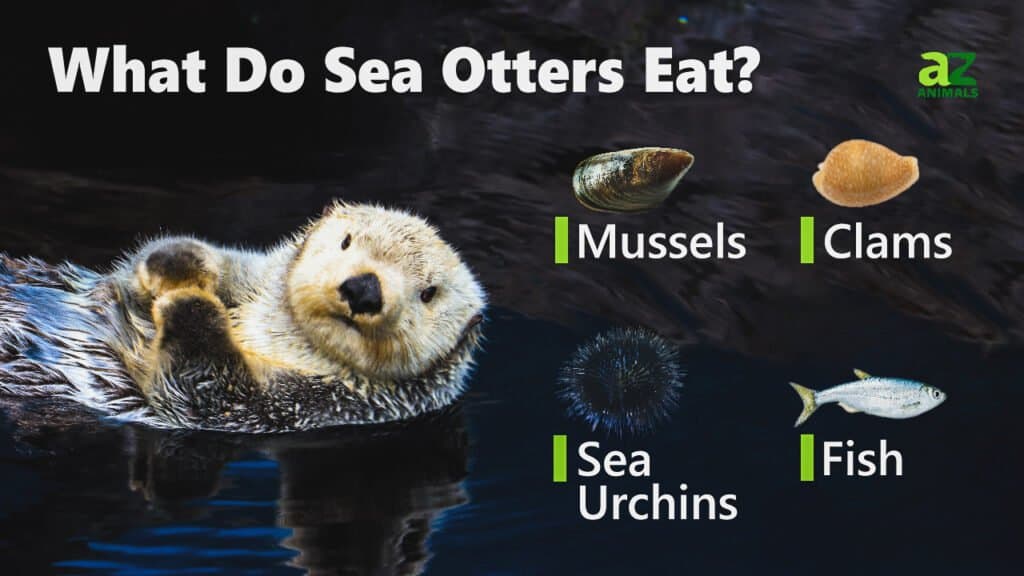
Sea otters eat clams, abalone, snails, sea urchins, octopus, and many other animals. They are classified by some experts as omnivores, but this designation is misleading. Sea otters are primarily carnivorous, but they may be opportunistic omnivores. While they may be able to consume vegetation as well, all three subspecies hunt and consume live prey as their primary food source.
Additionally, all three sea otter subspecies feed on similar marine species found in their coastal habitats. Numerous studies have also found that individual sea otters often have clear preferences.
The Complete Sea Otter Diet
The sea otter diet consists primarily of bivalve invertebrates. Prey is commonly found in the large underwater kelp beds of their shallow coastal habitats. Prey selection is consistent among each subspecies and encompasses approximately forty types of marine life.
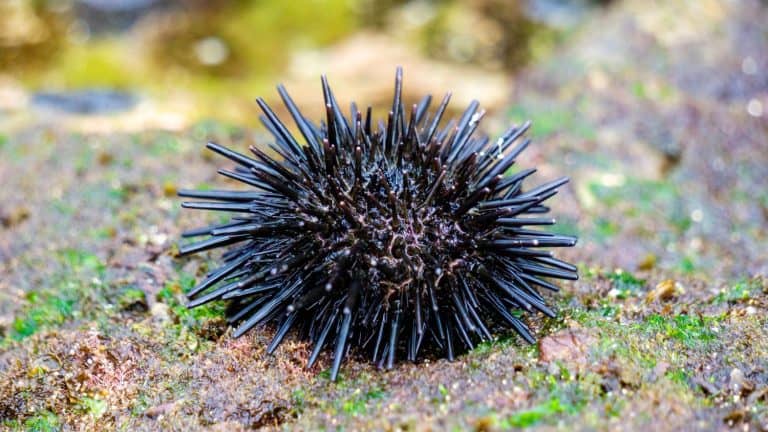
Sea otters hunt for various species of clams, mussels, abalone, crabs, snails, starfish, and sea urchins. They also prey on species of octopus, squid, fish, and have occasionally been observed eating small birds. Individual otters display a marked preference for a specific type of prey. But experts report that many otters have a high preference for abalone.
Researchers believe that sea otters develop highly specific and individual preferences for food as an evolutionary adaptation. Researchers have found that sea otters favored prey depending on the mother’s choices during the weaning process. The pups are inducted into what one researcher termed “Food guilds”. These are groups of individual otters that focus on one prey species.
Why Do Sea Otters Have Favorite Foods?
With each group of otters eating something different, the sea otter avoids competition with its kind. The primary competition for food the sea otter faces is humans, particularly due to commercial abalone and urchin fisheries. Commercial fishing is a direct threat caused by the loss of available food sources. It also has the added and more devastating threat of pollution.
How Much Does a Sea Otter Eat?
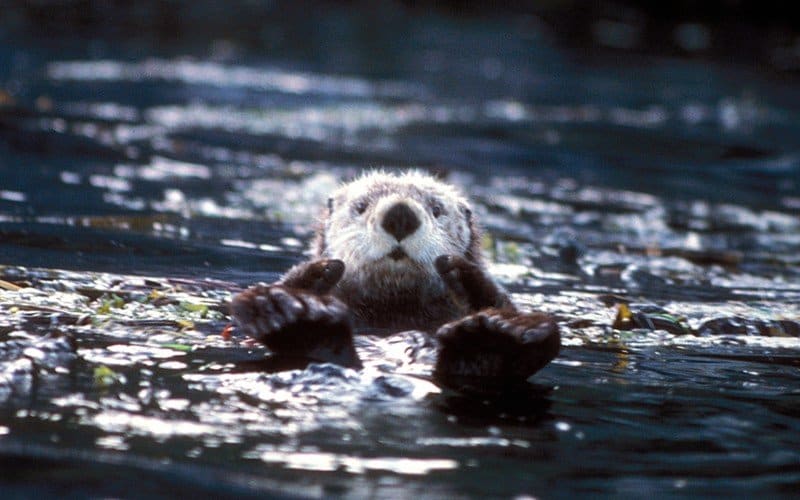
Sea otters have to eat around 25% of their body weight every day.
©David Menke / Creative Commons – Original
Unlike other species of marine mammals, the sea otter does not develop insulating fat layers. It cannot rely on fat for sustenance or to protect it from the cold. Instead, it relies on its extremely dense and waterproof fur to keep it warm.
To stay alive, sea otters must consume around 25% of their body weight every day. An adult sea otter typically weighs between 14 and 45 kg, depending on sex and region, and needs to eat about 20–25% of its body weight each day.
What Do Baby Sea Otters Eat?
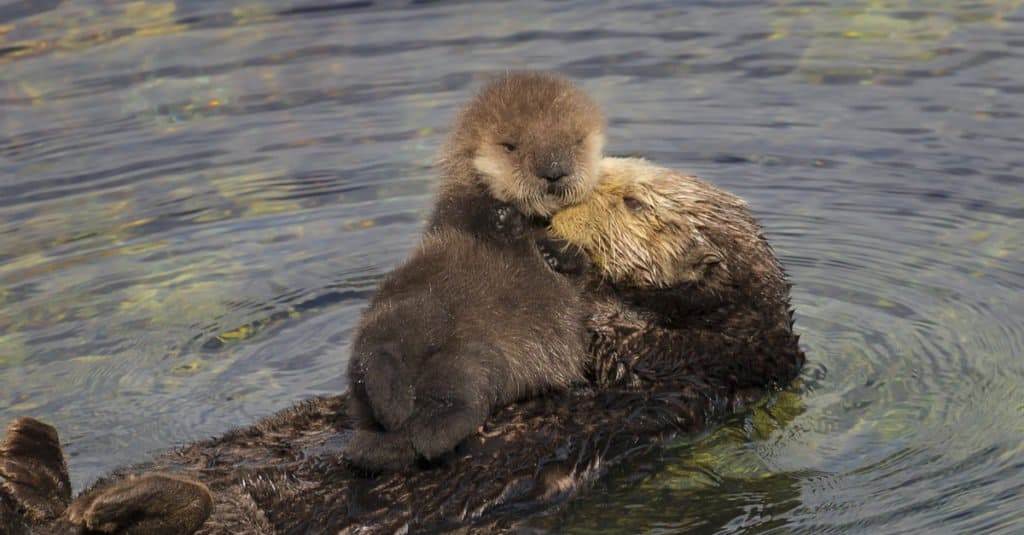
When a mother sea otter hunts and eats, her pups are learning how to hunt too.
©Chase Dekker/Shutterstock.com
Sea otters are the smallest of marine mammals, and baby sea otters are referred to as pups. Female sea otters give birth to one pup at a time on average, and on rare occasions may give birth to twins. Their gestation period can last for between four and 12 months, due to delayed implantation.
Infant pups nurse from their mother as soon as they are born. The pups are with their mother constantly while she hunts. Pups begin eating solid food when they are a few weeks old and are weaned by the time they are six months old, after which they hunt alone.
How Do Sea Otters Hunt?
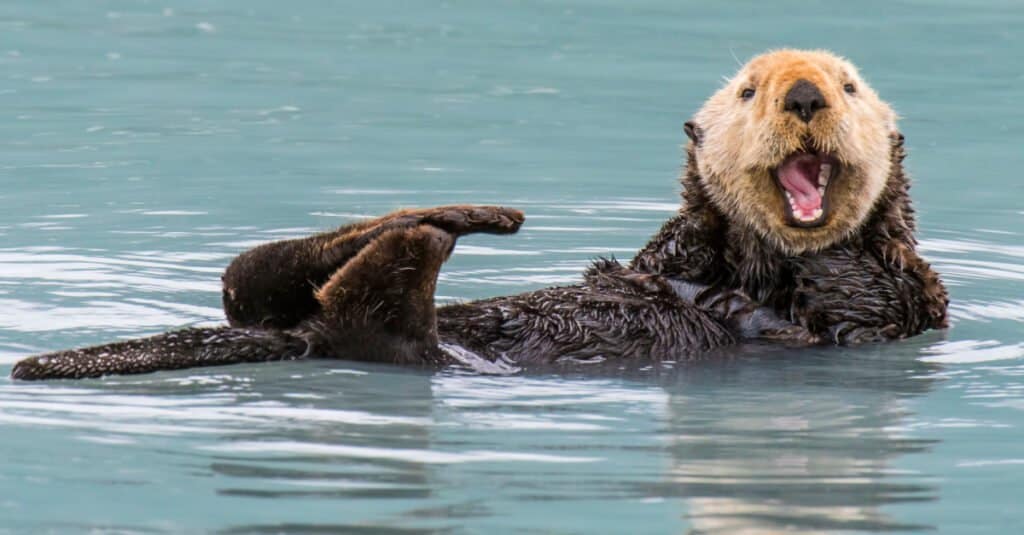
Tool use in otters has a genetic component, but young otters also learn these behaviors from their mothers and through social learning.
©iStock.com/David McGowen
Individual otters develop specialized hunting methods based on what they eat. Some sea otters are deep divers, traveling up to one hundred feet in one dive for abalone and urchins. Medium divers that seek prey like clams, worms, or smaller shellfish may only go forty feet. Otters with a preference for easier prey like black snails stick close to the shorelines.
Sea otter dives last for an average of about one minute. Many can locate a significant amount of prey in that brief period. Prey is consumed on the surface of the water. Otters may eat what they find immediately or after multiple dives.
Sea otters are active primarily during the day, alternating between hunting and resting periods. The sea otter prefers to hunt at dawn or dusk. They spend most rest periods grooming their dense fur, which is essential for maintaining water resistance and warmth.
Why Do Sea Otters Carry a Rock?
Sea otters are inventive and highly efficient hunters and are one of the few non-primates that can use tools. Carrying a specific rock with them wherever they go is a necessary part of the sea otters’ hunting kit.
Sea otters do not have enough strength in their jaws to crack open the shells of abalone and clams. So they habitually select and carry rocks with them to smash the shells open on their bellies while floating. They conceal these rocks in underarm pouches. The sea otter’s pouches also act as storage for food to eat later. These pouches allow them to collect larger amounts of food on each dive.
Sea otters’ dense, warm, and waterproof fur helps them stay buoyant in the water. They use their sensitive whiskers to help find prey and their strong and agile paws to dig. They also use their rock to bash shellfish like abalone off underwater shelves.
Do Other Animals Prey On Sea Otters?
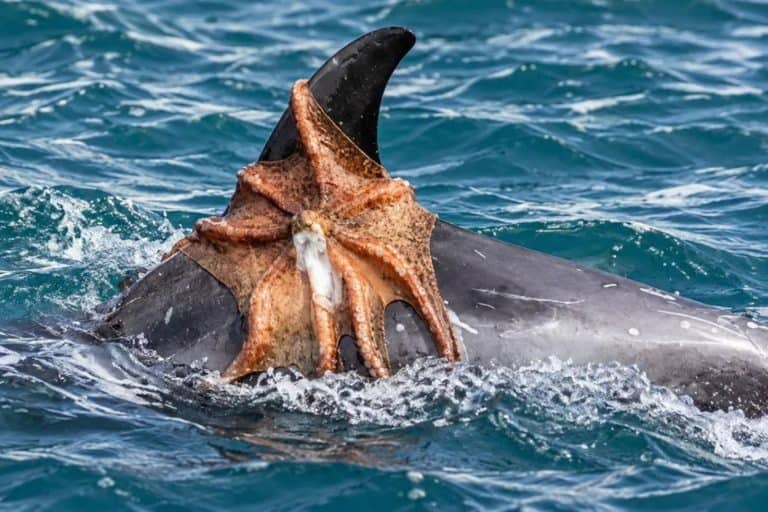
The sea otter faces threats from predators in the water and on land. The sea otter’s primary natural predators are larger marine mammals like killer whales and sharks. Additionally, they are preyed upon by land mammals and birds like bears, coyotes, and eagles.
Despite having to always remain vigilant, the sea otter can live for up to 23 years, although the average is around 10 to 15 years for males and 15 to 20 years for females.
Do Sea Otters Impact Other Species?
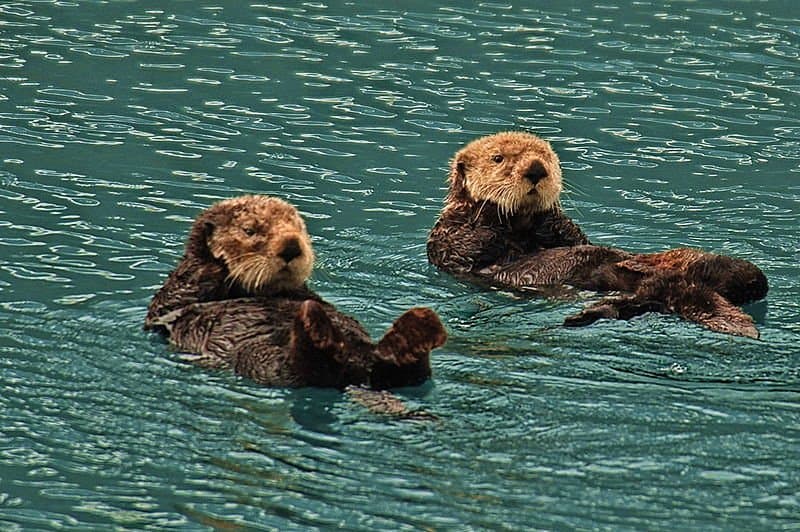
Sea otters are a keystone species, and what sea otters eat is an important part of the survival of their entire ecosystem.
©Dave Bezaire & Susi Havens-Bezaire / Creative Commons – Original
Sea otters are designated as keystone species. This classification is reserved for animals that directly and significantly impact their environment. Keystone species are the most important animals in their habitats, and other species depend upon their presence for survival.
Sea otters eat marine life that would become overpopulated without them to keep their numbers at a manageable level. They have little to no natural competition for their prey. The loss of the sea otter would have devastating effects on other animal species. By choosing animals within the vast coastal kelp beds, they keep the balance in their marine ecosystem. Overpopulation of prey damages the kelp beds. This causes a reduction in vital nutrients, resulting in the death of the kelp. Many species of marine life, like rockfish and ocean perch, rely on these kelp beds. They act as both a place to live and camouflage from predators.
Additionally, sea otters are prey for other animals that depend on them for food. Their natural predators include species that are threatened or endangered. These animals would also suffer if the sea otter were removed.
The negative impact of removing a keystone species can rapidly spread throughout an entire ecosystem. This can cause devastating and irreversible damage. Due to the extreme influence sea otters have, the loss of this endangered species would be particularly devastating.
Are Sea Otters Dangerous To Humans?
The sea otter is often portrayed as a friendly and engaging animal. But you should never assume that they aren’t dangerous! Male sea otters are capable of extremely territorial behavior and are particularly aggressive during mating periods. Remember, the sea otter is a wild animal. Experts strongly discourage approaching or attempting to handle any animal in the wild.
Sea otters are also an endangered species, and unauthorized individuals who attempt to approach them may face serious penalties.