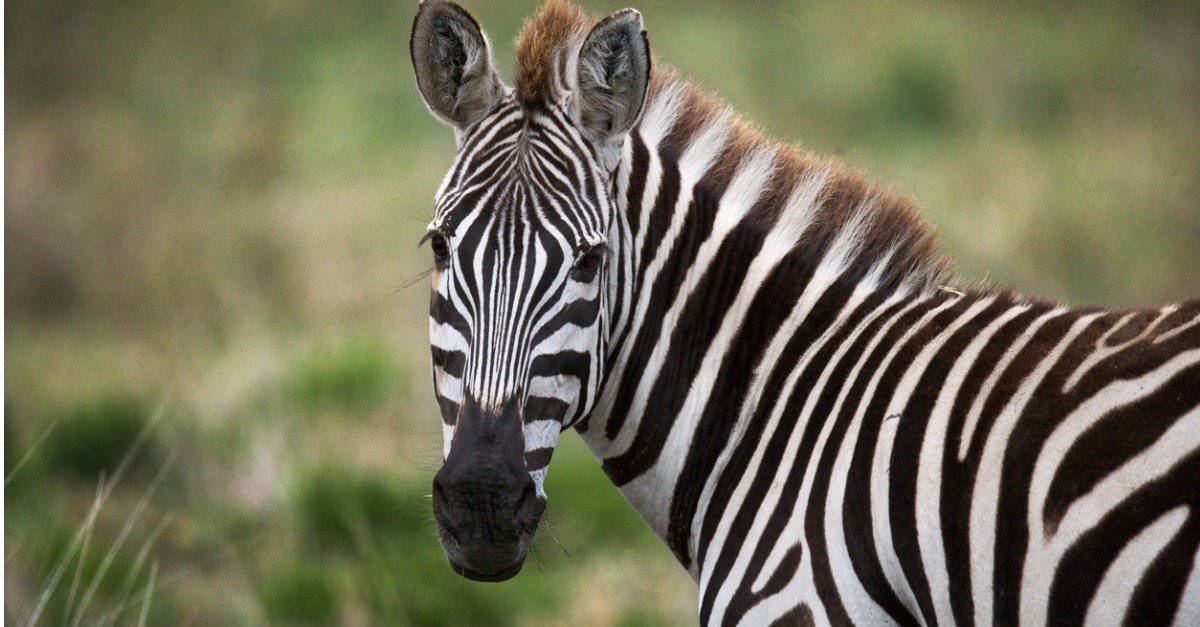

The savannas and grasslands of Africa support dozens of grazing herbivores, with enormous animals like rhinos and elephants living largely in peace alongside impalas and wildebeests. However, research into the habits of the zebra suggests that such a balance couldn’t exist without them. Apart from their distinct black and white stripes, these equines closely resemble wild horses in terms of temperament, appearance, and diet. But what exactly do zebras eat?
The Zebra’s Diet
Just like horses, zebras subsist primarily on a diet of grasses. However, some zebra species differ from fellow grass-feeding herbivores in their preference for long grass. Grevy’s zebras and mountain zebras tend to graze on taller, coarser grasses and vegetation. Plains zebras prefer short, green grasses, but they will also eat tall grasses. The taller grasses are better equipped to survive drought. As a result, zebras are built to survive in a wider range of environments and more dire circumstances than other grassland grazers.
Zebras have adapted to thrive on grass that has less nutritional value. Their stomachs can digest coarser and more fibrous plant matter, transforming it into fuel more efficiently. This type of grass is indigestible to many other animals in the savanna. Their diets leave zebras with few competitors for food, even though they spend up to 60% of their day eating.
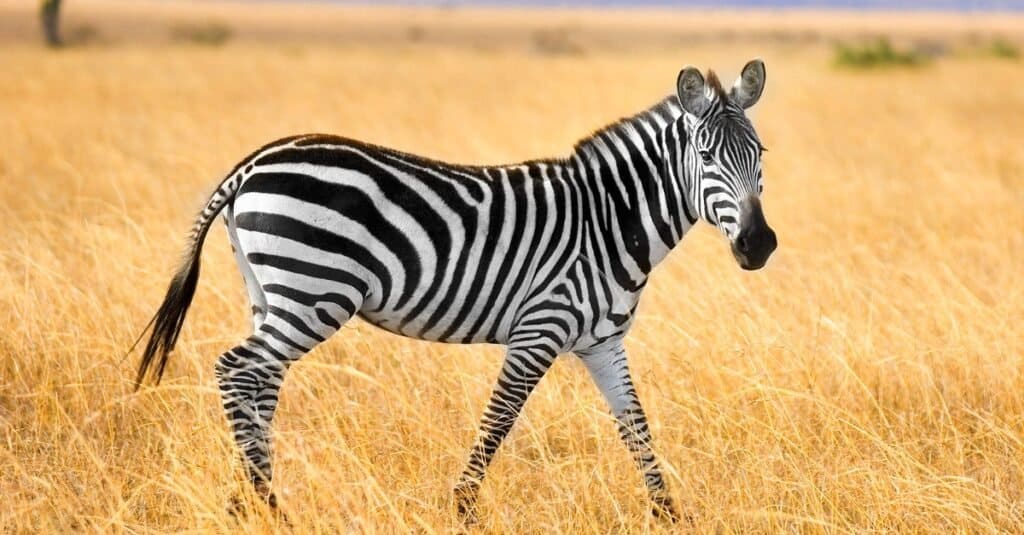
The majority of a zebra’s diet consists of different types of grasses.
©iStock.com/GlobalP
Environmental Conditions and Adaptations
However, hard times also demand changes in diet. While most of a zebra’s diet consists of various types of grasses in the savanna, they’re also known to eat shrubs, branches, and even small trees. When circumstances become especially lean, zebras can be seen stripping bark from trees for a meal. Zebra teeth have adapted to their environment in much the same way as their stomachs have. Sharp incisors cut apart rough grass and shoots that are then pulverized by the zebra’s heavy molars.
To accommodate all that chewing, a zebra’s teeth continue to grow throughout its whole life. The remarkable physiology of the zebra ensures that food is usually not hard to find; however, the real threat in the wild is finding water. While some zebras can survive up to five days without water, they need regular access to water to thrive. That’s not always easy in the arid grasslands and mountains that zebras call home.
Zebras in the wild eat a diet that includes:
- Short, green grasses (Plains zebras)
- Tall, coarse grasses (More typically Grevy’s and mountain zebras)
- Shrubs
- Small trees
- Shoots
- Saplings
- Bark
- Herbs
How Do Zebras Forage for Food?
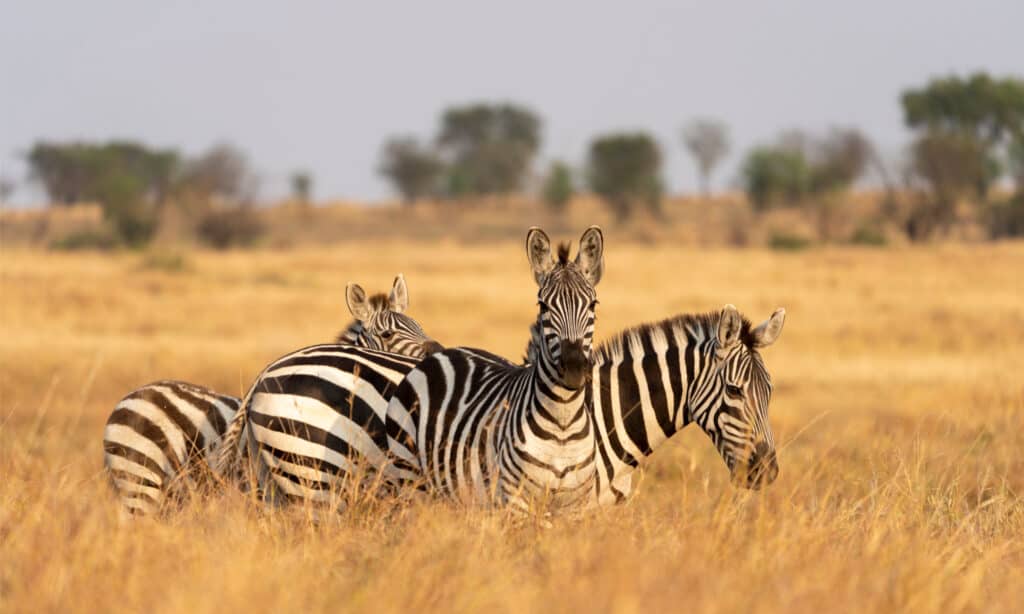
Plains zebras are the most widely distributed zebra species.
©iStock.com/Cavan Images
The different species of zebra have developed foraging habits unique to their environments. In turn, these behaviors have a critical impact on the larger ecosystem.
Plains Zebras
Plains zebras are the most prevalent species and the most widely spread as well. Their habitats extend throughout much of southern and eastern Africa. They gather into migratory harems, living a nomadic existence following water sources and rain clouds. These journeys will often take them beyond the grasslands into forested and mountainous regions, and the environment benefits from their wide wandering range. They’re often referred to as “pioneer grazers” because they clear out the long grass for other herbivores with more delicate stomachs.
Mountain Zebras
Mountain zebras adopt very different tactics for staying fed and hydrated. Found in the rocky hills and mountains of Angola (Hartmann’s mountain zebras) or South Africa (Cape mountain zebras), their environments force them into smaller family groups than their plains counterparts. It also forces them to be a bit more creative with their feeding habits. These equines will resort to browsing on twigs and other parts of the tree when necessary, and they use their hooves to dig for water in their rocky environments. Mountain zebras may make localized seasonal or altitudinal movements, but they are not migratory in the same sense as plains zebras.
Grevy’s Zebras
Grevy’s zebra is the most endangered species, and they differ from the other two species in that they don’t gather in structured harems. Instead, these zebras gather into informal grazing groups out of necessity for shared resources. However, they lack the social complexities found in other zebra herds. Even if food is not plentiful, they do not migrate as long as food and water are sufficient. Instead, they will establish semi-permanent territory with a nearby water source. Although they need less water than cattle, when water is scarce, they will dig for subsurface water with their hooves.