
Quick Take
- That red bullseye around the eye isn't just a clever logo. What goes into painting it on might surprise you.
- Bullseye isn't one dog, and the casting may not match the character's name.
- One 1999 TV spot launched a mascot, and the dog appeared for just seconds. Find out how a cameo grew into a phenomenon.
- Bull terriers aren't always white, and their breeding history includes some unexpected ingredients.
If you have ever been to a Target store or have come across any of the company’s ads, you’re sure to have seen their cute canine mascot, Bullseye. That white pup with the bright red Target icon painted around one eye has been the iconic mascot of the Target Corporation for over 20 years. But what kind of dog is the target dog? Let’s take a closer look at Bullseye’s origins and learn more about his breed.
What Kind of Dog Is the Target Dog?
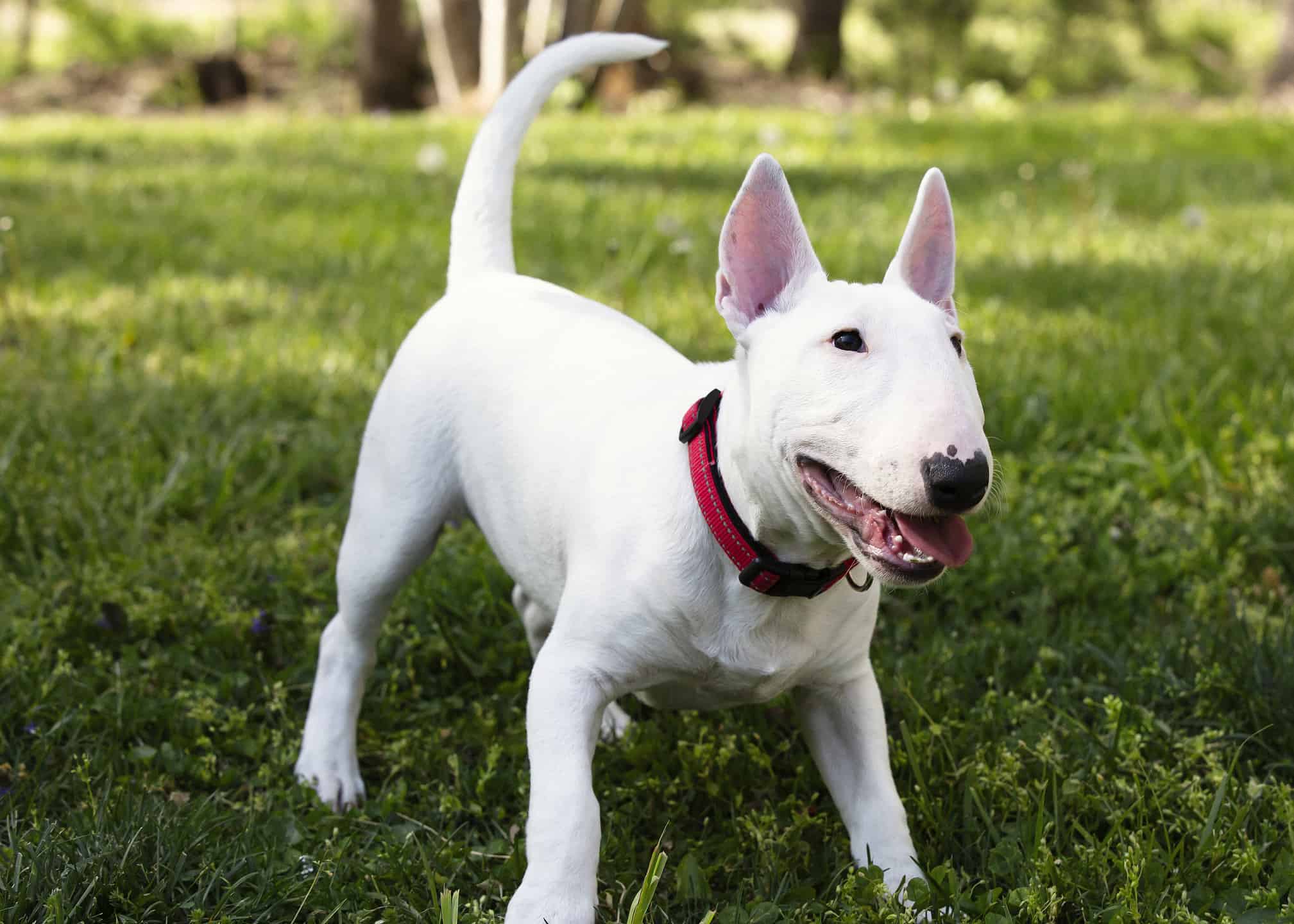
The iconic Target dog named Bullseye is an English bull terrier. And don’t worry, the signature red and white bullseye marking around his eye is completely non-toxic. A professional makeup artist paints it on with vegetable-based paint approved by the Humane Society.
According to Target, its very first Bullseye was portrayed by an English bull terrier named Arielle. The all-white pooch made her debut in 1999 as part of Target’s advertising campaign, Sign of the Times. In the original advertisement, Petula Clark’s Sign of the Times plays in the background as many different iterations of the target icon flash across the screen. The commercial ends with a checker piece in the middle of the screen, shaped like the Target bullseye logo. A white bull terrier then appears, with the Target logo checker piece superimposed on his eye. The dog is shown briefly in profile before running off the screen.
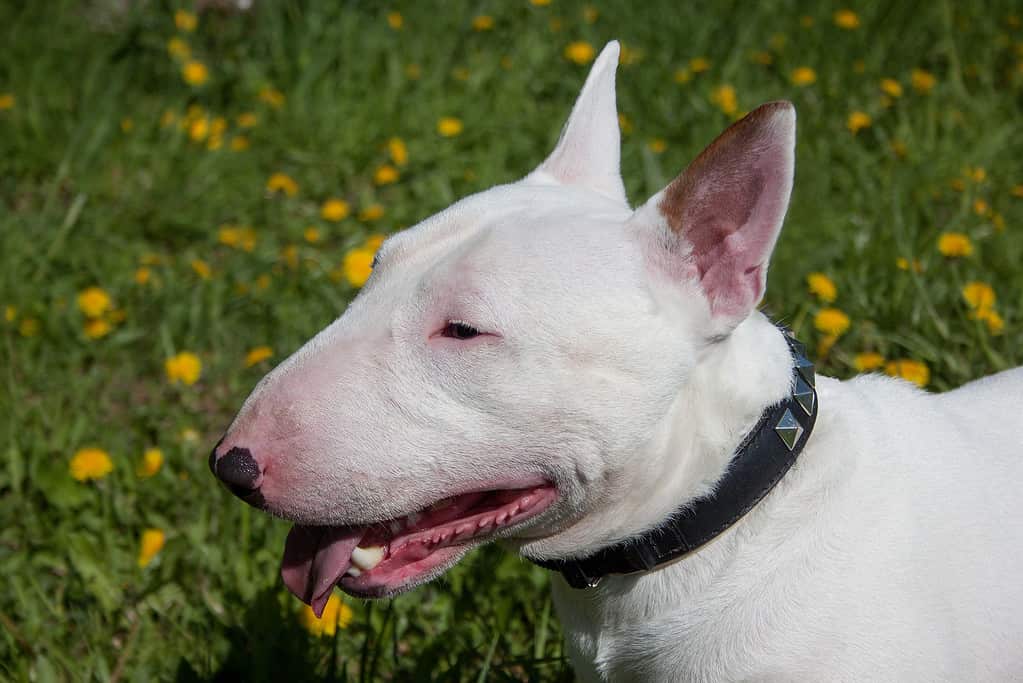
Bullseye, the official English bull terrier mascot for Target, is actually portrayed exclusively by female dogs, despite the character traditionally being referred to using male pronouns.
©iStock.com/SergeyTikhomirov
How Bullseye Rose to Fame
The Sign of the Times campaign left Target shoppers hungry for more of Bullseye the bull terrier; even in his very brief TV appearance, he won their hearts. Later that year, Target featured Bullseye on one of its first gift card designs.
Target launched its first Bullseye dog plushie in 1999. The adorable bull terrier pup was so popular that in 2001 Target began selling a variety of outfits to accessorize its Bullseye plush.
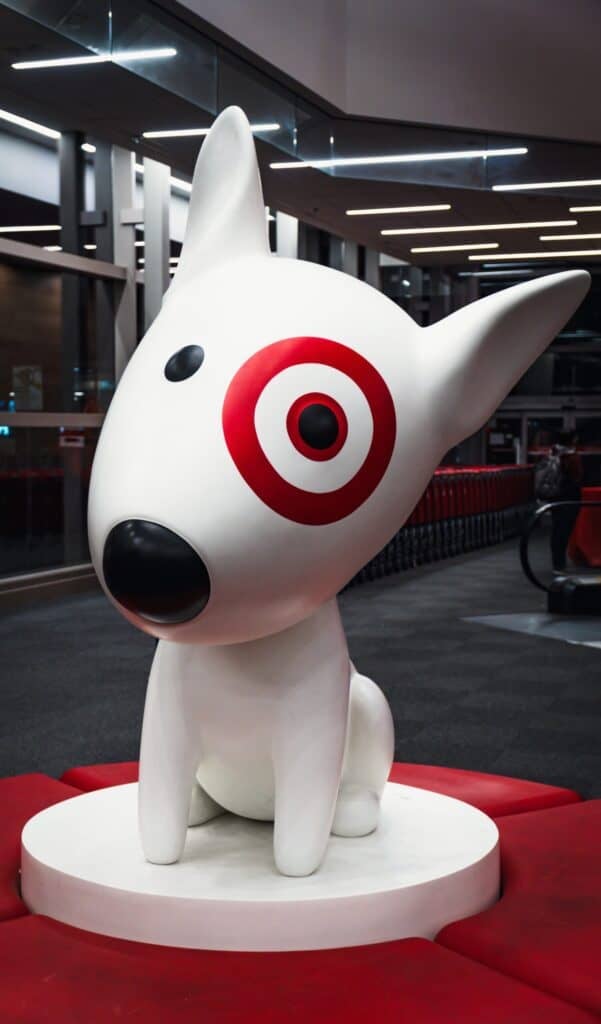
Bullseye is an icon.
©Mathaeus Andersen/Shutterstock.com
Two years later, in 2003, Bullseye and his charismatic smile were once again featured in Target’s See. Spot. Save. campaign. Beguiled by the dog’s jovial personality, the public went wild for Bullseye, who quickly solidified his status as an integral part of American pop culture.
Seemingly, no one was immune to Bullseye’s charm. Bullseye began to appear at red-carpet events all over the world. He even became something of a legend in 2006 when, according to Target, he became the first dog to be immortalized in wax at Madame Tussauds™ Museum in New York.
Bullseye Today
Today, Bullseye continues to charm people all over the world. He often shows up for Target store openings and other important events. Whenever Bullseye flies on an airplane, he sits politely in his own seat, nestled calmly beside the rest of the plane’s passengers. Bullseye’s popularity is so great that one dog can hardly handle all of his responsibilities. That’s why there are actually several white bull terriers that fulfill the role of Bullseye. The dogs are trained by David McMillan, the operator of Worldwide Movie Animals, and they all live together on a ranch in California.
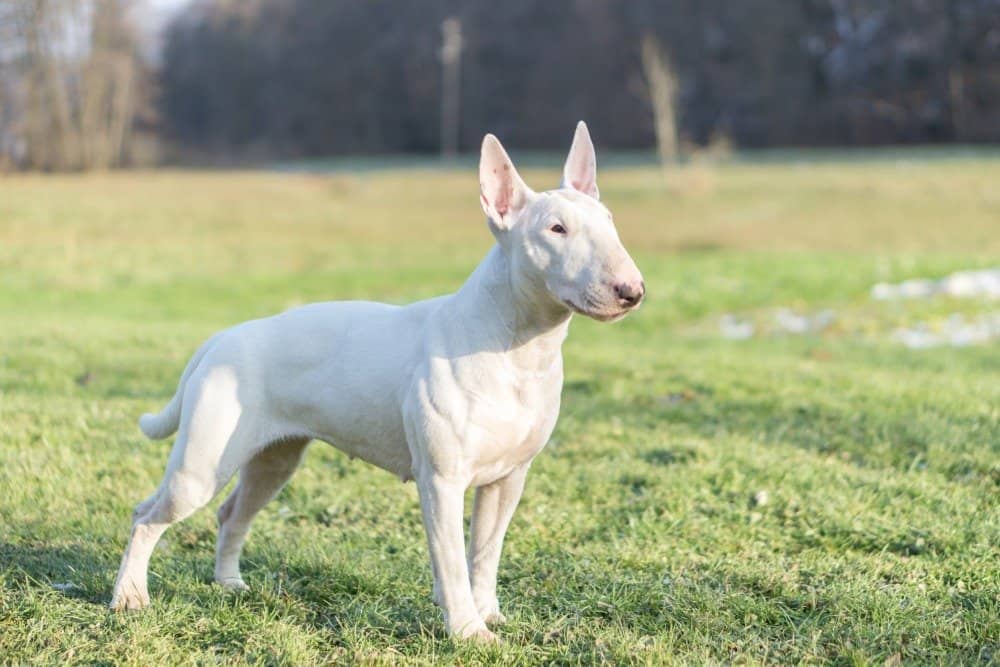
Multiple bull terriers are presently fulfilling the role of Bullseye.
©24K-Production/Shutterstock.com
The Bull Terrier Breed
In the early 1800s, people began breeding bull and terrier breeds for hunting animal pests and for blood sports. Breeding Old English bulldogs with Old English terriers, breeders combined lightly built bodies with speed, dexterity, and tenacity. By the mid-1800s, breeders began using other breeds as well, like Spanish pointers, borzois, Dalmatians, and rough collies. Breeders used these breeds to selectively introduce traits like elegance, agility, cleaner profiles, and stronger legs. Breeders also wanted to reduce the space between the muzzle and forehead.
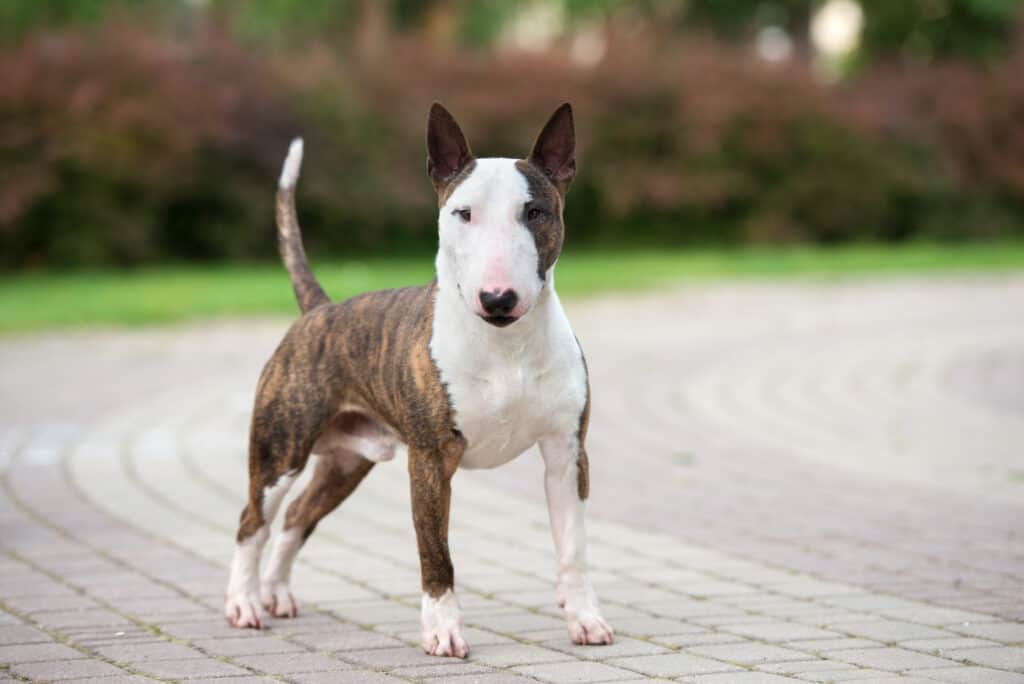
Bull terriers are not always white.
©otsphoto/Shutterstock.com
In 1917, a bull terrier named Lord Gladiator emerged as the first modern bull terrier with no stop, the indentation between the eyes and snout, cementing the start of the signature egg-shaped head profile that is characteristic of bull terriers today. It wasn’t long before the breed grew in popularity. President Theodore Roosevelt and General George S. Patton Jr. both owned bull terriers.
Bull Terrier Appearance and Temperament
Modern bull terriers are typically 21 to 22 inches tall and weigh between 50 and 70 pounds. However, there is also a miniature bull terrier breed that stands 10 to 14 inches tall and weighs 18 to 28 pounds. Although the two are different sizes, both dogs have the same appearance and personality.
Bull terriers have recognizable egg-shaped heads with smooth faces. Their eyes are small and triangular, and they have pointed ears. The modern bull terrier is a muscular dog with amazing agility and a playful spirit. Bull terriers are often all white, like the Target dog, Bullseye. However, bull terriers come in just about any color and pattern, from solid to spotted to brindle.
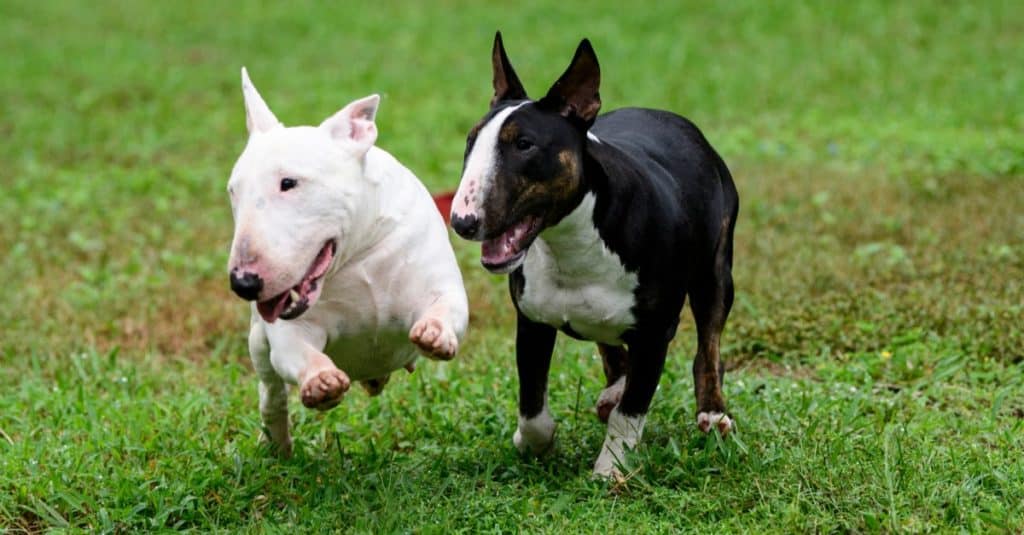
Bull terriers have recognizable egg-shaped heads with smooth faces.
©GoDog Photo/Shutterstock.com