
Quick Take
- A single moose can host over 50,000 ticks, triggering blood loss, hair loss, and heightened risk of hypothermia.
- Moose act as ecosystem engineers, keeping beaver meadows open for decades and shaping habitat that supports diverse species.
- Antlers serve as satellite dishes, funneling sound to the moose’s ears and sharpening its rival detection.
- Read on to discover how entomopathogenic fungi and natural tick-control tools are being explored to curb tick loads on moose.
Standing nearly 7 feet tall and weighing as much as a small car, the Alaskan moose (Alces alces gigas) is a living relic of the Ice Age. Whether you spot a massive bull stepping out of the willows or a mother guiding her calves through a quiet neighborhood, encountering one of these massive animals is a powerful reminder of Alaska’s wild heart.
To many, the moose is the ultimate symbol of the “Last Frontier.” However, it only became an official state symbol quite recently. Interestingly, the push to name the moose as Alaska’s official state land mammal didn’t come from politicians or historians; it began with a group of determined elementary school students from the Kenai Peninsula.

From the Classroom to the Capitol
In the late 1990s, students at Kalifornsky Beach Elementary near Soldotna noticed something missing. While Alaska had an official bird (the willow ptarmigan) and a state flower (the forget-me-not), the land’s most iconic animal — the moose — had no formal title.
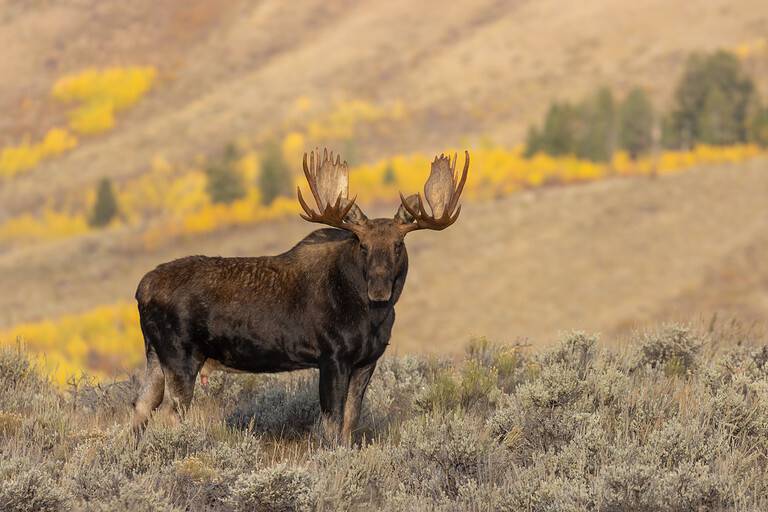
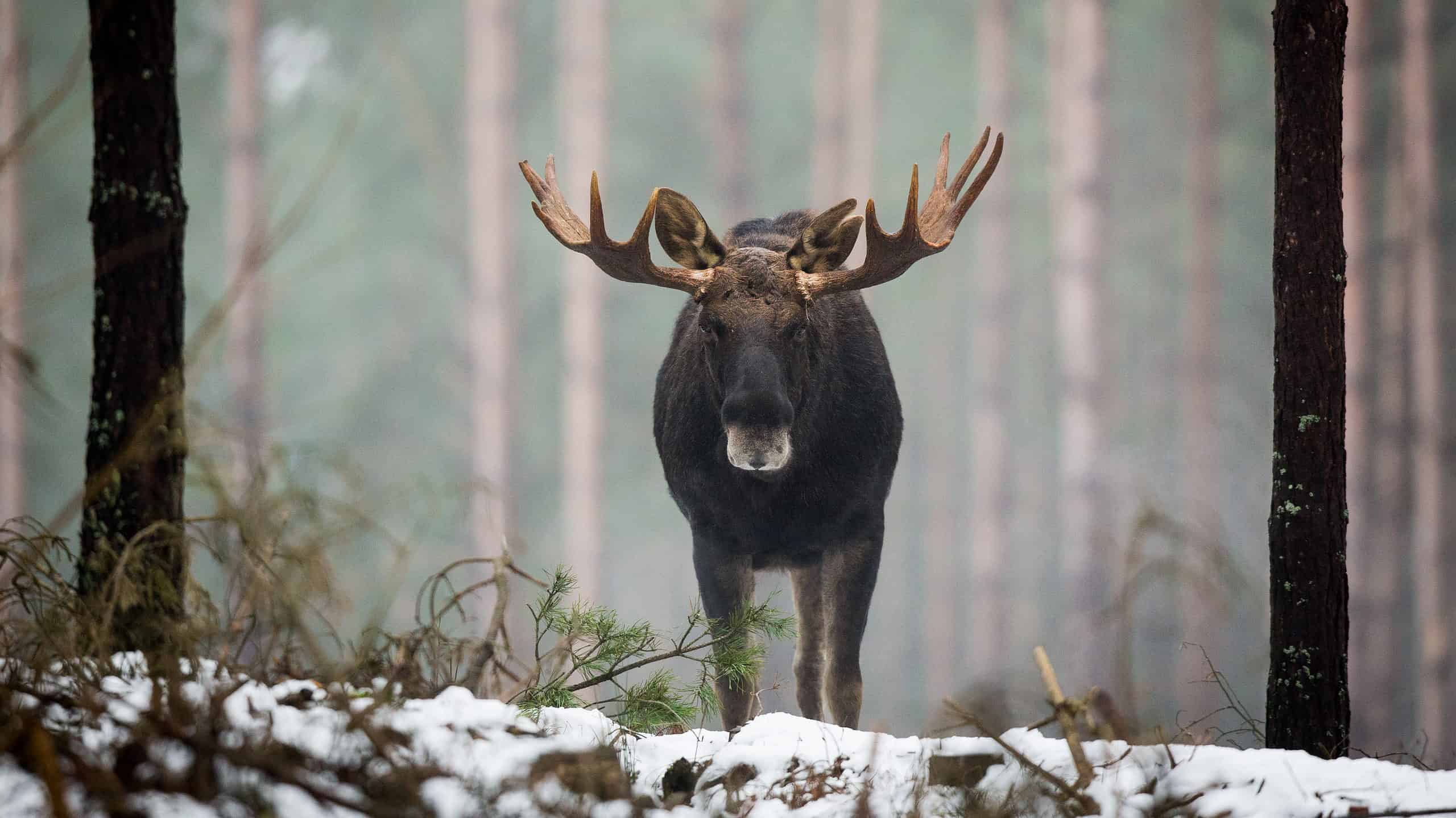
An Alaskan bull moose can weigh up to 1,600 pounds.
©JacobLoyacano/Shutterstock.com
Instead of only discussing the issue, the students launched a full-scale campaign. They argued that the moose was the perfect symbol for Alaska, representing both the “Last Frontier” and a vital source of food for many families. Moose are a familiar sight in Alaska, frequently passing through local backyards.
Senator Lyda Green supported the students’ ambitions and introduced Senate Bill 265. During the legislative process, the students attended committee hearings where the moose’s cultural and ecological importance was officially documented. Supporters highlighted that the moose is a true Alaskan resident, found from the southeastern panhandle all the way to the frozen Arctic Slope.
The campaign reached its peak on May 1, 1998, when Governor Tony Knowles signed the bill into law. Today, the moose and the bowhead whale (the state marine mammal) stand together as official guardians of Alaska’s wild heritage.
The Cultural Significance of Moose in Alaska
The word “moose” is an English adaptation of the Algonquian word moosu or moos, which literally means “eater of twigs.” Unlike grazers that primarily eat grass, moose are “browsers.” They spend their days stripping bark and leaves from trees like birch, aspen, and willow. This high-reaching diet allows them to thrive in dense thickets and snowy landscapes.
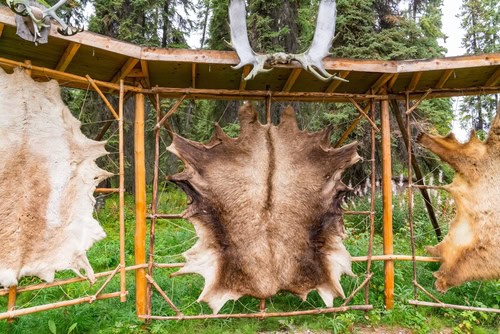
Indigenous peoples of Alaska held a deep respect for the moose and relied on it for sustenance, tools, and clothing.
©Paul Brady Photography/Shutterstock.com
For Alaska’s indigenous peoples, the moose is much more than a symbol — it is a cornerstone of survival. For thousands of years, the Athabascan people of the Interior and other Northern tribes have looked to the moose to sustain nearly every aspect of their lives.
A single moose provides hundreds of pounds of nutrient-dense meat, which is vital for enduring the brutal sub-arctic winters. People used every part of the animal: they tanned the hides into tough leather for clothing and moccasins, and shaped bones and antlers into essential tools like needles and scrapers.
Today, the moose remains a sacred figure in indigenous storytelling, embodying resilience, strength, and wisdom. In many communities, the tradition of sharing moose meat continues to be a vital way to strengthen social bonds and honor ancestors during potlatch ceremonies.
Master of the Deep Freeze
The Alaskan moose is the largest of its kind — a true masterpiece of Arctic survival. Its body has remained largely unchanged since the Ice Age and is perfectly adapted for life in the frozen north.
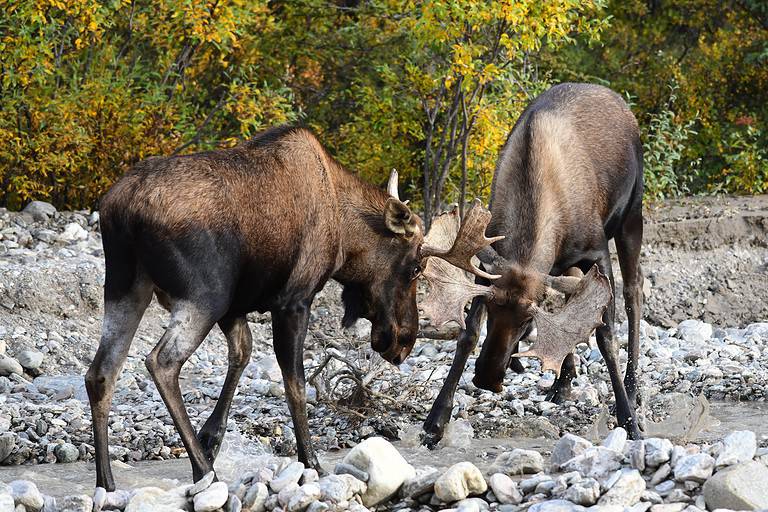
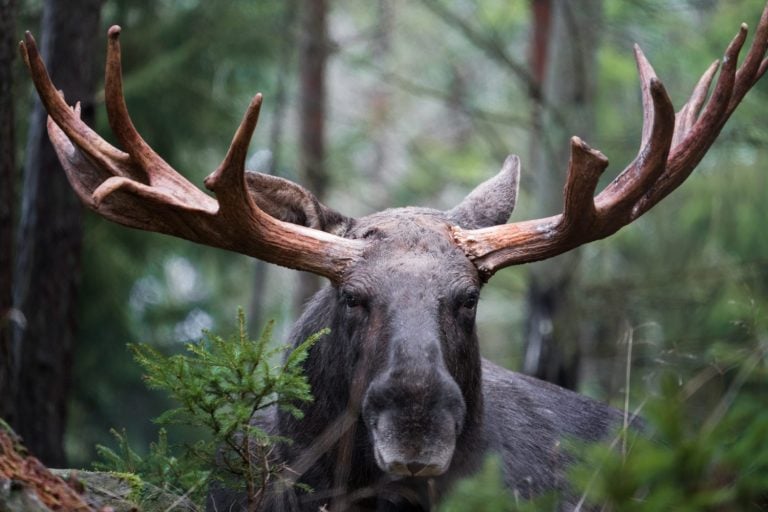
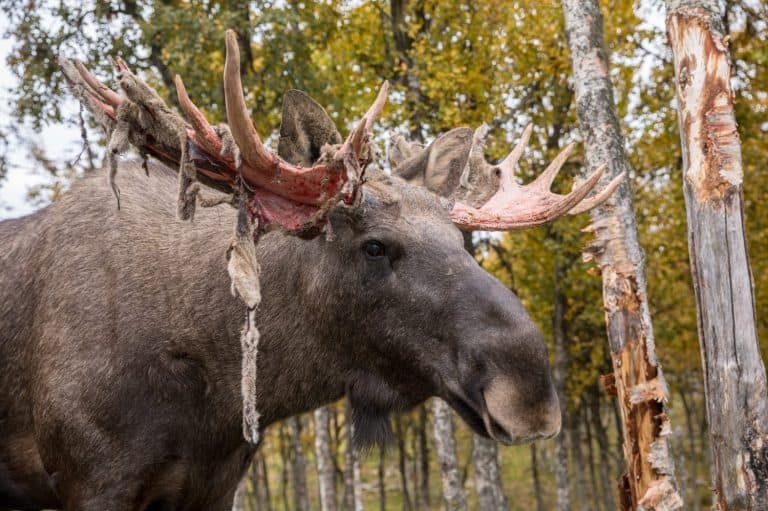
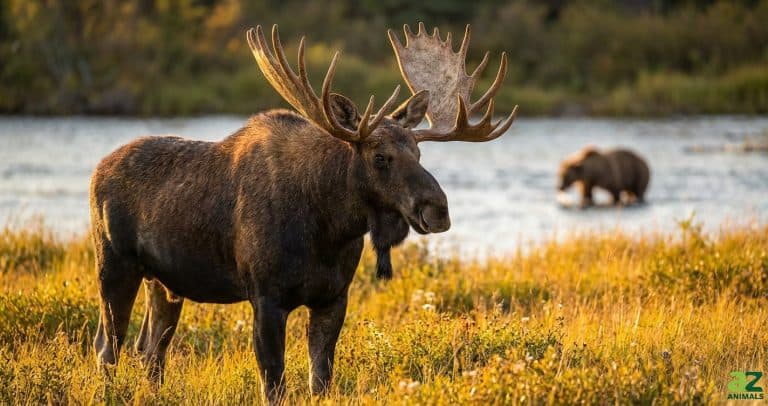
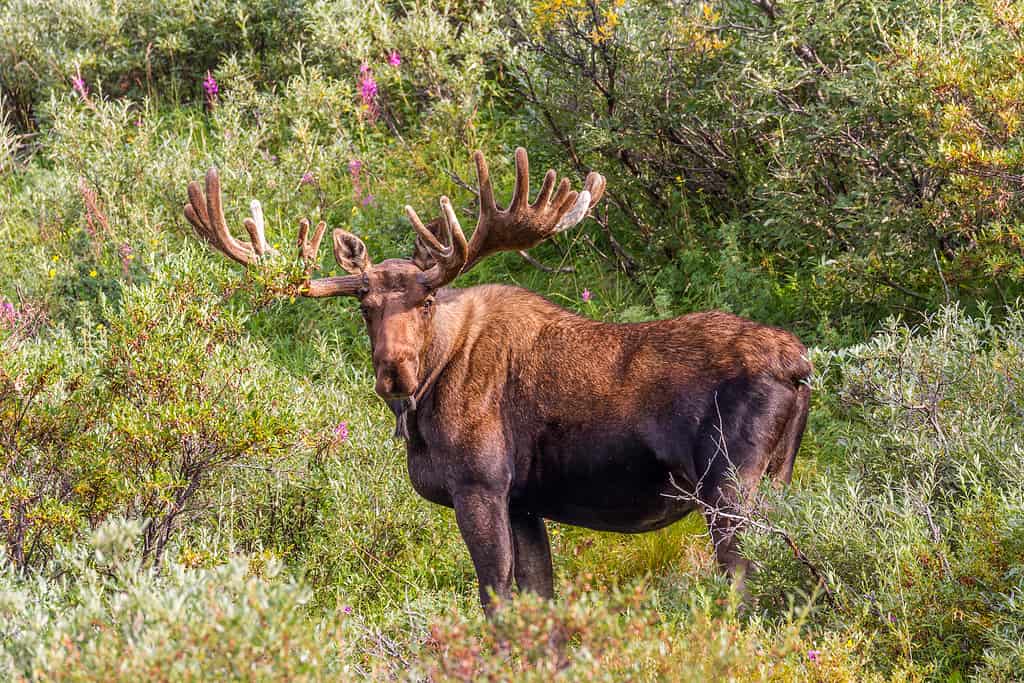
The most iconic feature is the bull moose’s massive, fan-like antlers. Unlike permanent horns, these are living tissues that regrow every single year. In Alaska, a mature bull moose’s rack can span 6 feet across and weigh more than 60 pounds. While their antlers are primarily used for sparring during the rut (mating season), they also act like satellite dishes, funneling sound toward the moose’s ears to help it detect rivals.
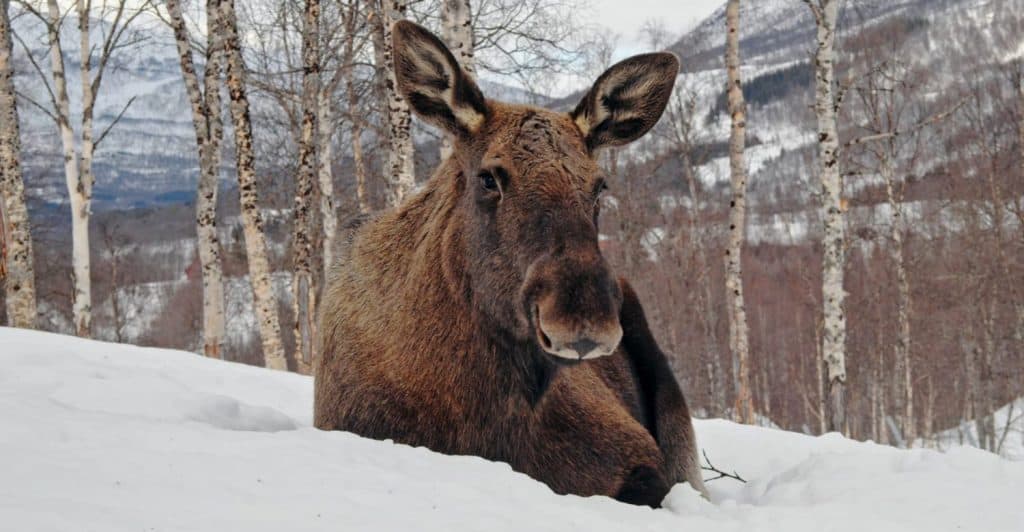
Alaskan moose have incredible insulation and can handle temperatures as low as -40 degrees F.
©Wirestock Creators/Shutterstock.com
Hanging from the throat of both males and females is a furry flap of skin called the dewlap, or “bell.” While biologists are still studying its exact purpose, it likely serves several roles. During the rut, for instance, bulls use it to spread their scent to cows. It may also help a moose release excess body heat after a long run. A large, swaying bell signals that a bull is in his prime, which is usually between three and five years of age.
Every inch of the moose is designed to handle extreme cold and heavy snow. Their long, stilted legs act like natural snowshoes. This allows them to step over fallen logs and trek through deep drifts that would trap deer. To stay warm, their fur is made of hollow guard hairs. These hairs trap a layer of air against the skin, acting like a high-tech sleeping bag that keeps the moose comfortable even when temperatures drop to -58 degrees Fahrenheit.
Master Architect and Meadow Maker
Moose are more than just simple forest residents in Alaska; they also help create and protect “beaver meadows” — vibrant, open ecosystems that are essential for many different species.
The process begins with the beaver. Beavers cut down large trees to build dams, which creates a pond. This floods the surrounding forest, killing the original trees and the fungi in the soil. Moose heavily graze on the young willow and aspen saplings that try to grow back around the water’s edge. By relentlessly eating those shoots, the moose prevents the forest from immediately reclaiming the land.
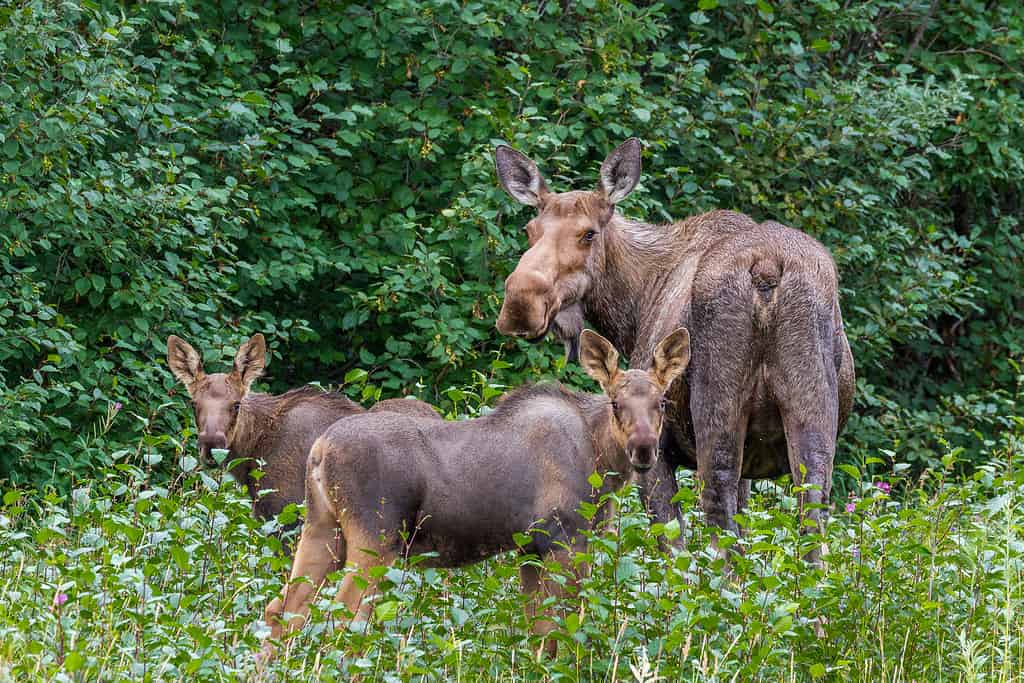
Alaskan moose calves stay with their mothers for around one year.
©JacobLoyacano/Shutterstock.com
This allows slower-growing evergreens like fir and spruce to take root, which eventually shade the area. Beavers don’t enjoy eating these evergreens, so eventually they move on to a new area. The abandoned beaver dam eventually breaks, the water drains away, and a new, nutrient-rich meadow is born.
For the forest to grow back again, forest voles must ‘re-seed’ the soil with essential fungi (mycorrhizae) that help trees grow. However, the meadow stays open for decades because aggressive meadow voles defend the territory, driving away the forest voles and preventing the fungi and the trees from returning.
By relentlessly browsing young trees and triggering this natural chain reaction, moose act as natural architects, ensuring these vibrant meadows remain open to support a diverse and thriving ecosystem.
Protecting the King of the North
Protecting the Alaskan moose is ecologically important and honors the spirit of the land, as well as the people who call it home. While the state’s population remains stable at around 175,000 animals, biologists are working hard to ensure the moose don’t suffer the same declines seen in the Lower 48.
Shorter winters have triggered a surge in winter ticks. A single moose can host tens of thousands of ticks — sometimes over 50,000 — which can lead to significant blood loss, hair loss, and increased vulnerability to cold. Affected moose often rub their dark fur to soothe the itching, exposing their white undercoat — earning them the nickname “ghost moose.” This leads to hypothermia, failed pregnancies, and high death rates among calves.
Scientists are now fighting this with naturally occurring entomopathogenic fungi that specifically target and kill tick larvae. Field trials have shown that fungi like Metarhizium brunneum can reduce tick populations by over 60 percent. New research is also exploring the use of balsam fir oil as a natural tick repellent.
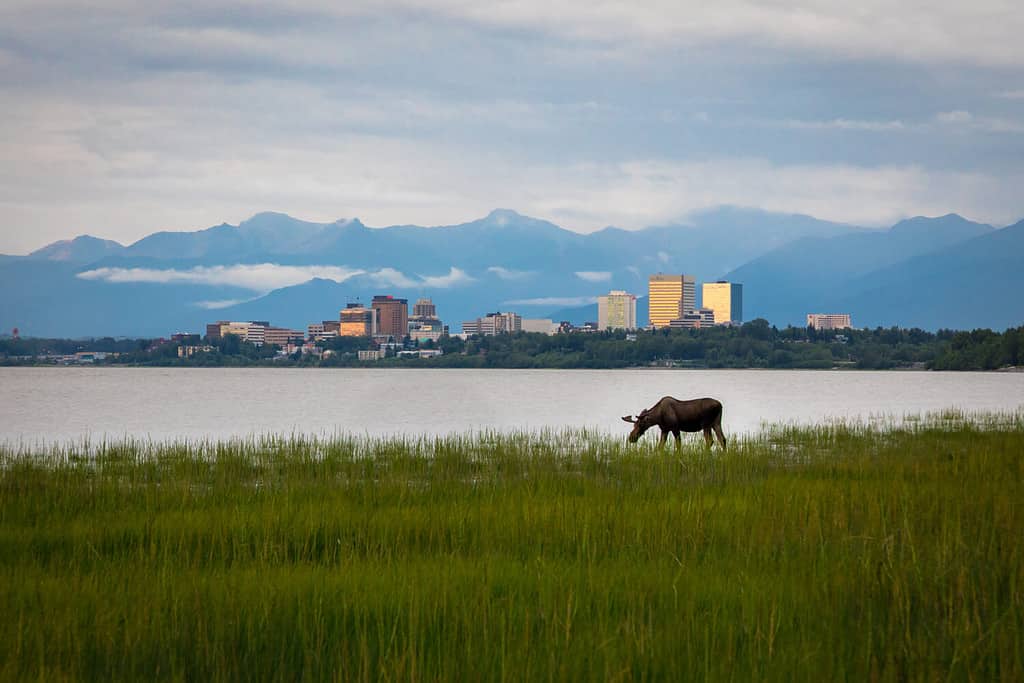
Moose in Alaska often venture into urban areas looking for food.
©BILD LLC/Shutterstock.com
Another significant challenge moose in Alaska face is the highway. Because moose evolved to “stand their ground” against predators like wolves, they often refuse to budge for oncoming cars, leading to over 800 accidents every year. To combat this, conservationists are using heat maps to help identify collision hotspots, alongside better lighting and fencing. They are also working to remove brush from the roadside so drivers can spot moose from greater distances.