
Quick Take
- Eight massive animals ending up in a stranger's pool sounds like chaos, yet there is a biological reason water buffalo are drawn to water that makes this less random than it appears. Why buffalo seek water →
- The first buffalo didn't jump in voluntarily, and what actually triggered seven more to follow is caught on CCTV. The answer is not what you'd expect.
- The animal that trashed an English backyard is also one of the most economically powerful livestock species on Earth, and the reason why may surprise you. Their economic importance →
- Water buffalo can't cool down the way most large animals do, and that quirk of biology explains more about this pool incident than the broken fence ever could. How buffalo regulate heat →
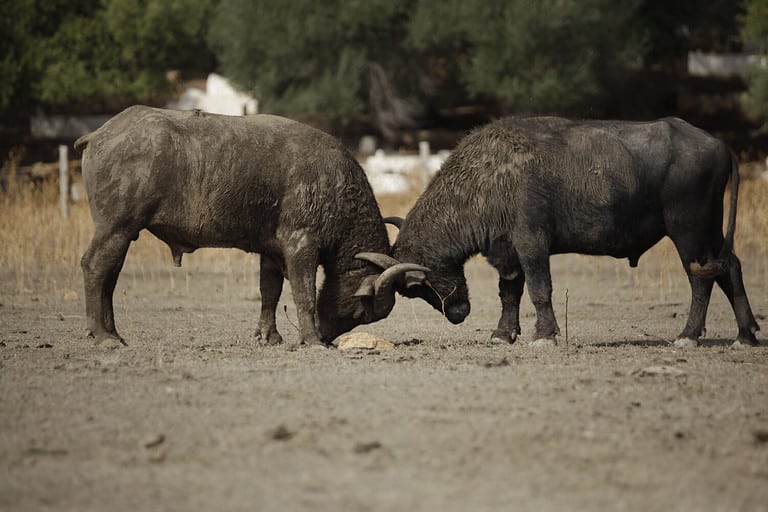
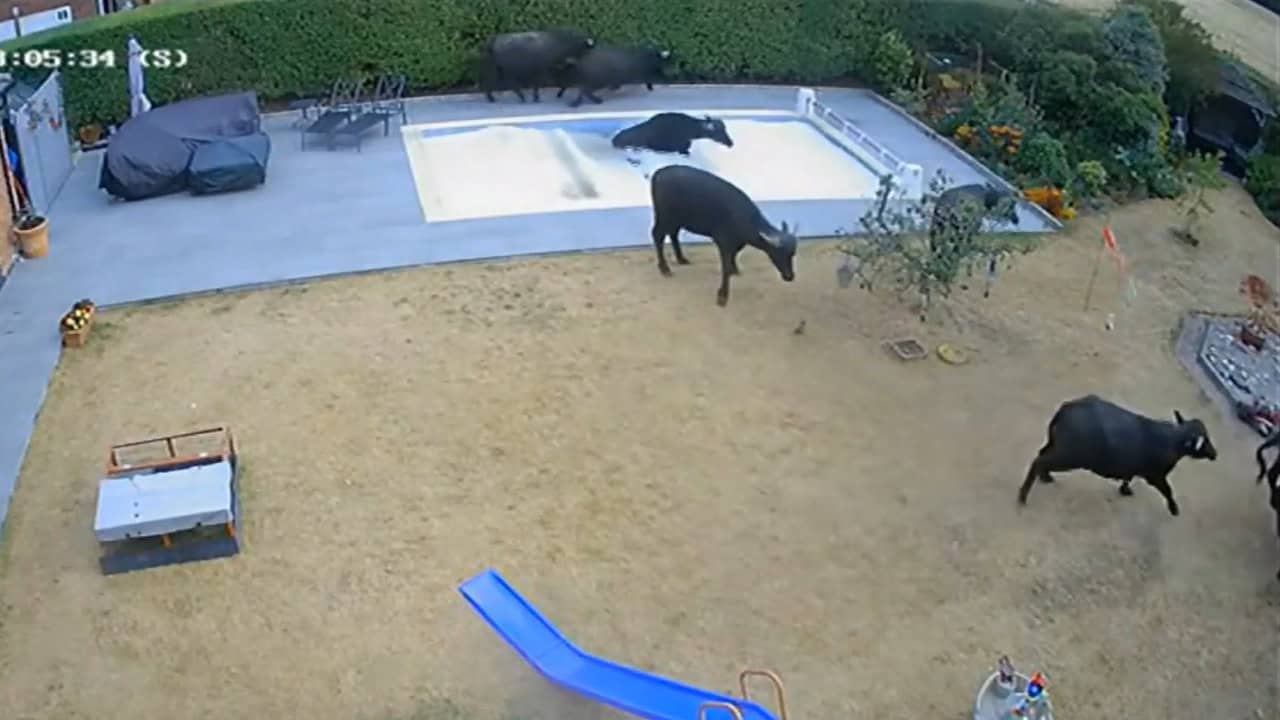
Apparently, water buffalo are not big on waiting for an invitation to a pool party. Footage captured in Essex, England, in July 2022 shows a herd of escaped water buffalo wandering into a couple’s backyard, where several of the animals discovered the swimming pool the hard way. One stepped onto the pool cover and fell through, and seven more eventually ended up in the water.
The incident involved 18 escaped animals from a nearby rare breeds farm. Eight fell into the pool, while others damaged fencing, flower beds, and the surrounding garden. Fortunately, the buffalo were rescued unharmed. The homeowners, Andy and Lynette Smith, were left with more than £25,000 in damage, and the farm’s insurer eventually agreed to cover the full repair bill.
Where Do Water Buffalo Normally Live?
Water buffalo are not native to the United Kingdom. The animals in this video were domesticated buffalo that had escaped from a nearby farm after an electric fence failed.
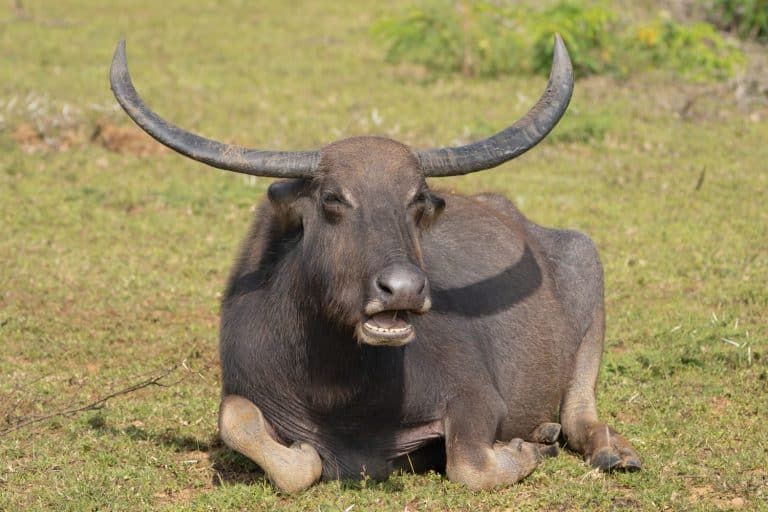
The domestic water buffalo’s scientific name is Bubalus bubalis. There are two major domesticated types: river buffalo and swamp buffalo. River buffalo are especially common in the Indian subcontinent and parts of the Near East and Europe, while swamp buffalo are concentrated largely in China and Southeast Asia. Domesticated and feral populations have also been introduced to other parts of the world, including South America and Australia.
The domestic species should not be confused with the wild water buffalo, Bubalus arnee, which is considered the wild ancestor of today’s domesticated buffalo. Remaining wild populations are found in parts of South and Southeast Asia. Because domesticated water buffalo have been moved around the world for thousands of years, they can now be found far beyond the region where their ancestors originated.
How Do Water Buffalo Normally Behave?
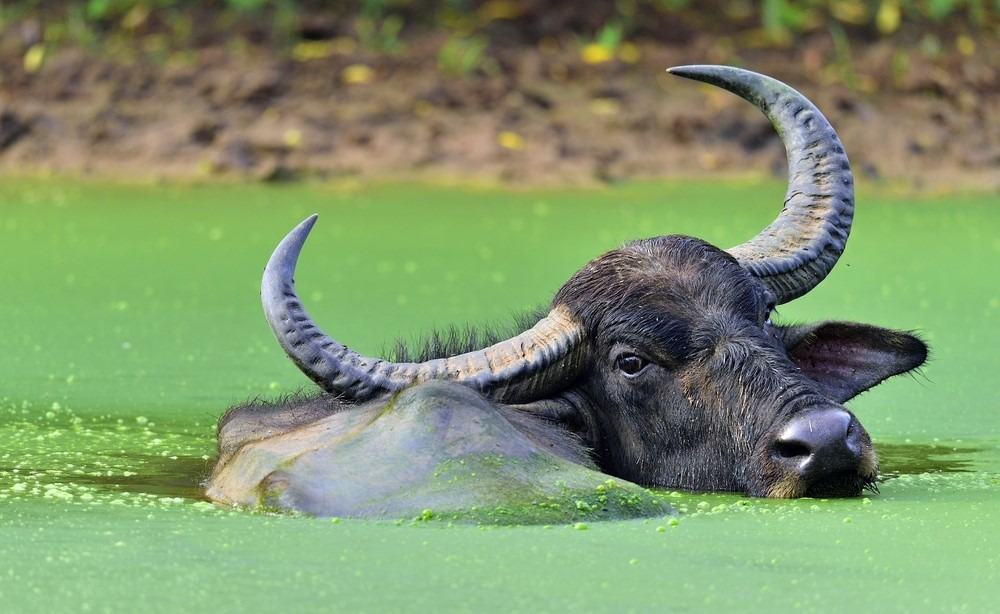
Water buffalo cool down by submerging themselves in water.
©Sergey Uryadnikov/Shutterstock.com
Water buffalo are social animals. Female-centered groups can include mothers, young animals, and younger females, while adult males may form smaller bachelor groups or spend time alone. Herd size varies depending on habitat and whether the animals are wild, feral, or domesticated.
They are also famously fond of water and mud, and there is a good biological reason for it. Water buffalo have relatively few sweat glands compared with cattle, which makes it harder for them to cool themselves by sweating. Wallowing in mud, standing in water, and resting in shade all help them manage heat. Buffalo have even been observed submerging much of their bodies while leaving little more than their eyes and nostrils above the surface.
That does not mean the buffalo in this video deliberately chose the Smiths’ swimming pool for a morning soak. CCTV footage showed one animal stepping onto the solid pool cover and falling through. The commotion that followed led to seven more buffalo ending up in the water. Their natural attraction to water may be real, but this particular swim appears to have been an accident.
Why Were Water Buffalo Domesticated?
Humans have lived and worked alongside water buffalo for thousands of years. The two major domestic types appear to have separate histories: river buffalo were probably domesticated roughly 5,000 years ago, while swamp buffalo were domesticated in China at least 4,000 years ago. Both became enormously important livestock animals.
Today, water buffalo are raised for milk, meat, hides, and agricultural work. According to the United Nations Food and Agriculture Organization, buffalo produce about 15 percent of the world’s milk, making them second only to cattle as a source of global milk production. Their milk is richer in fat and protein than typical cow’s milk and is used for products including cheese, yogurt, butter, and other dairy foods.
Water buffalo have also been used for centuries as powerful draft animals, particularly in rice-growing regions where their ability to move through wet, muddy ground is extremely useful. They can pull plows and carts, while their manure can be used as fertilizer. In other words, the animal that accidentally demolished an Essex backyard is also one of the most economically important livestock species in much of Asia.