
Quick Take
- Every white Doberman alive today traces back to a single dog born in 1976, and the reason reputable breeders refuse to produce this color reveals something unsettling about the genetics behind it. Trace the white Doberman's origins →
- Two of the five AKC-recognized Doberman colors share a hidden genetic trait that makes them visually striking but physically vulnerable in the same unexpected way. See the dilute gene connection →
- The rarest breed-standard Doberman color requires a very specific genetic combination from both parents, yet most people cannot identify it just by looking. Discover the rarest standard color →
Bred in Germany as guard dogs during the late 19th century, the Doberman Pinscher is believed to be a mixture of many dog breeds, including the German Pinscher, Rottweiler, and black and tan terrier. These smart, energetic dogs have sleek coats, regal appearances, and athletic builds. They are affectionate family companions, and they excel in canine sports, as well as police and military work. Doberman Pinschers can be various colors, but the American Kennel Club (AKC) only recognizes four. The rare white Doberman Pinscher can be registered, but white is not considered a breed standard color. The breed standard colors include fawn and rust, blue and rust, red and rust, and black and rust.
History
In 19th century Germany, tax collector named Louis Doberman was worried about bandits attacking him. However, he was also the town’s animal control officer, so he began to take dogs on his rounds for protection. Later, he began breeding dogs, looking for a loyal companion as well as a protector. This led to the early Doberman Pinscher. He allegedly bred the German Pinscher, black and tan terrier, and Rottweiler.
The first known Doberman Pinschers were seen in the 1870s and were met with great interest. After Doberman passed, German breeders continued his work, concentrating on function rather than appearance, and the breed became known as aggressive and headstrong. A breeder named Otto Goeller successfully bred a more serviceable working dog and companion, and in 1899, the German Kennel Club recognized the Doberman Pinscher as a breed. These dogs stand up to 28 inches at the shoulder and weigh up to 100 pounds, with males being larger.
White Doberman
The rarest Doberman color is white. White Dobermans are actually not pure white. Instead, their coats are a pale cream color with white markings. These dogs also have blue eyes and pink noses. Their unique coloring is caused by a genetic mutation. Every white Doberman is descended from a female born in 1976, who was the result of inbreeding. Unfortunately, these dogs frequently suffer from significant health issues, which can include poor vision, an increased risk of skin cancer, and a heightened sensitivity to sunlight. Although this color is listed on the AKC website for registration, white is not considered a breed standard color and white Dobermans are disqualified from competition. Reputable breeders do not breed for this color. However, with appropriate care, white Dobermans can live a normal lifespan.
Fawn and Rust Doberman
Of all breed standard colors, fawn and rust is the rarest. Fawn and rust Dobermans carry the recessive dilute gene for red, which leads to their unique fawn coloring. Both parents must have the dilute recessive gene for the fawn color to be expressed. Their coat colors look brown with a much less reddish undertone, almost like a light milk chocolate color. These dogs have tan markings around their muzzle, ears, chest, legs, bottom, eyebrows, and under their tail. Dogs with dilute genes are prone to coat and skin problems due to the way pigment-producing cells are deposited in the hair shaft. Problems can include thinning and hair loss, ingrown hairs, and staph infections.
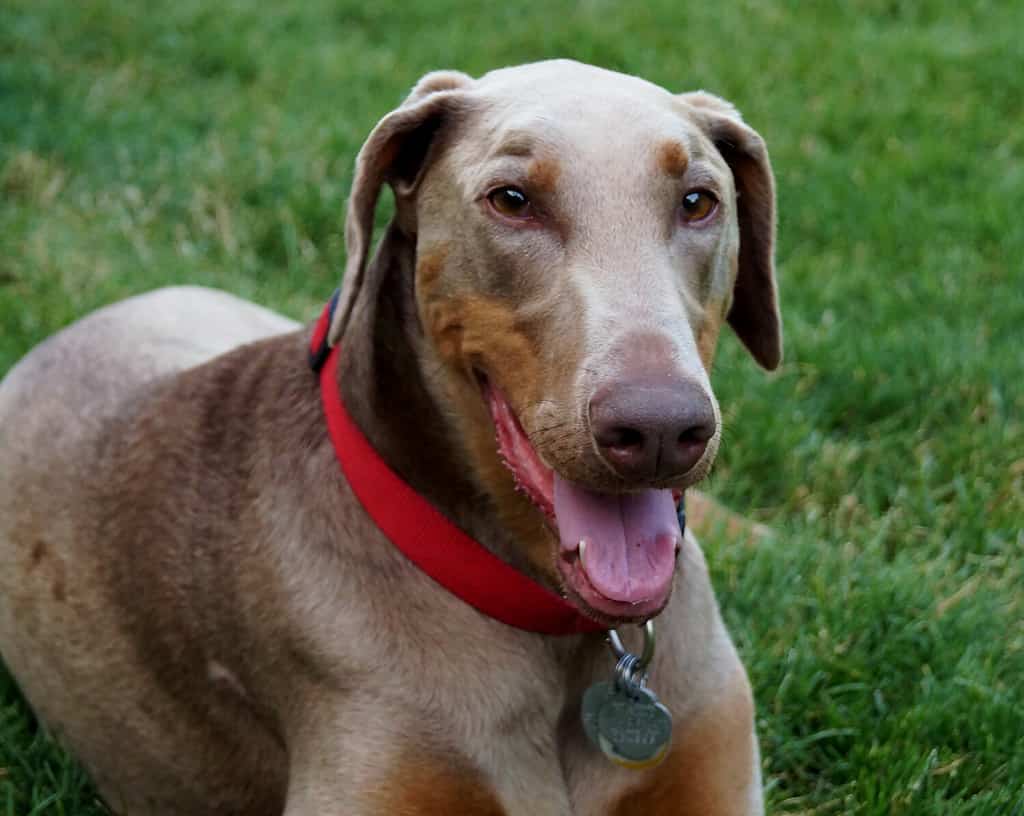
©Just_Julie/Shutterstock.com
Blue and Rust Doberman
Blue and rust Doberman Pinschers are a sight to behold. They are not as common as the black and rust variety but are very popular. Sometimes they are also called the grey Doberman. The blue coloring is a dilution of black. Dogs with blue coats have inherited copies of the dilute recessive gene from both parents. These dogs are also prone to the same skin issues as dogs with fawn coloring because of their pigment-producing cells.
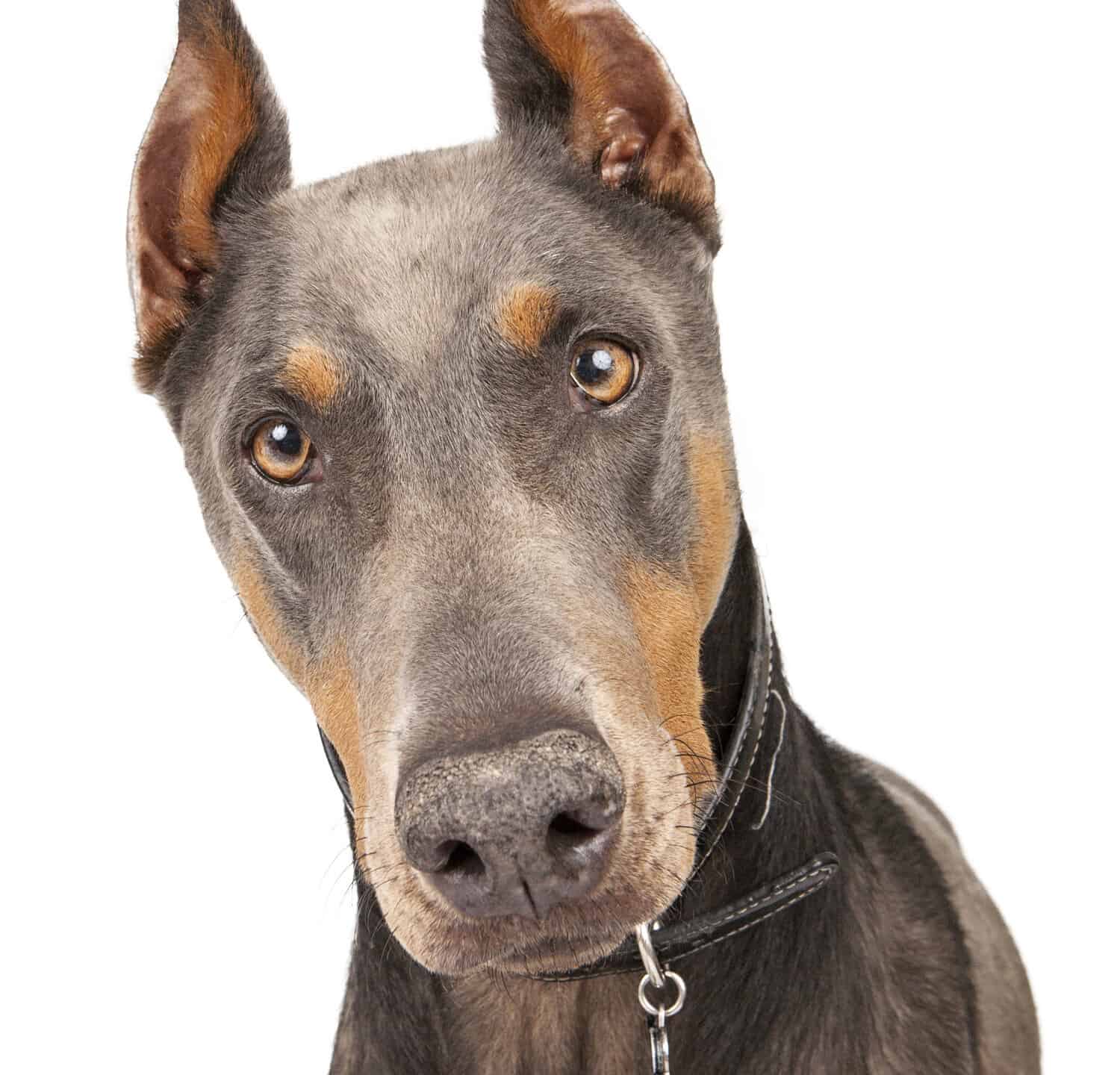
A blue or blue and rust Doberman Pinscher has dilute genes from both parents.
©GoodFocused/Shutterstock.com
Red and Rust Doberman
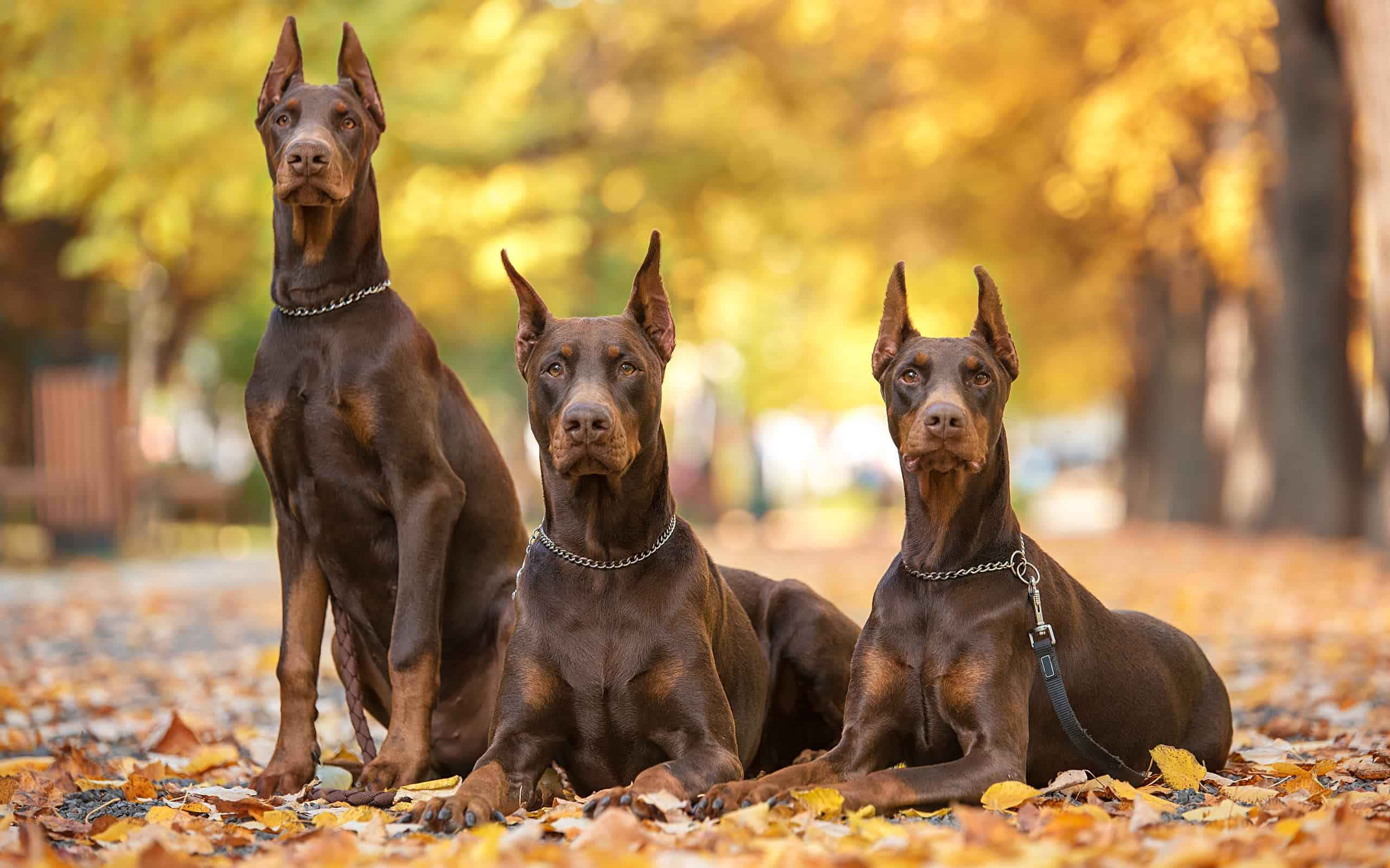
The second most common color of Doberman Pinschers is red and rust. Some dog fanciers prefer them to the traditional black and rust Dobermans, as they are said to have a less harsh appearance. These dogs are coppery-red to brown with tan markings on their chest, face, legs, and under their tail. These dogs are not as common as the black and rust Dobermans, as the black gene is dominant. Red Dobermans are also more prone to skin issues such as acne, folliculitis, and allergies.
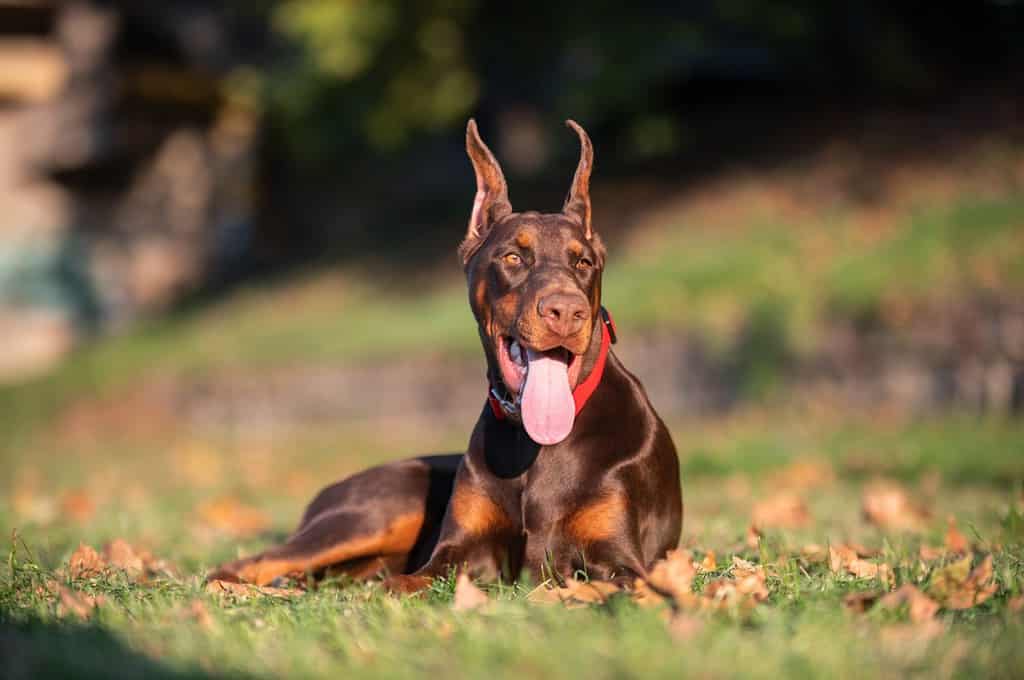
Red and rust dobermans have copper to brown coats with tan markings on the face, chest, and legs.
©Kristina Chizhmar/Shutterstock.com
Black and Rust Doberman
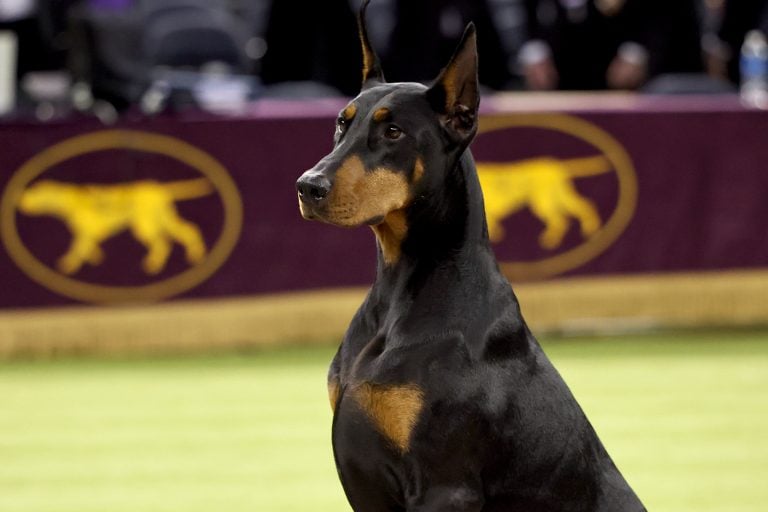
The most common color of Dobermans is black and rust. These are the Doberman Pinschers most people picture when they imagine the breed. They are the ones used in movies and comic books. Some people call them black and brown Dobermans or black and tan Dobermans. These dogs have sleek black coats with tan markings on their eyebrows, legs, muzzle, chest, ears, and under their tails. Black and rust Dobermans are not as prone to skin issues as other color variations, but they may still suffer from allergies and acne.

The most common color of Dobermans is black and rust.
©JELIZAVETA KARAKAJA/Shutterstock.com