
Quick Take
- Your dog's breed alone could get it banned from the cargo hold, something many owners don't find out until they're already at the airport. See breed restrictions →
- One common summer travel window is quietly off-limits for dogs on many airlines, and most pet owners do not realize just how dangerous the reason actually is. See the summer ban →
- Buying your dog an extra seat sounds like the ultimate pet-parent move, but most people never see the catch that airlines have waiting for them. See the seat-purchase catch →
- There's a specific number you need to hit before booking your dog's ticket. Forgetting to check it could get you both turned away at check-in. Check the weight limit →
We never want to leave our furry friends behind when we go on a trip, but if you’re traveling a long distance, is it feasible to bring your dog with you? So, when can dogs fly on planes, and when can’t they? In this article, we’ll discuss general rules determining when your dog can fly on a plane, the type of carrier required, and when it might be best to leave your pup to be cared for at home by a friend or family member.
To Fly In-Cabin, Dogs Must Fit Under the Seats
Many people would never take their dog on a plane unless it could fly in the cabin. Unfortunately, only small dogs are allowed in-cabin. In order to keep your dog with you on your flight, it needs to be small enough to fit beneath the seat in front of you. Even airlines that allow you to keep your dog on your lap during the flight require the carrier to be secured beneath the seat during takeoff and landing. Most airlines will require your pup to stay in the carrier beneath the seat at all times.
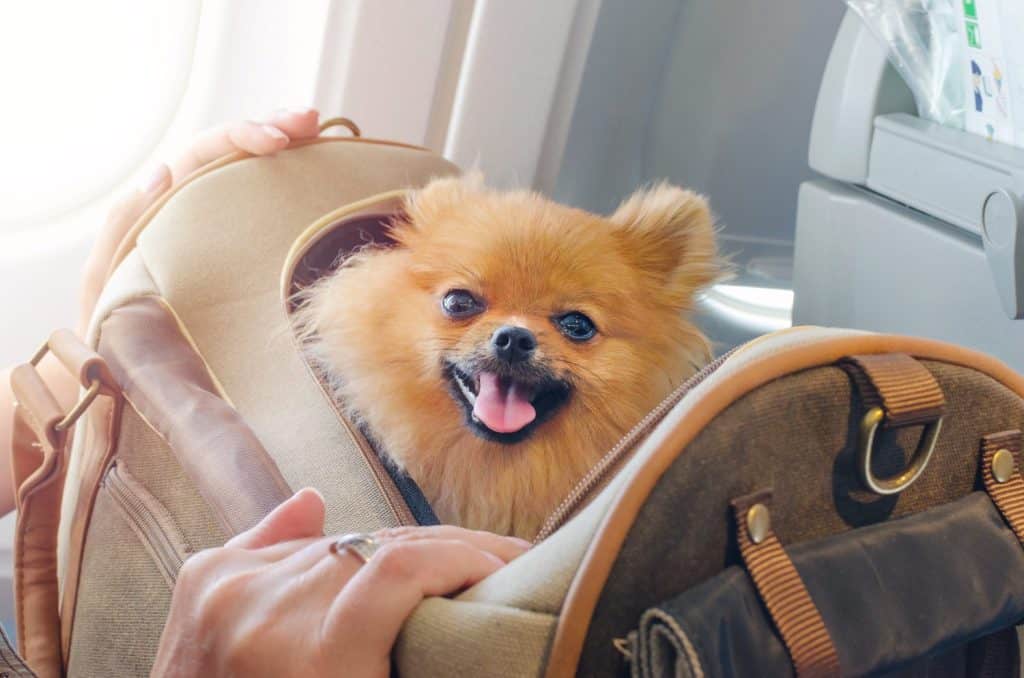
Generally only small dogs can fly in-cabin.
©nadisja/Shutterstock.com
Your Dog Must Fall Under the Airline’s Weight Limit
Just like your carry-on, your dog can’t exceed the weight limits set by the airline. This includes the weight of the carrier. Weight limits can vary, but are typically around 20 pounds. For example, United Airlines doesn’t have a weight limit, but this doesn’t mean your 50-pound dog can fly in-cabin. Your pup’s carrier still has to fit under the seat and meet other carrier regulations.
Make sure to weigh your dog inside the carrier before you buy the plane ticket so that you can be sure your pup is under the weight limit. You don’t want to be turned away as you’re trying to check in for your flight.
Dogs Typically Cannot Take Up Plane Seats
Most airlines do not allow your dog to sit in a seat on the plane, with or without a carrier. While this would be handy for large dogs, it’s usually not a possibility. Even trained service dogs generally cannot occupy seats.
However, there are some airlines, especially private airlines, that allow small dogs inside of carriers to sit beside you if you’ve bought an extra seat for them. Most airlines will not allow dogs outside of the carrier for safety reasons, but check your airline for specific regulations.
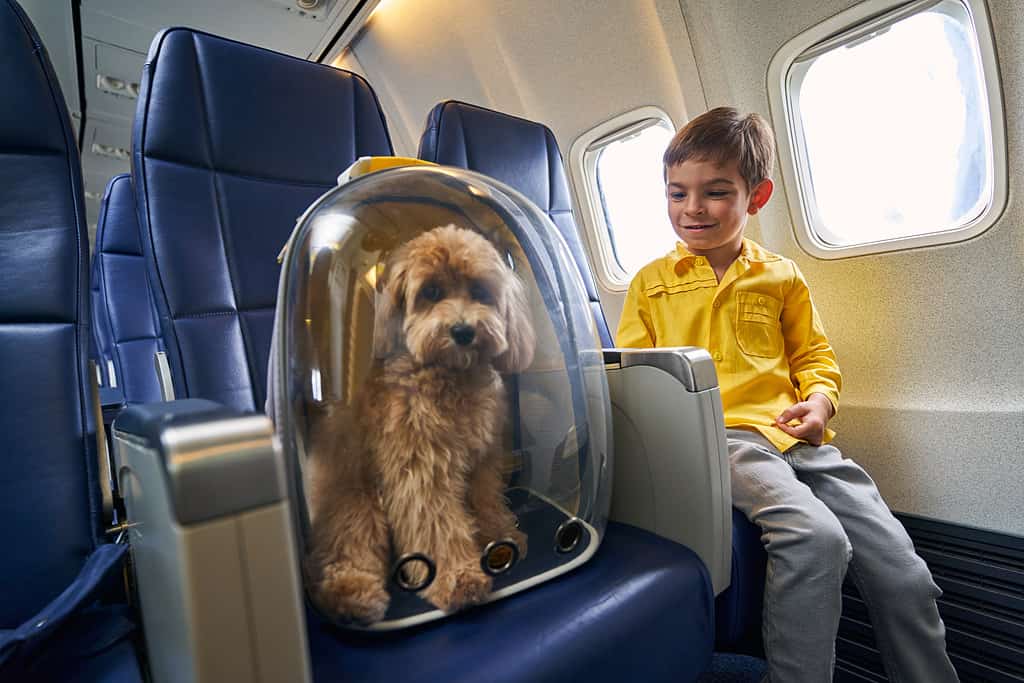
Some airlines may allow small dogs in carriers to sit beside you if you have purchased an extra seat.
©Svitlana Hulko/iStock via Getty Images
Flying In Cargo
Most airlines ban short-snouted, or brachycephalic, breeds from flying in cargo. This is because in-cargo flight comes with added risks, including an increased risk of heat stroke. Brachycephalic breeds like pugs, shih tzus, and boxers already struggle to breathe due to poor breeding. Stress exacerbates this, and any poor care on the trip such as unregulated temperatures or lack of hydration may affect them more than other dogs, since they’re already at a disadvantage.
Flying in cargo comes with extra stress and added risks for any dog breed, and most dog enthusiasts would not recommend it. Although the majority of dogs are healthy after being transported in cargo, that doesn’t mean the pups had a good experience.
The Risks of In-Cargo Flight
There are also the following risks to your dog’s physical well-being to consider:
- Your dog might suffer from heat stroke, lack of ventilation, or heart failure. Sometimes, the temperatures aren’t monitored as they should be, and pets pay the price. Stress can worsen all of the conditions above.
- Rough handling. If your pet is treated as luggage and handled roughly, they can be injured. This might also happen if something accidentally falls on their carrier during the trip.
- No one is monitoring your dog full-time. At home, you can see if your dog is acting odd or showing symptoms of illness. On a flight, the airline staff don’t know your dog or what to watch for, and caring for your dog is only a small part of their job. This can mean that medical conditions are missed.
- Your pet can be lost. On rare occasions, airlines might misplace your pet as they would baggage.
It’s also worth noting that some airlines are riskier than others. Do your research before trusting your best friend to strangers.
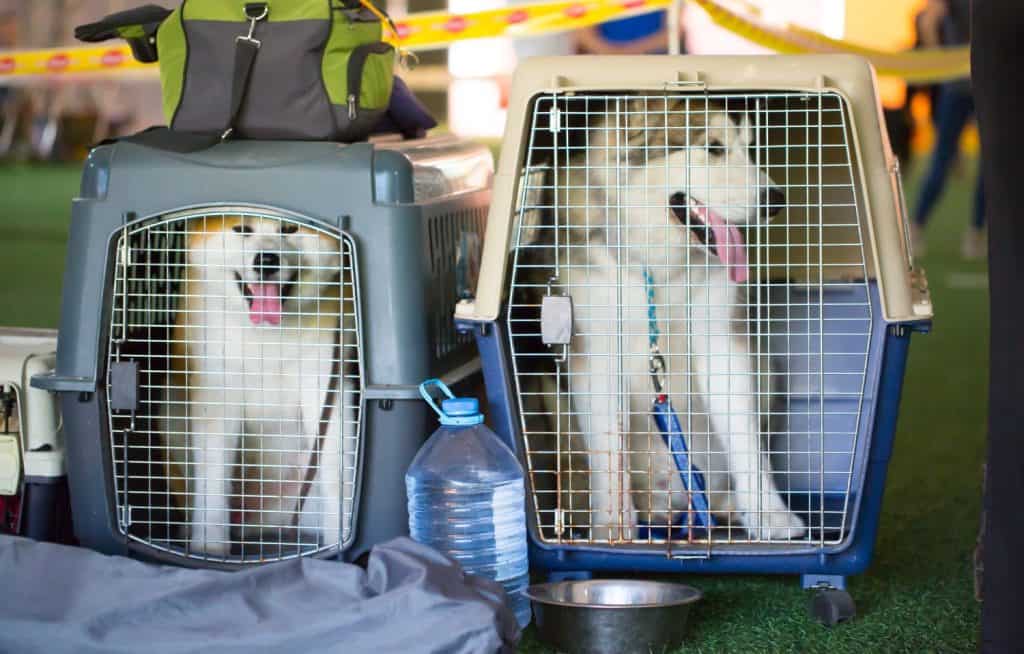
Only hard-sided carriers are allowed for dogs flying in cargo.
©Vera Larina/Shutterstock.com
Puppies May Be Able to Travel as Soon as 8 Weeks
If you’re wondering when you can fly with your puppy, the soonest any airline will allow is generally eight weeks. However, individual airlines have their own age restrictions. There are also minimum weights for puppies to fly, and small dogs might need to be older in order to meet those.
Now that you know you can fly with your puppy, you might wonder if you should. This is a tricky question since every situation and every puppy is different. In addition to the general stress of flying, here are some things to consider:
- If your puppy hasn’t had all of their vaccines, plane travel may be unsafe.
- Your puppy should see a veterinarian first to ensure they’re healthy enough to fly.
- Puppies and seniors are more fragile than young adult dogs. Flying is an added risk, particularly if they fly in cargo.
- Brachycephalic (short-muzzled) breeds make up the highest number of dog deaths on planes. It is dangerous for them to fly, especially in cargo.
It May Be Too Hot to Fly
Some airlines won’t allow you to transport your dog in cargo from May to September. This is because in some places, these months are too hot. Sadly, one of the most common ways dogs die in cargo is via heatstroke. Even if the airline allows your dog to fly in high temperatures, allowing them on the plane is risky for your pup.
Most airlines will not transport pets in the cargo hold if ground temperatures are over 85°F at any point on the trip, which includes the departure location, layover airports, and the destination. Carriers also restrict pets from flying during the hottest times of the day. You may have to fly during the early morning or late at night when temperatures are lower.
Your Dog Must Be Kept in an Airline-Approved Carrier
In order to fly, your dog will need a carrier, and not just any carrier will do. Most airlines have their own regulations concerning carriers, so be sure to check the airline’s website before purchasing a carrier. However, here are some general things to look for in a carrier for your dog’s in-cabin flight:
- It fits beneath the seats (ask the airline for maximum dimensions)
- Soft-sided carriers may be easier to fit under the seat, as they have some give to them
- Your dog can stand up straight, turn around, and lie down inside the carrier
- The bottom of the carrier is waterproof to prevent messes if your dog has an accident
- Ventilation on two or more sides of the carrier
- Sturdy to prevent escape
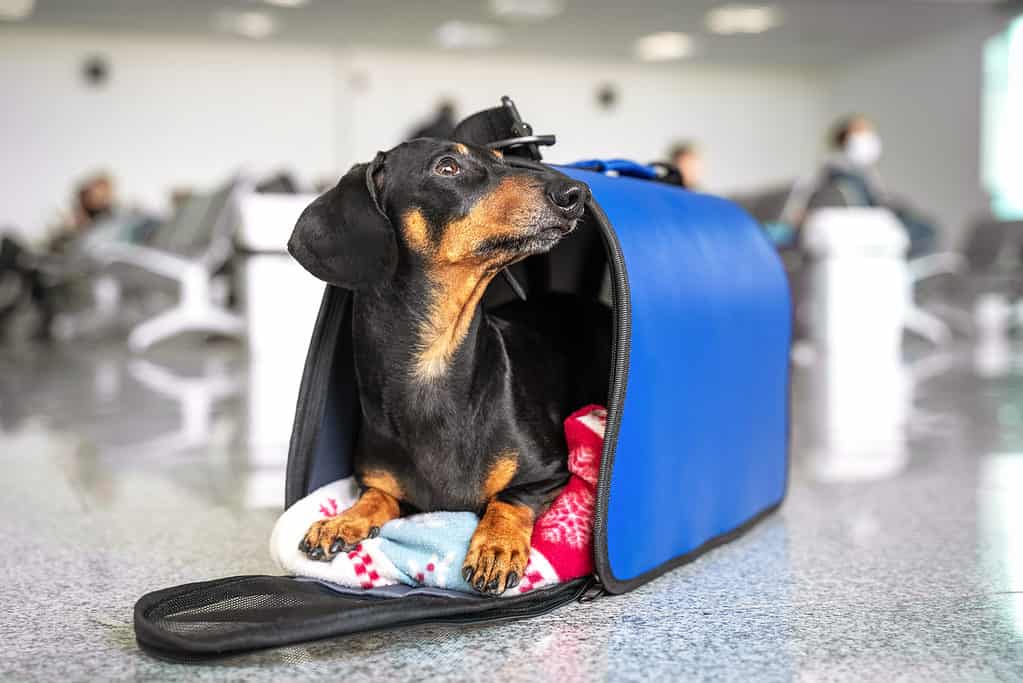
Dog carriers shouldn’t be soft-sided, as hard-sided carriers provide more protection for your dog.
©Masarik/Shutterstock.com
Guidelines for in-cargo flights vary. They should never be soft-sided, as hard-sided carriers provide more protection for your dog. In-cargo carriers must also have handles on the sides, along with secure latches on the door, as it’s crucial for them to be inescapable. The stress of an In-cargo flight could cause your dog to try to escape.
There must also be bowls attached to the crate’s door that can be filled without opening the door. The carrier cannot be collapsible or have wheels. Lastly, the carrier must be labeled with your pet’s name, your contact information, “live animal” stickers, and arrows indicating which side of the crate is the top.
Some Laws Ban Dog Travel to Certain Areas
Please check your local laws as well as those for your destination. Some countries don’t allow pets to be imported, or they require quarantine periods. Some quarantine periods are so long they could take up your entire stay, making it pointless to bring your pup along for the trip.
The United States bans dogs flying in from countries it deems to have a high risk of rabies, and Canada has similar measures in place. If you’re traveling within the United States, your dog will likely be allowed, but there are exceptions to this, such as if you’re traveling to Hawaii.
Unvaccinated Dogs Shouldn’t Fly
A rabies vaccine will typically be required to fly with your dog, as it’s mandated by law in most U.S. states that all dogs be vaccinated for rabies whether they’re flying or not. Other vaccines may also be required by the airline. The USDA website can assist you in determining which documents you will need for your flight.
Even if you live in the U.S. and you are just returning home with your dog, the CDC also requires U.S.-vaccinated dogs that have traveled to high-risk countries for rabies in the past 6 months to have a Certification of U.S.-Issued Rabies Vaccination form. If you are traveling internationally with your pup, check the CDC website for information about bringing your dog back into the U.S.
It is safest if your dog is vaccinated for all common ailments in your local area and the area you’re traveling to before boarding the plane. If you have a puppy, it’s best to wait until it’s gotten all puppy vaccines before traveling. After all, you don’t want your dog to get sick.
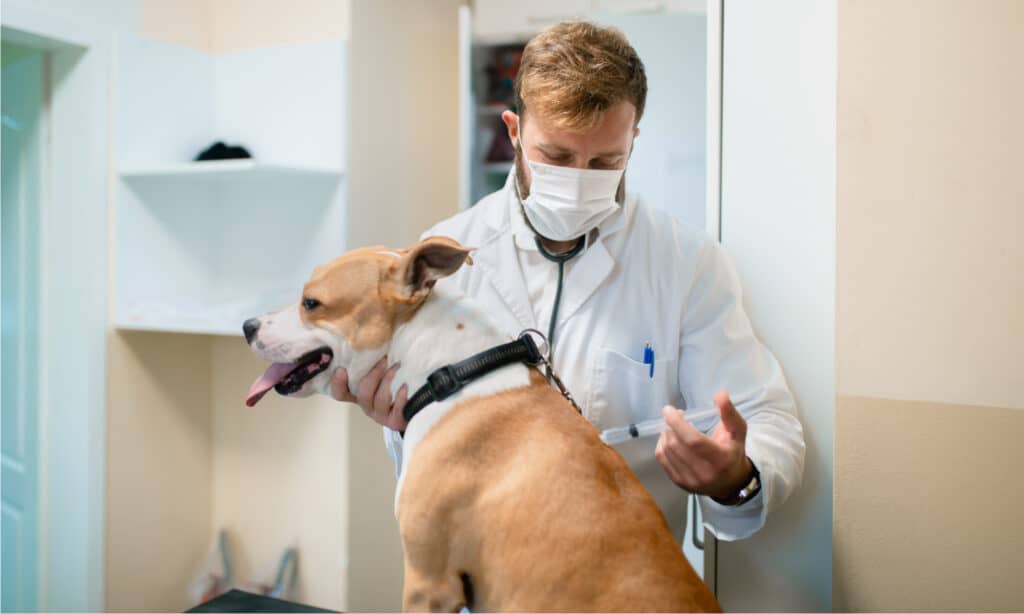
Your dog needs all of the required vaccines to ensure they are protected while traveling.
©StrDr stock/Shutterstock.com
Is Your Dog Healthy Enough to Fly?
Many airlines require a certificate from a licensed veterinarian proving your pup is fit to fly. If you are traveling outside the U.S., you will need to contact a USDA-accredited veterinarian to ensure you have the proper documentation to meet the entrance requirements to take your pup into another country.
Mental health is another consideration. While dogs with anxiety might not be banned from flying, it may not be ethical to put them on a plane. As noted earlier, flying is stressful even for well-adjusted dogs under the best circumstances. For dogs with anxiety, consider if their distress is worth bringing them along. How will this trip benefit them?
Are you moving to another state, and want to bring your precious pup with you? Can you or someone else drive your dog instead? Is this a vacation? Will your dog actually enjoy being away from home? Will you be able to spend adequate time together, rather than leaving your pup alone while you sight-see?
Can you bring your anxious dog in the cabin, or would your dog have to endure the extra stress of being kept in cargo? There’s no one-size-fits-all answer, but it’s worth considering all of your options before putting an anxious dog through unnecessary stress.