
Quick Take
- An in-flight emergency with 68 animals aboard forced a split-second decision that says everything about what this organization is really made of. Read the rescue story →
- A global crisis most charities barely survived became the moment Pilots To The Rescue couldn't keep up with demand. Here's why. See the pandemic surge →
- Michael Schneider raised the seed money for this nonprofit in under 48 hours. See how $12,000 was raised →
When Michael Schneider earned his pilot’s license, he was simply looking for a reason to spend more time in the air. He never imagined that flying would eventually become the centerpiece of a nationwide effort that has helped save thousands of animals from overcrowded shelters.
Today, Schneider is the founder of Pilots To The Rescue, a nonprofit that coordinates emergency animal transportation by air and ground. Since launching the organization in 2015, it has completed more than 400 rescue missions, transported more than 7,200 animals, and logged nearly half a million flight miles.
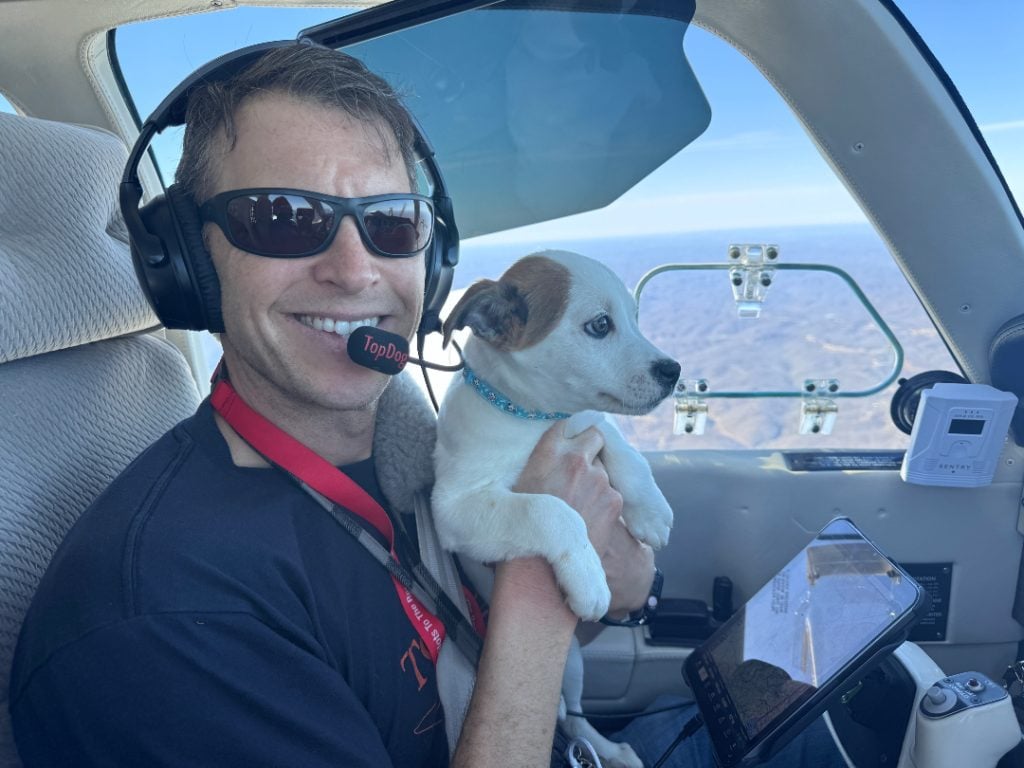
Just another day at the office for Michael Schneider!
A Rescue Mission Takes Flight
The idea took shape during a period of personal change. Schneider had recently earned his pilot’s license after becoming fascinated with aviation, and like many private pilots, he found himself searching for opportunities to fly.
“I had this desire to give back,” Schneider says. “When I heard about the animals, it really hit home because I always had a connection with animals since I was a little boy.”
His first rescue flight changed everything.
Although Schneider had spent years building businesses, fundraising for a nonprofit felt surprisingly natural.
“This type of sale is a lot easier because we’re actually saving lives,” he said. “When that passion ignited in me combining these two things — aviation and saving animals —people could tell that something was different when I was telling them about this, and they wanted to support that.”
That enthusiasm helped him raise $12,000 in less than two days to launch Pilots To The Rescue.
A few years later, the COVID-19 pandemic unexpectedly accelerated the organization’s growth. As travel restrictions slowed traditional ground transportation throughout the Northeast, rescue flights suddenly became one of the fastest ways to move animals between shelters.
“Our phone was ringing off the hook,” Schneider recalls. “We were doing a ton of transport. And that’s when the donations started pouring in.”
The surge convinced him it was finally time to leave his corporate events business and dedicate himself fully to animal rescue.
He hadn’t paid himself a dime to run the charity during its early years, he shares, “But I made up for the lack of compensation tenfold with the sense of fulfillment and being able to save all these animals. It was one of the best decisions I ever made.”
More Than Airplanes
Despite the impressive numbers, Schneider insists the work has barely begun.
“I feel like we’re just getting started,” he says. “They’re still euthanizing nearly a million cats and dogs in this country.”
The flights themselves may capture headlines, but Schneider believes they’re valuable for another reason.
“It’s exciting when you transport animals on an airplane,” he said. “The press often always comes to the airport … and that is giving me hope that we can have some transformation in the space.”
Every rescue becomes an opportunity to encourage adoption, fostering, and spaying and neutering. “We’re often telling people why it’s important to adopt these animals and why it’s important to reduce euthanasia.”
While airplanes remain the organization’s signature, they’re no longer the only tool in its arsenal. Pilots To The Rescue now operates seven rescue vans, allowing it to transport far more animals than flying alone ever could.
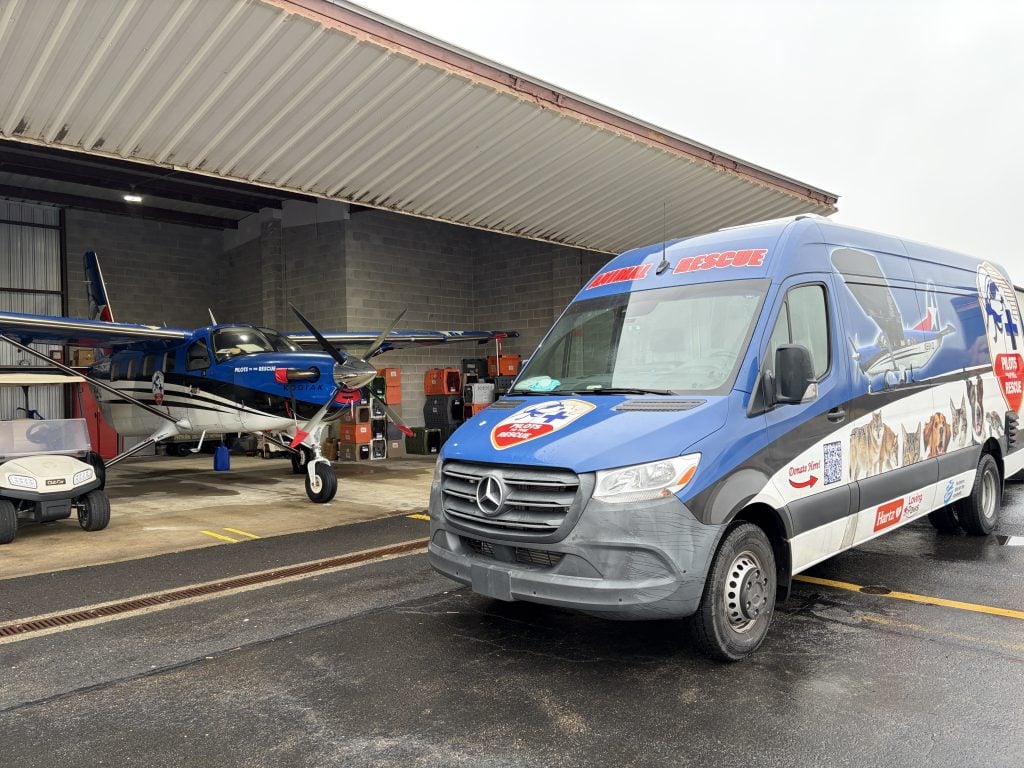
The Pilots to the Rescue fleet extends beyond just planes. They also have vans doing transport on the ground.
“The planes are great … very expensive,” Schneider says. “The vans allow us to move more volume, more animals.”
That practical mindset reflects his entrepreneurial background. Rather than treating the nonprofit differently from one of his previous companies, Schneider says he applies the same business principles every day.
“I run this like a business,” he explained. “More money means more animals saved.”
He also believes storytelling is just as important as fundraising.
“You need to inspire people and move them in order to donate,” he says. “Content is king… It’s really important that you promote your organization.”
Today, the nonprofit employs five full-time staff members while relying on volunteer pilots across the country. Those pilots donate their time, while the organization covers aircraft operating costs through donations. Schneider still flies at least once a month, though he now spends much of his time mentoring younger volunteer pilots.
“They have great training,” he said. “But they don’t have those real-world skills… It’s a great relationship.”
Building a National Lifeline for Animals
Some rescue missions are straightforward. Others become unforgettable.
Schneider remembers one flight carrying 68 dogs and cats when an aircraft alternator failed, forcing an emergency change of plans. After landing safely at a small airport with no maintenance services available, the team rented a U-Haul truck and drove the animals overnight from North Carolina to Philadelphia, stopping at rest areas to make sure every animal was safe.
“Everybody was okay,” he said. “I think if that was the summer, that would have been a different situation.”
The organization has transported everything from puppies and kittens to wolves, foxes, pigs, a spider monkey, endangered sea turtles, and even guide dogs in training. Its largest aircraft, nicknamed “Big Paw,” can carry as many as 83 cats in specially arranged crates.
Looking ahead, Schneider hopes Pilots To The Rescue will become the first organization shelters think of whenever animals need transportation.
“I would like to be thought of first in terms of transporting animals,” he said. “We need to transport animals — we have to call Pilots To The Rescue.“
His vision extends far beyond the East Coast, where most operations are currently based. He imagines a truly national network capable of moving animals from Seattle to Miami or Maine to California using a combination of aircraft, rescue vans, and other transportation methods.
Until then, every successful mission represents another chance to save lives and perhaps inspire someone else to help.
“If you don’t have the funds to donate,” Schneider said, “sharing this … is really important. Telling your local shelter about the services that we provide … Everybody knows wealthy people. Tell a wealthy person.”
To learn more about Pilots to the Rescue, donate or get involved, visit pilotstotherescue.org.