

Quick Take
- There is a time limit every dog owner needs to know, yet most routinely ignore it, and doing so can cause a serious health condition in their pet. See the time limit →
- One breed on this list is famously high-energy, yet still ranks among the best dogs for owners who are away from home. The reason why is genuinely counterintuitive. Meet the surprising pick →
- Most people searching for a "low-maintenance" dog make one adoption choice upfront that almost guarantees failure, and this holds true no matter the breed. Avoid this adoption mistake →
- Your daily commute may matter more than your dog's breed when it comes to leaving them home alone. See how commute time matters →
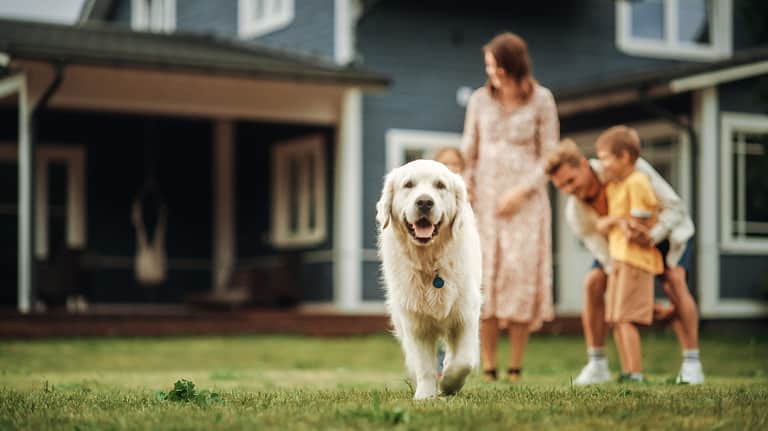
It can be difficult to find the right dog if you live alone and work outside the home, as many breeds just aren’t suited for this lifestyle. You might be wondering, what breeds can be safely left alone? The best dog breeds that can be left alone are those that are independent, rather than bred to work alongside humans. They’re also relatively low energy and able to calm down after getting tired out. In this article, we’ll discuss how long dogs can be left alone, and the five best dog breeds that can be safely left alone.
Dogs Should Not Be Left Alone for More than 4-6 Hours
Generally, it’s important to know that there isn’t a dog breed suited to being left alone all day. While some people leave their dogs for an entire work day, this isn’t advised. The first reason for this is that dogs shouldn’t be expected to hold their bladders for long periods.
Most adult dogs can hold it for 8 hours when pressed, but holding it for this long all of the time can cause health problems like urinary tract infections (UTIs). It’s better for them to empty their bladder every 4-6 hours instead. It’s also not fair to a dog to expect them to go without attention or exercise for longer than 4-6 hours. So, what do you do if you want a dog but work full-time outside the home? Here are some tips.
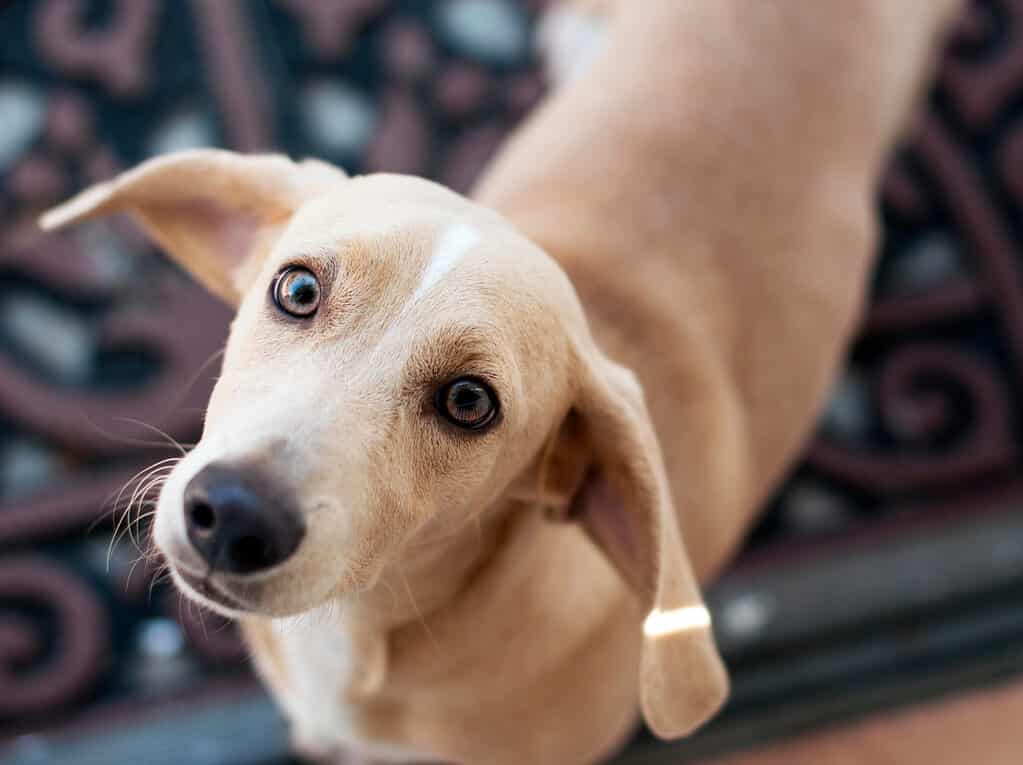
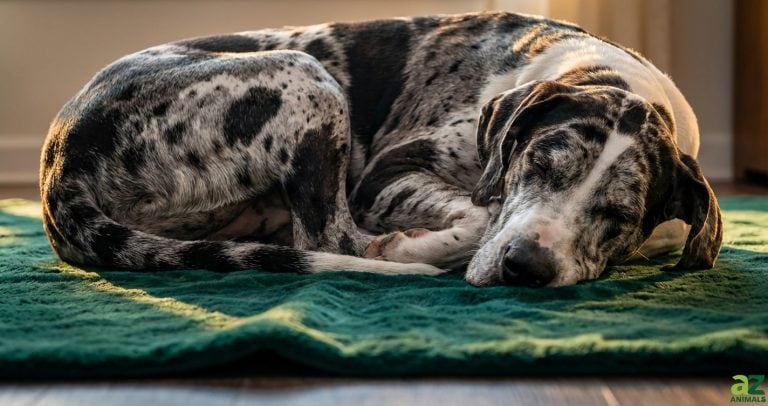
Dogs are not suited to being left alone
©Karen Dole/Shutterstock.com
Adopt an Adult Dog, Not a Puppy
When you adopt a two-month-old puppy, it needs to go out around once every two hours. This gradually increases as the puppy ages. For example, three-month-old puppies can hold it for three hours, four-month-old puppies for four hours, etc. Puppies also need a lot more attention, training, and short bursts of exercise than adult dogs. Puppies are just not compatible with families who are gone most of the day.
Have Others in the Family Care for Them
The ideal home for any dog breed is a family who is home for a large part of the day. This may include partners who work different shifts or older children who leave for school and return home from school at different times.
Adopt More Than One Dog
While two puppies are not generally recommended, you may be able to adopt a bonded pair of adult or senior dogs from a rescue. These dogs are already trained and settled together, and they can provide company for one another while family members are away.
Hire a Dog Walker or Pet Sitter
Another option is to hire someone to come around halfway through your work day to care for your dog. This breaks things up so your dog isn’t alone for more than 4-6 hours, and they get exercise and a potty break. You can also ask friends or family to drop by if they’re willing.
Consider Your Commute
If you work an hour away from home, this means your dog is left alone for the length of your shift plus two extra hours. On the flip side, if you work five minutes from home, you might be able to come home on your lunch break, meaning your dog doesn’t have to be alone the entire day.
Reconsider Adopting Until You Are in a Better Position
If you work overtime, reconsider adopting a dog. Sadly, not everyone can care for a dog properly during every season of their lives. If you frequently work overtime and no one else is home, it’s best to wait until you’re in a better position to adopt.
5 Dog Breeds That Can Be Safely Left Alone
Now that we’ve talked about how no dog should be left for more than 4-6 hours, let’s get into some breeds that have an easier time being alone. When determining these breeds, the following traits were examined:
- Independent, rather than clingy
- Laid back, rather than hyperactive (there are high-energy breeds on this list, but none of the extremely high-energy breeds that need to be occupied most of the day).
- Not bred to work side-by-side with humans or in a pack of dogs.
- Not bred to be lap dogs, as certain breeds within this category can tend toward clinginess and may be prone to separation anxiety, though this is not true of all lap dog breeds.
Remember that it’s best to adopt an adult dog who is used to being home alone. If you’d like your dog to also be lower-energy, adopting a senior is your best bet! As we noted above, avoid adopting a puppy, as they can’t be safely left home alone. They’ll have accidents, get bored, and will likely be destructive.
1. Greyhound
Greyhounds are large dogs that stand 27-30 inches tall and weigh 60-70 pounds. These dogs are sighthounds, which means they were bred to hunt using their sense of sight. Their lithe frames are built for sprinting, so they need a large, enclosed space to run. Greyhounds are prone to chase and shouldn’t be off-leash in an unenclosed space.
These dogs are high-energy and need daily walks, but it doesn’t take much activity to tire them out. They’re content to spend much of the day lounging on the couch. Often compared to cats, greyhounds can also be quite independent and even aloof. They can be trained with patience and positive reinforcement. Make sure to adopt an adult greyhound that is used to being left alone. Some adult greyhounds have separation anxiety as well, so talk with the rescue or shelter to ensure they’re the right fit for you.
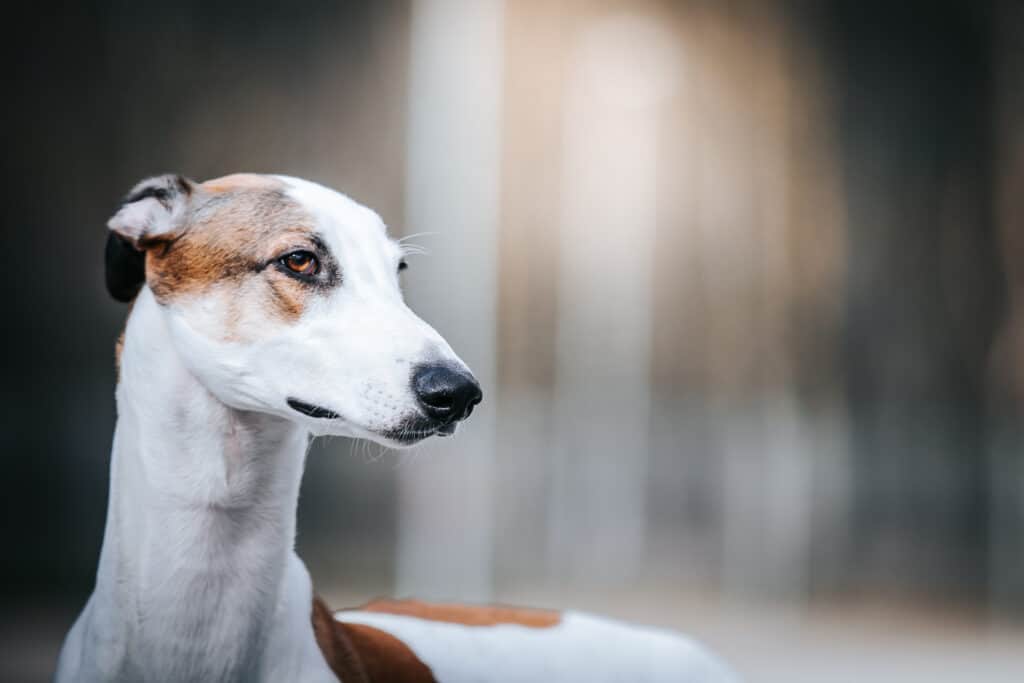
Make sure to adopt an adult greyhound that is used to being left alone.
©Eve Photography/Shutterstock.com
2. Borzoi
Borzois are giant dogs at 26+ inches tall and 60-105 pounds. The Borzoi is another sighthound breed that tends to be independent enough to stay home alone for short periods without issue. They’re also quite laid-back and can lounge in the house while you’re gone, as long as they get enough exercise throughout the rest of the day. Sighthounds are also sensitive dogs. They’re known for being able to sense people’s emotions. They aren’t well-suited to a chaotic or conflict-driven environment, but much prefer peaceful homes.
It may take some time to find a grown Borzoi up for adoption because this isn’t a very well-known breed. This is good for the dogs because it means Borzois aren’t overbred. Another option is to follow sighthound rescue groups and wait, as a Borzoi might show up in one eventually.
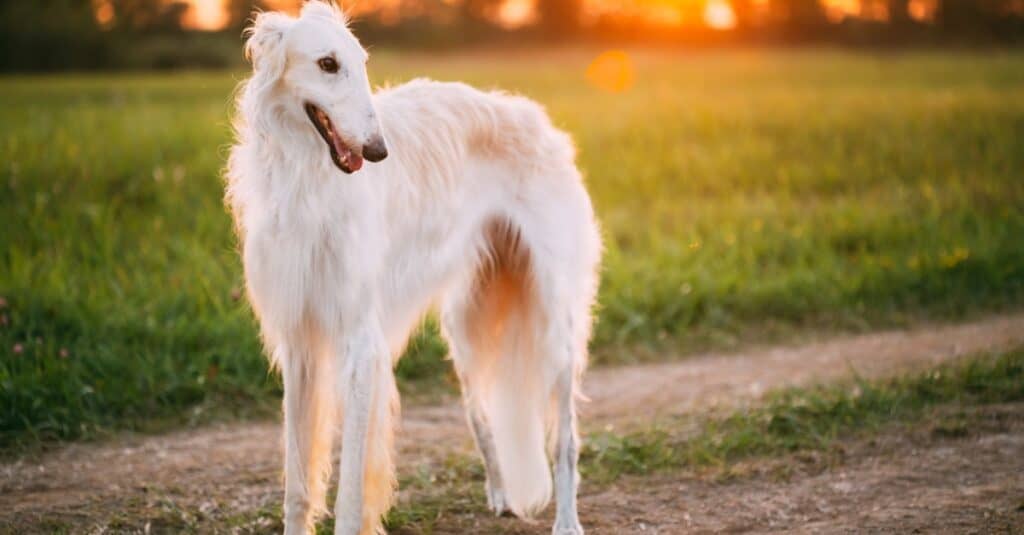
The Borzoi is laid back as long as they get plenty of exercise when their humans are home.
©Grisha Bruev/Shutterstock.com
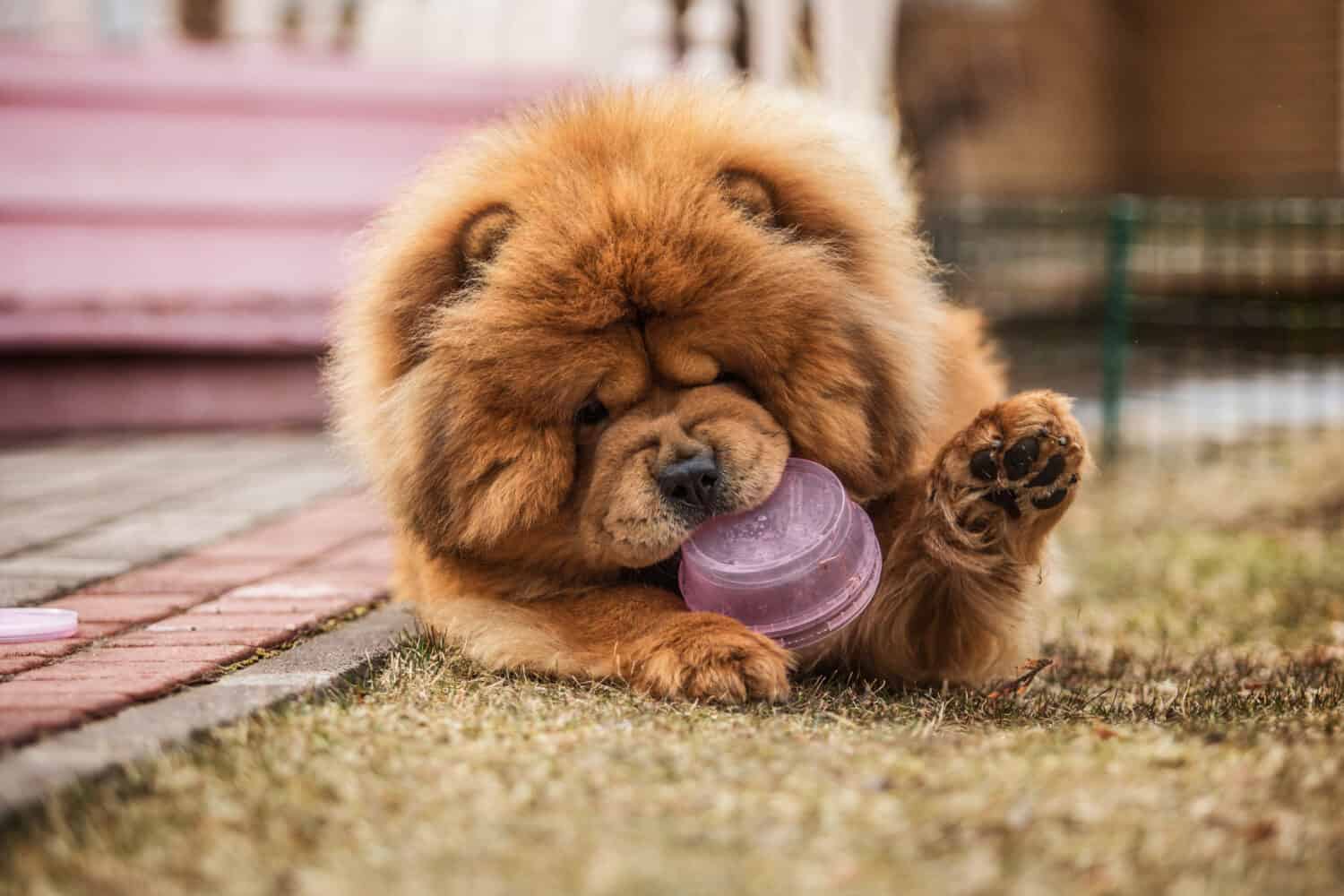
3. Chow Chow
Next on our list is the Chow Chow. These large dogs stand 17-20 inches tall and weigh 45-70 pounds. Chow Chows may not be the best for first-time owners because they can be stubborn and are wary around strangers. Training and socializing your Chow Chow is important to avoid problem behaviors like aggression toward strange people or dogs.
However, they’re quiet and independent with low to moderate exercise needs. Your Chow Chow will need daily walks or a big yard to play in, but the rest of the time they’ll be happy to stay inside and relax. Due to their heavy coats, these dogs are prone to overheating. The best candidate will be a grown shelter or rescue Chow Chow who is aloof but socialized and doesn’t have separation anxiety.
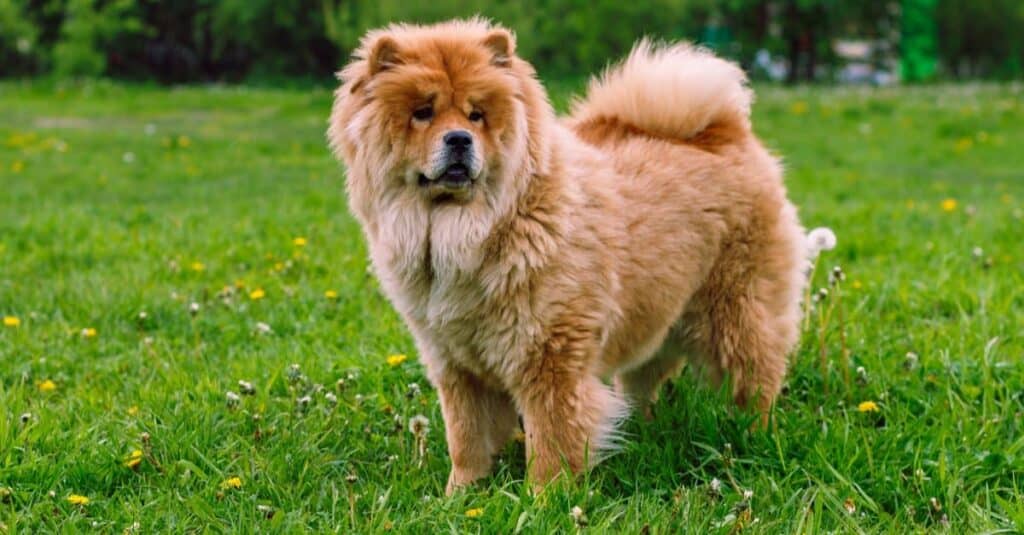
Chow Chows are quiet and aloof with low to moderate exercise needs.
©Flower_Garden/Shutterstock.com
4. Akita
Akitas are large, fluffy dogs. They’re 24-28 inches tall and can weigh anywhere from 60-130 pounds. These dogs are muscular and very protective. They tend to do best as an only pet and are often wary of strangers. Despite their cute appearance, Akitas aren’t the right dogs for most first-time owners. It’s vital that they receive proper training throughout their lives. Akitas tend to be loving with their family, but aren’t typically clingy. They’re also quite playful when they aren’t guarding you or your home.
While they can be laid back indoors when left alone, Akitas need plenty of exercise throughout the day to stay happy and healthy. They’re also smart dogs who need mental stimulation to keep them from becoming bored. Like the other dogs on this list, adopt an adult Akita that suits your lifestyle. A senior Akita is recommended, as these dogs tend to need less exercise than young adult Akitas, and might do better when left alone.
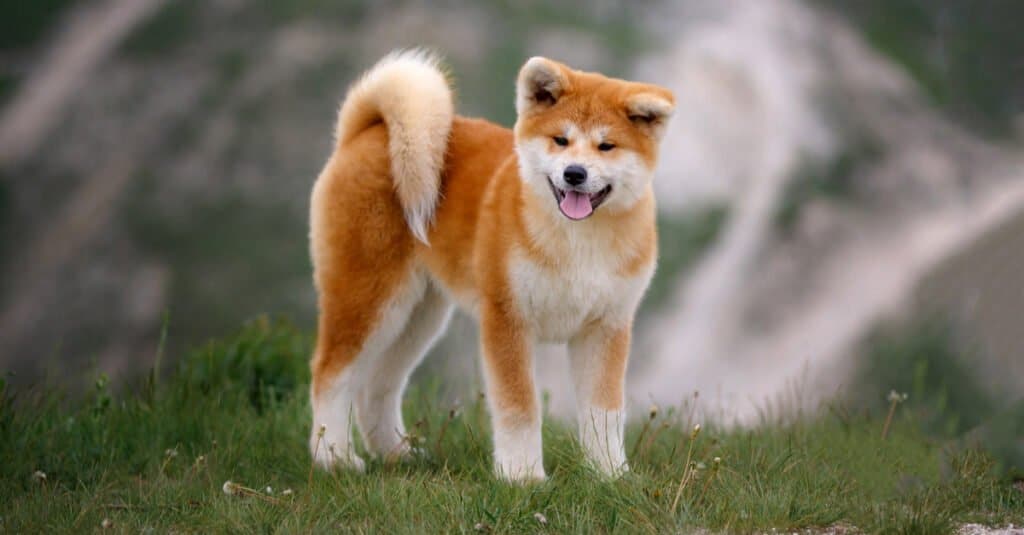
The Akita is a protective, loyal breed.
©Tatyana Kuznetsova/Shutterstock.com
5. Saluki
Salukis are large dogs that grow 23-28 inches tall and weigh 40-65 pounds. They are another sighthound breed, meaning they tend to be affectionate and loyal, but they are generally not clingy. These dogs require plenty of exercise, but afterward, they are content to laze around the house the rest of the day.
Salukis are gentle but independent and tend to be reserved around strangers. They also have a very strong prey drive and are not ideal for families with cats or other small pets. They should also never be off-leash outside, unless they are in their own backyard with supervision. Despite their large size, this breed, as well as the other sighthounds on our list, tend to be good family dogs. You can search for an adult Saluki at a breed-specific or sighthound rescue, but they’re a fairly rare breed in the United States.
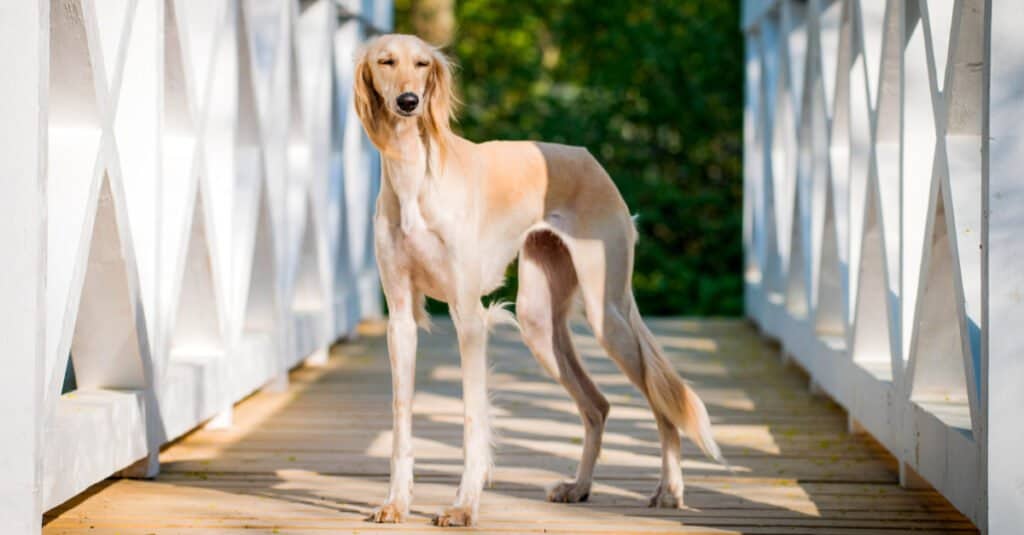
Salukis don’t do well with smaller pets like cats or small dogs.
©Sarune Kairyte/Shutterstock.com
Conclusion
We hope this list helps you find the right dog breed. Remember to look for dogs with an independent nature and relatively low exercise needs, or the ability to stay calm after getting their daily exercise. Avoid breeds that were bred to be lap dogs or very active, as these dogs won’t be happy when left alone.
It’s unfair to leave any dog alone for more than 4-6 hours regularly, though once in a while is okay. Keep in mind that your commute to work and after-work activities will also factor into how long your dog spends alone. Lastly, be sure to adopt an adult dog rather than a puppy, or be committed to having someone at home to raise the puppy until they reach adulthood and can be safely left alone.