
Quick Take
- One GSP color was banned by the AKC for years because it was assumed to prove the dog was a mutt, but science eventually changed everything. Black's AKC history →
- The most popular GSP color pattern isn't the rarest, though the genetics behind rarity will surprise you. Solid liver rarity explained →
- "Liver and white" and "white and liver" are basically same color, but the difference is proportion. White and liver distinction →
- If you spot a GSP in a certain shade, it's almost certainly not purebred, regardless of what the seller may tell you. Non-standard GSP colors →
German shorthaired pointers (GSPs) don’t have many coat colors. According to the American Kennel Club (AKC), they can only be liver, black, or a mixture of liver, black, and white markings. There are seven breed standard colors, and three breed standard markings. In this article, we’ll discuss the genetics of these color patterns, and rank the colors from most common to rarest for German shorthaired pointers.
7. Liver Roan
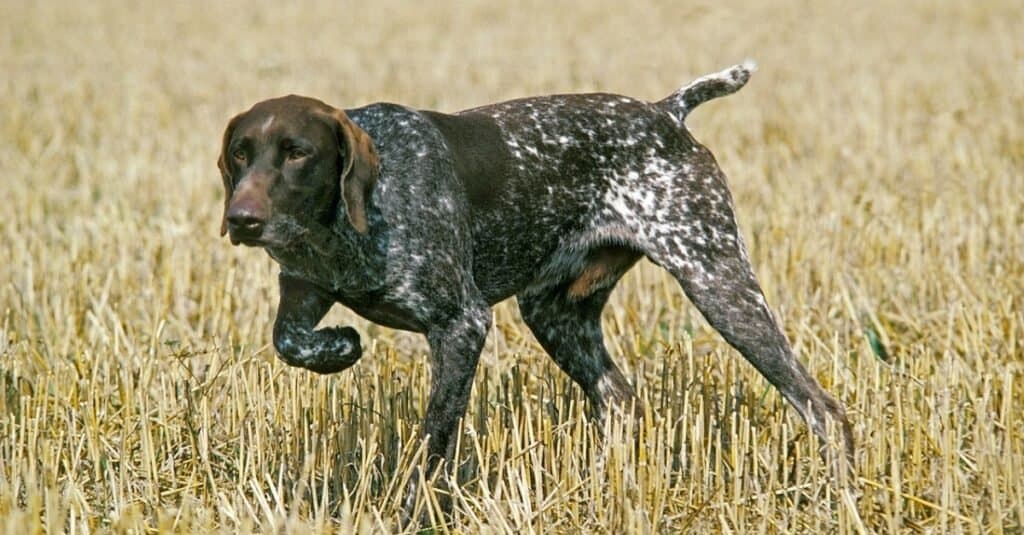
Liver roan dogs have a blend of solid liver-colored hairs and white hairs on otherwise white coats.
©iStock.com/slowmotiongli
The liver roan color pattern is the most popular and thus the most common GSP color. A dog with a roan color pattern has an even mixture of colored and white hairs on areas that would otherwise be solid white. They do not have isolated spots like ticked dogs, but instead, they have liver hairs mixed with their white ones to create a more mottled look.
Dogs with this coat generally appear darker in color than liver and white ticked dogs, discussed below, due to the fully blended hairs. They also tend to have liver patches around their heads, backs, and tails. While liver is a recessive trait, roan is a dominant trait, so only one copy of the roan gene is needed to produce roan puppies. Liver-colored dogs also have brown pigmented skin on their noses, lips, around the eyes, and on the paw pads.
6. Liver and White
Liver and white dogs have a liver base color with white patches or ticking. The white patches are typically seen around the head, ears, back, and tail. Ticking covers the entire body and may be lightly or heavily concentrated. As noted above, a liver-colored dog has a brown nose, lips, and paw pads, as well as brown pigmentation around the eyes.
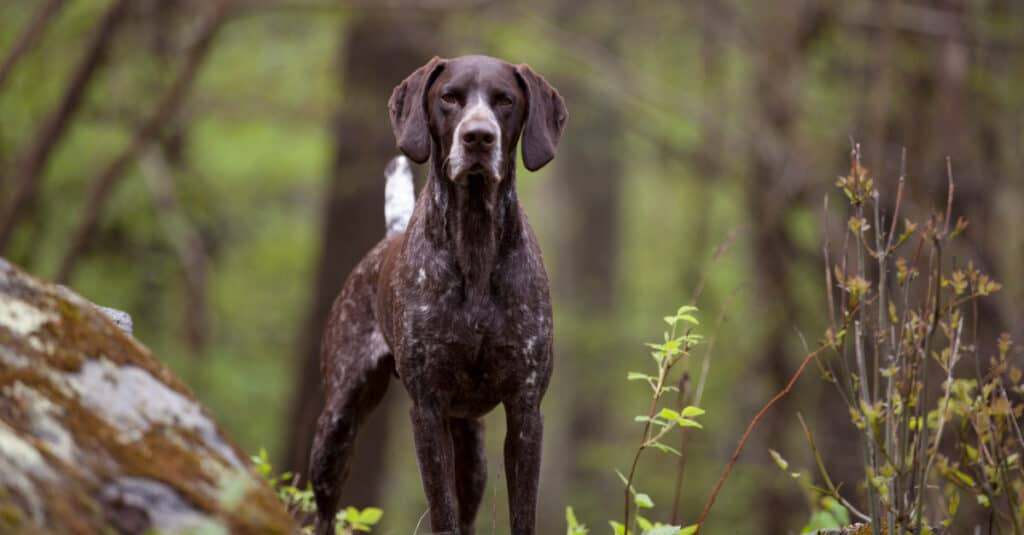
A liver and white GSP typically has a mostly liver base with white patches or ticking.
©iStock.com/BranstonandTwiglet
5. White and Liver
The difference between white and liver vs. liver and white is the distribution of the colors. A white and liver dog has a predominantly white base coat with liver-colored patches, spots, or ticking. Patches are usually seen on the head, ears, back, and tail. A liver GSP of any color pattern will always have brown pigmented skin on the nose, lips, around the eyes, and paw pads.

White and liver dogs may have patches or ticked coats with primarily white bodies.
©iStock.com/BeeBuddy
4. Black Roan
A GSP with a black roan color pattern has black and white hairs growing together all over the body, whereas ticking refers to small black spots on the dog. As mentioned above, roan patterned dogs typically appear to have darker coats and also have patches of black around their heads, backs, and tails. Dogs with black color patterns have black pigmented skin on their noses, lips, around their eyes, and on their paw pads.
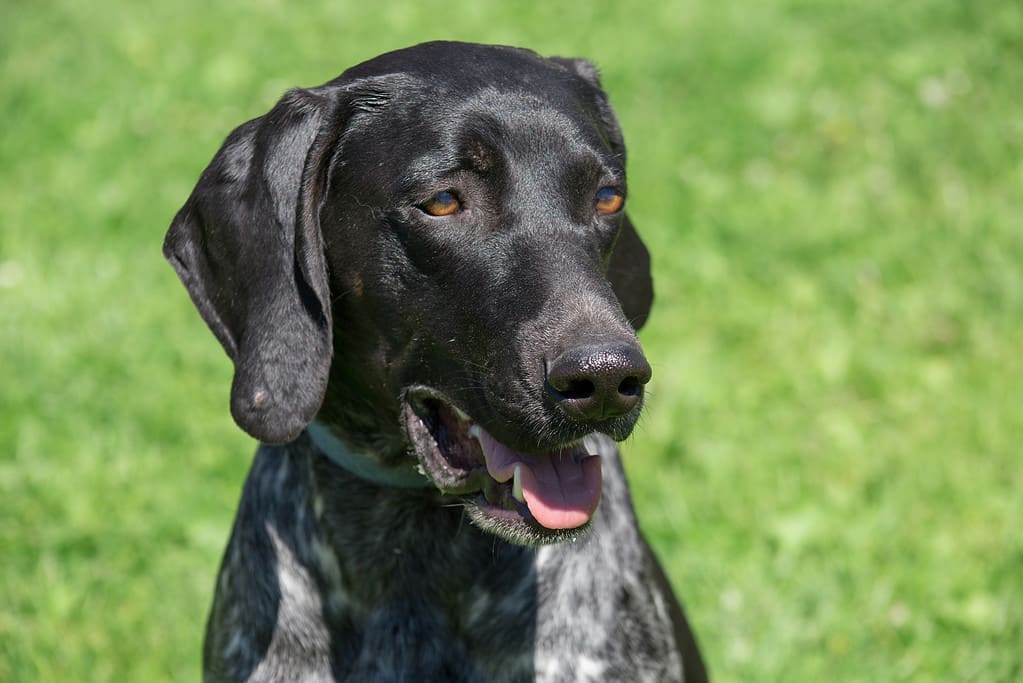
Black roan pups tend to have less white in their coats.
©SergeyTikhomirov/iStock via Getty Images
3. Black and White
Black and white German shorthaired pointers have mostly white coats with black on the head and ears. They may also have other patches of black, black ticking throughout the coat, or roan patterns, as seen in the dog above. These dogs also have black pigmented skin, including the nose, lips, around the eyes, and on the paw pads.

Black and white GSPs are becoming more common now that they’re accepted by the breed standards.
©iStock.com/Flopaganifoto
2. Liver
As noted above, the liver coat color is caused by a recessive gene. Although liver patterning is popular, a solid liver coat color is still rare to see in the breed. Most GSPs have white and liver coats, often with patches, ticking, or a roan pattern.
Liver dogs generally have deep brown coats, similar to the chocolate coat color you see in other breeds. However, liver can range from light to dark shades, as does the skin pigmentation seen on their noses, lips, around the eyes, and paw pads.
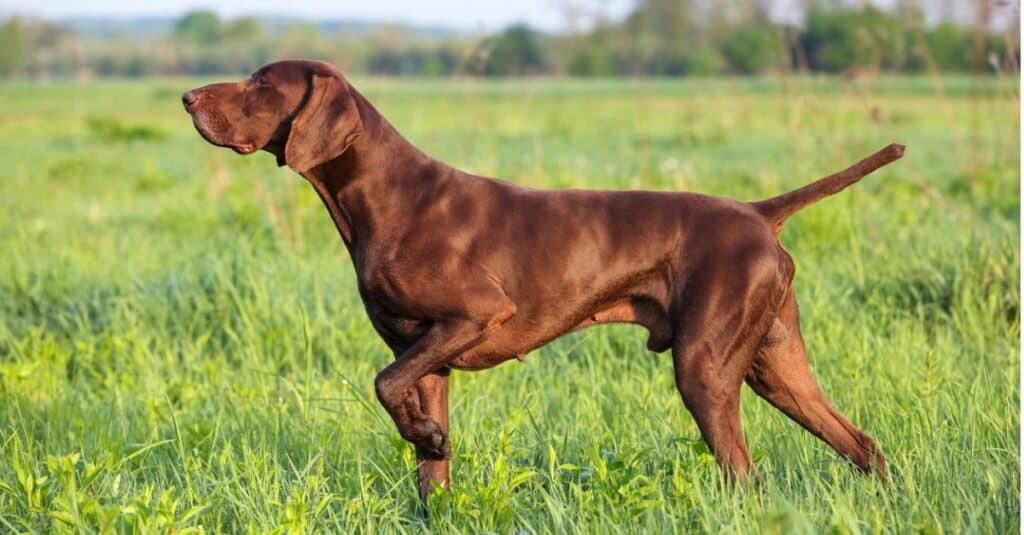
Solid-colored GSPs are less common than those with white base coats.
©iStock.com/vik898
1. Black
A black coat color was historically not accepted by the AKC, though black has been recognized as a standard color in Germany, the country of origin, since the 1930s. Genetic testing has since helped demonstrate that even pure black GSPs are purebred dogs. It’s now considered a standard coat color by the AKC, but pure black coats are still less common.
Although black is a dominant gene—as is the gene for solid-colored coats—it was considered undesirable for a long time. In addition, solid-colored coats are rare to see in the breed. Most have patches or ticking in the coat. Black GSPs will always have black noses. Some liver GSPs have very dark coats, but their lighter noses mean they’re still registered as liver.
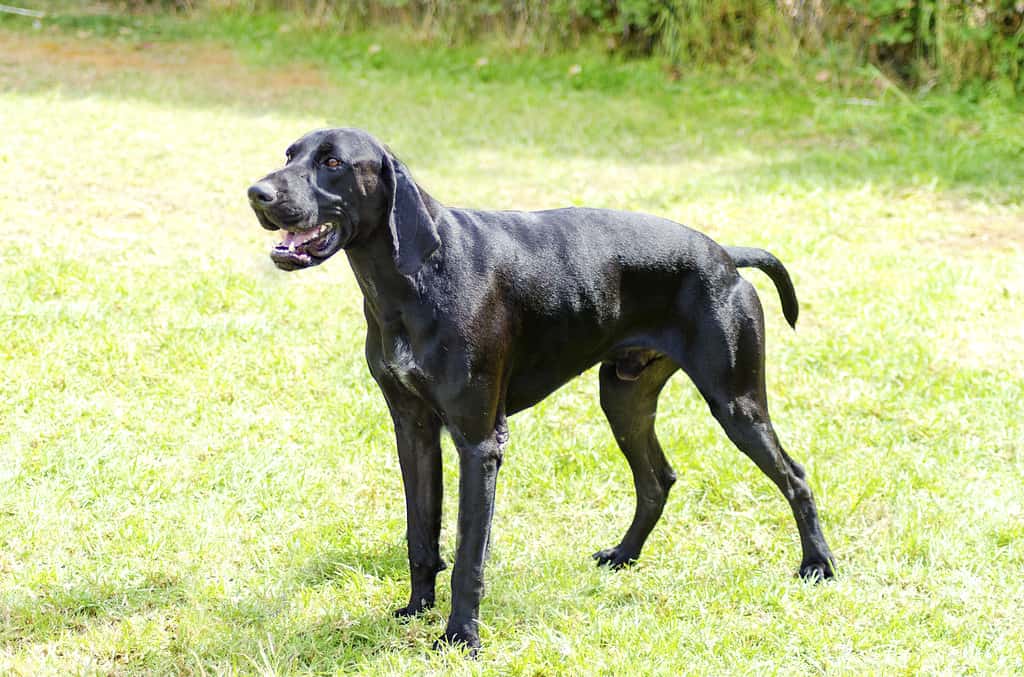
Black GSPs are not really rare, but they’re less common to see than liver, patched, or roan dogs.
©f8grapher/iStock via Getty Images
German Shorthaired Pointer Markings
German shorthaired pointers may have the following markings:
- Patched
- Ticked
- Patched and ticked
Roan is listed as part of the breed standard colors, so it is not included under markings. GSPs can be black and white or liver and white, but never black and liver together.
Puppies are born with all of their patches in place, but you won’t know what their roan or ticked patterns look like until they’re a couple of months old. Until then, they have only their patches and white base coat. Their markings will also darken with age, so your puppy with very light ticking will likely have a darker coat once they’re older.
What Color Eyes Should a German Shorthaired Pointer Have?
GSPs should have dark brown eyes. Lighter yellow eyes are penalized by the AKC, and they do not have other eye colors.
Are There Other German Shorthaired Pointer Colors?
German shorthaired pointers cannot be lemon, orange, or red. If you see them in these colors, the dog is most likely a mixed breed. Many have English pointers in their lineage since the two breeds are very similar.
You also won’t see solid white coats in GSPs. While albino dogs exist, they’re very rare and not accepted by the AKC. Breeders should not purposefully breed albino puppies because they’re prone to health issues.