
Quick Take
- One rare color looks almost identical to a standard AKC color, though one subtle physical detail sets them completely apart. See liver pepper details →
- A breeder charging extra for a rare-colored puppy is actually a warning sign, not a selling point. Spot the warning signs →
- Two completely different coat colors both appear white to the naked eye, but they're not the same dog. Compare white vs. white chocolate →
- Miniature schnauzers require a grooming technique most dog owners have never heard of, and skipping it has visible consequences. Explore grooming requirements →
It’s always fun to see dogs that are different from the norm. For instance, most of us have seen a black miniature schnauzer, but not as many people have seen a reddish-colored one! These rare coat colors aren’t accepted into American Kennel Club (AKC) shows because they are not breed standard colors. In this article, we’ll go over rare and unique miniature schnauzer coat colors and what they look like. We’ll also discuss some other key points when it comes to miniature schnauzers and their fur.
Common Miniature Schnauzer Coat Colors
There are three miniature schnauzer colors recognized as standard by the AKC:
- Black
- Black and silver
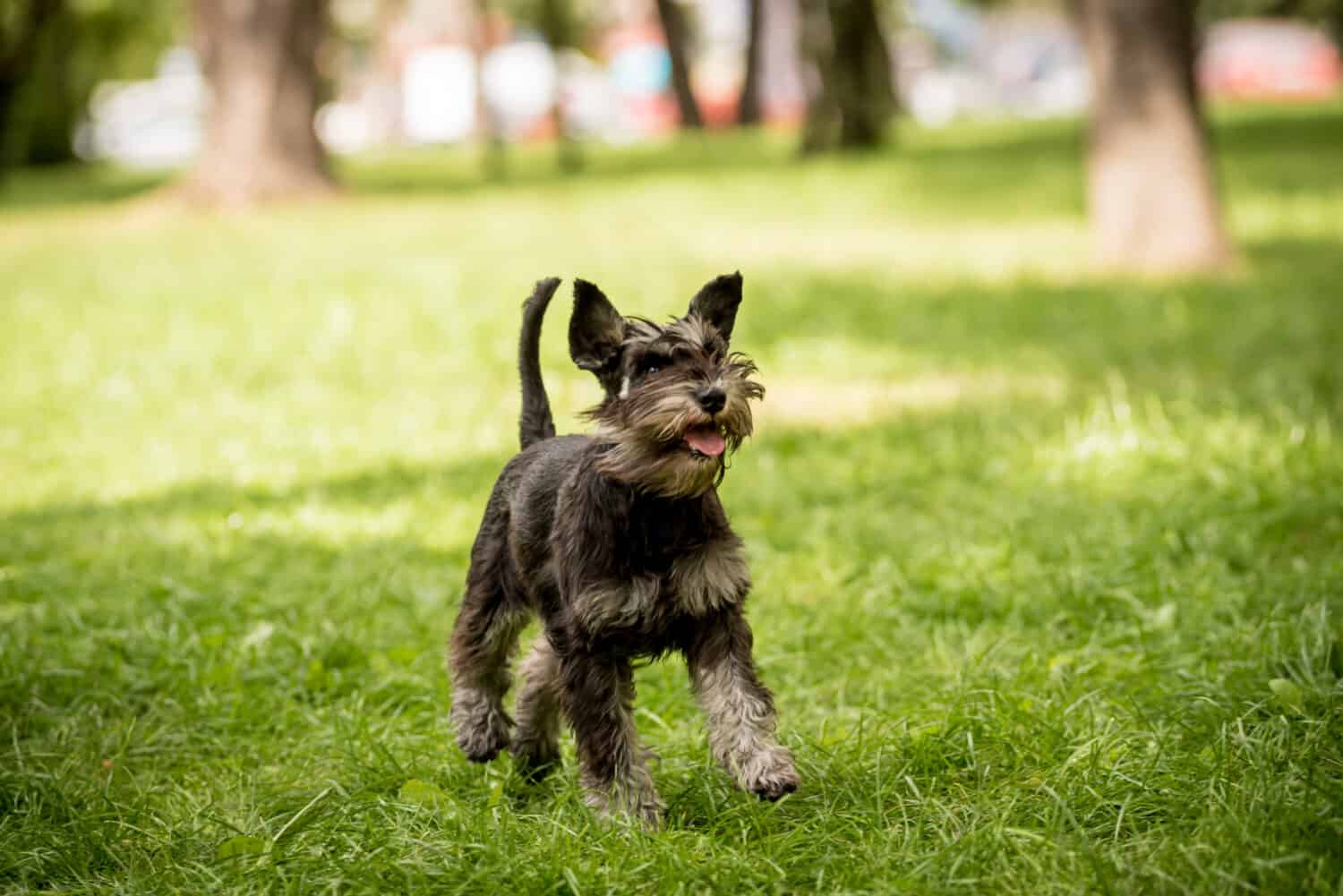
- Salt and pepper
In addition, the breed standard states that miniature schnauzers shouldn’t have white or pink patches of skin. Their noses should be completely black. White spots are disqualifying at AKC shows, with the exception of a small white spot on the chest of a black Schnauzer.
In the United States, you will most commonly see purebred dogs that adhere to AKC standards. This is especially true if you adopt from a reputable breeder, as they tend to adhere to breed standards rather than try to breed rare coat colors for money or popularity.
Rare Miniature Schnauzer Coat Colors
1. Wheaten
Wheaten is one of the rarest colors of miniature schnauzers. Their coats can be pale cream to reddish-orange. These dogs can have brown or black paw pads and a brown or black nose. They typically have brown or hazel eyes, but they can also occasionally be green or blue.

Wheaten miniature schnauzers have cream to reddish-orange colored coats.
©Gene Isenko/Shutterstock.com
2. Liver and Tan
Liver and tan miniature schnauzers tend to have mostly liver-colored coats. The color liver is a dark brown. They have light tan patches typically on their chests, the bottoms of their legs, and on their faces.
3. White
White schnauzer puppies are born with solid white fur. They usually have dark eyes, black paw pads, and a black nose.

White schnauzers have black noses and paw pads.
©MaraZe/Shutterstock.com
4. Liver Pepper
The liver pepper color is similar to the salt and pepper coat color, except that the nose and paw pads are a chocolate brown shade. Their eyes may be hazel to green.
5. White Chocolate
White chocolate pups are simply white in color, sometimes with some cream in the coat as well. They typically have pink skin, brown paw pads, and a brown nose. Their eyes are usually hazel or green.

White chocolate miniature schnauzers have brown paw pads and noses.
©iStock.com/EllenaZ
6. Liver
Liver is a solid dark brown coat color. These dogs also have brown paw pads and noses. Their eyes are generally hazel or green.
7. Parti Coats
“Parti” in miniature schnauzer coats means the dogs have white patches with white skin underneath. These areas lack pigment.
Parti-colored coats you might see include:
- Chocolate parti (also known as liver parti)
- Wheaten parti (also known as cream parti)
- Black parti
- Salt and pepper parti
- Liver and tan parti
- Liver and red parti
- Black and silver parti

Parti miniature schnauzers have white patches alongside another coat color, such as chocolate or black.
©Stephanie Frey/Shutterstock.com
Rare Is Not Always Best
While a coat color outside the norm isn’t an automatic sign of poor breeding, it should raise a red flag, especially if the breeder is charging exorbitant prices for the rare puppies. As always, research your breeder thoroughly before purchasing from them. Most importantly, they should have both parent dogs tested with all recommended genetic health tests. These results should be published and made easily available to you.
Other signs of a reputable breeder are breeding infrequently, keeping the dogs in a suitable home environment that you can visit, and having a waitlist that you can sign up for before the puppies are born. Your contract should always state that, should you need to rehome your puppy, they’ll go back to the breeder. This shows that they care where their dogs end up, and will ensure they never spend time in a shelter.
If your breeder doesn’t have all of the above, run in the other direction! You are dealing with either a backyard breeder or a puppy mill, neither of which breed ethically.
Other Things to Know About Miniature Schnauzer Coats
Aside from color, another unique thing about miniature schnauzer coats is that they have wiry topcoats with smooth undercoats. Their coats take special care and a technique known as hand-stripping. This is typically best done by a professional dog groomer who has experience with wire-coated breeds.
Handstripping involves pulling out dead fur by hand. This dead fur would otherwise become trapped in the coat, giving the dog an unruly appearance and causing mats to develop. Alternatively, miniature schnauzers can have their fur clipped. Regardless, they should see a groomer every four to six weeks and also be brushed regularly at home.