Classification and Evolution
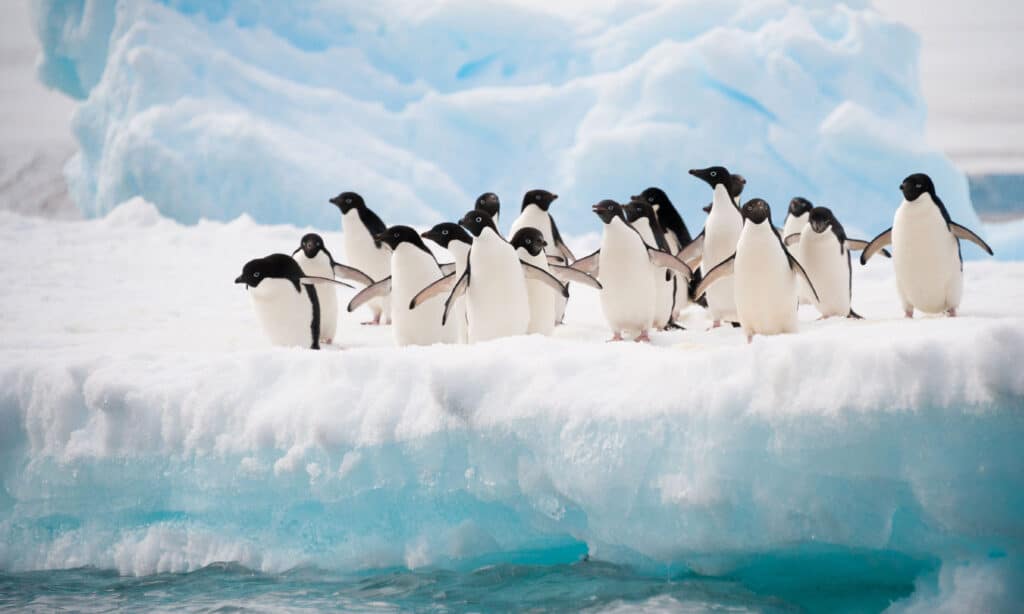
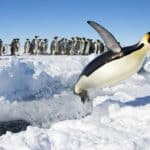
Only two species of penguin call the continent of Antarctica home, the Adélie and the emperor.
©iStock.com/axily
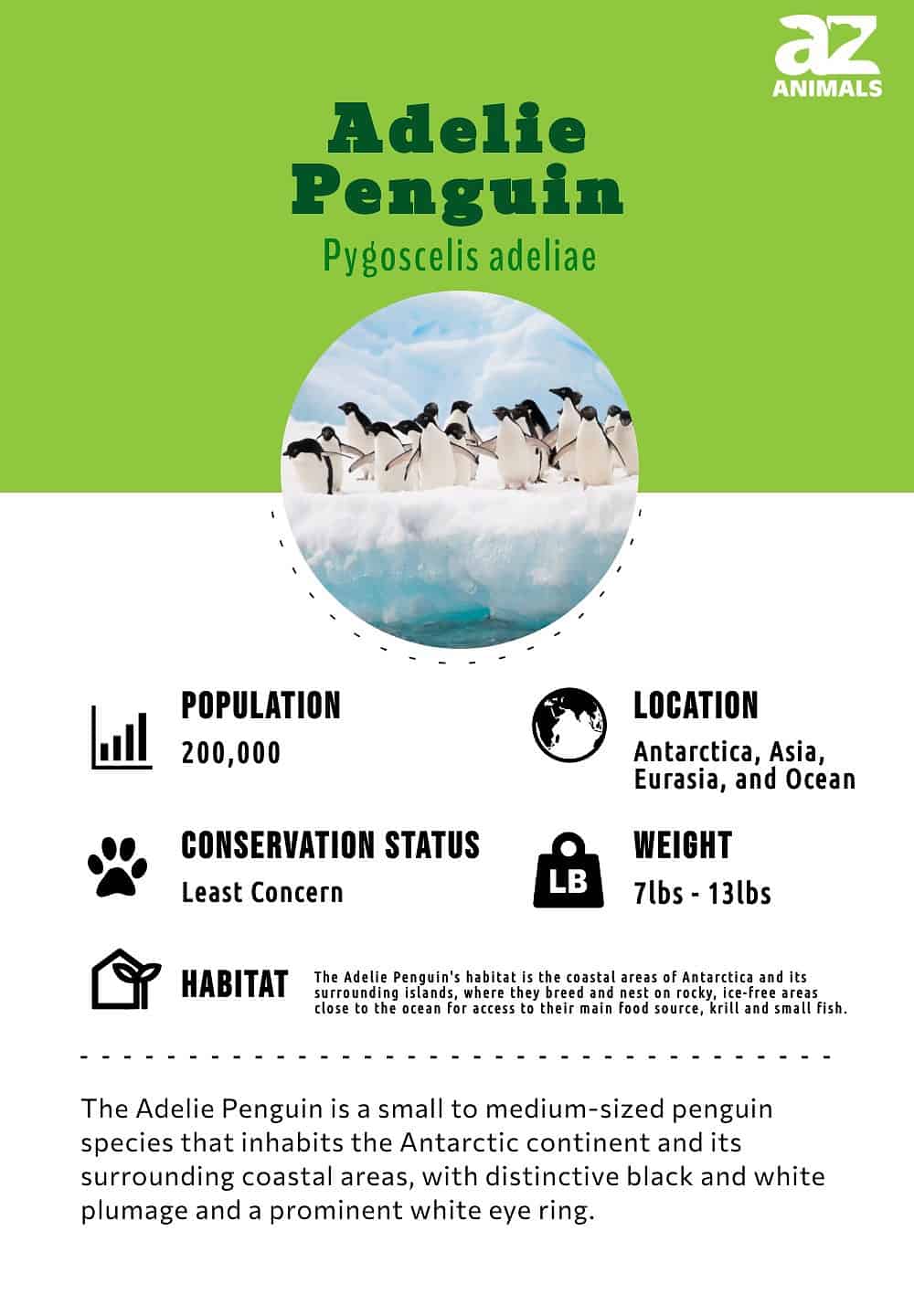
French explorer Jules Dumont d’Urville discovered this penguin in 1840. The species received its name from Adélie Land in France, which d’Urville named after his wife, Adélie.
The Adélie penguin is the smallest and most widely distributed species of penguin in the Southern Ocean. It is one of only two species of penguin that live on the Antarctic mainland (the other being the much larger emperor penguin).
Adélie penguins have adapted well to life in the Antarctic, as these migratory birds winter in the northern pack ice before returning south to the Antarctic coast for the warmer summer months.
Anatomy and Appearance
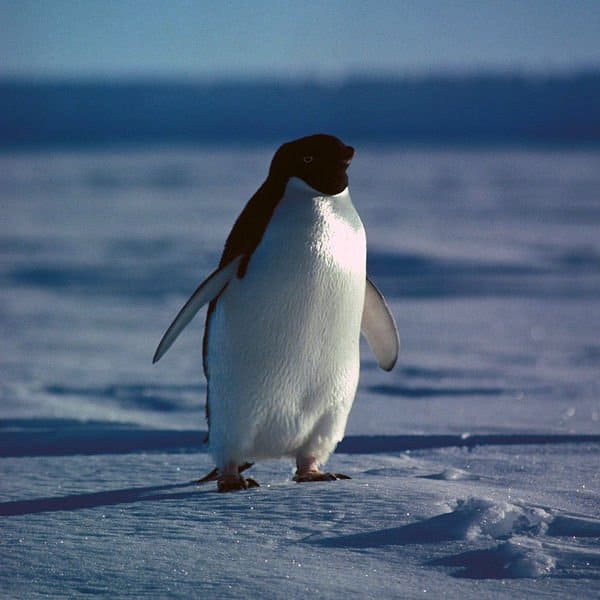
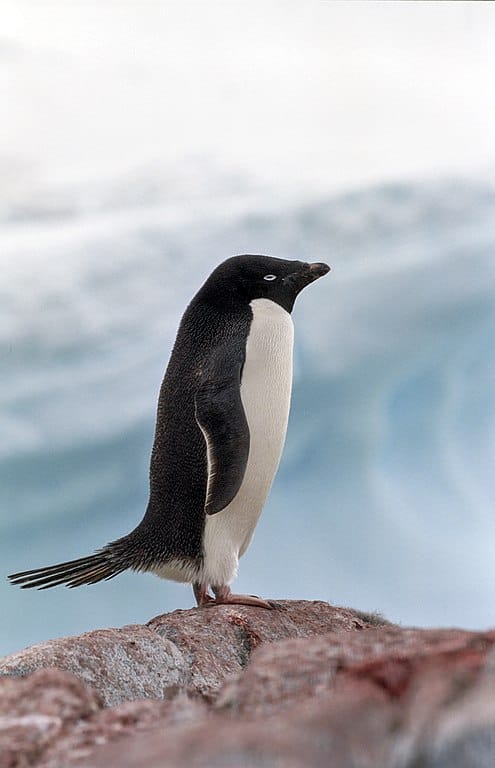
With its unique appearance, one can easily distinguish the Adélie from other species.
©Hannes Grobe, Alfred Wegener Institute for Polar and Marine Research / Creative Commons – Original
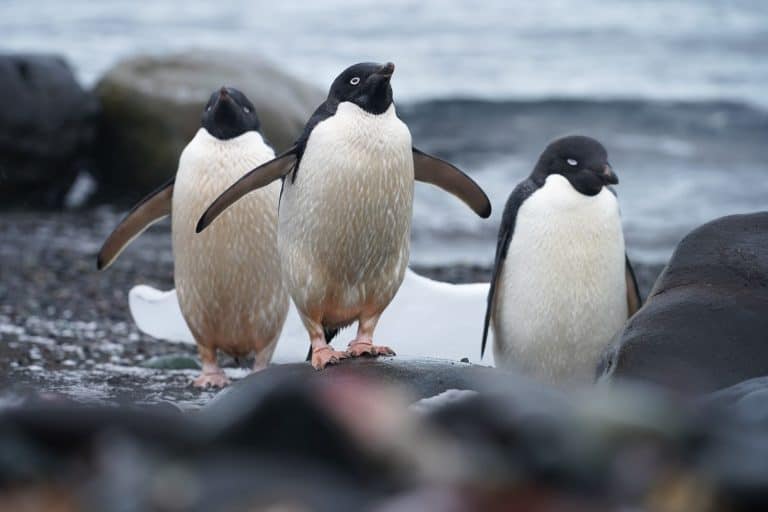
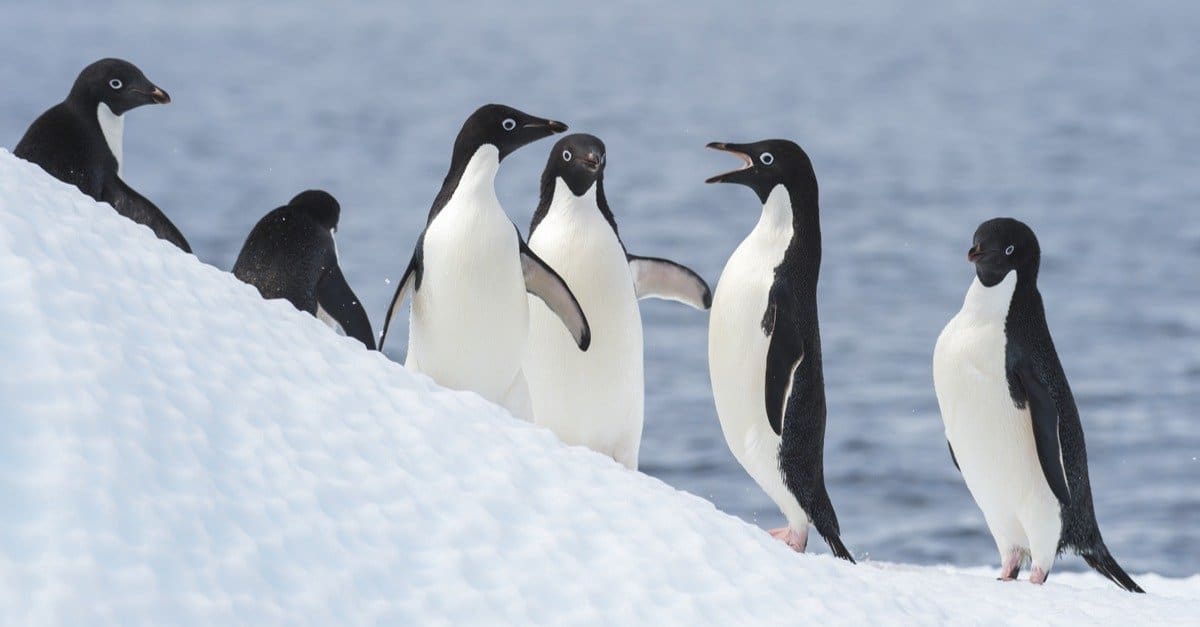
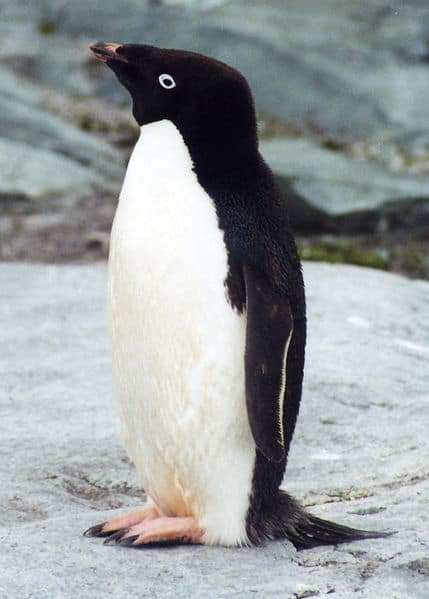
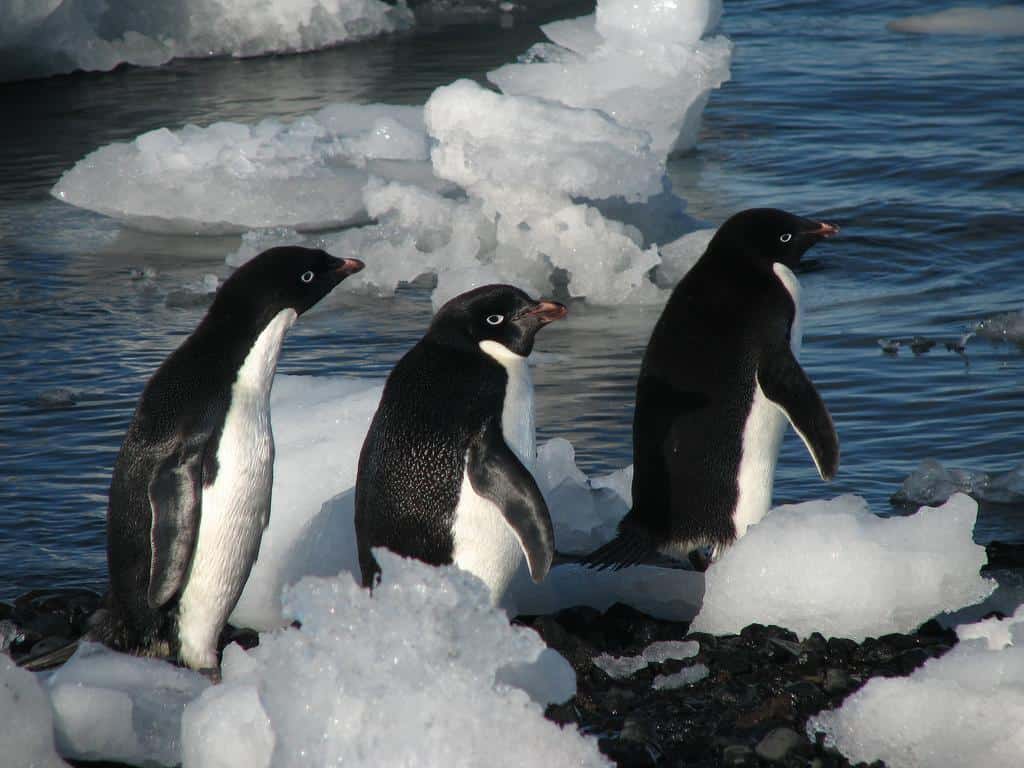
The Adélie penguin is one of the most easily identifiable penguin species. They have blue-black backs and completely white chests and bellies. Their heads and beaks are both black, with a distinctive white ring around each eye.
Their strong, pink feet are tough and bumpy, with nails that aid them in climbing rocky cliffs to reach their nesting grounds, while also helping to push them along when they are sliding (rowing) along the ice. These penguins also use their webbed feet along with their small flippers to propel them along when swimming in cold waters.
Distribution and Habitat
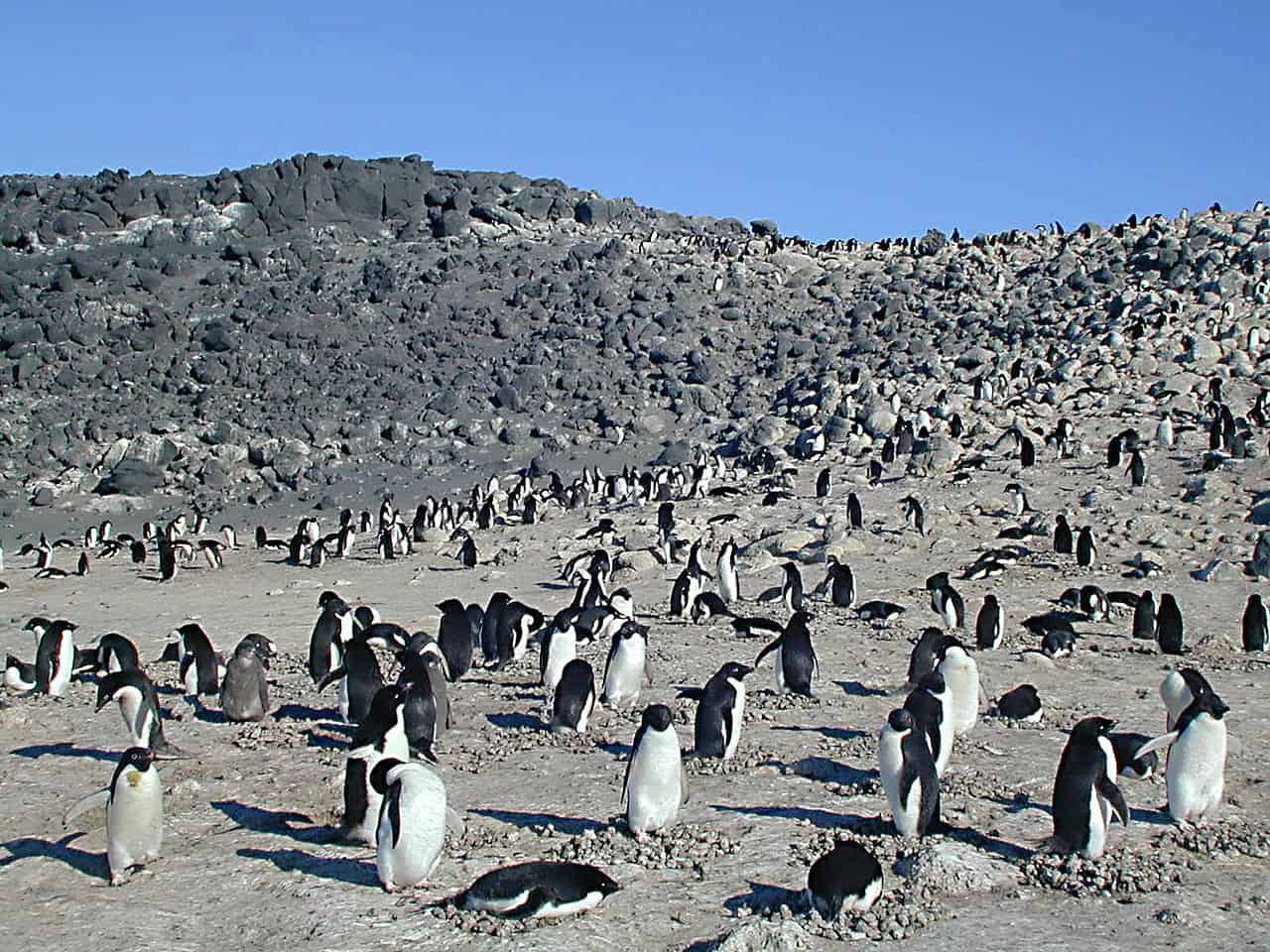
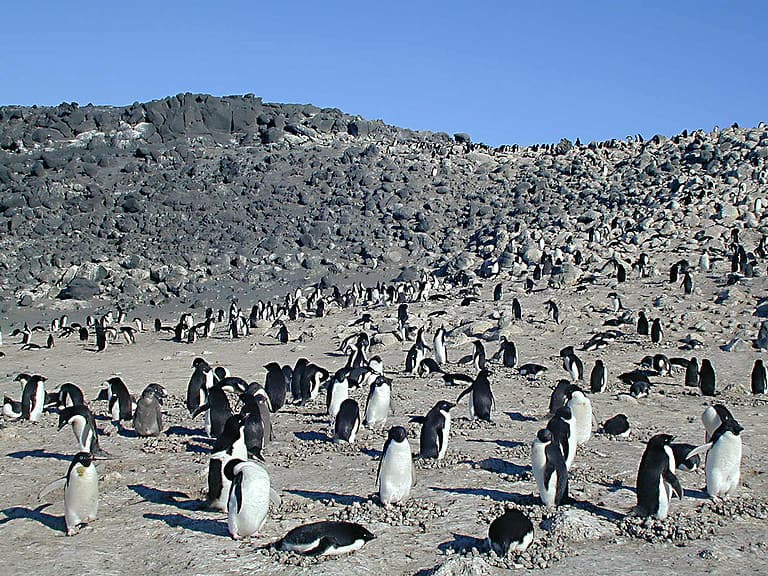
Over half a million Adélie penguins have formed on Ross Island one of the largest animal colonies in the world.
©Peter West, National Science Foundation, Public domain, via Wikimedia Commons – Original / License
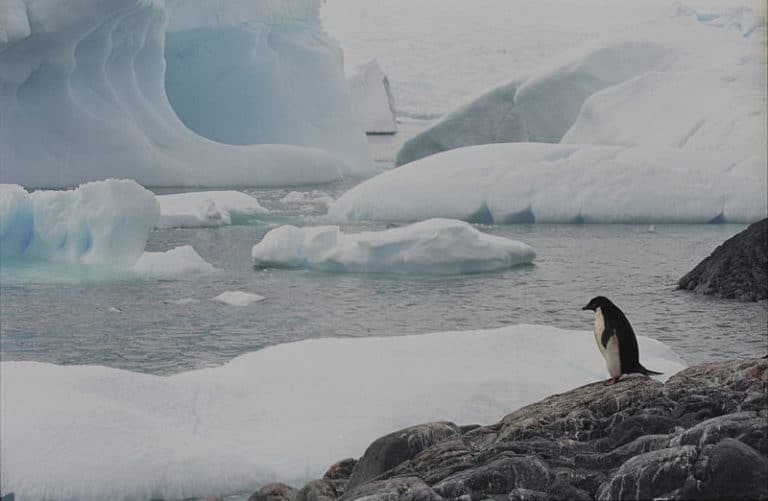
The Adélie penguin is one of the southernmost birds in the world, as it lives along the Antarctic coastline and on the islands close to it. During the winter months, they migrate north, where they inhabit large platforms of ice and have better access to food.
During the warmer summer months, they return south. There, they head for the coastal beaches in search of ice-free ground on the rocky slopes where they can build their nests. More than half a million Adélie penguins have formed one of the largest animal colonies in the world on Ross Island, an island formed by the activities of four monstrous volcanoes in the Ross Sea.
Behavior and Lifestyle
These penguins are as highly social as many other species of penguin.
©lin padgham / Flickr – Original
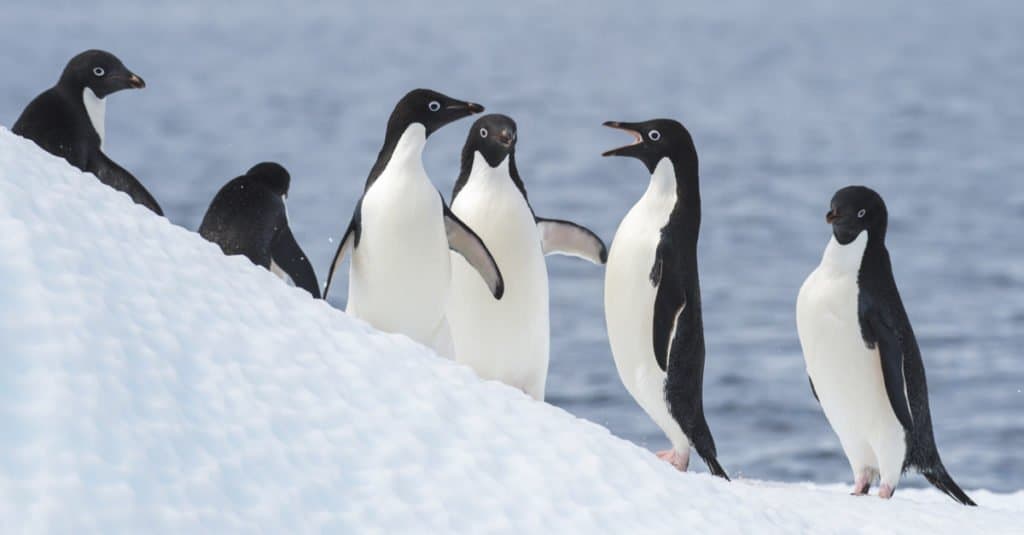
Like all species of penguin, the Adélie penguin is a highly sociable animal, gathering in large groups known as colonies, which often number thousands of penguin individuals. Although Adélie penguins are not terribly territorial, it is not uncommon for adults to become aggressive over nesting sites. Sometimes, they even steal rocks from the nests of their neighbors.
Adélie penguins also hunt in groups, likely because it reduces the risk of hungry predators eating them. Adélie penguins are constantly interacting with one another, with body language and specific eye movements thought to be the most common forms of communication.
Reproduction and Life Cycles
Adélie penguins return to their breeding grounds during the Antarctic summer months of November and December. Their soft feet are well designed for walking on land, making the trek to their nesting ground much easier, as the penguin fasts during this time. Adélie penguin pairs mate for life in large colonies, with females laying two eggs a couple of days apart in a nest built from rocks.
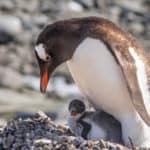
Both the male and female take turns incubating their eggs while the other goes off to feed, for up to 10 days at a time. The Adélie penguin chicks have an egg tooth which is a bump on the top of their beaks, which helps them to break out of the egg.
Once hatched, the parents still take turns looking after their young while the other goes off to gather food. After about a month, the chicks congregate in groups called crèches and are able to fend for themselves at sea when they are between 2 and 3 months old.
Diet and Prey
Adélie penguins are strong and capable swimmers, obtaining all of their food from the sea. These penguins primarily feed on krill, which live throughout the Antarctic Ocean. They also feed on mollusks, squid, and small fish. The record of fossilized eggshells accumulated in the Adélie penguin colonies over the last 38,000 years reveals a sudden change from a fish-based diet to krill, which evidently started about 200 years ago.
Researchers believe this is due to the decline of the Antarctic fur seal in the late 1700s and baleen whales in the twentieth century. The reduction of competition from these predators has resulted in there being an abundance of krill, which the Adélie penguins are now able to exploit as an easier source of food.
Predators and Threats
©vladsilver/Shutterstock.com
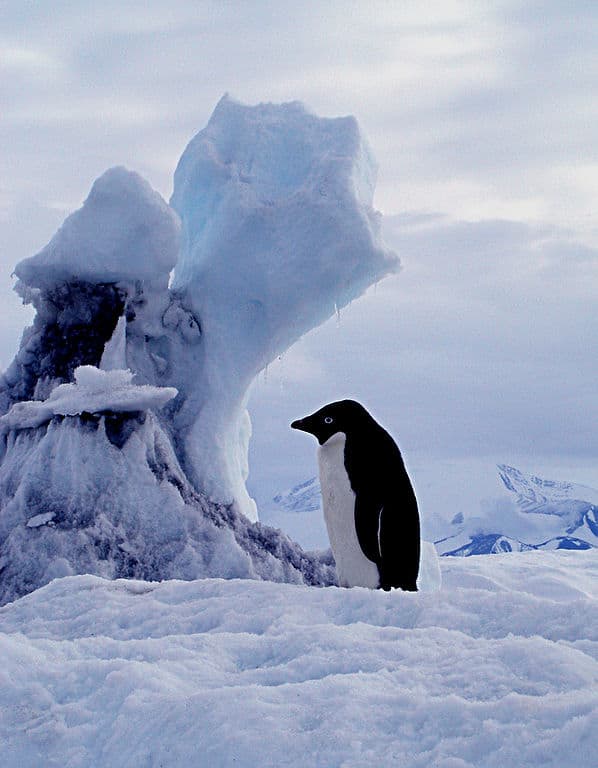
Adult Adélie penguins have no land-based predators due to the uncompromising conditions that they inhabit. In the water, however, the biggest threat to the Adélie penguin is the leopard seal, which is one of the southernmost species of seal and a dominant predator in the Southern Ocean.
These penguins have learned to avoid these predators by swimming in large groups and not walking on thin ice. The killer whale is the other main predator of the Adélie penguin, although they normally hunt larger species of penguins further north. South Polar skuas prey on the Adélie penguin’s eggs if left unguarded, as well as chicks that have strayed from a group.
Interesting Facts and Features
Adélie penguins inhabit one of the coldest environments on Earth and so have a thick layer of fat under their skin helping to keep them warm.
Their feathers help to insulate them and provide a waterproof layer for extra protection. The Adélie penguin is a highly efficient hunter and is able to eat up to 2kg of food per day, with a breeding colony thought to consume around 9,000 tonnes of food over 24 hours.
The flippers of the Adélie penguin make them fantastic at swimming and they can dive to depths of 175 meters in search of food. Adélie penguins do not have teeth as such but instead have tooth-shaped barbs on their tongue and on the roof of their mouths. These barbs do not exist for chewing but instead to assist the penguin in swallowing slippery prey.
For interesting facts, Read “10 Incredible Adélie Penguin Facts.”
Relationship with Humans
A visit to the Adélie penguin colonies has long since been on the program for tourists to the Antarctic, who marvel at the vast numbers of them nesting on the beaches and hunting in the surrounding waters. This has made them one of the most well-known of all penguin species today. Early explorers, however, also hunted the penguins both for their meat and their eggs in order to survive in such uncompromising conditions.
Conservation Status and Life Today
Despite living strictly in coastal Antarctica, Adélie penguins are one of the most common and widespread penguins in the Southern Hemisphere. With more than 2.5 million breeding pairs found throughout southern Antarctica, this penguin has adapted well to its polar habitat. Scientists also use their nesting patterns as indicators of climate change, noticing that they are able to nest on beaches that were previously covered in ice. The Adélie penguin is listed as Least Concern.
Adélie Penguin Pictures
View all of our Adélie Penguin pictures in the gallery.

Hannes Grobe, Alfred Wegener Institute for Polar and Marine Research / Creative Commons
How to say Adélie Penguin in ...
Sources
- David Burnie, Dorling Kindersley (2011) Animal, The Definitive Visual Guide To The World's Wildlife / Accessed February 3, 2009
- Tom Jackson, Lorenz Books (2007) The World Encyclopedia Of Animals / Accessed February 3, 2009
- David Burnie, Kingfisher (2011) The Kingfisher Animal Encyclopedia / Accessed February 3, 2009
- Richard Mackay, University of California Press (2009) The Atlas Of Endangered Species / Accessed February 3, 2009
- David Burnie, Dorling Kindersley (2008) Illustrated Encyclopedia Of Animals / Accessed February 3, 2009
- Dorling Kindersley (2006) Dorling Kindersley Encyclopedia Of Animals / Accessed February 3, 2009
- Christopher Perrins, Oxford University Press (2009) The Encyclopedia Of Birds / Accessed February 3, 2009
- Animal Diversity Website / Accessed February 3, 2009
- About Antarctica / Accessed February 3, 2009
- Penguin World / Accessed February 3, 2009
- Antarctic Connection / Accessed February 3, 2009
- Animal Corner / Accessed February 3, 2009
- American Scientist / Accessed February 3, 2009
- National Geographic / Accessed February 3, 2009