



“The axolotl is the rarest species of salamander.”
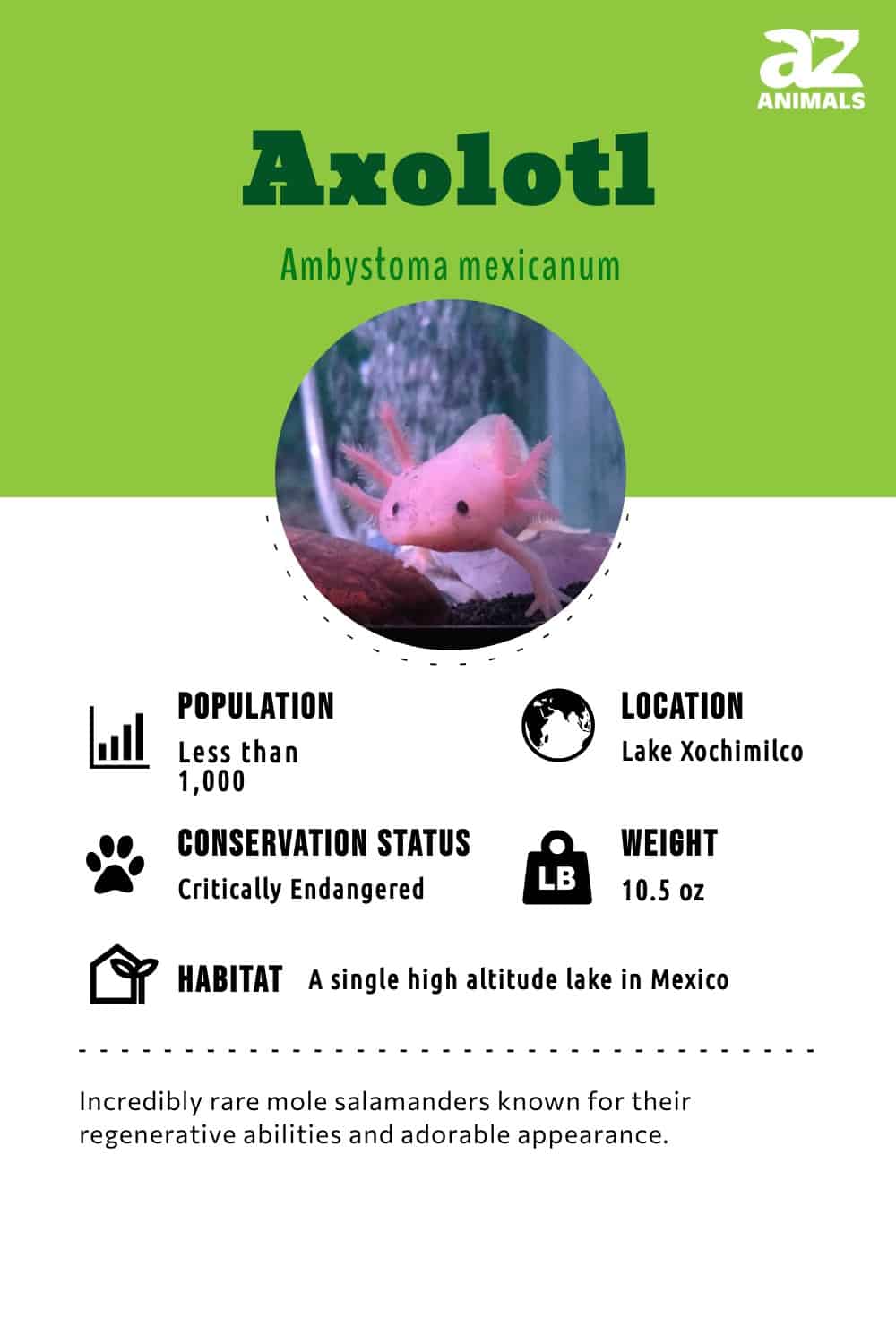
Axolotls are often referred to as “Mexican walking fish,” but they are actually amphibians that prefer to live their entire lives underwater. These remarkable creatures can regenerate almost every part of their bodies if necessary, including their spines, internal organs, and even some parts of their brains. They have a very unique appearance and are extremely popular as exotic pets, but they can also be found in captivity at zoos, laboratories, and breeding facilities. There are almost none of these creatures left in the wild.
Incredible Axolotl Facts
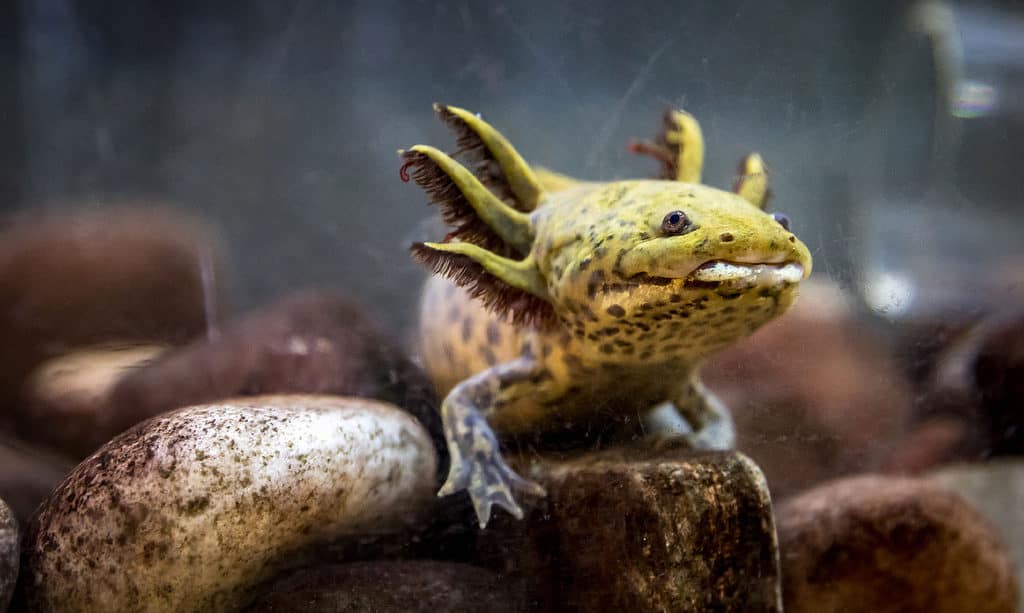
Axolotls are one of the only salamanders to spend most of their lives underwater.
©iStock.com/Gerardo Martinez Cons
- Axolotls can regenerate their limbs as well as their spines, brains, and nearly every other body part.
- They exhibit a trait called neoteny, which means that they never outgrow their juvenile characteristics like other salamanders. For example, they have both gills and lungs.
- The name “axolotl” means “water monster.”
- They are commonly called “Mexican walking fish” even though they are not fish at all.
Scientific Name
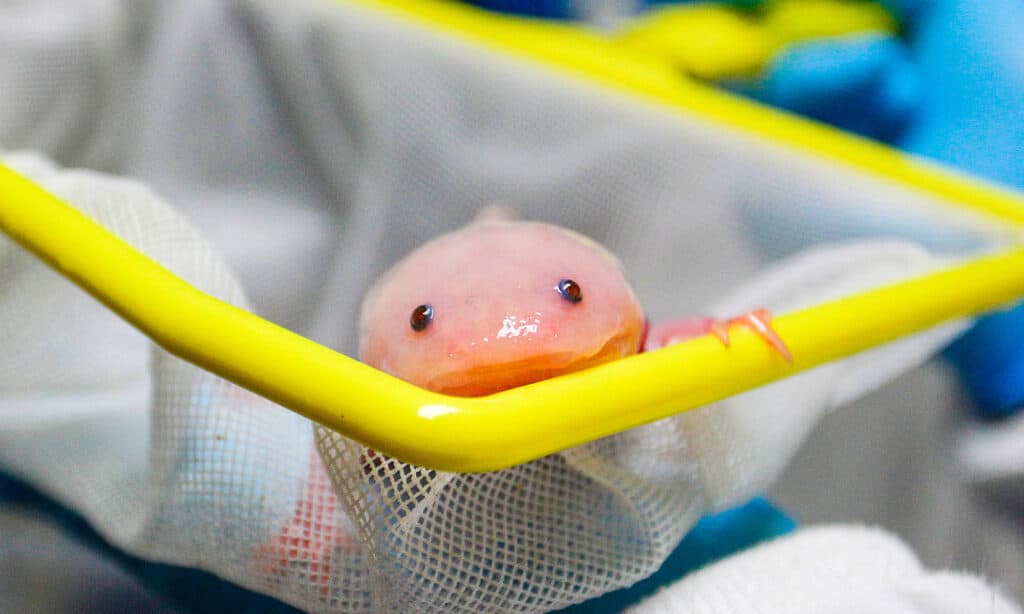
Some believe axolotls get their scientific name from their distinct mouths.
©Guillermo Ossa/Shutterstock.com
The axolotl’s scientific name is Ambystoma mexicanum. There is some debate regarding the origin of the name, however. The genus was named by Johann Jakob von Tschudi in 1839, and he did not provide information regarding the derivation of the name.
Some believe that he meant for the name to be Amblystoma, which means “blunt mouth” and is derived from the Latin ambly, or “dull,” and stoma, or “mouth.” Because it’s unclear whether or not Tschudi made an error, the genus name remains unchanged.
Appearance

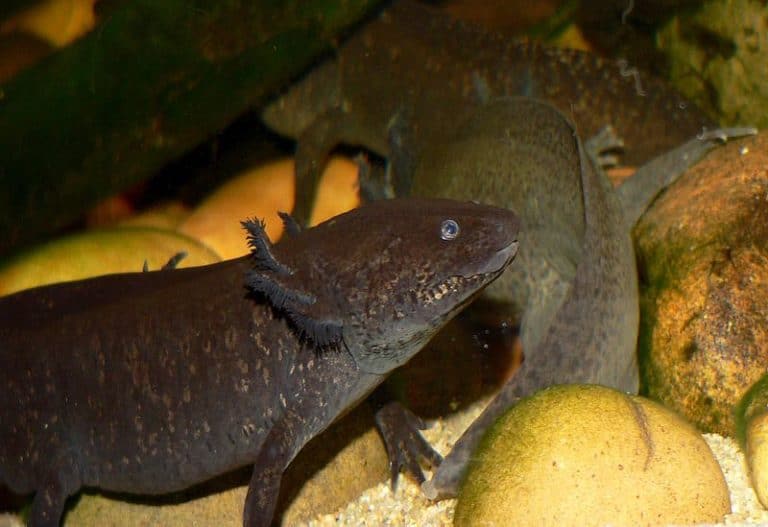
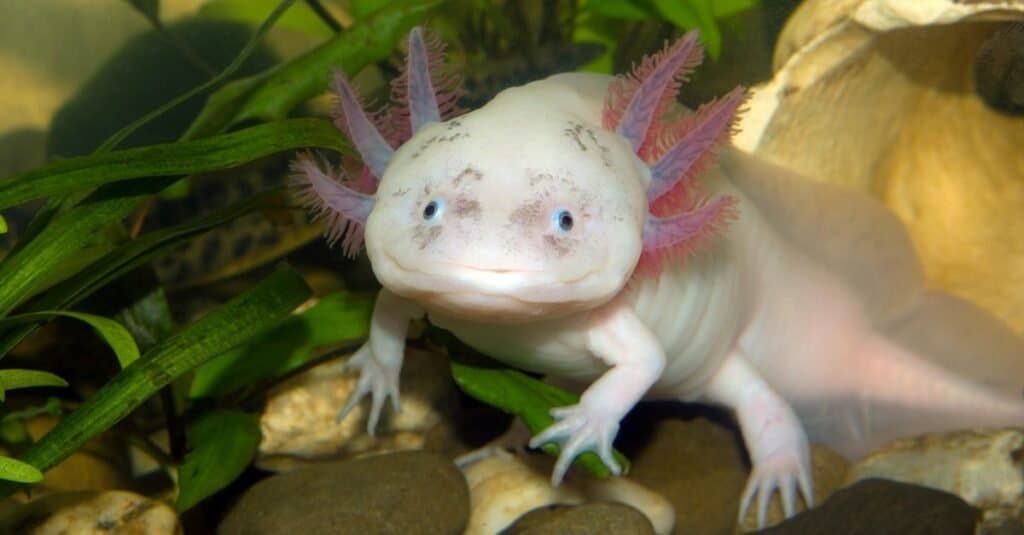
Axolotls can have a variety of different color variations. Normal axolotls are an olive-tan color with gold speckles, but there are genetic mutations that can cause different coloring. Leucistic axolotls display pale white or pink skin with black eyes. Albinos have vibrant gold skin and matching eyes. Axanthic types are gray with black eyes. And melanoids are solid black with no other coloring. In addition to these natural mutations, exotic pet breeders will also intentionally cross-breed certain variants to produce new and interesting color combinations for novelty purposes.
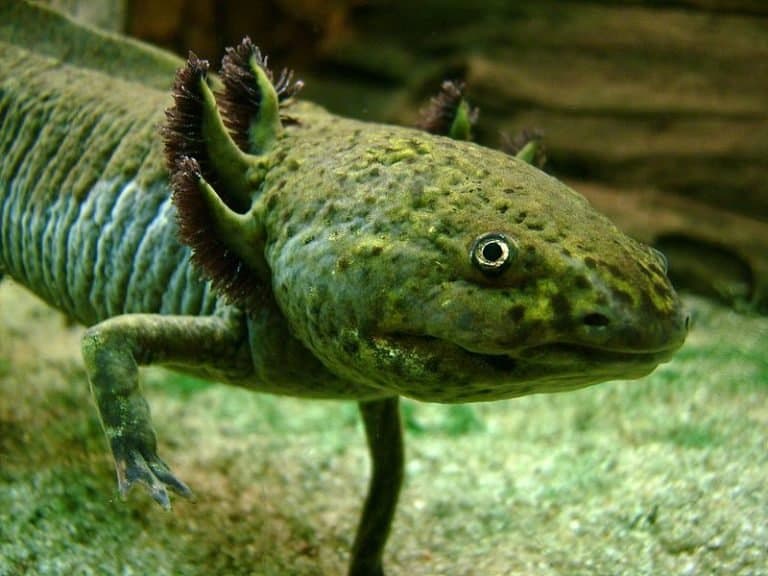
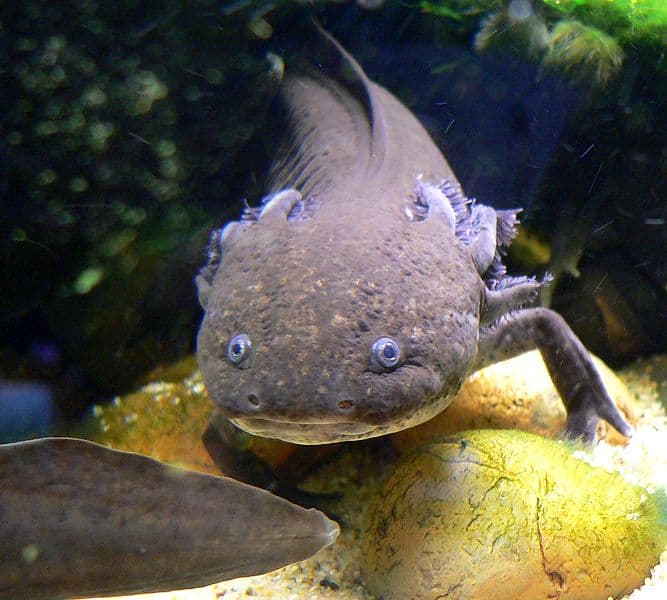
Male and female axolotls can grow to be up to 18 inches long, but the average size is typically around 9 inches. They can also weigh up to 8 ounces. They have wide, somewhat flat heads with lidless eyes and thin mouths that appear to be smiling. They both have three branched gills that protrude from either side of the head, and they retain their larval dorsal fin throughout their lives. In addition, their limbs are small and underdeveloped, and they feature long, slender digits that resemble fingers.
Once they reach sexual maturity, both males and females are easy to tell apart. Males develop a large, swollen cloaca, and their tails typically grow longer. Females develop much wider bodies because they can carry anywhere from 300 to 1,000 eggs at a time.
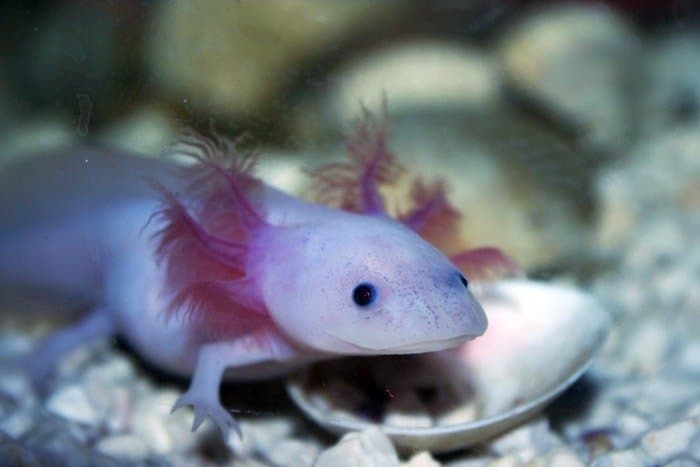
Axolotls are easy to spot from their bristled gills on the side of their head.
©Orizatriz, CC BY-SA 3.0, via Wikimedia Commons – Original / License
Behavior
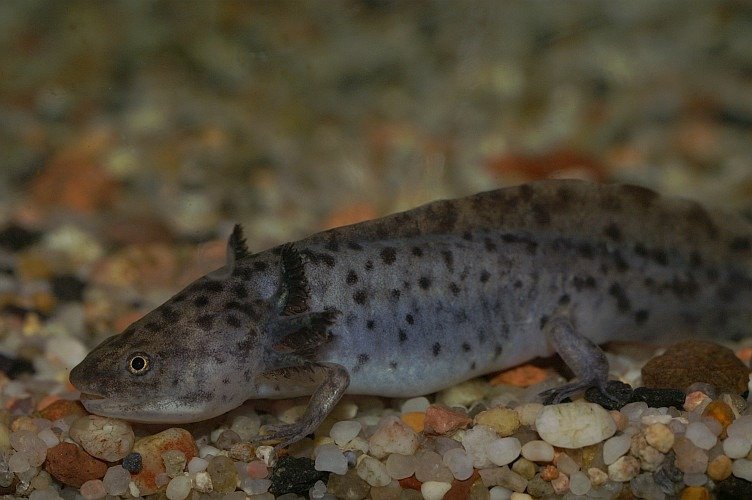
Axolotls are relatively shy creatures.
©Pmalkowski Przemysław Malkowski, CC BY 3.0, via Wikimedia Commons – Original / License
In general, axolotls are solitary creatures. They prefer not to interact with humans, and they live by themselves in the wild unless they are mating, often hiding among plants and rocks at the bottom of the lakes in which they live.
Evolution
©Spok83/Shutterstock.com
From an evolutionary perspective, axolotls are comparatively extremely young in contrast to other Mexican salamanders. Scientists estimate that they have only been in their native habitat for about 10,000 years. These creatures did not have long to flourish, for around the thirteenth century their home began to be settled by humans. After the land was claimed by Spain in the 1500’s urbanization began to rapidize until the area became modern day Mexico City, leaving but a tiny fraction of the axolotl’s biome for them to dwell. Biologists have taken note of how axolotls express traits in adulthood that other amphibians only show during adolesence, like breathing underwater, and hypothesize that this could be because of their incredibly brief chance to evolve before their populations became seriously threatened.
Habitat

Lake Xochimilco is the only place in the world where axolotl can be found in the wild.
©Faviel_Raven/Shutterstock.com
Axolotls are native to the Valley of Mexico and can only be found in the Lake Xochimilco region. In the past, they could also be found in Lake Chalco, but every acre of land in that area is now dry in order to prevent flooding, so these creatures had to migrate.
Despite the fact that they are part of the salamander family, they live entirely in the water. The waters of Lake Xochimilco are usually about 65 degrees Fahrenheit, which is right at the edge of the 60-65 degree comfort zone that these creatures prefer to live in. They can be found at the bottom of the lake surrounded by plants and rock structures in which to hide.
Population
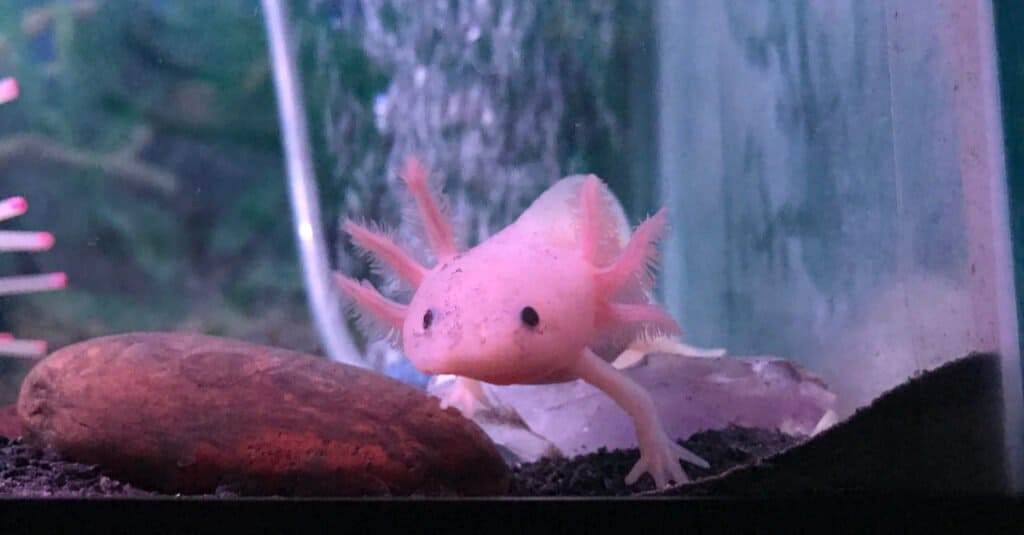
Axolotls are almost extinct in the wild.
©Meggyn Pomerleau/Shutterstock.com
Currently, the IUCN has currently listed the axolotl as a critically endangered species, and this means that they are on the brink of becoming extinct in the wild. The price of Mexico City’s urban sprawl has caused a severe decline in the population, and as the demands of Mexico City have steadily increased, more of this creature’s native surroundings in the Lake Xochimilco area has been drained or contaminated, and this habitat loss is a major contributing factor to their population decline.
Researchers are not sure exactly how many axolotls exist in the wild currently, but the most optimistic estimate is in the hundreds. The most recent count showed fewer than 30 axolotls per acre in their natural habitat, so their numbers are incredibly low. They are bred extensively in captivity as pets and food, however, so their conservation status is complicated.
Diet
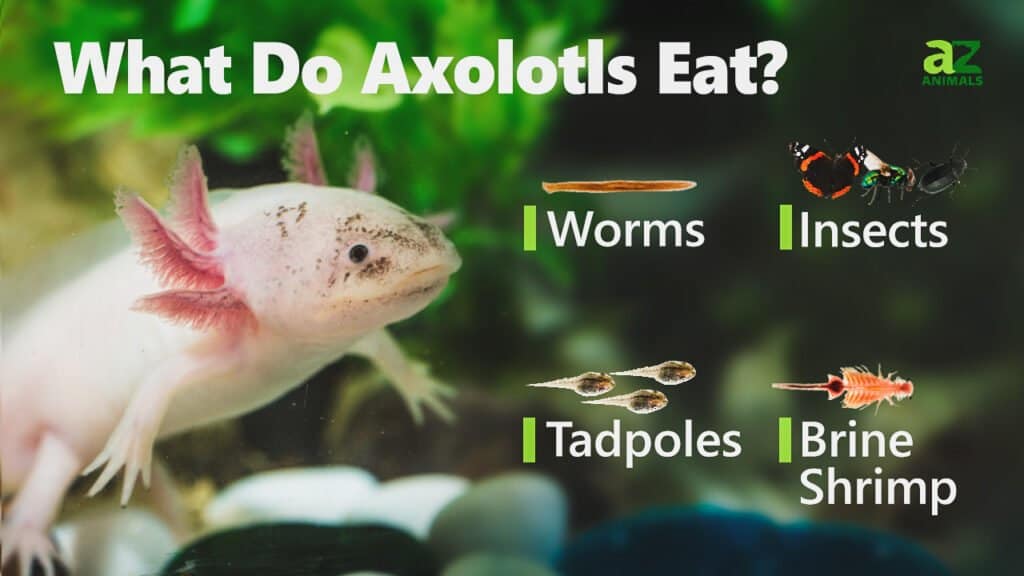
The axolotl is carnivorous, and in the wild, it will typically eat worms, crustaceans, small fish, mollusks, insects, and insect larvae. The ones that live in captivity are usually fed a diet that consists of salmon pellets, black worms, bloodworms, white worms, and Daphnia. Anyone keeping one of these creatures as a pet should be sure to feed it a protein-rich diet in order to keep it healthy. For a complete list of foods axolotls eat, check out our “What Do Axolotls Eat?” page.
Predators
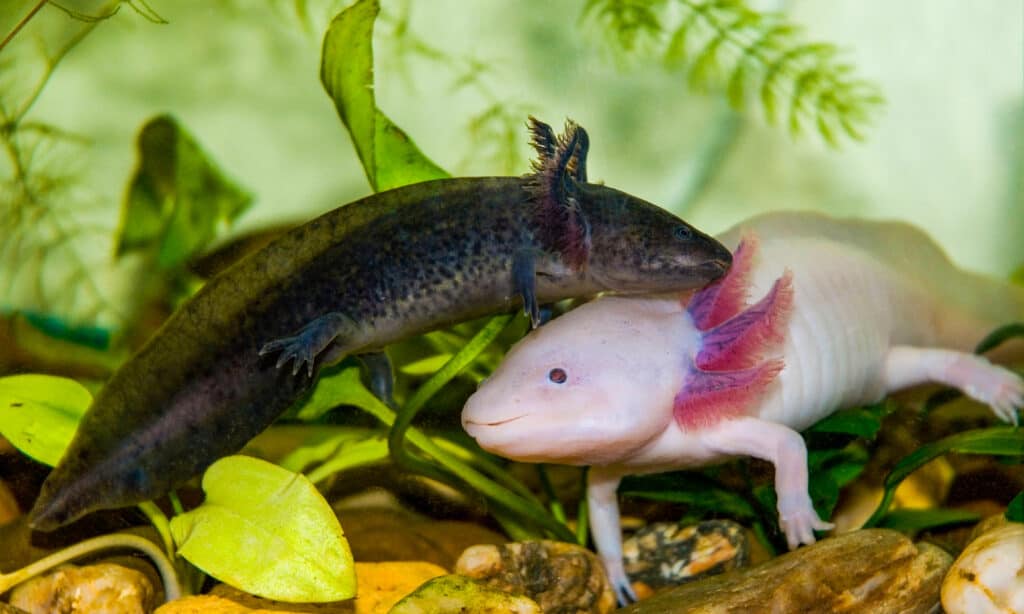
Humans have been the biggest detriment to axolotl’s habitat.
©iStock.com/Vitaliy Halenov
Axolotls face a number of threats from both human and animal predators. Roasted axolotl is considered a delicacy to many, and there are also huge numbers of people who capture them to sell for profit.
The introduction of non-native species such as the Asian carp and African tilapia has also hurt the wild axolotl population because these fish will eat their young as well as the small prey that they survive on.
Reproduction, Babies and Lifespan
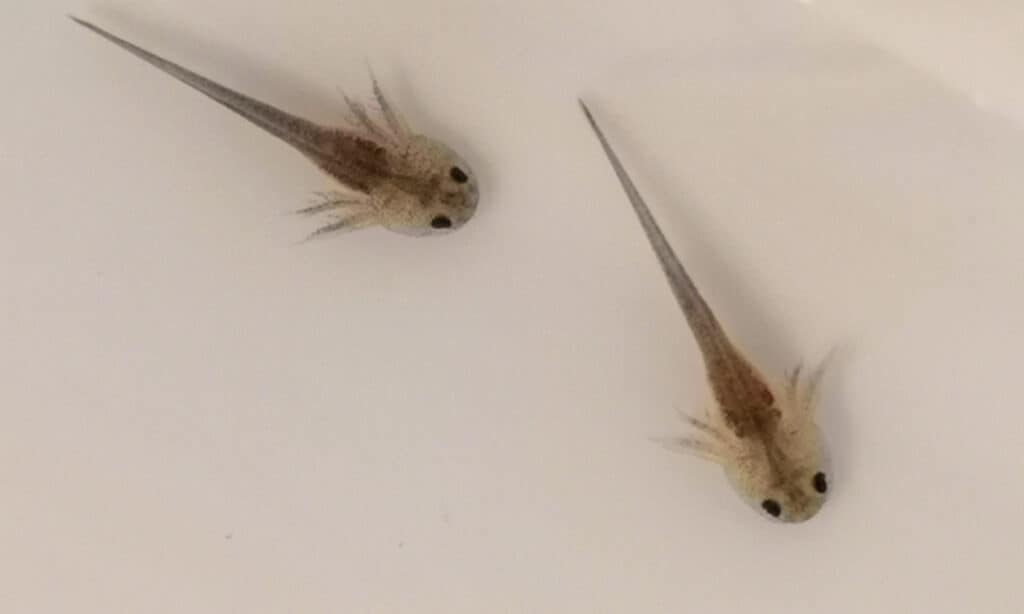
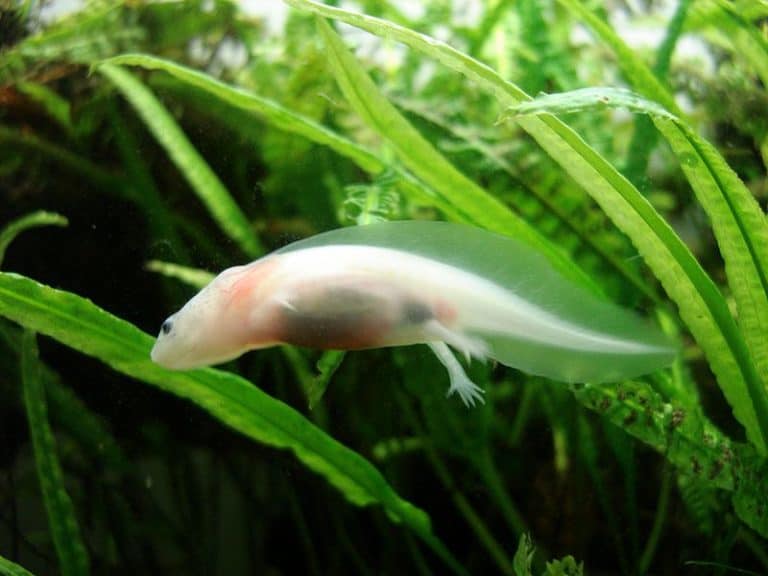
Baby axolotls look a lot like tadpoles, though you can already distinguish them by their branched gills.
©rachata klahan/Shutterstock.com
In the wild, axolotls typically live up to 15 years. In captivity, their lifespan is usually longer, and they can live up to 25 years. These creatures generally reach sexual maturity around 18 months. Some may take up to 24 months to reach full maturity, but they are always still in their larval form when maturation happens.
Axolotls breed in late winter or early spring, and their mating rituals involve a courtship dance that relies on a combination of visual and chemical signals that allow the female to find and insert the sperm capsules that the male deposits for her.
Females can lay anywhere from 100 to 1,000 eggs in a single spawning. Each egg is laid individually, and females prefer to lay their eggs on plants when possible. The eggs will hatch after incubating for 14 days at 75 degrees Fahrenheit, and the larvae will begin eating within their first few hours of life. Baby axolotls will remain larvae even as they reach sexual maturity, that’s because axolotls never leave their larvae stage! In fact, if you inject an axolotl with iodine it will force a metamorphosis that sees them lose their gills and turn into a type of salamander.
Axolotl parents do not care for their larvae. In fact, they are not averse to eating their own eggs or their own babies. This is something that breeders and pet owners must carefully account for.
Keeping an Axolotl as a Pet
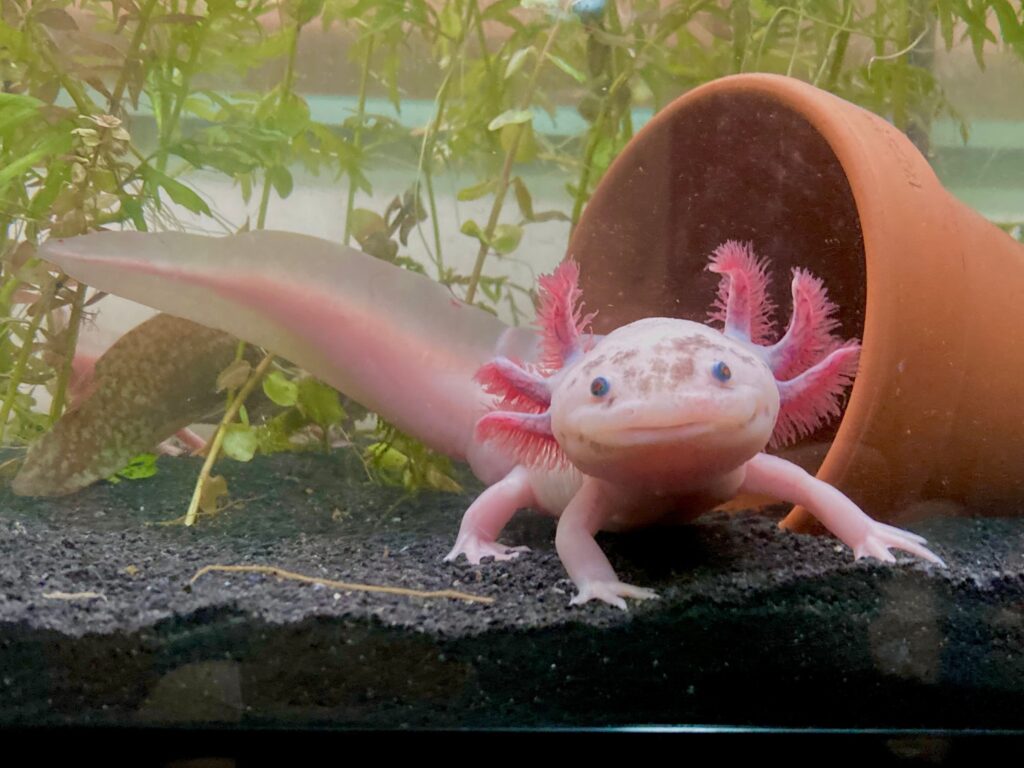
Axolotls are becoming increasingly popular aquarium pets.
©axolotlowner/Shutterstock.com
Axolotls have become popular in the exotic pet trade. They can make great pets, but be aware that they can be challenging for beginning pet owners who haven’t previously cared for amphibians. Axolotls require large water tanks and relatively uniform water temperatures that accommodate their sensitive skin. Purchasing an axolotl generally costs about $20 to $70 but the real expense will come from tank set-ups, keeping an axolotl fed, and potential vet check-ups. Keep in mind that axolotls can live over 10 years in captivity, so purchasing one as a pet can be a long-term commitment.
Axolotl in Zoos
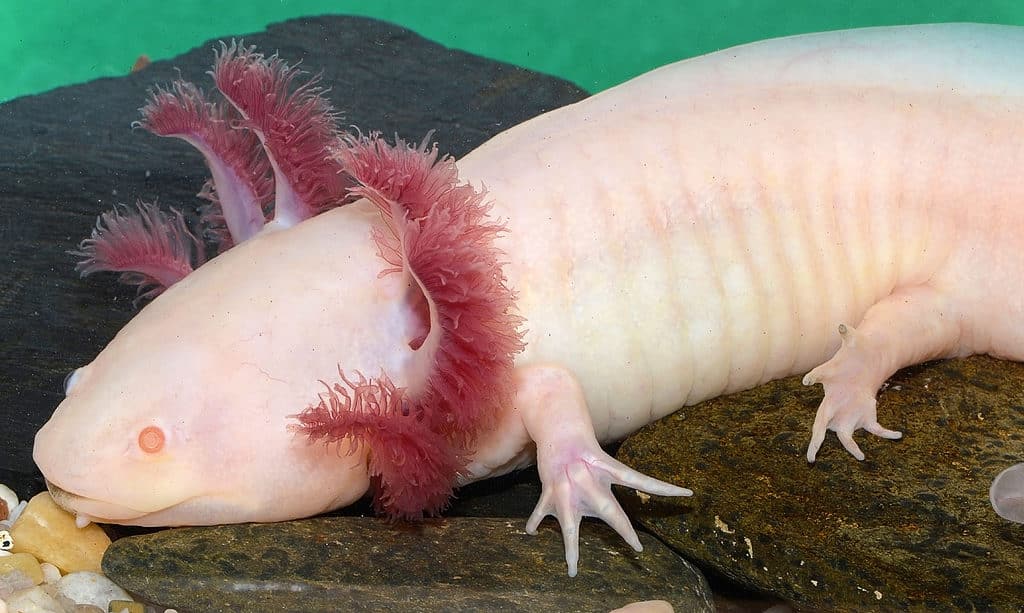
You don’t have to travel to Mexico City in order to meet a real life axolotl.
©Guillermo Guerao Serra/Shutterstock.com
There are many zoos across the United States that feature axolotl exhibits so that you can see these fascinating creatures up close and learn more about them. A few of the most well-known exhibits can be seen at the San Diego Zoo, the Lincoln Park Zoo and the Detroit Zoo.
Types of Axolotl
While axolotl are but one species of mole salamander, they can display a wide spectrum of genetic variation visible in a variety of gorgeous colors. Breeders have sought to accentuate these traits by manipulating the chromatosphores, or pigment cells, so that they can be sold as a recognizable specimen of their kind. New and unique types of axolotl are being discovered and bred all the time. Below you can find a list of all of the most popular varieties of axolotl.
- Wild Axolotl
- Leucistic Axolotl
- White Albino Axolotl
- Golden Albino Axolotl
- Melanoid Axolotl
- Axanthic Axolotl Morph
- Copper Axolotl Morph
- GFP (Green Flourescent Protein) Axolotl Morph
- Chimera Axolotl Morph
- Mosaic Axolotl Morph
- Silver Dalmation Axolotl Morph
- Enigma Axolotl Morph
- Firefly Axolotl Morph
Axolotl Pictures
View all of our Axolotl pictures in the gallery.

How to say Axolotl in ...
Sources
- Zenodo
- Aquarium Industries
- National Geographic
- Animals.net
- Erik Vance for Scientific American
- Dallas World Aquarium
- https://www.gbif.org/species/144098111