


C
Species Profile

Common Toad

Bufo bufo

Warty wanderer, springtime pond pilgrim
Andre Karwath / Creative Commons

Common Toad Distribution

Click a location to explore more animals from that region

Loading map...

At a Glance

Wild Species
Also Known As European toad, Common European toad, Eurasian toad, Garden toad
Activity Nocturnal+
Lifespan 10 years
Weight 0.15 lbs
Status Least Concern
Did You Know?

Size: typically ~7-13 cm snout-vent length (females larger; exceptionally to ~15 cm reported in some populations).

Scientific Classification

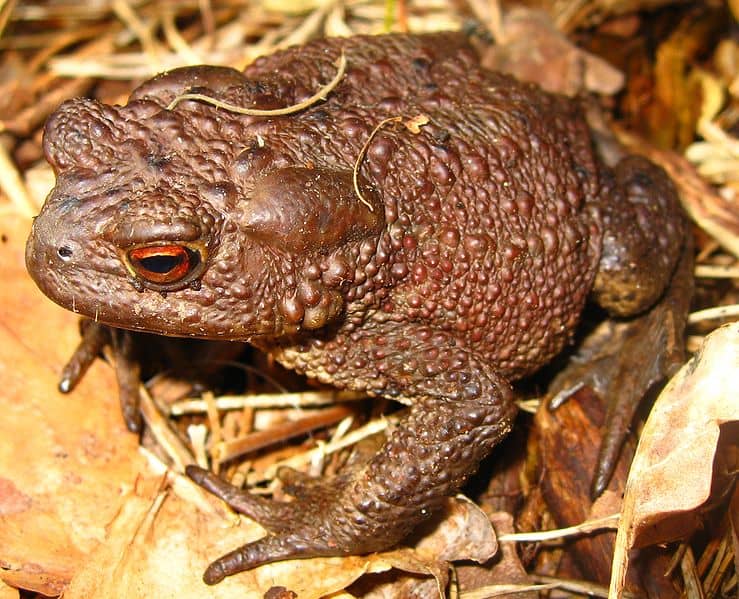
A widespread Eurasian true toad (family Bufonidae), typically brown/olive with warty skin and prominent parotoid glands; largely terrestrial as an adult, breeding in freshwater.

Kingdom
Animalia
Phylum
Chordata
Class
Amphibia
Order
Anura
Family
Bufonidae
Genus
Bufo
Species
Bufo bufo

Distinguishing Features

  • Dry, warty skin; robust body
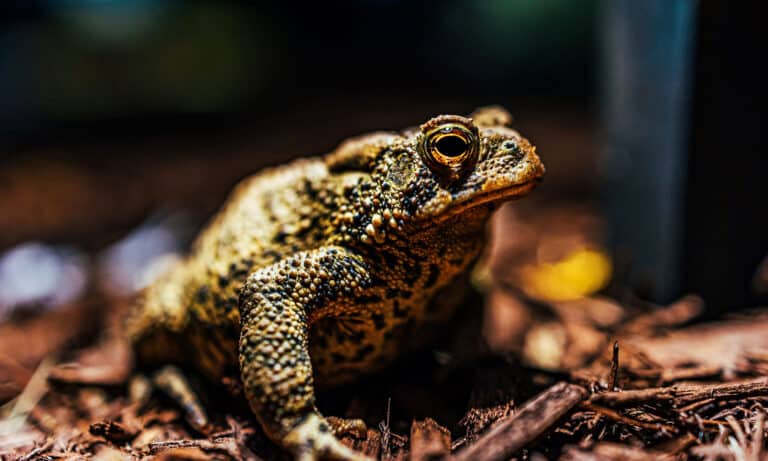
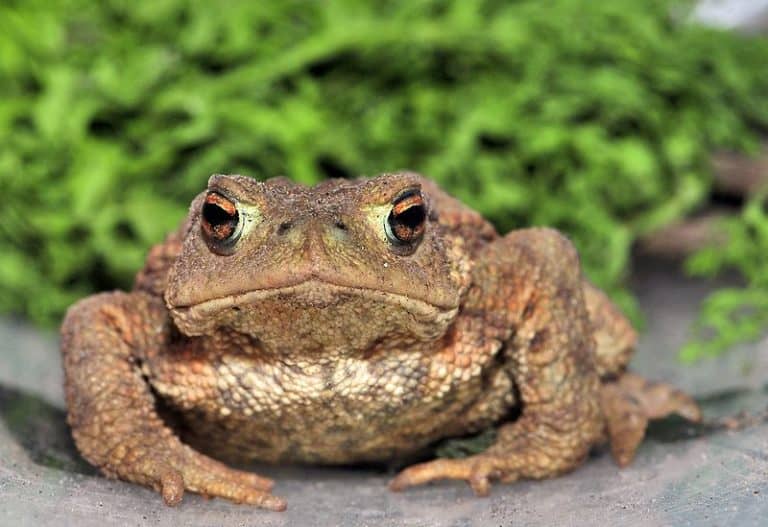
  • Prominent parotoid (poison) glands behind the eyes
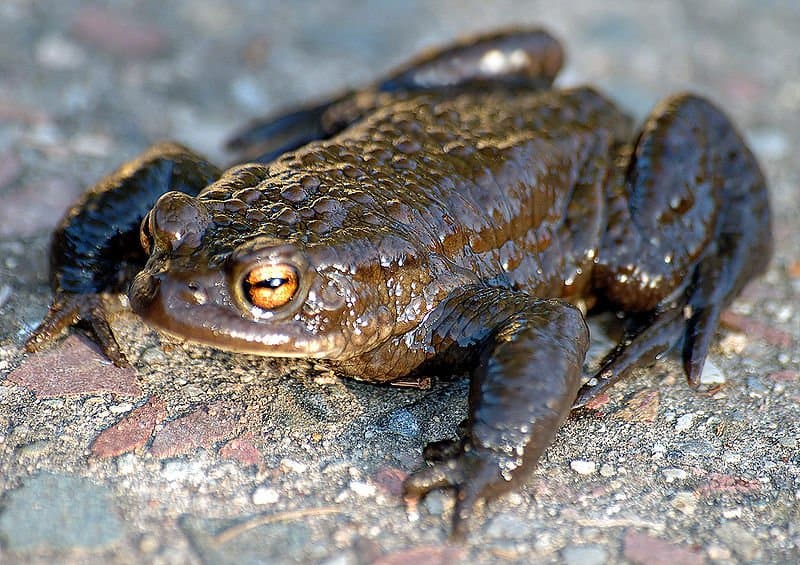
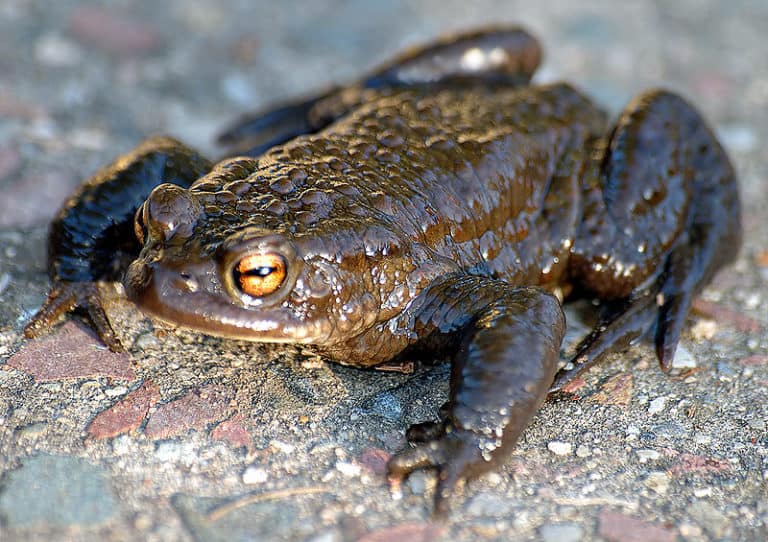
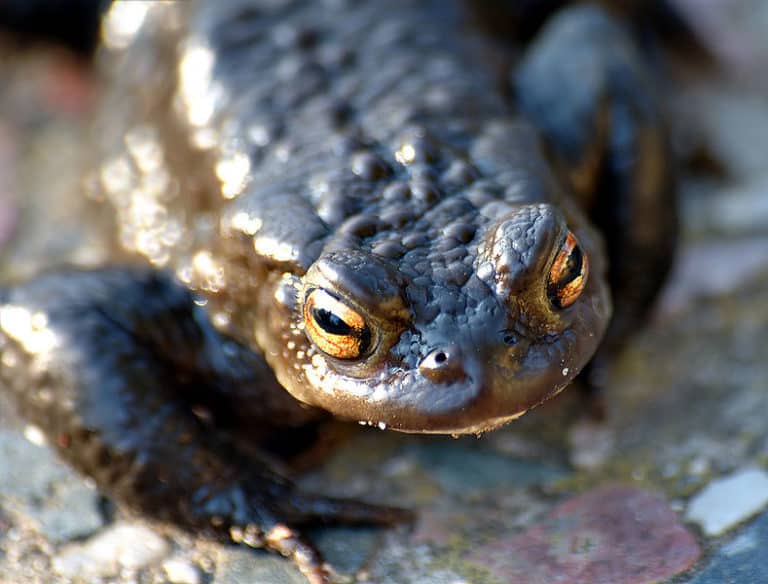
  • Typically copper/orange eyes with horizontal pupils
  • Walks more than it hops; relatively short legs for a frog/toad
  • Breeds in water; lays long strings of eggs

Physical Measurements

Males and females differ in size

Length
4 in (3 in – 6 in)
Weight
0 lbs (0 lbs – 0 lbs)
Poisonous

Appearance

Primary Colors
Secondary Colors
Skin Type Common Toad (Bufo bufo) has dry, thick, glandular, very warty skin. Parotoid glands behind the eyes make bufotoxins (bufadienolides) that deter predators, so avoid eye or mouth contact and wash hands after handling.
Distinctive Features
  • Robust, squat body with relatively short hind legs compared with many frogs; adapted for terrestrial walking/hopping rather than long jumps.
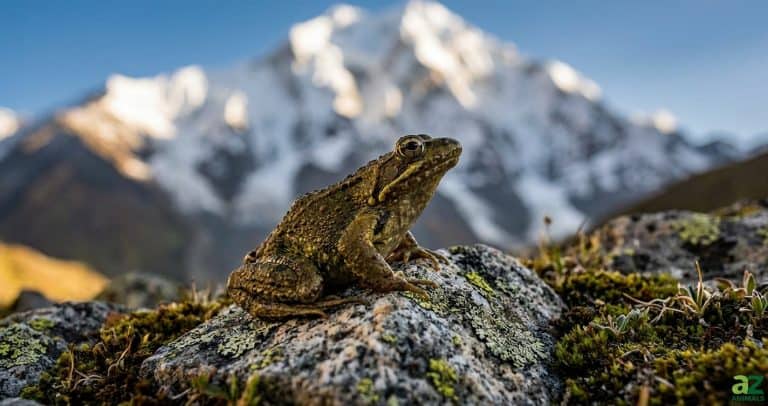
  • Prominent parotoid glands (oval/elongate swellings) behind each eye-key Bufonidae trait and a major visual identifier for Bufo bufo.
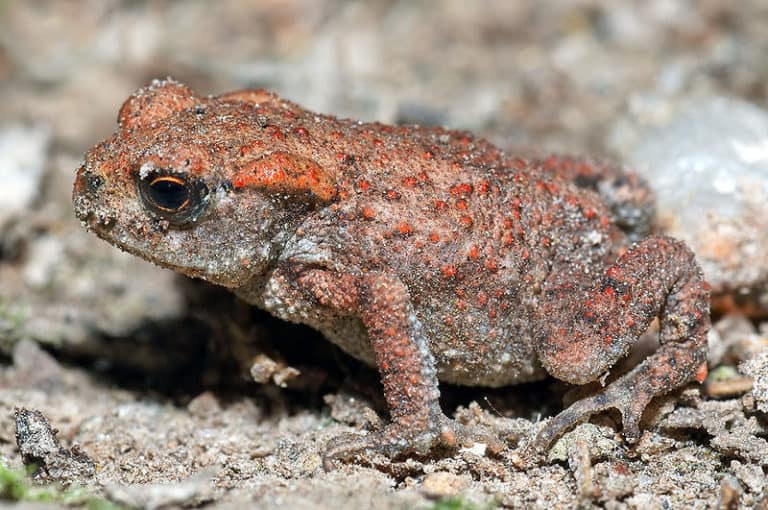
  • Warty dorsal skin with many poison glands; warts are usually evenly distributed rather than arranged in neat lines.
  • Horizontal pupil typical of true toads; iris often described as coppery/orange-brown in European field descriptions.
  • Seasonal breeding migration from terrestrial refuges to still/slow freshwater in early spring across much of its Eurasian range; adults are largely nocturnal and terrestrial outside the breeding period (well-documented life history for Bufo bufo).
  • Females lay long double strings of eggs, not clumps, often several meters long, with about 3,000–6,000 eggs per clutch in European records for Bufo bufo.
  • Tadpoles are typically small and very dark/blackish, schooling in the breeding water before metamorphosis (commonly described for Bufo bufo).
  • Adult snout-vent length (SVL) of Bufo bufo: males usually about 5–9 cm, females about 7–11 cm; some individuals grow larger in parts of the range.
  • Longevity: commonly ~10-12 years in the wild, with much longer maximum ages recorded in captivity (often reported into multiple decades for Bufo bufo in husbandry/mark-recapture summaries).

Sexual Dimorphism

Sexual dimorphism is present, especially in size and breeding-season traits. Females are typically larger-bodied than males; males develop secondary sexual characteristics during the spring breeding season (reported consistently for Bufo bufo in European herpetology sources).

  • Smaller average SVL than females (often ~50-90 mm).
  • Breeding-season nuptial pads (darkened/roughened pads) on the inner fingers (notably the first digits) to aid in amplexus.
  • Forelimbs relatively more robust during breeding; males often appear more compact.
  • Throat/ventral coloration may appear darker in some males during the breeding period (variable).
  • Larger average SVL than males (often ~70-110 mm) with broader abdomen, especially when gravid.
  • Lack nuptial pads; body often appears fuller/heavier outside breeding due to egg load.
  • When paired in amplexus, females typically carry males during aquatic breeding due to size difference.

Did You Know?

Size: typically ~7-13 cm snout-vent length (females larger; exceptionally to ~15 cm reported in some populations).

A single female can lay ~3,000-6,000 eggs in paired gelatinous strings (not clumps), often several meters long.

Breeding is often a brief spring event: in much of Europe, peak spawning commonly occurs March-April (earlier in mild lowlands, later at altitude/latitude).

Adults can show strong breeding-site fidelity, returning to the same pond year after year and navigating across land to reach it.

Defense comes from prominent parotoid glands behind the eyes that exude milky bufotoxins-effective against many predators but dangerous to pets if mouthed.

Tadpoles are typically small and dark/black; larval development to metamorphosis commonly takes ~6-12 weeks depending on temperature and food.

Longevity: commonly ~10-12 years in the wild; markedly longer lifespans (multiple decades) have been documented in captivity/long-term records for the species.

Unique Adaptations

  • Parotoid glands + bufotoxins: large, paired toxin glands behind the eyes secrete defensive chemicals (including bufadienolides); secretions can irritate eyes/mucosa-wash hands after handling and keep pets from mouthing toads.
  • Thick, keratinized, warty skin: reduces water loss compared with many frogs and supports a largely terrestrial adult lifestyle.
  • Efficient water balance: can absorb water through the pelvic patch on the underside and is behaviorally adapted to seek humid refuges during dry periods.
  • Cryptic coloration: brown/olive, mottled dorsum blends with leaf litter and soil; many individuals show a pale mid-dorsal line that breaks up outline.
  • Bidder's organ (true toad family trait): males possess a rudimentary ovarian structure (Bidder's organ), a notable reproductive anatomical feature of "true toads."

Interesting Behaviors

  • Mass breeding migrations ("toad crossings"): adults travel from terrestrial foraging/overwintering sites to freshwater breeding ponds, often crossing roads and concentrating along traditional routes.
  • Explosive breeding and amplexus: males clasp females (amplexus) and may form "mating balls" if many males compete for a female in a small area.
  • String-laying oviposition: females extrude twin egg strings while moving through submerged vegetation; males simultaneously fertilize eggs externally.
  • Nocturnal foraging: adults are most active at dusk/night, using sit-and-wait ambush plus short lunges to take prey (beetles, slugs, worms, etc.).
  • Seasonal dormancy: in colder parts of its range, adults overwinter (hibernation/brumation) in burrows, compost heaps, under logs, or crevices.
  • Predator-deterrence postures: when threatened, may inflate the body, raise up on limbs, and present the head/parotoid region to an attacker to encourage toxin contact.

Cultural Significance

The common toad (Bufo bufo) is a spring wetland symbol in Europe. Its road crossings spur volunteer toad patrols and temporary fences. Old tales linked toads with poison, change, and witchcraft. Today they teach life cycles and the need for clean freshwater.

Myths & Legends

The medieval European "toadstone": a gemstone believed to be found in a toad's head and set in rings or amulets to detect or neutralize poison-described in bestiaries, lapidaries, and medical lore.

Witchcraft and familiars in European folklore: toads were frequently named as witches' companions or ingredients in spells and brews, appearing in early modern belief and literature as emblematic creatures of the night and the uncanny.

Shakespearean lore: in *Macbeth*, the witches' cauldron begins with "Toad, that under cold stone..."-drawing on the toad's folkloric association with hidden places, venom, and sorcery.

Perrault's tale 'Diamonds and Toads' is a moral story where a character's words make Common Toads (Bufo bufo) and other creatures, showing the long European idea of toads as ugly, punished, or low.

"Toads found in stone" stories (17th-19th century Britain/Europe): popular anecdotes claimed live toads emerged from solid rock during quarrying-told as marvels of nature and persistence, and repeated in newspapers and natural history curiosity collections.

Conservation Status

LC Least Concern

Widespread and abundant in the wild.

Population Decreasing

Protected Under

  • Bern Convention (Convention on the Conservation of European Wildlife and Natural Habitats) - Appendix III (Protected fauna species).
  • National protections vary across range; often protected from killing/capture and/or trade in multiple European countries (e.g., Great Britain: Wildlife and Countryside Act 1981-provisions restrict sale/trade).
  • Occurs in numerous protected areas across its broad Eurasian distribution; site protection can be effective where breeding ponds and surrounding terrestrial habitat are conserved and connected.
  • Species biology (context for conservation planning): adults are primarily nocturnal and terrestrial; strong breeding-site fidelity with seasonal spring migrations to freshwater; spawning occurs in water with eggs laid in long gelatinous strings. Typical adult snout-vent length is ~6-13 cm (females generally larger than males). Sexual maturity commonly ~2-4 years; longevity is often ~10-12 years in the wild, with substantially higher maxima reported under protected/captive conditions.
  • HUBS (Bufonidae/toads conservation landscape): statuses range from Least Concern (many widespread Bufo/Bufotes spp.) through Vulnerable/Endangered/Critically Endangered in range-restricted taxa; common recurring threats are habitat loss and wetland modification, road mortality (infrastructure), agricultural pollution, disease (notably chytridiomycosis), and climate-driven drying of breeding sites. Notable at-risk toads include several narrowly distributed island or montane species where any combination of habitat change, invasive predators, and disease can rapidly elevate extinction risk.

Life Cycle

Birth 4000 tadpoles
Lifespan 10 years

Lifespan

In the Wild
2–15 years
In Captivity
5–39 years

Reproduction

Mating System Polygynandry
Social Structure Aggregation Group
Breeding Pattern Transient
Fertilization Substrate Spawning
Birth Type Substrate_spawning

Common Toad (Bufo bufo) shows explosive-breeding at freshwater sites with scramble competition and many more males. Males arrive early and use axillary amplexus. Fertilization is external: females lay one clutch of thousands of eggs in two long strings on submerged plants; no parental care.

Behavior & Ecology

Social Breeding aggregation Group: 100
Activity Nocturnal, Crepuscular, Cathemeral
Diet Insectivore ground beetles
Seasonal Migratory, Hibernates 3 mi

Temperament

Generally non-aggressive and non-territorial; adults tolerate close proximity during breeding due to high densities at spawning sites (Beebee & Griffiths, 2005).
Defensive rather than confrontational: relies on immobility/camouflage and toxin secretion from parotoid glands; handling or predation attempts can elicit toxin release and a distress posture (Bufonidae defensive behavior summarized in Beebee & Griffiths, 2005).
Breeding-season male behavior is high-contact and competitive (scramble competition), with frequent clasping attempts; mistaken amplexus can occur and is typically terminated by release signals (Davies & Halliday, 1977/1978).
HUBS variation: boldness and surface activity can increase at mild temperatures and during peak breeding, while in colder/drier conditions individuals remain more secretive and strictly nocturnal; degree of male-male interference rises with local density.

Communication

Male advertisement call: a low-intensity, short, purring/trilling call given mainly at breeding sites; compared with many anurans it is relatively quiet and often effective only at short range Described in standard species accounts; e.g., Beebee & Griffiths, 2005
Release call: emitted Typically by males, and also by females/juveniles when clasped) to signal mistaken amplexus; functions to reduce prolonged male-male clasping (Davies & Halliday, 1977/1978
Distress call/squeak: produced when seized by a predator or handled, potentially startling predators and attracting attention of other predators General anuran antipredator vocalization noted in amphibian behavior syntheses, including Beebee & Griffiths, 2005
Chemical defense/chemosignaling: bufotoxins from parotoid glands deter predators; olfaction/chemical cues are implicated in orientation and breeding-site recognition in many bufonids, including B. bufo, alongside other navigation cues Sinsch, 1990; Beebee & Griffiths, 2005
Tactile signaling during reproduction: sustained axillary amplexus, plus physical jostling in dense breeding congregations; release responses are triggered by tactile cues Davies & Halliday, 1977/1978
Visual cues at close range: in shallow, clear water and in dense groups, movement/positioning and body contact facilitate mate localization when acoustic signaling is limited Inferred from low call amplitude and congregation breeding described in Beebee & Griffiths, 2005

Habitat

Biomes:
Temperate Forest Boreal Forest (Taiga) Mediterranean Temperate Grassland Freshwater Wetland
Terrain:
Plains Hilly Valley Mountainous Riverine Coastal
Elevation: Up to 8202 ft 1 in

Ecological Role

Widespread terrestrial mesopredator of soil- and leaf-litter invertebrates; links aquatic breeding habitats with terrestrial food webs.

Biological control of many pest invertebrates (e.g., beetles, caterpillars, slugs) in gardens, woodland edges, and farmland mosaics Energy/nutrient transfer between aquatic (larval) and terrestrial (adult) systems via seasonal migrations and biomass movement Prey base support for higher trophic levels (e.g., snakes, birds, small mammals), contributing to food-web stability Soil/leaf-litter food-web regulation through predation on detritivores and other invertebrates (indirectly influencing decomposition dynamics)

Diet Details

Human Interaction

Domestication Status

Wild

Common Toad (Bufo bufo) is a wild Eurasian amphibian with no history of domestication. People affect it by changing habitat and causing road deaths in mass spring migrations to breeding ponds. Conservation actions (tunnels, barriers, pond creation), research and education, and occasional private keeping or pets are other human interactions.

Danger Level

Low
  • Skin secretions from parotoid glands contain bufotoxins that can irritate eyes/mucous membranes; risk increases if handled and then eyes/mouth are touched.
  • Ingestion is the main serious hazard; swallowing a toad (or getting secretions into the mouth) can cause nausea/vomiting and potentially more severe toxicity (rare in humans; more common/serious in dogs).
  • Low infectious risk: as with many wild amphibians, basic hygiene is advised after handling (and handling should generally be minimized for animal welfare).

As a Pet

Not Suitable as Pet

Legality: Laws differ by country or state. In much of Europe Bufo bufo is protected or regulated: wild-caught toads are often banned or need permits and it’s listed under the Bern Convention (Appendix III). Elsewhere rules vary; captive-bred is usually preferred.

Care Level: Experienced

Purchase Cost: Up to $50
Lifetime Cost: $800 - $3,000

Economic Value

Uses:
Ecosystem services (invertebrate pest predation in gardens/fields) Education and outreach (school/nature-center demonstration species where legal) Scientific research (migration ecology, orientation, amphibian declines, disease ecology) Conservation management (flagship species for road-crossing mitigation and pond restoration)
Products:
  • non-market service: reduction of pest insects and other invertebrates via predation
  • research outputs: data/models for amphibian conservation and road-mitigation planning
  • biochemical research material: study of bufotoxins/bufadienolides from skin secretions (not a consumer product; typically regulated and not harvested commercially for this species)

Relationships

Predators 10

Grass snake
Grass snake Natrix natrix
Dice snake Natrix tessellata
Grey heron
Grey heron Ardea cinerea
White stork Ciconia ciconia
Common buzzard
Common buzzard Buteo buteo
Carrion crow Corvus corone
European badger Meles meles
European hedgehog Erinaceus europaeus
European polecat
European polecat Mustela putorius
Eurasian otter Lutra lutra

Related Species 8

Spiny toad Bufo spinosus Shared Genus
Caucasian toad Bufo verrucosissimus Shared Genus
Asiatic toad Bufo gargarizans Shared Genus
Natterjack toad
Natterjack toad Epidalea calamita Shared Family
European green toad Bufotes viridis species complex Shared Family
American toad
American toad Anaxyrus americanus Shared Family
Cane toad
Cane toad Rhinella marina Shared Family
Colorado River toad Incilius alvarius Shared Family

Ecological Equivalents 5

Animals that fill a similar ecological role in their ecosystem

Common frog
Common frog Rana temporaria Often breeds in the same freshwater ponds as Bufo bufo across much of Europe. Both are early-spring breeders in temperate climates and have aquatic larvae followed by largely terrestrial adult life stages.
Common spadefoot toad Pelobates fuscus Shares a largely terrestrial, nocturnal adult lifestyle and reliance on still or slow-moving freshwater for breeding. Both consume similar terrestrial invertebrate prey (worms, beetles, slugs). Pelobates differs by a fossorial specialization but overlaps in the pond-breeding niche.
Smooth newt Lissotriton vulgaris Commonly co-occurs in small ponds used by Bufo bufo for breeding. Both have aquatic eggs and larvae in spring and prey on small aquatic invertebrates during the breeding season, although newts remain more aquatic for longer.
Great crested newt Triturus cristatus Uses similar pond habitats (often fish-poor, still waters) and has overlapping breeding periods with Bufo bufo; both can be indicators of suitable pond networks in agricultural/woodland mosaics.
Grass snake
Grass snake Natrix natrix A frequent predator of adult and juvenile amphibians in the pond-edge and ditch habitats used by breeding Bufo bufo; occupies the same wetland-terrestrial ecotone and follows amphibian migrations.

Rush Hour Traffic Is The Biggest Threat To Common Toads

One of the most populous species of amphibians in Europe, common toads are small, four-legged animals that live in the water and on land.

Though millions of common toads waddle their way around Europe, the species is on the decline, and rush hour traffic is one of its biggest threats. Currently, they experience the highest rate of mortality among amphibians in Europe, and 20 tonnes of the animal are killed yearly during spring migration. Grassroots conservation teams across the continent have mobilized over the past two decades. These groups are making great strides in saving countless animals. Still, more public education is needed to thwart the diminishing numbers.
 

Top Toad Facts

Parasite Attacks: Common toads are vulnerable to several parasitic attacks by various animals, including fatal fly and worm attacks.

A Friend of Witches: In the Middle Ages, people associated toads with witches and the Devil, whose coat of arms featured three toads. The species was believed to have magical powers. If a toad was found in a house, people assumed that the residents of the home were associated with witches.

Literary Standard: Over the centuries, great English writers, like William Shakespeare, A.A. Milne, and George Orwell, famously referenced toads in their work. Milne even wrote an entire play about a toad lawyer named Mr. Toad, who lived on an estate named Toad Hall.

No Wart Worry: Common toads have lumps on their skin. People often refer to them as “warts.” Though their bumps resemble warts, they’re not communicable, and you won’t grow warts if you handle the animal.

Dead Skin Meals: Common toads occasionally shed their skin. Instead of leaving the discarded epidermis on the ground, toads tidy up by eating it!

Clam Transporter: Fingernail clams use toads as transporters. The small mollusks cling to the toads’ toes and use the amphibian to carry them to different locations.
 

Scientific Name

Common toads are also known as “European toads.” Their scientific name is Bufo bufo. Bufo is a Latin word that means “toad,” but some linguists think the word has older language roots. Osco-Umbrian languages pre-date Latin and were spoken in Central and Southern Italy. Researchers now believe that bufo is a borrowed root word that means “sliminess” and stems from these ancient tongues. However, the characterization is a bit of a misnomer because toad skin is dry.

Appearance & Behavior

What do Toads Look Like? How Much Does a Common Toad Weigh?

On average, common toads are about 10 to 18 centimeters (4 to 7 inches) long. How much does a common toad weigh? The species usually weighs between 20 and 80 grams (0.7 and 2.8 ounces). In other words, the biggest European toads only weigh half as much as a baseball! Southern toads are typically larger than their northern counterparts, and females are usually bigger than males.

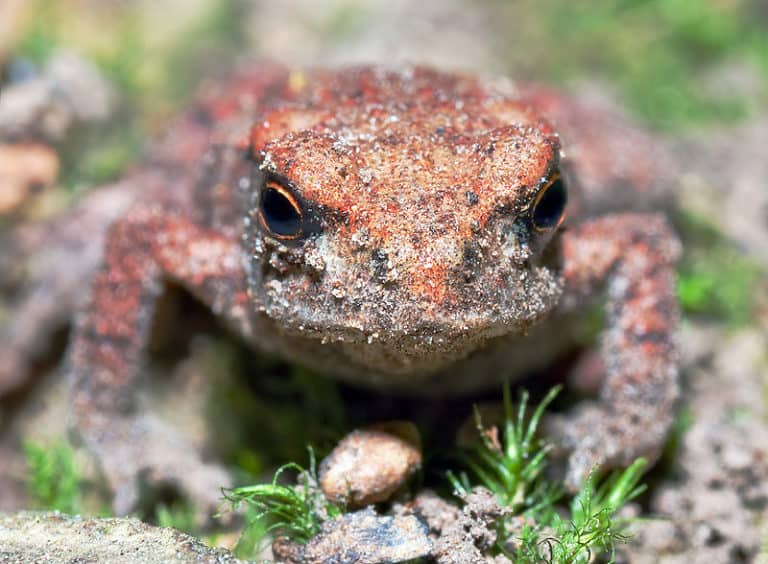
Coloring for individual animals varies between grey-brown and olive-brown; males are usually browner than females. Both sexes of the species have dirty white underbellies with grey and black splotches. All toads sport wart-like lumps, and their skin is dry.

Toads have slightly protruding snouts with mouths and two-nostrils. They don’t have teeth or necks, but they do have bulging, bulbous eyes with yellow or copper irises and horizontal stilted pupils. Behind each eye is a gland filled with a substance known as “bufotoxin” or “bufogin,” which is a noxious liquid that toads excrete when they sense a predator or feel threatened. When attacked, common toads can also inflate their bodies, raise high on their legs and lower their heads to form a defensive stance.

Common toads are often confused with natterjack toads and European green toads. However, natterjacks have a yellow stripe that runs along the lengths of their backs, and green toads have a distinct pattern that differentiates them from common toads.
 

Toad Behavior

Toads prefer to be alone, but they do congregate for mating season. As nocturnal animals, common toads wake at dusk and spend the evenings hunting for food. At sunrise, they return to their lairs and sleep the day away.

A toad’s year consists of three stages: sleeping, mating, and eating.

In winter, they burrow away and enjoy a winter sleep. Different than hibernation, winter sleeps don’t result in the animal’s bodily functions slowing to a point where they don’t wake for months. Sometimes, on milder winter days, you can find a common toad out foraging for food, though it’s rare.

During the winter sleep period, toads find long-term slumber spots in basements, under mud composts, and around dead wood. Some dig ground holes near other amphibians.

They wake in the spring and start migrating to their ancestral breeding grounds, which can be miles away. To travel, the weather needs to be above 5 degrees Celsius (41 degrees Fahrenheit). In the autumn, toads spend their time filling up on food.

Commons toads have four legs, which they use to get around. The majority of the time, toads get from place to place by walking. It’s a clumsy walk, but they can reach speeds of up to 8 kilometers (5 miles) per hour. Occasionally, they’ll intersperse their walking with short, awkward hops.

Toads use vocalizations for various reasons. In the amphibian symphony, they are responsible for the high-pitched “qwark-qwark-qwark” calls. Toads settle disputes mainly through croaking, and the tenor of its croak is an indication of its size. The bigger the toad, the deeper the “qwark.”
 

Habitats: Where Do Common Toads Live?

As their name indicates, European toads live all over Europe, except in Ireland, Iceland, and some parts of Scandinavia. Their eastern range limit is Irkutsk, Siberia; their southern range limit is a series of mountain ranges spanning through Morocco, Algeria, and Tunisia. They are also found on certain Mediterranean islands, including Malta, Crete, Corsica, Sardinia, and the Balearic Islands. Scientists have also discovered small populations in northern parts of Asia.

Where do common toads live? Primarily, they like to live in high-foliage areas, like forests, woodlands, open countryside, fields, parks, and gardens. During their daytime slumbers, they burrow in lairs under leaves, roots, and stones. Common toads can be difficult to spot as they usually find places where they blend into the natural surroundings. For example, a grey toad may prefer to sleep near stones because their skin acts as a natural camouflage.
 

Common Toad Diet

Common toads don’t weigh much, but they’re voracious eaters. They mainly dine on invertebrates — animals without a backbone — including woodlice, slugs, caterpillars, flies, earthworms, and beetles. Sometimes, they eat small mice. Since toads don’t have teeth, they gulp their meals whole. Additionally, to aid in hunting, common toads have a sticky substance on their tongues to trap prey.

Toads must be careful about their beetle selection, though. Bombardier beetles — also known as “the farting bug” — secrete a poisonous liquid after being swallowed. According to studies, the substance makes toads sick, and most vomit up the beetles within 12 to 107 minutes of digesting. Amazingly, most of the regurgitated bombardiers are still alive when they exit the toad’s body!
 

European Toad Predators & Threats

Common toads are equipped with natural toxins — “bufotxin” and “bufogin” — which they secrete when threatened or provoked. This goes a long way in warding off animals who see them as a meal. However, it’s not a foolproof biological system. For example, grass snakes are unaffected by the substances and swallow toads whole without issue.

Hedgehogs, rats, minks, snakes, herons, crows, raptors, and domestic cats are natural predators of common toads. To avoid toads’ defense toxins, birds poke holes in the amphibian with their beaks and peck out the livers. Blow flies also present a big threat to European toads. A parasitic predator, blow flies lay eggs on toads’ skin. When the eggs hatch, the larvae crawl into the toads’ nostrils and eat their flesh internally, resulting in death.

Young toads are sometimes attacked by worms that slow their growth and cause anorexia. Dragonfly larvae, diving beetles, and water boatmen also feed on tadpoles.

Climate change is a significant threat to common toads as well. Since troublesome weather patterns are causing other animals, like otters and frogs, to seek higher ground, toads now have more competition for food, and they’re not winning the resources fight.

Other human-related threats to common toads include:

  1. Drainage of breeding wetlands;
  1. Agricultural activities that disrupt habitats;
  1. Pollution; and
  1. Road mortality.

European Toad Reproduction, Babies, and Lifespan

Mating and Breeding

Using smell and orientation cues, common toads return to the ponds in which they were born to mate and breed. In the early spring, males grow “nuptial pads” on their fingers. When a boy toad finds a girl toad with whom to mate, he mounts her back, wraps his front legs around her armpits, and uses the pads to grasp on tightly. Males can stay in this position for several days as they fertilize the female.

Once females are fertilized, they lay strings of eggs that look like black pearls. These strings can contain between 3,000 to 6,000 eggs and reach 3 to 4.5 meters (10 to 15 feet) long. Water seeps into the eggs, and within two to three weeks, depending on the weather, tadpoles hatch. Parents typically don’t stick around to nurture their spawn, but the hatchlings sometimes form shoals, which are large groups of swimming fish.

Generally speaking, common toads prefer to breed in deeper water, like fish ponds, village ponds, and reservoirs. In recent years, males have been arriving earlier at breeding grounds because the weather is getting warmer sooner. Females often take a year off between mating seasons.
 

Babies

Baby common toads are called “tadpoles.” When they hatch, they cling to the jelly of the egg strings and feed on it for nutrition. After a few days, they move onto the undersides of water leaves and eventually start swimming. In the first several weeks of life, they grow legs, and their bodies reabsorb their tails. After about 12 weeks, the tadpoles — which are usually black colored with grey bellies — make the transition to toadlets. At this point, they measure about 1.5 centimeters (0.6 inches) and leave the pond to start foraging for insects.

Common toads reach maturity between 3 and 7 years old, depending on their location and other external forces.
 

Lifespan

In the wild, common toads live between 10 and 12 years. In captivity, they can live up to 50 years! Females of the species have higher mortality rates than their male counterparts.

As they age, European toads are vulnerable to several common bacterial and viral diseases, including red leg syndrome, flavobacteriosis, mycobacteriosis, chlamydiosis, and ranavirus.
 

Common Toad Population

Though common toads are the fourth most common amphibian in Europe and fall under the ICUN’s “Least Concerned” category, their numbers are rapidly declining. The population has decreased by more than two-thirds since the 1980s. In Spain, due to increased aridity, conservationists consider common toads to be “near threatened.” The United Kingdom Biodiversity Action Plan lists them as a priority species.

Why are toad numbers plummeting? Several factors are contributing to the decrease. The main problem is habitat fragmentation because of urban sprawl and increased traffic. Since toads travel back to the ponds in which they were born, they must cross busy motorways to get there, which leads to high amounts of road mortality.

The good news is that an active grassroots movement has developed over the past several years to help toads cross roads safely. Commonly known as “toad patrols,” thousands of volunteers in the United Kingdom and across Europe engage in a variety of toad protection activities during the spring migration. Toad patrols devise ways to get animals across busy streets safely. Some collect them in buckets, and others carry them one by one. At the busiest intersections, local councils and volunteers post toad crossing signs. According to some estimates, toad patrols save up to 800,000 animals annually.

Though many people may casually call a group of toads a “clutch,” the proper term is “knot.”
 

View all 392 animals that start with C
How to say Common Toad in ...
Catalan
Gripau comú
Czech
Ropucha obecná
German
Erdkröte
English
Common Toad
Spanish
Sapo común
French
Crapaud commun
Finnish
Rupikonna
Hebrew
קרפדה מצויה
Hungarian
Barna varangy
English
Vanlig padde
Polish
Ropucha szara
Portuguese
Bufo bufo
Swedish
Vanlig padda

Sources

  1. David Burnie, Dorling Kindersley (2011) Animal, The Definitive Visual Guide To The World's Wildlife / Accessed January 11, 2010
  2. Tom Jackson, Lorenz Books (2007) The World Encyclopedia Of Animals / Accessed January 11, 2010
  3. David Burnie, Kingfisher (2011) The Kingfisher Animal Encyclopedia / Accessed January 11, 2010
  4. Richard Mackay, University of California Press (2009) The Atlas Of Endangered Species / Accessed January 11, 2010
  5. David Burnie, Dorling Kindersley (2008) Illustrated Encyclopedia Of Animals / Accessed January 11, 2010
  6. Dorling Kindersley (2006) Dorling Kindersley Encyclopedia Of Animals / Accessed January 11, 2010
A-Z Animals Staff

About the Author

A-Z Animals Staff

AZ Animals is a growing team of animals experts, researchers, farmers, conservationists, writers, editors, and -- of course -- pet owners who have come together to help you better understand the animal kingdom and how we interact.
Connect:

Thank you for reading! Have some feedback for us?


Common Toad FAQs (Frequently Asked Questions)

Is the common toad poisonous? They can be.

Common toads store bufotoxin and bufogin, two harmful substances, in their glands and skin. They secrete the liquids when threatened or provoked. Technically, a single toad has enough of these substances to cause death to certain animals and even humans in very rare cases. Scientists have yet to develop an anti-venom. Healthy people can usually handle common toads without fear of infection; however, it’s wise to keep the family dog and cat away from the amphibians.