Orangutan
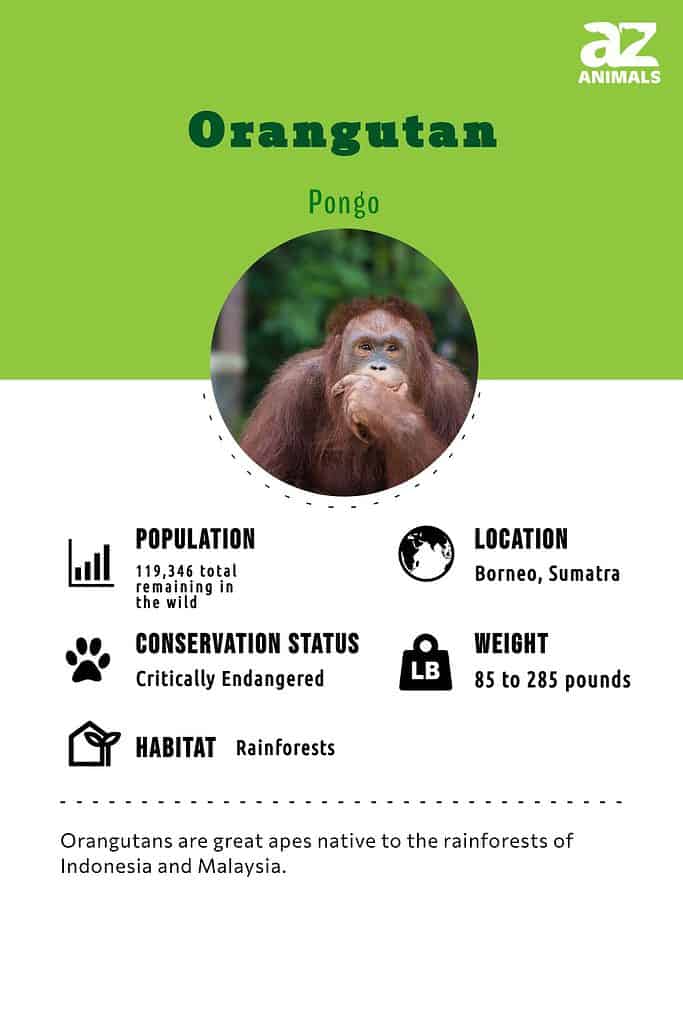
Pongo pygmaeus, Pongo abelii, Pongo tapanuliensis
 Verified by: AZ Animals Staff
Shares 97% of its DNA with humans!
Advertisement
Orangutan Scientific Classification
- Kingdom
- Animalia
- Phylum
- Chordata
- Class
- Mammalia
- Order
- Primates
- Family
- Hominidae
- Genus
- Pongo
- Scientific Name
- Pongo pygmaeus, Pongo abelii, Pongo tapanuliensis
Read our Complete Guide to Classification of Animals.
Orangutan Conservation Status
Orangutan Facts
- Prey
- Fruits, Bark, Insects
- Name Of Young
- Infant
- Group Behavior
- Solitary
- Fun Fact
- Shares 97% of its DNA with humans!
- Estimated Population Size
- 20,000
- Biggest Threat
- Hunting and Habitat Loss
- Most Distinctive Feature
- Red hair and longer arms than legs
- Other Name(s)
- Red Ape, Forest Person
- Gestation Period
- 9 months
- Habitat
- Lowland tropical forest
- Diet for this Fish
- Omnivore
- Average Litter Size
- 1
- Lifestyle
- Diurnal
- Common Name
- Orang-utan
- Number Of Species
- 3
- Location
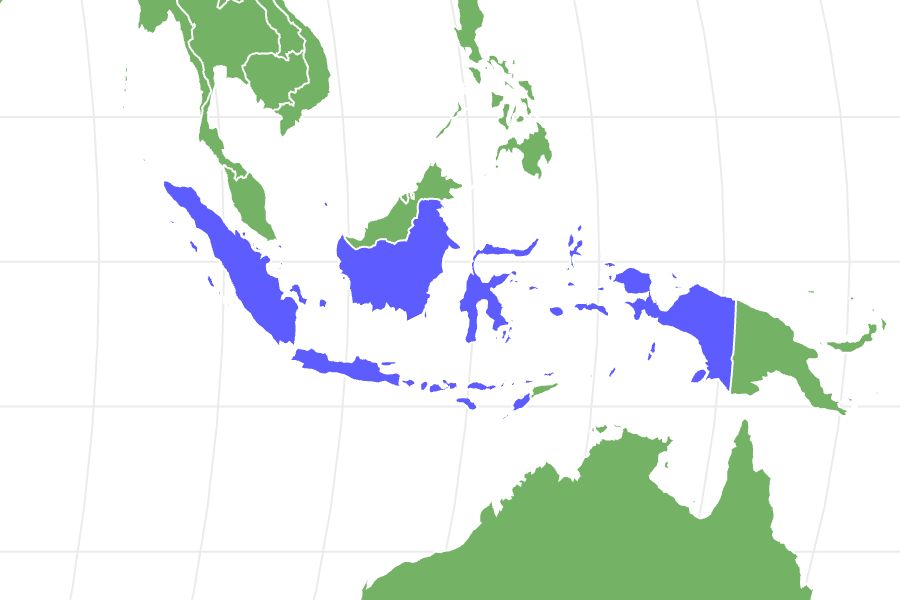
- Borneo and Sumatra
- Slogan
- Shares 97% of its DNA with humans!
- Group
- Mammal
Orangutan Physical Characteristics
- Color
- Brown
- Grey
- Red
- Black
- Orange
- Skin Type
- Hair
- Top Speed
- 2.7 mph
- Lifespan
- 30 - 40 years
- Weight
- 30kg - 90kg (66lbs - 200lbs)
- Height
- 1.25m - 1.5m (4ft - 5ft)
- Age of Sexual Maturity
- 12 - 15 years
- Age of Weaning
- 3 years

 © Wendy Bird - Copyright A-Z Animals
View all of the Orangutan images!



How to Add Us to Google News


Classification
The orangutan is one of the largest primates in the world and is the only member of the great ape family that is found outside of Africa. There are three species of orangutan found in the steamy jungles on the islands of Borneo and Sumatra, which are the Bornean orangutan, the Sumatran orangutan, and the Tapanuli orangutan. The Bornean orangutan is more numerous and widespread than its cousins on Sumatra, with three distinct sub-species of Bornean orangutan found in differing geographic regions on the island. Orangutans are one of the closest living relatives to modern humans, and we share 96.4% of our DNA with these forest-dwelling apes. The three species are actually so similar in both behavior and appearance that their name Orang Hutan in their native Malaysian communities literally means “Person of the Forest.” All three species of orangutan are today severely affected by human activity in their native habitats and are listed by the IUCN on their Red List as Critically Endangered.
Evolution
The exact process of orangutan evolution remains largely unknown because there is a lack of fossil and sub-fossil evidence. However, studies have shown that the divergence between orangutans and humans occurred approximately 12 to 15 million years ago. Orangutans used to inhabit much wider areas than they do now, spreading as far north as northern India and southern China and south to Java. Fossils such as Sivapithecus and Ramapithecus from the Siwalik hills in Pakistan provide some insights into what their ancestral species may look like. At the end of the Pleistocene era (approximately 12,500 years ago), orangutans’ range diminished significantly; they were only found on two islands: Borneo and Sumatra. It is estimated that at this time, Bornean and Sumatran populations began diverging from each other, which happened around 0.6 – 2 million years ago.
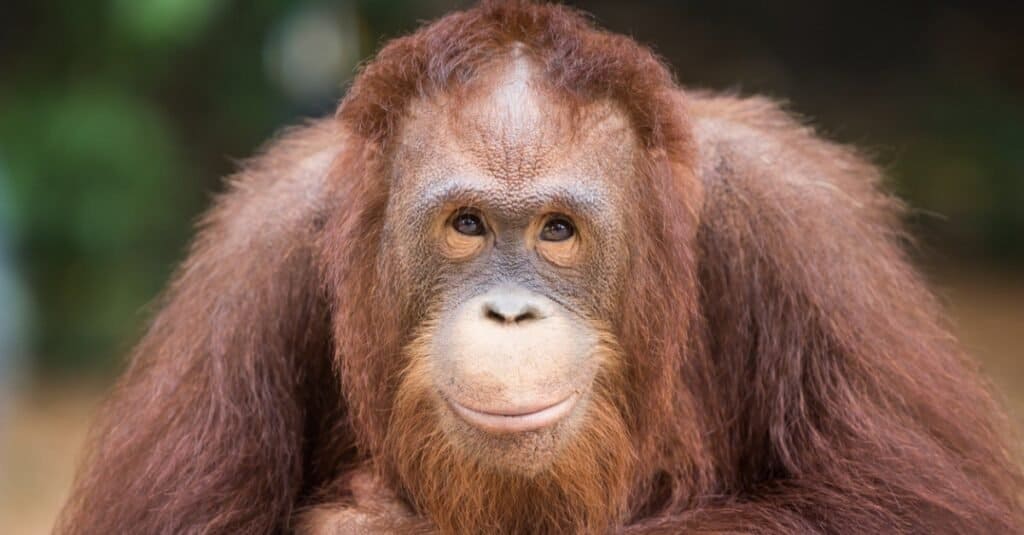
The divergence between orangutans and humans occurred approximately 12 to 15 million years ago.
©Everything I Do/Shutterstock.com
Anatomy and Appearance
The orangutan is a large arboreal animal which means that it spends the majority of its life high in the trees and therefore has evolved some very special adaptations to make living in the forest easier. As the orangutan is too heavy to leap like a monkey, they use their long arms to swing on the tree branches until they can get close enough to grab onto the next one. The hands and feet of the orangutan are both equally effective at grasping onto branches, and their opposable thumbs also make their nimble digits very dexterous. The Bornean orangutan tends to be slightly larger in size than the Sumatran orangutan, which is more lightly colored, along with having a longer beard than its cousin. Tapanuli orangutans are similar in appearance to the Sumatran orangutan but have frizzier hair, smaller heads, and flatter faces. Male orangutans develop fleshy cheek pads as they mature, but these are much more pronounced on the faces of male Bornean orangutans, and all three species also have a throat pouch that is used to make deep calls that echo through the forest.
Adult female orangutans weigh 82-110 pounds. Males typically weigh twice as much as females, coming in at 160-285 pounds. Females are between three and a half and four feet tall when standing on their feet. Males stand between four and a half and five feet tall.
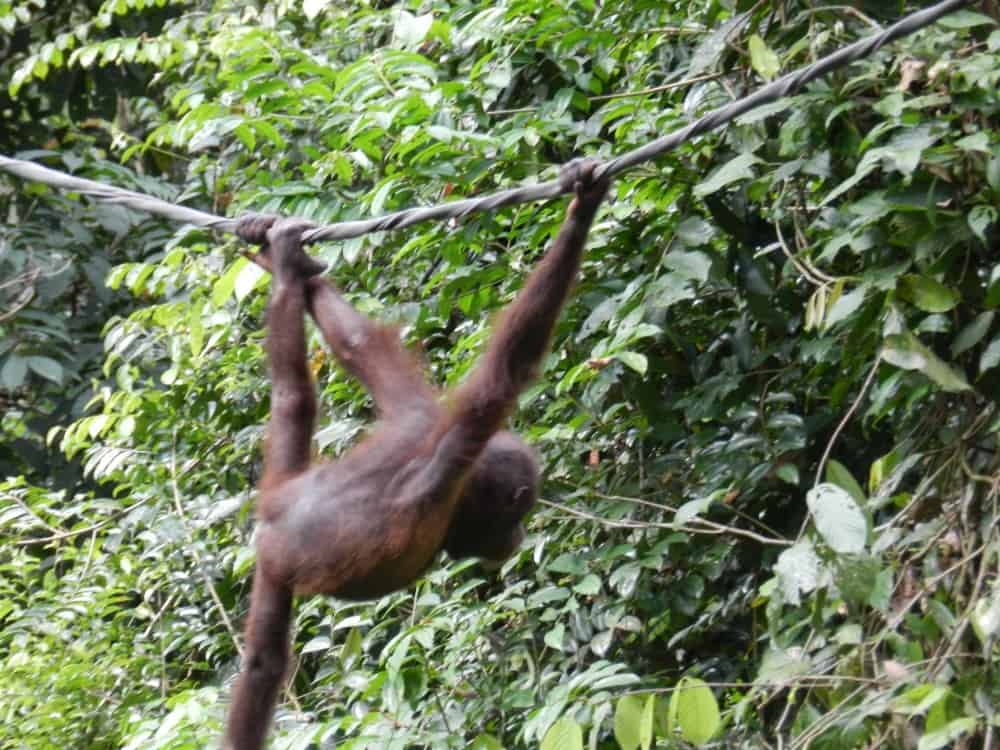
Bornean Orang-utan at Sepilok Orangutan Rehabilitation Centre, Sabah
©Millie Bond – Copyright A-Z Animals
Distribution and Habitat
Although orangutans would have once been found on a number of the forested, tropical islands in Indonesia, today, they are confined to just two, which are the islands of Borneo and Sumatra. Their tree-dwelling lifestyle means that orangutans prefer dense tropical forests in the lowlands where there is an ample and varied supply of food. Along with also being found in hillside forests, in valleys, and around peat swamps, there are a number of isolated populations on both islands that are found in the high mountain jungles at much higher altitudes. The Bornean orangutan is found in three remaining locations on Borneo, but the Sumatran orangutan now only inhabits the very northern tip of Sumatra, with the majority of wild individuals being found in just one province. The Tapanuli orangutan is found in a remote region in northwestern Sumatra, with the entire population found in an area of just 386 square miles. All three species, however, are severely threatened by the drastic decline of their habitats which have been deforested for timber or cleared for agriculture.
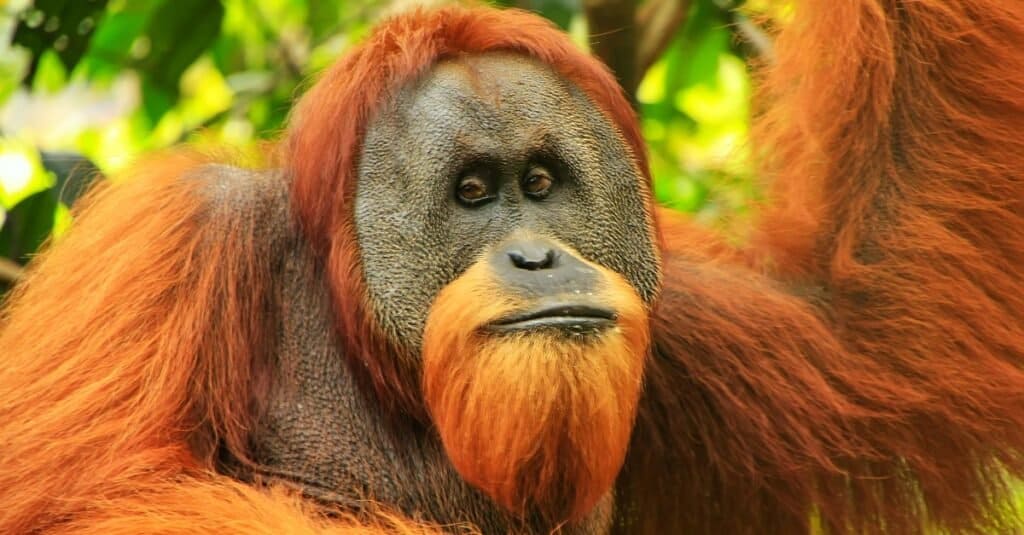
All three species of orangutan are severely threatened by the drastic decline of their habitats, which have been deforested for timber or cleared for agriculture.
©Don Mammoser/Shutterstock.com
Behavior and Lifestyle
There are two big differences between orangutans and other great apes, which are the fact that they are solitary and that they spend almost all of their lives high in the trees. The large size of the orangutan means that it moves very slowly through the forest, but often because they spend so much of their time foraging for and eating fruits in the surrounding trees. They make nests to sleep in at night high in the canopy by folding branches over and padding them out with leaves to ensure a comfortable night. Although they do have their own patches of forest, orangutans are not particularly territorial. They will even tolerate feeding together around trees that have an abundance of ripened fruits (Sumatran orangutans seem to be more sociable than Bornean orangutans). Male orangutans, though, will make their presence known by producing loud, long calls using their throat pouches to both intimidate rival males and attract a female to mate with.
Read about if orangutans are dangerous or not.
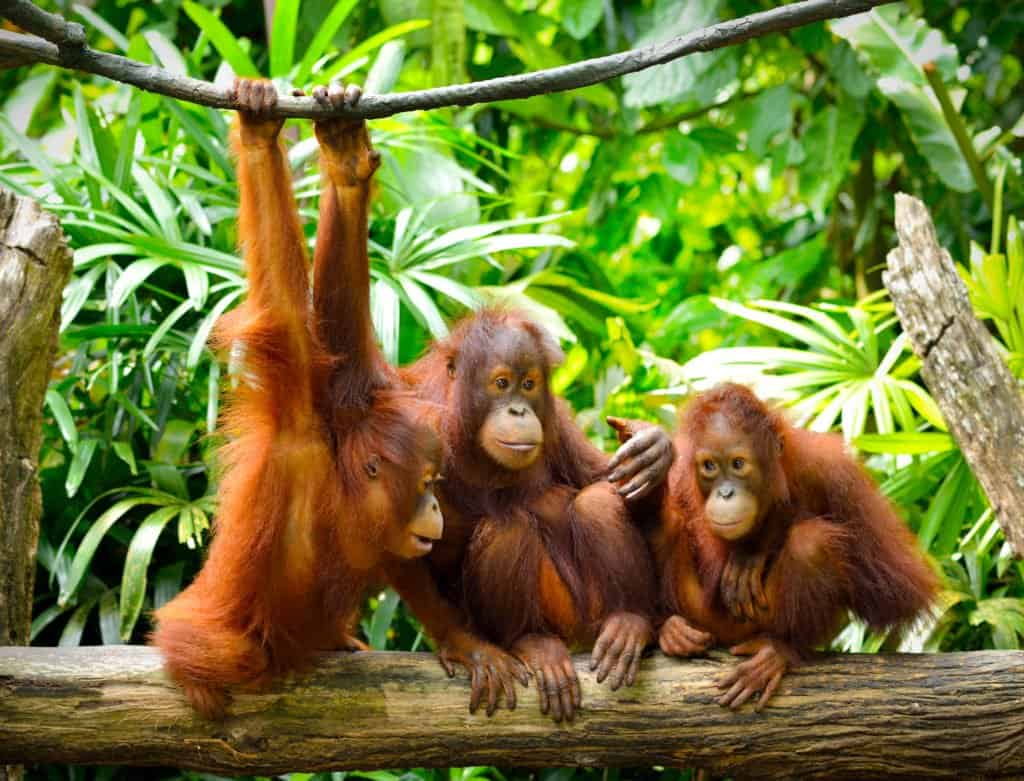
Orangutans make nests to sleep in at night high in the canopy by folding branches over and padding them out with leaves to ensure a comfortable night.
©tristan tan/Shutterstock.com
Reproduction and Life Cycles
After a gestation period that lasts for around nine months, the female orangutan gives birth to a single infant in a special nest built high in the trees. Young orangutans cling onto their mother’s hair to stay secure whilst she is moving through the trees in search of food and is not fully weaned until they are three years old. However, orangutans will remain with their mother until they are often seven or eight years old as she teaches them the skills they need to survive in the forest. This includes learning about what plants to eat and where they can be found and also involves them being taught how to use tools such as sticks and leaves to make life easier. The orangutan is one of the most slow-developing mammals on the planet that cannot breed until it is between 12 and 15 years old. Females tend to have a maximum of three offspring during their life which means that in areas where populations have been affected by hunting or habitat loss, they take a very long time to recover.
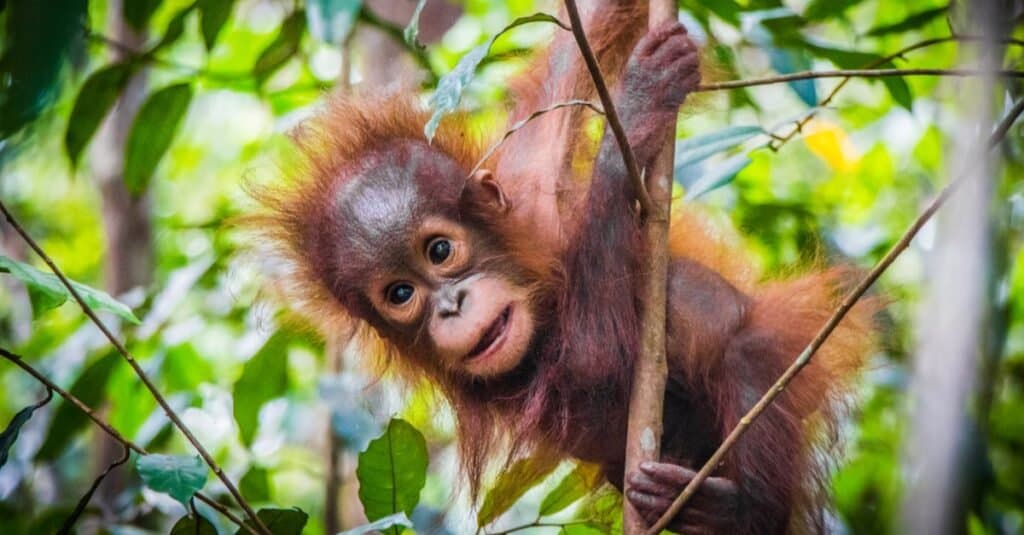
The orangutan is one of the most slow-developing mammals on the planet that cannot breed until it is between 12 and 15 years old
©Alex East/Shutterstock.com
Diet and Prey
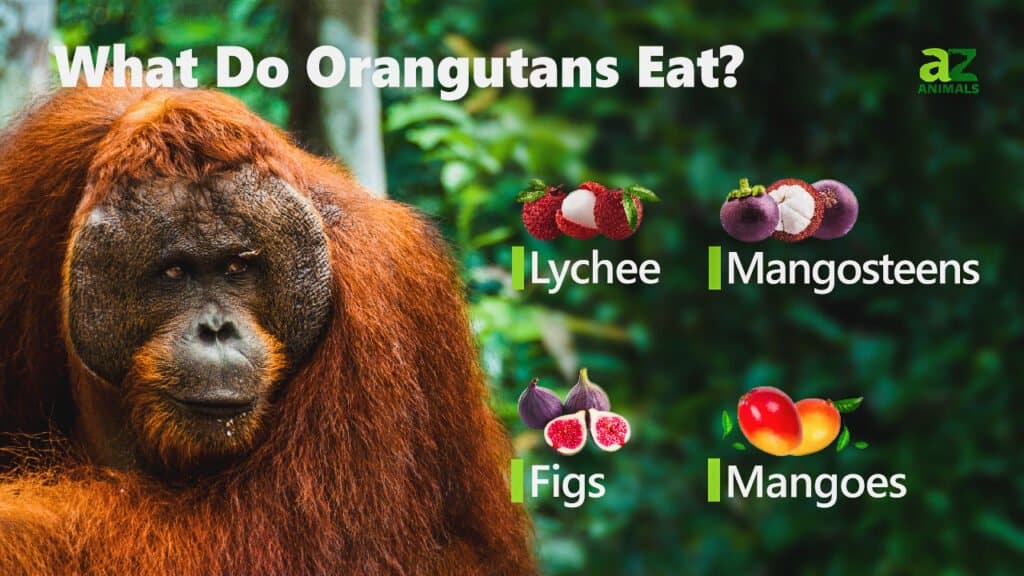
The orangutan is an omnivorous animal that eats a mixture of both plant and animal matter. The majority of its diet is comprised of numerous types of fruit. Their large size and frugivorous nature mean that orangutans must spend most of their day eating, which is possibly the reason why they have evolved to being semi-solitary animals. Despite the fact that orangutans do move throughout large home ranges, they have their own patch of forest that tends to contain the perfect amount of food to sustain that individual (or a mother with her young). Orangutans eat both ripe and unripe fruits, including mangoes, lychees, durian, and figs, which grow in abundance in some places and are where a number of individuals may meet up to feed. When there is a good fresh water source, the orangutan collects it in its cupped hands and then drinks it as it falls, but they don’t need to drink too much as they get the majority of the moisture that they need from their food.
For a complete analysis of the diet of orang-utans, make sure to visit ‘What Do Orangutans Eat.’
Predators and Threats
Historically, orangutans on both Borneo and Sumatra would have been threatened by a number of large, ground-dwelling carnivores, which is possibly why they have evolved to lead an almost completely arboreal life. Large felines such as tigers and clouded leopards are the primary predators of the orangutan, along with crocodiles and the occasional large Asian black bear. However, due to drastic deforestation in both Malaysia and Indonesia, the population numbers of the orangutan’s predators have fallen drastically, with some being even more endangered today than the orangutans themselves. Humans are by far the biggest threat to the remaining orangutan populations as they have not only destroyed much of their unique forest homeland but also hunt and capture the young that are then sold into the exotic pet trade.
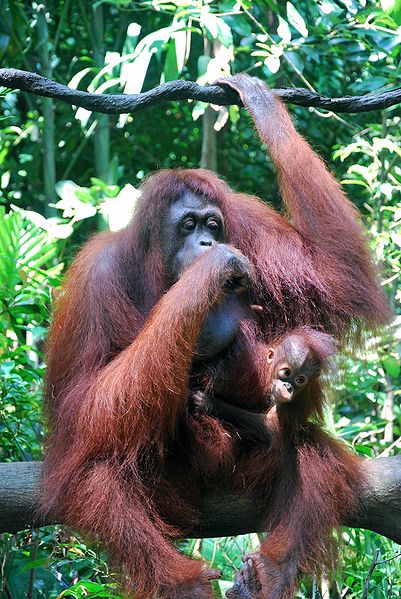
Humans are by far the biggest threat to the remaining orangutan populations.
©chensiyuan / CC BY-SA 4.0 – License
Interesting Facts and Features
The orangutan is a very distinctive animal in the tropical Indonesian forests, with its bright, red, and orange hair leading to it also being known as the red ape. The orangutan is not only the largest tree-dwelling animal in the world, but it is also one of the most intelligent. In order to make the most of the seasonal changes in the tropical rainforest, Orangutans are known to make a mental map of where the different fruit trees are and when they will bare their ripened fruits. Like a number of other great apes, Orangutans are also known to use tools to facilitate their lives in their jungle, often using sticks and branches to collect honey from bee hives or extract ants and termites from inside hollow trees. Although the exact tool skill-set seems to depend on individual populations, they are really quite remarkable, with some orangutans actually known to use large leaves as an umbrella to keep the worst of the rain off and also put smaller leaves on the soft pads of their hands and feet to protect them in thorny vegetation.
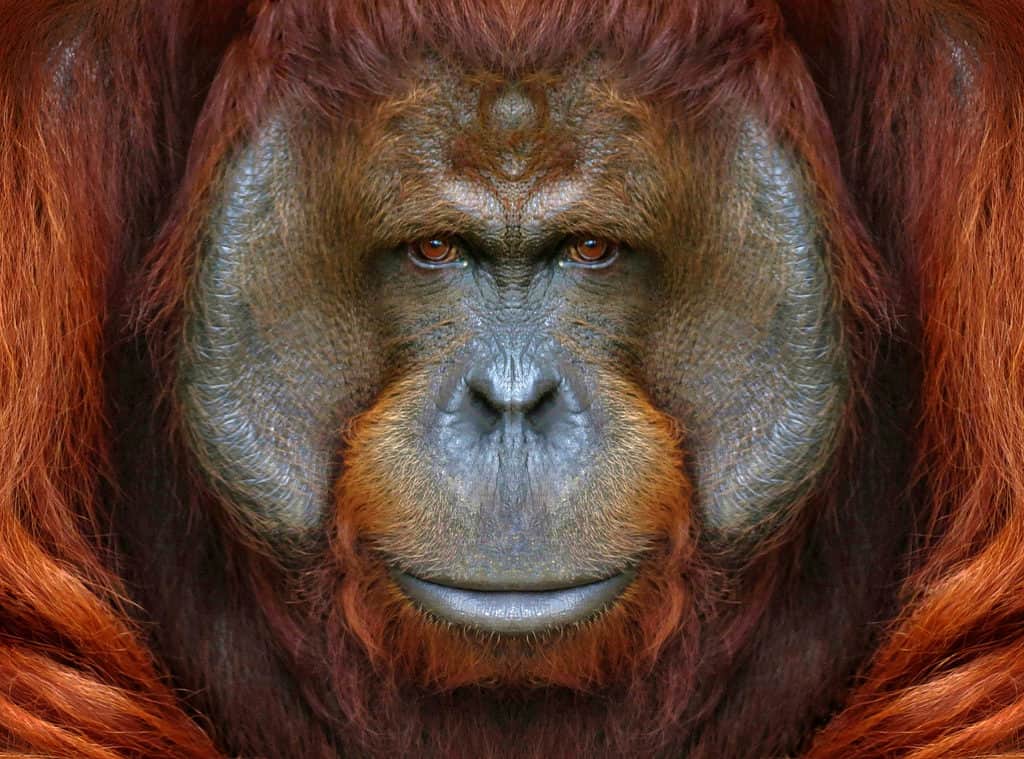
The orangutan is not only the largest tree-dwelling animal in the world, but it is also one of the most intelligent.
©arul_nkh/Shutterstock.com
Relationship with Humans
Since the arrival of modern humans in the Indonesian Archipelago roughly 40,000 years ago, orangutan numbers throughout southeast Asia have been declining. Once also found on the island of Java, orangutans are extinct throughout much of their natural range today due to both hunting and habitat loss. Originally hunted for their meat, things became more sinister in the 1800s when orangutans were in higher demand from zoos around the world, and infants were captured to be sold to them. Things were only made worse with the boom in the trade of exotic pets, with mother orangutans often being killed trying to prevent their young from being captured by people. The biggest threat to orangutans, though, is habitat loss in the form of deforestation for the often illegal logging of tropical timbers and the land clearance for the ever-increasing palm oil industry.
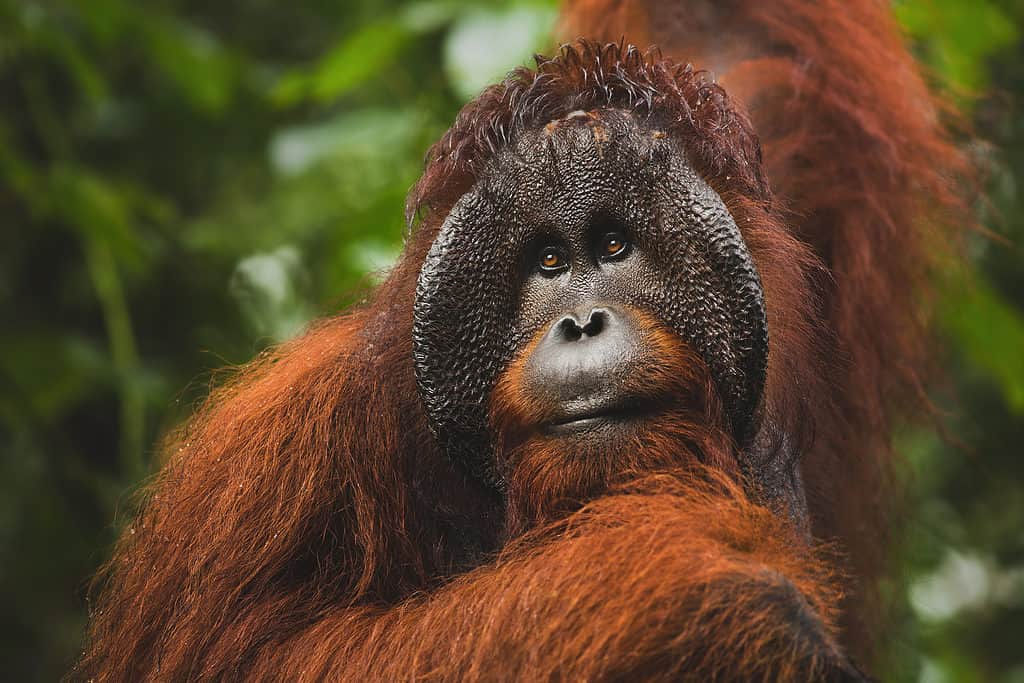
The biggest threat to orangutans, though, is habitat loss in the form of deforestation for the often illegal logging of tropical timbers and the land clearance for the ever-increasing palm oil industry.
©Marketa Myskova/Shutterstock.com
Conservation Status and Life Today
Today, all three orangutan species are listed by the IUCN as animals that are severely under threat in their natural environments, with the Bornean orangutan, the Sumatran orangutan, and the Tapanuli orangutan listed as Critically Endangered. With up to 104,700 Bornean orangutans, 7,000 Sumatran orangutans, and just 800 Tapanuli orangutans thought to remain in the diminishing rainforests, the situation is only getting worse, and despite their legal protection, an estimated 5,000orangutans are killed every year. A number of rehabilitation and reintroduction projects exist in both Borneo and Sumatra, some of which have shown success. A population of young that were confiscated from the illegal pet trade have been introduced into one of Sumatra’s national parks, which have been known to be successfully breeding, with the population now totaling 70 members. If nothing continues to be done though about their dwindling habitats, it has been estimated that orangutans will be extinct from the wild within the next 10 years.
Find out the population of orangutans in the world today.
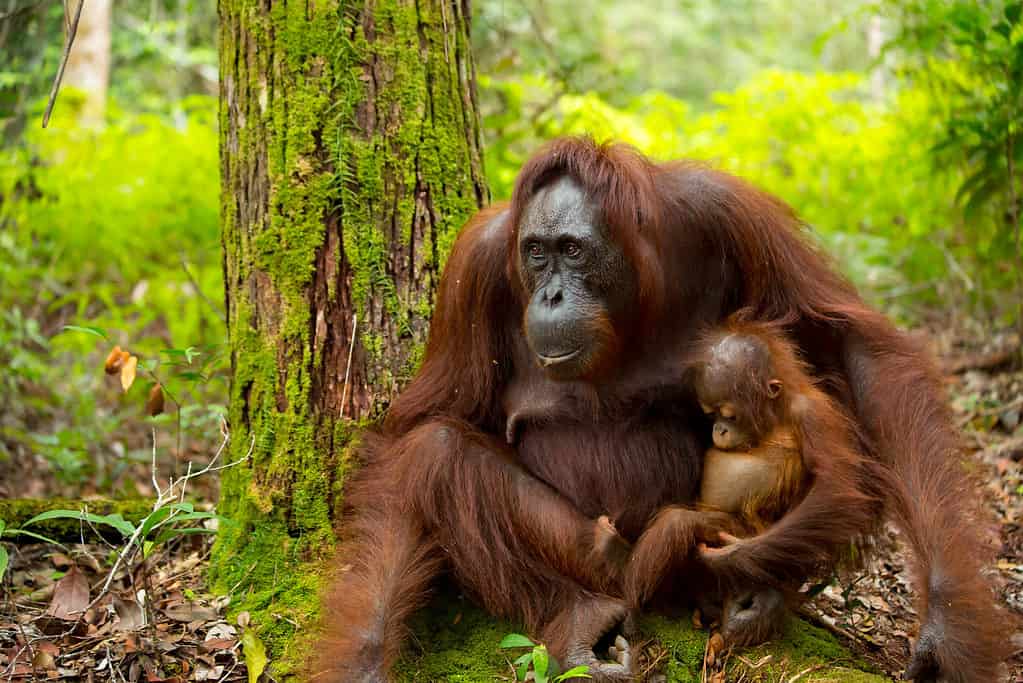
Orangutans will be extinct from the wild within the next 10 years unless drastic measures are taken.
©Katesalin Pagkaihang/Shutterstock.com
3 Types of Orangutans
There are three species of orangutan – Bornean, Sumatran, and Tapanuli. Additionally, the Bornean orangutan has three subspecies. Here is a breakdown below.
Sumatran Orangutan (Pongo abelii). Males are 5.6 feet tall and 200 pounds. Females are 3 feet tall and 100 pounds. Thin, long face with light red hair. Eat almost exclusively fruit and insects. It uses tools and travels by tree.
Tapanuli Orangutan (Pongo tapanuliensis). Rarest great ape. frizzy hair, smaller head. Males have large mustaches. Males are 4.5 feet tall and 200 pounds. Females are 3.5 feet tall and 110 pounds.
Bornean Orangutan (Pongo pygmaeus) – The third-largest ape. Tree-dwelling. Males 165 pounds. Females 85 pounds. Arms up to 4.9 feet long. Shaggy red coat.
- Northwest Bornean orangutan (Pongo pygmaeus pygmaeus). They live in Malaysia and northern Indonesia.
- Central Bornean orangutan (Pongo pygmaeus wurmbii). They live in Southern and Central Indonesia.
- Northeast Bornean orangutan (Pongo pygmaeus morio). They live in East Indonesia and Malaysia.
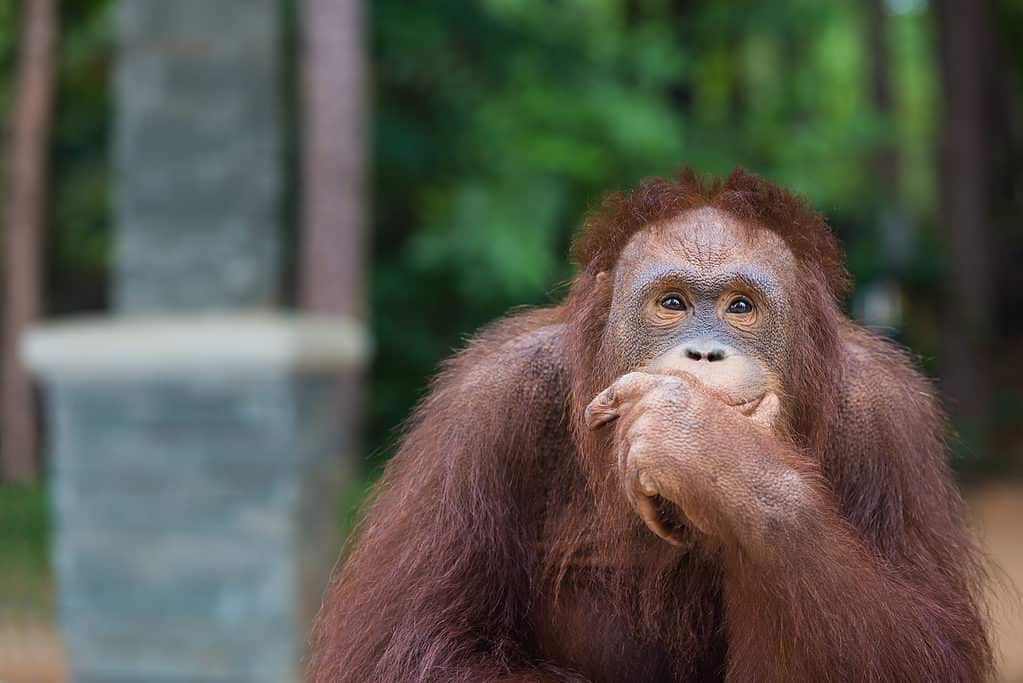
Orangutans are highly intelligent, and curious.
©Everything I Do/Shutterstock.com
How to Add Us to Google News

Orangutan FAQs (Frequently Asked Questions)
Are Orang-utans herbivores, carnivores, or omnivores?
Orang-utans are Omnivores, meaning they eat both plants and other animals.
What Kingdom do Orang-utans belong to?
Orang-utans belong to the Kingdom Animalia.
What class do Orang-utans belong to?
Orang-utans belong to the class Mammalia.
What phylum to Orang-utans belong to?
Orang-utans belong to the phylum Chordata.
What family do Orang-utans belong to?
Orang-utans belong to the family Hominidae.
What order do Orang-utans belong to?
Orang-utans belong to the order Primates.
What type of covering do Orang-utans have?
Orang-utans are covered in Hair.
What genus do Orang-utans belong to?
Orang-utans belong to the genus Pongo.
Where do Orang-utans live?
Orang-utans live in Borneo and Sumatra.
In what type of habitat do Orang-utans live?
Orang-utans live in lowland tropical forests.
What are some predators of Orang-utans?
Predators of Orang-utans include humans, tigers, and clouded leopards.
How many babies do Orang-utans have?
The average number of babies an Orang-utan has is 1.
What is an interesting fact about Orang-utans?
Orang-utans share 97% of their DNA with humans!
What is the scientific name for the Orang-utan?
The scientific name for the Orang-utan is Pongo pygmaeus, Pongo abelii, or Pongo tapanuliensis.
What is the lifespan of a Orang-utan?
Orang-utans can live for 30 to 40 years.
What is a baby Orang-utan called?
A baby Orang-utan is called an infant.
How many species of Orang-utan are there?
There are 3 species of Orang-utan.
What is the biggest threat to the Orang-utan?
The biggest threats to the Orang-utan are hunting and habitat loss.
What is another name for the Orang-utan?
The Orang-utan is also called the red ape or forest person.
How many Orang-utans are left in the world?
There are 20,000 Orang-utans left in the world.
How fast is an Orang-utan?
An Orang-utan can travel at speeds of up to 2.7 miles per hour.
What is the difference between a chimpanzee and an orangutan?
The main differences between orangutans and chimpanzees include their size, reproduction and lifespan, social behavior, skin, and habitat. Although the two are unique in their own ways, what’s most remarkable about orangutans is their cognitive ability to understand the reason behind specific actions.
How to say Orangutan in ...
Thank you for reading! Have some feedback for us? Contact the AZ Animals editorial team.
Sources
- David Burnie, Dorling Kindersley (2011) Animal, The Definitive Visual Guide To The World's Wildlife
- Tom Jackson, Lorenz Books (2007) The World Encyclopedia Of Animals
- David Burnie, Kingfisher (2011) The Kingfisher Animal Encyclopedia
- Richard Mackay, University of California Press (2009) The Atlas Of Endangered Species
- David Burnie, Dorling Kindersley (2008) Illustrated Encyclopedia Of Animals
- Dorling Kindersley (2006) Dorling Kindersley Encyclopedia Of Animals
- David W. Macdonald, Oxford University Press (2010) The Encyclopedia Of Mammals
- Sumatran Orang-utan Information, Available here: http://www.iucnredlist.org/apps/redlist/details/39780/0
- Bornean Orang-utan Information, Available here: http://www.iucnredlist.org/apps/redlist/details/17975/0