



Quick Take
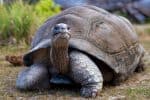
- An animal with no natural predators was nearly wiped out in under 100 years, a fate that its own fearlessness was partly to blame for. How fearlessness backfired →
- This tortoise can live longer than any human ever has, though the way scientists track its age reveals a surprising complication. Lifespan and age tracking →
- The biggest modern threat to these tortoises isn't hunting or predators. It's something that hasn't fully arrived yet. The climate change threat →
- One introduced farm animal dealt more damage to this species than centuries of hunters ever did, and it didn't even need teeth to do it. Goats and grazing competition →
Before the 1700s, the Aldabra Giant Tortoise had no significant predators or competition for food, with all populations of the various giant Tortoise species thought to have been healthy. However, the people who arrived on the islands found both the Tortoises and their eggs easy to catch and kill and somewhat good to eat, with mass hunting wiping out nearly all of them in less than 100 years. The Aldabra Giant Tortoise was also eaten by the domestic animals that arrived with people, with their ground-dwelling nests being particularly vulnerable. They have also now lost much of their natural habitat due to expanding Human settlements throughout the atoll.

Classification and Evolution
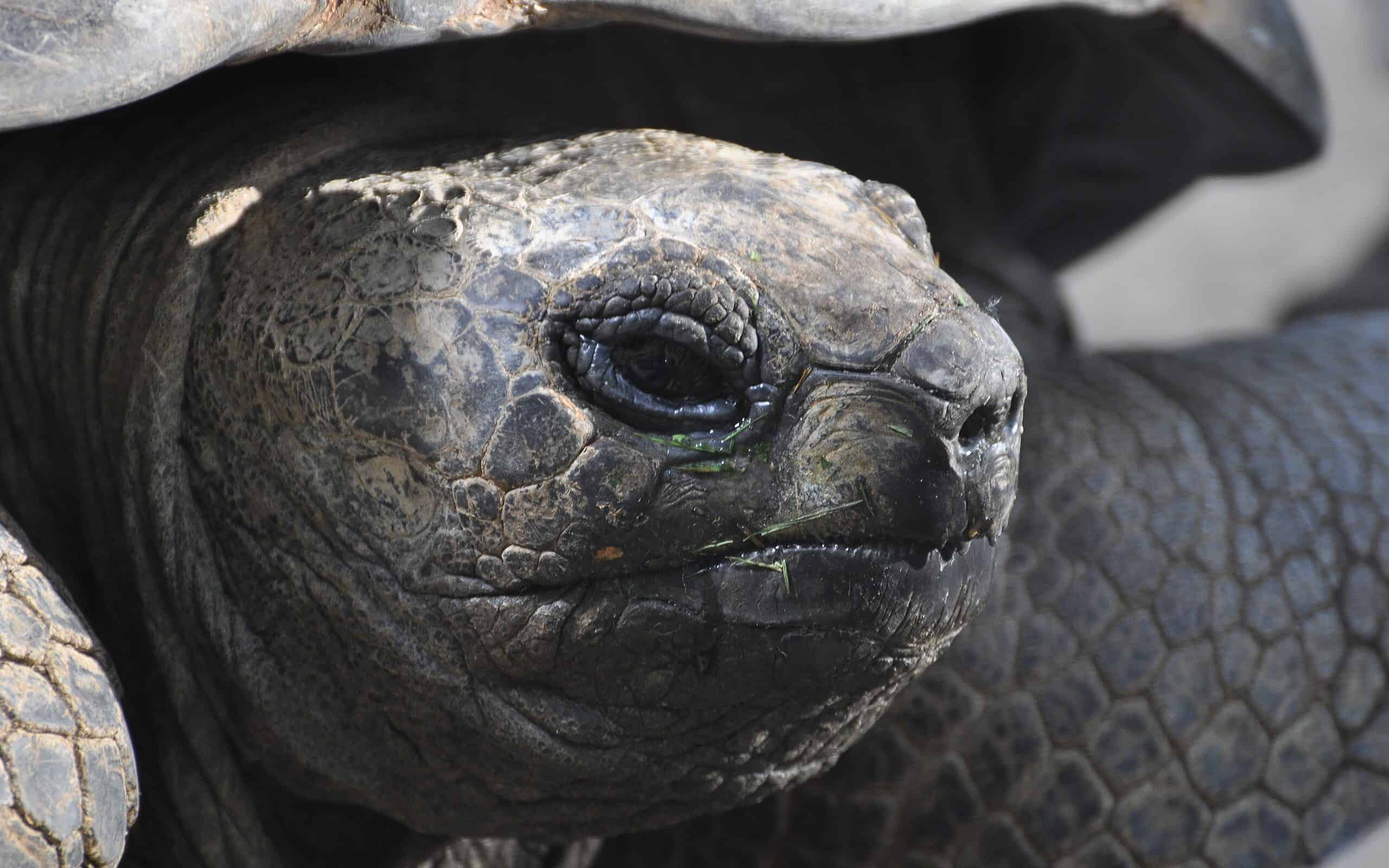
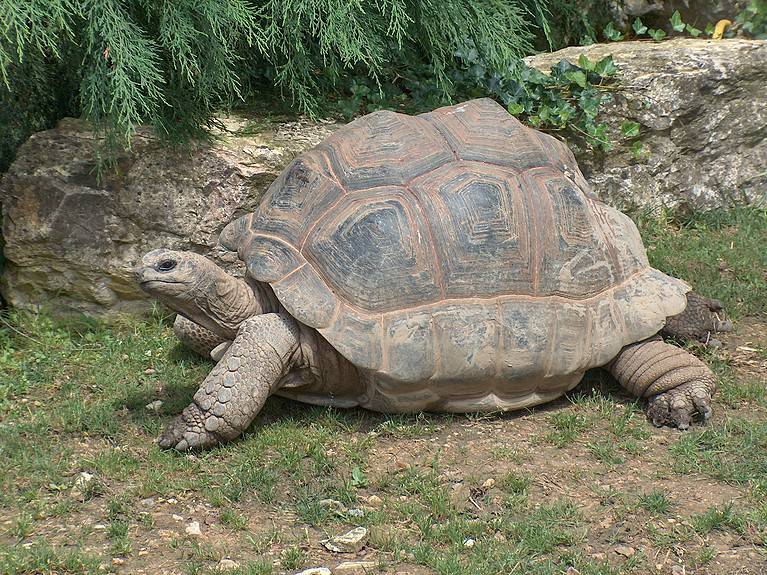
Aldabra giant tortoises are the only surviving members of the Aldabrachelys genus.
©Aiwok, CC BY-SA 3.0, via Wikimedia Commons – Original / License
The Aldabra Giant Tortoise is a massive, long-necked reptile endemic to the Aldabra Islands off the East Coast of Africa. The Aldabra giant tortoise is among the biggest types of land tortoise and longest-living animals on the planet, with one Aldabra giant tortoise reportedly living to approximately 250 years of age, though the exact age has not been confirmed. The Aldabra Giant Tortoise is the last surviving species of Indian Ocean giant tortoises, as others such as the Seychelles Giant Tortoise went extinct soon after the arrival of humans to this region. The Aldabra Giant Tortoise and the Seychelles Giant Tortoise share many characteristics, to the point where much debate has arisen as to their true classification.
Anatomy and Appearance
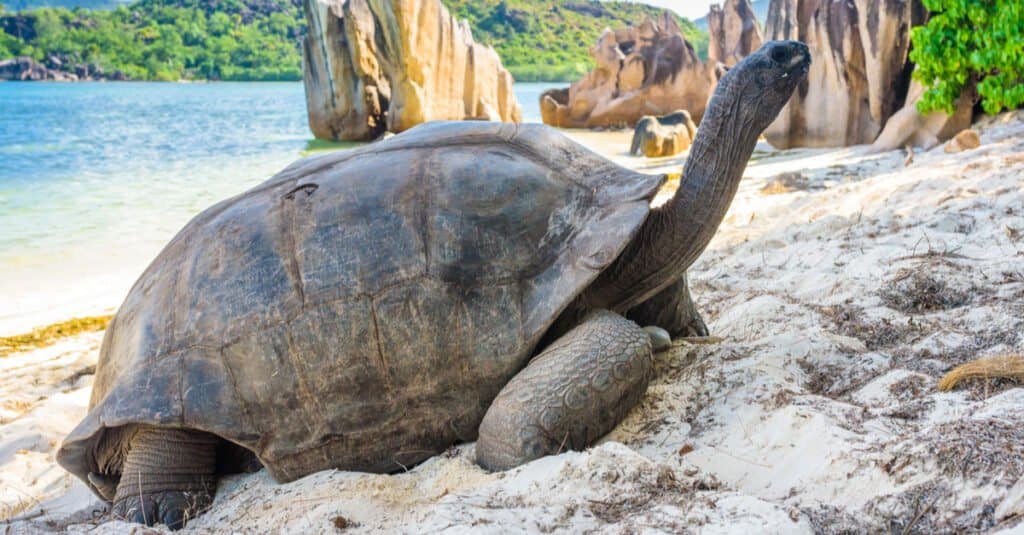
Aldabra giant tortoises are perfectly adapted to life on the sandy shores of a mangrove beach.
©Jan Bures/Shutterstock.com
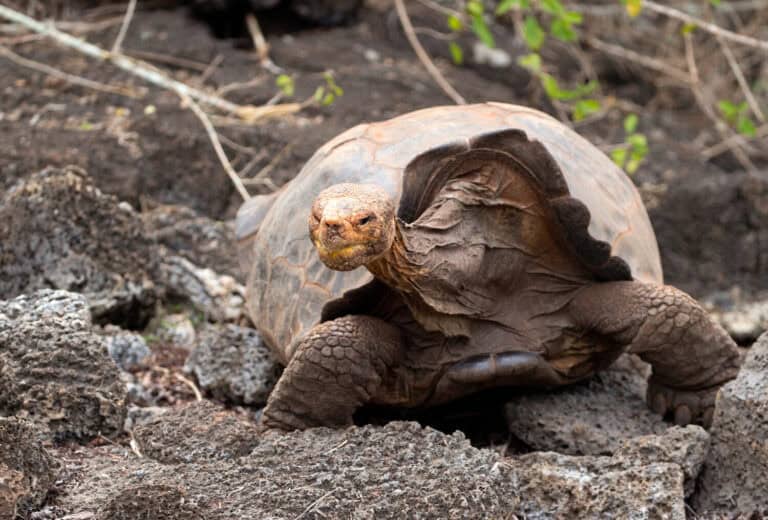
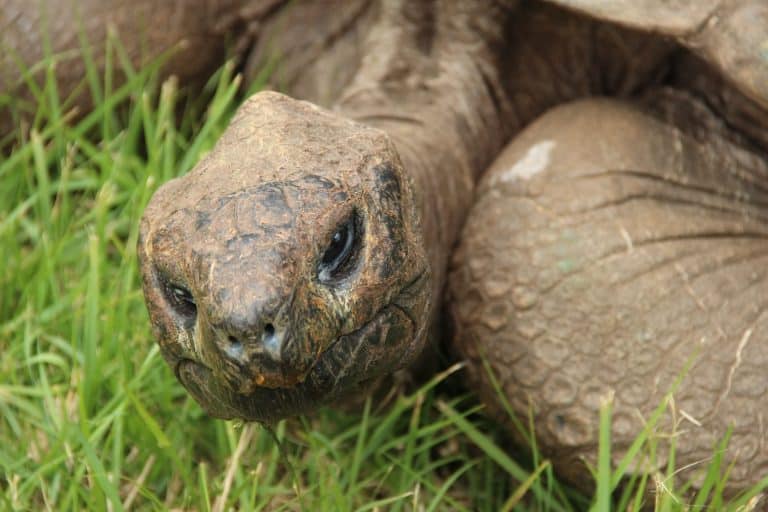
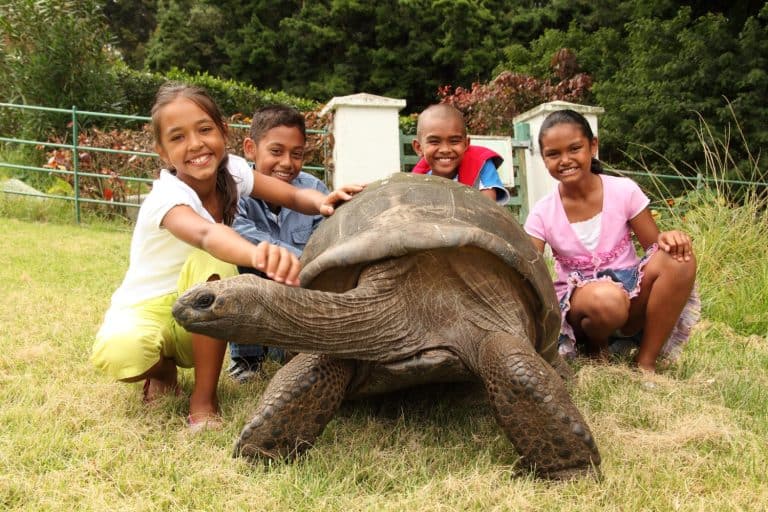
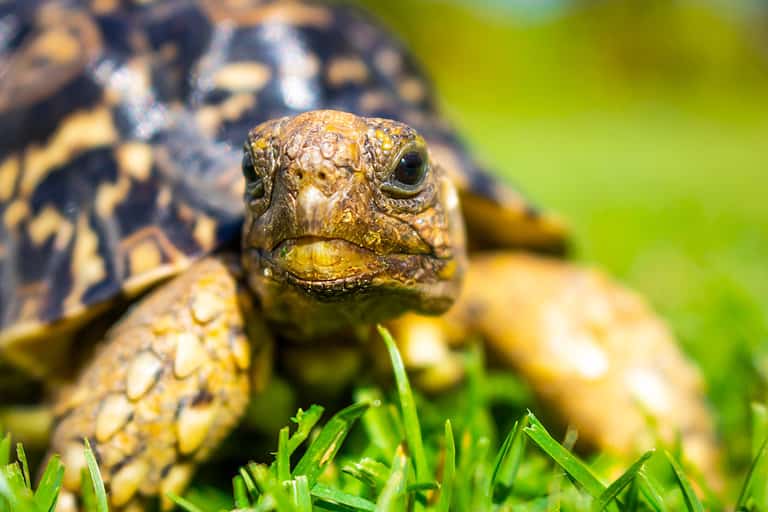
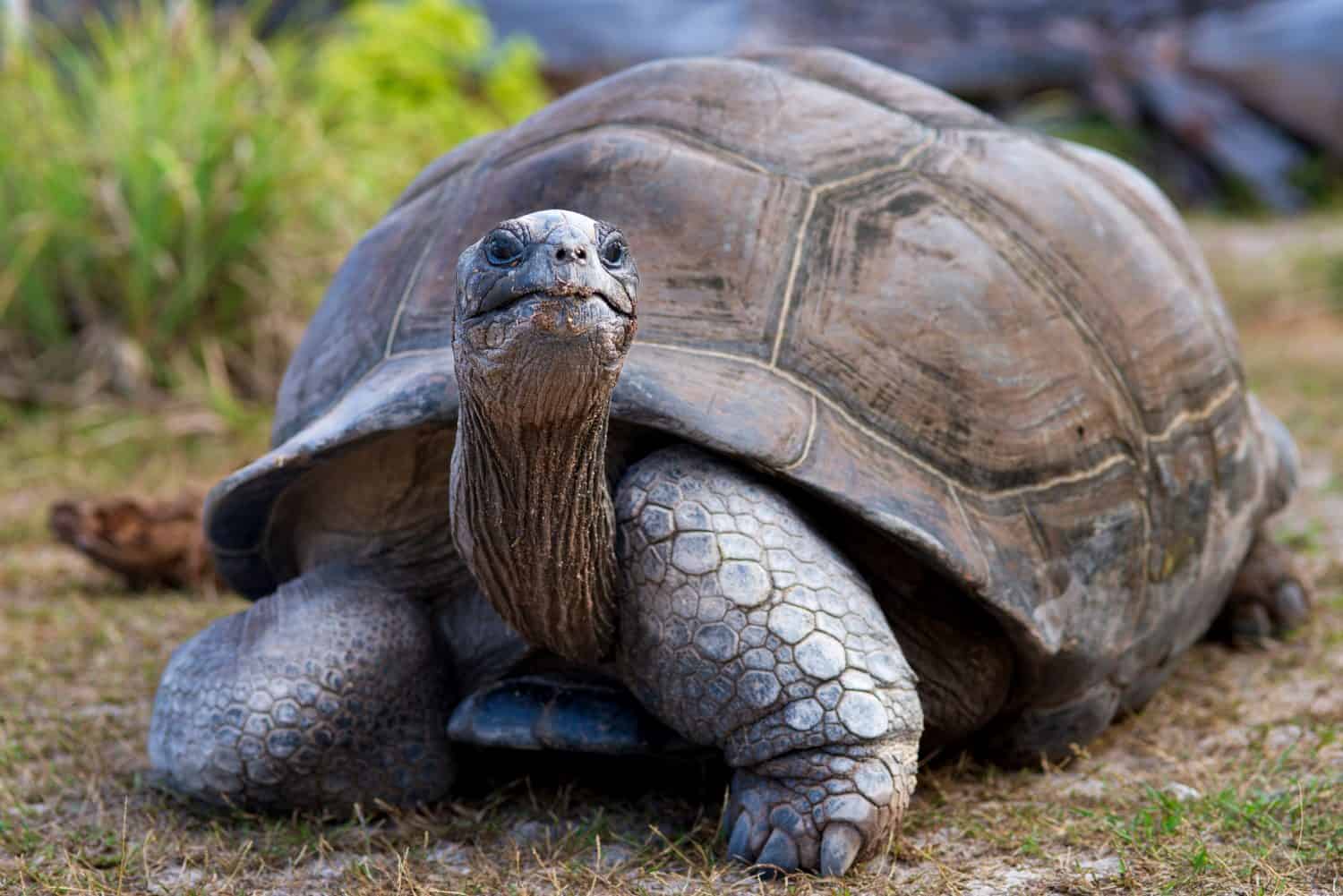
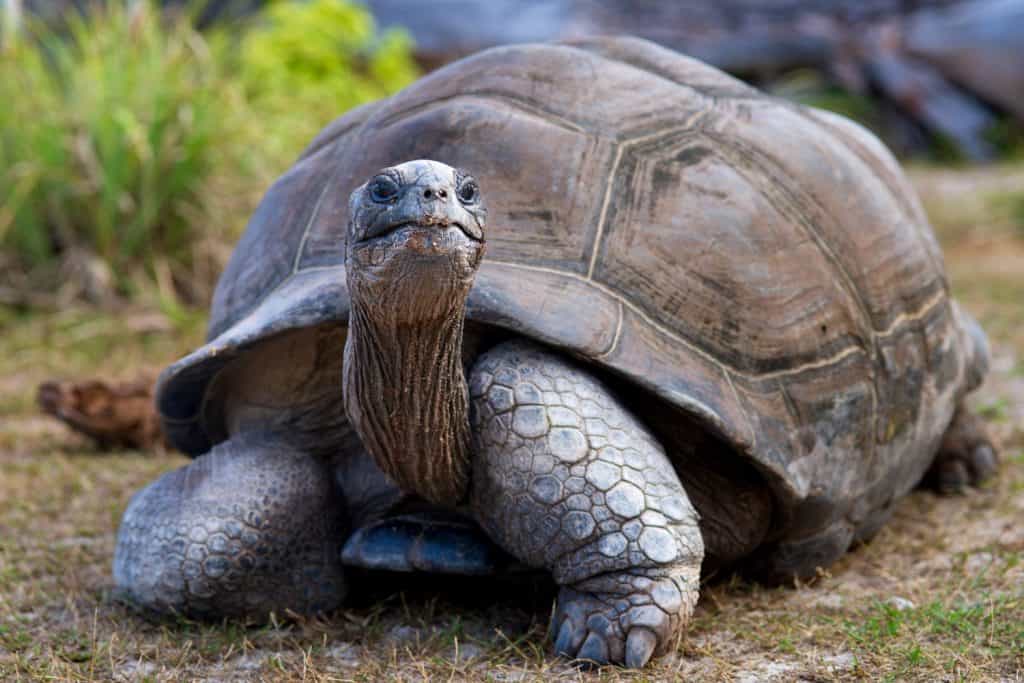
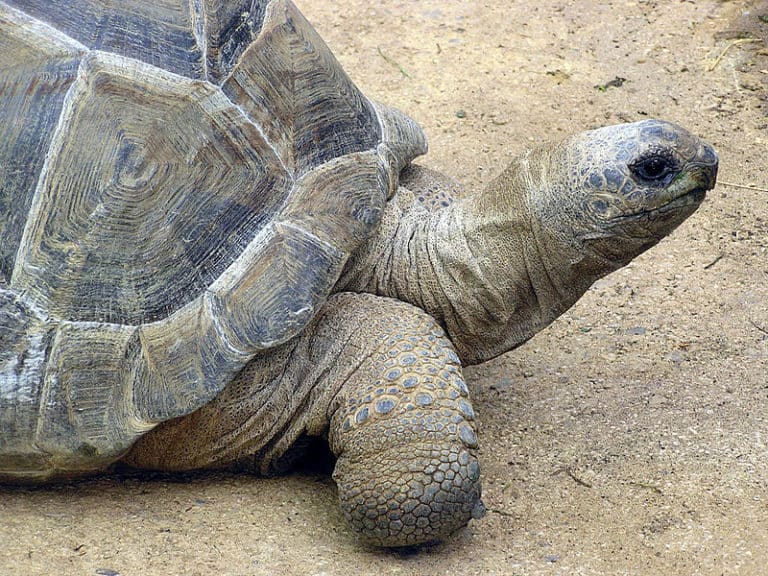
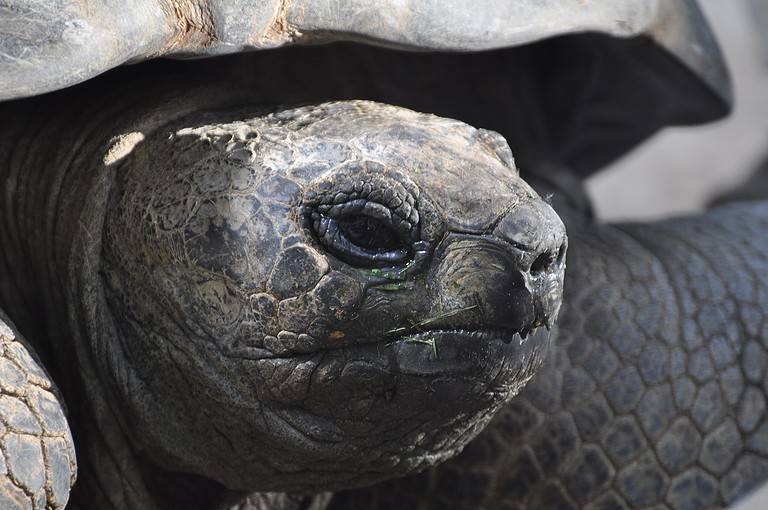
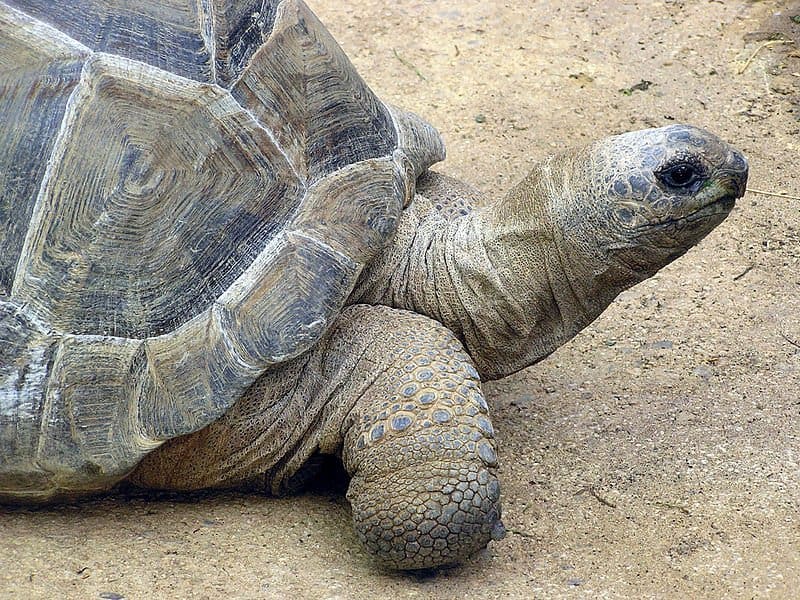
The Aldabra Giant Tortoise has a massive defensive shell known as a carapace that protects the vulnerable, soft body within. The Aldabra Giant Tortoise is also notable for its long, craning neck that it uses to eat leaves from low-hanging branches. The male Aldabra Giant Tortoise can grow up to 4 feet (1.22 meters) long, with females being slightly smaller at a length of 3 feet (0.9 meters). The males are considerably heavier, despite not being much larger, weighing up to 200 lbs (90 kg) more than their female counterparts. Their sturdy, shovel-like feet provide traction for walking across unyielding sands.
Distribution and Habitat
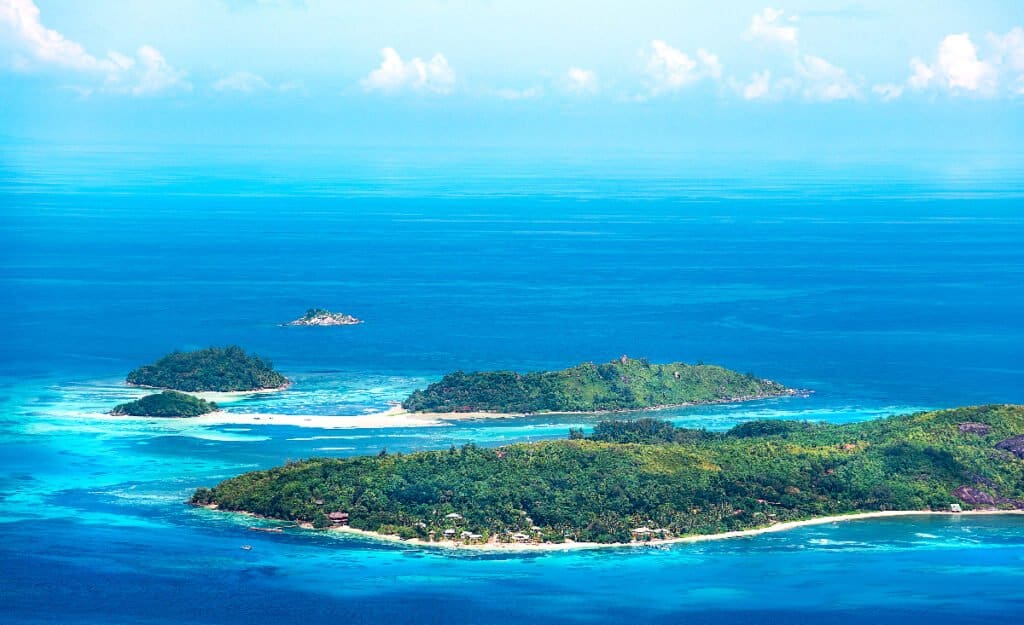
Aldabra giant tortoises only live in the island nation of the Seychelles.
©22Images Studio/Shutterstock.com
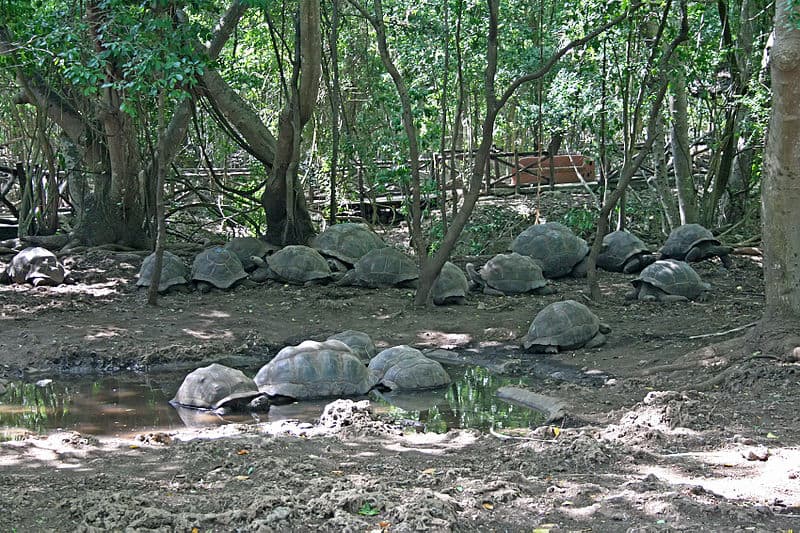
The Aldabra Giant Tortoise mainly dwells in the grassy and swampy regions of the Aldabra Atoll (a mass of coral that partially or wholly obscures a lagoon), which is a portion of the Seychelles chain of islands in the Indian Ocean. They once shared these islands with a number of other giant Tortoise species, but many of these were hunted to extinction in the 1700s and 1800s. Although the Aldabra Giant Tortoise is usually found in areas of dense, low-lying vegetation, it is also known to wander into sparser, rocky regions when food is in short supply. The Aldabra Giant Tortoise can also often be found resting in the shade, or in a very shallow pool of water to cool itself down in the heat.
Behavior and Lifestyle
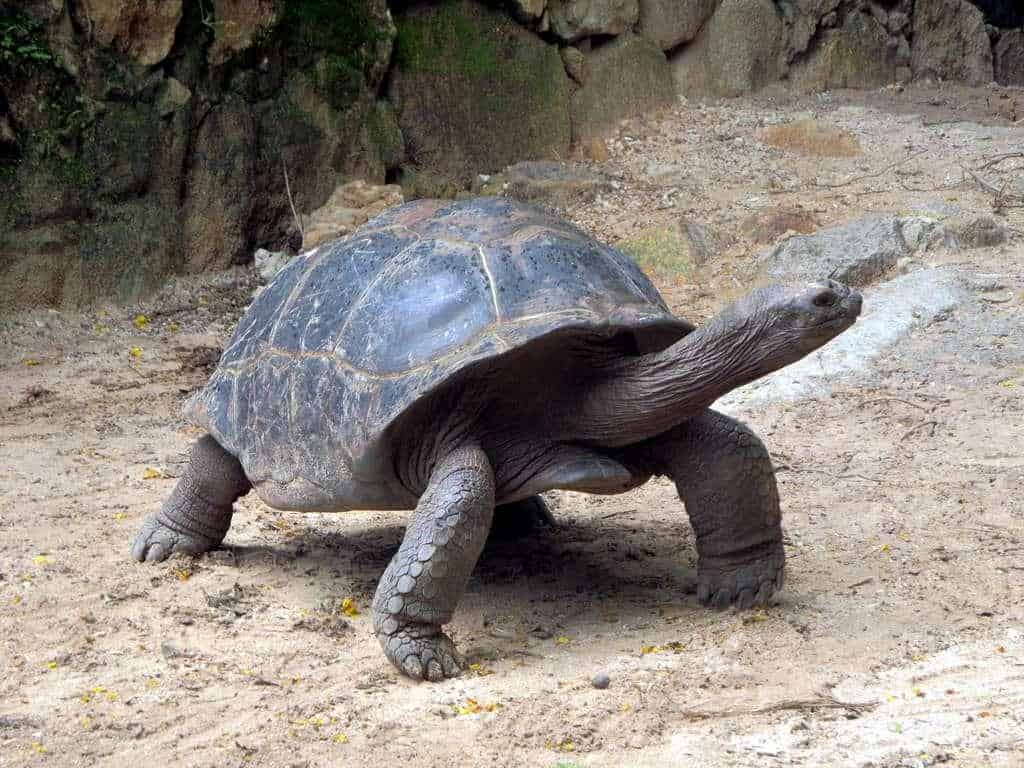
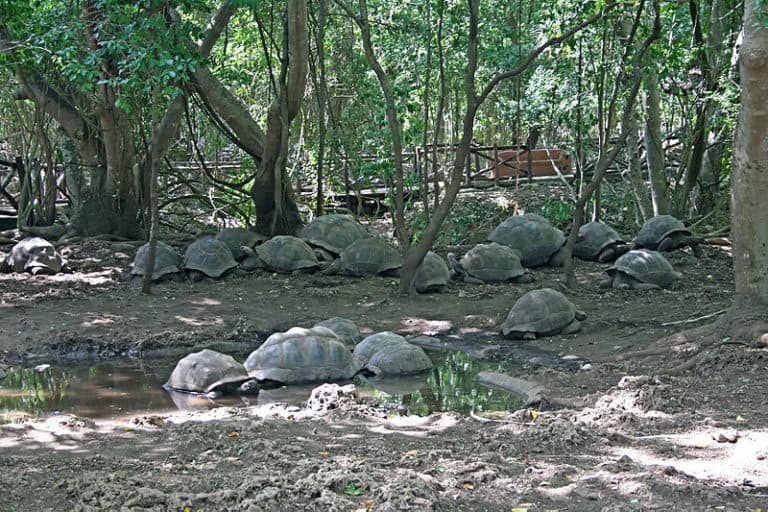
Aldabra giant tortoises are highly social amongst themselves.
Aldabra Giant Tortoises are known to travel solitarily, as well as in herds, which primarily congregate in spacious, grassy fields. The Aldabra Giant Tortoise does most of its eating in the early morning hours when they can forage in the light without the full force of the daytime sun’s heat. The Aldabra Giant Tortoise has also been seen digging burrows into the sand in order to cool off and escape the heat. Despite being slow and cautious animals, the Aldabra Giant Tortoise is said to be uninterested in the presence of people, indicating that one of the reasons that they were so easy for Human settlers to hunt was simply because these animals had no fear of them.
Reproduction and Life Cycles
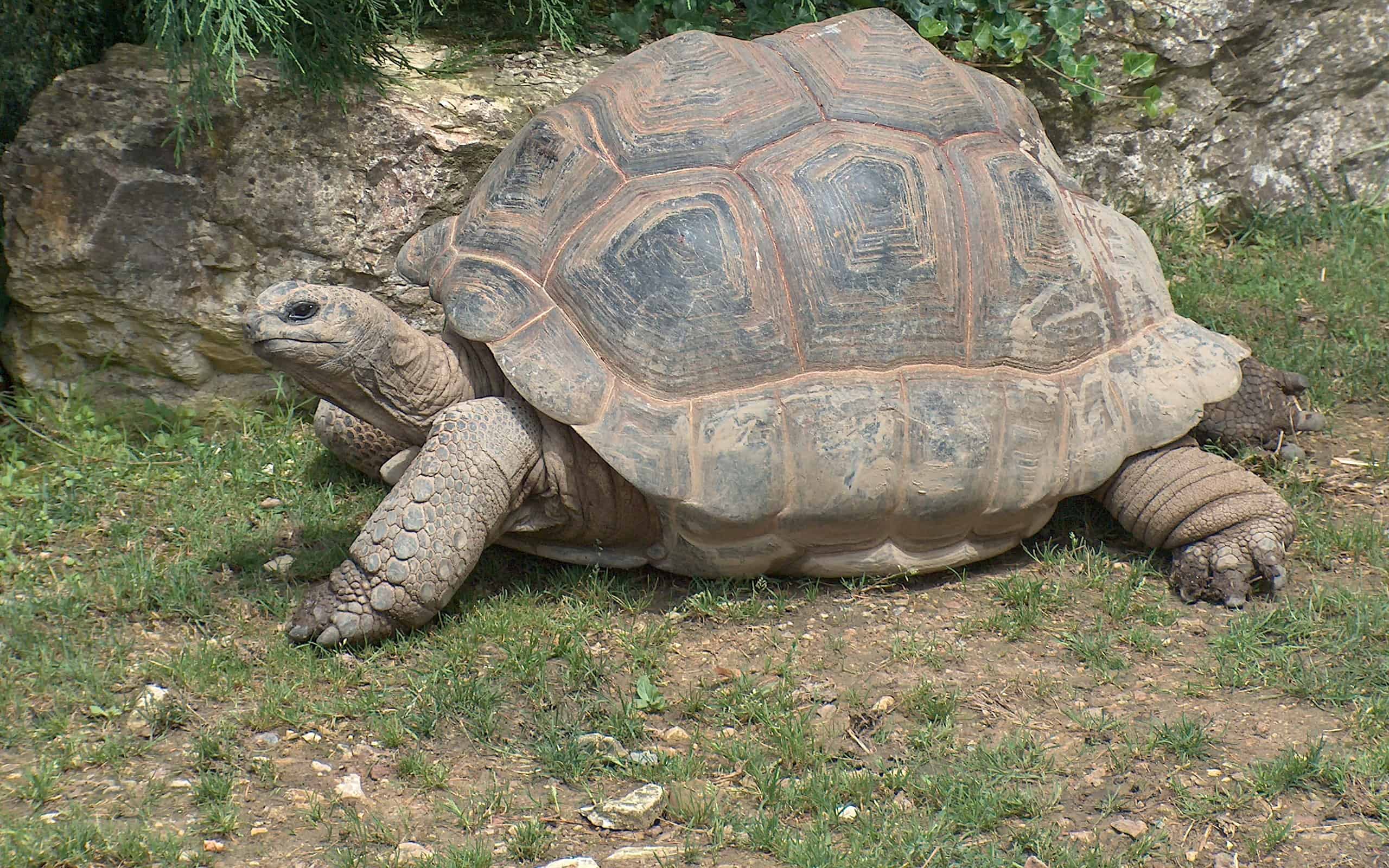
Aldabra giant tortoises metabolize incredibly slowly.
©Yotcmdr, Public domain, via Wikimedia Commons – Original / License
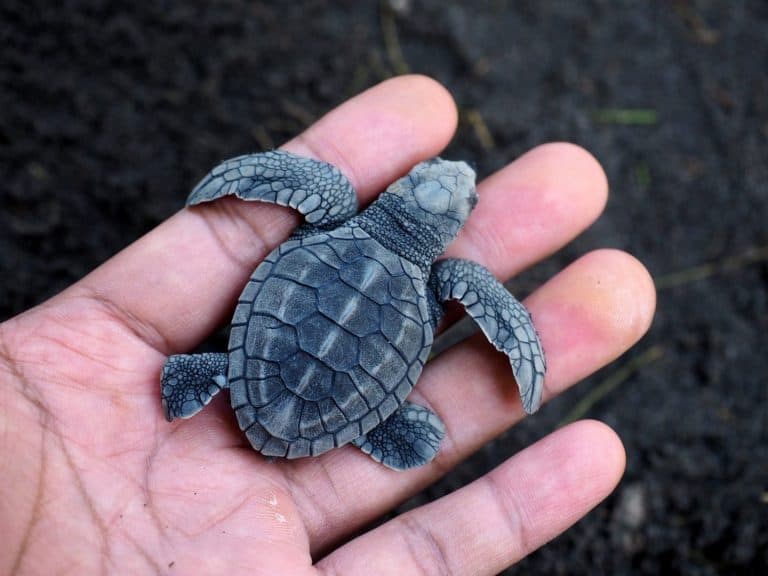
Aldabra Giant Tortoise mothers typically lay between 4 and 14 rubbery eggs between February and May. They bury their eggs in a dry, shallow pit that is easily raided by predators if left unguarded. Biologists believe that female Aldabra Giant Tortoises are able to produce more than one clutch a year, which typically hatch after an incubation period ranging from roughly 3 to 8 months. The baby Aldabra Giant Tortoises tend to all emerge during the same two-week period, which coincides with the arrival of the rainy season. They are very slow-growing reptiles and often do not reach sexual maturity until they are between 20 and 30 years old. Although some individuals have been known to live for more than 250 years, most live to be between 80 and 120 years old.
Diet and Prey
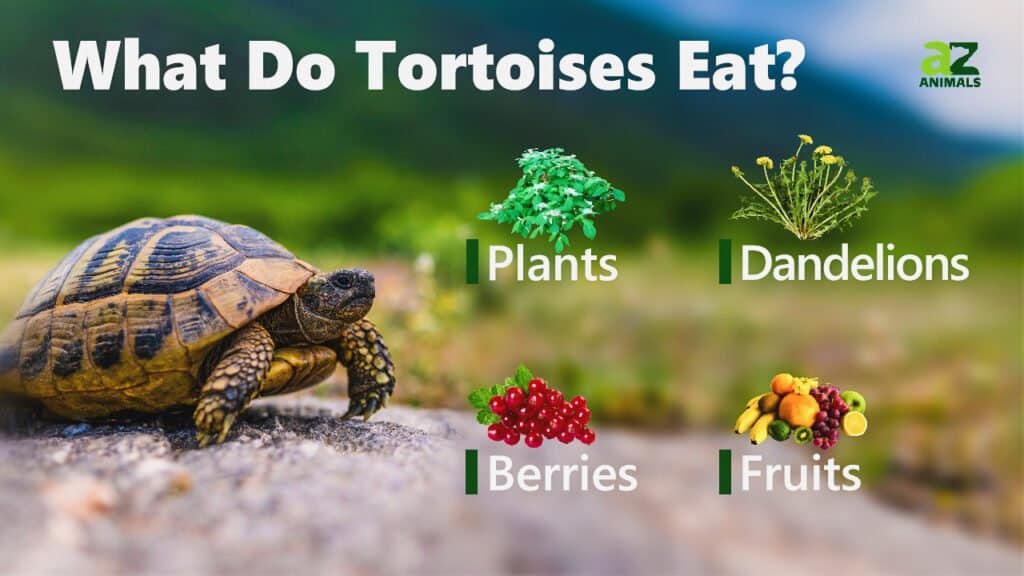
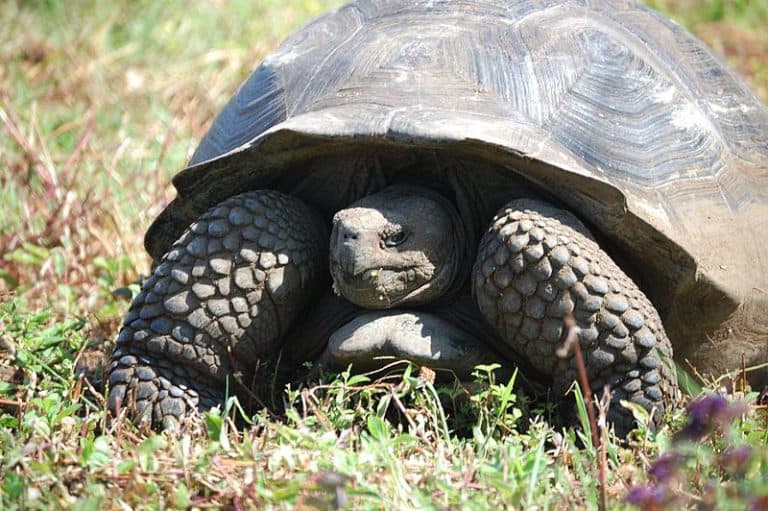
The Aldabra Giant Tortoise is an herbivore, spending a significant portion of its time searching for sustenance in its surrounding well-vegetated environment. The Aldabra Giant Tortoise is commonly seen in places that are referred to as “Tortoise Turf”, which offer a buffet of more than 20 varieties of herbs and grasses for these reptiles to snack on. Aldabra Giant Tortoises also eat leaves, berries, fruits, and nuts from the foliage and are known to reach up on their hind legs to nibble on treats slightly higher up. One of the biggest blows to the species from the introduction of domestic animals was the sudden competition for food. Goats are known to graze very quickly, munching their way through vast areas of the Tortoise’s native habitat.
Predators and Threats
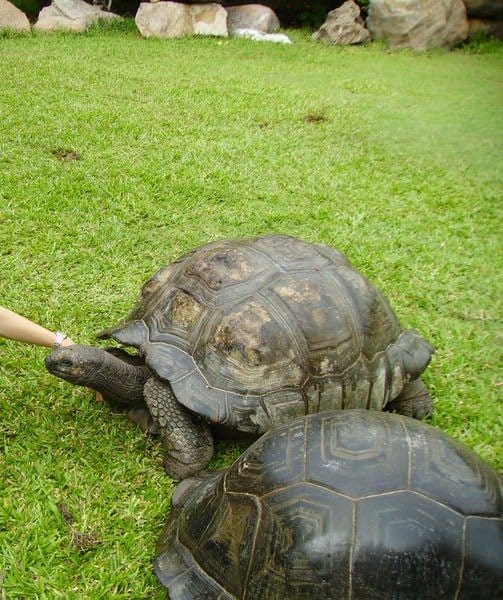
Aldabra Giant Tortoises were hunted by early human settlers of the Aldabra Atoll.
Due to their gargantuan size relative to the other creatures native to their island, Aldabra Giant Tortoises did not initially have any natural predators (with the exception of eggs and baby tortoises, which fell victim to a species of crab that inhabits sandy tunnels on the atoll). This changed when the first humans arrived and introduced domesticated animals like dogs and goats, which would eat the tortoises themselves as well as feed on the vulnerable young. Today, the Aldabra Giant Tortoise is most threatened by habitat loss from growing human settlements, with climate change becoming an increasingly significant threat to the species in the future.
Interesting Facts and Features
Aldabra Giant Tortoises could be greatly affected by climate change.
©Arpingstone, Public domain, via Wikimedia Commons – Original / License
The Aldabra Giant Tortoise has been given 40 scientific names to date, mainly because of ongoing debate about their similarity to other large Indian Ocean Tortoise species, including the possibly extinct Seychelles Giant Tortoise. Despite population numbers dropping through hunting, habitat loss, and the introduction of new predators, one of the biggest threats to the Aldabra Giant Tortoise is the rising sea level, caused by climate change. The islands that these tortoises live on are only a few meters above sea level and are therefore at great risk from these rising waters.
Conservation Status and Life Today
Conservation efforts have helped protect the Aldabra giant tortoise from extinction.
©Muhammad Mahdi Karim / Creative Commons – Original / License
Today, the Aldabra Giant Tortoise is listed as an animal that is Vulnerable to extinction in the wild. However, the Aldabra atoll has now been protected from human interference after being declared a World Heritage Site and boasts a population of around 152,000 Aldabra Giant Tortoises, the world’s largest and most stable population. Other, smaller populations of the Aldabra Giant Tortoise dwell on Zanzibar, while Mauritius and Rodrigues are home to small populations in captivity in conservation parks and zoos. The captive breeding programs on these islands aim to revive the species, and populations there today appear to be thriving.
Aldabra Giant Tortoise Pictures
View all of our Aldabra Giant Tortoise pictures in the gallery.

How to say Aldabra Giant Tortoise in ...
Sources
- David Burnie, Dorling Kindersley (2011) Animal, The Definitive Visual Guide To The World's Wildlife / Accessed July 12, 2010
- Tom Jackson, Lorenz Books (2007) The World Encyclopedia Of Animals / Accessed July 12, 2010
- David Burnie, Kingfisher (2011) The Kingfisher Animal Encyclopedia / Accessed July 12, 2010
- Richard Mackay, University of California Press (2009) The Atlas Of Endangered Species / Accessed July 12, 2010
- David Burnie, Dorling Kindersley (2008) Illustrated Encyclopedia Of Animals / Accessed July 12, 2010
- Dorling Kindersley (2006) Dorling Kindersley Encyclopedia Of Animals / Accessed July 12, 2010
- Reptiles Web / Accessed July 12, 2010
- Natural History Museum / Accessed July 12, 2010