
While many people associate the American alligator (Alligator mississippiensis) with Florida, Louisiana has a far greater population of these large reptiles, supporting an estimated 2 million individuals—more than any other state. In Lake Pontchartrain, sightings tend to occur near freshwater inlets or after heavy rains dilute salinity levels. Though rarely encountered in open water, alligators remain a vital part of the Pontchartrain Basin’s ecosystem, acting as top predators throughout the surrounding wetlands. Today, we are highlighting Louisiana’s Lake Pontchartrain and the alligators that, at times, inhabit this massive body of water.
This post was updated to clarify the alligator’s scientific name, the classification of Lake Pontchartrain as an estuary, the typical salinity of the water, formation of the lake, historical naming, average alligator size, and alligator population in Lake Pontchartrain.
History of Lake Pontchartrain
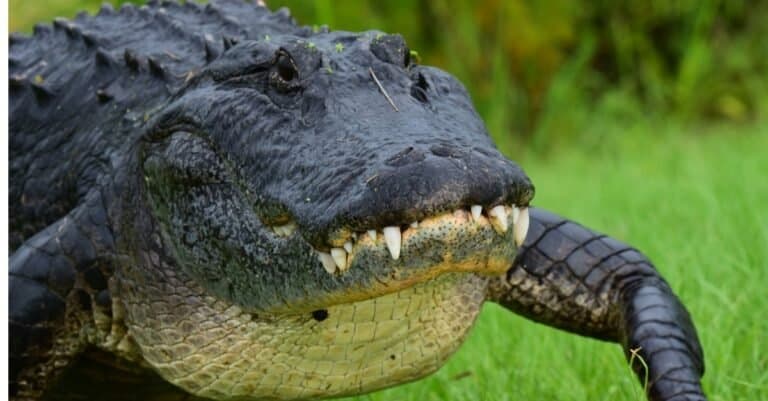
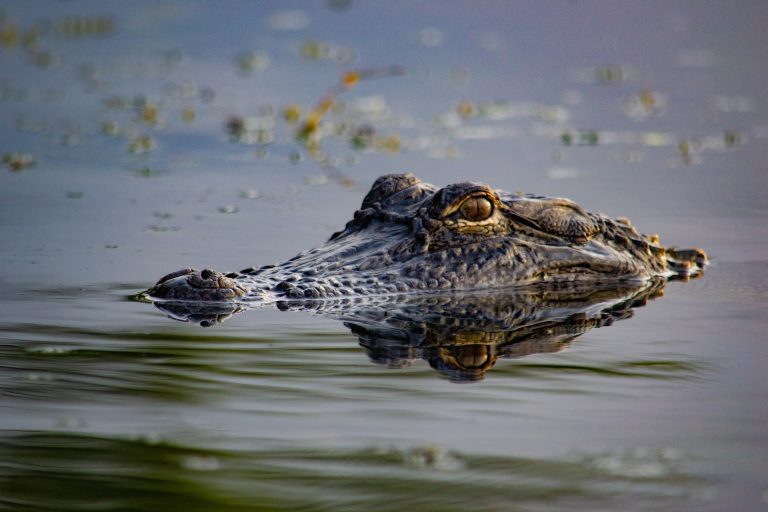
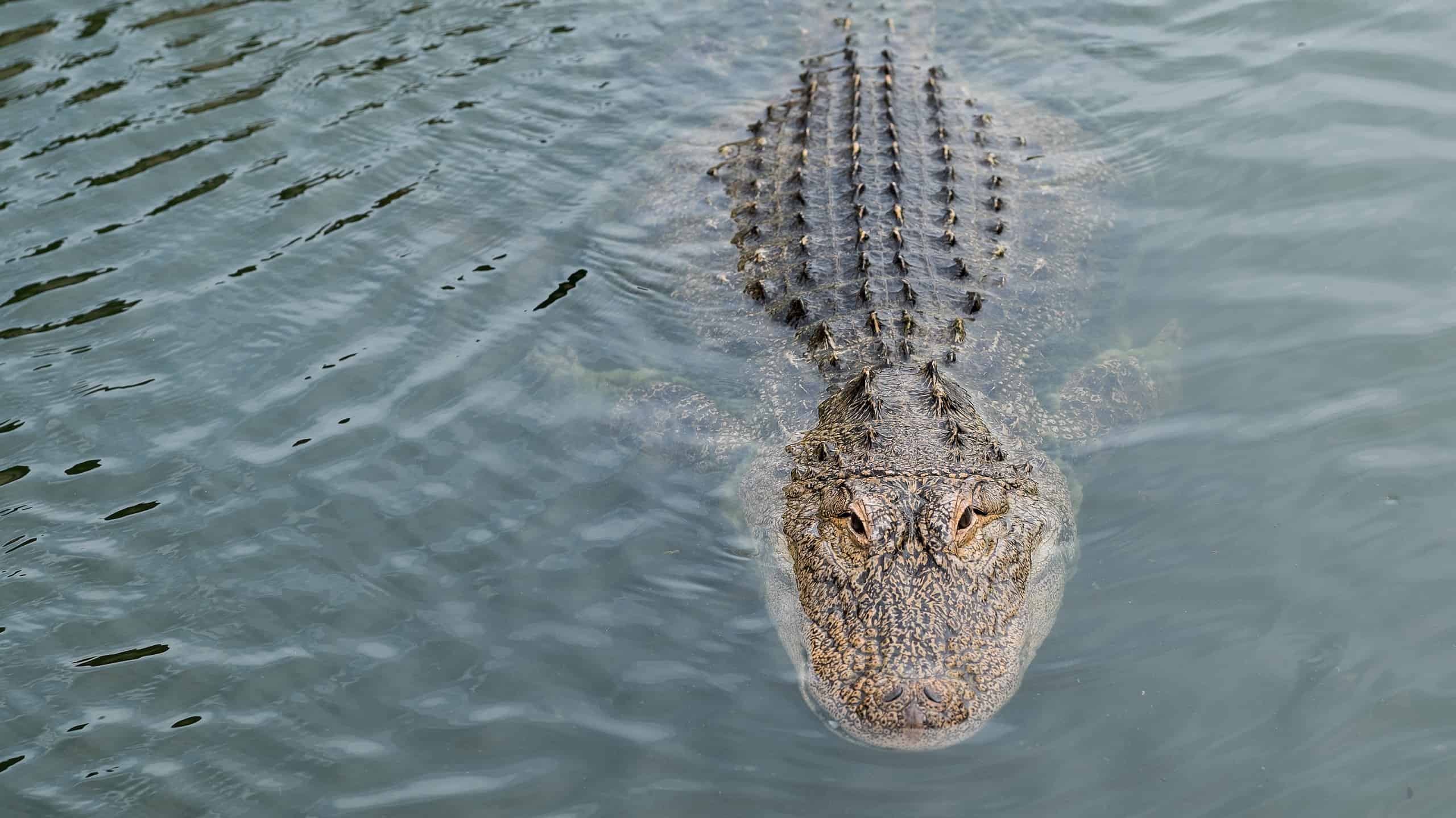
Alligators are everywhere in Louisiana, especially Lake Pontchartrain.
©iStock.com/Cindy Larson
The largest lake in Louisiana is actually not a lake at all, but an estuary made up of brackish water (a mix of freshwater and saltwater). It is one of the largest such bodies in the United States. Its salinity averages 1–5 parts per thousand, compared to seawater’s 35 parts per thousand. It’s mostly freshwater with limited tidal influence from the Gulf via the Rigolets and Chef Menteur Pass.
The history of Lake Pontchartrain dates back several thousand years ago, when rising sea levels and deltaic sedimentation shaped the Pontchartrain Basin during post-glacial times. Native Americans used to call it “Okwata,” which means “wide water.” Later, French explorer Pierre Le Moyne d’Iberville named it Lake Pontchartrain in 1699, after visiting the lake with Native American tribes. He named it for Louis Phélypeaux, comte de Pontchartrain, France’s Minister of Marine under Louis XIV.
Lake Pontchartrain is a part of the larger ecosystem called the Pontchartrain Basin, composed of many different rivers, bayous, and swamps. The Pontchartrain Basin is massive, with over 10,000 square miles spread across Louisiana and Mississippi. Additionally, it is among the biggest estuarine systems around the Gulf of Mexico.
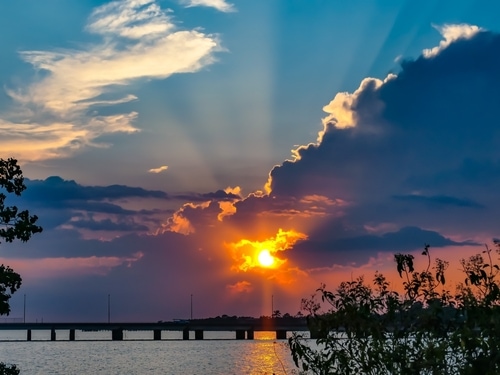
Lake Pontchartrain has remained popular in Louisiana among locals and tourists and has a great animal biodiversity.
©Vivian Shoultz/Shutterstock.com
Species Profile: The American Alligator
Alligators are apex predators that have survived for thousands of years. Their natural prey is small fish, insects, snakes, and turtles. Unfortunately, they have attacked humans before, though rarely in the state of Louisiana. While generally wary of humans, alligators can become aggressive if provoked or accustomed to being fed.
Where Alligators Live
Alligators live in the southeast of the United States. More specifically, you will find them in Florida, Georgia, Louisiana, South Carolina, North Carolina, Alabama, and the southern part of Texas. Alligators prefer freshwater habitats, like swamps and marshes. Occasionally, they will venture into saltwater territories. Some alligators venture near the Gulf Coast, like off the shores of Biloxi, Mississippi. However, they cannot survive for long periods in ocean climates the way crocodiles can.
How Large Can Alligators Get?
Most male alligators reach 11–13 feet, though the largest verified specimen measured just over 19 feet.
Estimating How Many Alligators Live in Louisiana’s Lake Pontchartrain
Exact population numbers are unknown; the Louisiana Department of Wildlife and Fisheries (LDWF) hasn’t published alligator counts specific to Lake Pontchartrain. Salinity levels fluctuate depending on rainfall and Mississippi River spillway openings, sometimes lowering salt levels temporarily. However, due to Lake Pontchartrain’s brackish nature, alligators are less common there than in nearby bayous and marshes.
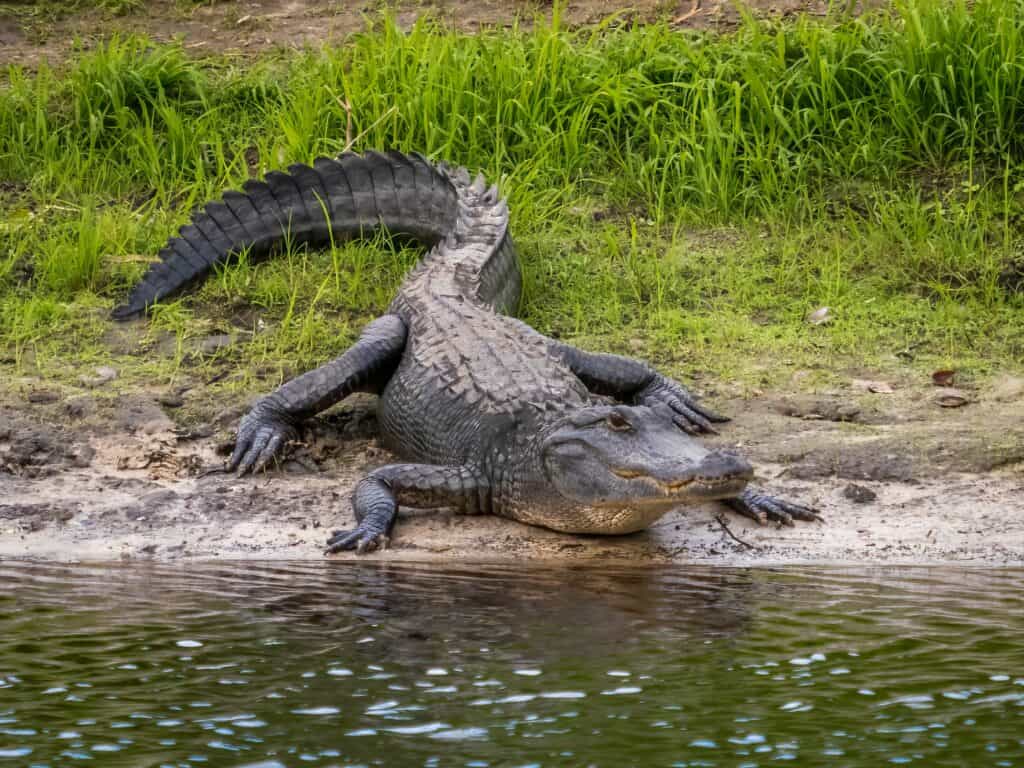
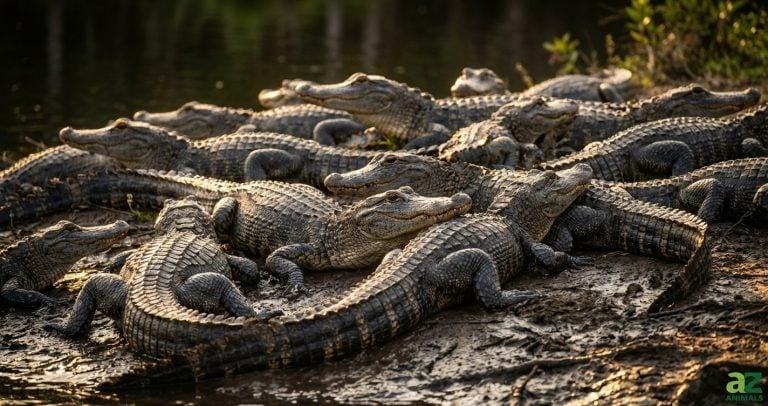
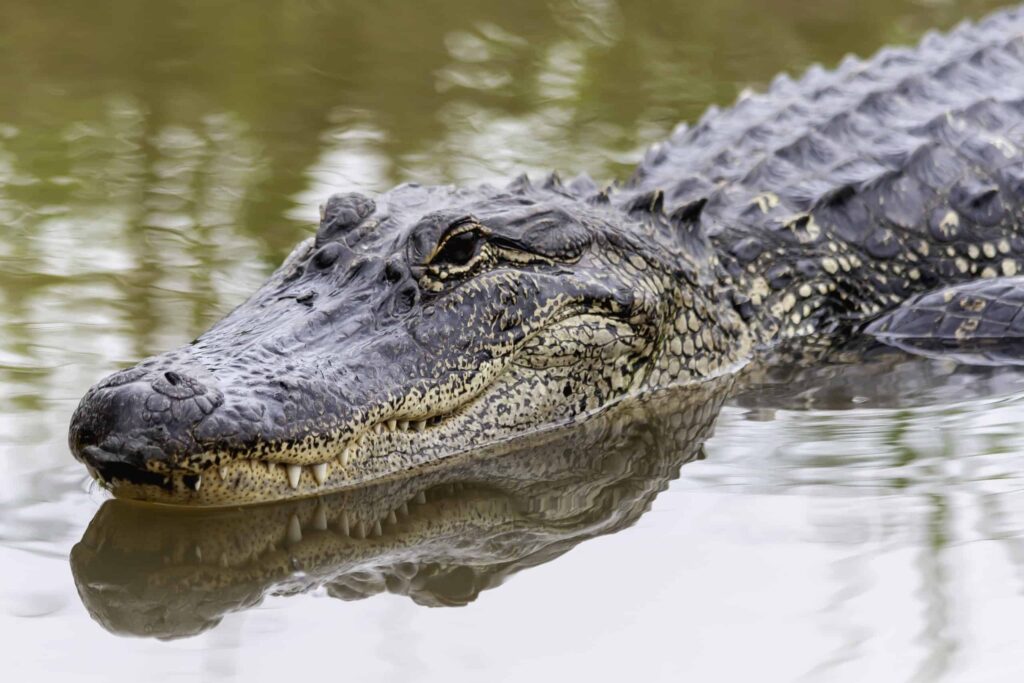
Alligators can sometimes be found in river deltas.
©Jim Schwabel/Shutterstock.com
Safety Around Alligators
How safe is it to swim in Lake Pontchartrain? Swimming in Lake Pontchartrain can vary, depending on the situation and the area. Yes, alligator attacks have happened over the years throughout the United States. But these are incredibly rare in Louisiana. Still, safety is key.
The Louisiana Department of Wildlife of Fisheries (LDWF) advises people never to harass or touch alligators. Never allow small children to play in the water or near the water’s edge. Also, you should never swim at dusk or night. Do not feed alligators; remember, alligators lose their fear of humans when they are fed. Call the proper authorities if you see an alligator acting aggressive or being a nuisance.
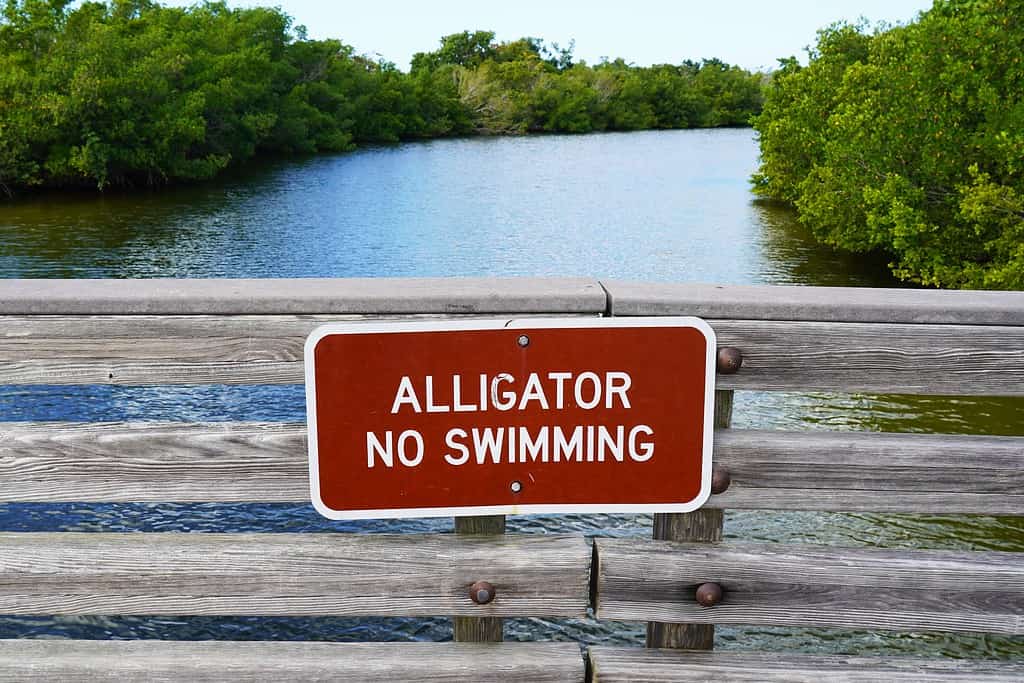
Always take precautions when entering the lake, especially if you notice signs warning you not to swim.
©Yordan Balabanov/Shutterstock.com