
Quick Take
- Native species evolved naturally in a region; non-native species exist in any given area due to human activity.
- Only a small percentage of introduced species become invasive, meaning they cause measurable economic or ecological harm.
- Invasive status depends on impact, not just origin or how quickly a species spreads.
You’ve probably seen a headline or two about an invasive species taking over. Perhaps you’ve seen a sign warning of non-native plants. But have you ever wondered what those labels actually mean? Are non-native species always bad? Is every introduced animal invasive? And who decides?
Like most things in life, the answers are nuanced. In ecology and law, words like native, non-native, introduced, and invasive have specific meanings. They aren’t interchangeable, even though they’re often used that way in casual conversation. Understanding the difference helps us make sense of certain ecological issues we hear about—like zebra mussels clogging water pipes or backyard honeybees pollinating tomatoes.
So let’s break it down.
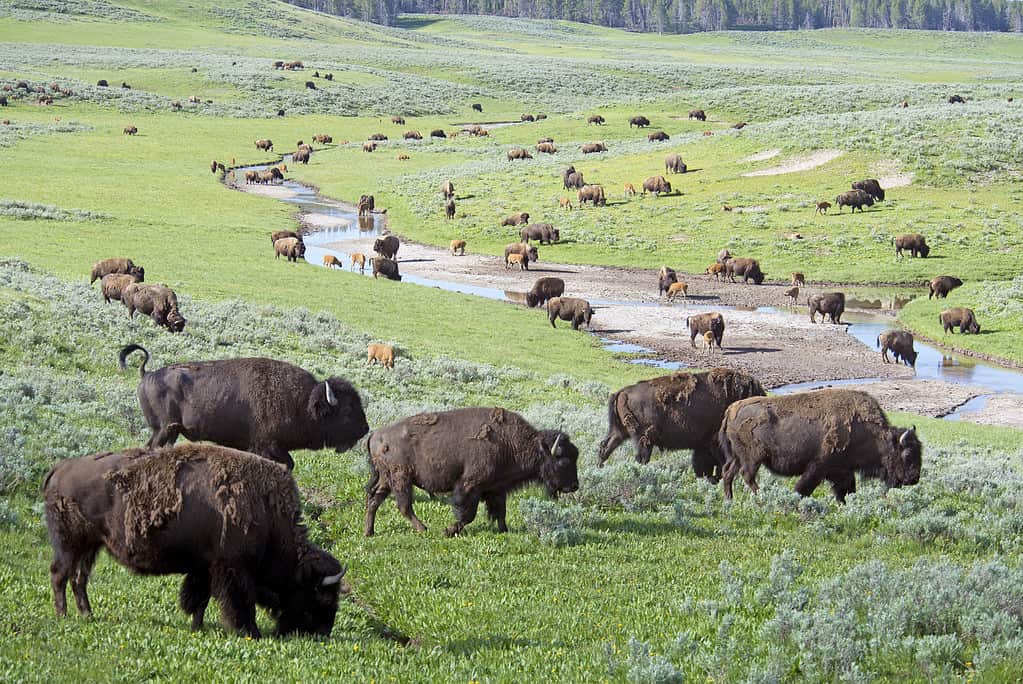
American bison roaming Yellowstone National Park — a classic example of a species that evolved within its ecosystem and remains ecologically integrated today.
©iStock.com/Betty4240
Native
A native species is one that occurs naturally in a particular region without human involvement. That means it arrived and established populations through natural processes like migration, wind dispersal, or geological change. The U.S. Geological Survey defines a native species as one that is “part of the balance of nature that has developed over hundreds or thousands of years in a particular region or ecosystem.”
For example, the American bison and Bald eagle are native to North America. They evolved in this region or arrived long before modern human transportation reshaped ecosystems. They’re woven into local food webs. Predators, prey, parasites, and plants all coevolved alongside them.
That said, a species isn’t automatically native to an entire country just because it evolved on that continent. Native status depends on historical range within a specific region. The mountain lion, for example, is native to North America, but not found in every state.
Non-Native
A non-native species, sometimes called an exotic or alien species, is one that occurs outside its historical, natural range because of human activity. That activity can be intentional or accidental.
For instance:
- The Nutria is native to South America. It was brought to the United States in the early 1900s for the fur trade, and escaped or released individuals established wild populations, especially in the Gulf Coast states.
- The House sparrow is native to Eurasia. It was deliberately introduced to New York in the 1850s for insect control and is now widespread across the United States.
- The Brown trout is native to Europe but introduced to North American rivers for sport fishing.
Here’s the key point: non-native does not automatically mean harmful.
Many non-native species live quietly in their new environments without causing major ecological or economic damage. In fact, the majority of non-native species never become invasive–only a small percentage of introduced species cause serious harm.
So if you hear “non-native,” don’t assume “disaster.” It’s a description of origin, not impact.
Introduced
Introduced species are non-native species that humans have moved, deliberately or accidentally, into a new area. In other words, “introduced” describes the mechanism. “Non-native” describes the location relative to historical range.
For example:
- European settlers intentionally released European starling in New York’s Central Park in the 1890s.
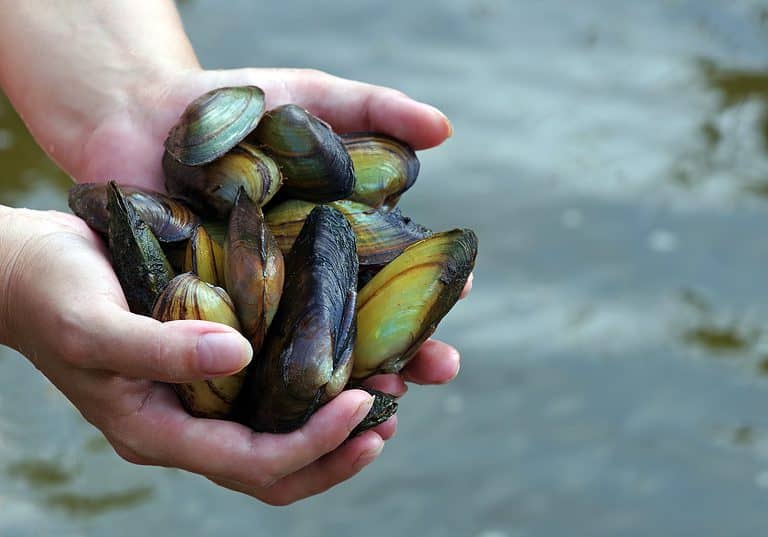
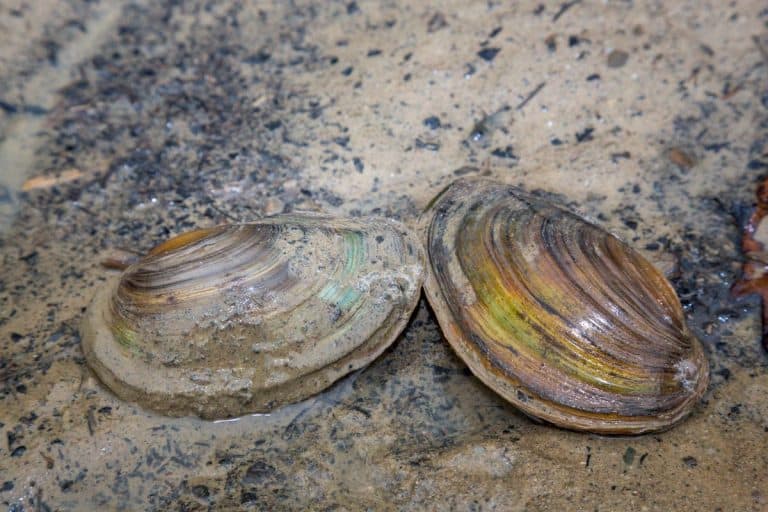
- Zebra mussels likely arrived in the Great Lakes in the 1980s through ballast water discharged from transoceanic ships.
- Kudzu was introduced from Asia in the late 1800s for erosion control and ornamental purposes.
All introduced species are non-native. But again, not all introduced species become invasive.
Sometimes, introduced species even provide benefits. Brown trout support recreational fishing. Many agricultural crops in the U.S., including wheat and apples, are non-native but essential to our food system.
That doesn’t make introduction risk-free. It just means impact varies.
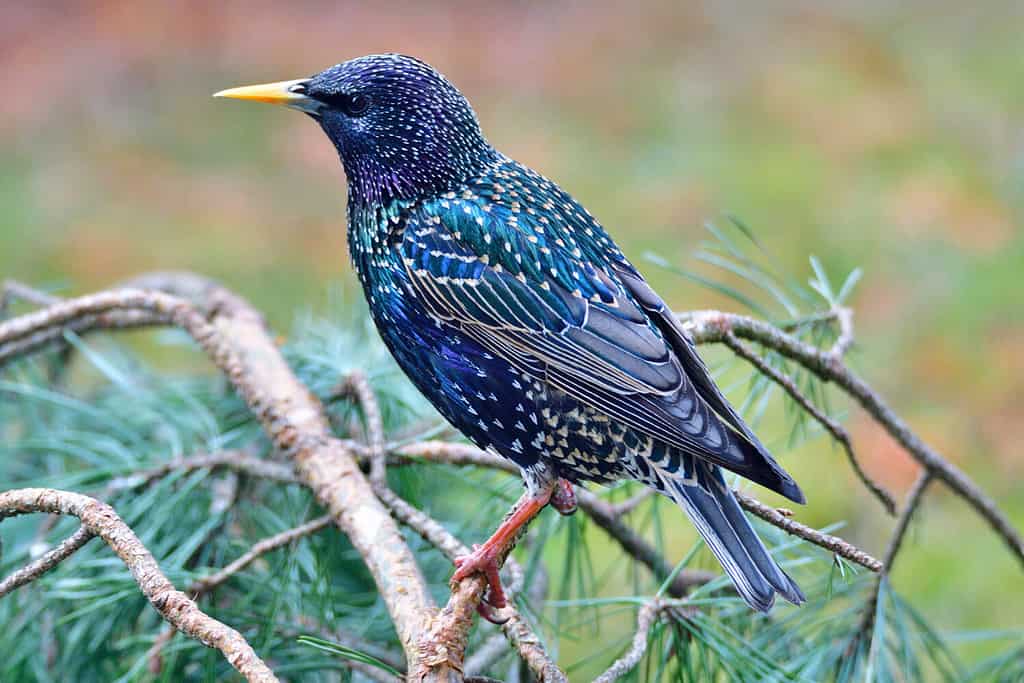
European starlings released in Central Park in the 1890s — one of the most famous deliberate wildlife introductions in U.S. history.
©Karin Jaehne/Shutterstock.com
Invasive
Now we get to the word that sparks the most concern.
Under U.S. law, the term invasive species has a specific definition. Executive Order 13112, signed in 1999 and later updated, defines an invasive species as one that is both non-native and whose introduction “causes or is likely to cause economic or environmental harm or harm to human health.”
So to qualify as invasive, a species must meet two criteria:
- It’s non-native to the ecosystem.
- It causes, or is likely to cause, harm.
Harm can mean many things. Ecological harm might include outcompeting native species, spreading disease, or altering habitats. Economic harm might involve clogged water infrastructure, damaged crops, or reduced fisheries. Human health impacts can include increased allergens or disease transmission.
Real-world examples include:
- The Zebra mussel, which attaches to pipes, boat hulls, and native mussels, costing billions in control and infrastructure damage.
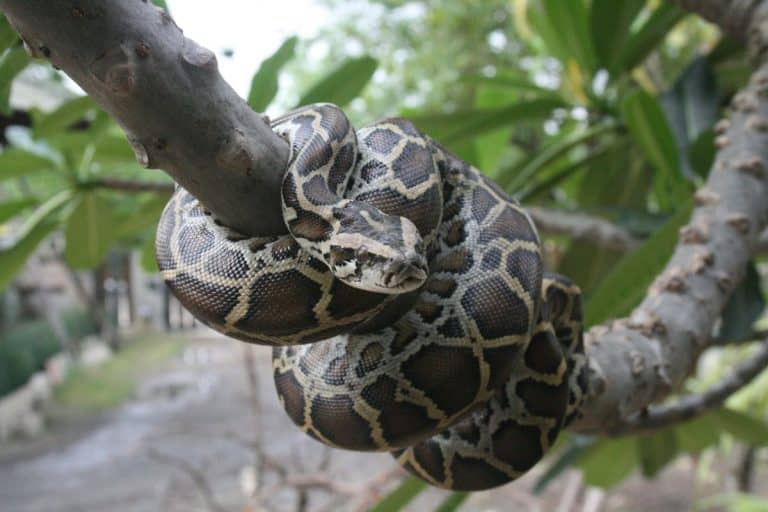
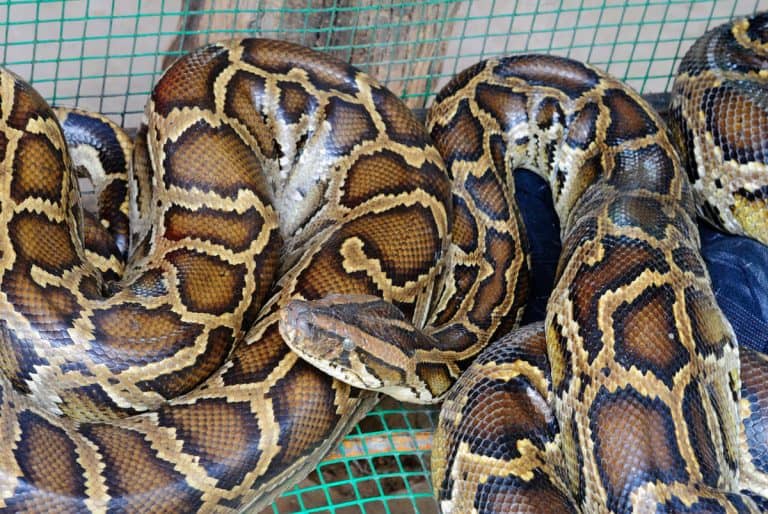
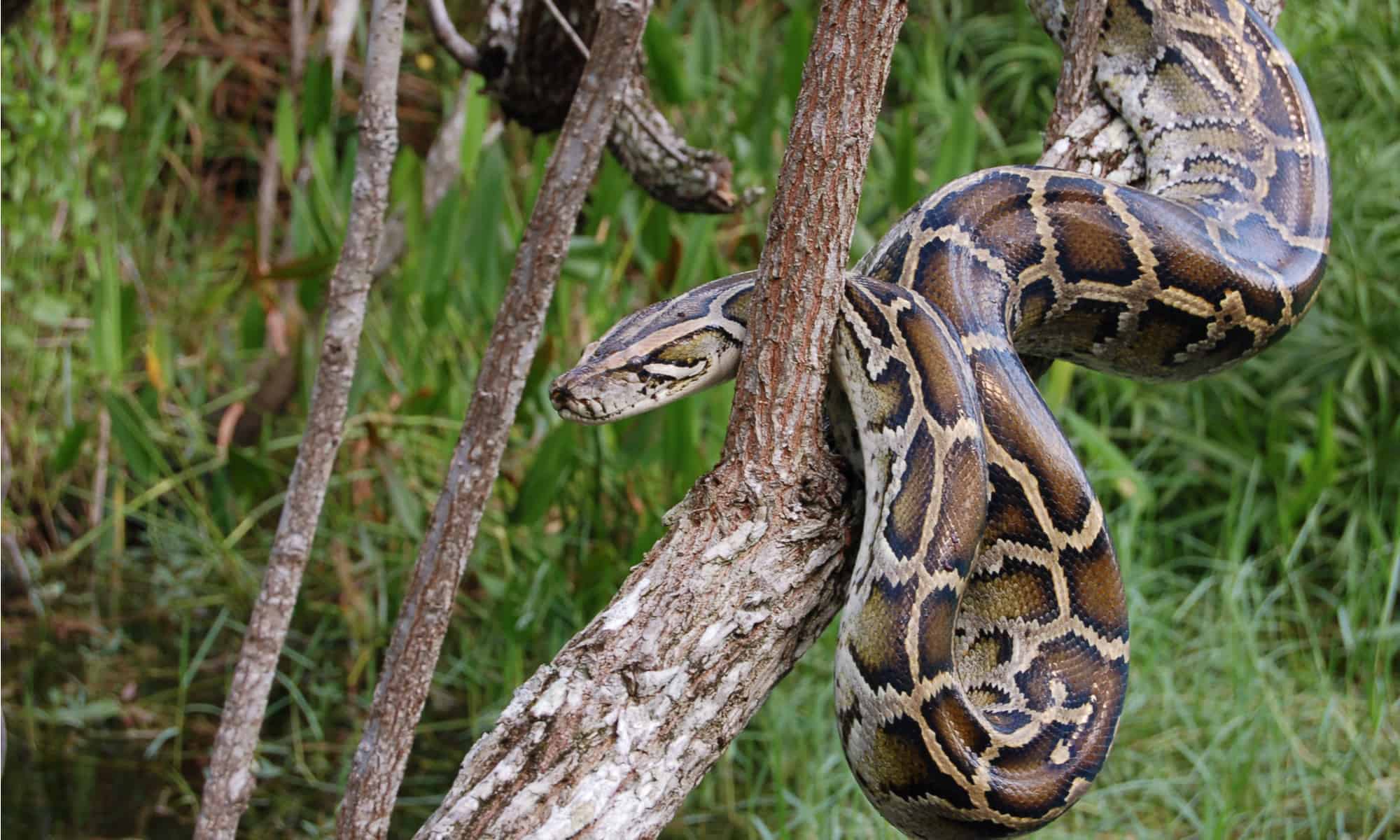
- The Burmese python in Florida, which has dramatically reduced populations of small mammals in parts of the Everglades. The U.S. Geological Survey documented declines of raccoons and opossums exceeding 90 percent in some study areas.
- The Asian carp, which compete with native fish in the Mississippi River Basin.
These species aren’t just non-native. They’re disruptive at a scale that changes ecosystems and costs real money.
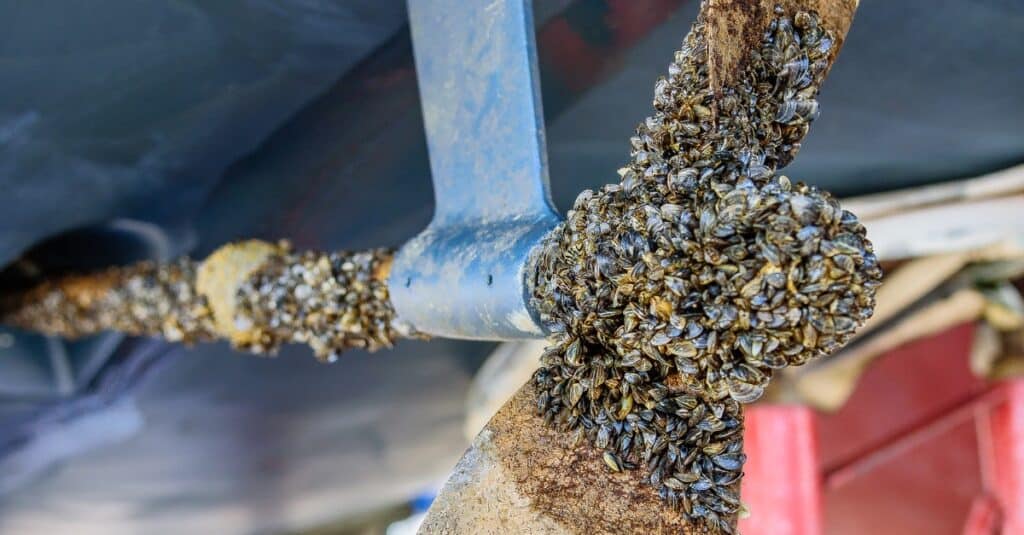
Zebra mussels attached to a boat propellor — a small organism with large economic impact on water infrastructure and native aquatic life.
©iStock.com/JeffCaughey
Common Misconceptions
Because these terms get tossed around loosely, a few myths keep popping up.
Misconception 1: All non-native species are invasive.
Not true. Many non-native species coexist without major impacts. The USDA notes that only a fraction of introduced species become invasive. Labeling every non-native species as invasive oversimplifies a complex issue.
Misconception 2: Native species are always beneficial.
Native species can also cause problems under certain conditions. For example, when natural predators are removed or land use changes, native species can overpopulate and damage ecosystems. Overabundant white-tailed deer in some suburban areas are a good example. They’re native, but in high densities they can overbrowse forests and increase vehicle collisions.
Misconception 3: “Invasive” just means “spreads quickly.”
Rapid spread is common among invasive species, but speed alone isn’t enough. A species must cause harm to meet the legal definition. A non-native plant that spreads but doesn’t disrupt ecosystems or economies might not qualify as invasive under federal guidelines.
Misconception 4: Humans aren’t part of the equation.
Humans are central to this story. Global trade, travel, landscaping, pet ownership, and even ballast water practices have all reshaped species distributions. The pace of introductions today is far faster than historical natural dispersal.
How Scientists Decide What’s Invasive
Determining whether a species is invasive involves research and monitoring. Scientists look at:
- Population growth and spread
- Impacts on native species
- Changes to habitat structure
- Economic costs
- Effects on agriculture or infrastructure
- Risks to human health
Agencies like the U.S. Fish and Wildlife Service and state wildlife departments conduct risk assessments before listing species as injurious or invasive. The USFWS Lacey Act listings, for example, restrict import and transport of species deemed harmful.
It’s also worth noting that invasiveness can vary by region. A plant that’s invasive in Florida might not survive winters in Minnesota. Context matters.
Are Outdoor Domestic Cats Invasive?
Few species spark more debate than the domestic cat. Cats are beloved pets, but they are also highly effective predators. When allowed outdoors, they sit at the center of the native-versus-invasive discussion.
Domestic cats originated from wildcats in the Near East and were spread worldwide by humans. In the United States, they are non-native because they did not evolve here. Under Executive Order 13112, a species is invasive if it is non-native and causes harm. Outdoor cats meet both criteria.
A 2013 study in Nature Communications estimated that free-ranging cats kill billions of birds and mammals each year in the U.S. The authors concluded they’re a leading source of human-linked wildlife mortality. Island ecosystems are especially vulnerable, with cats contributing to documented bird extinctions. Because of this impact, ecologists generally classify outdoor cats as invasive where they threaten native wildlife. The controversy is not scientific, it’s social. People love their cats, and their cats love going outside.
In short: yes. When roaming outdoors in sensitive ecosystems, domestic cats function as an invasive species.
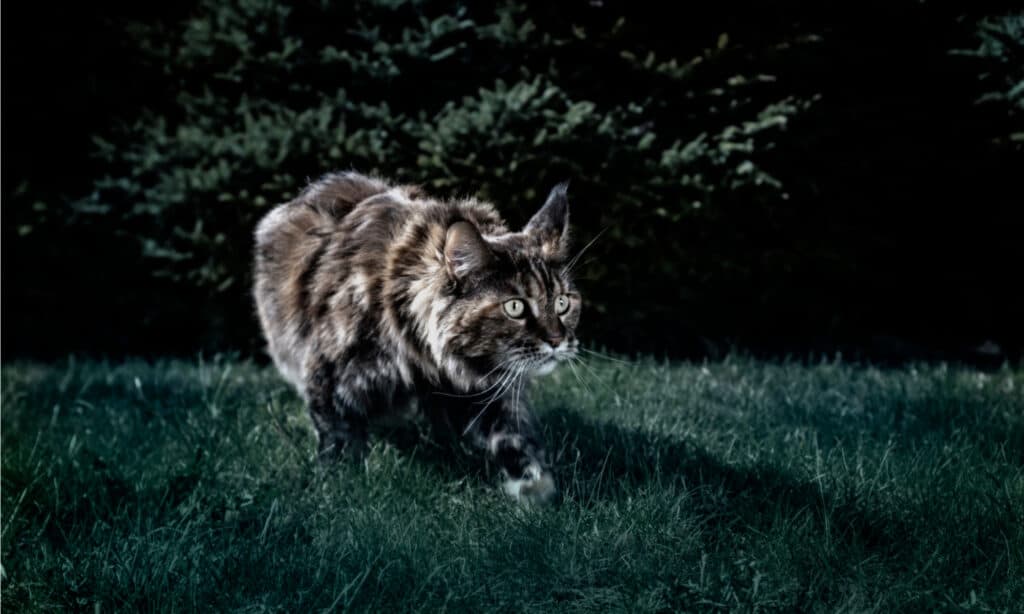
Outdoor domestic cats are a controversial example of a non-native predator.
©Konstantin Zaykov/Shutterstock.com
So, What Should You Take Away?
Here’s the simple version:
- Native species evolved or arrived naturally in a region.
- Non-native species live outside their historical range because of human involvement.
- Introduced species are non-native species moved by humans.
- Invasive species are non-native species that cause harm.
Those last two words matter most. Harm is the dividing line.
Next time you hear about an invasive insect or plant, you’ll know it’s not just about where it came from, it’s about what it’s doing now.
In a world where plants and animals hitch rides on cargo ships and airplanes every day, understanding these terms isn’t just trivia—it’s part of being an informed citizen in a global ecosystem that’s more connected than ever.