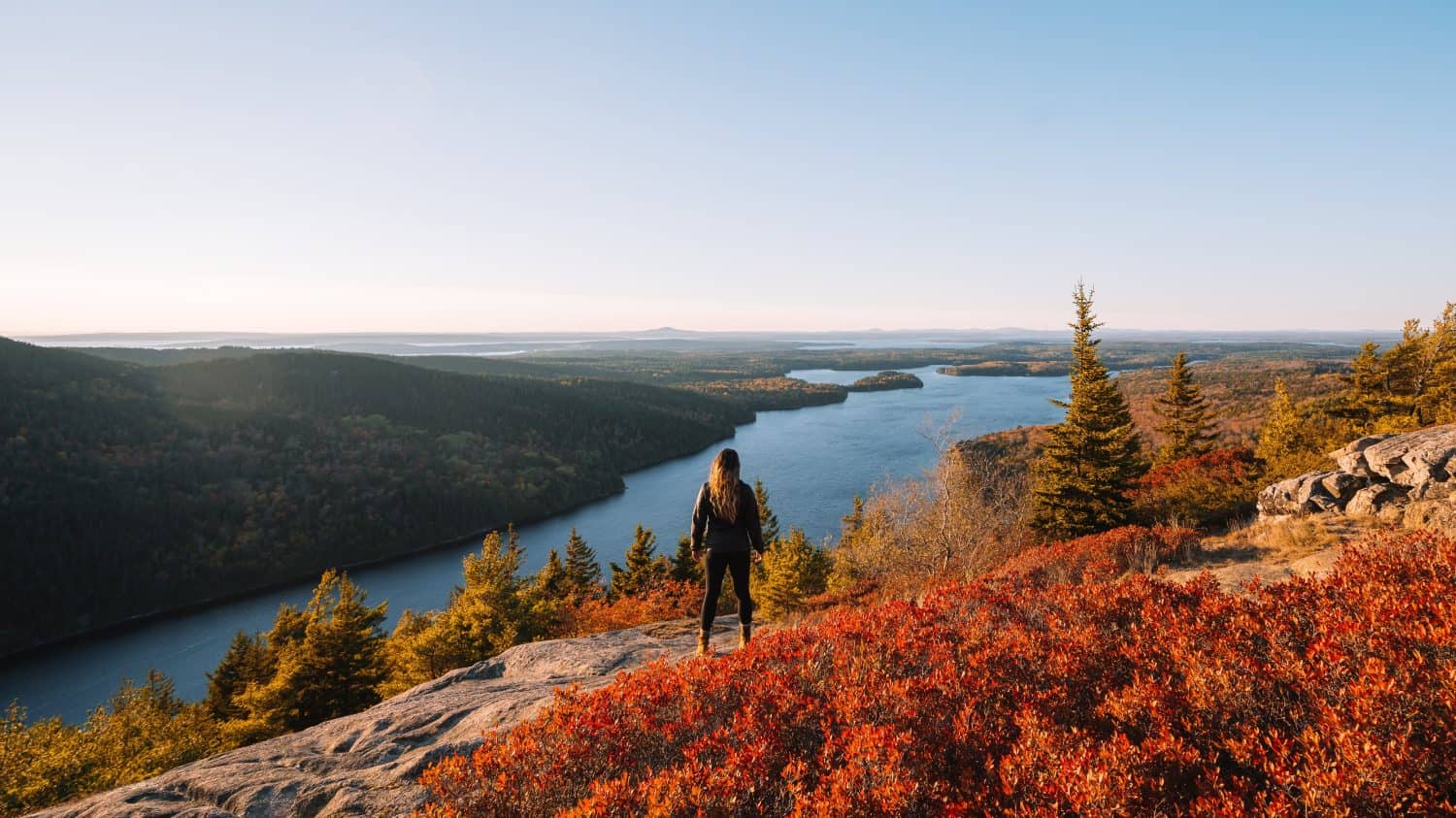

There aren’t many places in the United States like Acadia National Park. Located along the rugged, windswept mid-section coastline of Maine, the park is expansive and visually spellbinding. It has an impressive range of diverse terrains, including forests, valleys, wetlands, cobble beaches, and mountains. In fact, Cadillac Mountain (located within the National Park) is the tallest mountain on the Atlantic coastline of the United States with an elevation of 1,528 feet. The area that is now Acadia has had human activity for thousands of years. Starting in the 19th century, wealthy visitors began visiting the area. Their presence helped establish Acadia (first called Lafayette) as the first national park east of the Mississippi River.
There are a lot of things to do at the park. Spring and summer provide ample hiking, bicycling, and boating opportunities. The wintertime brings snow, skiing, snowmobiling, and ice-fishing along with it. Such variety brings in millions of visitors a year. In 2023 alone, the park welcomed 3,879,890 visitors. Acadia National Park is a beautiful, rugged location full of diverse terrains and just as many animals. Let’s learn about some of the animals you might see when visiting this national park.
North American Beaver
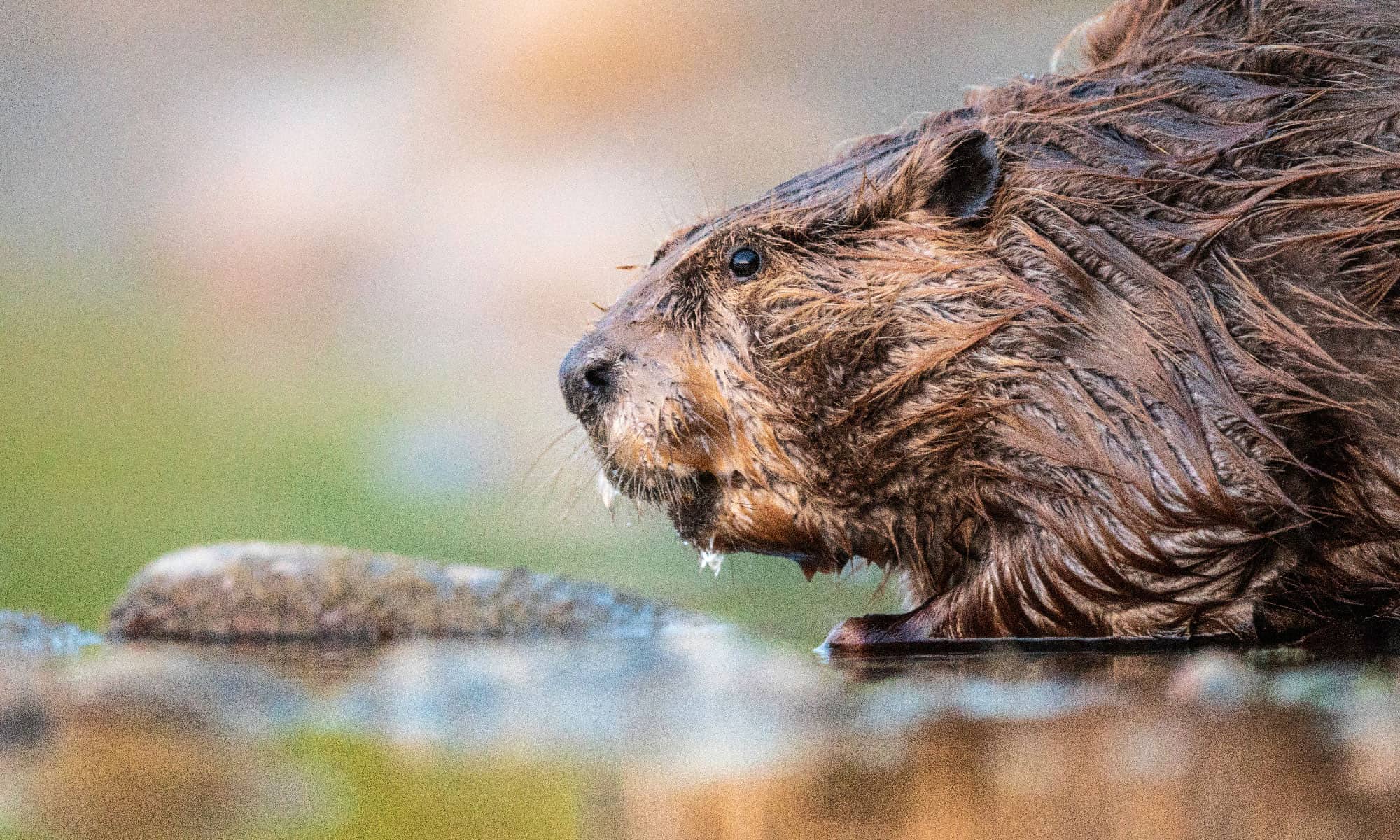
Beavers can sometimes be seen swimming around at dusk.
©Layne VR/Shutterstock.com
If you’re going to spot beavers at Acadia National Park, it’s going to be in the area’s many wetlands. They are a regular sight in the park’s streams, marshes, and other bodies of water. A stroll around Jordan Pond or the Tarn, or Witch Hole Pond, and you will likely see some chewed stumps, beaver lodges in water, or other signs of beaver activity. Seeing one in the flesh can be tricky, but they can sometimes be seen swimming around at dusk.
White-Tailed Deer
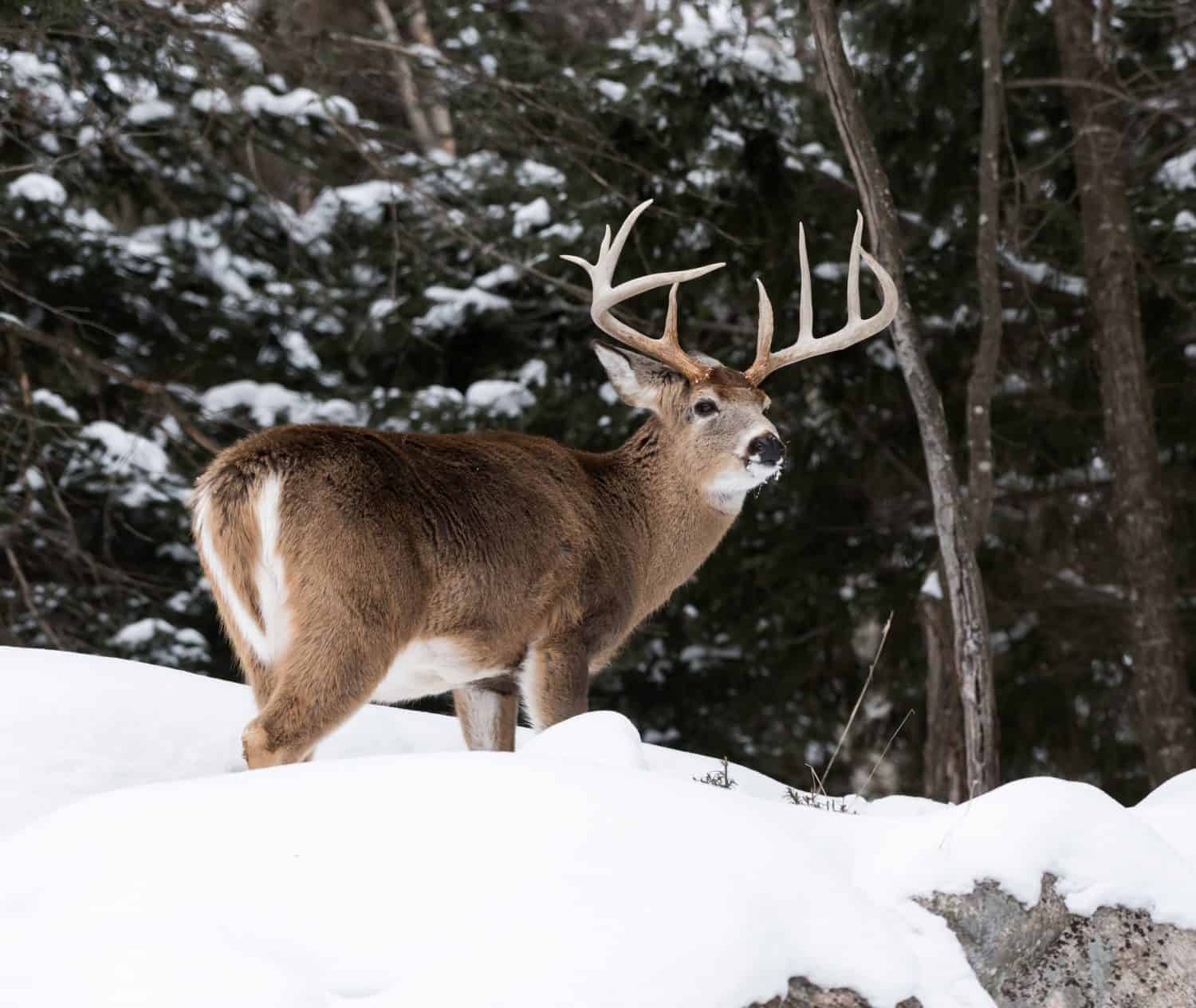
White-tailed deer can be seen in the park’s Sieur de Monts area or along carriage roads.
©FotoRequest/Shutterstock.com
Ungulate herbivores like white-tailed deer are relatively common in Acadia National Park, but they require a lot of space to breathe. They prefer areas with meadows and forest edges, but drivers should stay on the lookout for them as they like to cross roads. White-tailed deer are most active around dusk or dawn. White-tailed deer sightings in Acadia National Park happen most often around the Sieur de Monts area or along carriage roads.
Red Fox
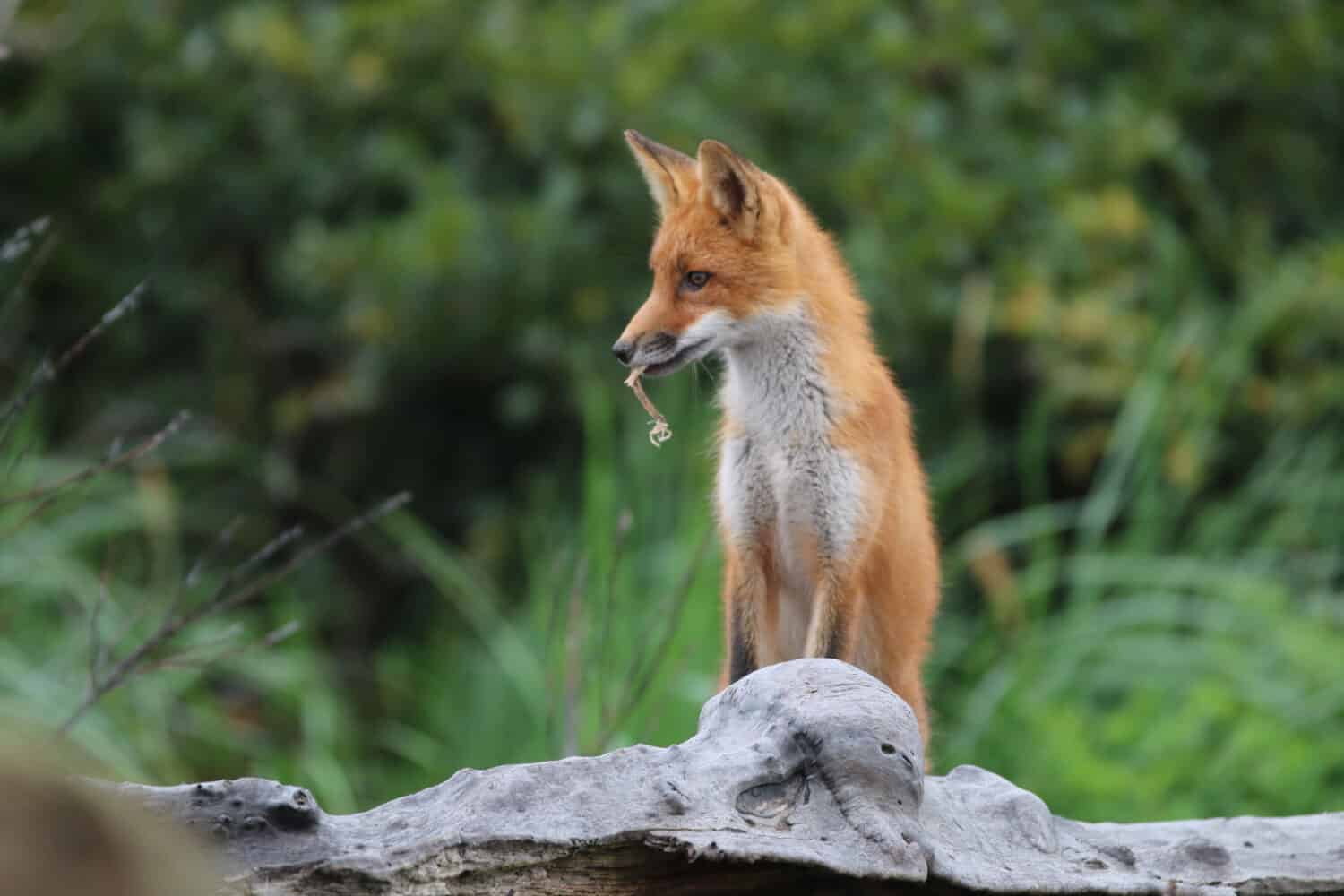
Red Foxes can be seen darting across the park’s roads and trails, typically at dusk or dawn when they are in hunting mode.
©Ian William Hromada/Shutterstock.com
Carnivores like red foxes are smart, sly, and hard to pin down. They prefer edge areas like the space between forests and meadows. There, they hunt small mammals, birds, and insects, but are also known to dine on berries. They are most active in the early morning hours or at dusk. Visitors are most likely to see them darting across a trail or a road, like the park’s Acadia Park Loop Road.
Common Loon
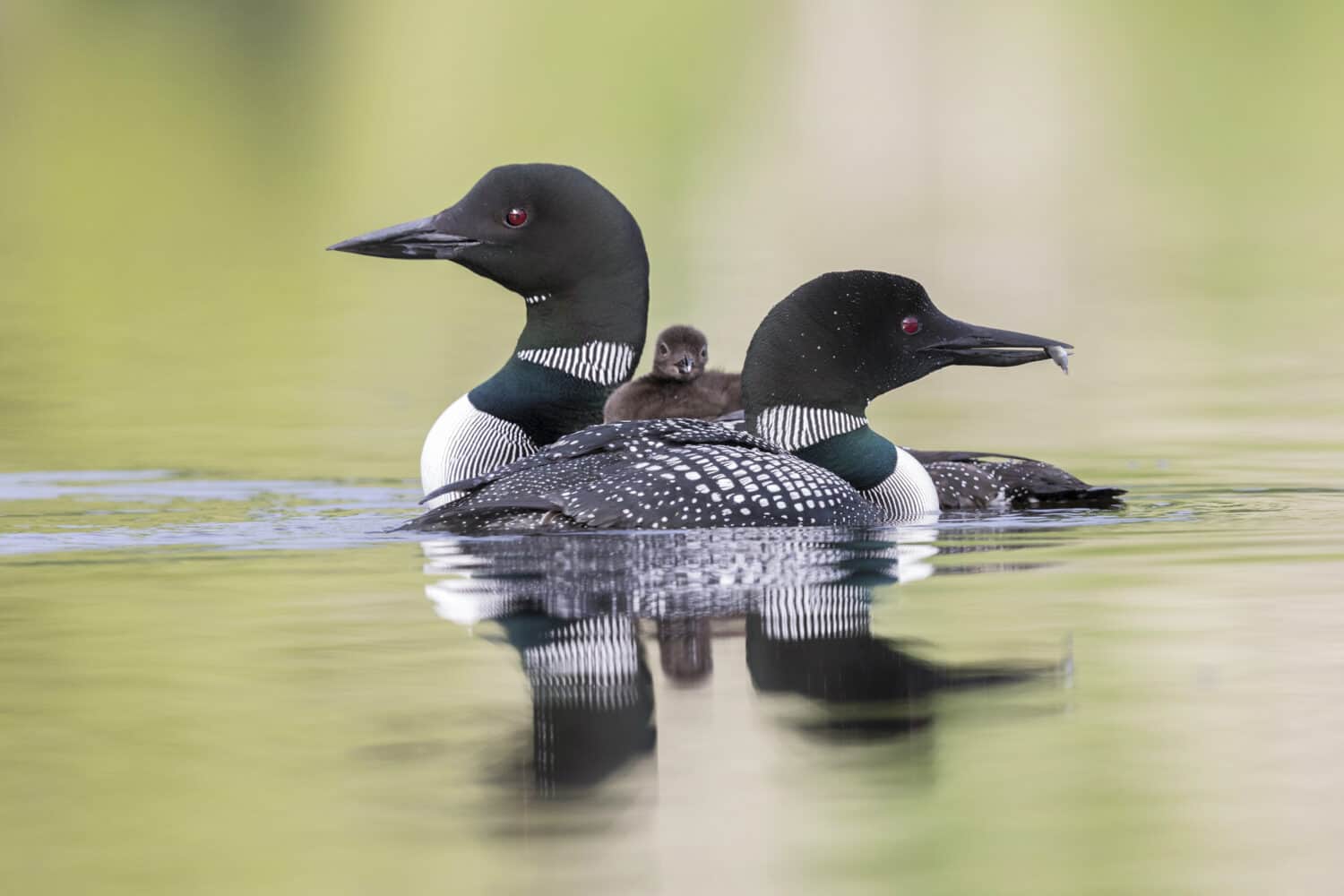
Loons can be found on large ponds and bays during the summer and along the coast in winter.
©Brian Lasenby/Shutterstock.com
Unlike carnivorous mammals, common loons are, well, pretty common at Acadia National Park. They will be found within the park’s many waterways. While they prefer large ponds and lakes, they sometimes move into coves and more obscured areas to stay safe from predators. In the wintertime, they move to the coast after the lakes freeze over. While they are easy to find thanks to their unique calls, they are just as sensitive to human disturbances. The park recommends people stay at least 100 yards away from any common loon while observing it.
Moose
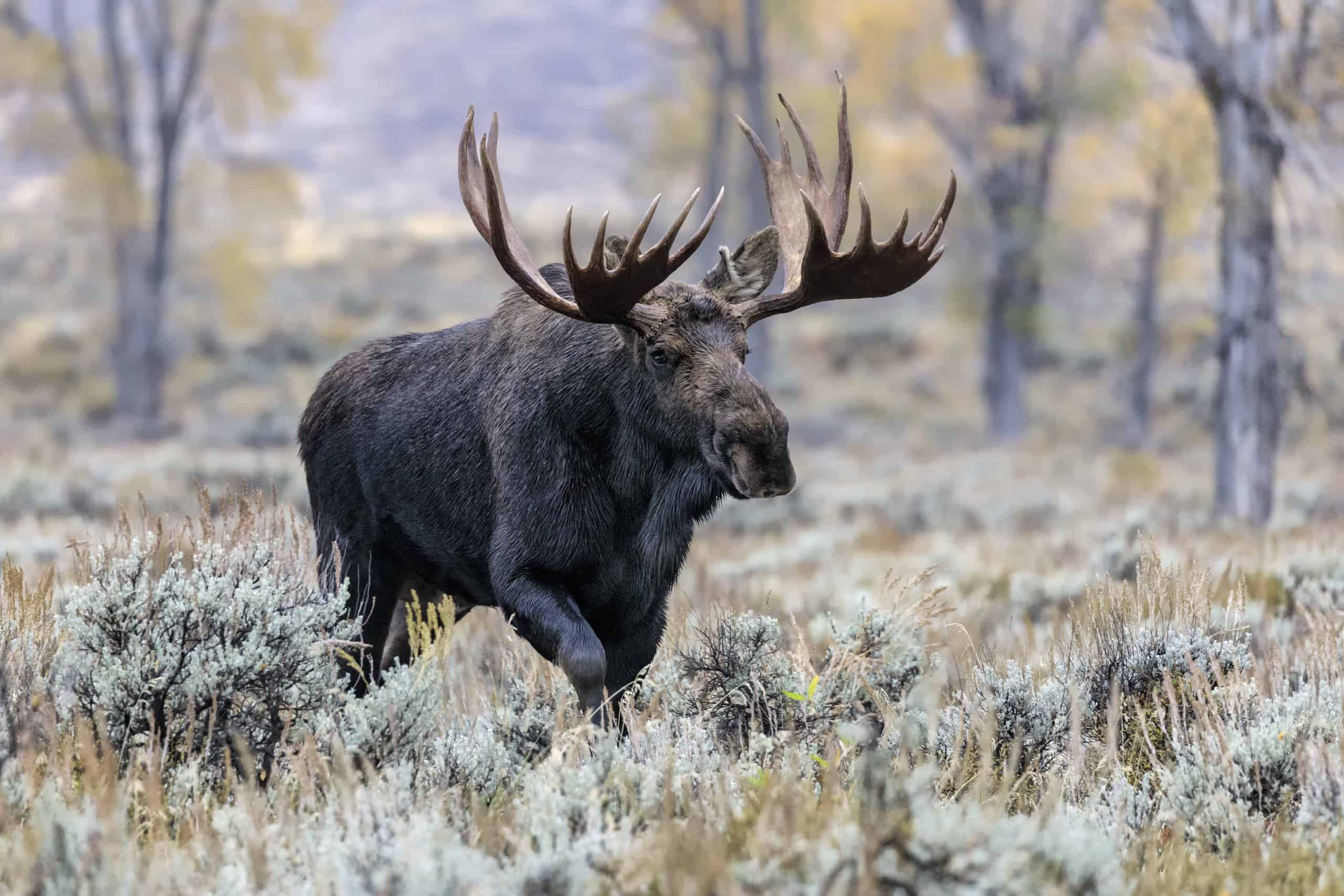
Moose can sometimes be seen along the Schoodic Peninsula or the Mount Desert Island area.
©David Osborn/Shutterstock.com
The moose is the largest animal that can be found in Acadia National Park and also the rarest. While they are more common in Maine’s interior, some can be spotted by lucky visitors along Acadia’s coastal areas. They are most commonly seen along the Schoodic Peninsula or in the Mount Desert Island area, where they feed on tree shoots and aquatic plants. Chances are, however, you’ll just see signs of moose activity: tracks, signs of browsing, and moose droppings. That’s probably for the best, too, as moose will charge when they feel threatened.
Peregrine Falcon
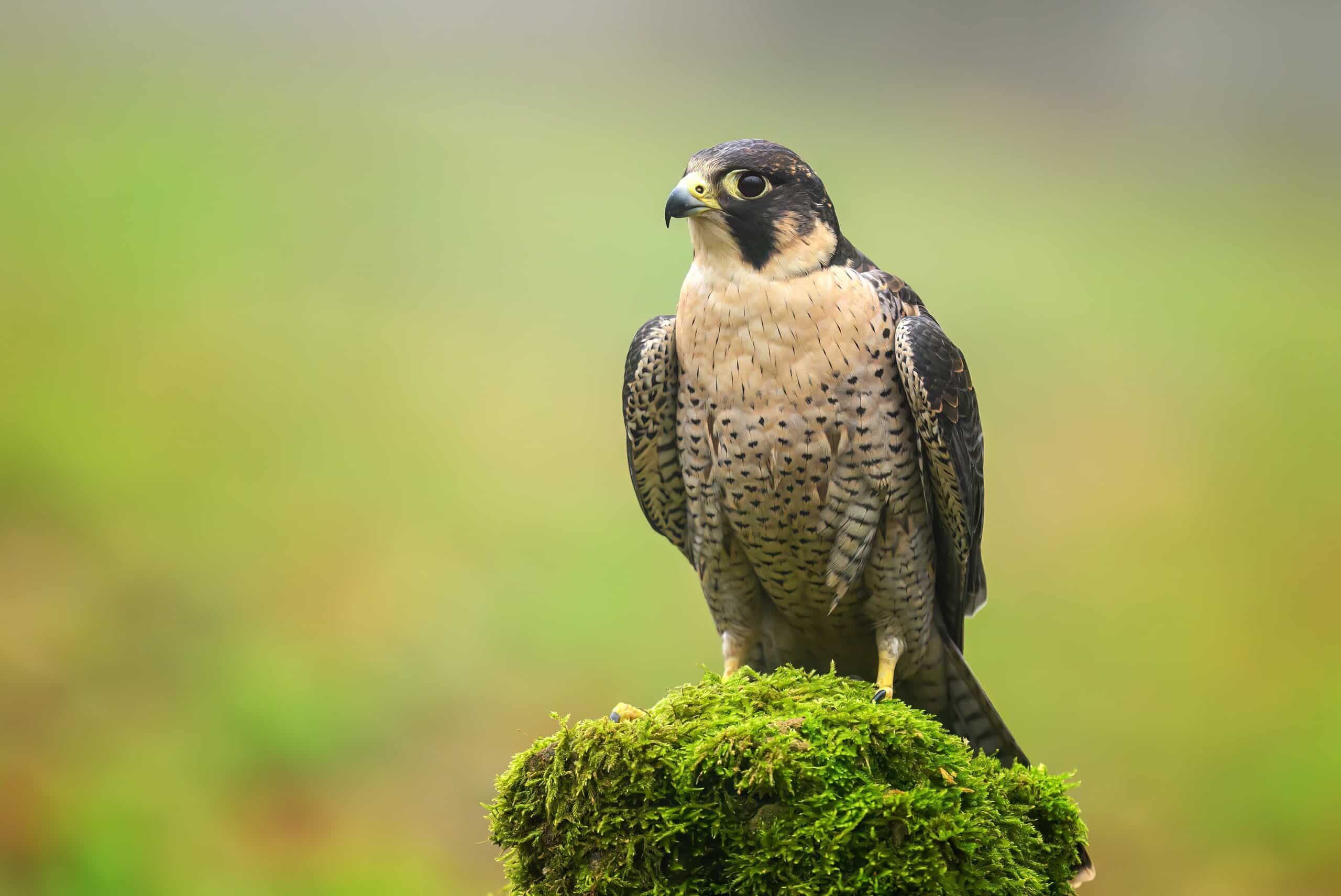
Once nearly extinct, peregrine falcons have reestablished populations in Acadia National Park at places like Cadillac Mountain and the high cliff overlooking Jordan Pond.
©Piotr Krzeslak/Shutterstock.com
Another rare creature that the lucky visitor can spot at Acadia National Park is the peregrine falcon. Once nearly extinct in the Eastern United States due to pesticide use, peregrine falcons have made a successful return to form thanks to breeding initiatives in places like Acadia National Park. They were successfully ‘hacked’ at a high cliff overlooking Jordan Pond, so they often return to this spot. They can also be seen soaring high above Cadillac Mountain, high trails, and other cliff sites.
Raccoon
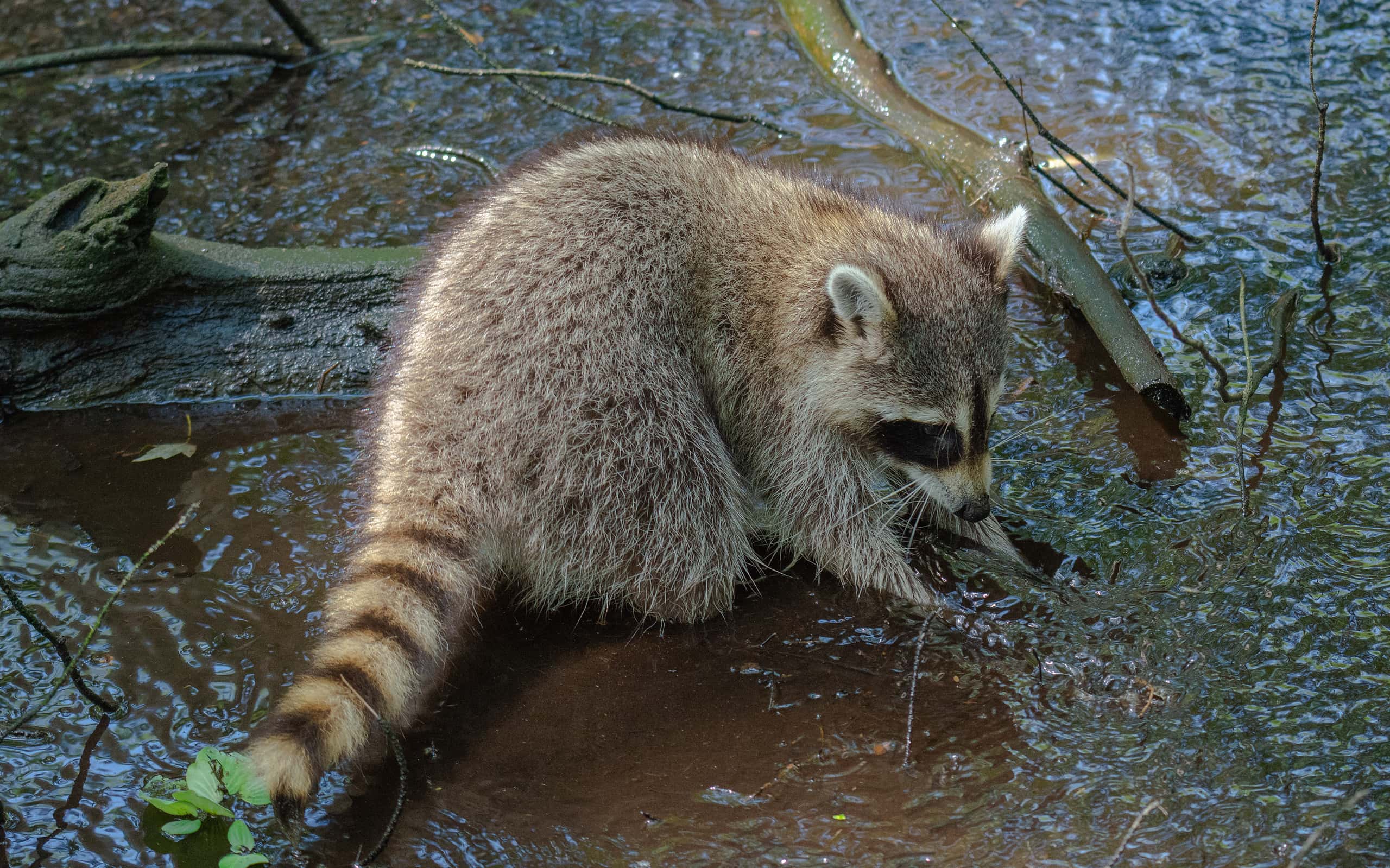
Raccoons are so common at Acadia National Park that park officials warn visitors about their tendency to steal unsecured food items.
©ad-e-motion/iStock via Getty Images
Suffice it to say that raccoons are a pretty common sight at Acadia National Park. So much so, in fact, that park officials warn visitors about keeping their food and campgrounds secured tightly in case a curious raccoon comes looking for a free meal. They typically live in burrows and tree cavities and come out at night. While they can be found around the whole park, one was found back in 2016 near the restroom at Sieur de Monts that tested positive for rabies.
Red Squirrel
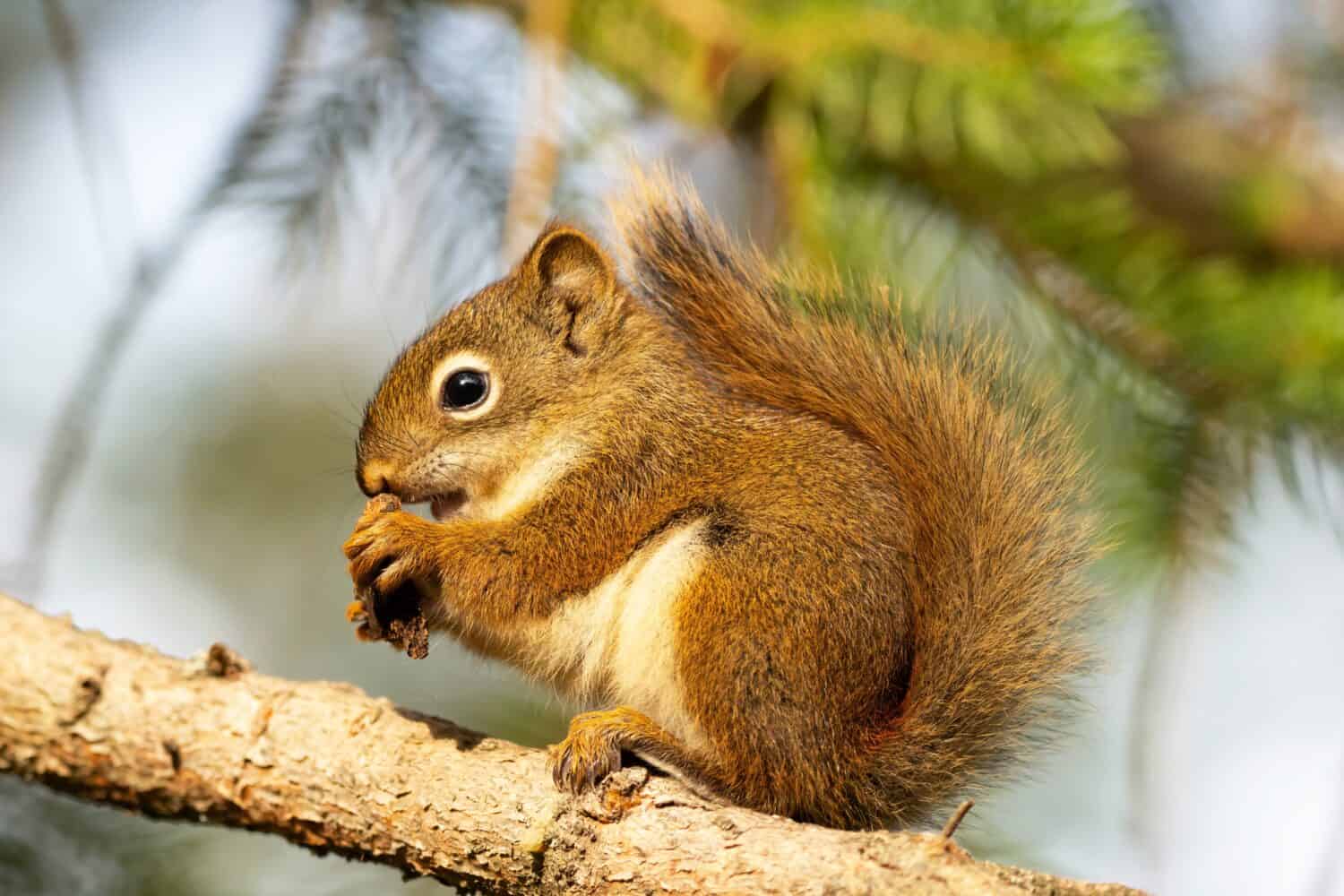
Red Squirrels are known to dart across roads at Acadia National Park, such as Park Loop Road.
©Saeedatun/Shutterstock.com
In most parts of Acadia National Park, red squirrels are common but hard to spot for more than a moment. If anything, you will hear their adorable chittering sounds before you see them. That said, they live across the state of Maine, usually in dense evergreen stands or in mixed forests with both deciduous and evergreen trees. Park officials say not to be tempted to feed them due to their cute faces. Also, watch out for them when driving because they are known to dart across the park’s roads, like Park Loop Road
Eastern Chipmunk
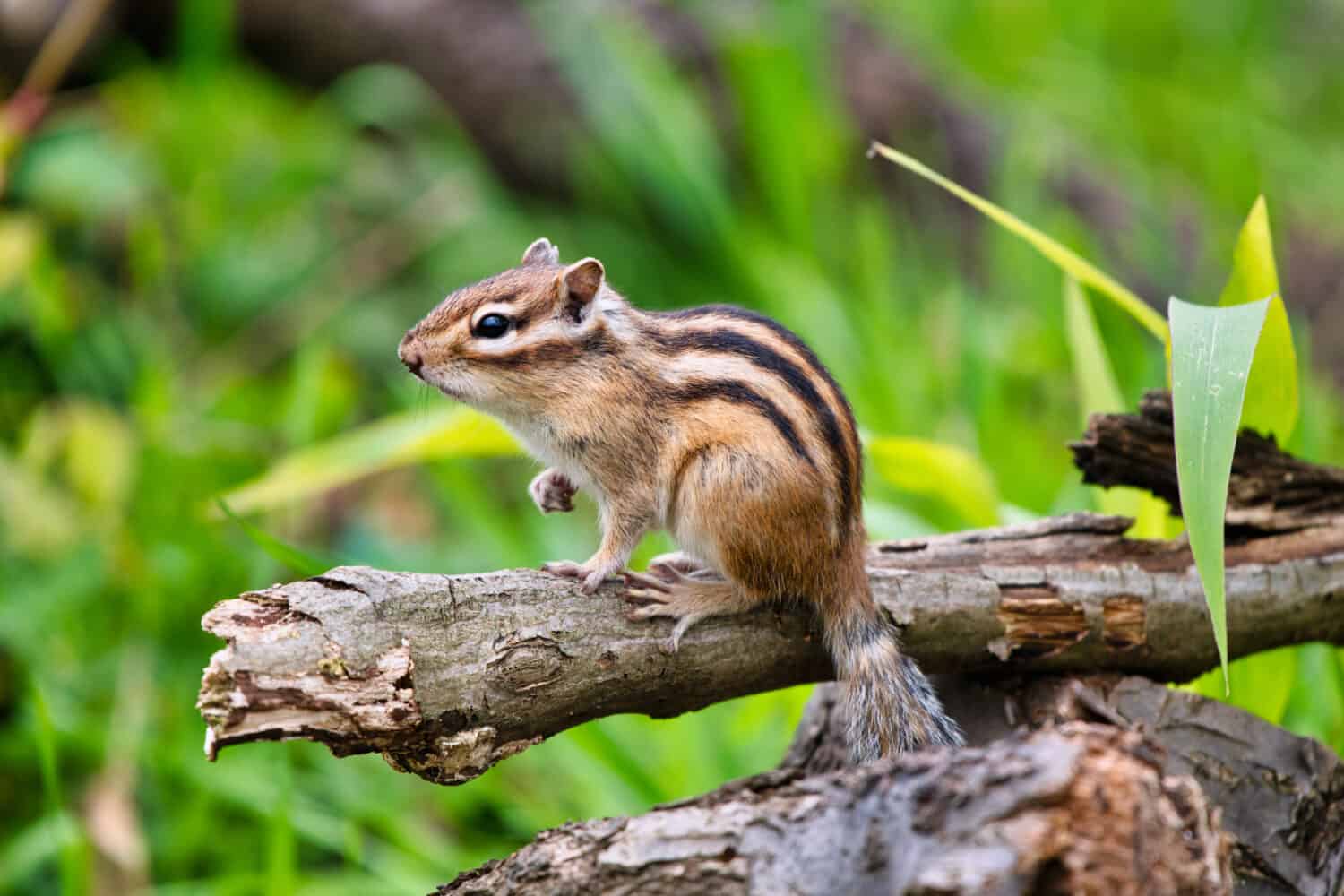
Eastern Chipmunks have distinct brown and black stripes running the length of their bodies.
©Tatsuya Nishizaki/Shutterstock.com
They may look relatively similar to red squirrels, but eastern chipmunks are a distinct species of rodent found in Acadia National Park. They are, however, just as cute. Eastern Chipmunks live in deciduous forests and park areas where they prefer rocky areas, brush, log piles, and shrubs to provide camouflage. Like red squirrels, they are relatively common in the park. Be careful driving, however, as they often get killed by passing cars while darting across roadways.
Black-Capped Chickadee
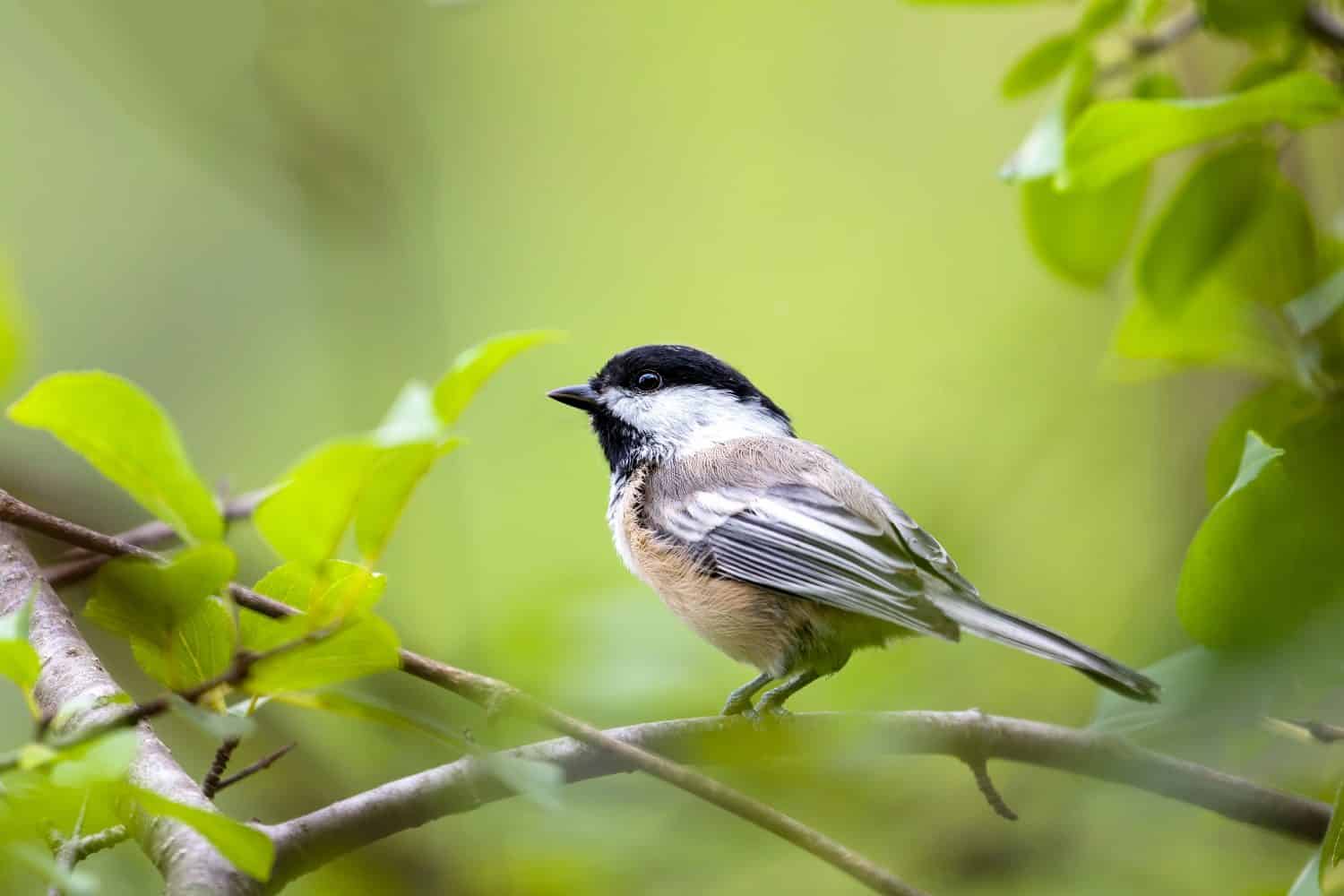
Black-capped chickadees are curious birds and often approach hikers and picnickers.
©Manu M Nair/Shutterstock.com
Because Maine’s state bird is the black-capped chickadee, there’s a good chance you’ll spot this bird in Acadia National Park. They are characterized by small frames and standout black caps and bib features. You will hear them by their ‘chick-a-dee-dee-dee’ sounding calls, and you will know them by their curiosity. While they prefer wooded areas, black-capped chickadees are inquisitive and known to approach hikers or people having picnics. Since they handle the cold by lowering their body temperatures, chickadees can be found in the park year-round.
Spring Peeper

Spring Peepers are hard to see but easy to hear, thanks to their high-pitched calls that sound off at dusk.
©Jay Ondreicka/Shutterstock.com
While Acadia National Park features six types of frogs, including the American bullfrog and green frog, perhaps the most interesting is the spring peeper. They live in the park’s wetlands, be they ponds or streams. Spring peepers are characterized by small, tan or brown bodies with a dark ‘X’ mark on their backs. They usually feed on insects and serve as food for larger creatures like birds and snakes. While they are very hard to spot, visitors to the park know them best for their memorable croaks, which come alive at dusk. These calls sound like high-pitched “peeps,” which not only signals breeding season but gives them their name.
American Mink

They may be solitary, but minks thrive in both the freshwater and saltwater environments of Acadia National Park.
©Gallinago_media/Shutterstock.com
Minks may be one of the lesser-known carnivores in the Acadia National Park, but they are easily among the cutest. These small, semi-aquatic creatures have dark brown coats with lighter underfur and small button noses. Nocturnal and incredibly adaptable (they thrive in both freshwater and saltwater environments), minks feed on fish, birds, amphibians, and even smaller mammals. Seeing them in Acadia is rare but not unheard of. They are often found moving through streams, marshes, and along the park’s many miles of shoreline. For decades, minks were heavily hunted for their fur, which led to population decline. Luckily, minks in Acadia have made a stunning return to form in recent years, thanks to conservation efforts. Seeing them is rare, but visitors have spotted minks in areas like The Tarn, Shore Parth, and Sand Beach.
Snowshoe Hare
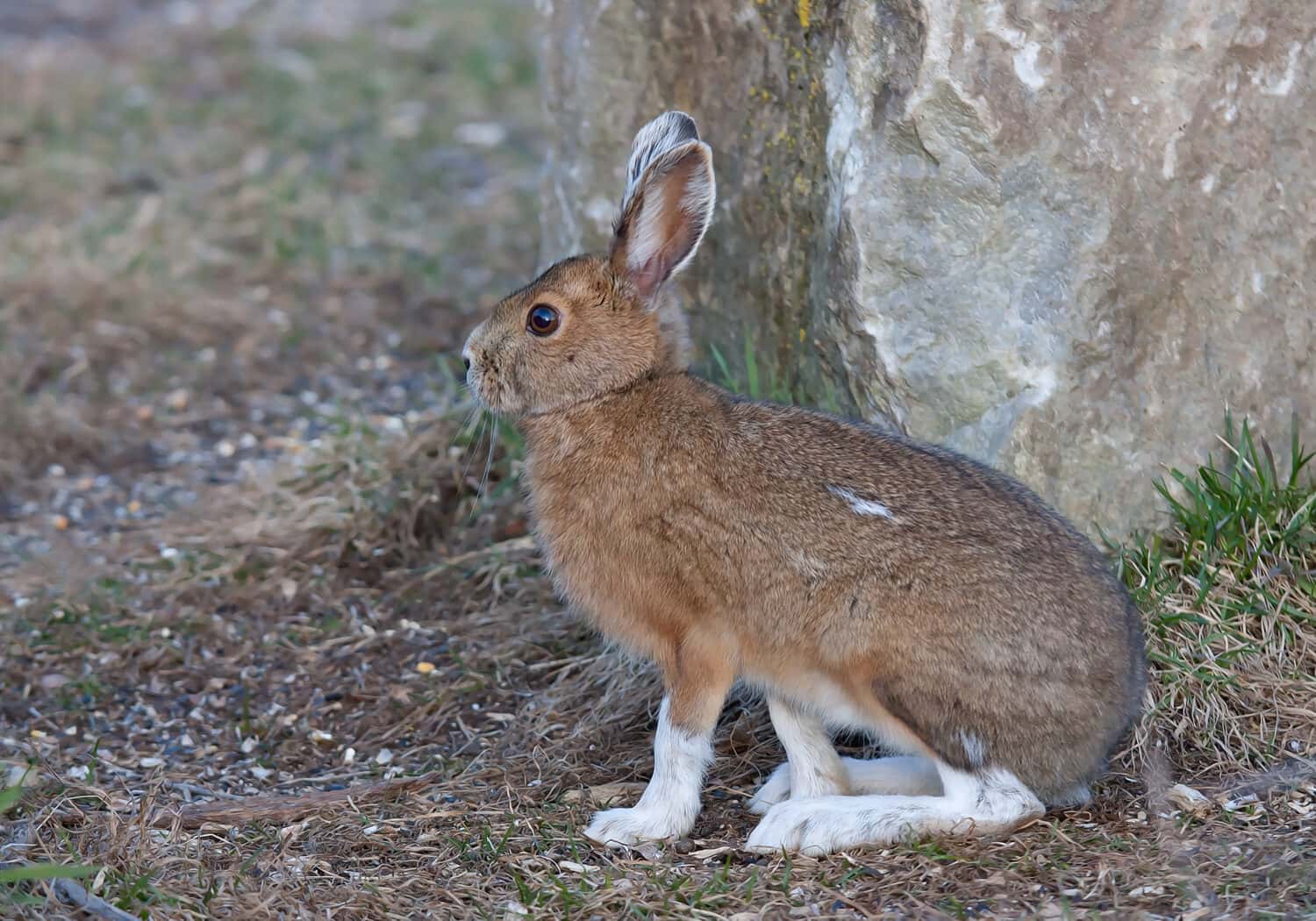
Snowshoe hares are most often seen in Acadia National Park during the early spring or fall.
©Jim Cumming/Shutterstock.com
Squirrels and chipmunks may be everywhere in Acadia National Park, but rabbits like showshoe hares can be seen there, too. They are characterized by large feet (which gives them their name) and coats that turn from brown in the summer to pure white in the winter. They are distributed evenly across the northernmost parts of the United States. If you see one at Acadia National Park, it will likely be in the early spring or fall, when its coat color is transitioning. Even so, snowshoe hares blend in very well with their surroundings, so spotting one will take a particularly meticulous eye.
Herring Gulls
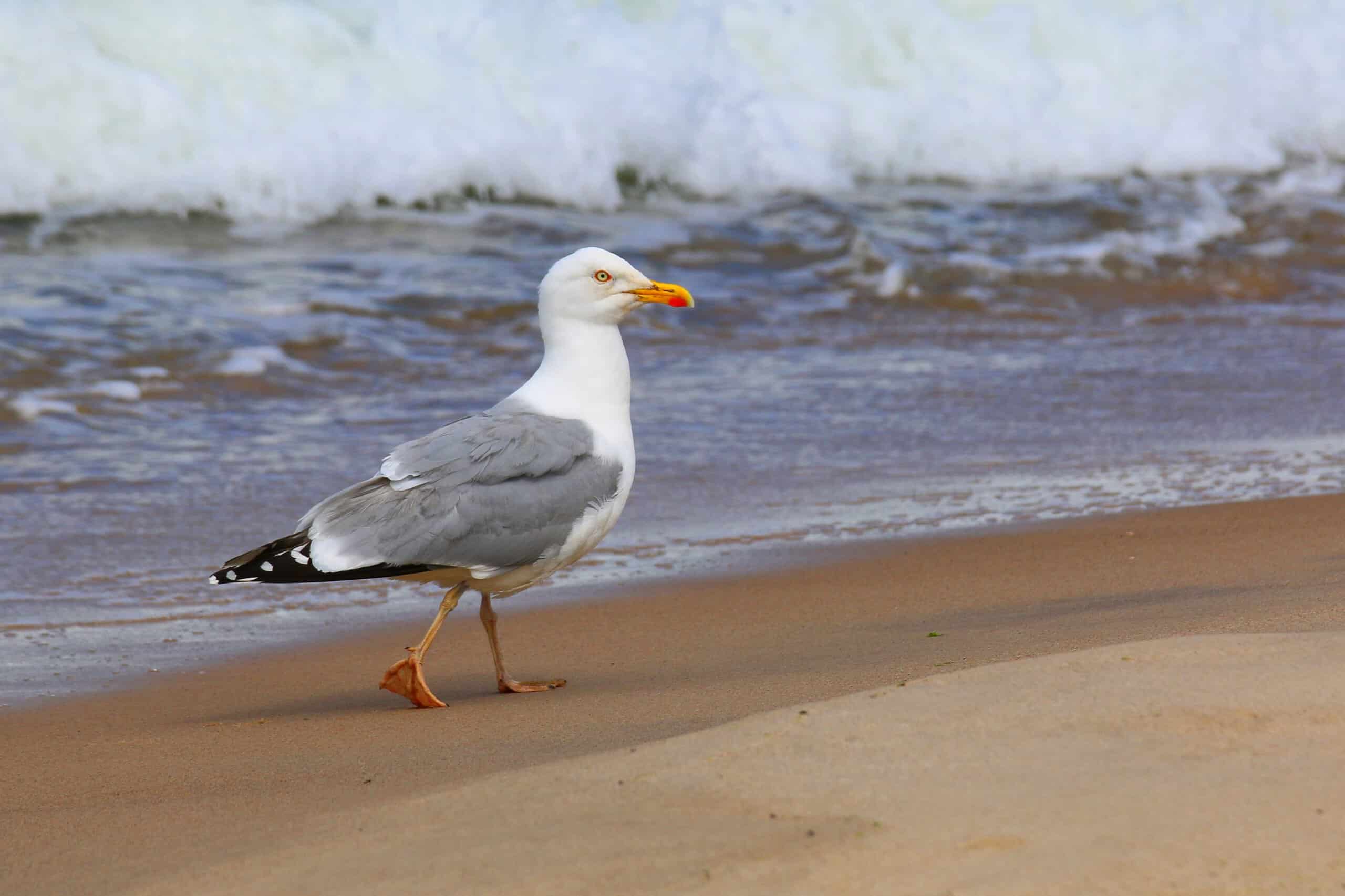
Gulls like herring gulls and great black-backed gulls can be found both along the coast and as far inland as Cadillac Mountain.
©Alina Zienowicz/Shutterstock.com
Seagulls like herring gulls or great black-backed gulls are probably the most commonly seen animals at Acadia National Park. While herring gulls have sturdy bills, great black-backed gulls are the largest species of seabird in the gull subfamily. There’s a good chance you will spot them along the shore of the park. That said, gulls can be pretty curious and adaptable. They can be seen throughout Mount Desert Island. Some visitors have spotted them as far inland as Cadillac Mountain’s peak. Though they usually eat fish and marine invertebrates, they aren’t against a wider variety of food sources.
North American Porcupine
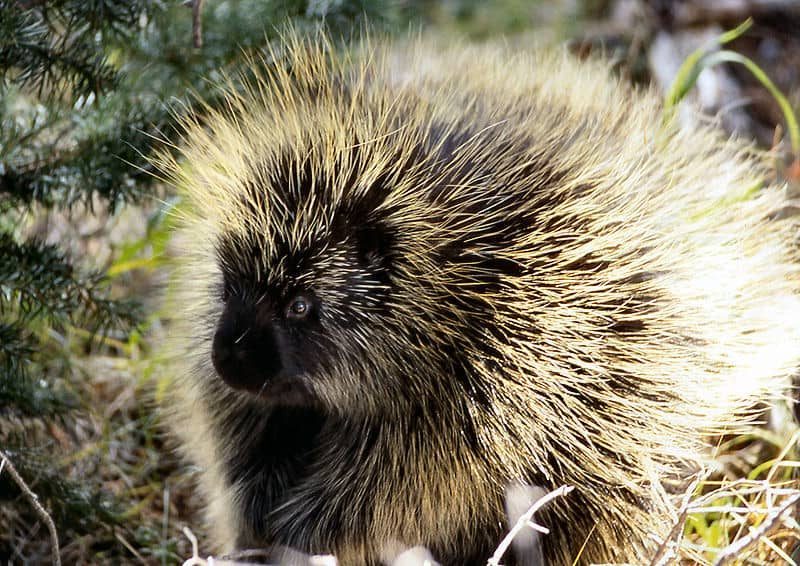
Acadia Porcupines are hard to spot but are practically everywhere in the park, feeding in the forests and finding shelter in the granite-covered mountain areas.
©National Park Service - Public Domain
North American porcupines are a regular presence in Acadia National Park, but traces of them are more regularly seen than living specimens. They are slow, sneaky, and most active at night. While they are essentially herbivores, feeding on leaves and twigs, they are known to fight back with their spiky quill coat when threatened. These quills, embedded in flesh, cause incredible pain and are very hard to remove, so park officials warn about getting too close to porcupines. They move about the park with ease, acquiring from birch and fir forests before nestling down in granite-covered mountain areas. Porcupines are also good climbers and can be found hanging out in trees. They have been seen all over the park, such as alongside Park Loop Road. Porcupines have also been in places like Schoodic Woods and on Pemetic Mountain.
Harbor Seal
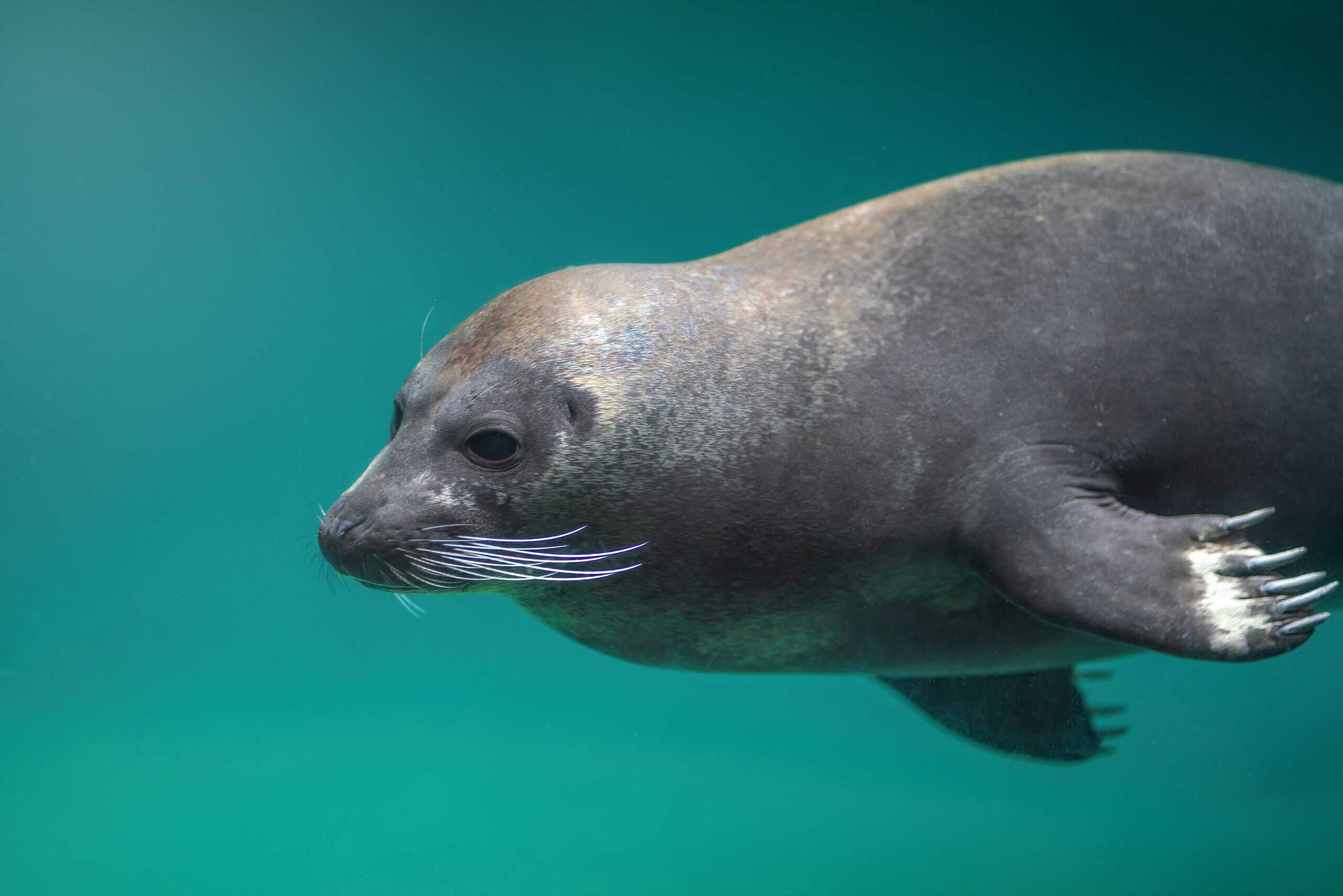
Both harbor seals and gray seals can be seen along Acadia National Park’s rugged coastline.
©Diego Grandi/Shutterstock.com
While some creatures move about Acadia National Park with ease, others, like the harbor seal, have more restricted movement. They live in the water and along the shore, so that’s where they can be found. That said, seals don’t like a lot of human activity, and the park gets millions of visitors a year. Acadia features both harbor seal and gray seal populations, both of which live just offshore and in some harbor areas. If you see them, they will be catching some sun as they ‘haul out’ on rocky ledges or areas of the shoreline. Since mother seals will often leave their pups alone on the shoreline, park officials ask visitors to maintain safe distances from them.
Spotted Salamander
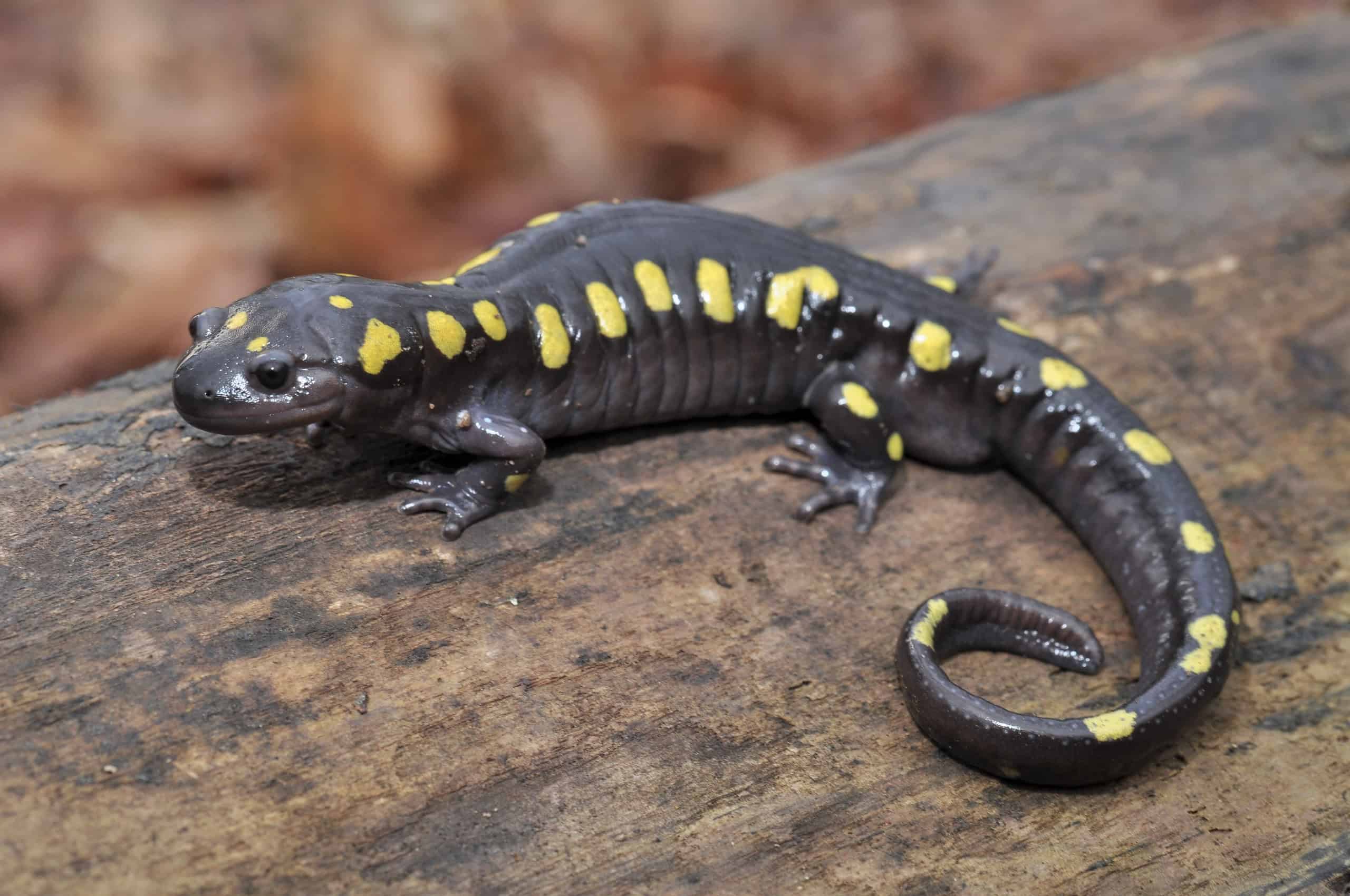
While Spotted Salamanders are the biggest salamanders in Acadia National Park, they are also the hardest to spot because they spend most of their time underground.
©Mike Wilhelm/Shutterstock.com
The spotted Salamander is one of the more prized animals to spot at Acadia National Park. They are characterized by their distinct black and yellow-spotted bodies. They are also the largest species of salamander in Acadia National Park, reaching lengths of between six and ten inches. These sizeable amphibians spend most of their time underground, however, so seeing one is one of the rarer opportunities that the park affords visitors. On the other side of the spectrum is the Eastern Newt. It’s the smallest salamander in the park, reaching at most five inches in length. Some lucky hikers spot them when they are juvenile and orange, as it’s the only time they can be found on land.
Black Bear
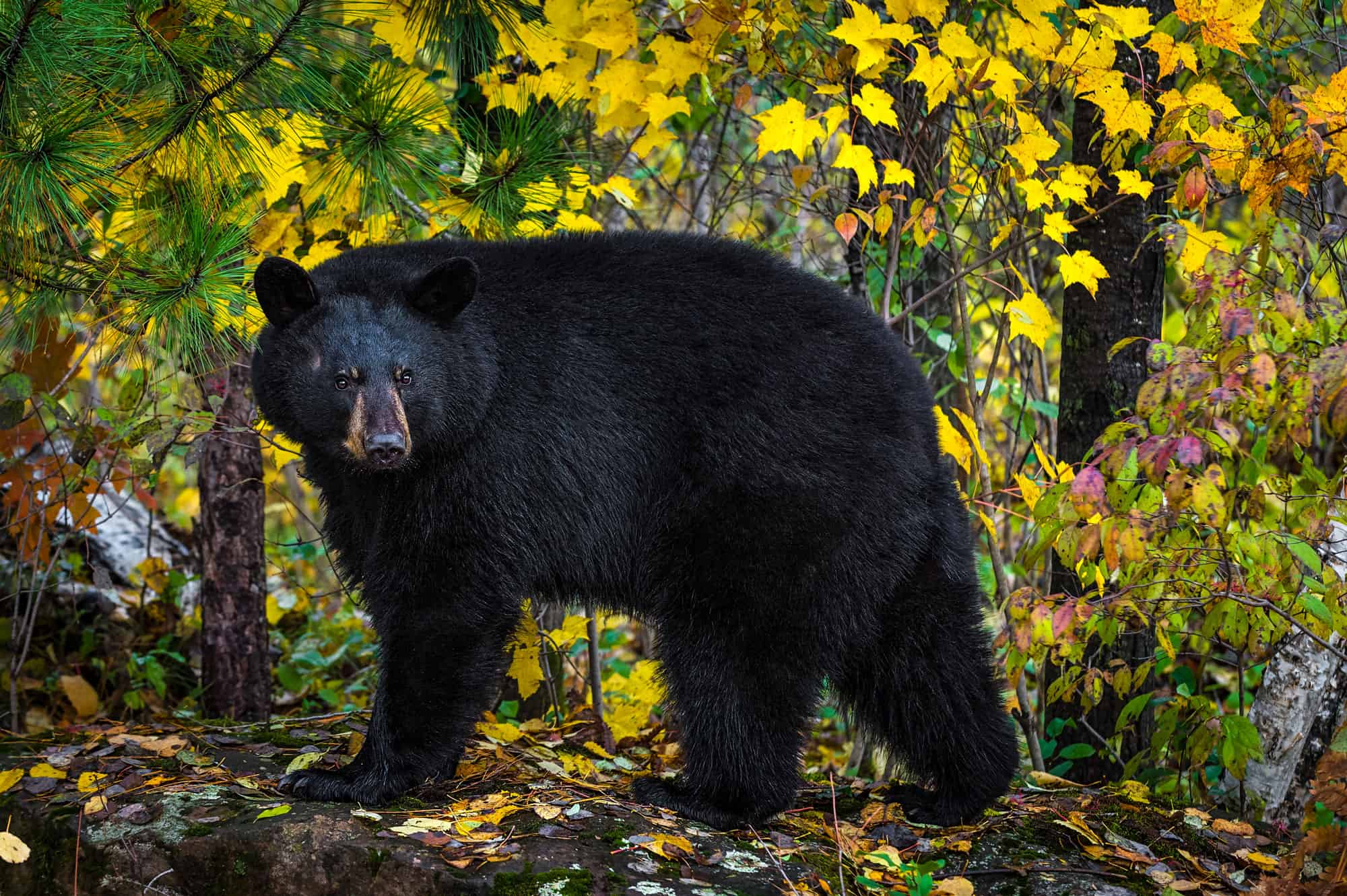
A small, permanent population of black bears lives on Mount Desert Island, but individuals are rarely seen by visitors.
©Holly Kuchera/Shutterstock.com
There seems to be a theme here: the biggest animals that live in Acadia National Park are also the hardest to spot. Black bears fall into this category. There is a confirmed small but permanent population of black bears on Mount Desert Island, but visitors rarely see them. They are only spotted once or twice a year. The rest of the time, they are like ghosts. While Acadia has all the food that black bears prefer, their territory density prevents much of a large population. Indeed, female black bears need about six to nine square miles of territory each. That means Acadia, at most, could only support about four breeding females year-round. They are shy animals that avoid humans and dislike dogs, so seeing one at Acadia would be a true rarity. If you see them anywhere, it will likely be along the Schoodic Peninsula.