Quick Take
- Lake Jesup's staggering gator density isn't natural. It traces back to a decades-old decision that locals still talk about today. Trace the relocation history →
- Compared to a Florida lake nearly 60 times its size, Lake Jesup holds a wildly disproportionate share of the state's alligators. The numbers are hard to believe. See the population numbers →
- A gator hunter at Lake Jesup learned the hard way that a hooked alligator isn't a defeated one, and his story is every bit as harrowing as it sounds. Read the 2020 attack story →
- Swimming is the least of your worries at Lake Jesup. The lake has another problem that makes the gators almost secondary. Discover the other dangers →
Alligators were once endangered in their native southeastern United States, but they are now so common that they sometimes become nuisances. In fact, there are an estimated 1.3 million alligators in Florida. Many of Florida’s lakes have tens of thousands of alligators inhabiting them. However, per acre, Lake Jesup is Florida’s most alligator-infested lake. How many alligators are in the lake, and how did they all get there?
About American Alligators
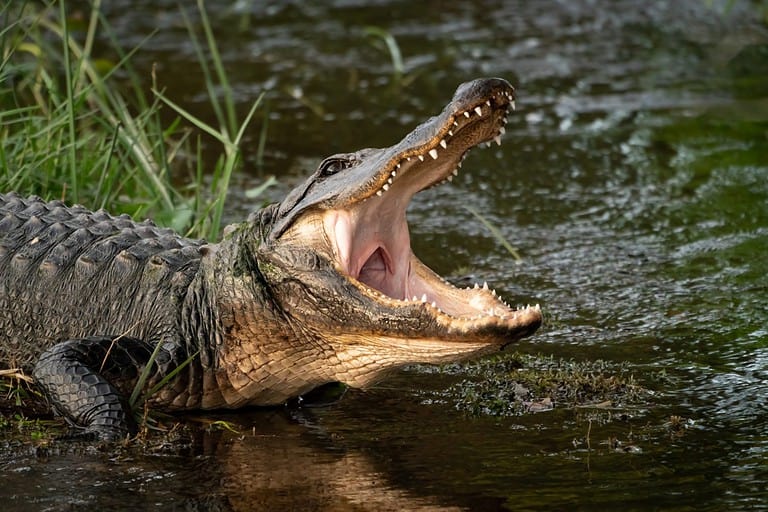
Alligators are semi-aquatic, ectothermic carnivores that can be found submerged in the water or basking in the sun to warm themselves. Alligators primarily live in freshwater habitats, such as rivers, lakes, swamps, ponds, marshes, and even drainage ditches and retention ponds. Wildlife officials warn that alligators can be found in nearly any body of water. Small alligators prey on animals such as frogs, toads, crabs, fish, birds, snails, spiders, and rodents. Adult alligators eat larger prey including turtles, smaller alligators, feral pigs, deer, muskrats, and raccoons.
Female alligators rarely grow larger than 10 feet long, while males can reach 13 feet or even longer. There have been a few cases of larger gators, particularly in southern states like Florida and Louisiana. The largest alligator on record is 15 feet 9 inches long and was found in Alabama. The Florida state record alligator is 14 feet 3.5 inches. At last count, there were 194 alligators longer than 9 feet in Lake Jesup.
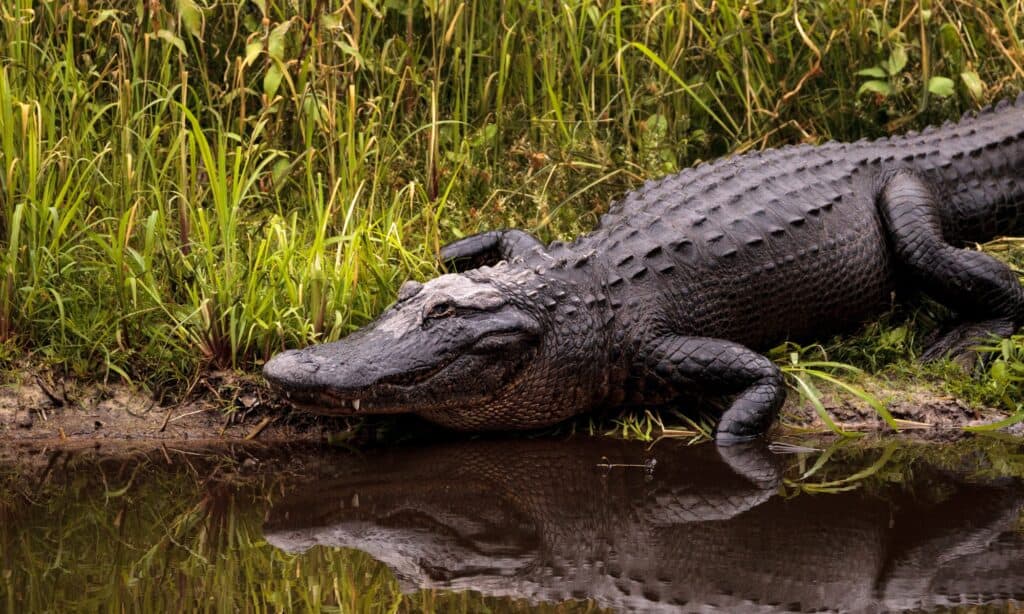
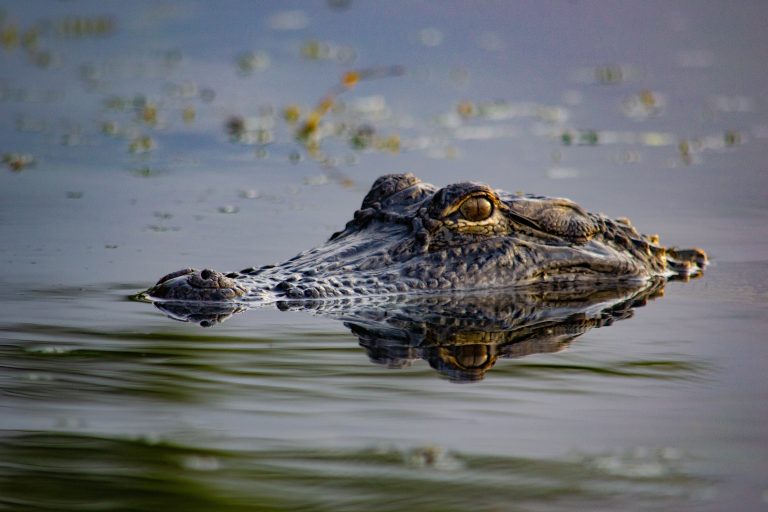
Alligators are common throughout Florida.
©iStock.com/LagunaticPhoto
How Many Alligators Are in Lake Jesup?
The Florida Fish and Wildlife Conservation Commission keeps a rough tally of the gator population in Lake Jesup. A recent estimate indicates there are roughly 14,518 alligators living in the 8,058-acre lake. (The lake and its surrounding floodplain and wetlands can reach up to about 16,000 acres, depending on water levels and season.) In comparison, Lake Okeechobee, which is much larger at 467,200 acres (roughly 730 square miles), has nearly 33,542 gators.
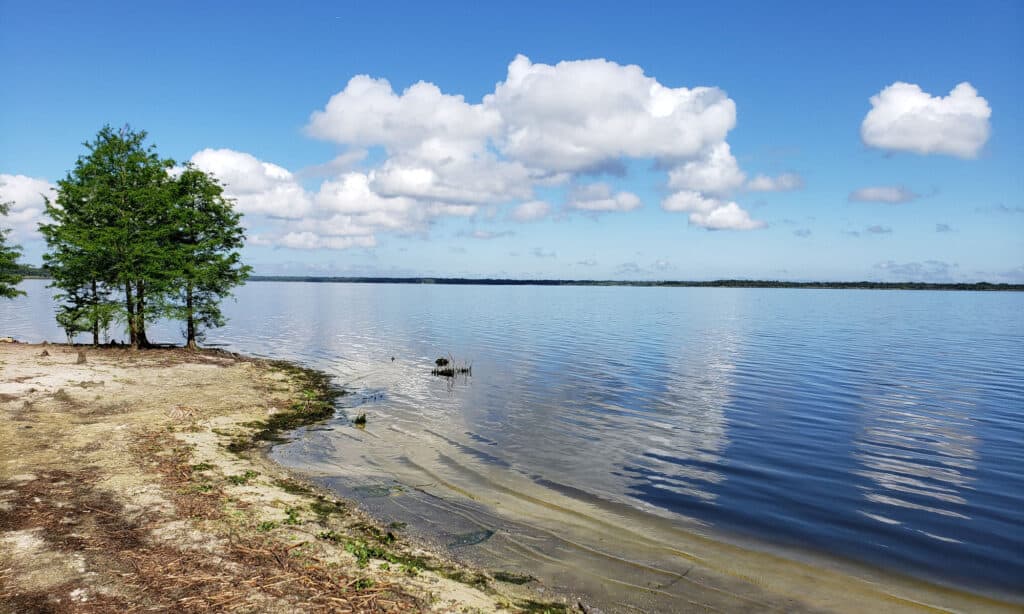
Lake Jesup has an estimated number of 13,000 alligators.
©Thomas Decot/Shutterstock.com
Why Is Lake Jesup One of the Most Alligator-Infested Lakes?
Lake Jesup has more alligators per square mile of shoreline than any other lake in Florida. In fact, there are more than 400 gators per square mile of shoreline. However, where did all of these alligators come from?
Locals believe this was due to relocation efforts beginning as far back as the 60s and 70s. When the area around Lake Jesup was being developed, a number of permanent water sources were drained to make way for new construction. Since alligators were on the endangered species list until 1987, they could not be hunted or killed. All of the alligators in the area had to be relocated, and Lake Jesup is where they were taken.
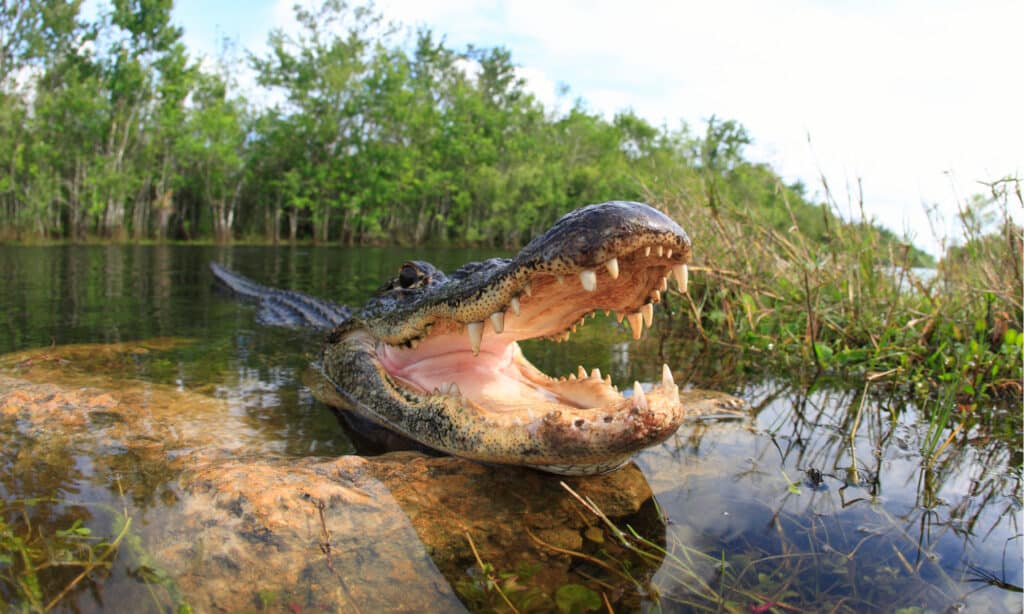
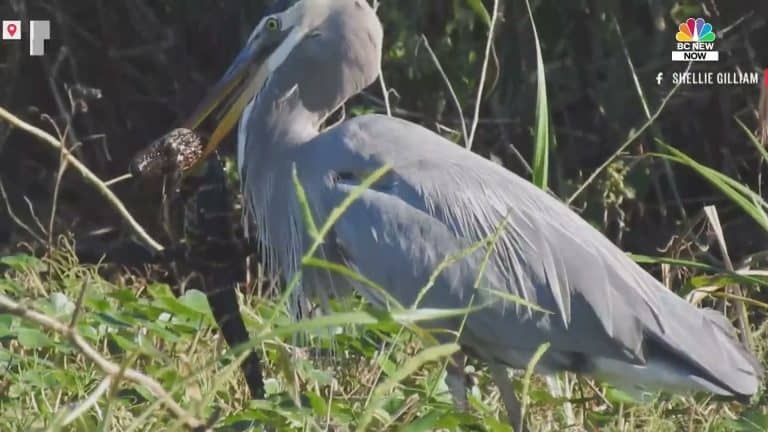
Alligators’ diets include turtles, feral pigs, deer, and raccoons.
©Thierry Eidenweil/Shutterstock.com
Alligator Attacks in Lake Jesup
FWC and local records show multiple, non-fatal gator encounters in Lake Jesup over the years. However, there has only been one widely reported alligator attack in Lake Jesup in recent years. The attack occurred in 2020. Luckily, it didn’t cost the victim his life, but it nearly cost him his arm.
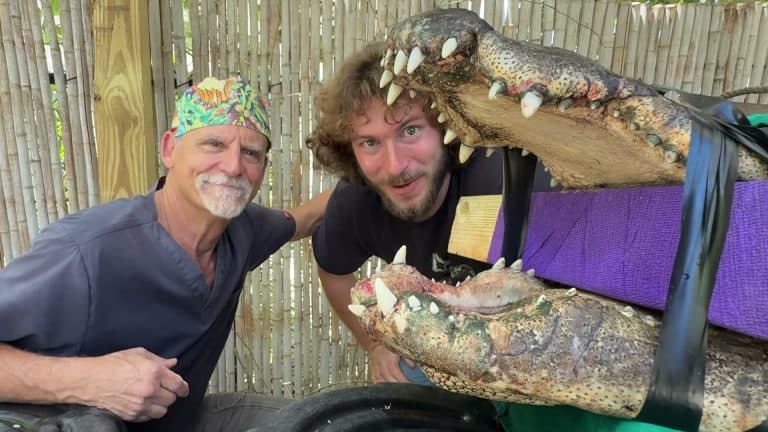
Hunting alligators in one of Florida’s most alligator-infested lakes is never risk-free, especially when targeting large gators. After hooking the alligator, the victim and his friends pulled it close to their boat and prepared their boomstick to end the giant gator’s life. Before they could do that, the alligator lunged from the water and grabbed the victim’s right arm. The alligator nearly tore the arm off before returning to the water, leaving the victim to undergo multiple surgeries to reattach and repair his arm.
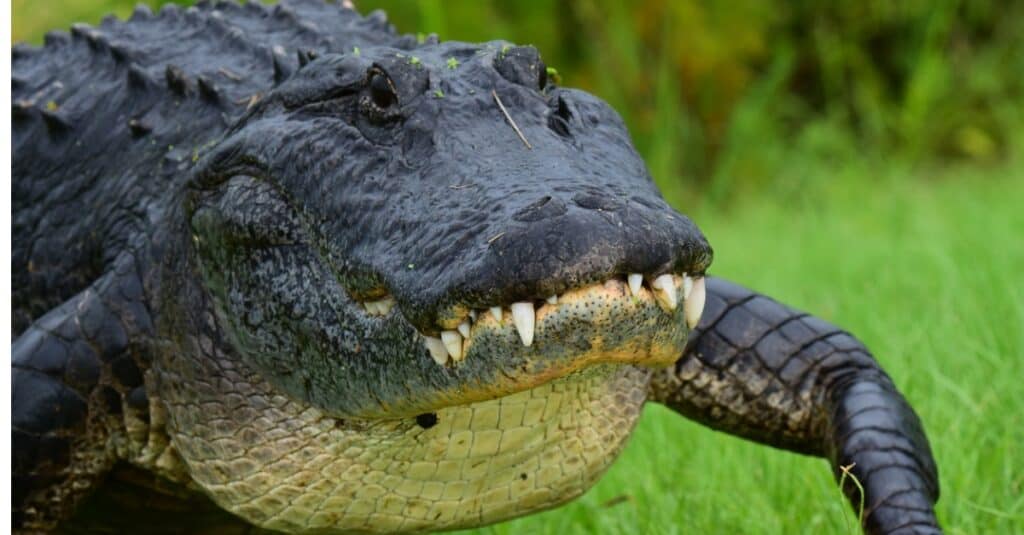
Alligators are best viewed from afar in Lake Jesup.
©iStock.com/cturtletrax
Can You Swim in Lake Jesup?
Alligators notwithstanding, Lake Jesup is not the best lake for swimming. It is one of the shallowest lakes in Florida. Its average depth is only six feet, though it would be deeper if not for a thick layer of sediment on the lake’s bottom. Stormwater runoff drains into the lake, but there is little drainage out, resulting in heavy siltation. The lake also harmful blue-green algae toxins. This is all bad for humans but good for alligators.
While there have never been any fatal alligator attacks there, with more than 400 alligators per square mile of shoreline, it’s not a smart place to take a dip. Officials highly discourage swimming due to the gators, as well as the algae. Lake Jesup is better enjoyed from a safe distance on land or by boat. If you want to see the gators, they are best viewed from a commercial airboat captained by an experienced tour guide.