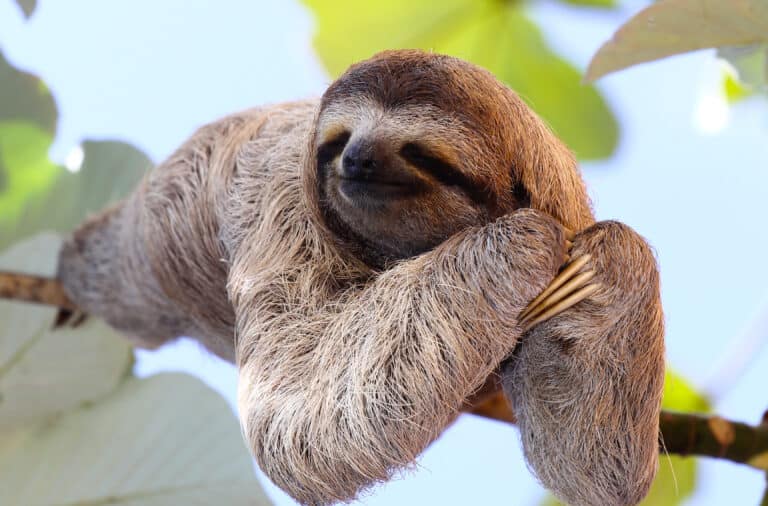

Rock hyraxes are peculiar creatures, with the body of a guinea pig, the snout of a weasel, and the surprising dental work of a tiny saber-toothed tiger. As seen in this YouTube video, these unique rock-dwellers spend much of their day sleeping, but there is much more to the rock hyrax than meets the eye.
What Is a Rock Hyrax?
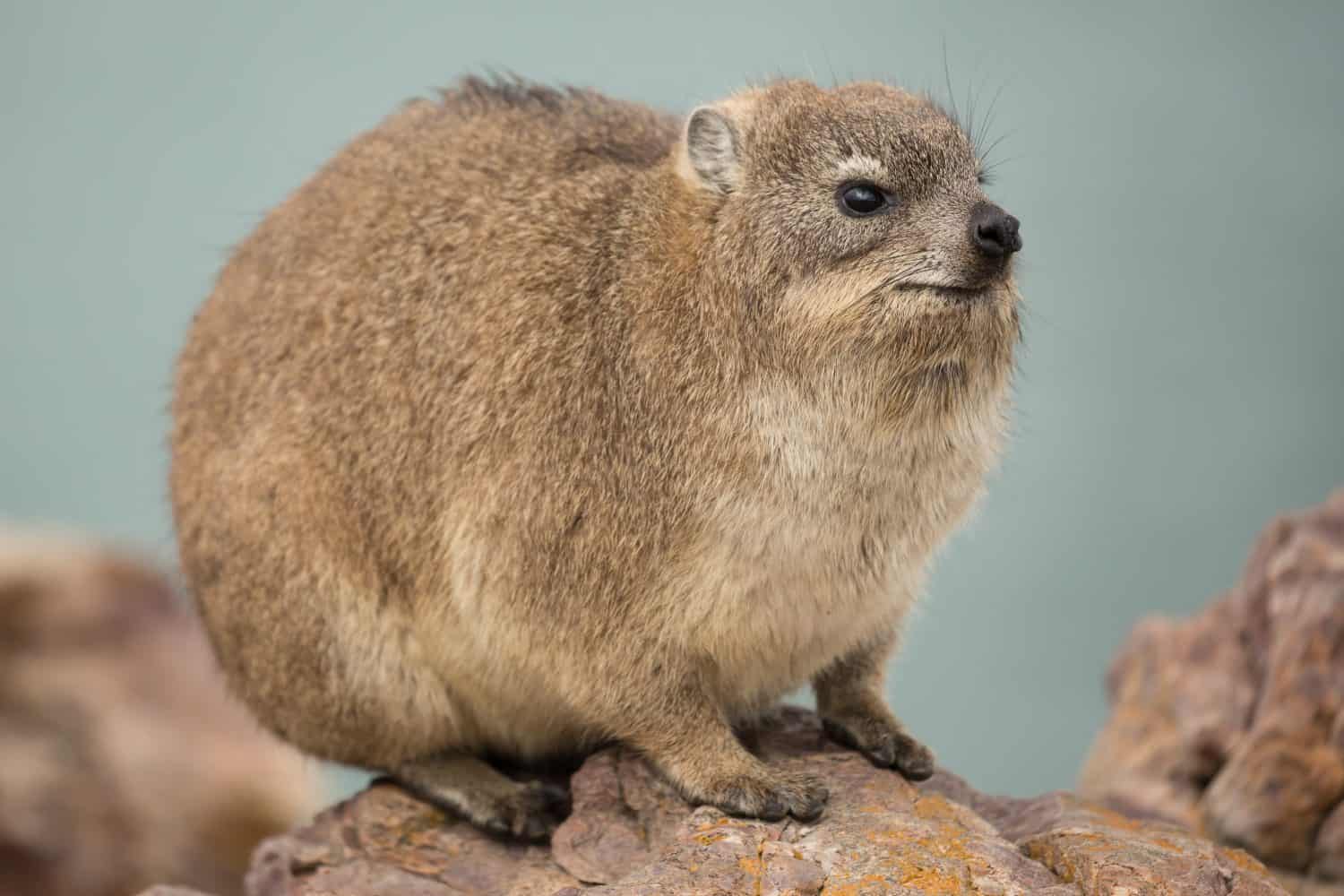
Rock hyraxes have remarkably enhanced hearing and sight.
©rjmiguel/Shutterstock.com
Rock hyraxes (Procavia capensis) are unusual creatures. With their stocky, guinea-pig-like bodies, rounded ears, triangular snouts, and tiny fang-like teeth, these intriguing animals are easy to mistake for a rodent. Despite their furry appearance, however, hyraxes are not rodents at all. In fact, their closest living relatives are manatees and elephants.
Also known as rock rabbits or rock dassies, these small animals typically weigh 4 to 12 pounds and grow 22 inches long. Their fur is brownish-gray or yellowish, and they have a distinctive patch of long, black hair on their backs. This patch covers a scent gland used for communication, and the black hair stands up when the hyrax feels threatened or angry.
Rock hyraxes have short legs and tiny feet perfectly adapted for climbing. Their rubbery footpads stay moist and contain specialized muscles that create a suction-cup effect, enabling them to navigate steep cliffs and rocky terrain with impressive agility. Like their elephant and manatee relatives, they have short toes with hoof-like nails.
Where Do Rock Hyraxes Live?
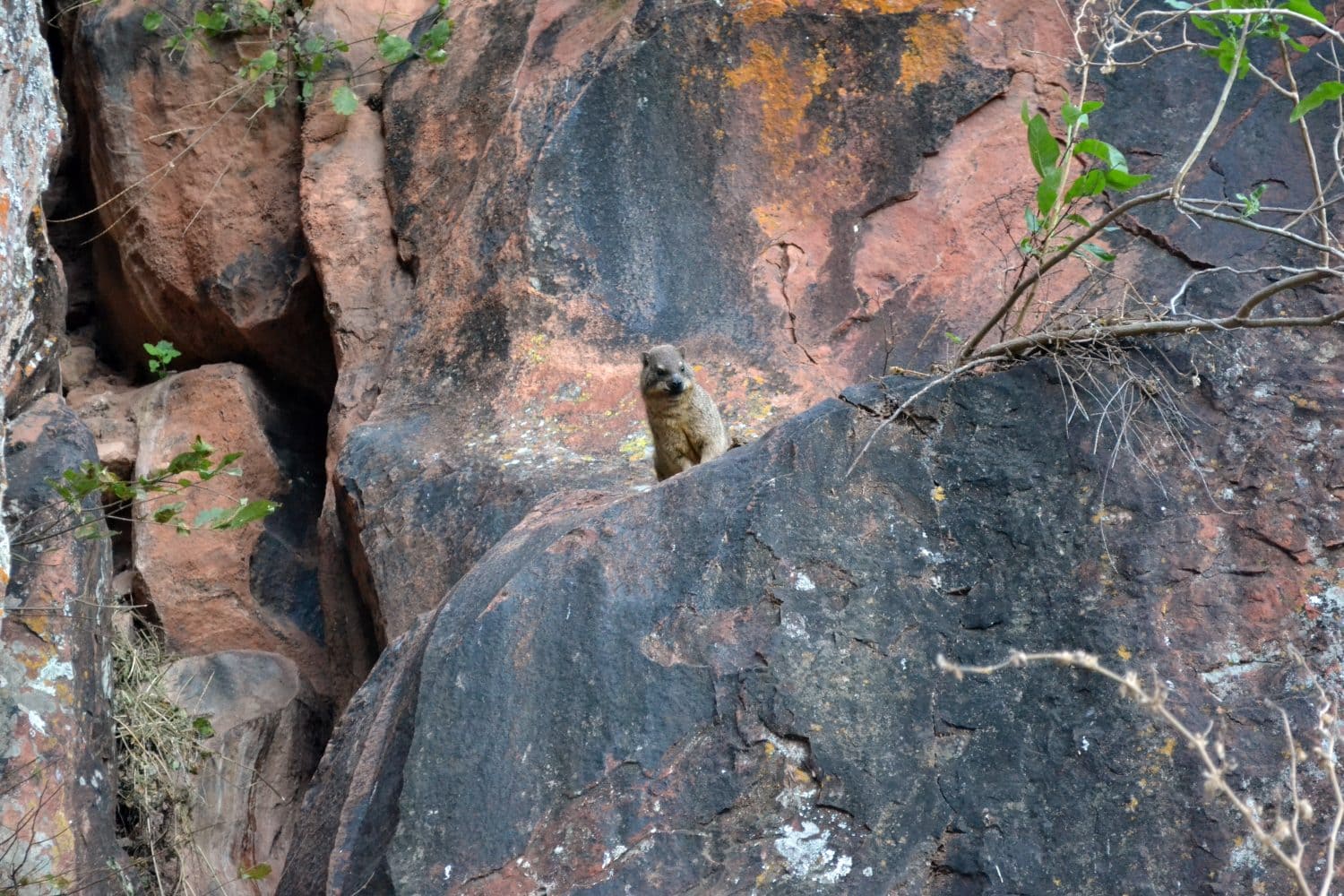
Hyraxes have three toes on their back feet and five on their front feet.
©MIRAFotos/Shutterstock.com
Rock hyraxes live in rocky habitats across sub-Saharan Africa and the Middle East. They are incredibly adaptable creatures, and you can find them in dry, rocky areas, scrublands, and even forests, from sea level up to 14,000 feet. Each habitat includes rocky outcrops or mountain cliffs, which is where they build their nests and seek shelter.
These peculiar creatures spend surprisingly little time eating — only an hour a day at most — and graze on grasses and shrubs. For the rest of the day, they spend most of their time resting and sleeping, as seen in the YouTube video.
Why Do Hyraxes Sleep So Much?
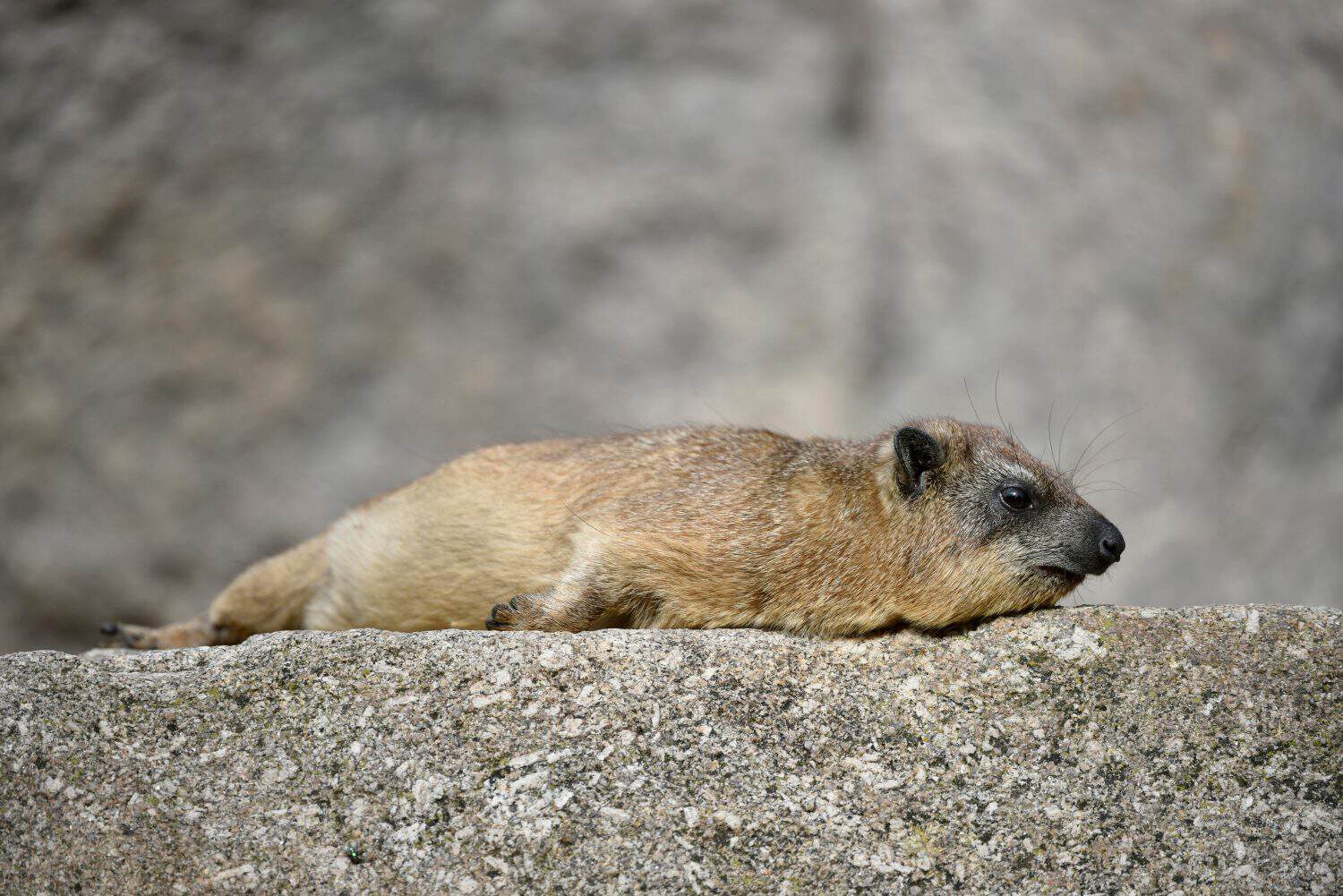
Rock hyraxes have two front teeth like tusks, which continuously grow throughout their lives.
©imageBROKER.com/Shutterstock.com
As their name suggests, rock hyraxes make their homes among rocks. Instead of digging burrows, they live together in colonies of several dozen animals, nesting in the natural cracks and crevices of rocky areas. They are most active during the day, but they can be found napping at any time.
Despite their sleepy appearance, hyraxes are not actually lazy. One study found that rock hyraxes are actually awake for about 66.2 percent of a 24-hour period. They also spend very little time in REM sleep, which is the dreaming state. However, they do get a significant amount of slow-wave sleep, or deep sleep, which makes up about 25 percent of their sleep cycle. Rock hyraxes can instantly transition from a state of deep sleep to being wide awake and then back to sleep again, unlike many other animals.
The Benefits of Social Sleep
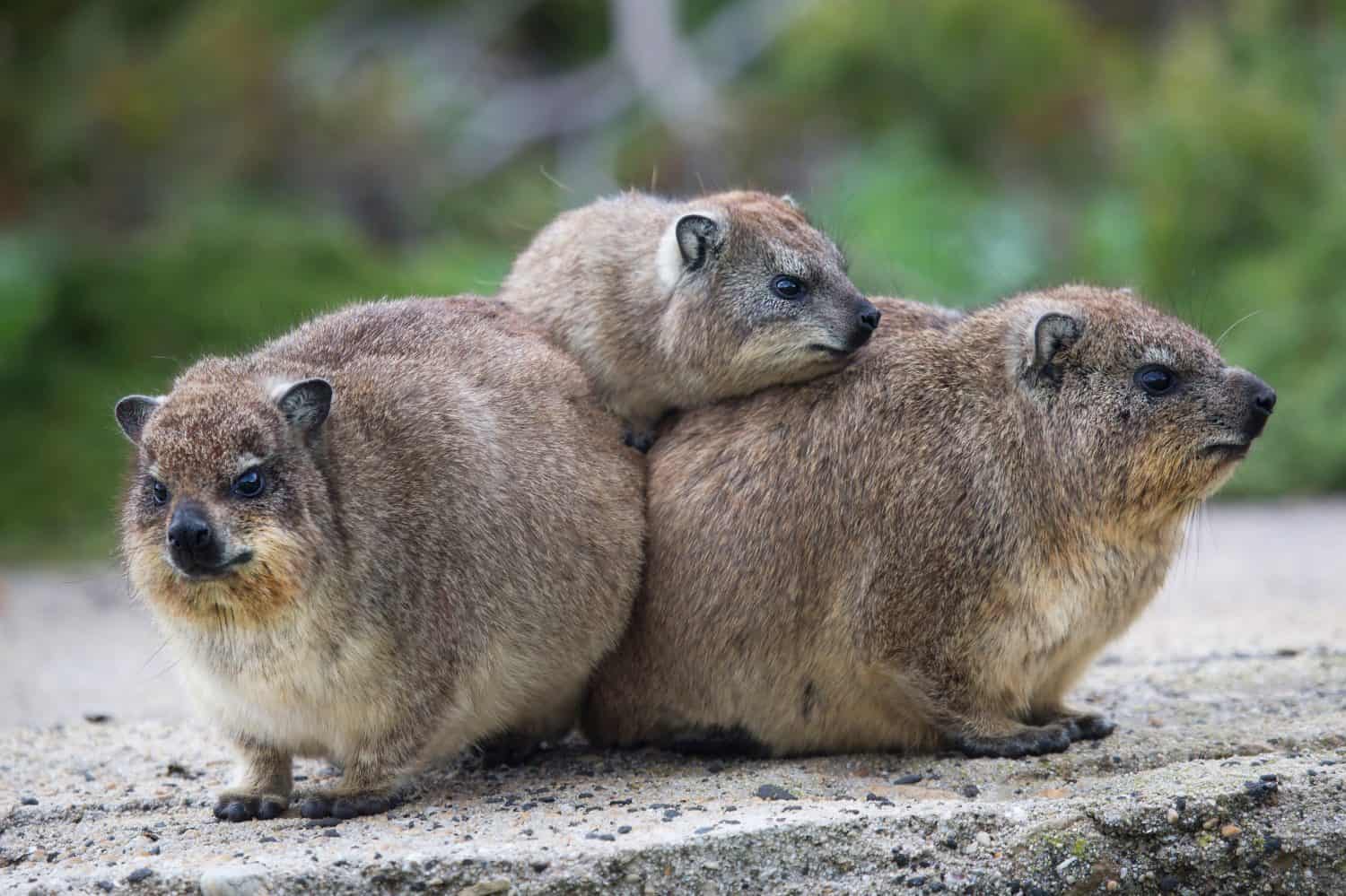
Rock hyraxes live together in colonies of five to 60 other hyraxes.
©Dirk M. de Boer/Shutterstock.com
While rock hyraxes seem to spend their lives sleeping, they rest together for reasons beyond just sleep. As seen in the YouTube video, they often sprawl out and sunbathe, which helps them stay warm. Hyraxes can spend several hours a day soaking up the sun, especially on colder days, which helps them conserve energy and warmth. As prey animals, they must remain constantly alert and need all their energy to quickly escape from predators.
When hyraxes sleep together in a group, the average duration of their REM sleep episodes increases by about 20 seconds during the day and 40 seconds at night. In other words, they sleep much better with friends! Scientists believe this social sleep provides better thermoregulation, as huddling together helps the animals stay warm. Interestingly, hyraxes can be picky about their napping partners. Studies also show that while they will cuddle up with almost anyone for a daytime nap, rock hyraxes are much more selective about whom they sleep next to at night.
Rest and Temperature Control
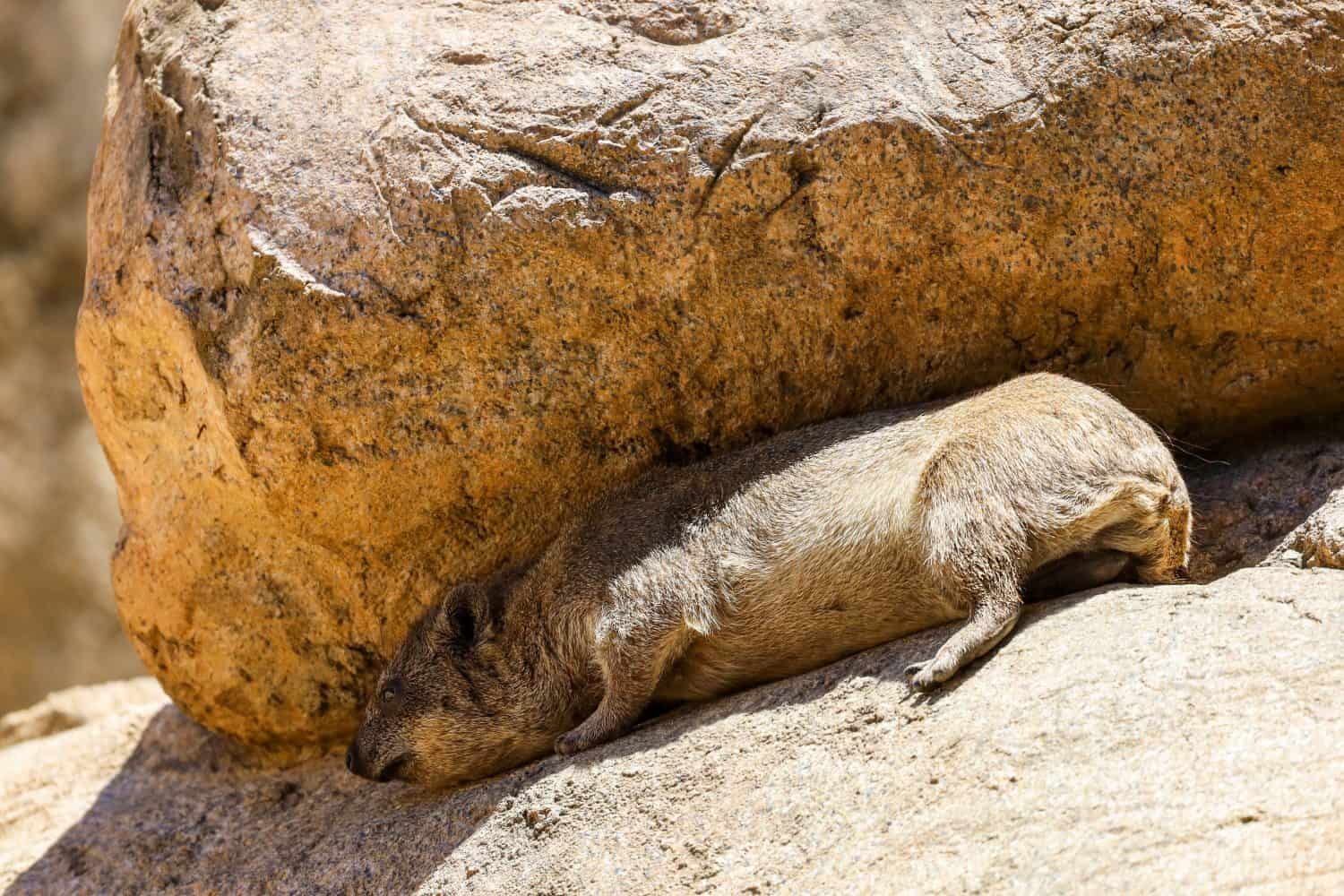
Rock hyraxes often tuck their bodies between boulders to rest.
©Rosamar/Shutterstock.com
When temperatures rise, rock hyraxes have several ways to cool down. They lie down and relax their muscles to reduce heat production, and their breathing rate increases to release extra heat. They also sweat through the soles of their feet, a very effective cooling method that accounts for 22 percent of their total body heat loss.
In contrast, when it is cold, rock hyraxes huddle together and bask in the sun for longer periods. This allows them to conserve heat and reduces the energy needed to maintain a stable body temperature.
A study on yellow-spotted hyraxes revealed that their body temperature fluctuates easily, particularly in hot weather. Their resting heart rate is around 118 beats per minute, and their metabolism is adapted to be more energy efficient than other mammals of similar size. These unique adaptations help rock hyraxes conserve and use energy more efficiently, allowing them to thrive in many different habitats and climates.