
Quick Take
- A heron has one specialized neck bone that makes it a more dangerous predator than most people realize, which is also the reason even fast reptiles can't escape. See the specialized vertebra →
- The predator here can easily become the prey, and adult alligators have developed a surprisingly clever trick to flip the script on herons. How alligators turn the tables →
- There's a place in Florida where herons deliberately nest directly above pools of alligators, a arrangement that leaves both species better off. Explore their Florida coexistence →
- Herons occasionally pay a fatal price for being too ambitious, which reveals an unexpected limit to how far their adaptability actually goes. When ambition becomes fatal →
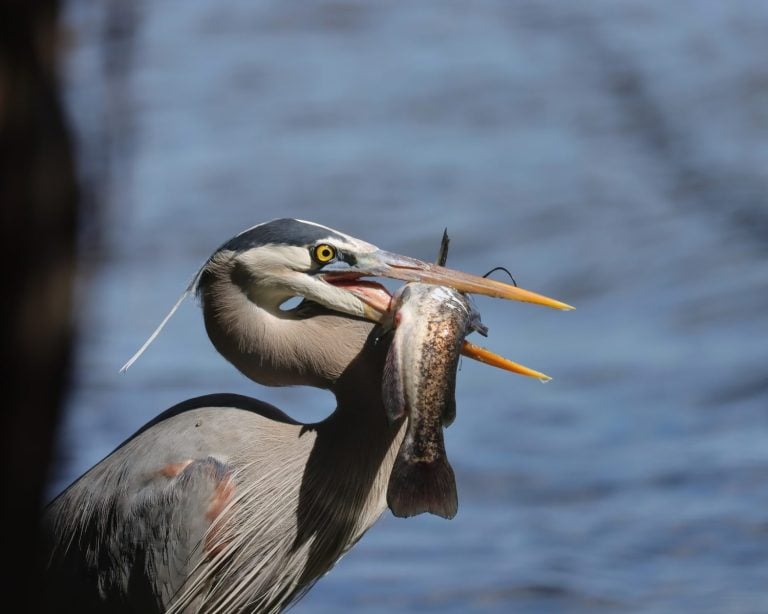
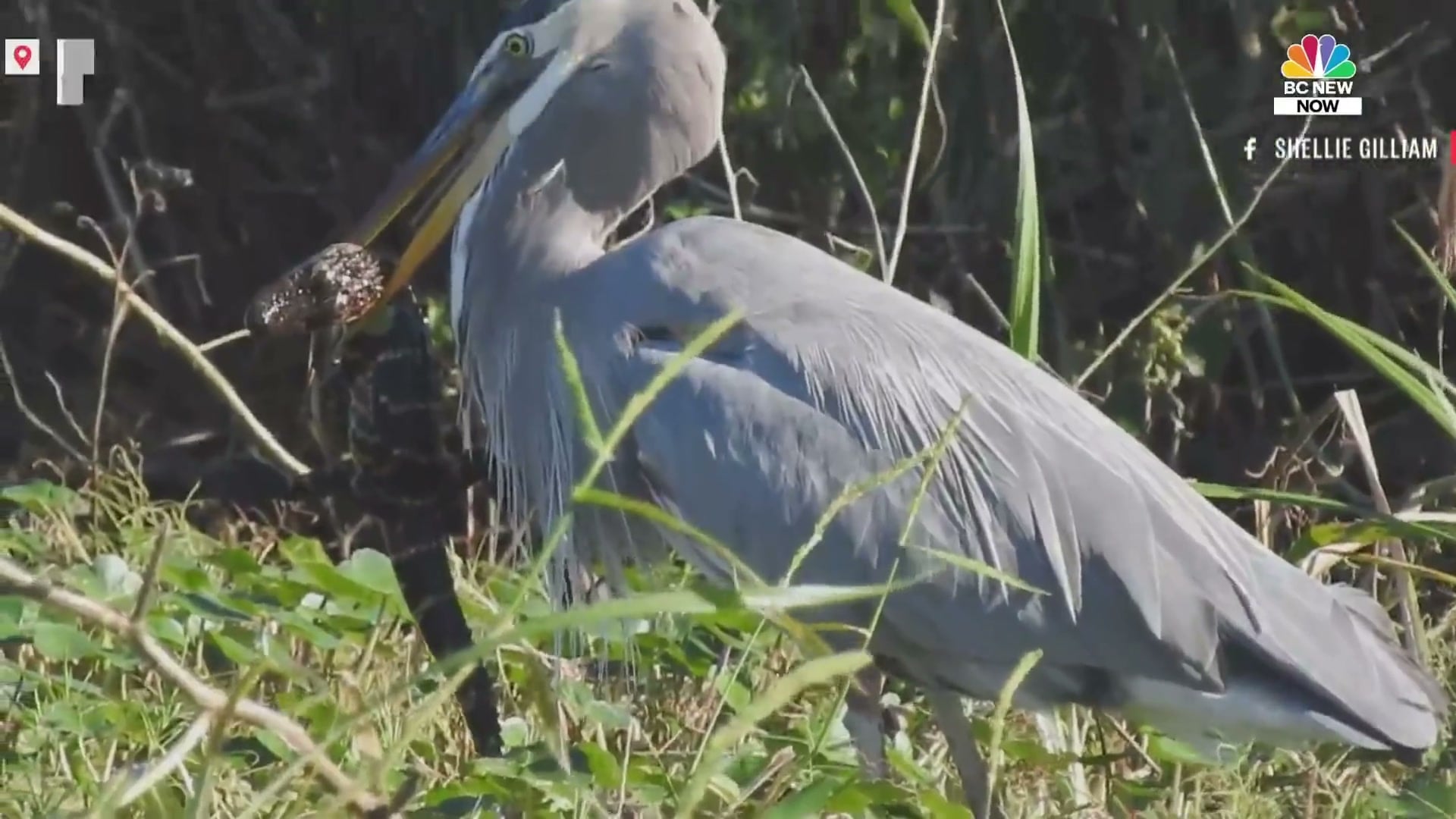
This video out of Florida shows a great blue heron gripping a small alligator in its massive beak, flipping it around, and swallowing it completely whole. The clip has shocked plenty of viewers who think of herons as gentle fish-eaters. But wildlife biologists aren’t surprised at all. Great blue herons are opportunistic predators that will gladly scarf down a reptile — including a young alligator — whenever the chance arises.
Built Like a Modern Dinosaur
Great blue herons (Ardea herodias) are the largest herons in North America, standing up to 4.5 feet tall with wingspans that can stretch nearly 6.5 feet. According to the Cornell Lab of Ornithology, their diet is incredibly diverse, spanning fish, frogs, reptiles, small mammals, insects, and even other birds. In the wetlands of the southeastern United States, studies have frequently found snakes, turtles, and juvenile alligators on the heron’s menu.
Herons are classic ambush predators. They stand perfectly still in shallow water or stalk forward with extreme slowness. When prey gets close, they strike with a lightning-fast extension of their S-shaped neck. Their necks feature a unique sixth vertebra that acts like a hinge, allowing for a blindingly fast forward thrust. It’s easily quick enough to snag fast fish and speedy reptiles before they even realize they are in danger.
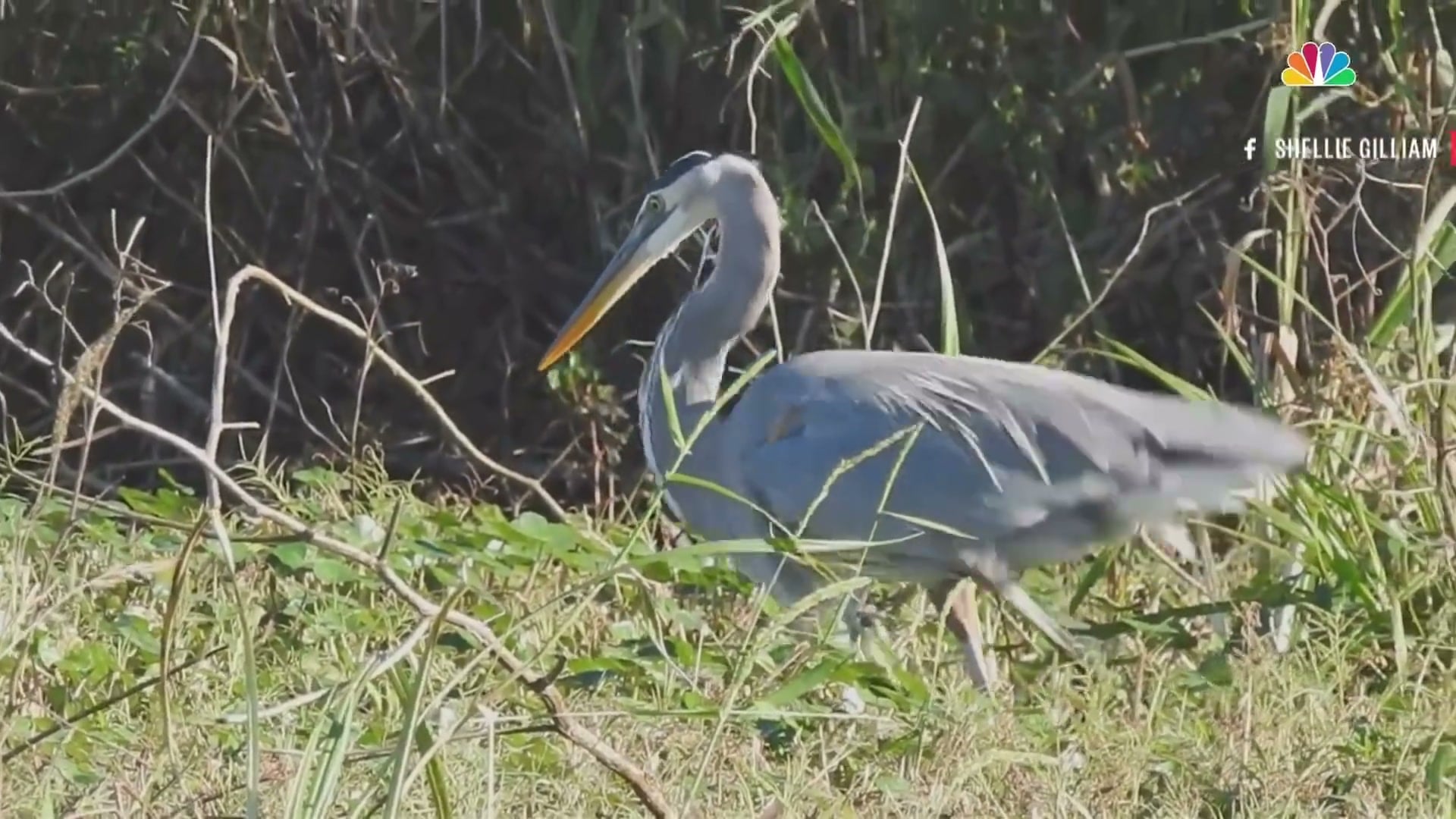
Herons have an easy-to-identify S-shaped neck.
©NBC News via YouTube — used under fair use – Original / License
Down the Hatch
Because herons don’t have teeth or talons to tear their food apart like hawks or eagles do, they have to swallow everything whole. Once the bird subdues its prey, usually by stabbing it repeatedly or slamming it with its beak, it repositions the animal head-first and gulps it down.
Their throats and esophaguses can stretch remarkably to accommodate large meals. However, ornithologists have found great blue herons choked to death on prey that was simply too big to pass, proving that the birds sometimes bite off more than they can chew.
The Lifecycle of a Hatchling
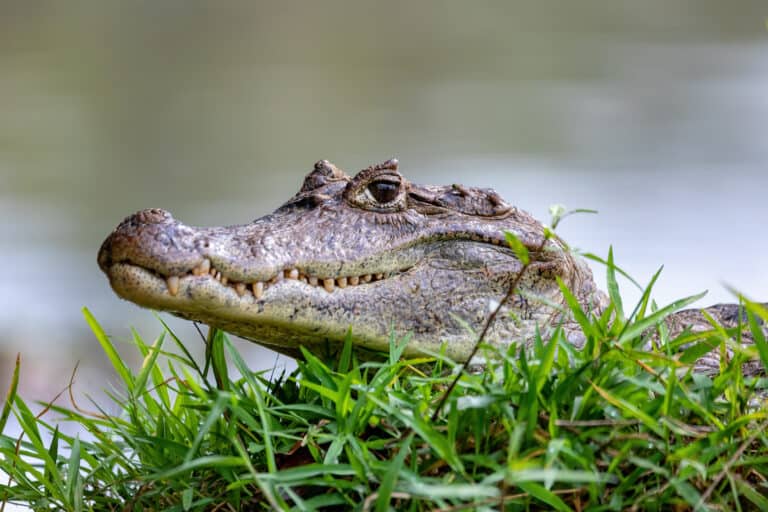
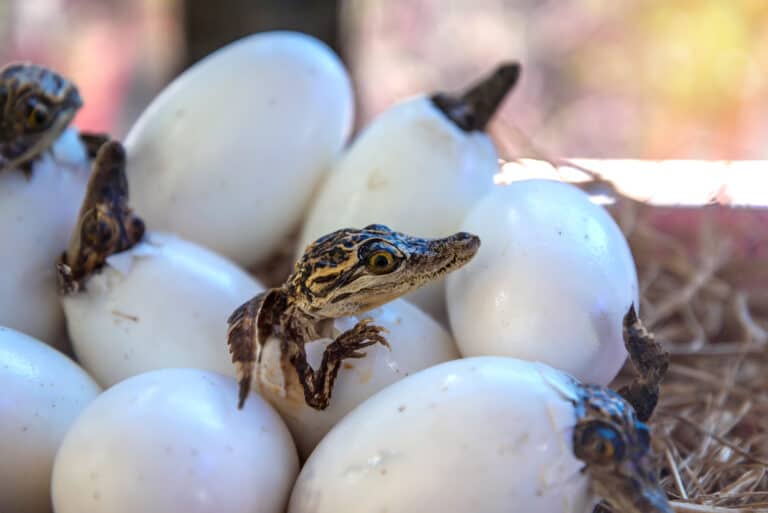
A baby alligator is well within a heron’s realistic target range. Hatchling American alligators (Alligator mississippiensis) emerge from their eggs at just 6 to 8 inches long, leaving them incredibly vulnerable for their first few years of life.
The Florida Fish and Wildlife Conservation Commission notes that baby gators are hunted by just about everything: wading birds, raccoons, otters, large fish, and even bigger alligators. In fact, studies suggest that roughly half of all alligators don’t survive their first year. Mother gators do their best to guard their clutches, but they simply can’t watch every single hatchling every second of the day.
A Two-Way Street
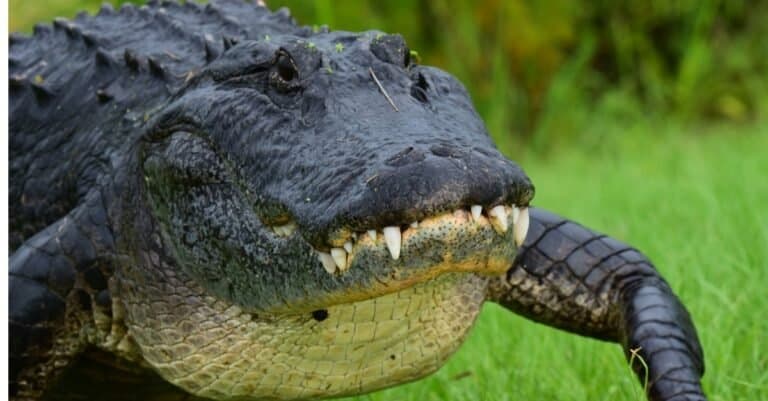
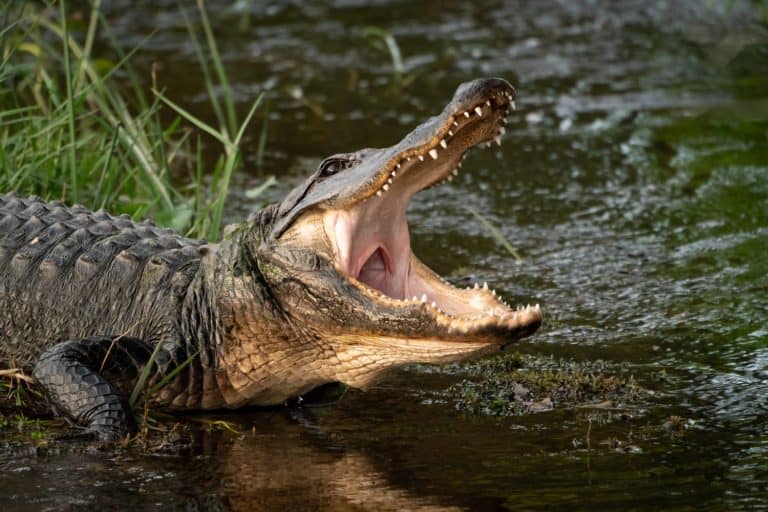
What makes this relationship fascinating is that the roles reverse completely as the animals grow. Adult American alligators regularly hunt and eat great blue herons and other wading birds.
Some researchers have even documented alligators balancing sticks on their snouts as a lure for nesting herons seeking twig material. Ultimately, the relationship between these two Florida species boils down to which one is bigger at the moment they cross paths.
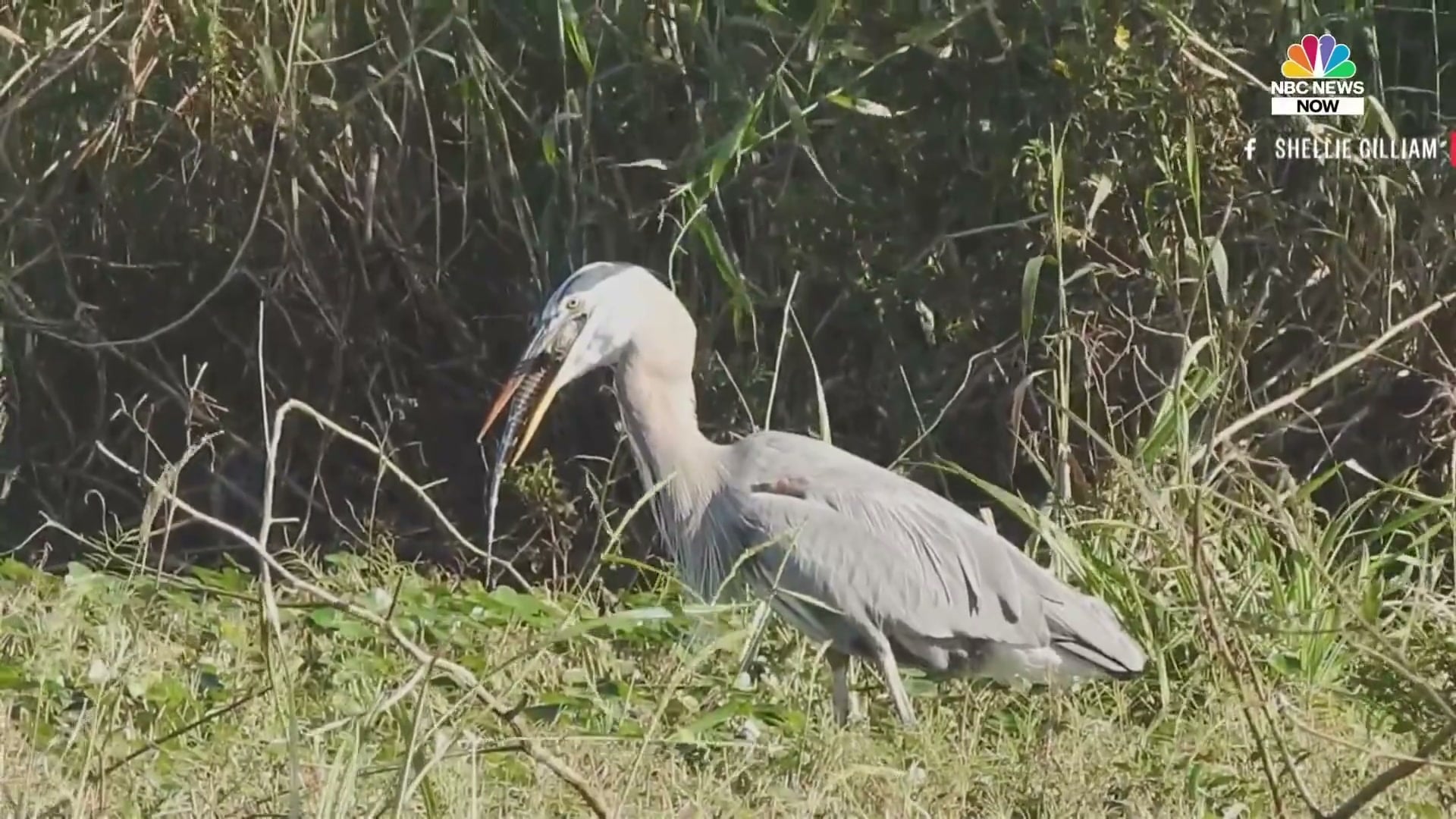
More than 50% of gators don’t survive their first year.
©NBC News via YouTube — used under fair use – Original / License
Fact-Checking the Bird
To better understand these wetland giants, it’s worth clearing up a few common myths. First, they aren’t just fish-eaters. The classic image of a heron waiting for minnows in a marsh is only half the story. Their extreme dietary flexibility is a major reason why their population is so stable, with conservation groups like Partners in Flight estimating around 700,000 breeding birds across North America.
Next, this isn’t “weird” behavior. In fact, a heron eating a baby gator isn’t a sign of an environmental crisis or freakish aggression. It happens all the time, most notably at places like the Alligator Farm rookery in St. Augustine. There, herons intentionally nest in trees directly above alligator-filled ponds. The big gators below keep tree-climbing predators like raccoons away from the bird nests, and in return, the gators get to eat the occasional dropped egg, fallen chick, or clumsy adult heron. It’s a system of mutual exploitation.
Ultimately, this video is just a snapshot of an ancient, everyday relationship in Florida’s swamps. If a bird can stand chest-deep in a swamp and strike faster than you can blink, it’s going to eat whatever fits down its throat, and a baby alligator on the wrong side of that beak is just another lunch.