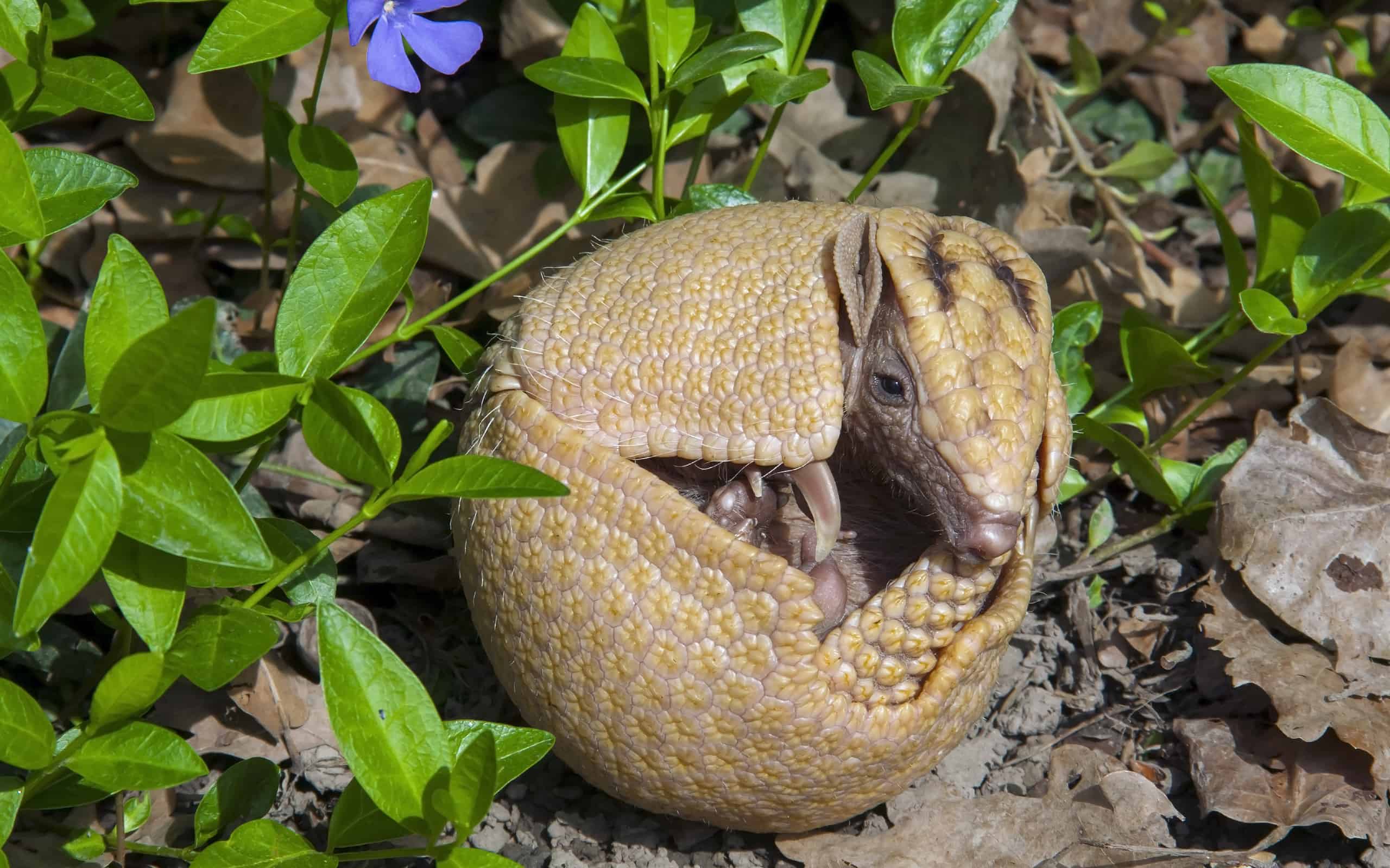

Nature produces many odd creatures, and among the strangest is the armadillo (Cingulata). This animal looks like it’s wearing a suit of armor, and its name means little armored one. Thanks to its armor-like carapace, you might assume that armadillos are amphibians or reptiles, but they’re actually mammals. Continue reading to learn more about mammals and why the armadillo qualifies.
What Is a Mammal?
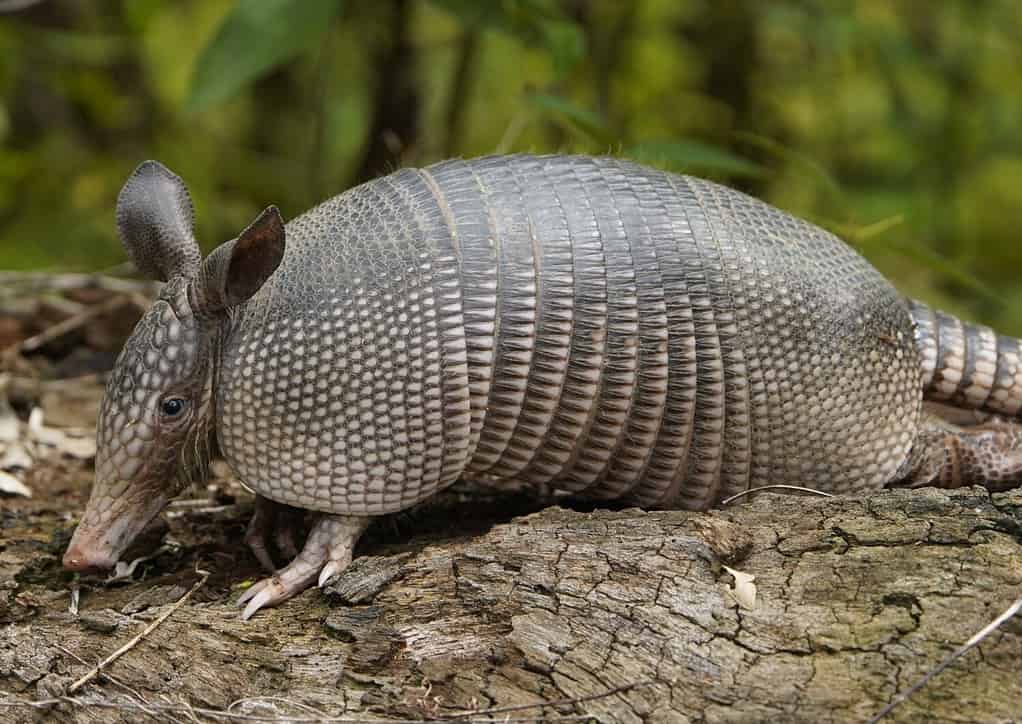
The Armadillo gets its name from its armor-like carapace.
©guentermanaus/Shutterstock.com
Every mammal is a vertebrate, which is an animal with a backbone. Other animals have backbones, but they don’t meet the other criteria for mammals. All mammals have fur or hair on their skin. Some marine mammals have no hair, but they meet the other requirements to be mammals. Mammals are the only animals that sweat. This ability helps mammals regulate their body temperature. Some marine mammals don’t have sweat glands because they live in the ocean.
Most mammals give birth to live young, although some reptiles and fish also do. They also nurse their young, and even monotremes, which lay eggs, nurse their young. They’re mammals who lay eggs but also nurse their young. Only mammals have a neocortex, which is the most evolved part of the brain in which cognition and memories are processed. And finally, all mammals have four-chambered hearts. Now, let’s see which boxes the armadillo checks on our list.
Armadillos Characteristics
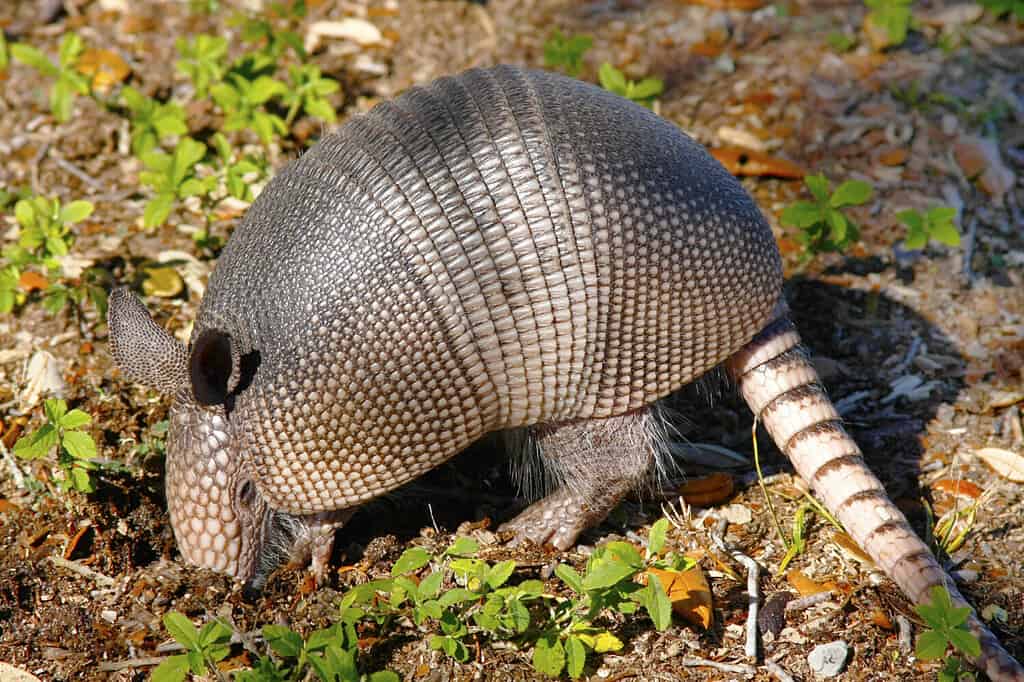
Though it’s not that noticeable, armadillos do have hair, and their carapace is coated with a layer of keratin, the substance of hair and fingernails.
©Steve Bower/Shutterstock.com
An armadillo is a vertebrate. This characteristic alone does not qualify the armadillo as a mammal, but it’s a start. Armadillos also have hair. The wiry hairs found on their underbelly help armadillos navigate in the dark. The bony plates that make up the armadillo’s carapace are covered in a layer of keratin, the substance of hair and nails.
Armadillos have sweat glands located near their hair follicles. They give birth to live young, typically having large litters of up to 15 pups. Armadillos also have four-chambered hearts and a neocortex, though an armadillo’s neocortex is smaller than those found in other mammals.
Having checked all of the boxes, the verdict is in: Armadillos are indeed mammals!
Types of Armadillo
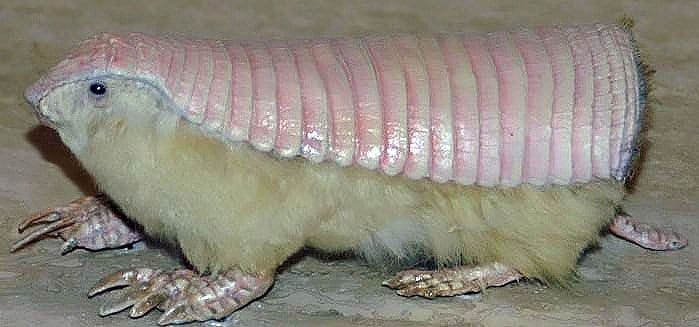
The pink fairy armadillo is native to Central Argentina.
©Photo by David J. Stang / Creative Commons – Original / License
There are 21 species of armadillo. Only the nine-banded armadillo lives in the U.S. Other species including the pink fairy armadillo which is native to Argentina, the seven-banded armadillo and the screaming-hairy armadillo, both of which are endemic to Bolivia, Paraguay, and Southern Argentina, and the giant brown armadillo found in Argentina, Brazil, and Venezuela.
Most armadillos are fairly large and come in earth-toned colors of gray, black, and brown. The pink fairy armadillo, however, stands out for its tiny size and bright color. It is a tiny creature that’s about six inches long, and its shell is a bright pink color. The giant brown armadillo is the largest member of the family. It can be 5 feet long. The screaming hairy armadillo gets its name from its shaggy armor and its loud, piercing calls.