Quick Take
- One animal on this list uses its pink coloring not as a disadvantage, but as a deadly trap for unsuspecting prey. See the deadly pink trap →
- For one species here, the pinker it gets, the older and more battle-scarred it is, and scientists are still piecing together exactly why. Explore the pink dolphin mystery →
- One of these eight animals is so rarely spotted that most people have no idea it even exists, and it lives right beneath our feet. Meet the hidden armadillo →
- Pink is usually a predator's dream target, yet some of the world's most successful hunters have evolved to be exactly that color. Discover the pink predator →
Animals are generally associated with the usual shades of nature, like hues of brown and deep earthy tones. Pink is certainly not a color usually spotted in the wild, as it can make creatures stand out, which can be a disadvantage when avoiding predators or sneaking up on prey. Yet nature has produced some animals that sport the festive color. These creatures display pink feathers, fur, skin, shells, or scales. While some get their color from pigments in their food, others are naturally pink due to unique adaptations. Here are eight pretty-in-pink animals found in the wild.
1. Flamingo
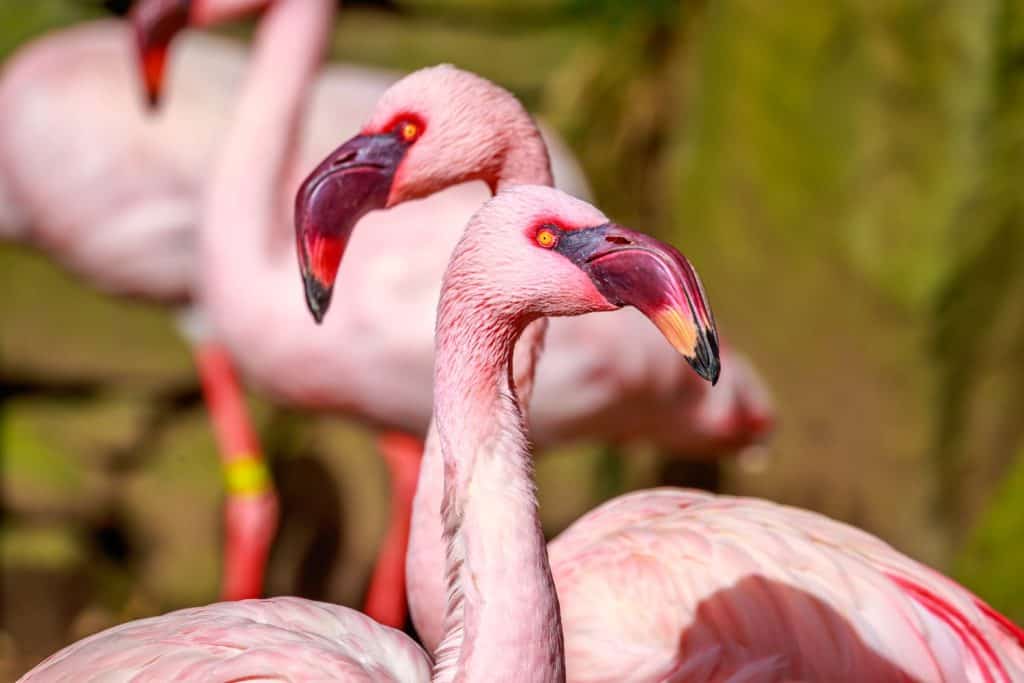
©Png Studio Photography/Shutterstock.com
The flamingo is probably the world’s most famous pink animal. Interestingly, flamingos are not born pink but get their color from pigments called carotenoids found in the algae and small crustaceans they feed on. The more of these foods they consume, the brighter their feathers become. Their long legs, curved bills, and cheerful coloration make them instantly recognizable. Large flocks can transform entire wetlands into vast fields of pink.
2. Pink Fairy Armadillo
©Harsha_Madusanka/Shutterstock.com
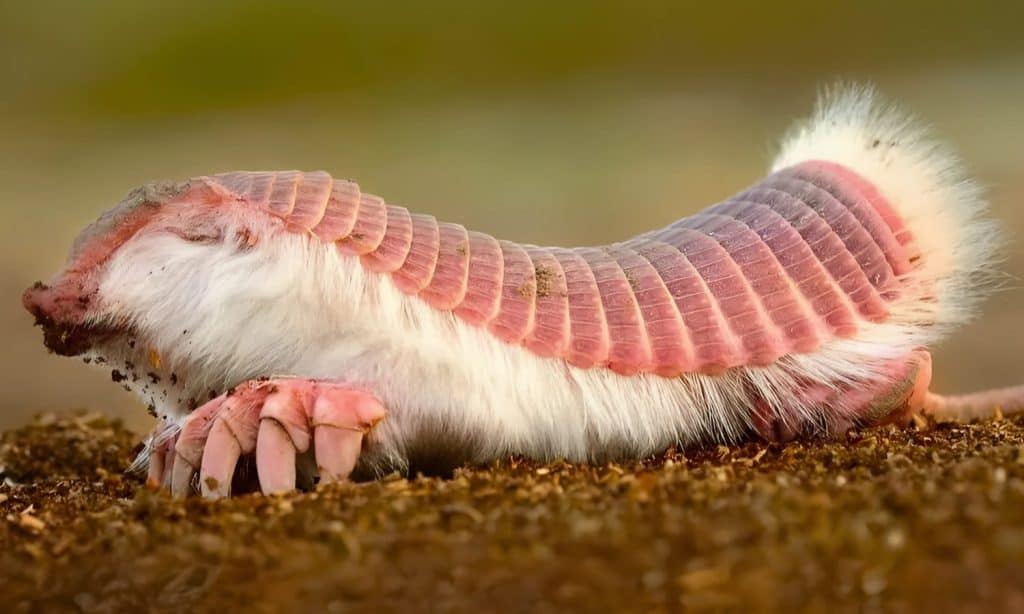
The pink fairy armadillo is one of the strangest mammals on Earth. Found in Argentina, it has a pale pink shell that helps regulate body temperature. However, you are not likely to spot this tiny armadillo, as it spends most of its life underground, digging for insects and roots. Its silky white fur contrasts sharply with its rose-hued shell. Because it is rarely seen, many people never realize such a ground-dwelling pinky animal exists.
3. Roseate Spoonbill
©iStock.com/Donyanedomam
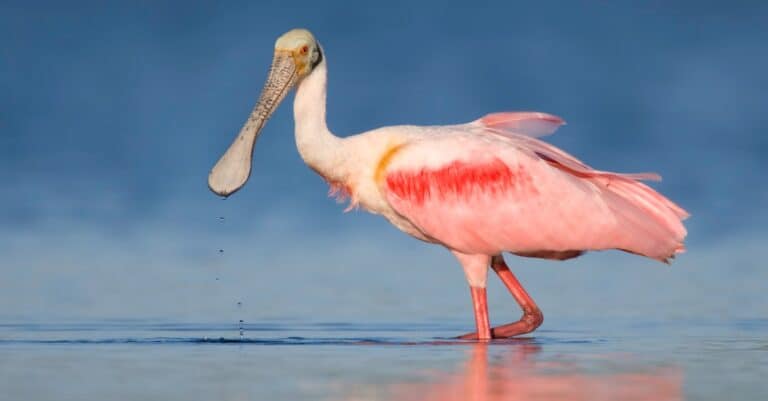
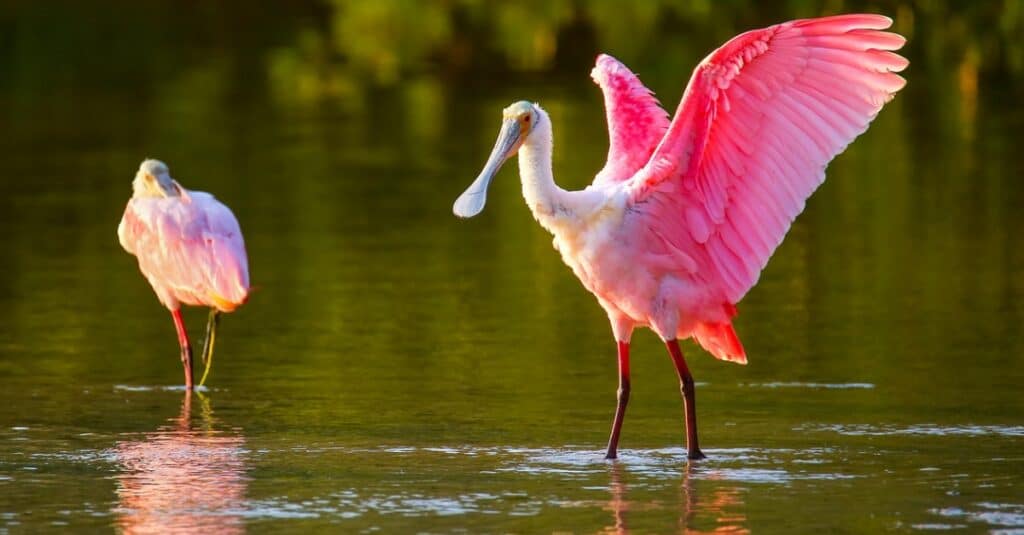
The roseate spoonbill is a striking bird that lives in parts of North and South America. Like flamingos, its bright pigment comes largely from its diet. Its broad, spoon-shaped bill is used to search shallow water for food. Almost neon pink feathers combine with patches of red on the wings to make for an exceptionally colorful wading bird. Seeing one in flight is hard to forget.
4. Amazon River Dolphin
©COULANGES/Shutterstock.com
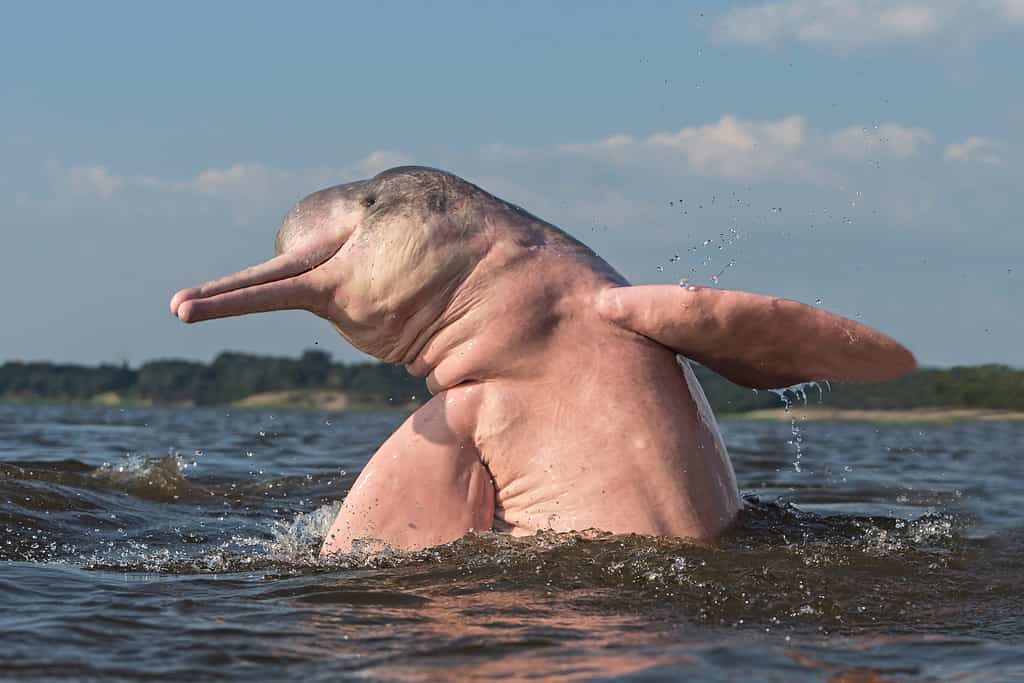
Not only do these dolphins live in freshwater rivers instead of the typical ocean environment, but they also have a rare shade. The Amazon River dolphin, often called the pink river dolphin, develops a baby pink coloration as it matures. Some of these dolphins are only subtly pink, while others can become shockingly vibrant in color. Scientists believe the intensity of their color comes from age, blood vessel distribution, and even small scars. These dolphins inhabit rivers in the Amazon Basin and are one of the most intelligent freshwater mammals in the world.
5. Orchid Mantis
©monster_code/Shutterstock.com
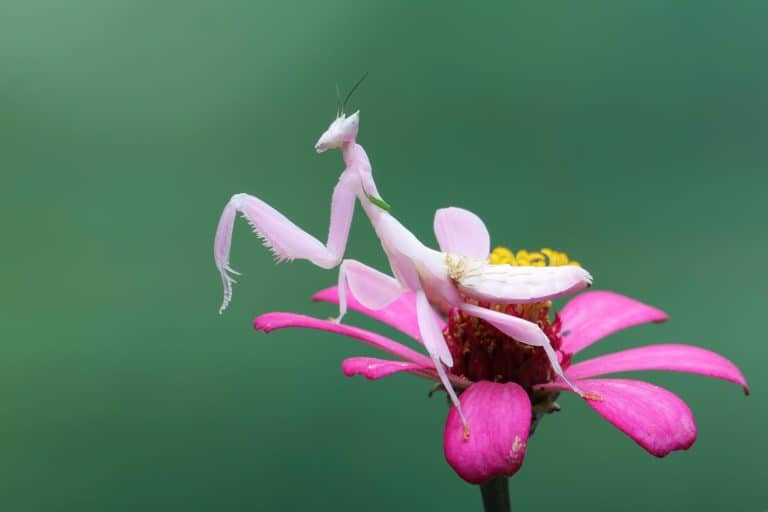
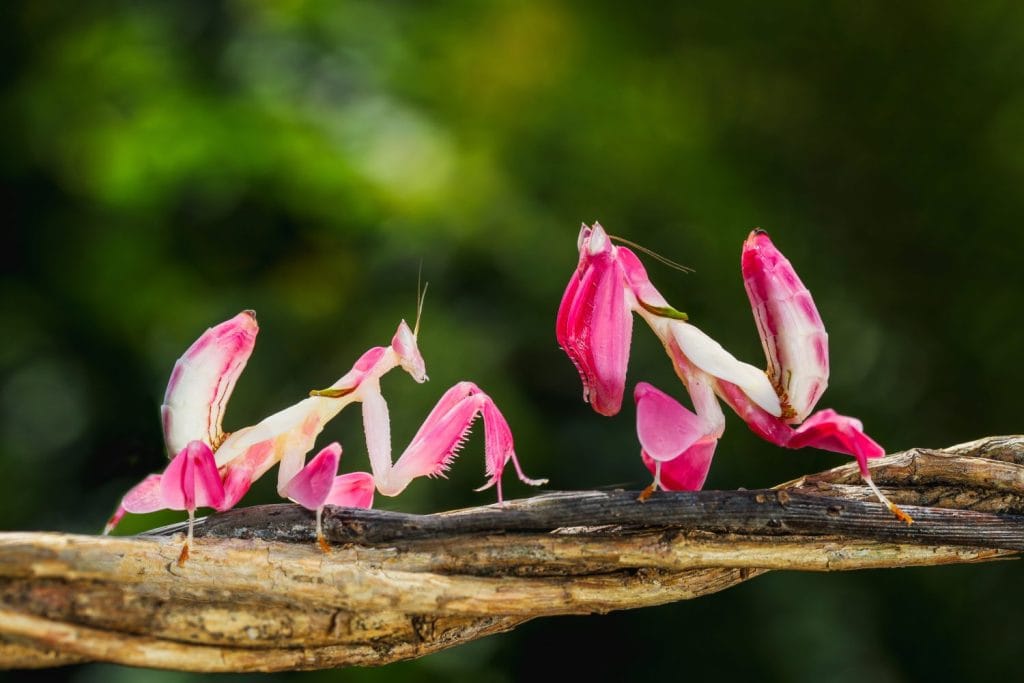
The orchid mantis is a predatory insect that looks more like a flower than a critter. Its pink coloration helps complete this plant disguise, with a body and legs that mimic orchid petals with great accuracy. This appearance attracts pollinating insects that mistake it for a real bloom. Once prey lands, the mantis strikes with incredible speed. Its elegant and harmless appearance contrasts with its efficient predatory instincts.
6. Galah
©David Steele/Shutterstock.com
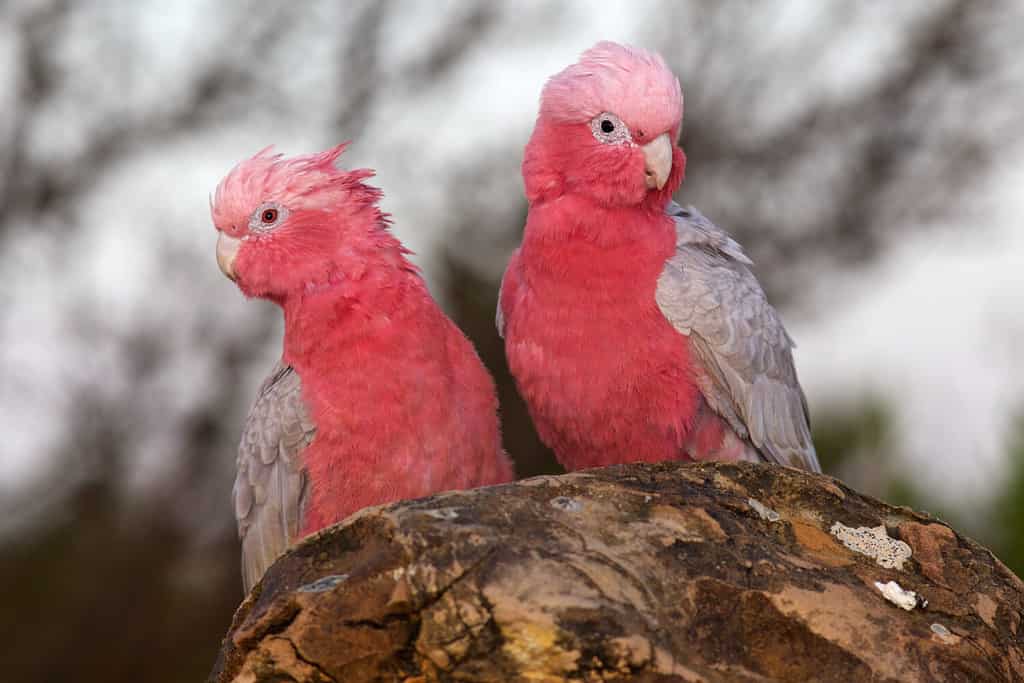
The galah is a species of cockatoo native to Australia. It has a distinctive candy pink chest and face paired with gray wings and back feathers. Their stunning color isn’t the only thing about these birds that draw attention; galahs are highly social and like to gather in noisy flocks. Their intelligence, playful nature, and pretty pink shade make them popular with birders. Large groups feeding in open grasslands create a gorgeous display of color.
7. Pink Katydid
©SIMON SHIM/Shutterstock.com
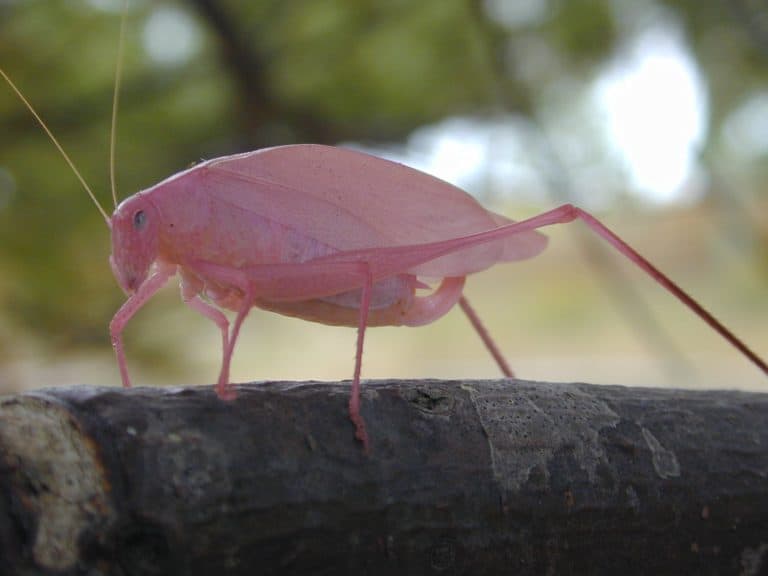
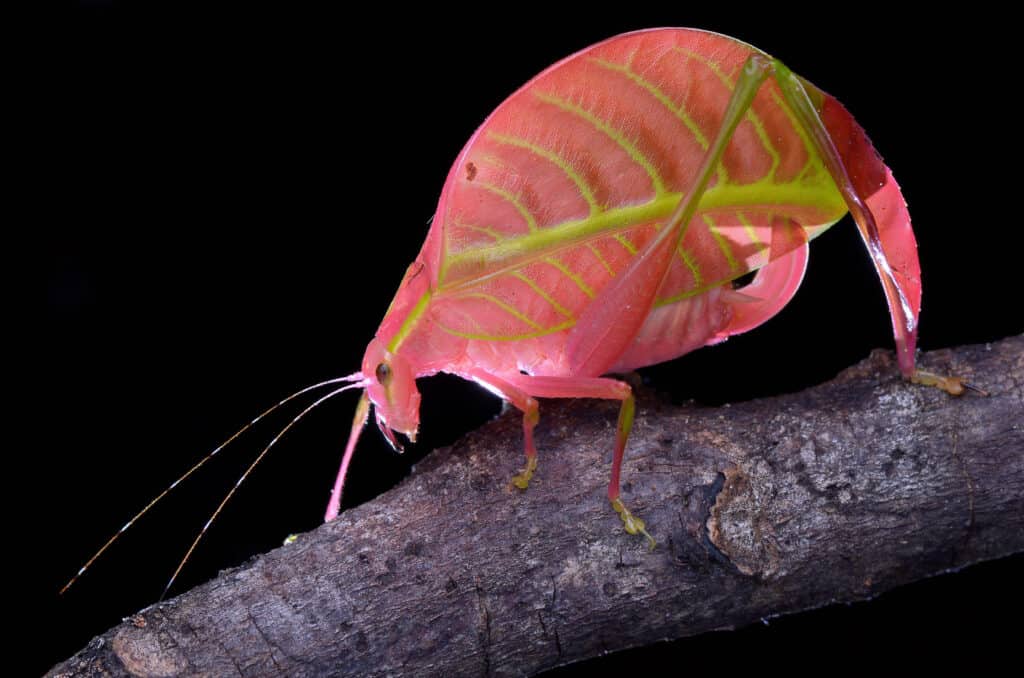
Pink katydids are rare insects that owe their unusual color to a genetic condition called erythrism. Instead of the typical green coloration that helps most katydids blend into plants, these individuals have rosy shades of pink. However, their unique color may actually mimic plants in their habitat that also go through a pink stage of development. Still, they are much less commonly seen than ordinary green katydids. Spotting one in the wild is considered a special find by many researchers.
8. Pink Sea Star
©stillhope/iStock via Getty Images
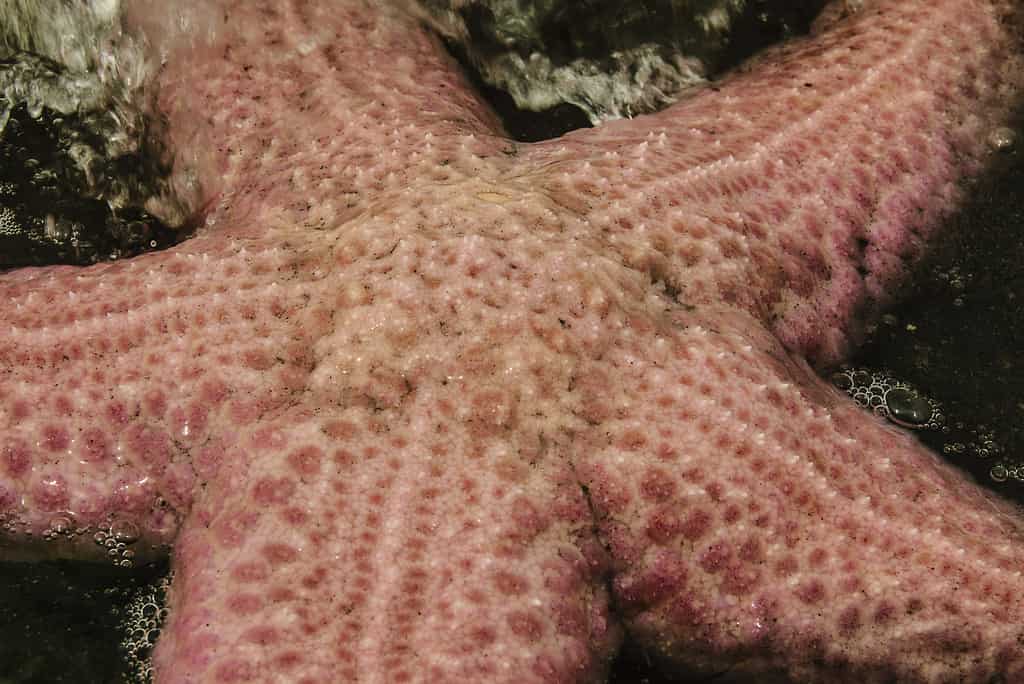
The pink sea star provides a flash of color in the cold waters of the Pacific Northwest. It is certainly one of the most eye-catching inhabitants of rocky tide pools and shallow coastal waters. But don’t let this pretty pink sea star sea fool you; it is an effective predator that feeds on clams, mussels, and other small marine animals. Using its hundreds of tiny tube feet, it can pry open shellfish and consume them fairly easily. The delicate looking pink sea star shows that even some of the ocean’s most beautiful creatures can be formidable hunters.