
Quick Take
- Naked mole-rat workers don't stay in the same role forever, and the job they eventually graduate to demands the ultimate sacrifice. See how roles shift →
- Their colony defense against snakes is a coordinated strategy so precise it's hard to believe it comes from rodents living in the dark. Meet the soldier mole-rats →
- Newborn pups survive on something from the adults that sounds revolting but turns out to be biologically essential.
- Living like a bee colony isn't just a quirk. It's the only reason these mammals can survive an environment that should be uninhabitable. Explore the harsh environment →
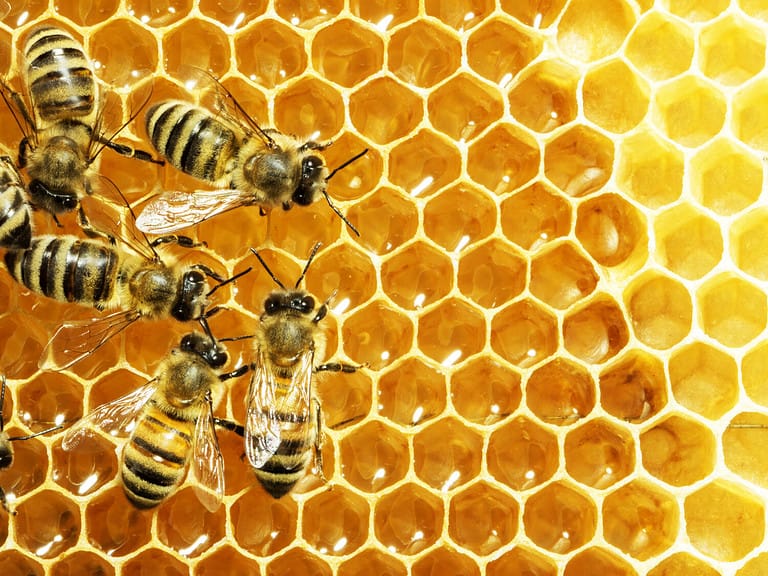
When you think of a eusocial colony, insects probably come to mind, such as bees, termites, or ants. However, two species of mammals live in highly organized social colonies with one queen and many workers: the naked mole-rat and the Damaraland mole-rat. In these colonies, usually only one or a very few individuals reproduce, while the others are sterile and care for the offspring. Let’s take a look at the fascinating world of the naked mole-rat, the rodent that lives like a bee.
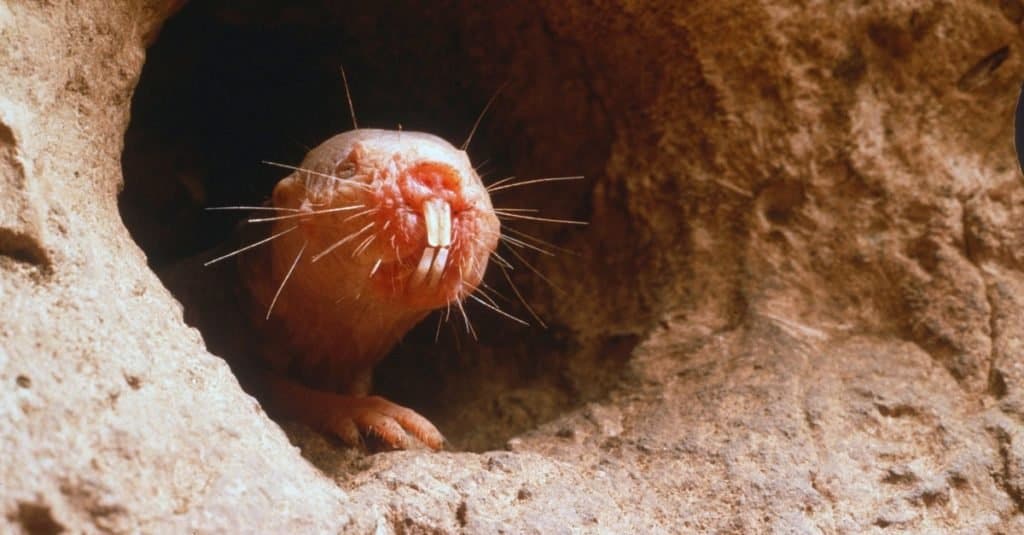
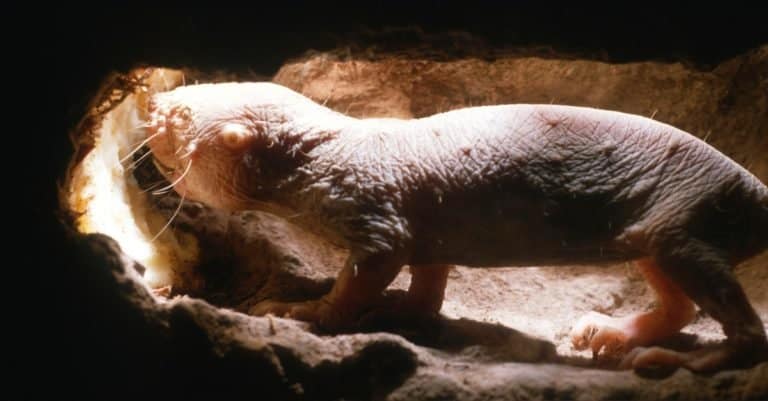
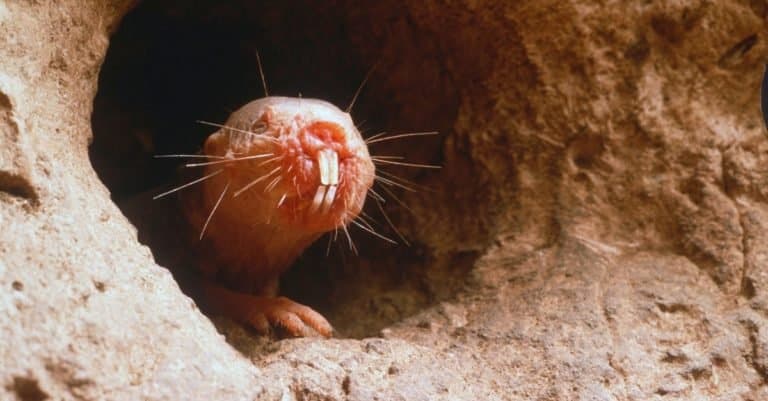
Some naked mole-rats in the colony act as soldiers, guarding entrances to their underground tunnels.
©Neil Bromhall/Shutterstock.com
Life Underground in Extreme Conditions
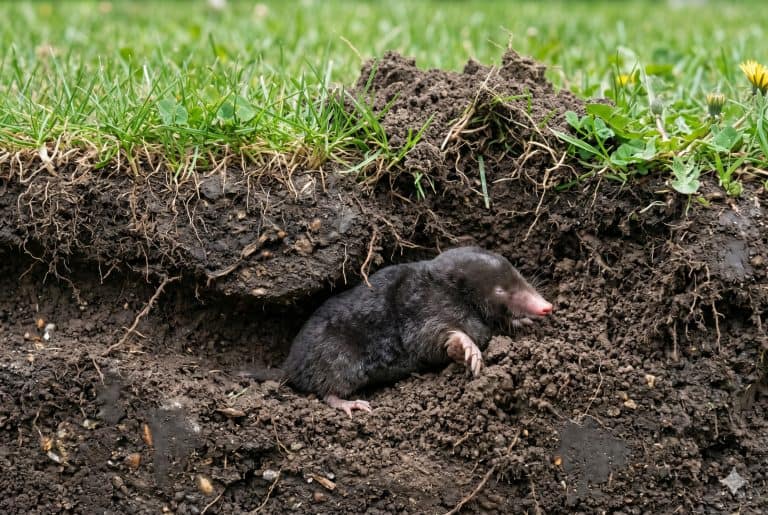
As their name suggests, the naked mole-rat (Heterocephalus glaber) is completely hairless. However, it’s neither a mole nor a rat. These wrinkled, pink-skinned, small mammals live in East Africa inside complex underground burrows that may be close to 2 miles long and over 6 feet deep. Because they have no fur and very little fat, their bodies do not regulate temperature efficiently. They need to be in warm environments and will huddle together for warmth.
Naked mole-rats have terrible eyesight. But this hardly matters since they spend almost all of their time in dark tunnels underground. Instead, they use their superior sense of touch, thanks to whisker-like hairs on their body, to navigate their environment. The crowded chambers where they live have very low oxygen levels, but naked mole-rats have adapted to tolerate both low oxygen and high carbon dioxide levels.
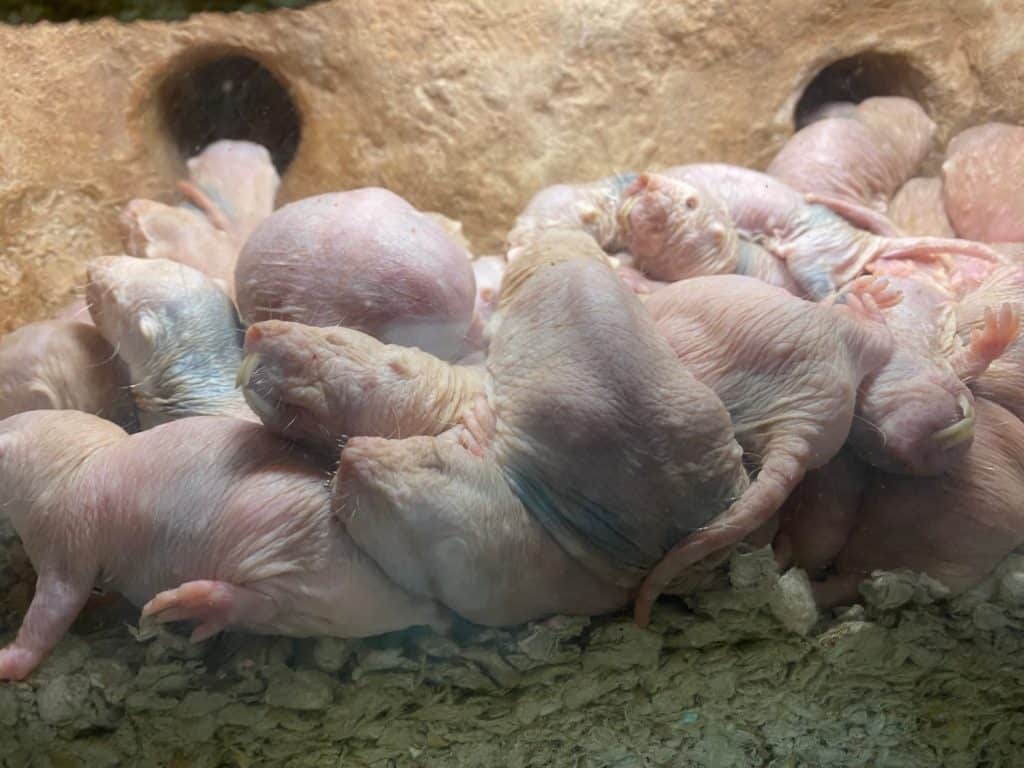
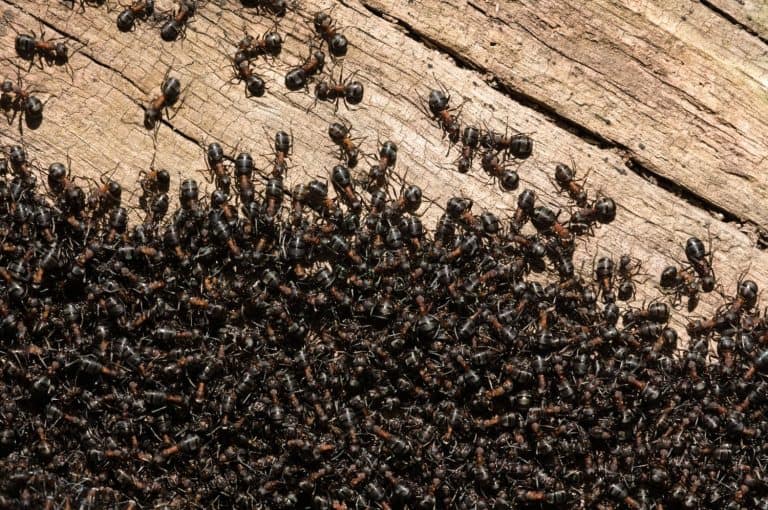
Because naked mole-rats have very little ability to regulate their body temperature, they huddle together for warmth.
©christopher babcock/Shutterstock.com
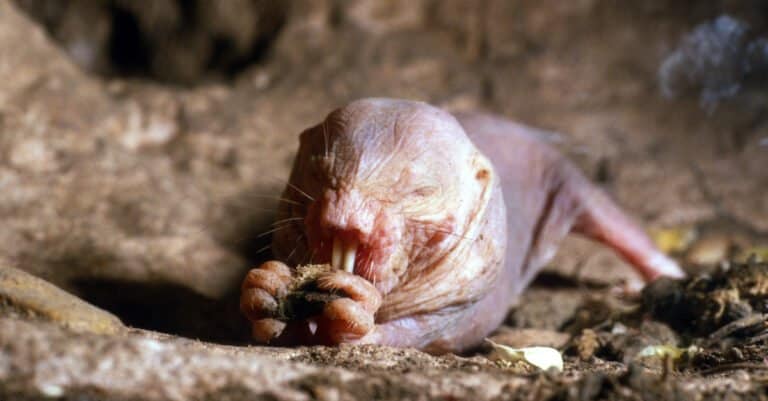
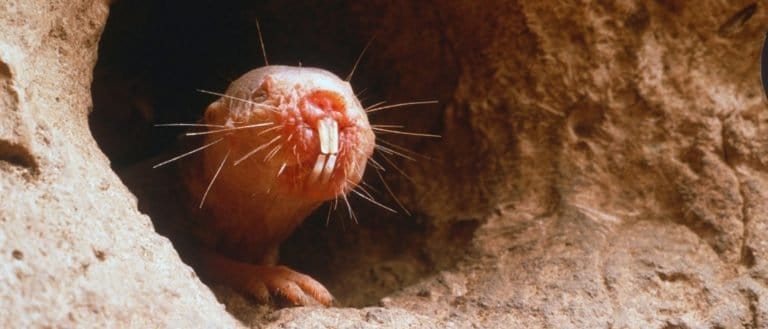
These unusual rodents have long teeth that they use for digging. Their front teeth move independently, like chopsticks, and grow through their lips, allowing them to keep their mouths closed while digging and avoid getting a mouthful of dirt. Scientists know that a large part of their sensory brain is dedicated to their teeth, but we don’t know exactly why.
Inside a Naked Mole-Rat Colony Where Everyone Has a Job
Neurobiologist Thomas Park told the Journal of Experimental Biology the fascinating story of the naked mole-rats’ eusocial society. Park explained, “In every colony there is a breeding queen and one to three breeding males.” In addition to the few breeding mole-rats, colonies are made up of 60 to 300 individuals that cannot breed. These individuals are all workers.
Mole-rat pups are mature around 1 year of age when they start working for the colony. From around 1 year to 6 years, they continue to grow. While they are smaller, they work as housekeepers, digging tunnels, bringing food to the nest, and caring for the offspring. At age 6, when they have bulked up in size, they take on the job of soldiers. The soldiers protect the colony from predators.
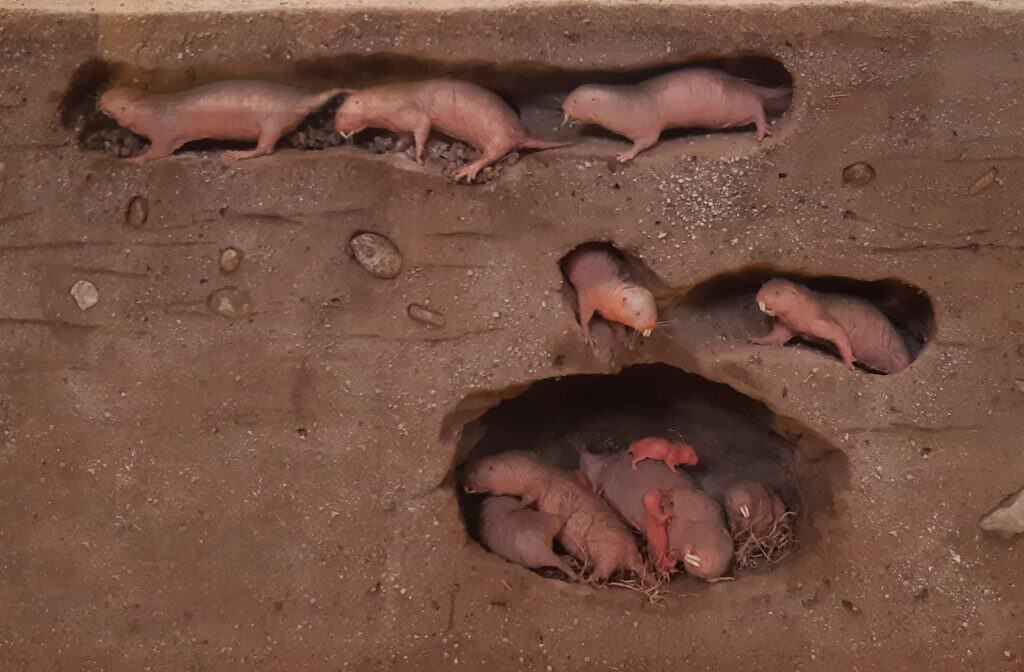
This model of a naked mole-rat eusocial colony depicts soldiers, workers, and a queen with her pups.
©Chiswick Chap, CC BY-SA 4.0, via Wikimedia Commons – Original / License
Park said, “Soldiers spend 99% of their time sitting around, but if there’s a threat to the colony – usually when they open a hole to kick dirt outside, they’re vulnerable to attack from snakes – the soldiers come into play. They latch onto the snake with their teeth, and the housekeepers fill in the tunnels so that the snake can’t come after them; it’s the ultimate sacrifice.”
How Naked Mole-Rat Pups Are Raised by the Colony
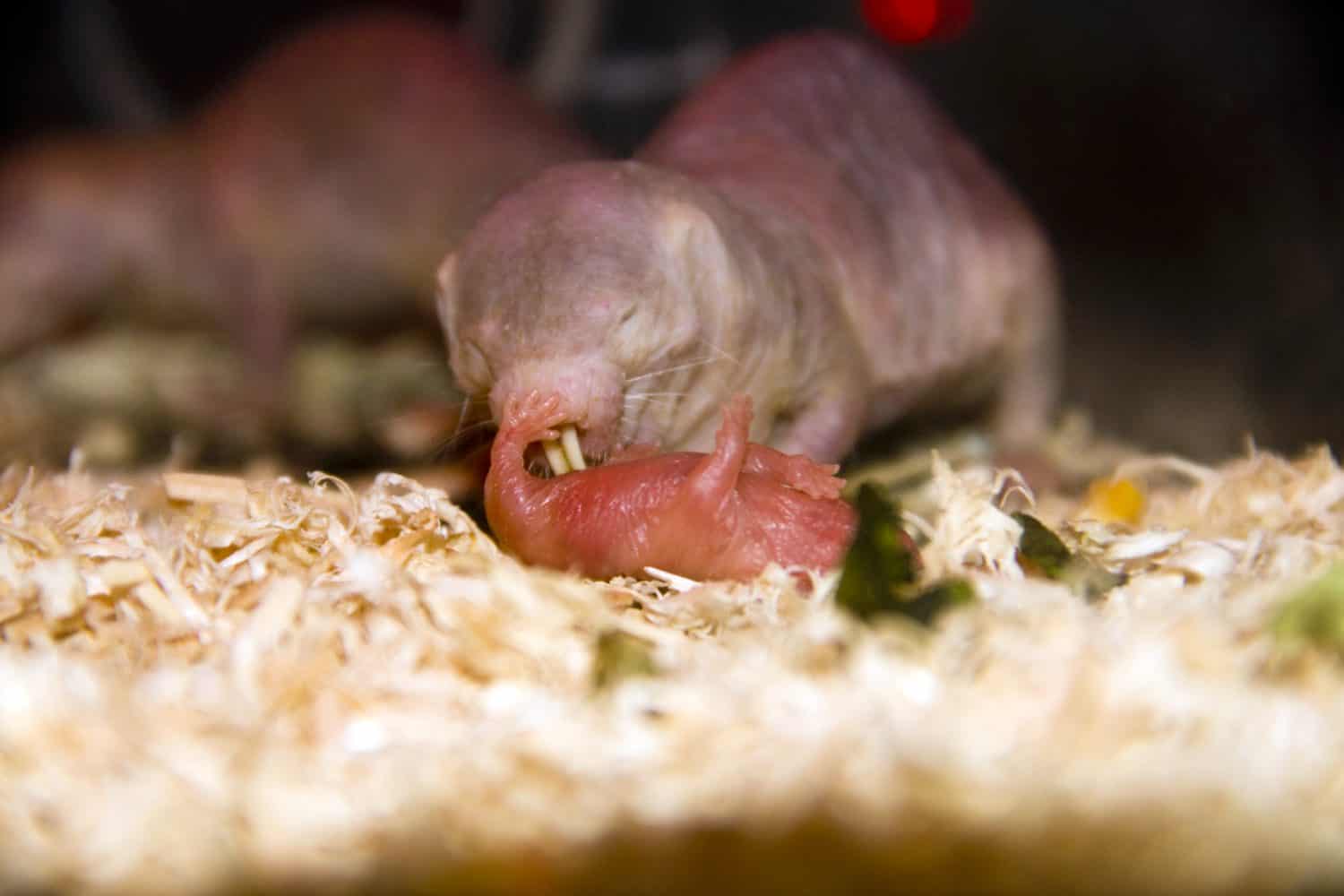
The queen gives birth to all of the offspring and nurses the babies for about one month. Newborns weigh only 1 to 2 grams and are the size of a jellybean. While the pups are still small, they stay close to the queen. The housekeepers share the work of caring for the pups. They bring them food when they are old enough to eat solids and help carry them from chamber to chamber so they can stay with the queen if she moves around. The babies also eat the feces of the adults, known as fecal pap, which provides them with beneficial bacteria that their digestive systems need. Finally, the housekeepers huddle around the babies to keep them warm and will transport them out of the nest if there is a threat to the colony.
Why Did Naked Mole-Rats Evolve Eusocial Colonies?
Scientists believe that naked mole-rats adapted to live in eusocial colonies to survive the harshness of their environment. Naked mole-rats live in burrows underneath the desert, where access to resources is scarce. They don’t need water, but get their moisture from eating the tubers, roots, and bulbs they find growing underground. If a single mole-rat went off on its own to search for food, it might wander for a long time, expending most of its energy digging for roots.
However, when the group works together, they can take turns digging, making their efforts more efficient. Once food is found, they either bring food back to the group or signal to others to help gather it. By dividing up the duties, some individuals protect the home from snakes, others care for the offspring, and still others help feed the group. Through cooperation, rather than competition, naked mole-rats thrive in an unforgiving environment that few mammals could survive.