
Quick Take
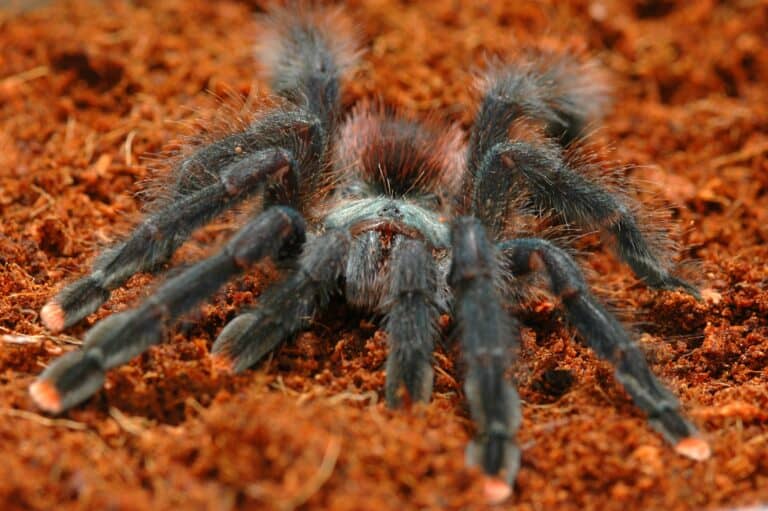
- Therapohosa apophysis, the Goliath pinkfoot, is one of the largest spiders in the world with a leg span of 12 inches.
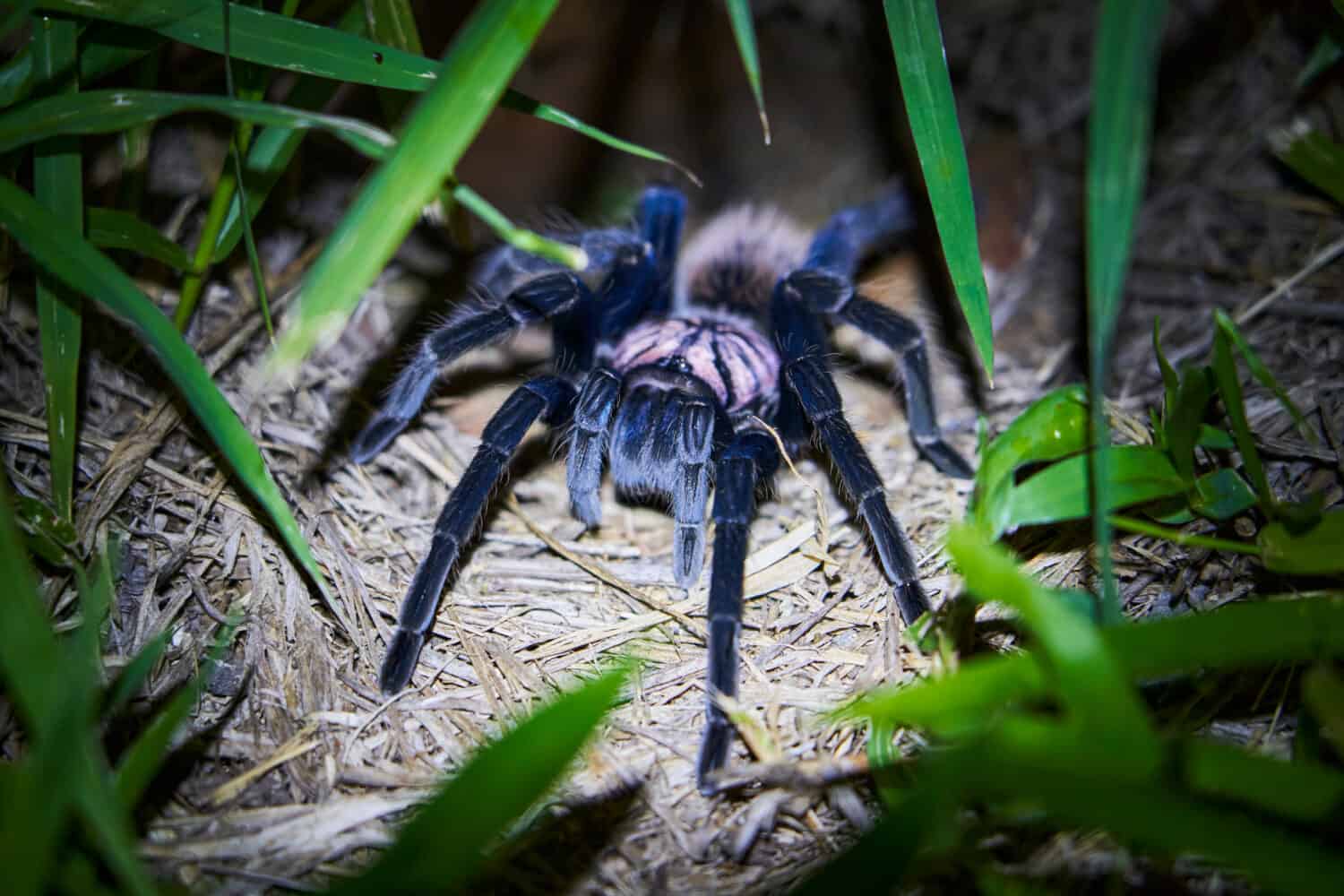
- The arboreal tarantulas Avicularia juruensis and Avicularia purpurea have two morphotypes depending on geographical location.
- Hapalopus species are commonly called “pumpkin patch tarantulas” because their abdominal patterns are often shades of black and orange.
- Kankuamo was the first genus with type VII urticating setae, characterized by lance-like barbs in a reversed direction.
Colombia is located in northwestern South America, with coastlines on both the Pacific Ocean and the Caribbean Sea. The Andes Mountains dominate the western landscape, while the Amazon rainforest and the Llanos savannas are key ecosystems in the east. Colombia is one of the most biodiverse countries on the planet, with 10% of the Earth’s species found there.

There are close to 60 tarantula species inhabiting the forests and jungles of Colombia. The following list includes all currently recognized tarantula species in the country according to the World Spider Catalog as of December 2025. An asterisk after a species name indicates that it is the type species. See our complete list of tarantula species for a comprehensive reference of all tarantula species.
Acanthoscurria Ausserer, 1871
Acanthoscurria tarantulas are large, heavy terrestrial spiders with leg spans of up to 8 inches. One primary characteristic of Acanthoscurria tarantulas is stridulating, or noise-making, setae on the coxa and trochanter of leg I (the first and second segments). They typically have brown to black bodies with pale bands at the leg joints and long, reddish-colored setae (hairs) on their abdomens and legs. These spiders often burrow or shelter under logs and rocks. Researchers described A. armasi based on a specimen in the collections of the American Museum of Natural History, New York. The holotype male was originally found along a forest edge near the Suárez River. The elevation of 2,625 to 3,280 feet indicates it was collected in the Santander department, located in the Eastern Cordillera of the Andes. A. armasi has a total length of 1.50 inches, with its longest legs (pair IV) measuring 2.23 inches.
- Acanthoscurria armasi Sherwood, Gabriel, Peñaherrera-R. & Alayón, 2025
- Common name: N/A
- Distribution: Colombia
Aenigmarachne Schmidt, 2005
The genus Aenigmarachne includes just two species of small terrestrial spiders: one newly described species from Colombia and one from Costa Rica. These spiders are primarily distinguished by the male and female genitalia, the lack of tibial apophyses (protrusions) on leg I, and the presence of type I setae subtype Ib in males and subtype Ie in juveniles and females. The female paratype has a total length of 1.28 inches with the longest legs (pair IV) measuring 1.30 inches. Females and juveniles have reddish-brown carapaces and abdomens, while males are a darker brown. A. colombiana was collected near the village of Puerto Coca in the municipality of Tiquisio in the Bolívar Department, northern Colombia. These spiders were found to dig burrows near human-built structures.
- Aenigmarachne colombiana Osorio, Polo, Sabbatino & Martínez, 2025
- Common name: N/A
- Distribution: Colombia
Agnostopelma Pérez-Miles & Weinmann, 2010
Tarantulas in the genus Agnostopelma are medium-sized terrestrial spiders. They can be distinguished from other genera by the lack of scopulae (dense tufts of microscopic setae that help create adhesion) on leg IV, which is uncommon in Theraphosidae. Females also have very short tarsi (feet). The female paratype of A. tota has a dark brown cephalothorax, abdomen, and legs, with pale bands at the leg joints. (Males lack clear bands.) The abdomen and legs are covered in long setae with lighter tips. Types III and IV urticating setae are also present. The coloration of A. gardel is similar to A. tota, but males have obvious banding at the joints. Agnostopelma species have a distribution that includes Monguí, Laguna de Tota, and Belén, Boyaca´ Department in the Eastern Cordillera of the Andes. Specimens were found in shelters under stones.
- Agnostopelma gardel Pérez-Miles & Weinmann, 2010
- Common name: N/A
- Distribution: Colombia
- Agnostopelma tota* Pérez-Miles & Weinmann, 2010
- Common name: N/A
- Distribution: Colombia
Aguapanela Perafán & Cifuentes, 2015
Aguapanela is a monotypic genus including only Aguapanela arvi. It is primarily distinguished by the presence of stridulatory setae on the palps and legs I and II, as well as the presence of type III and IV urticating setae. The holotype male has a total length of 1.19 inches, and its longest legs (pair IV) measure 2.34 inches. Its cephalothorax, abdomen, and legs are black, with darker femora. The legs are covered in long, reddish setae. The abdomen is also covered in long, red setae with a dark patch of urticating setae. Females also have long red setae on the sides of the abdomen. A. arvi can be found in the high Andean forests at elevations of over 6,562 feet. It is known from Caldas and Medellin, Antioquia Department in the Central Cordillera of the Colombian Andes.
- Aguapanela arvi* Perafán & Cifuentes, 2015
- Common name: N/A
- Distribution: Colombia
Amazonius Cifuentes & Bertani, 2022
The genus Amazonius was created to accommodate former Tapinauchenius species. Like members of Tapinauchenius, Amazonius tarantulas are arboreal. They are generally found in lowland rainforests in the Amazon River Basin. When taxonomists transferred A. subcaeruleus to Amazonius, the species was synonymized with Amazonius burgessi. It has a dark body with the cephalothorax, abdomen, and legs densely covered in short, dark setae. Longer, lighter, reddish-colored setae are scattered on the abdomen. Its legs are also covered in longer, lighter guard setae. A. subcaeruleus is a medium-sized spider reaching leg spans of up to around 5 inches.
- Amazonius subcaeruleus (Bauer & Antonelli, 1997)
- Common name:
- Distribution: Colombia, Ecuador, Venezuela
Avicularia Lamarck, 1818
Avicularia species are small to medium-sized arboreal tarantulas. They typically make retreats in tree cavities or on vegetation. A. juruensis and A. purpurea have two morphotypes depending on geographical location. In southern Colombia, A. juruensis males and females have grizzled setae on the carapace, legs, and palps. Legs and palps have light yellow rings and short, dark setae with a purple sheen. Females have long, reddish-brown guard setae on the top and sides of the abdomen, while males have white-tipped setae on the top. A. purpurea has a brown carapace with golden brown setae that have a purple sheen. It has a black abdomen with long brown guard setae. The legs and palps have short brown setae with a purple sheen and long, brown guard setae. It also has whitish leg rings. They are found at the edge of the Amazonian plain and the eastern Cordillera of the Andes.
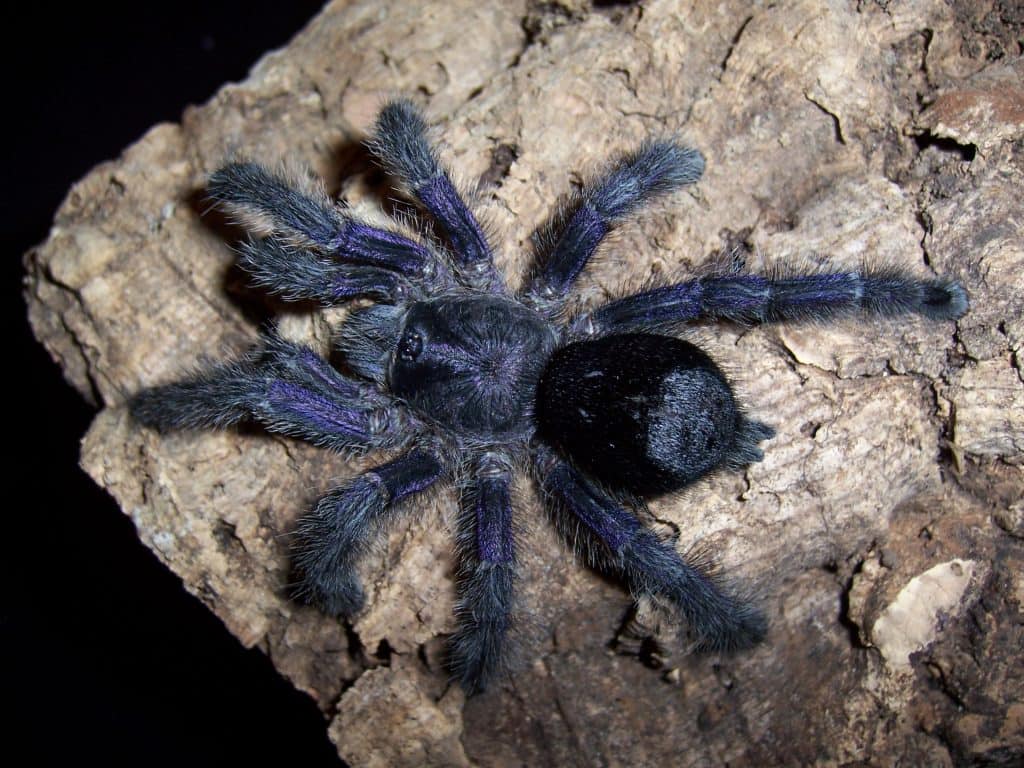
Avicularia species are arboreal tarantulas that inhabit the rainforests of South America.
- Avicularia juruensis Mello-Leitão, 1923
- Common name: Amazonian pinktoe or Peruvian pinktoe
- Distribution: Colombia, Ecuador, Peru, Brazil
- Avicularia purpurea Kirk, 1990
- Common name: Ecuadorian purple or Ecuador purple pinktoe
- Distribution: Colombia, Ecuador, Peru
Colombiarachne Sherwood, Gabriel, Peñaherrera-R., Guerrero-Campoverde, León-E., Mora-Bolaños, Ríos-Tamayo & Cisneros-Heredia, 2025
Colombiarachne is a monotypic genus including only Colombiarachne dianae. The genus is differentiated by the genitalia of the male, the structure of the tibial apophyses (protrusions), and the presence of urticating setae Type I. The holotype male has a total length of 1.01 inches and its longest legs (pair IV) measure 2.17 inches. This species is known only from the type locality along the San Juan River between Cucurrupi and Noanama, Chocó Department in the Pacific lowlands of Colombia.
- Colombiarachne dianae* Sherwood, Gabriel, Peñaherrera-R., Guerrero-Campoverde, León-E., Mora-Bolaños, Ríos-Tamayo & Cisneros-Heredia, 2025
- Common name: N/A
- Distribution: Colombia
Cyclosternum Ausserer, 1871
Cyclosternum are generally small to medium-sized burrowing spiders found in humid forests and grasslands. However, species-level identification is difficult. The genus is considered problematic and is in need of a complete revision. The C. schmardae female is described from a specimen collected in Ecuador. However, later researchers illustrated a male from Colombia, stating that they cannot be sure that the species is correct because of the differing geographical locations of the sexes. No precise type locality is given. Researchers consider descriptions and illustrations of C. schmardae doubtful.
- Cyclosternum schmardae* Ausserer, 1871
- Common name: Yellow-banded birdeater
- Distribution: Colombia, Ecuador
Cymbiapophysa Gabriel & Sherwood, 2020
Cymbiapophysa is a diverse genus with short geographical ranges and elevations. It is distinguished from other genera primarily based on genital morphology. These terrestrial tarantulas are small to medium-sized with a total body length of 0.75 inches to 1.50 inches. There is little information about the ecology of each species, as most are known only from museum specimens. C. magna is believed to be from the foothill humid gallery forests (a narrow, forested corridor along rivers) in the central Chocó along the San Juan River. C. marimbai is known from southern Colombia on the southwestern side of the Andes.
- Cymbiapophysa magna Sherwood, Gabriel, Brescovit & Lucas, 2021
- Common name: N/A
- Distribution: Colombia
- Cymbiapophysa marimbai (Perafán & Valencia-Cuéllar, 2018)
- Common name: N/A
- Distribution: Colombia
Cyriocosmus Simon, 1903
Members of the genus Cyriocosmus are typically small tarantulas, with total lengths between 0.39 inches and 1.25 inches, not including the chelicerae (mouthparts) and spinnerets. C. leetzi has a bicolored, reddish-brown and black carapace with black spots in a radial pattern. It has a dark abdomen with orange stripes on the sides, and a reddish-brown patch of urticating setae. The legs have black femora with wide, silvery-grey longitudinal stripes. Its legs and abdomen are covered in long, pale setae. C. leetzi is known from the Eastern Plains (Llanos Orientales) and foothills of the Andes. Cyriocosmus burrows are often found under stones, fallen logs, or other organic debris.
- Cyriocosmus leetzi Vol, 1999
- Common name: Colombian dwarf tiger, Venezuelan dwarf beauty
- Distribution: Colombia, Venezuela
Euthycaelus Simon, 1889
Members of the genus Euthycaelus are medium-sized terrestrial tarantulas. These spiders lack urticating setae, which is unusual in New World tarantulas. Euthycaelus species are found in both wet and dry forests. E. amandae, E. guane, and E. norae are distributed in the Andean forests at the foothills of the Eastern Cordillera (along with the Cordillera de Mérida in Venezuela in the case of E. norae). E. cunampia is known from the Pacific Botanical Garden near Bahía Solano in the Chocó Pacific region.
- Euthycaelus amandae Guadanucci & Weinmann, 2014 – Colombia
- Common name: N/A
- Distribution: Colombia
- Euthycaelus cunampia Echeverri, Gómez Torres, Pinel & Perafán, 2023 – Colombia
- Common name: N/A
- Distribution: Colombia
- Euthycaelus guane Valencia-Cuellar, Perafán & Guadanucci, 2019 – Colombia
- Common name: N/A
- Distribution: Colombia
- Euthycaelus norae Guadanucci & Weinmann, 2014
- Common name: N/A
- Distribution: Colombia, Venezuela
Hapalopus Ausserer, 1875
Hapalopus tarantulas are primarily distinguished by the morphology of their genitalia, the presence of metatarsal (the sixth segment of the leg) pits, and patterned abdomens. They have spotted patterns on the sides, top, and/or underside of their abdomens. They may also have stripes on the top or speckling on the sides. Hapalopus species are commonly called “pumpkin patch tarantulas” because their patterns are frequently black and shades of orange. They are generally small tarantulas with both terrestrial and semi-arboreal tendencies, inhabiting both tropical dry forests and montane regions. In Colombia, Hapalopus species appear to be restricted to the Caribbean coastal region.
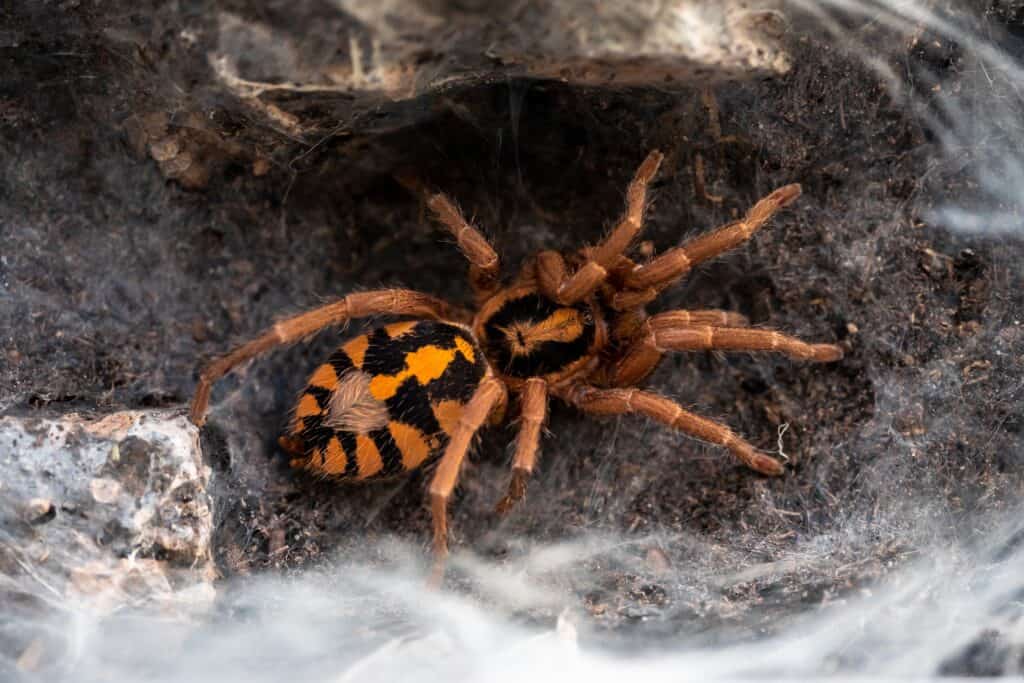
Hapalopus species are commonly called pumpkin patch tarantulas.
©tempisch/Shutterstock.com
- Hapalopus formosus* Ausserer, 1875
- Common name: N/A
- Distribution: Colombia
- Hapalopus guerreroi Benavides, Osorio, Sherwood, Gabriel, Peñaherrera-R., Hörweg, Brescovit & Lucas, 2024
- Common name: N/A
- Distribution: Colombia
- Hapalopus platnicki Sherwood, Gabriel, Peñaherrera-R., Osorio, Benavides, Hörweg, Brescovit & Lucas, 2024
- Common name: N/A
- Distribution: Colombia
- Hapalopus vangoghi Osorio, Benavides, Sherwood, Gabriel, Peñaherrera-R., Hörweg, Brescovit & Lucas, 2024
- Common name: N/A
- Distribution: Colombia
Homoeomma Ausserer, 1871
Tarantulas in the genus Homoeomma are small spiders with leg spans of less than 4 inches. The original description for H. strabo indicates its body and legs are dark brown to black. The legs have longitudinal stripes on the patellae and other joints, and they are covered in reddish setae that is an ashy-grey color at the ends. The setae on the top of the abdomen is similar to the legs, but it is colored red throughout on the sides. These dwarf tarantulas typically dig relatively shallow burrows under stones and roots in areas with dense vegetation. H. strabo is believed to be found in Anapoima, Cundinamarca Department, located in the Andean Region of central Colombia.
- Homoeomma strabo (Simon, 1892)
- Common name: N/A
- Distribution: Colombia, Brazil
Kankuamo Perafán, Galvis & Pérez-Miles, 2016
Kankuamo is a monotypic genus created to accommodate Kankuamo marquezi. The genus is differentiated from other genera primarily by type VII urticating setae. K. marquezi has a small patch of lance-like barbs in reversed direction, with the main barbs oriented toward the tip and running along the entire hair. The male holotype has a total length of 1.18 inches and the longest legs (pair IV) measure 1.44 inches. It has a light brown cephalothorax with black stripes, and the legs and cephalothorax are covered in black setae. The abdomen is brown with gold setae. It also has iridescent scopulae and claw tufts. Females are darker overall. K. marquezi inhabits the lower montane wet forest on the northwestern slope of the Sierra Nevada de Santa Marta (an isolated mountain range separate from the Andes).
- Kankuamo marquezi* Perafán, Galvis & Gutiérrez, 2016
- Common name: N/A
- Distribution: Colombia
Megaphobema Pocock, 1901
The large burrowing tarantulas in the genus Megaphobema have leg spans measuring up to 8 inches. Pocock’s original description of the genus emphasizes that legs III and IV are longer and stronger than legs I and II. M. robustum has a black, velvety carapace with pale orange setae around the edges. Its abdomen is black with long reddish-orange setae. The legs are bright reddish-orange except for black femora and grey-ish black tarsi (feet). The legs are also covered in an abundance of reddish-orange setae. These spiders inhabit the Amazon rainforest in Colombia and Brazil.
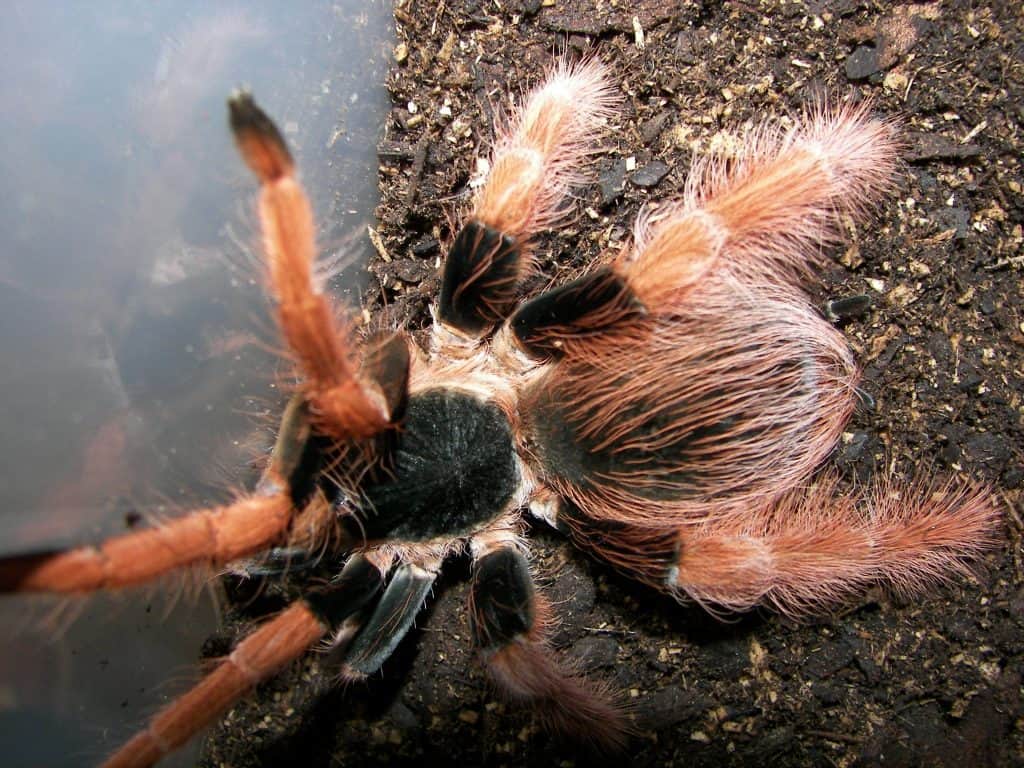
Megaphobema robustum is known as the Colombian giant red leg tarantula.
- Megaphobema robustum* (Ausserer, 1875)
- Common name: Colombian giant or Colombian giant red leg tarantula
- Distribution: Colombia
Neischnocolus Petrunkevitch, 1925
Neischnocolus tarantulas are generally small, brown or reddish-brown burrowing spiders with pale banding at their leg joints and short, reddish-brown or dark brown setae on their legs. Their abdomens are typically dark-colored with long reddish setae on the top and sides. Some species may also have light abdominal patterns. The genus can be differentiated from nearly all other genera by the complex genitalia morphology and the presence of type I (subtype d) urticating setae. Neischnocolus species are widely distributed across Colombia, including the Andean, Amazonian, and Pacific regions at varying altitudinal ranges. Its extensive geographic range leads researchers to conclude the diversity of genus has yet to be fully described.
- Neischnocolus amazonica (Jimenez & Bertani, 2008)
- Common name: N/A
- Distribution: Colombia
- Neischnocolus emergens Peñaherrera-R., 2025
- Common name: N/A
- Distribution: Colombia
- Neischnocolus mecana Echeverri, Gómez Torres, Pinel & Perafán, 2023
- Common name: N/A
- Distribution: Colombia
Neoholothele Guadanucci & Weinmann, 2015
Both male and female Neoholothele tarantulas have a dark carapace with golden setae on the cephalic (head) region. Females also have black-and-yellow striped abdominal patterns. Their legs are covered in light brown setae with gold setae on the femora. N. fasciaaurinigra females have a more distinct striped abdominal pattern than N. incei, the only other Neoholothele species. The female paratype has a total length of 1.17 inches, and the longest legs (pair IV) measure up to 1.35 inches.
- Neoholothele fasciaaurinigra Guadanucci & Weinmann, 2015
- Common name: Golden bumble bee tarantula
- Distribution: Colombia
Pamphobeteus Pocock, 1901
Members of the genus Pamphobeteus are medium to very large terrestrial tarantulas with a body size of up to 3.78 inches and a leg span of up to 9 inches. Pamphobeteus species are usually dark with colored markings on either side of the cephalic region. These markings are often shades of pink or purple and may connect radial stripes on the carapace. These spiders may also have longitudinal stripes on their legs. They have sexual dimorphism in relation to color and high diversity in Colombia. Pamphobeteus tarantulas are mainly distributed across the Andean region, but they can also be found in the Amazon rainforest. They typically inhabit burrows and other natural cavities.
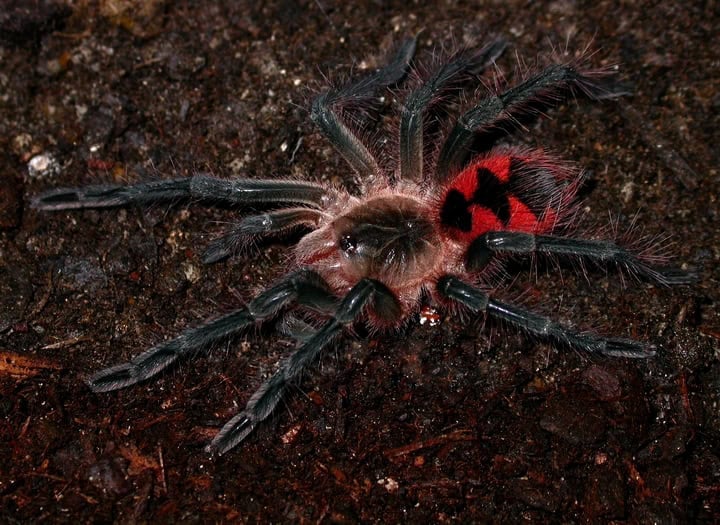
The black and red Christmas tree color pattern on Pamphobeteus nigricolor juveniles disappears when they mature.
- Pamphobeteus ferox (Ausserer, 1875)
- Common name: Colombian dark chocolate birdeater
- Distribution: Colombia
- Pamphobeteus fortis (Ausserer, 1875)
- Common name: Colombian giant copperhead or Colombian giant brown tarantula
- Distribution: Colombia
- Pamphobeteus insignis Pocock, 1903
- Common name: Colombian purple bloom
- Distribution: Colombia
- Pamphobeteus lapola Sherwood, Gabriel, Brescovit & Lucas, 2022
- Common name: N/A
- Distribution: Colombia
- Pamphobeteus verdolaga Cifuentes, Perafán & Estrada-Gomez, 2016
- Common name: N/A
- Distribution: Colombia
- Pamphobeteus nigricolor* (Ausserer, 1875)
- Common name: Giant blue bloom
- Distribution: Colombia, Brazil
- Pamphobeteus ornatus Pocock, 1903
- Common name: Colombian pink bloom
- Distribution: Panama, Colombia
Psalistops Simon, 1889
Psalistops species are generally small to medium-sized tarantulas distinguished by thick scopulae on the tarsi and metatarsi. These spiders previously belonged to the family Barychelidae (brushed trapdoor spiders) before being transferred to the family Theraphosidae in 2020. They shelter in silk-lined burrows with trapdoors that are camouflaged using soil, rocks, leaves, wood, or other debris. P. colombianus has a type locality of Albán, Cundinamarca, which is in central Colombia at an elevation of around 7,540 feet.
- Psalistops colombianus Mori & Bertani, 2020
- Common name: N/A
- Distribution: Colombia
Psalmopoeus Pocock, 1895
Psalmopoeus is an arboreal genus. These spiders build tube-like webs in tree cavities, under loose bark, and in leaves. They are medium to large-sized tarantulas with leg spans of 5 to 7 inches. Species in this genus often have dark-colored bodies with a metallic sheen on the legs and carapace and/or chevron-like abdominal patterns. P. emeraldus is described as being a deep olive color. The type locality is Muzo Emerald Mines, Boyacá, in the high Andes northwest of Bogotá. The original description for P. plantaris notes that the carapace and upper side of its legs are covered in olive or greenish-yellow setae, and the metatarsi and tarsi are pale pink at the ends. It is known from Cauca Department in southwestern Colombia. P. zombie has a dark body with an olive green carapace. It was found near the Río Ñambí Nature Reserve on the southern slopes of the Eastern Cordillera.
- Psalmopoeus emeraldus Pocock, 1903
- Common name: Emerald chevron
- Distribution: Colombia
- Psalmopoeus plantaris Pocock, 1903
- Common name: N/A
- Distribution: Colombia
- Psalmopoeus zombie Sherwood, Peñaherrera-R., Gabriel, Guerrero-Campoverde, León-E., Falcón-Reibán, Fajardo-Torres, Picón-Rentería & Cisneros-Heredia, 2025
- Common name: N/A
- Distribution: Colombia
Schismatothele Karsch, 1879
Schismatothele species are small burrowing tarantulas that lack urticating setae. They are distributed from the northern Andes Mountains south to the Amazon rainforest, with the area of greatest diversity in the Andes. Little is known about these spiders outside of taxonomic descriptions.
- Schismatothele hacaritama Perafán, Valencia-Cuéllar & Guadanucci, 2019
- Common name: N/A
- Distribution: Colombia
- Schismatothele modesta (Simon, 1889)
- Common name: N/A
- Distribution: Colombia
- Schismatothele quimbaya Moeller, Weinmann & Guadanucci, 2023
- Common name: N/A
- Distribution: Colombia
- Schismatothele weinmanni Guadanucci, Perafán & Valencia-Cuéllar, 2019
- Common name: N/A
- Distribution: Colombia
- Schismatothele olsoni Guadanucci, Perafán & Valencia-Cuéllar, 2019
- Common name: N/A
- Distribution: Colombia, Venezuela
Spinosatibiapalpus Gabriel & Sherwood, 2020
Members of the genus Spinosatibiapalpus range from small to large-sized spiders, with total body lengths between 0.79 inches and 2.36 inches. The genus is distinguished by the stout spination on the forward-facing side of the male palpal tibia, the genitalia morphology, and the presence of type I urticating setae. Only the species with a distribution in Colombia are known to have a tibial apophysis. S. neisi is known from the Department of Tolima in central Colombia. S. paula is found on the Caribbean coast in Magdalena and Atlántico Departments. The type locality for S. spinulopalpus is Boavita, Boyacá Department in the Eastern Cordillera.
- Spinosatibiapalpus neisi Osorio, Benavides & Bolaño-Manjarres, 2024
- Common name: N/A
- Distribution: Colombia
- Spinosatibiapalpus paula Bolaño-Manjarres, Benavides & Osorio, 2024
- Common name: N/A
- Distribution: Colombia
- Spinosatibiapalpus spinulopalpus (Schmidt & Weinmann, 1997)
- Common name: N/A
- Distribution: Colombia
Tandayarachne Peñaherrera-R. & Guayasamin, 2025
Tandayarachne is a recently described montane genus created for the newly discovered species Tandayarachne sherwoodae and the transferred species Neischnocolus pijaos. The genus was named for the Tandayapa Cloud Forest Station in the Andes of western Ecuador where the new species was found. T. pijaos has a reddish-brown carapace and a dark brown abdomen. Its legs are light brown with dark brown femora. It was found near La Coqueta, Ibagué, Tolima Department in the central mountain range of the Andes at an elevation of approximately 4,232 feet.
- Tandayarachne pijaos* (Jimenez & Bertani, 2008)
- Common name: N/A
- Distribution: Colombia
Thalerommata Ausserer, 1875
Thalerommata tarantulas are distinguished from other genera by the flattened, iridescent abdominal setae, which may also sometimes cover their legs. These arboreal tarantulas are very small, rarely reaching more than 2 inches in leg span. However, little is known about the individual species. Thalerommata previously belonged to the family Barychelidae (brushed trapdoor spiders) before their transfer to the family Theraphosidae in 2023. Colombia is home to seven of the thirteen known Thalerommata species.
- Thalerommata gracilis* Ausserer, 1875
- Common name: N/A
- Distribution: Colombia
- Thalerommata huila Bertani & Raven, 2023
- Common name: N/A
- Distribution: Colombia
- Thalerommata kogui Osorio, Benavides, García-Atencia & Bertani, 2024
- Common name: N/A
- Distribution: Colombia
- Thalerommata margarita Osorio, Benavides, García-Atencia & Bertani, 2024
- Common name: N/A
- Distribution: Colombia
- Thalerommata squamea Bertani & Raven, 2023
- Common name: N/A
- Distribution: Colombia
- Thalerommata yukpa Osorio, Benavides, García-Atencia & Bertani, 2024
- Common name: N/A
- Distribution: Colombia
Theraphosa Walckenaer, 1805
Theraphosa tarantulas are some of the largest spiders in the world. The Goliath birdeater, Theraphosa blondi, is found in Venezuela, Brazil, and Guyana, and is widely known as the largest spider on Earth by body length and mass. They reach 4.75 inches long with leg spans of up to 12 inches. T. apophysis can also reach around 12 inches in leg span, but as the species name suggests, males of T. apophysis have tibial apophyses. These spiders have brown bodies with long reddish-orange setae on their legs and abdomens. Juveniles have pale pink tips at the end of their legs that fade each time they moult. Theraphosa species excavate deep, silk-lined burrows in the rainforest, sometimes under roots or rocks.
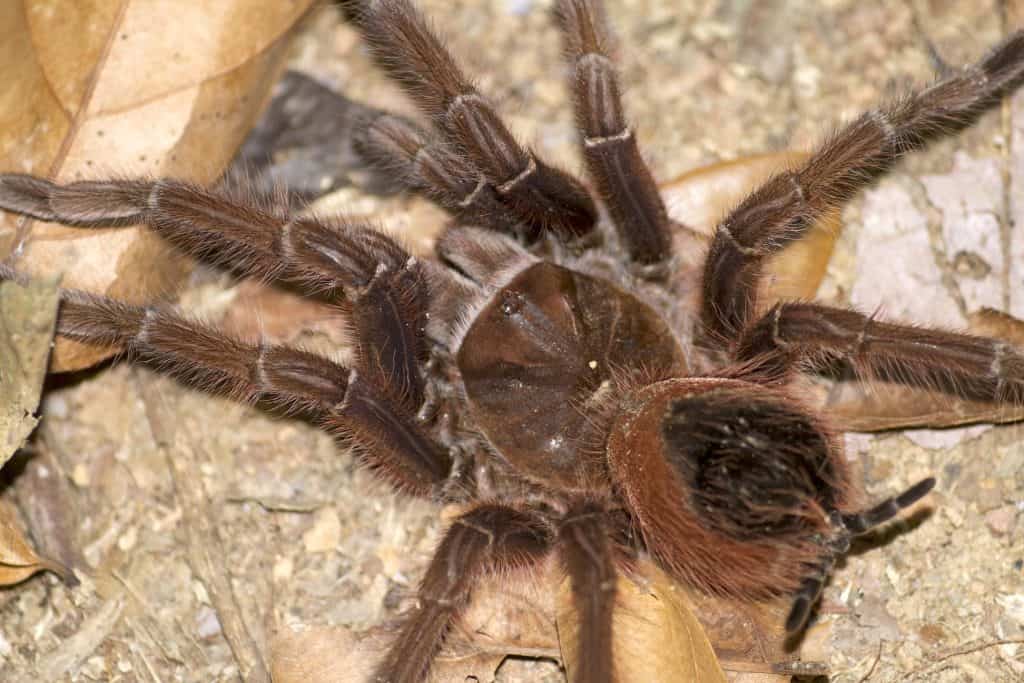
The Goliath pinkfoot, Theraphosa apophysis, can reach leg spans of up to 12 inches.
- Theraphosa apophysis (Tinter, 1991)
- Common name: Goliath pinkfoot
- Distribution: Colombia, Venezuela, Brazil
Xenesthis Simon, 1891
Xenesthis species are vibrantly colored and can be distinguished by the extensive scopulae on metatarsus IV. These large terrestrial spiders can reach leg spans of 7-9 inches. They are generally black overall with a pinkish-purple starburst on the carapace and reddish setae on the abdomen. They may also have bright pink setae with a blue sheen on their femora. These spiders excavate deep burrows in rainforest or montane forest habitats. The specific type locality for X. colombiana is unknown. X. immanis is known from Caldas Department in the Cordillera Central of the Andes in west-central Colombia. X. monstrosa is believed to have been originally collected in northwestern Colombia.
- Xenesthis colombiana* Simon, 1891
- Common name: N/A
- Distribution: Colombia
- Xenesthis immanis (Ausserer, 1875)
- Common name: Colombian lesserblack tarantula
- Distribution: Colombia, Venezuela
- Xenesthis monstrosa Pocock, 1903
- Common name: N/A
- Distribution: Colombia