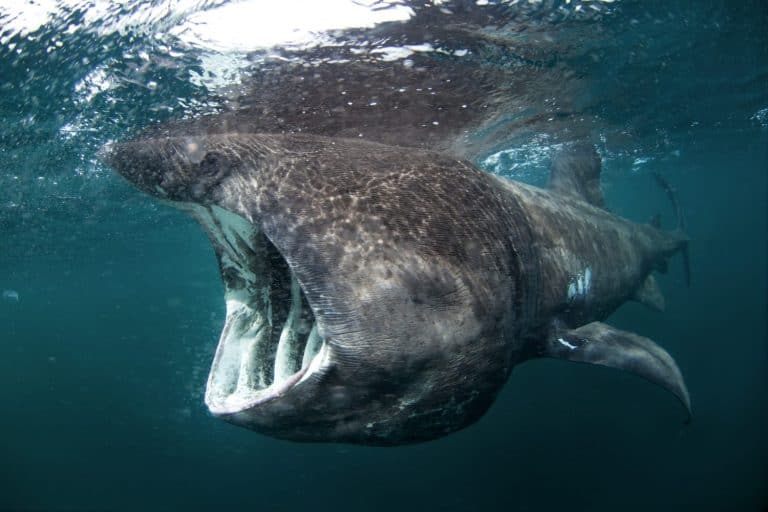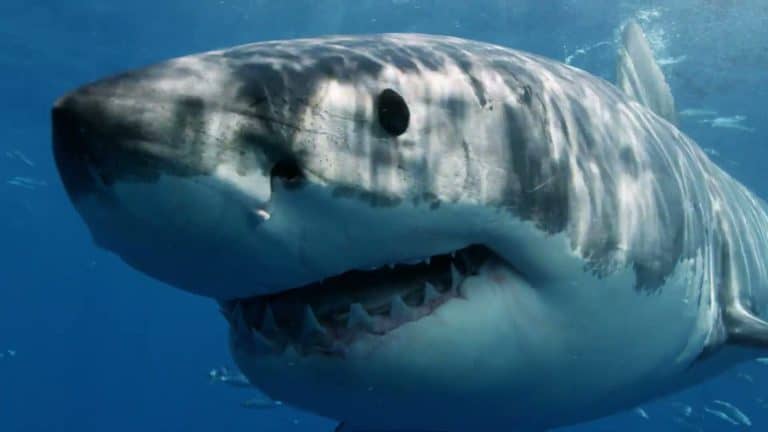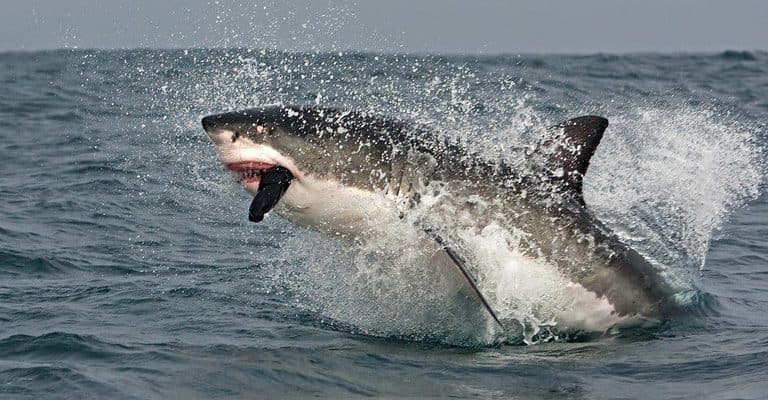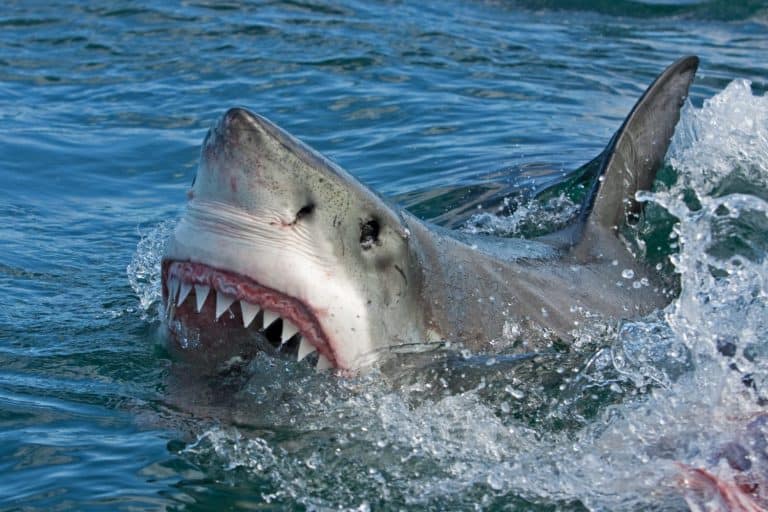

Basking sharks are amazing creatures found throughout the world’s oceans. They are not only the second largest fish in the world, but also one of only three shark species that filter feed. Although not everything is known about the basking shark due to its secretive nature, there are plenty of interesting facts to learn. Here are nine mind-blowing basking shark facts to prove how incredible this shark is.
1. Basking Sharks Can Weigh More Than Five Tons
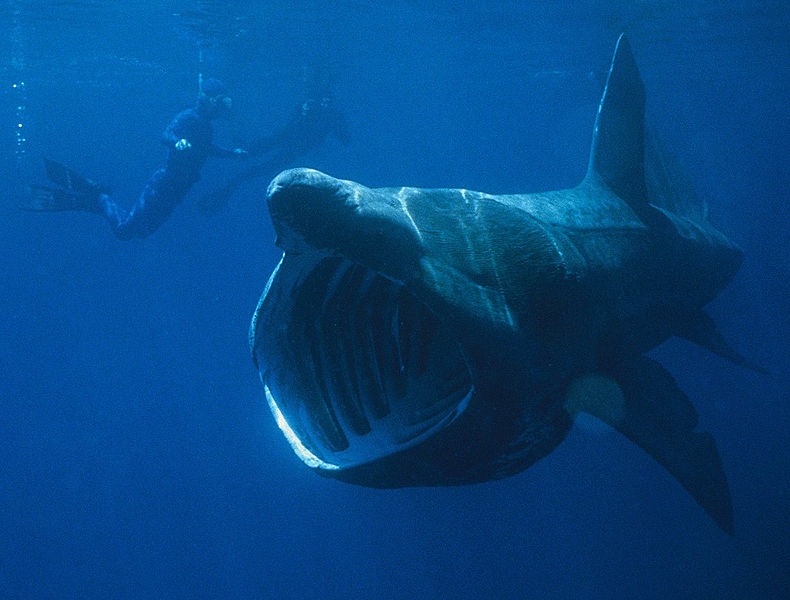
Basking sharks can grow up to 40 feet long.
©Chris Gotschalk / Public Domain, from Wikimedia Commons, the free media repository – Original / License
As the second-largest fish in the world, basking sharks (Cetorhinus maximus) are expected to be large. However, did you know that the average weight of a full-grown basking shark is over 10,000 pounds? To put that into perspective, this is about the combined weight of five average great white sharks. It’s no wonder basking sharks weigh so much when you consider they can reach a length of up to 40 feet.
The largest basking shark ever recorded was said to have been found in 1851 in Canada. This shark was estimated to have weighed up to 36,000 pounds. This would make it over seven times heavier than the largest verified great white shark.
2. Basking Sharks Can Jump Out of Water
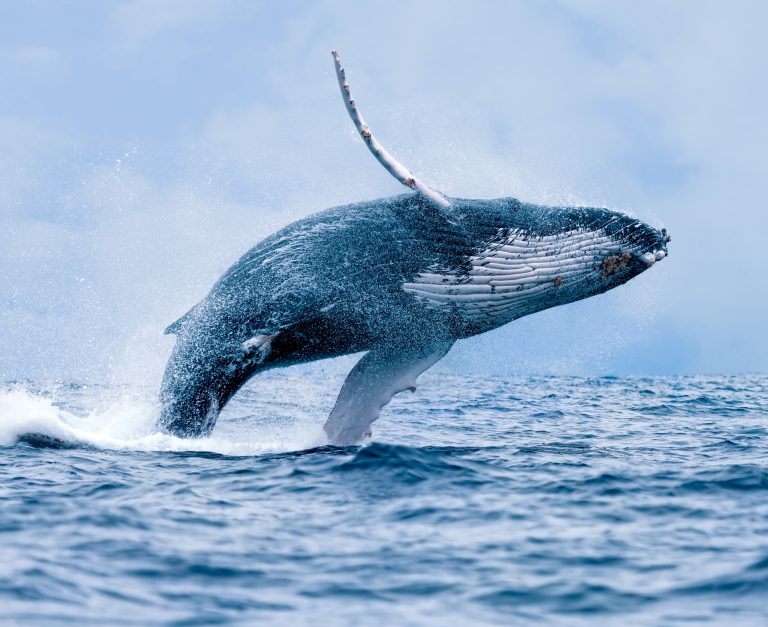
Given their large size and slow movement of around 2.3 mph, you might think it would be a challenge for this species to leap into the air. However, there are many recorded instances of this shark breaching the water like a small dolphin. In the basking shark’s case, breaching is thought to serve as an acoustic signal to other sharks. Researchers note that the sound of such a massive animal hitting the water could travel for miles.
Basking sharks can jump four feet out of the water while reaching speeds of 11 mph. A team from the University of Exeter recorded basking sharks breaching as often as six times a day, sometimes in rapid succession. One shark was recorded executing four breaches in just 47 seconds.
3. Basking Sharks Smell Bad
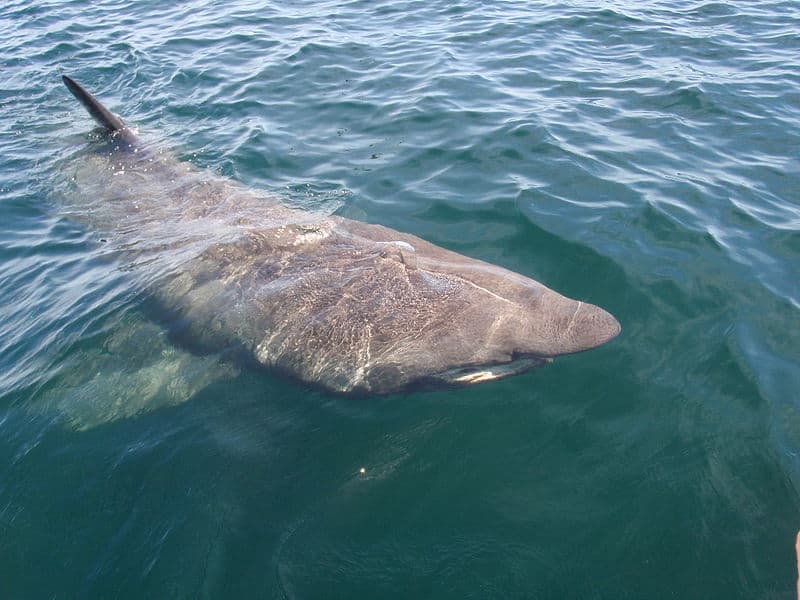
The basking shark’s skin is covered in mucus to help it swim more efficiently.
©rossbeane, CC BY-SA 2.0, via Wikimedia Commons – Original / License
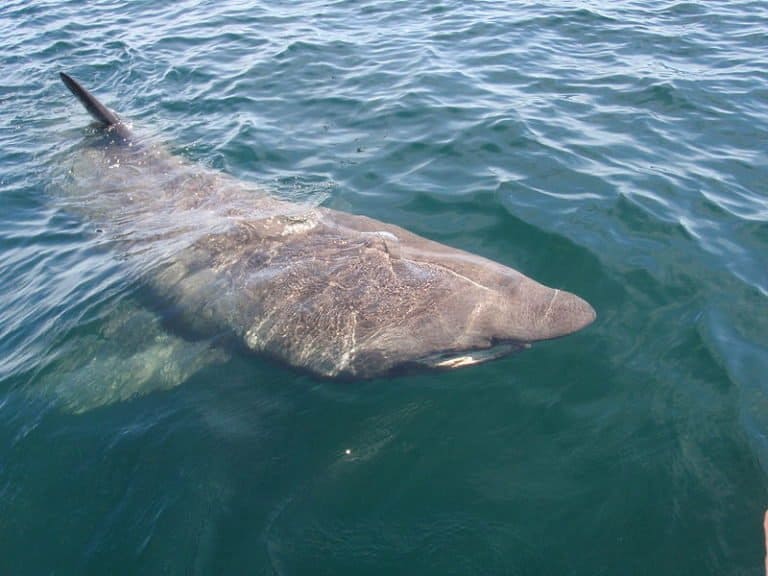
Basking sharks are covered in thick mucus. This thick mucus not only corrodes nets, but also emits a strong odor that some say can be detected above water.
The smelly slime covering their bodies may protect them from aquatic parasites like lampreys. This mucus also reduces water resistance and helps trap plankton in their gills.
4. The Liver of a Basking Shark Makes Up 25% of Its Weight
Sharks’ livers contain oils and fatty acids that are important for regulating buoyancy and energy use. The basking shark’s liver makes up around 25% of its entire body weight. This equals roughly 2,000-2,500 pounds and nearly 500 gallons of oil.
Throughout history, this shark has been hunted for its giant liver because of the valuable oil it contains. The oil has been used in medical treatments and cosmetics. This is just one of the reasons why basking sharks have become endangered.
5. Basking Sharks Have a Total of Around 1,500 Teeth
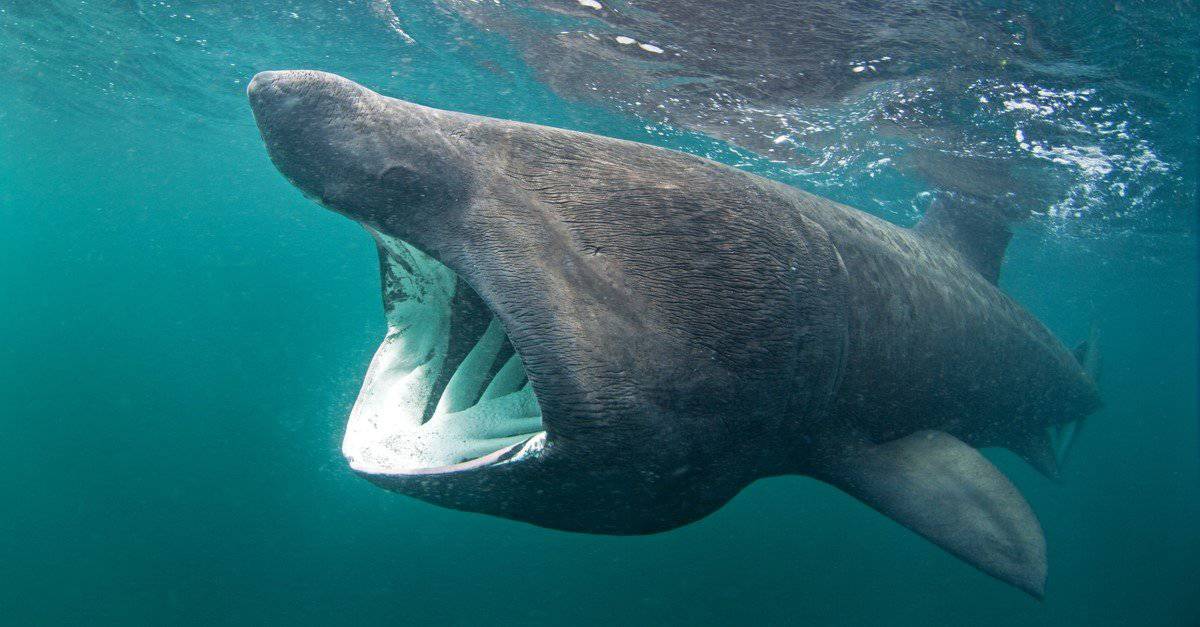
The basking shark’s large mouth reaches up to three feet wide and contains over 1,500 teeth. These teeth are small and conical. They have six rows of teeth on their upper jaw and nine rows on their lower jaw. Each row contains around 100 teeth which are 0.20-0.24 inches in length.
Because basking sharks are filter feeders, their teeth are not used for chewing. Researchers theorize that their teeth are used in the mating process.
6. It Is Common for Basking Sharks to Travel Over 5,000 Miles

Basking sharks regularly cross ocean basins in their migratory travels.
©Hermes / Creative Commons – Original
Basking sharks are highly migratory and will travel thousands of miles to feed on plankton. One basking shark that was tracked traveled 9,589 km (5,958 miles).
Their migration is believed to be driven by the search for mates, foraging for food, and moving to preferred water temperatures. Tagging technology has given researchers new insights that allow them to piece together these sharks’ mysterious travels.
7. Basking Sharks May Travel in Large Groups
Basking sharks are typically solitary, but sometimes groups can form large schools with up to 100 members. However, on November 5, 2013, an enormous group was spotted off the coast of New England, which consisted of 1,398 sharks within an 11-mile radius.
Numbers this high had never been seen before. However, researchers believe it is a positive sign for the species. Large amounts of plankton in the water were thought to be the reason for such a large gathering.
8. The Gestation Period for Basking Sharks Is 2-3 Years
The basking shark’s gestation period is believed to last 2-3 years. They give birth to live young. The young hatch from eggs inside the uterus. Then, they continue to develop before being born. The basking shark is thought to give birth to an average of four pups in the summer after their gestation period.
Their long gestation period, along with producing relatively few offspring, is one reason why it is challenging for their population to increase.
9. Basking Sharks Can Be Mistaken for Ancient Sea Monsters
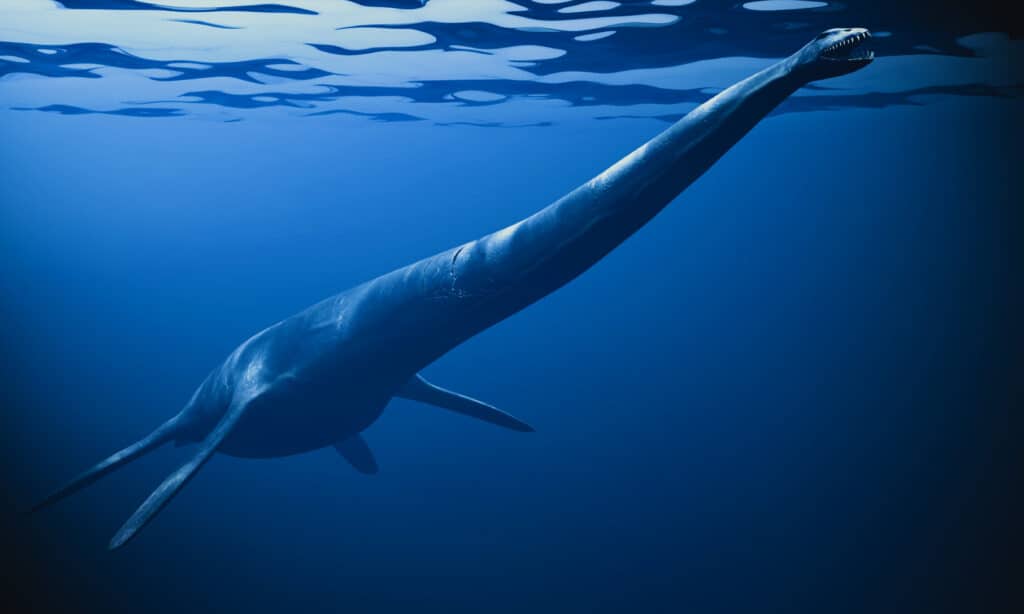
Basking shark carcasses have been mistaken for the carcasses of plesiosaurs.
©3dmotus/Shutterstock.com
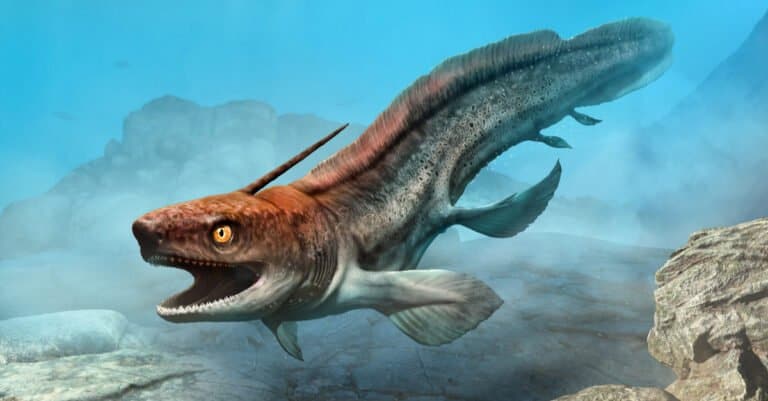
The Loch Ness Monster is said to be a plesiosaur, a type of long-necked predatory marine reptile from around 200 million years ago. Beyond the Loch Ness Monster, there have been other reports of plesiosaurs around the world. One sighting reported by a Japanese trawler in 1977 led to significant attention.
However, DNA analysis showed that the trawler actually had the carcass of a basking shark, not a plesiosaur. Basking sharks’ skulls are relatively small compared to their bodies, which can reach up to 40 feet in length. This leads to an appearance similar to ancient reptiles from the sea. So, if you hear about a long-necked “dinosaur” washing up from the ocean, the truth is — it’s probably just a basking shark.