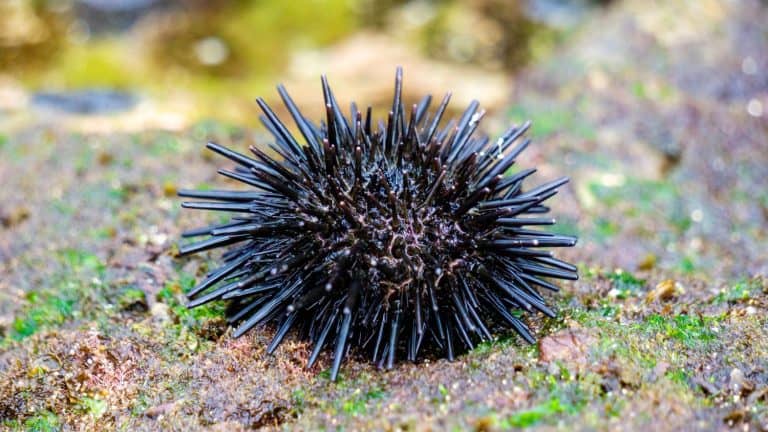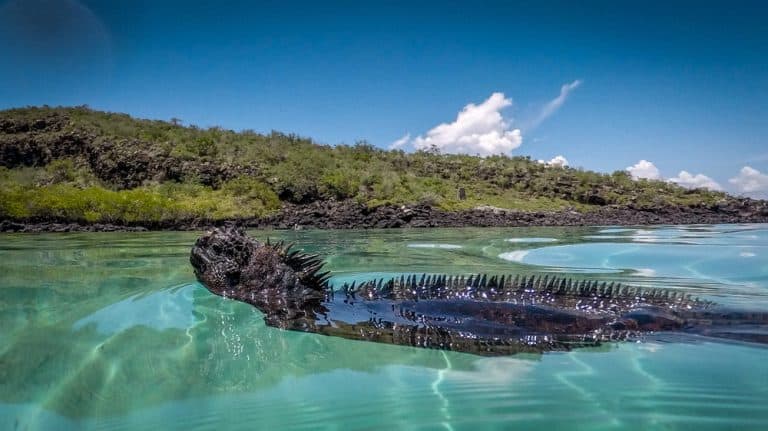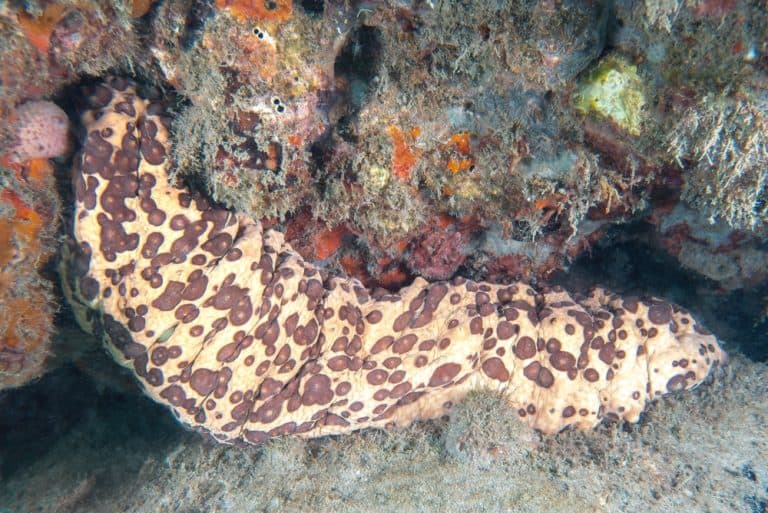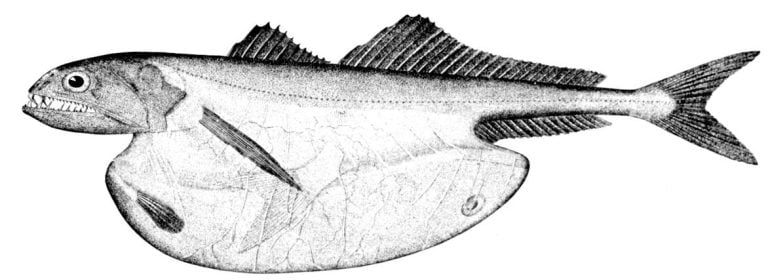

The vast array of organisms in the deep sea remains a mystery to humans. Now, marine biologists can add one more puzzle to the list. A collection of odd materials was discovered nearly four miles beneath the ocean surface off the coast of Japan. The strange structures appeared to be small, black, gelatinous, and egg-shaped. The alien-looking masses were documented via remotely operated vehicles traveling along abysmal plains. DNA analysis confirmed that the tiny globules are worm embryos from an unknown species. Though further exploration is needed, discovering such novel marine organisms reminds us of the mysteries beneath the Earth’s deep dark waters.
Though the newly discovered worm eggs are exceedingly small, the ocean is also home to enormous animals of breathtaking proportions. This phenomenon of gigantism occurs because larger animals are more efficient in the depth of the seas than smaller ones. These creatures can navigate long distances quickly to find mates, store more energy for longer periods of time, and adjust to a slow metabolism due to the cold temperatures at the bottom of the ocean. Animals with slower metabolisms grow and mature very slowly and can end up reaching enormous sizes. We’ve compiled a list of the Earth’s largest ocean animals, which we’ve ranked by weight.Read on to discover the 15 biggest deep-sea creatures.
This post was updated on July 17, 2025 to include information on newly discovered worm eggs in the deep sea.
15. Ocean Sunfish
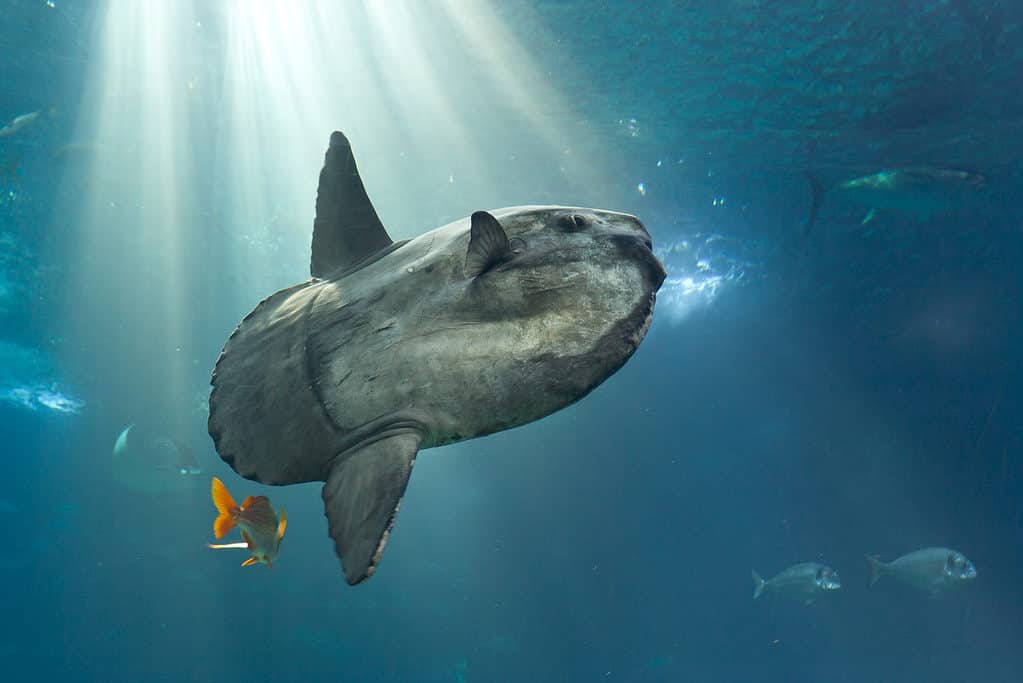
They may be massive, but these fish are gentle giants, acting docile around human divers.
©Rui Manuel Teles Gomes/Shutterstock.com
- Average Weight: up to 4,400 pounds
- Average Length: up to 11 feet
The Mola Mola, or Ocean Sunfish, are slow-moving, huge oval-shaped sea creatures. Mostly solitary creatures, they are one of the heaviest bony fish in the world.
14. Giant Ocean Manta Ray
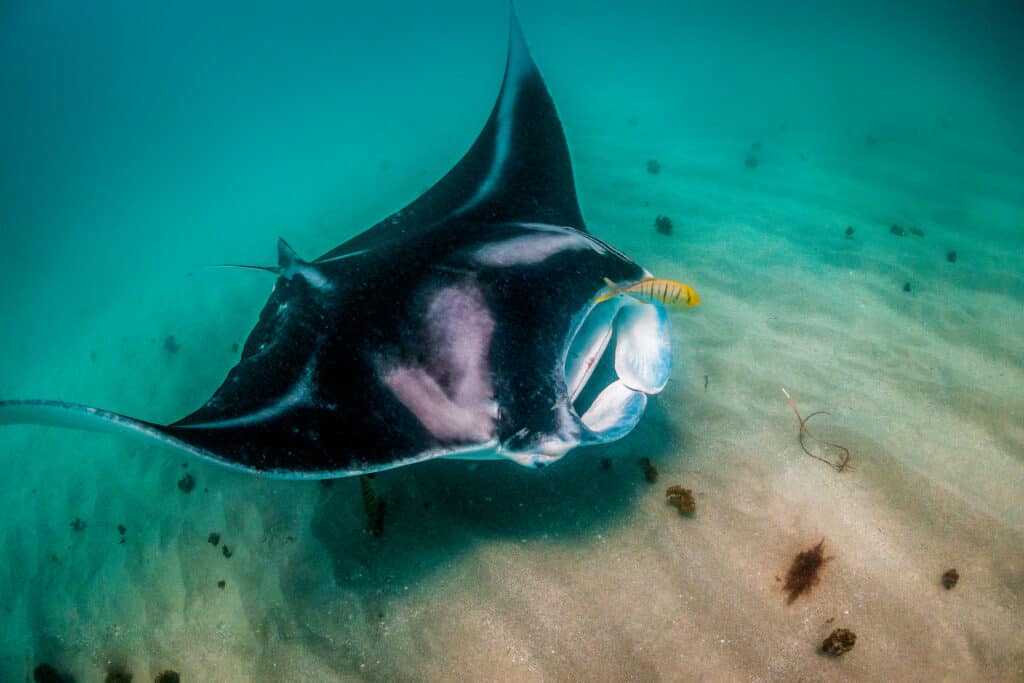
Manta rays are incredibly intelligent. Scientists consider them on the same level as primates, dolphins, and elephants.
©Aaronejbull87/Shutterstock.com
- Average Weight: up to 5,300 pounds
- Average Length: up to 23 feet
The world’s largest ray, the Giant Ocean Manta Ray has a large diamond-shaped body with expansive wing spans.
13. Basking Shark
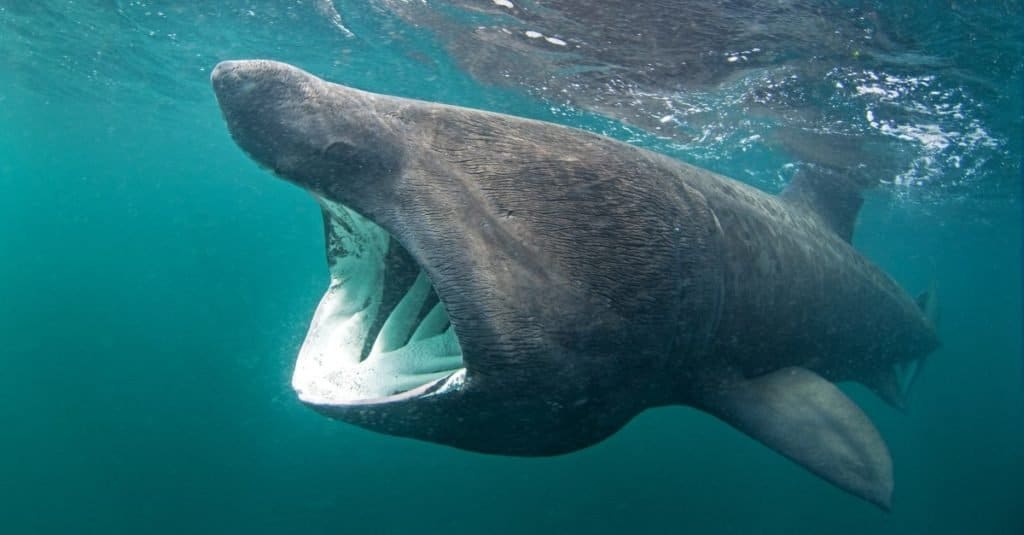
These massive sea creatures are the second-largest fish swimming in the world’s oceans.
©Martin Prochazkacz/Shutterstock.com
- Average Weight: up to 11,000 pounds
- Average Length: up to 39 feet
They may look large and threatening, but basking sharks feed on plankton and other tiny crustaceans.
12. Killer Whale
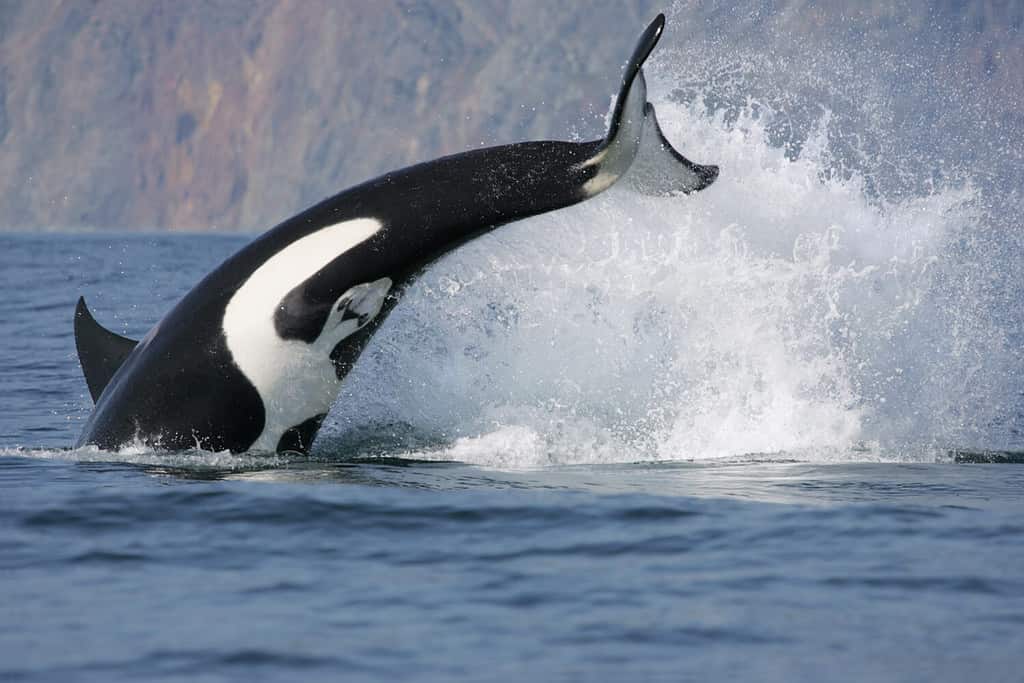
Some killer whales mainly eat herring and schooling fish, while others feast on Minke whales, stingrays, and sharks.
©Tatiana Ivkovich/Shutterstock.com
- Average Weight: up to 15,000 pounds
- Average Length: up to 26 feet
Orcas, also known as killer whales, are not whales despite their name but are the largest dolphin species.
11. Minke Whale
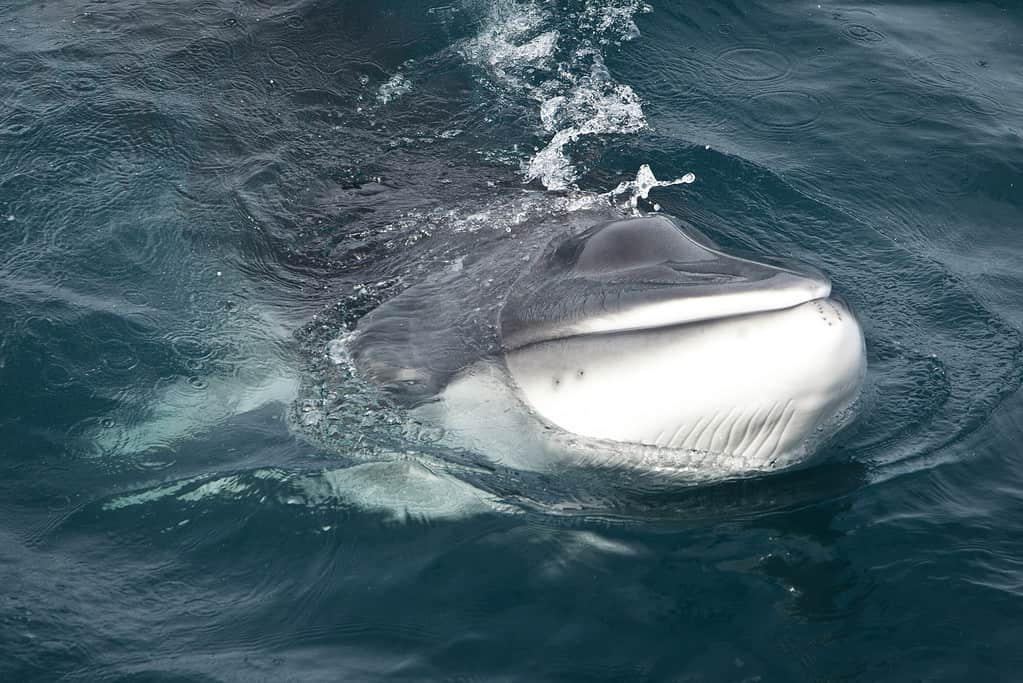
These speedy whales are known to reach up to 24 miles per hour when making an escape from their predator, the killer whale.
©Tim Watters/Shutterstock.com
- Average Weight: up to 20,000 pounds
- Average Length: up to 35 feet
Minke whales are the smallest members of the Baleen whale family.
10. Whale Shark
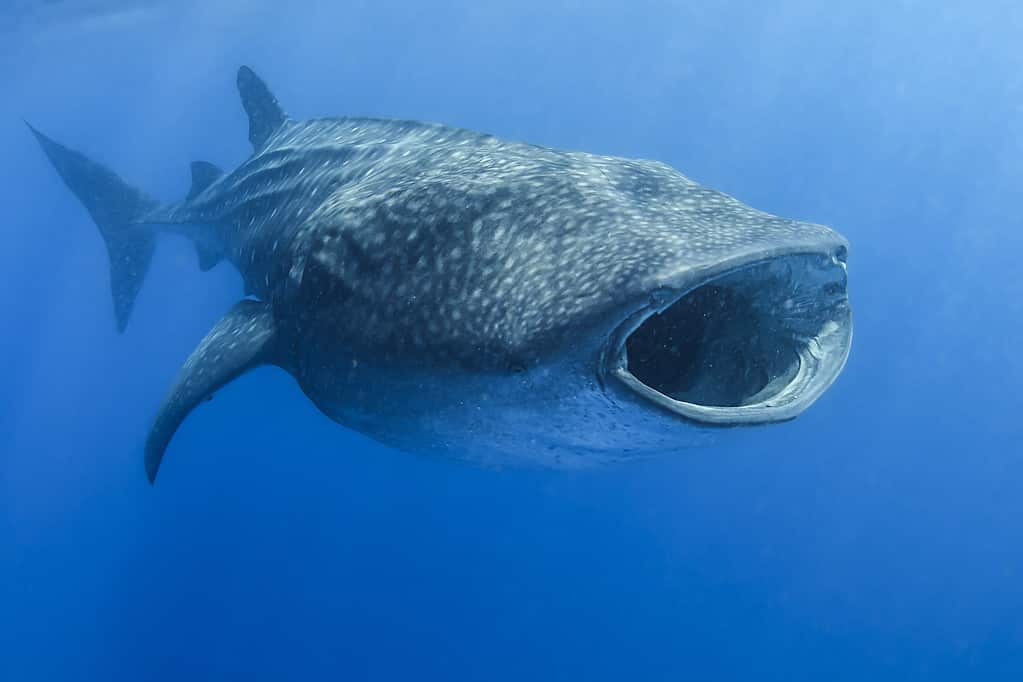
Scientists have found that these large and fascinating fish have tiny teeth on their eyes.
©Martin Voeller/iStock via Getty Images
- Average Weight: up to 41,000 pounds
- Average Length: up to 33 feet
Whale sharks are the largest fish on our list. These massive sea creatures have mouths that can stretch up to four feet wide.
9. Bryde’s Whale
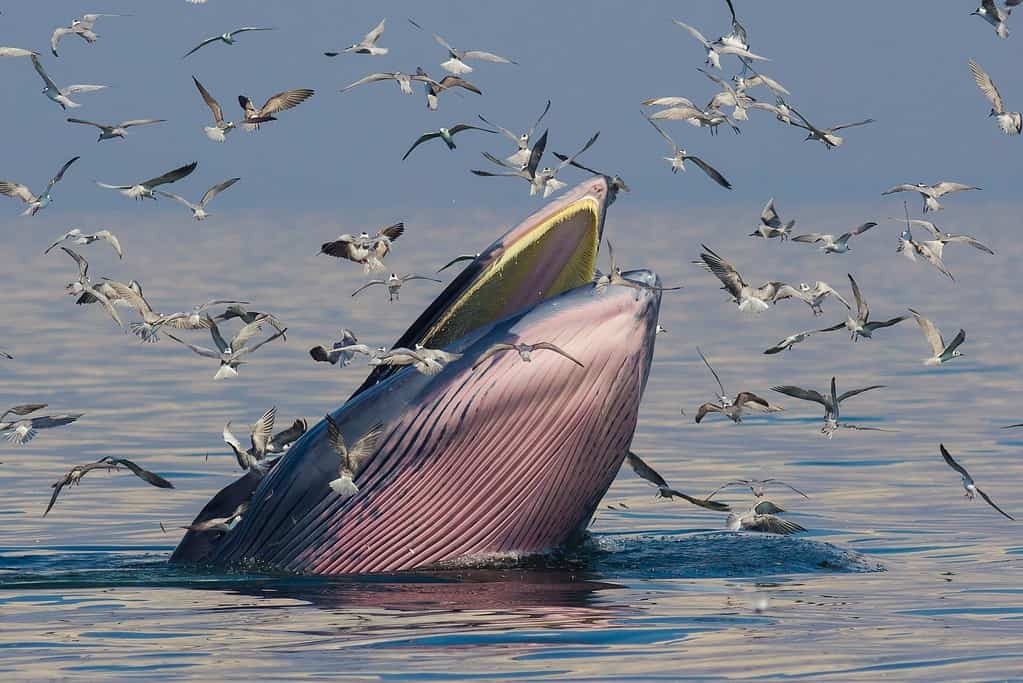
These large mammals can be found in the Atlantic, Pacific, and Indian oceans.
©aDam Wildlife/Shutterstock.com
- Average Weight: up to 44,000 pounds
- Average Length: up to 59 feet
Bryde’s whales are known for their slender, smoky gray-colored bodies.
8. Sei Whale
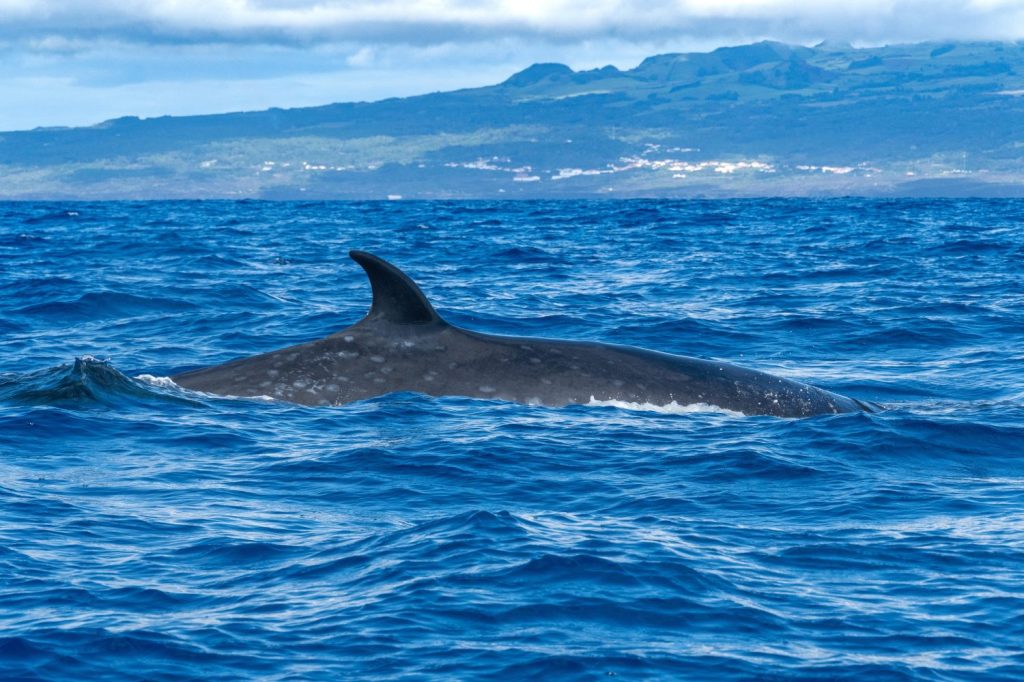
Sei whales travel in small groups of two to five individuals.
©HakBak/Shutterstock.com
- Average Weight: up to 62,000 pounds
- Average Length: up to 64 feet
Unusual in the animal world, female sei whales are typically larger than males. Sei whales are a mysterious species with unpredictable movement patterns and it’s not known where they breed.
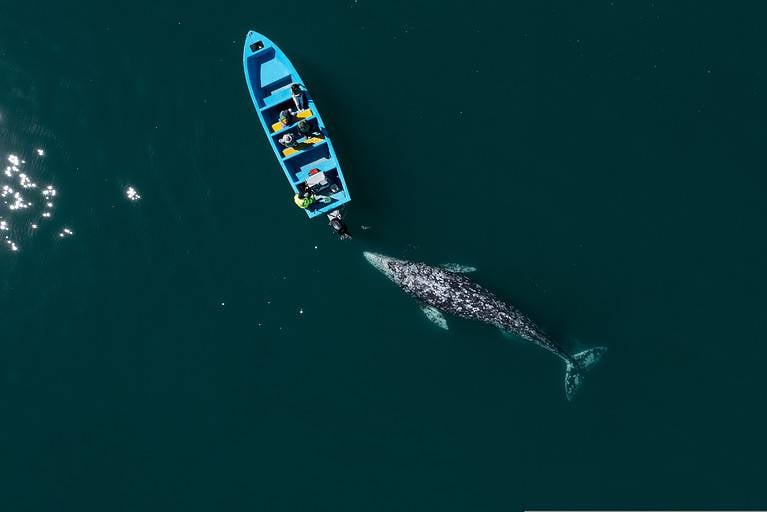
7. Gray Whale
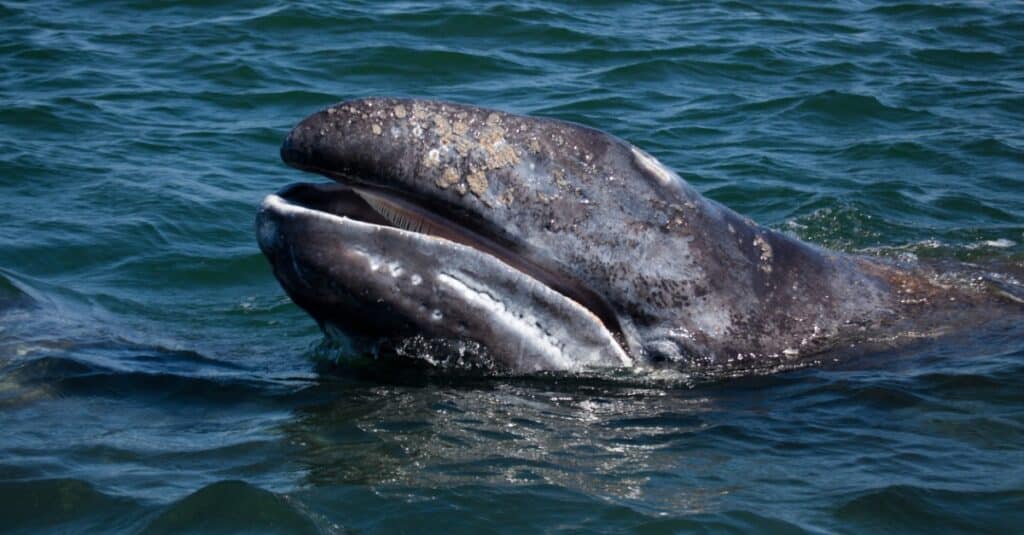
The massive gray whale is known for its gray skin covered with barnacles and scarred from parasites.
©Mogens Trolle/Shutterstock.com
- Average Weight: up to 72,000 pounds
- Average Length: up to 50 feet
One of the best spots to see the majestic gray whale is during the annual gray whale migration that occurs along the California coast. These big deep sea creatures are filter feeders, eating over one ton of tiny crustaceans per day.
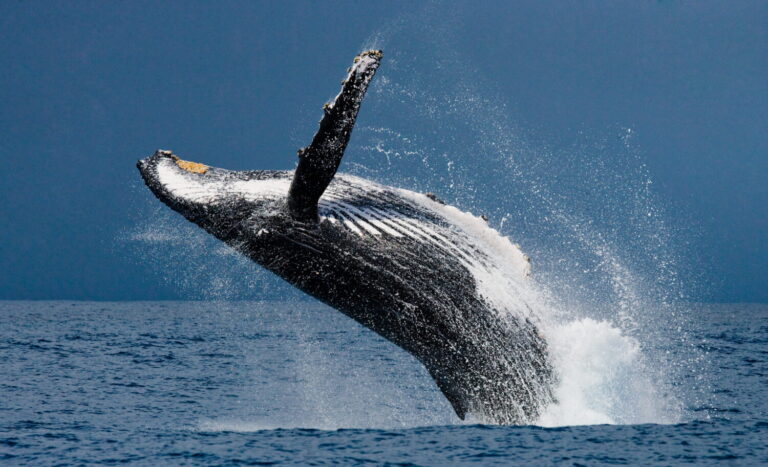
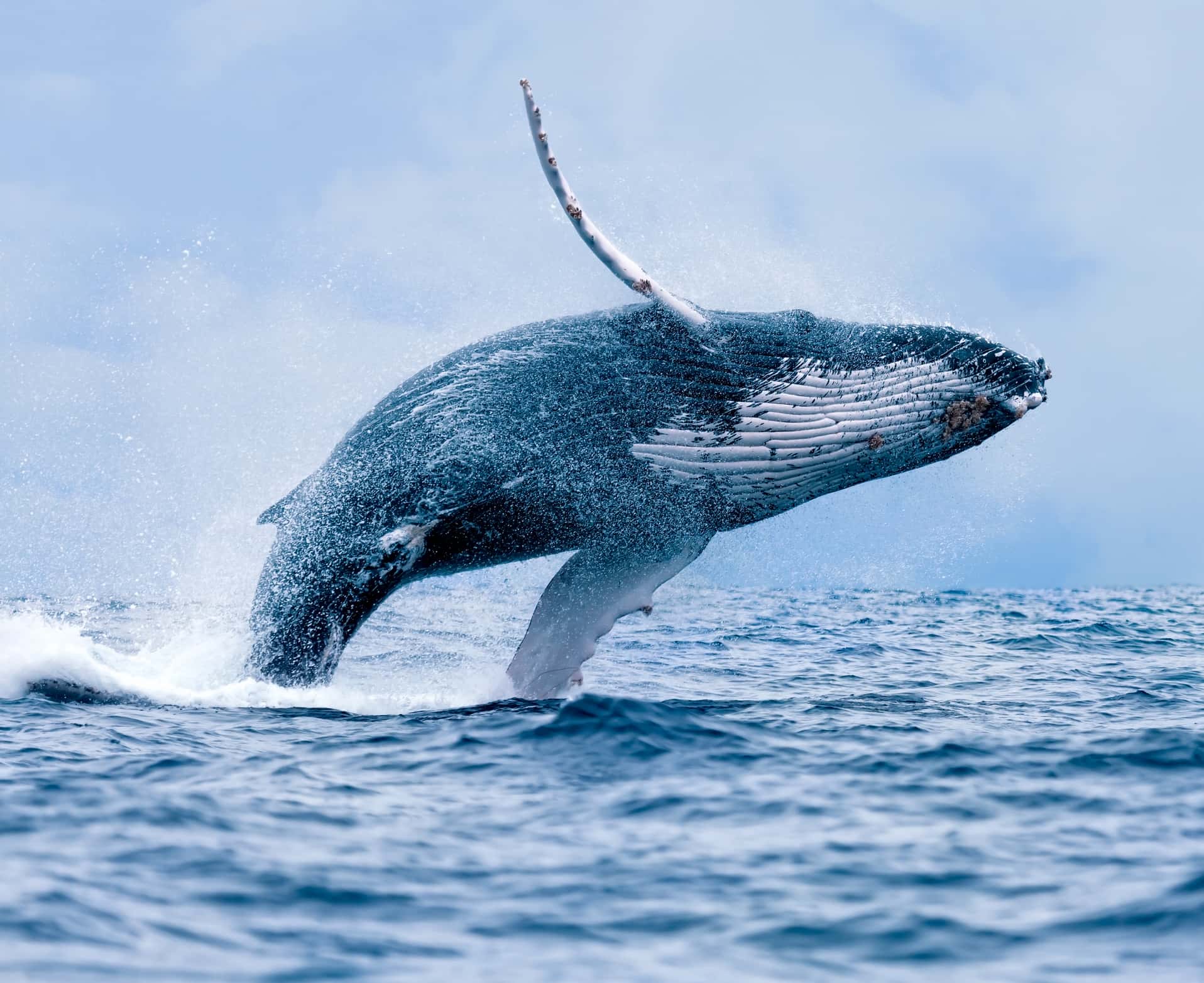
6. Humpback Whale
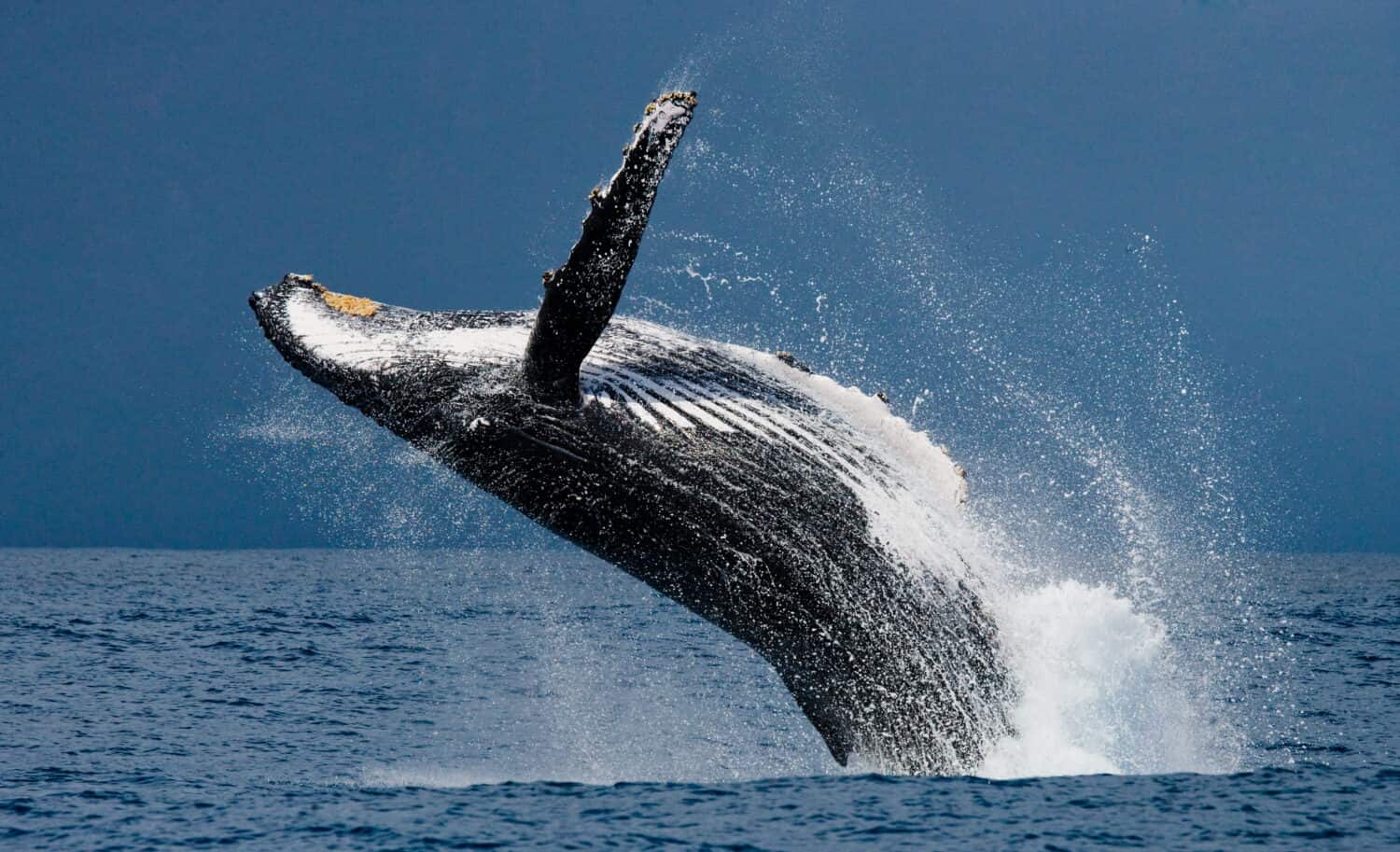
Male humpback whales are known for their beautiful and haunting songs.
©GUDKOV ANDREY/Shutterstock.com
- Average Weight: up to 80,000 pounds
- Average Length: up to 60 feet
Humpback whales can be found in oceans around the world. They were once threatened by the whaling industry, but their population has made a comeback thanks to conservation efforts.
5. Sperm Whale
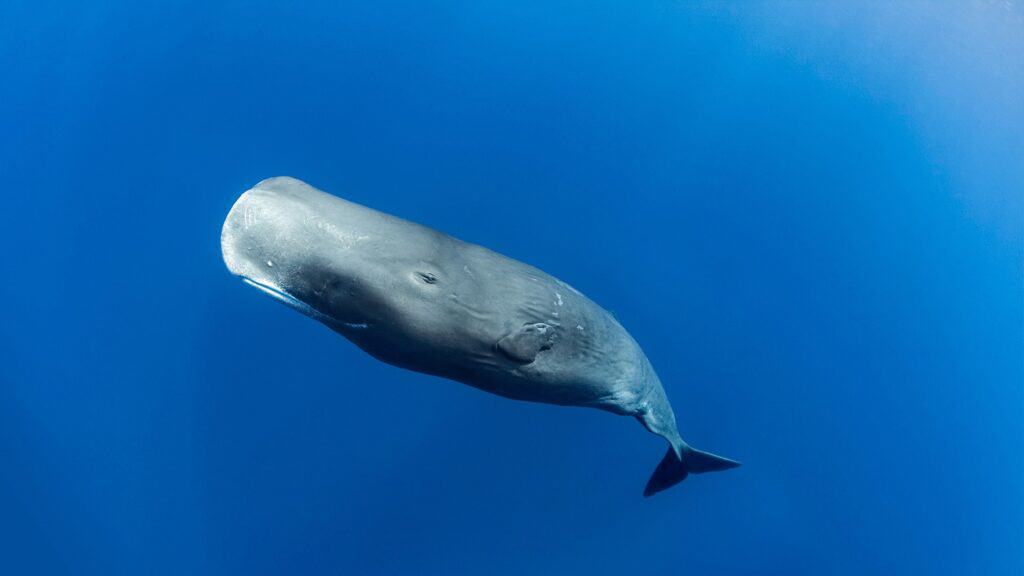
Although massive, they are fast. Sperm whales can swim up to 23 miles per hour.
©Animalgraphy/Shutterstock.com
- Average Weight: up to 90,000 pounds
- Average Length: up to 59 feet
These big creatures can be found in oceans around the world. Sperm whales are highly social, living in bonded groups that last their entire lifetimes.
4. Right Whale
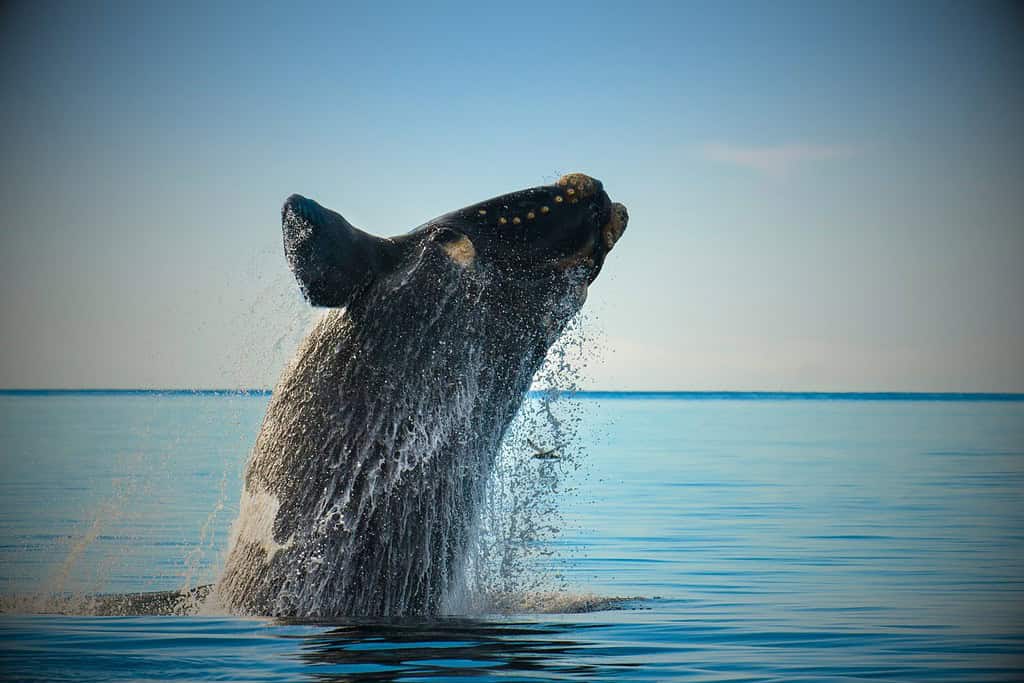
The North Atlantic right whale can be spotted breaching the water and then crashing back down with a thunderous splash.
©Tharuka Photographer/Shutterstock.com
- Average Weight: up to 140,000 pounds
- Average Length: up to 52 feet
There are three species of right whales: the North Pacific, North Atlantic, and Southern right whale. Sadly, the North Atlantic right whale is an endangered species, with only 360 individuals estimated to remain alive today.
3. Fin Whale
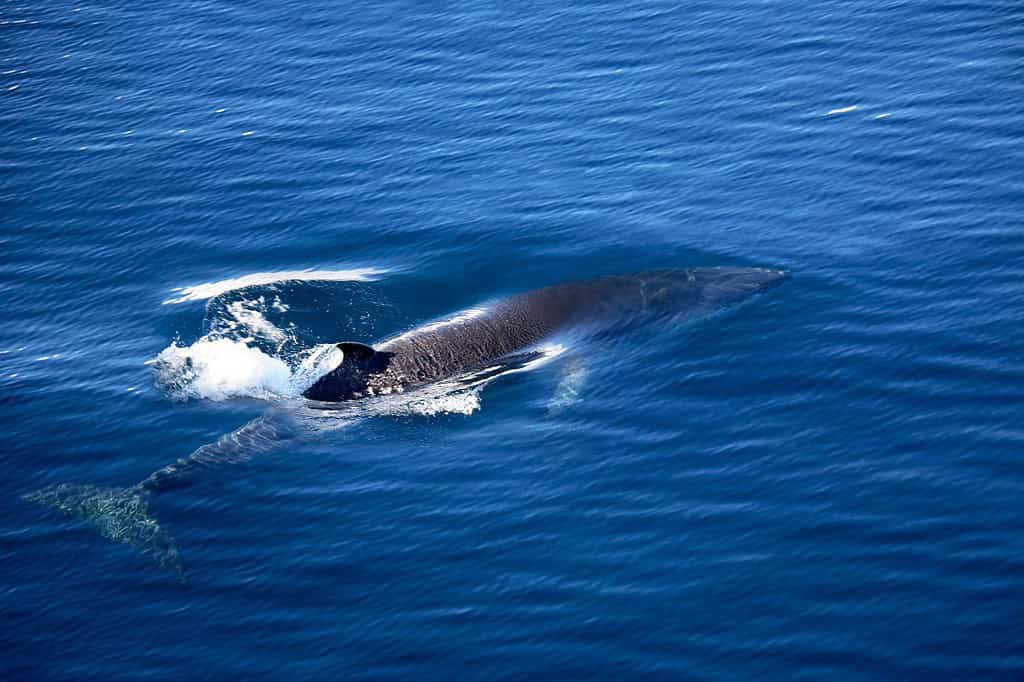
The fin whale is the second-largest animal on Earth.
©Steve Allen/Shutterstock.com
- Average Weight: up to 160,000 pounds
- Average Length: up to 85 feet
Fin whales swim in groups and can often be seen feeding in large groups of many species of whales. They tend to live in deep waters, migrating north in the summer.
2. Bowhead Whale
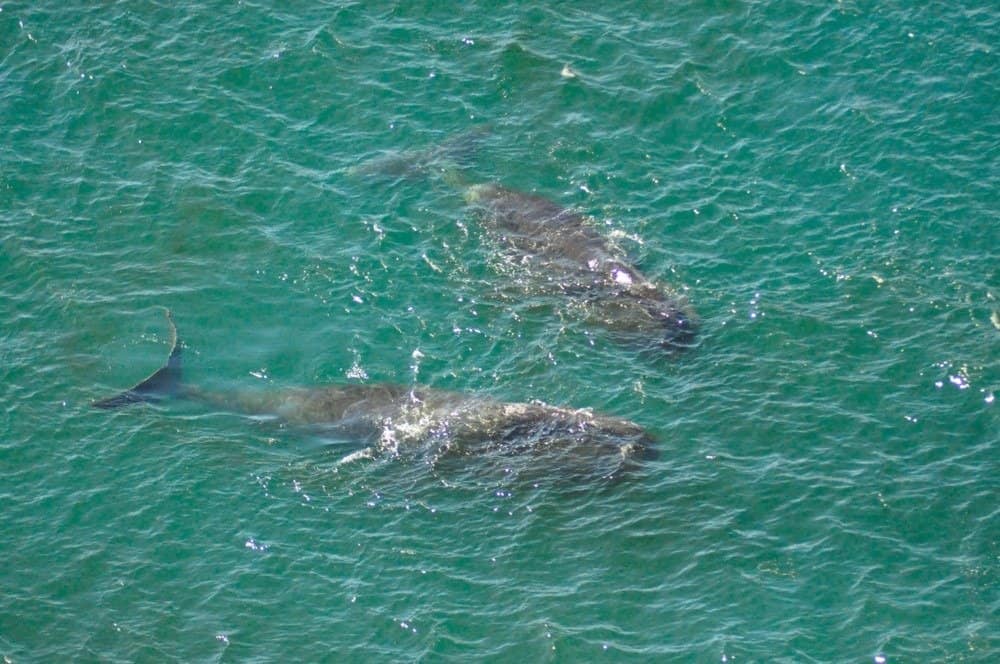
Despite their massive size, bowhead whales can leap completely out of the water.
©Vladimir Chebanov/Shutterstock.com
- Average Weight: up to 200,000 pounds
- Average Length: up to 62 feet
Bowhead whales live in very cold waters in the Arctic and subarctic. Amazingly, bowhead whales may live for 200 years or more, making them the longest-living mammals on Earth.
1. Blue Whale
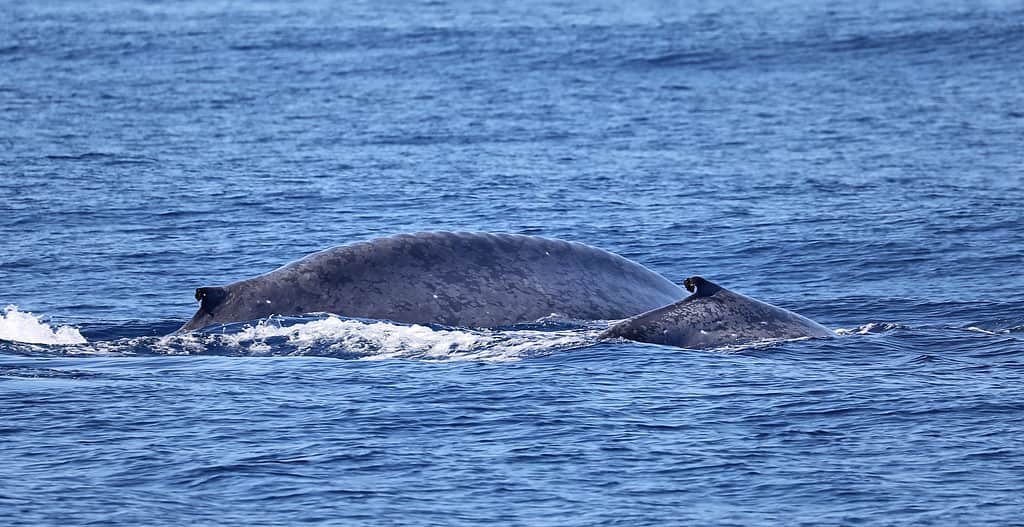
At only six months old, a baby whale can reach 52 feet in length.
©tane-mahuta/iStock / Getty Images Plus via Getty Images
- Average Weight: up to 352,000 pounds
- Average Length: up to 100 feet
The tongue of this enormous sea creature can weigh as much as an elephant. But despite its large size, the blue whale is not a frightening predator but feeds mostly on krill (tiny shrimp-like crustaceans) which it strains through its baleen palettes. The commercial whaling industry critically damaged the blue whale population, and today they are an endangered species.