
Each year, one of nature’s greatest dramas plays out across the plains of East Africa. The Great Migration sends millions of wildebeest, zebras, and gazelles sweeping through Tanzania and Kenya, following the rains for water and fresh grass. Crossing rivers full of crocodiles and open savannas stalked by predators, herds of a million or more animals create one of the most dramatic survival spectacles on the planet.
What Is the Great Migration?
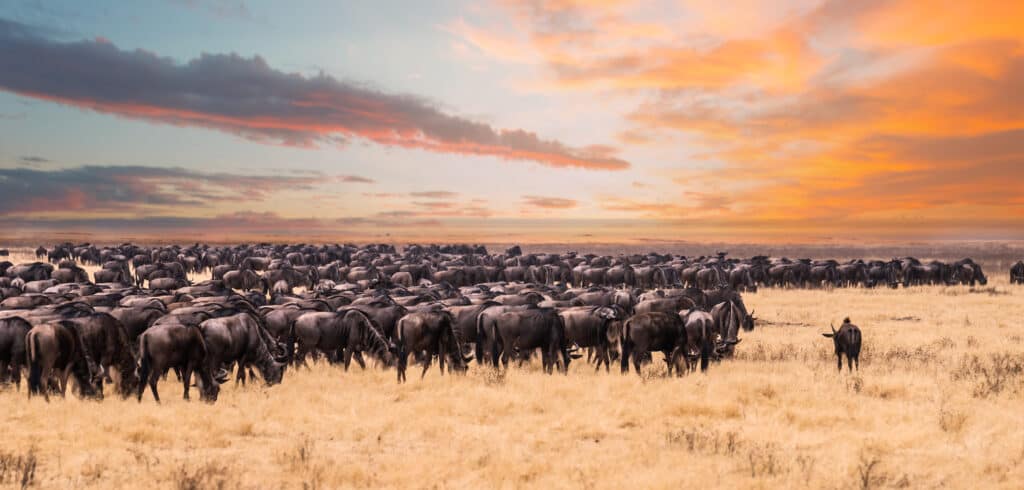
Wildebeest on the Great Migration in Serengeti National Park, Tanzania, headed toward Kenya.
©iStock.com/MrRuj
The Great Migration is a massive, circular journey between Tanzania’s Serengeti and Kenya’s Masai Mara, driven by the rains. Each year, wildebeest, zebras, and gazelles follow fresh grazing as the seasons change—calving in the southern Serengeti between December and March, moving northwest as the plains dry, then making the dramatic July–October river crossings into the Maasai Mara. When the rains return in November, the herds begin their trek back south, completing the cycle. This epic movement involves over a million animals.
The Masai Mara
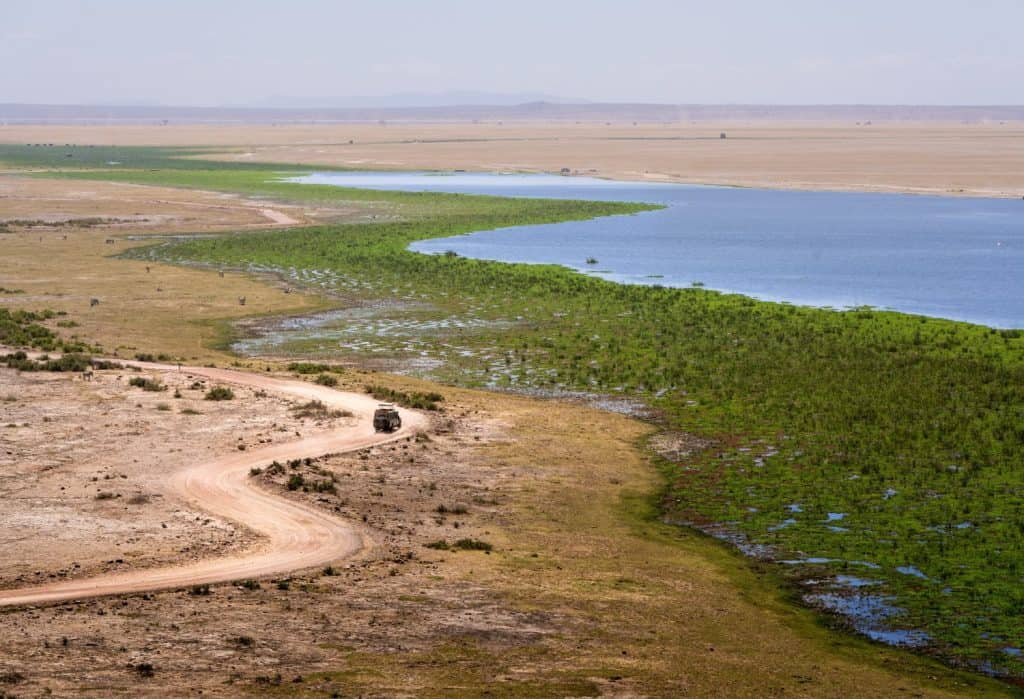
The Mara River flows from the highlands of Kenya through Tanzania into Lake Victoria.
©Smcgowan_photography/Shutterstock.com
The Masai Mara is a vast wildlife reserve in southwest Kenya, directly connected to Tanzania’s Serengeti National Park. Together, the two form one of the most famous ecosystems on Earth, home to lions, elephants, giraffes, cheetahs, leopards, hippos, crocodiles, and countless antelope species.
Balloon Safaris
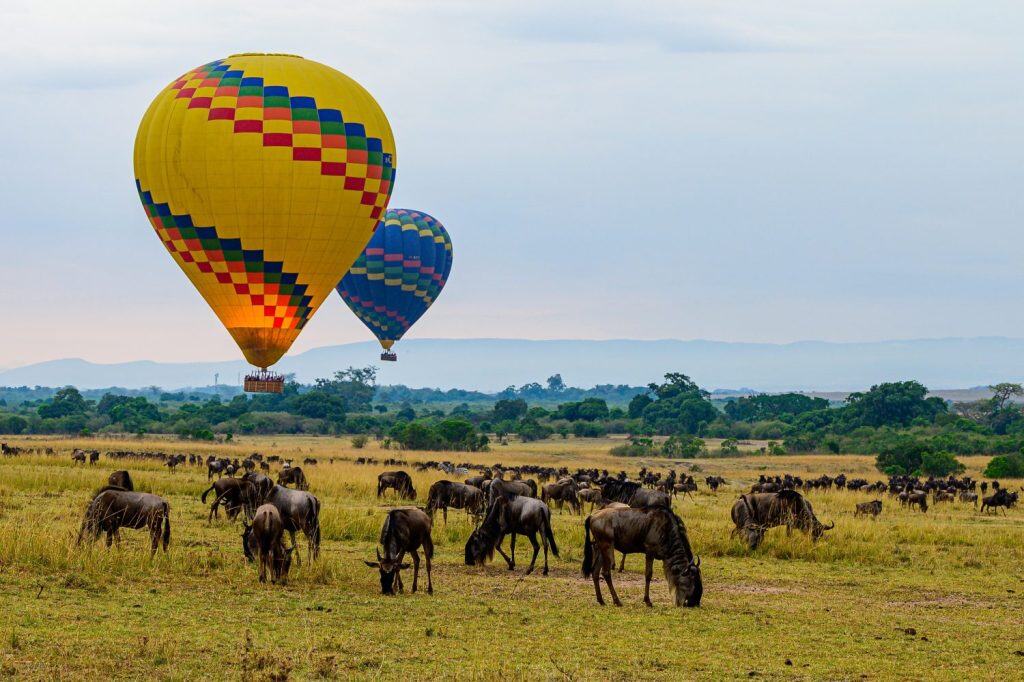
A balloon safari in the Masai Mara, Kenya, with wildebeest migration beneath.
©Matrishva Vyas/Shutterstock.com
A balloon safari gives travelers a sweeping bird’s-eye view of the Masai Mara. From a safe vantage point, tourists can see the vast scale of the migration as well as observe the intricacies of animal behavior in the herds that would be hard to discern from ground level.
Wildebeests
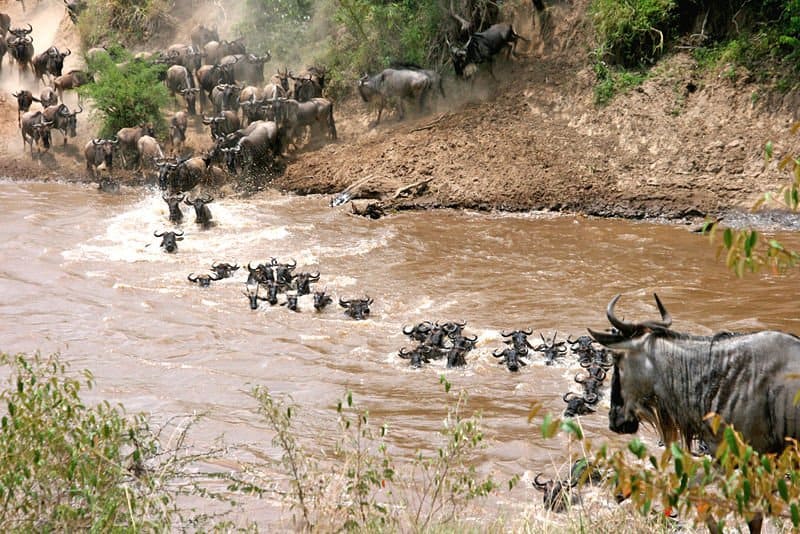
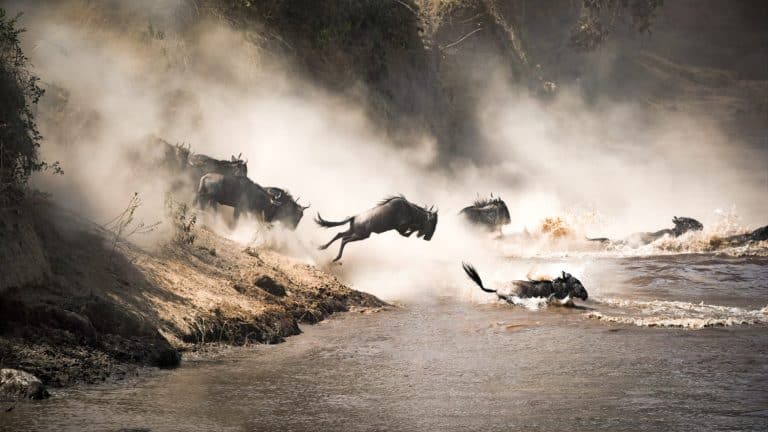
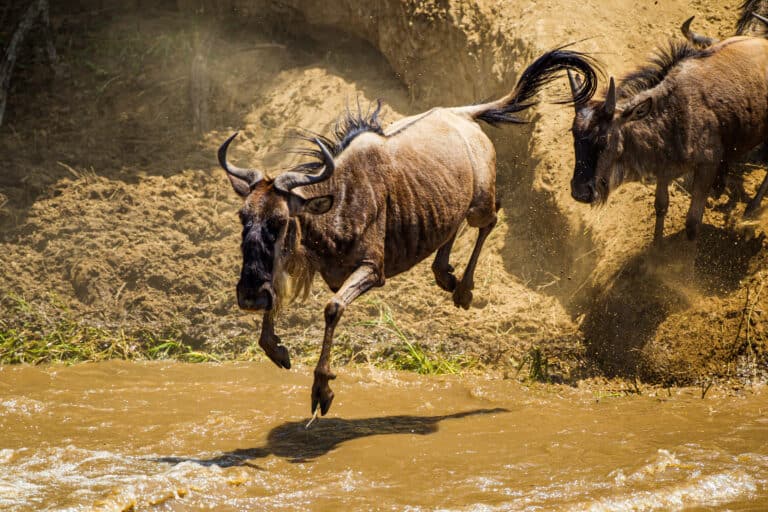
Crossing rivers is the most dangerous part of the journey for wildebeests and other herd animals.
©Eric Inafuku, CC BY 2.0, via Wikimedia Commons – Original / License
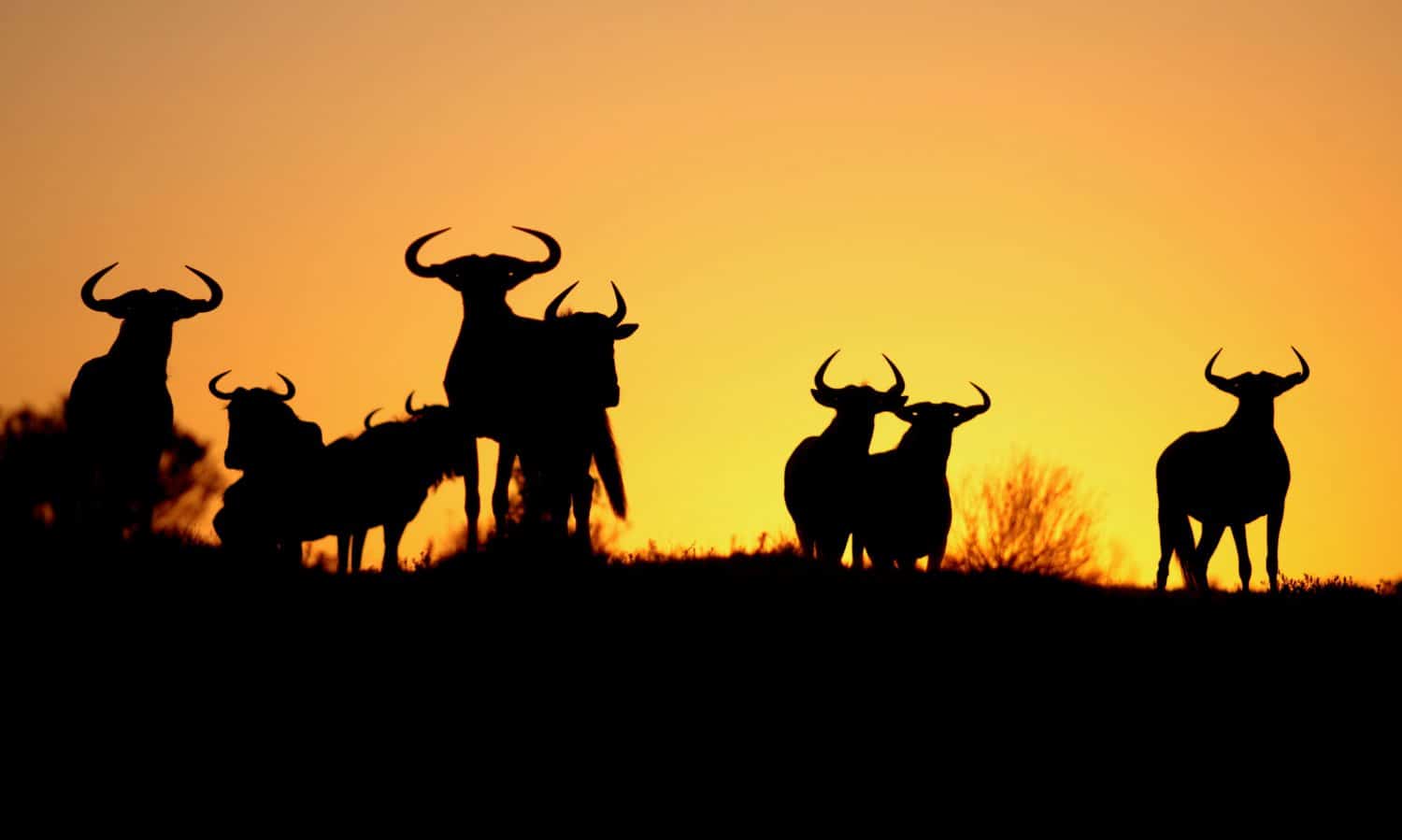
Wildebeest are rugged antelopes best known for their vast, synchronized herds that dominate the Great Migration. Estimates of their numbers range from 500,000 to over a million. Over the course of this journey, the herds cover over 600 miles, driven by the search for grass and water, and relying on sheer numbers for protection against the predators that shadow them.
Topi
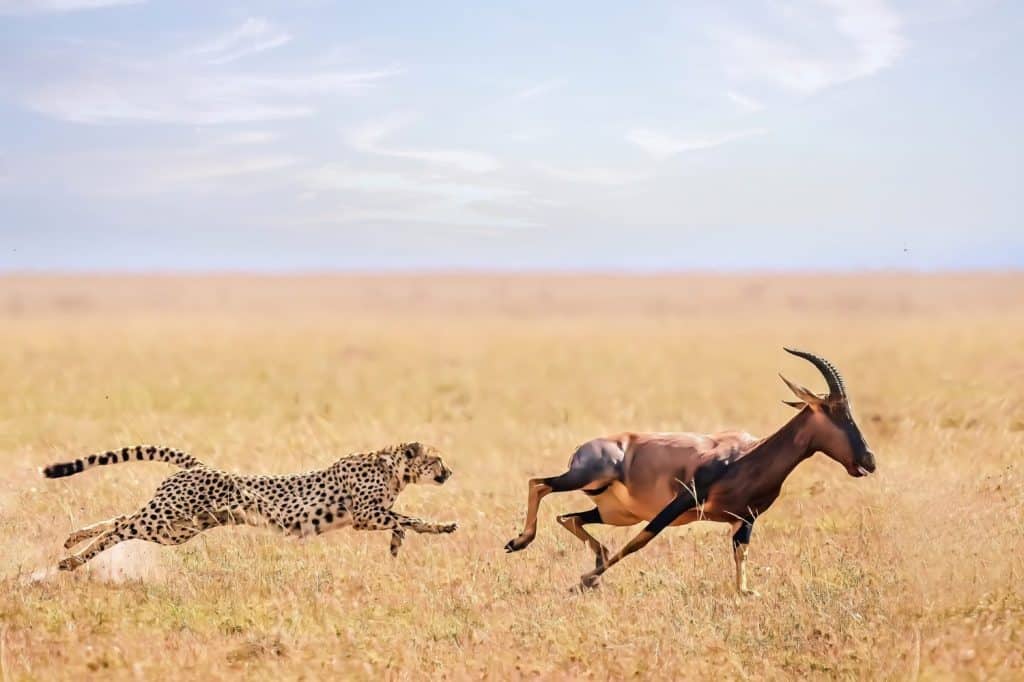
A cheetah hunts a Topi in the Masai Mara.
©Mou Mukherjee/Shutterstock.com
Topis are medium-to-large antelopes with glossy reddish-brown coats and dark markings on their faces and upper legs. Their long legs and endurance help them outlast predators like cheetahs. An estimated 40,000 to 60,000 topi take part in the Great Migration, often traveling in smaller herds alongside the larger throngs of grazers on the savanna.
Rains in Africa
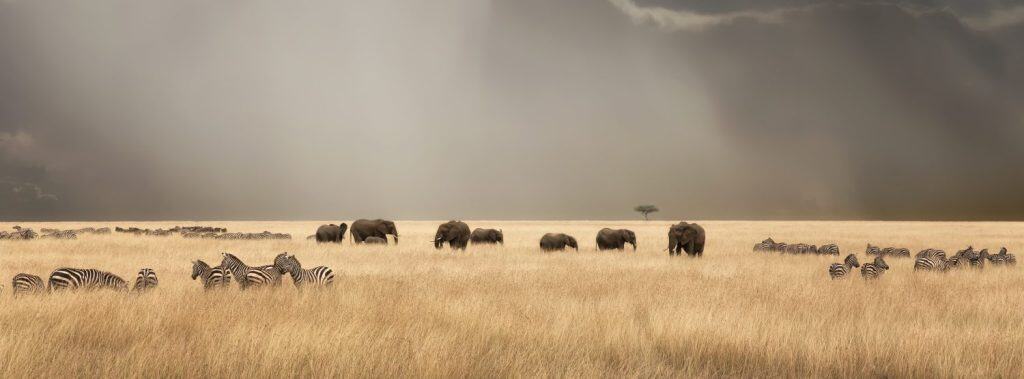
Elephants and zebras under stormy skies over the Masai Mara.
©Jane Rix/Shutterstock.com
Storms are dramatic on the Masai Mara, especially during the rainy season when afternoon thunderstorms frequently sweep across the plains. The moisture transforms the landscape from dusty brown to lush green, ensuring fresh grazing for migrating animals.
Elephants
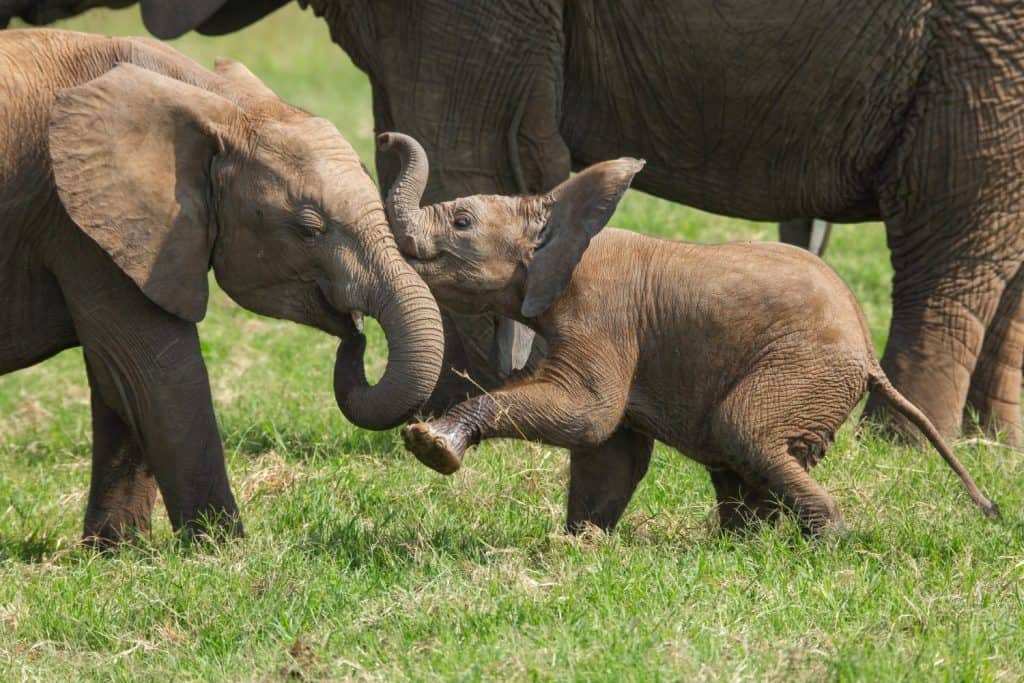
Young African elephants playing in the savanna of Kenya.
©Chedko/Shutterstock.com
Elephants are not central to the Great Migration. Although they also migrate, their movements are more dispersed, involve smaller groups, and are not as synchronized as the movements of the great grazing herds. Nonetheless, groups of elephants are often present in the same landscapes.
Herd Behavior
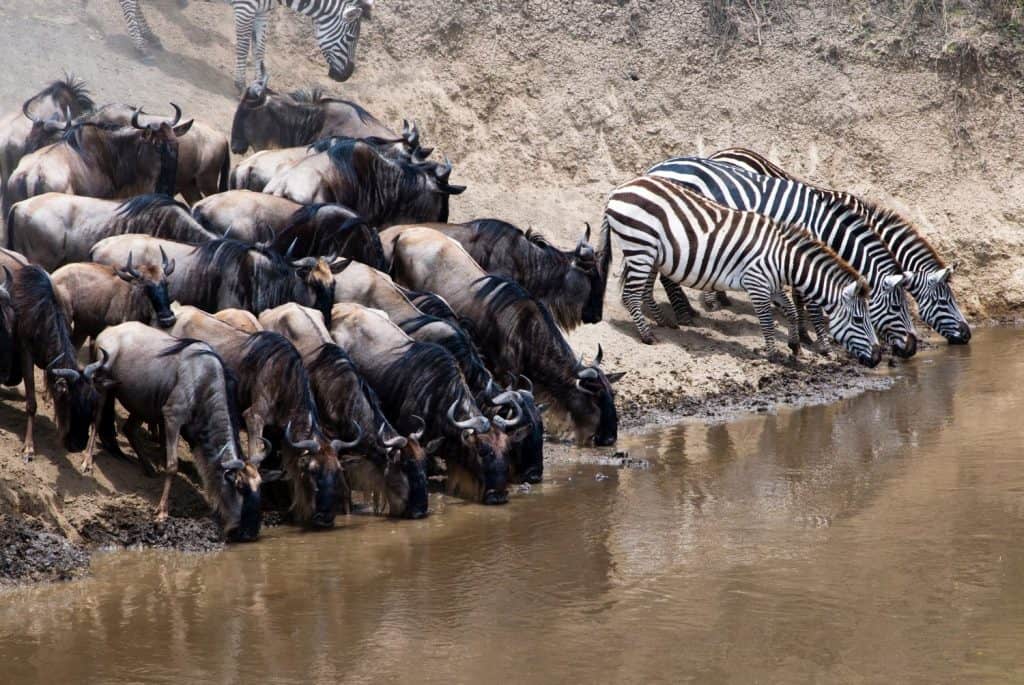
Blue wildebeest and common zebras in defensive groups, drinking at the Mara River.
©Robert Harding Video/Shutterstock.com
Different herding animals like zebras and wildebeest commonly gather to drink but tend to stay in distinct groups. Zebras rely on sharp vision to watch for predators, while wildebeest depend on their keen sense of smell. Sticking to separate groups minimizes competition, but keeping the groups close by lets them all benefit from the collective protection of a larger mixed herd.
Lions
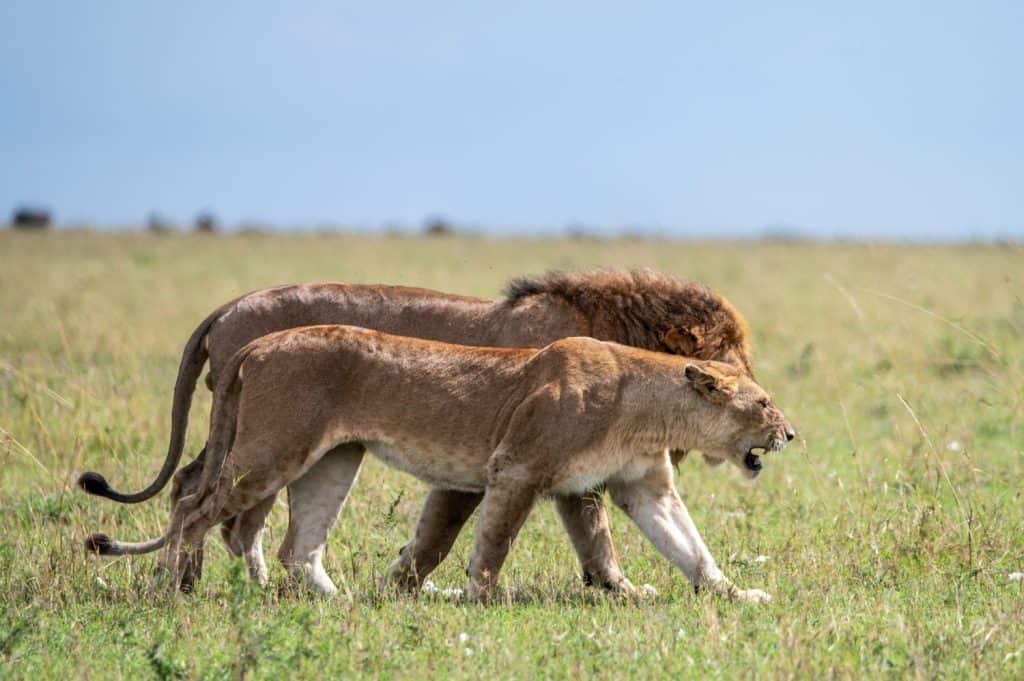
A male and female lion in Serengeti National Park during the Great Migration.
©Colin Mileman/Shutterstock.com
A male and female lion stalking side by side is a rare but impressive sight. While lionesses usually lead most hunts, males do participate, especially to take down larger prey or when food is scarce. Lions follow the migration to pick off straggling members of the herds.
Hyenas
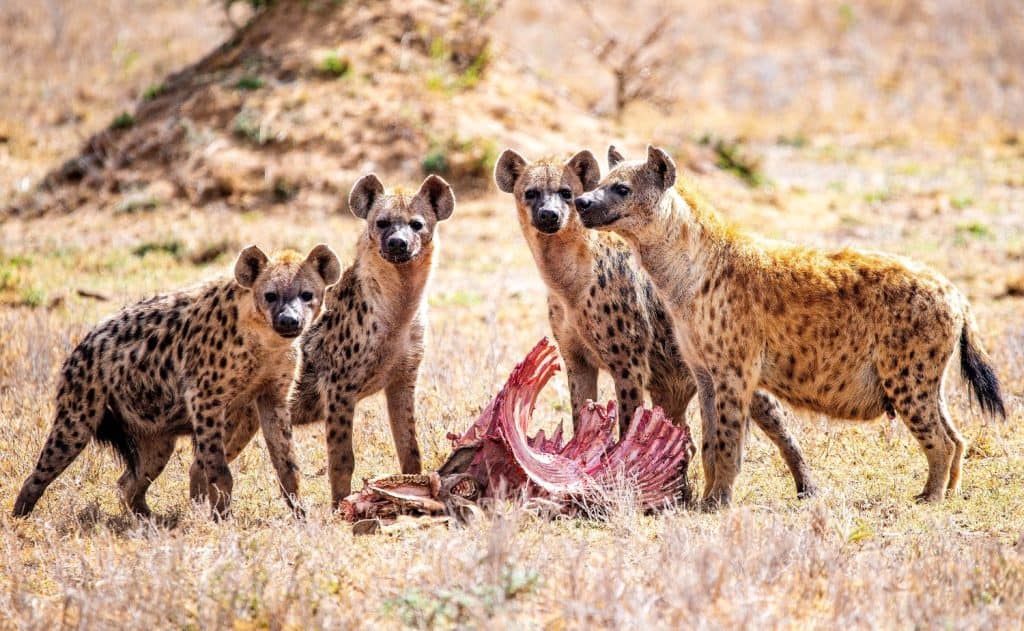
Spotted hyenas in Kenya.
©Sean Clee/Shutterstock.com
Hyenas are skilled predators and master scavengers, equipped with powerful jaws and teeth that allow them to consume nearly every part of a carcass, including the bones and hide. Spotted hyenas often feed in groups, reducing a large animal to scraps in under thirty minutes. This helps recycle the nutrients of dead animals and prevents the spread of disease from rotting carcasses.
River Crossing
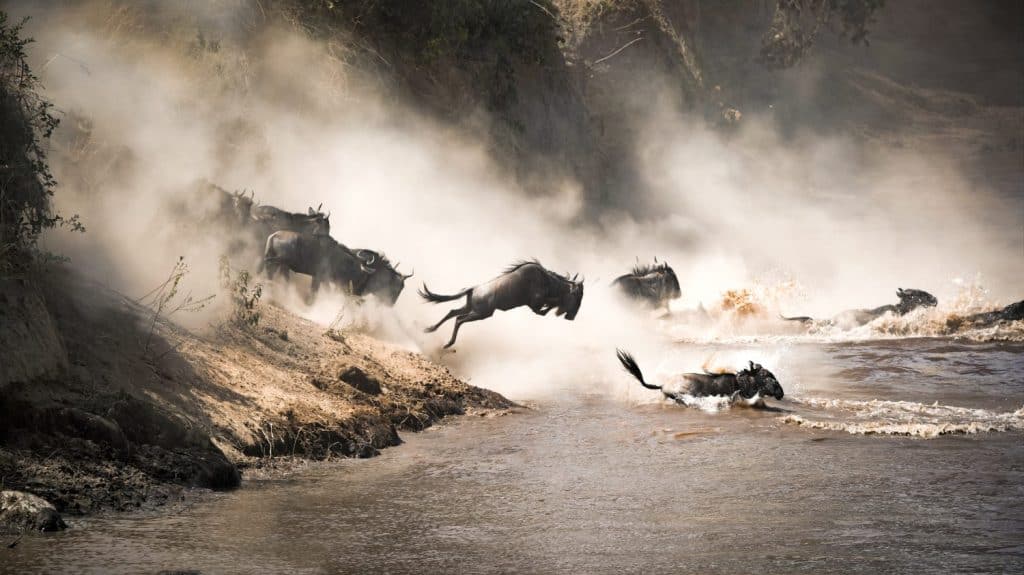
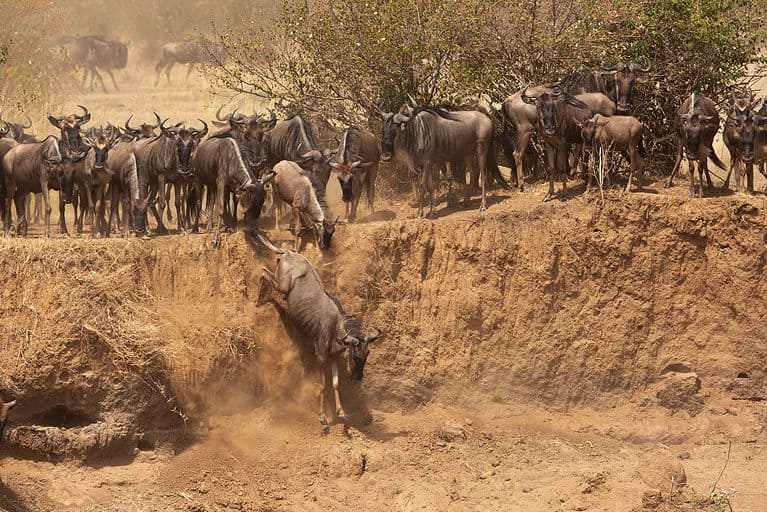
Wildebeest crossing the Mara River during the annual great migration.
©Jane Rix/Shutterstock.com
River crossings are one of the most dangerous parts of the Great Migration. The stress and excitement of the process cause stampede behavior that often means impulsively leaping rather than looking for the safest way to cross. Many animals are injured and drown in the process, or are attacked by river predators. The old, sick, and young are especially vulnerable.
Crocodiles
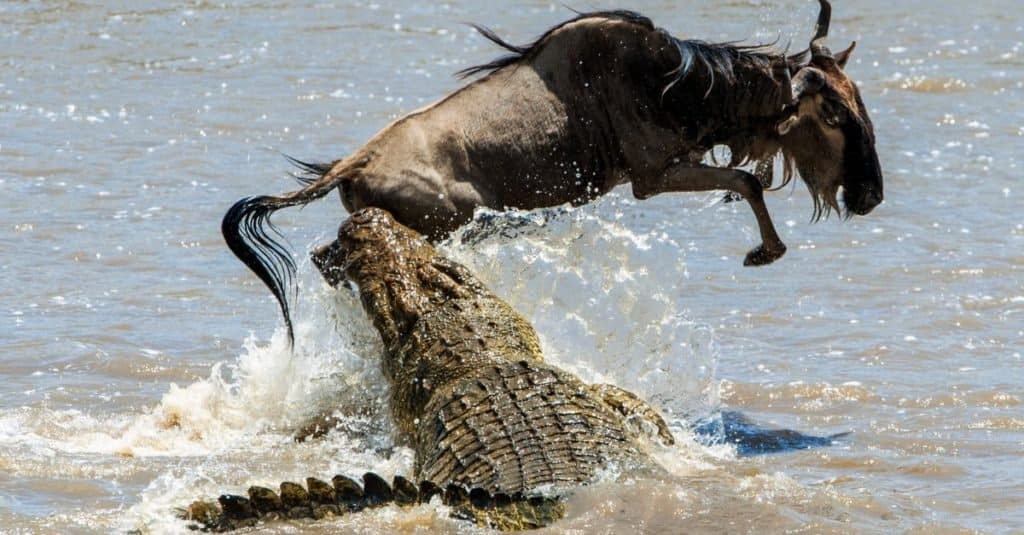
Crocodiles have the advantage in water over wildebeests.
©Sergey Uryadnikov/Shutterstock.com
Nile crocodiles lie in wait just beneath the surface of the river, ready to strike. In the chaos of the crossing, the massive reptiles drag vulnerable animals under in a swift, violent struggle that often results in death by drowning. These ambushes claim thousands of lives each year but are part of nature’s “survival of the fittest” that keeps the gene pool strong.
Hippos
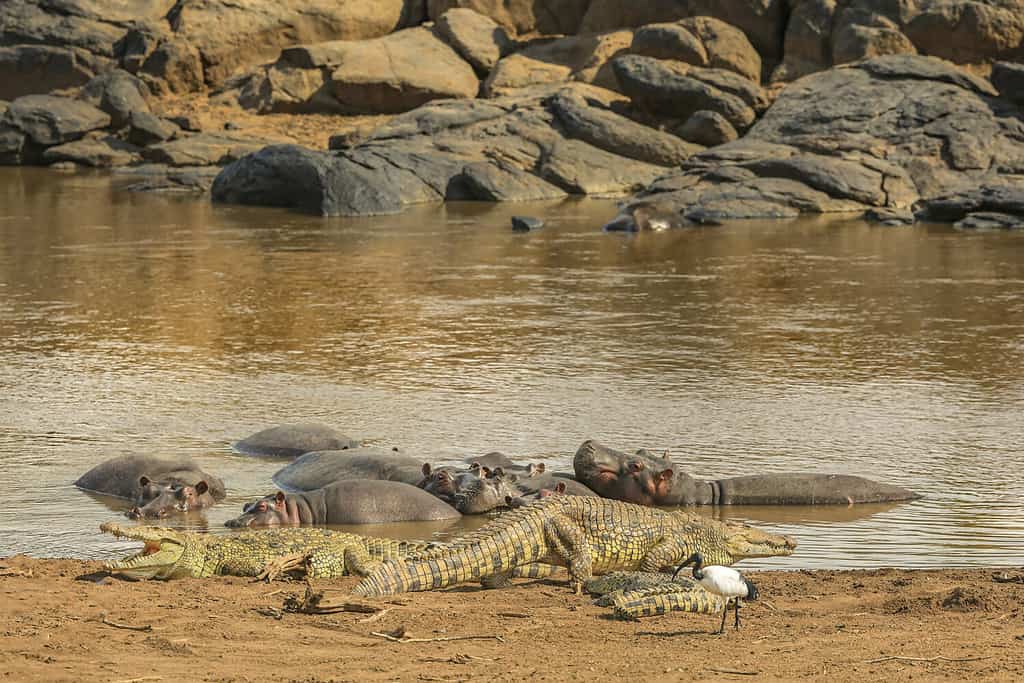
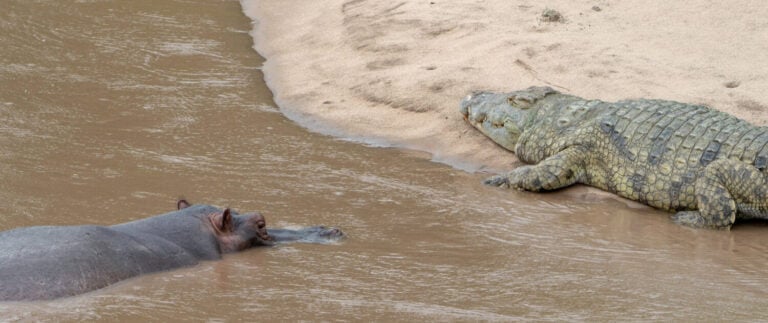
Crocodiles with hippos on a bank of the Mara River, Kenya.
©OlgaPetrusha/Shutterstock.com
Hippos spend their days submerged to stay cool and protect their young, while crocodiles bask near the water, awaiting prey during river crossings. Although both are powerful and territorial, they rarely interact aggressively. Hippos are too large and aggressive for most crocodiles to challenge, and each species gives the other their space to avoid conflict.
Giraffes
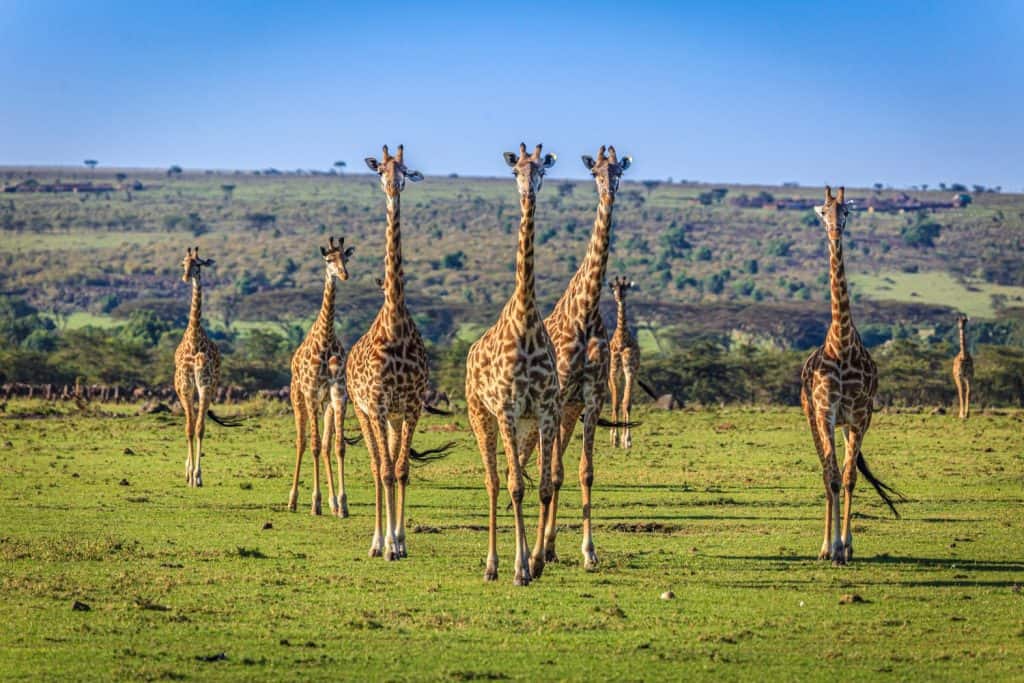
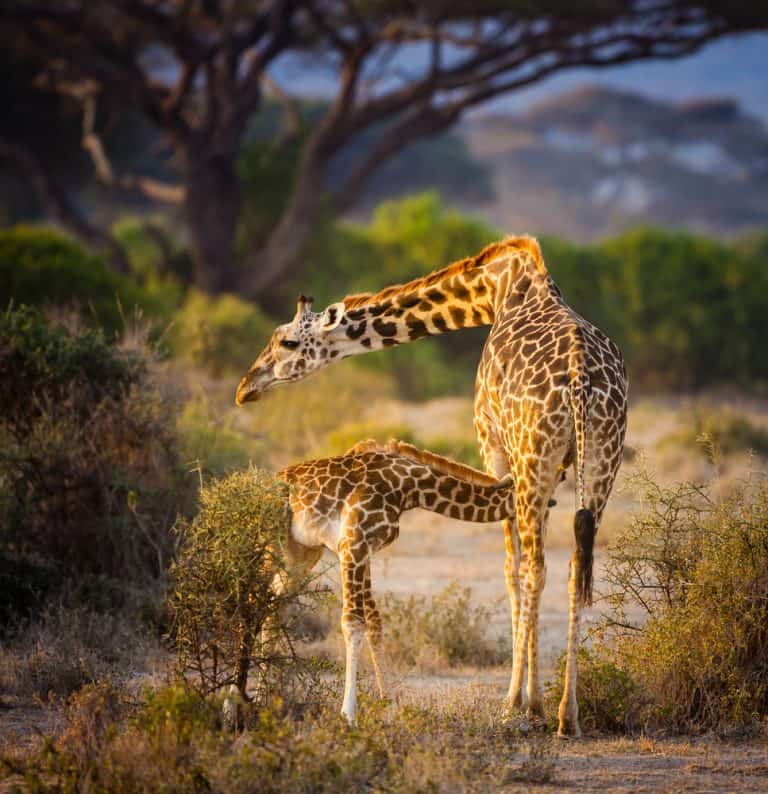
Maasai giraffe wander across the plains of Kenya.
©Danita Delimont/Shutterstock.com
Giraffes move locally and seasonally but do not take part in the entire Great Migration. They often cross the Mara River outside peak migration times, carefully navigating the crocodile-infested waters with slow, deliberate steps. Giraffes rely on their keen eyesight to watch for danger while moving steadily toward greener pastures.
Zebras
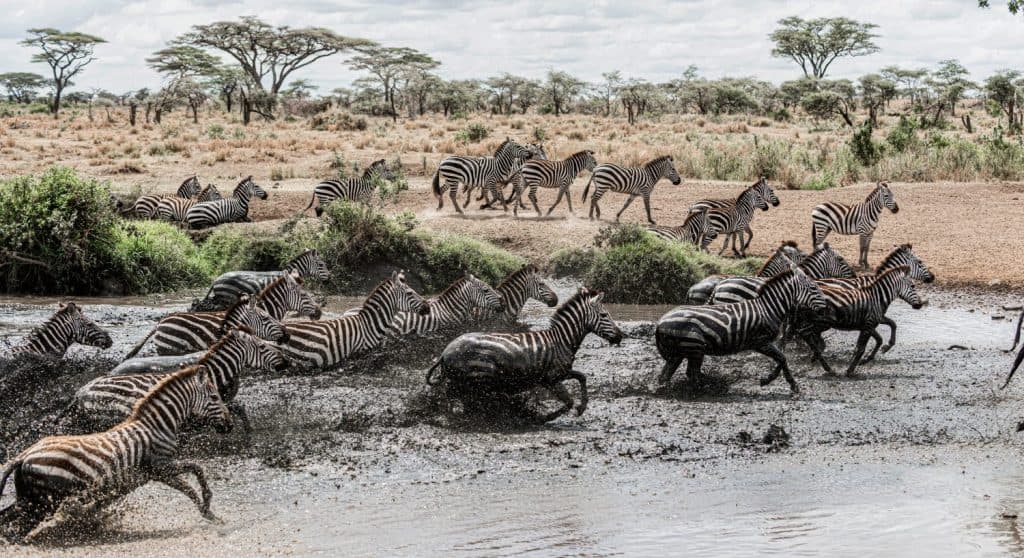
A large group of zebras running through a muddy river in the African savannah during the great migration
©Eric Isselee/Shutterstock.com
Herds of zebras migrate alongside wildebeest and gazelles. Estimates suggest 200,000 zebras take part in the Great Migration every year. Their sharp eyesight and alertness often help spot predators first, offering some protection for the herds traveling with them.
Impala
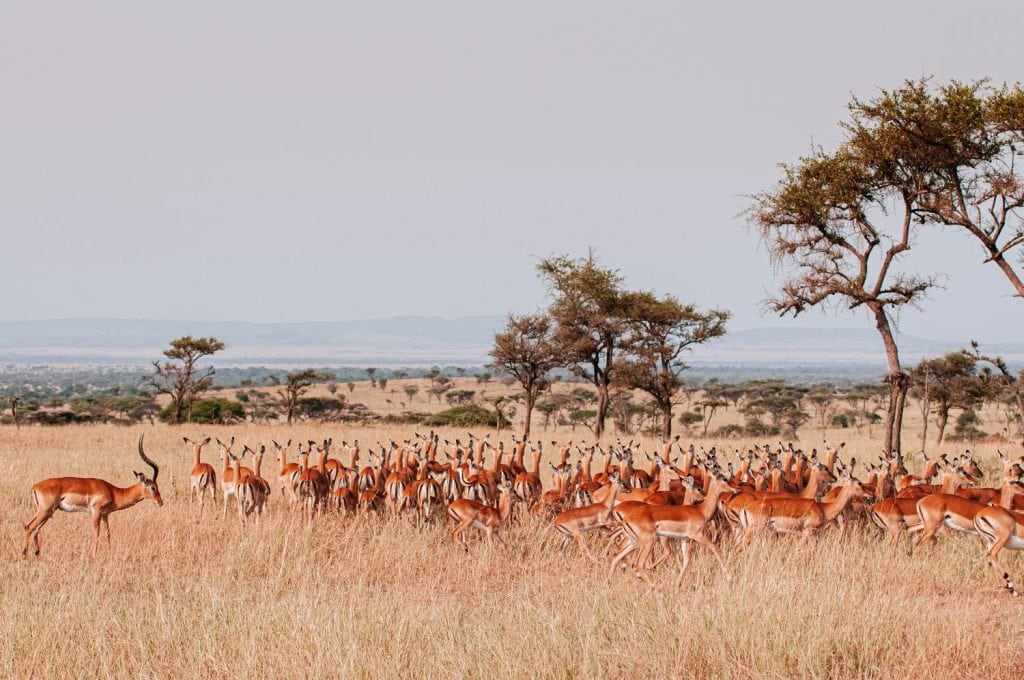
African Impala in a meadow of the Serengeti.
©PixHound/Shutterstock.com
Impalas are graceful, medium-sized antelopes that live year-round within the Serengeti–Mara ecosystem. Unlike the great herds of wildebeest and zebra, they do not join the mass migration; instead, they survive seasonal shifts by switching between grazing on grass in the wet months and browsing on foliage during the dry. Nevertheless, they are in the same environments as the thundering migratory herds sweep past.
Thompson’s Gazelles
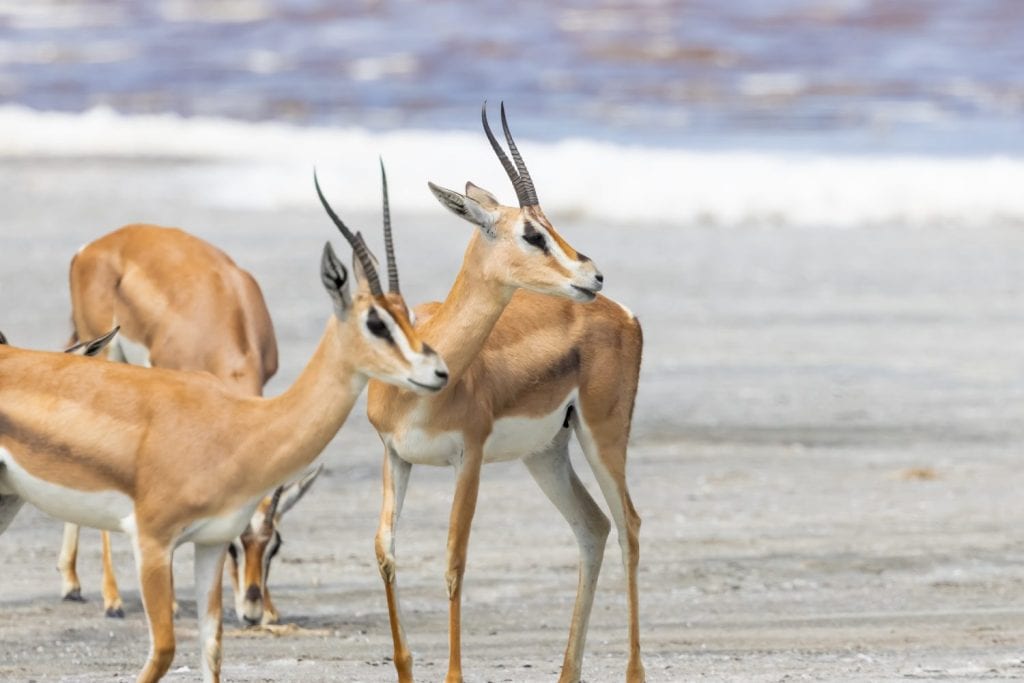
Gazelle at Lake Ndutu, Tanzania, Africa
©SNEHIT PHOTO/Shutterstock.com
Thomson’s gazelles are small antelopes that shadow the vast wildebeest and zebra herds. Their migrations are shorter, often trailing the larger grazers to feed on the nutrient-rich shoots left behind. About 400,000 take part in the migration. Because of their smaller size, they are easier prey for cheetahs and other predators than larger herd animals that can deliver powerful kicks and bites.
The Meaning of the Migration
The Great Migration is one of the last great journeys left on Earth—a moving river of life across an unspoiled wilderness. Nowhere else do such immense herds of wild animals still roam, echoing a time when landscapes everywhere teemed with creatures on the move. To watch it is to glimpse the world as it once was—and as it could be again, if we choose to protect these places and restore the habitats that have been lost.