
Quick Take
- Most people assume great whites are mindless, robotic hunters, yet behavioral research reveals something about their individual personalities that completely dismantles that idea. Discover their personalities →
- The full-body breach looks like raw aggression, but the physics behind it reveal a calculated, multi-step stealth strategy most viewers never notice. See the stealth strategy →
- The popular belief that great whites are Megalodon's descendants turns out to be flat-out wrong, and the real family tree is far stranger than most people expect. Explore the real family tree →
- South Africa's most famous great white hunting ground has been almost completely abandoned, and the reason has nothing to do with humans. See why orcas changed everything →
Andy Casagrande’s stunning documentary follows great white sharks (Carcharodon carcharias) across two of their world-famous hunting grounds: Mexico’s Isla Guadalupe and South Africa’s Seal Island. While the footage delivers Hollywood-level drama, including a now-iconic full breach at sunset, it also gives us a chance to look past the “mindless monster” stereotype and figure out what these sharks are actually doing and why.
The Blubber Jackpot at Guadalupe Island
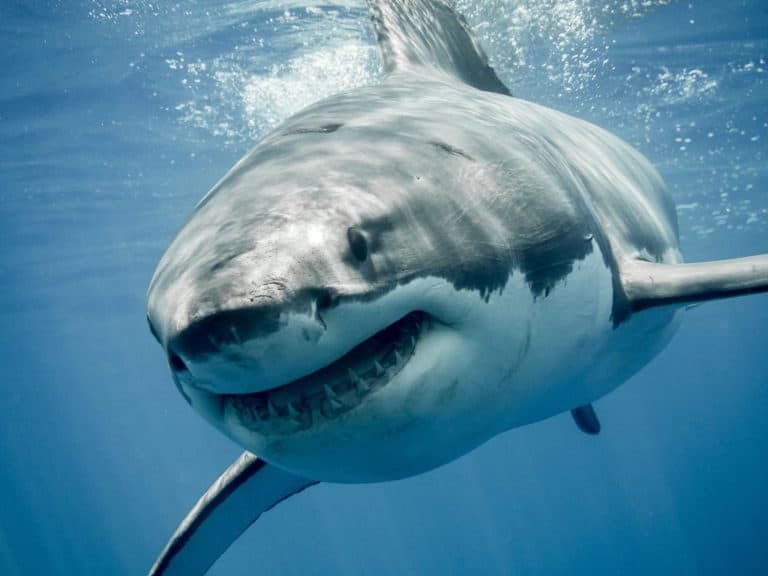
Guadalupe Island draws great whites from across the eastern Pacific every single year. In fact, photo-identification studies have cataloged around 360 individual sharks visiting the area over the past two decades, and the main attraction is food.
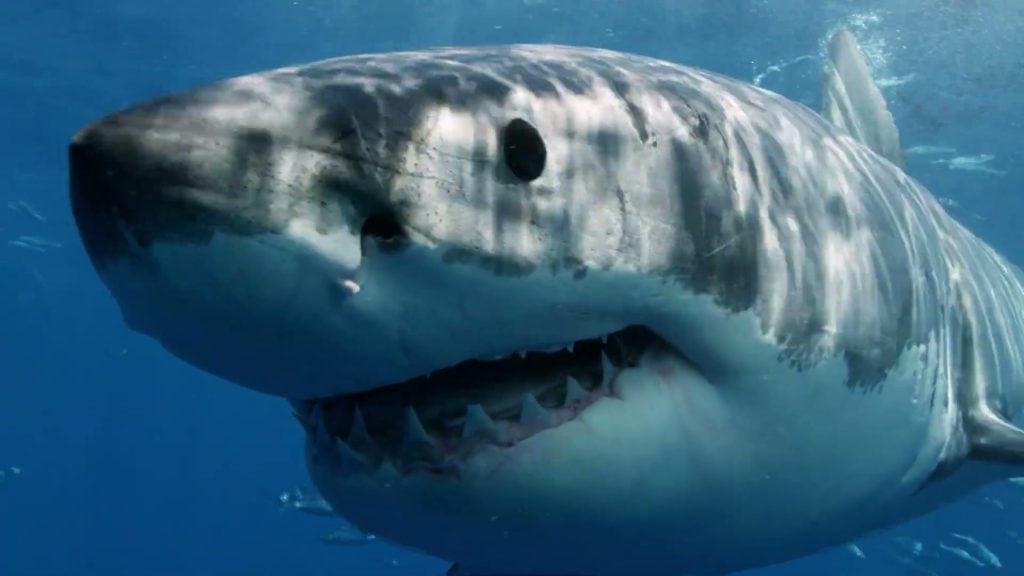
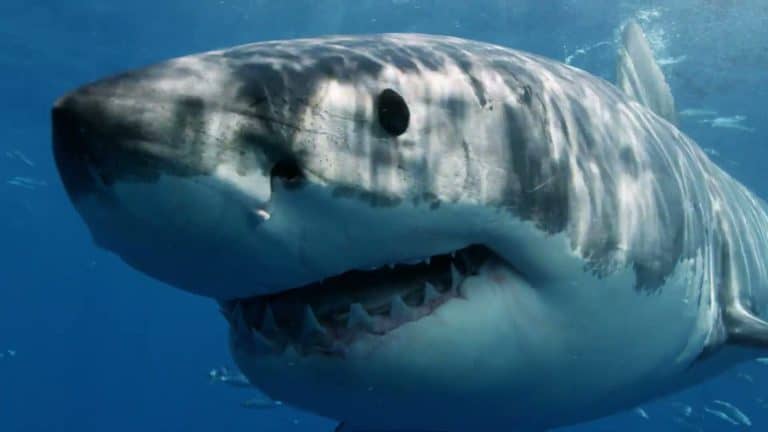
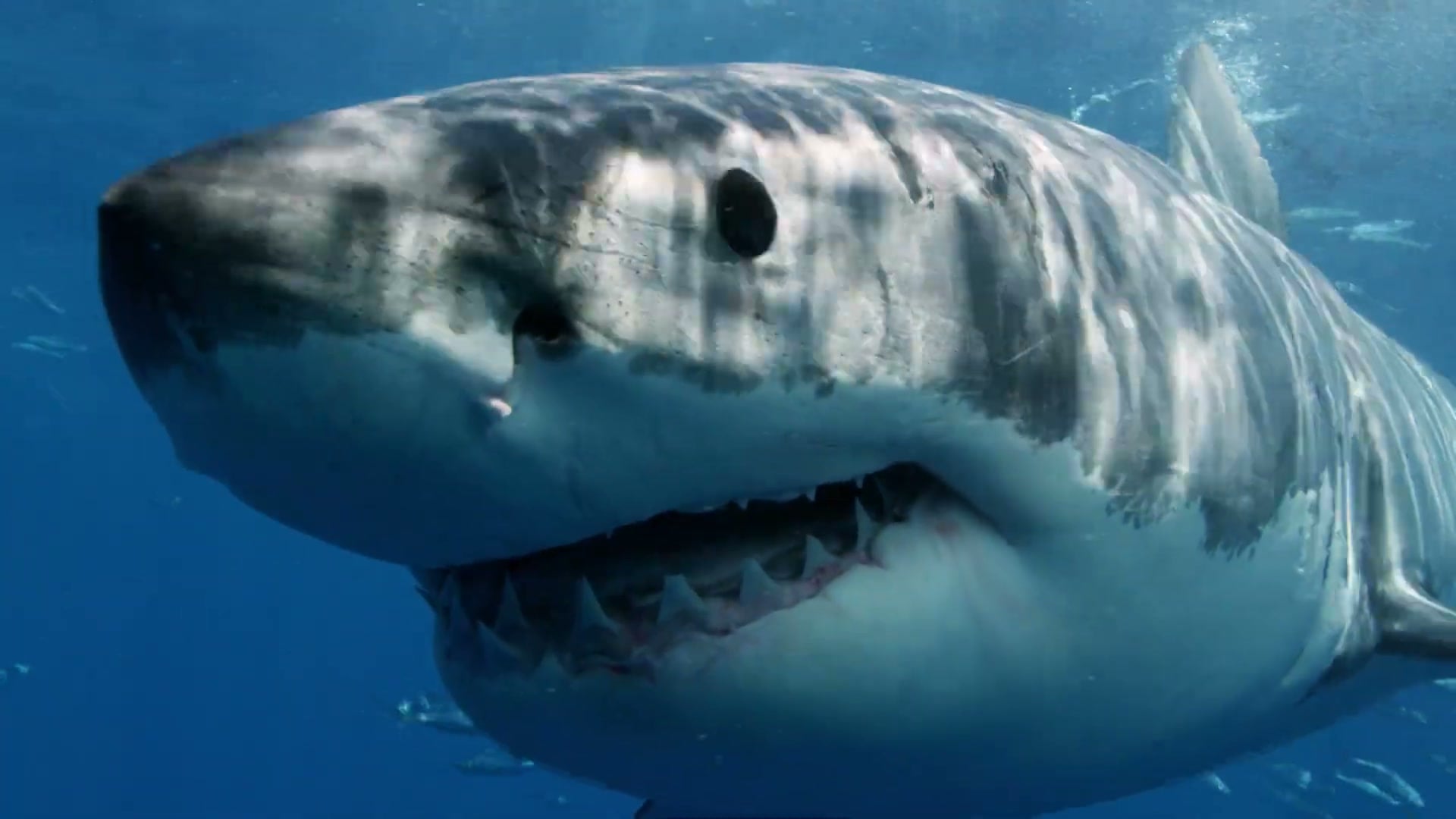
Look at those teeth!
©Andy Casagrande – Shark Dreams via YouTube — used under fair use – Original / License
The island is home to massive colonies of Guadalupe fur seals, California sea lions, and northern elephant seals. Adult male elephant seals can tip the scales at over 4,400 pounds (2,000 kg). Because these seals are packed with energy-dense blubber, a single successful kill is a massive jackpot. A 15-foot great white can easily survive for well over a month on the calories of just one meal of 66 pounds of blubber.
The Physics of the Breach
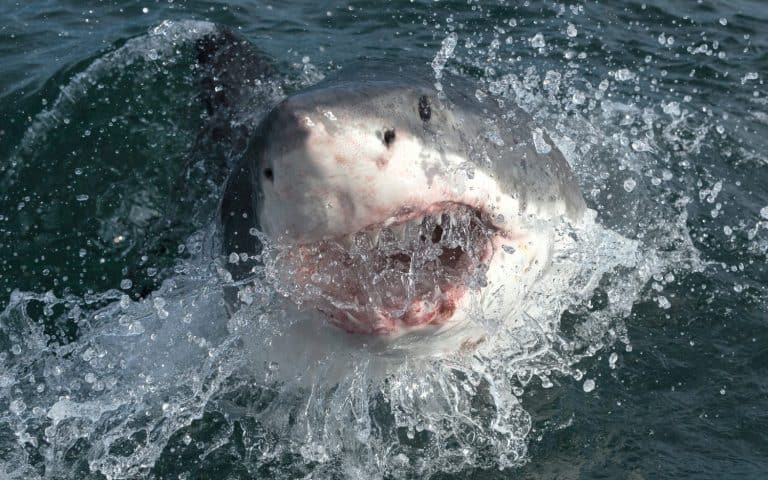
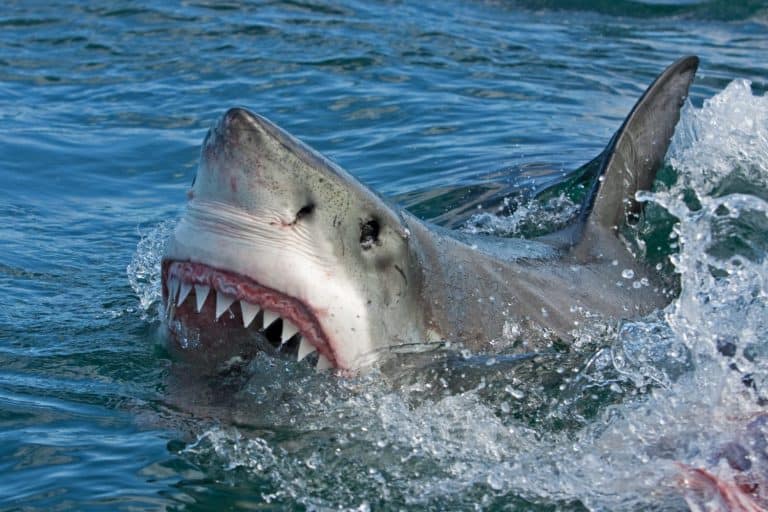
The film’s most jaw-dropping moments happen at Seal Island in South Africa, where great whites launch their entire bodies out of the water while hunting Cape fur seals. These displays reveal the sheer precision these predators employ to secure a meal.
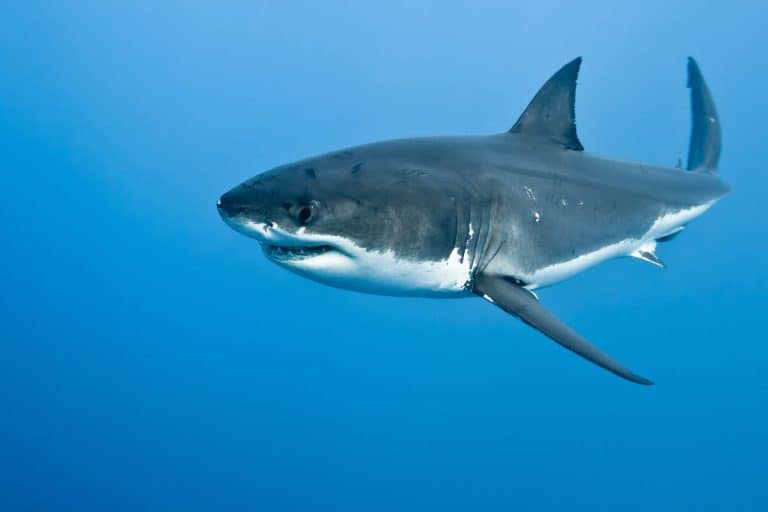
As sharks patrol the deep water near the seafloor, their dark backs blend perfectly into the deep ocean when viewed from above. This is a camouflage trick called countershading, and it makes them invisible in the dim morning light.
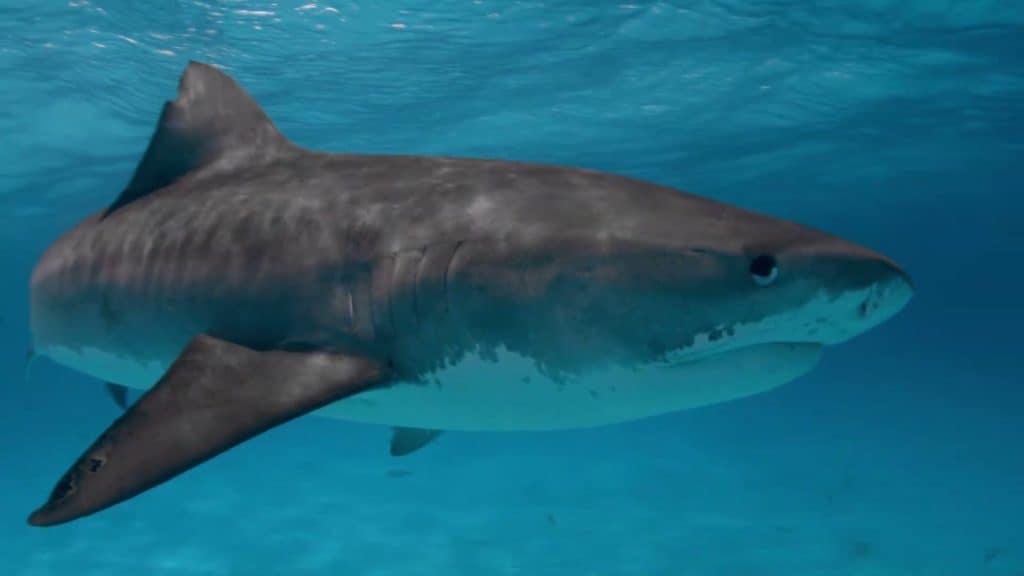
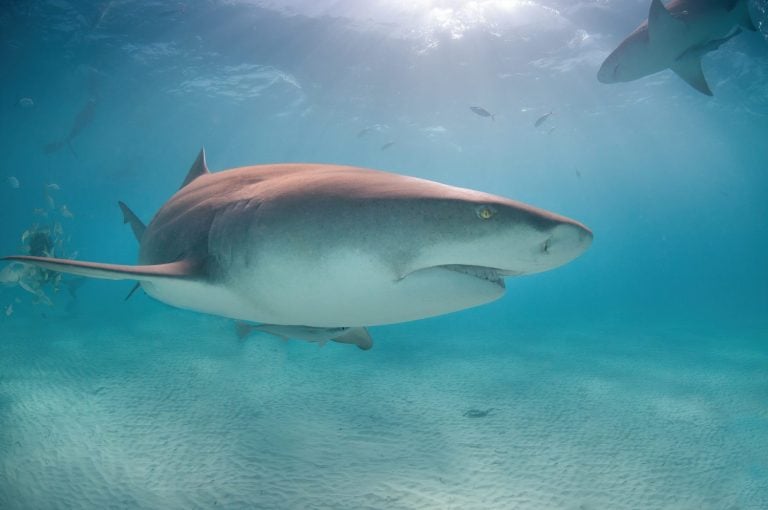
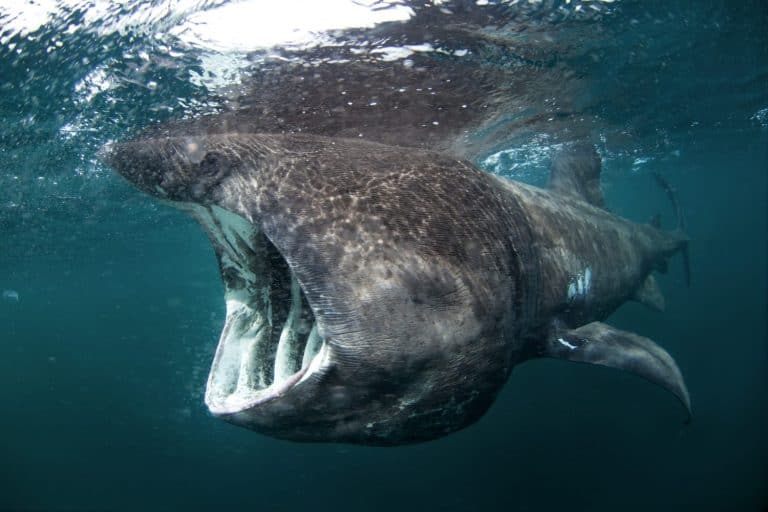
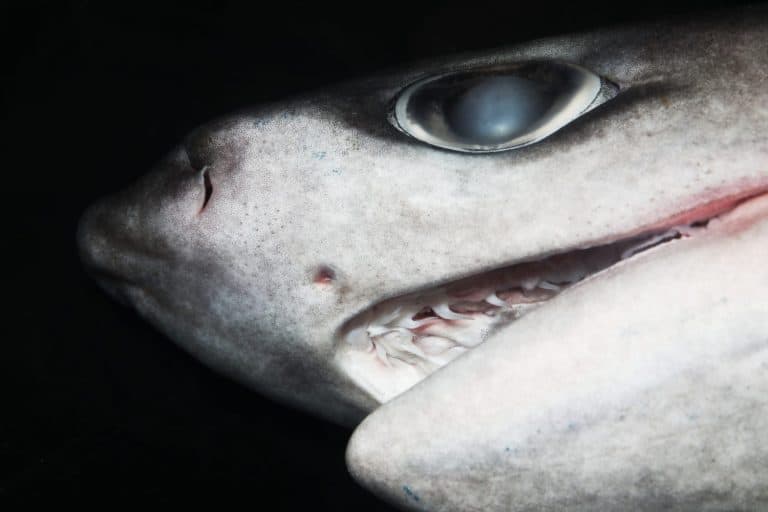
Tiger shark
©Andy Casagrande – Shark Dreams via YouTube — used under fair use – Original / License
The shark looks up, waiting for a seal to silhouette itself against the bright surface of the water. Once it spots a target, the shark accelerates straight up at maximum speed. The momentum of a 2,000-pound predator rocket-launching itself toward the surface is incredible. It’s a vertical ambush designed to surprise and overpower the seal before it can swim away.
The Megalodon Myth
The documentary dives deep into the great white’s family tree and debunks the massive pop-culture myth that great whites evolved from the giant Megalodon.
Great whites actually belong to the mackerel shark family, making the fast-swimming mako shark their closest living relative. Megalodon (Otodus megalodon) actually belongs to a completely separate, extinct family. When scientists look at the microscopic structure of their teeth, the two species are entirely different.
A New World for a New Predator
When Megalodon vanished from the oceans about 3.6 million years ago, its disappearance coincided with a massive global shakeup. As the Earth cooled and the Isthmus of Panama closed up, the slow, warm-water whales that Megalodon relied on for food began to disappear. Faster, more migratory whales took their place.
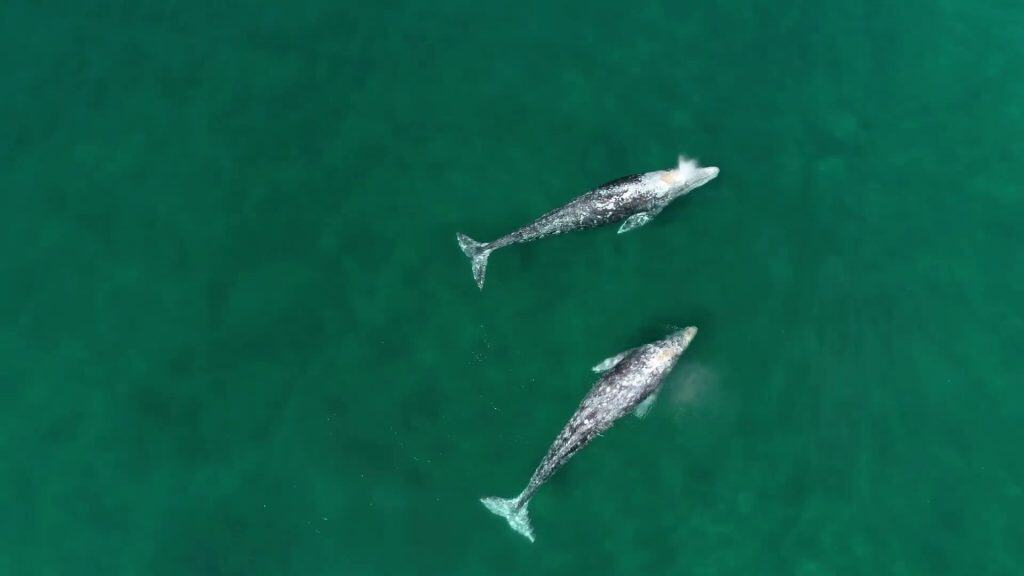
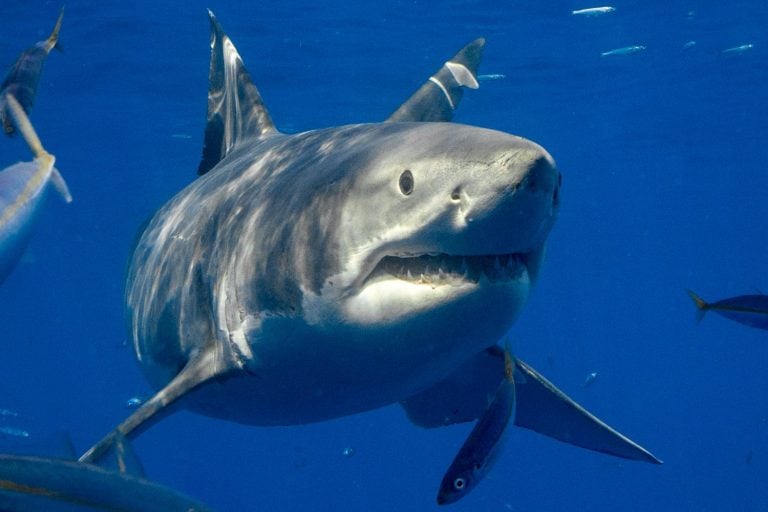
As warm-water whales disappeared, faster, more migratory whales like gray whales took their place.
©Andy Casagrande – Shark Dreams via YouTube — used under fair use – Original / License
Megalodon couldn’t adapt to the loss of its food base, but smaller, more agile predators including ancestral great whites and early killer whales were perfectly suited for this fast-paced new ocean and quickly filled the top-predator slots.
Seals are a major part of this evolution. Fossil discoveries show that seal ancestors originally transitioned from freshwater rivers to the marine environment about 23 million years ago. As cool, highly productive ocean currents developed over time, they supported the rise of the fat-rich mammals that great whites would eventually specialize in hunting.
Sharks Have Personalities Too
The documentary correctly challenges the idea that great whites are robotic, indiscriminate killers. Behavioral studies show that individual sharks actually have distinct animal personalities. Some sharks are shy, while others are bolder, consistently approaching research cages with curiosity.
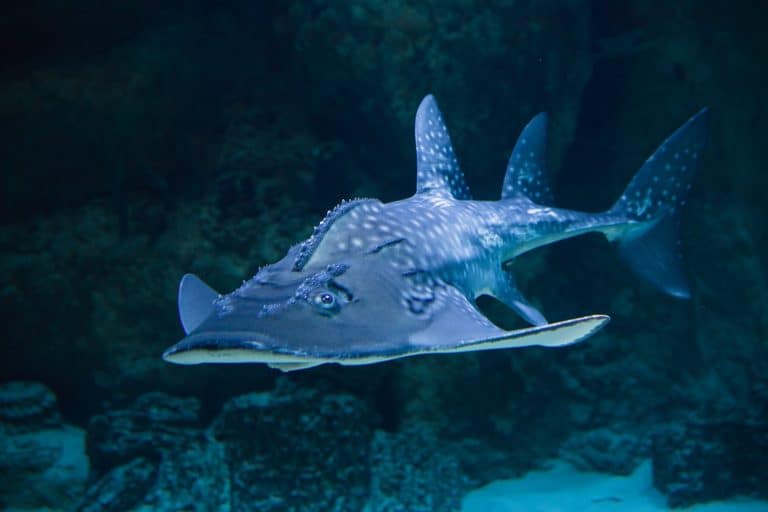
Also, great whites aren’t born hunting mammals. Juveniles have completely different teeth and jaws, feeding almost entirely on fish and rays. It isn’t until they grow to about 8 feet long that their jaws strengthen, their teeth change shape, and they transition to hunting marine mammals. Because of this, encounters with humans are incredibly rare and almost always the result of a shark investigating an unfamiliar object rather than a true predatory attack.
A Vulnerable Future
Despite their status as apex predators, great white populations are in trouble. The International Union for Conservation of Nature (IUCN) lists them as Vulnerable globally, with numbers dropping due to accidental entanglement in commercial fishing gear (bycatch), targeted fishing, and a loss of their natural prey.
Even natural dynamics are shifting: in recent years, the famous great whites of South Africa’s False Bay have almost completely vanished from Seal Island. Researchers have traced this sudden disappearance directly to a pair of killer whales named Port and Starboard, who discovered that hunting great whites for their nutrient-rich livers was easy prey, driving the local shark population away.
Casagrande’s footage is profound, showing how, from their flexible cartilage skeletons to the tiny, tooth-like scales covering their skin, every single feature of the great white shark is a living map of a millions-of-years-long negotiation with a changing ocean.