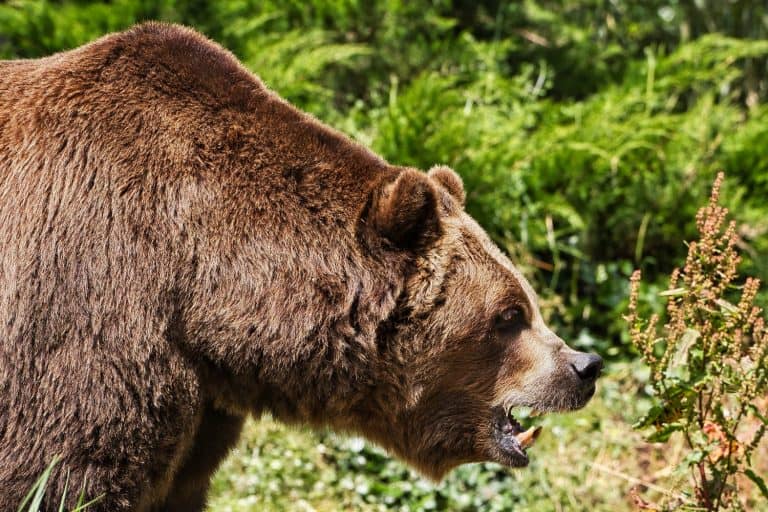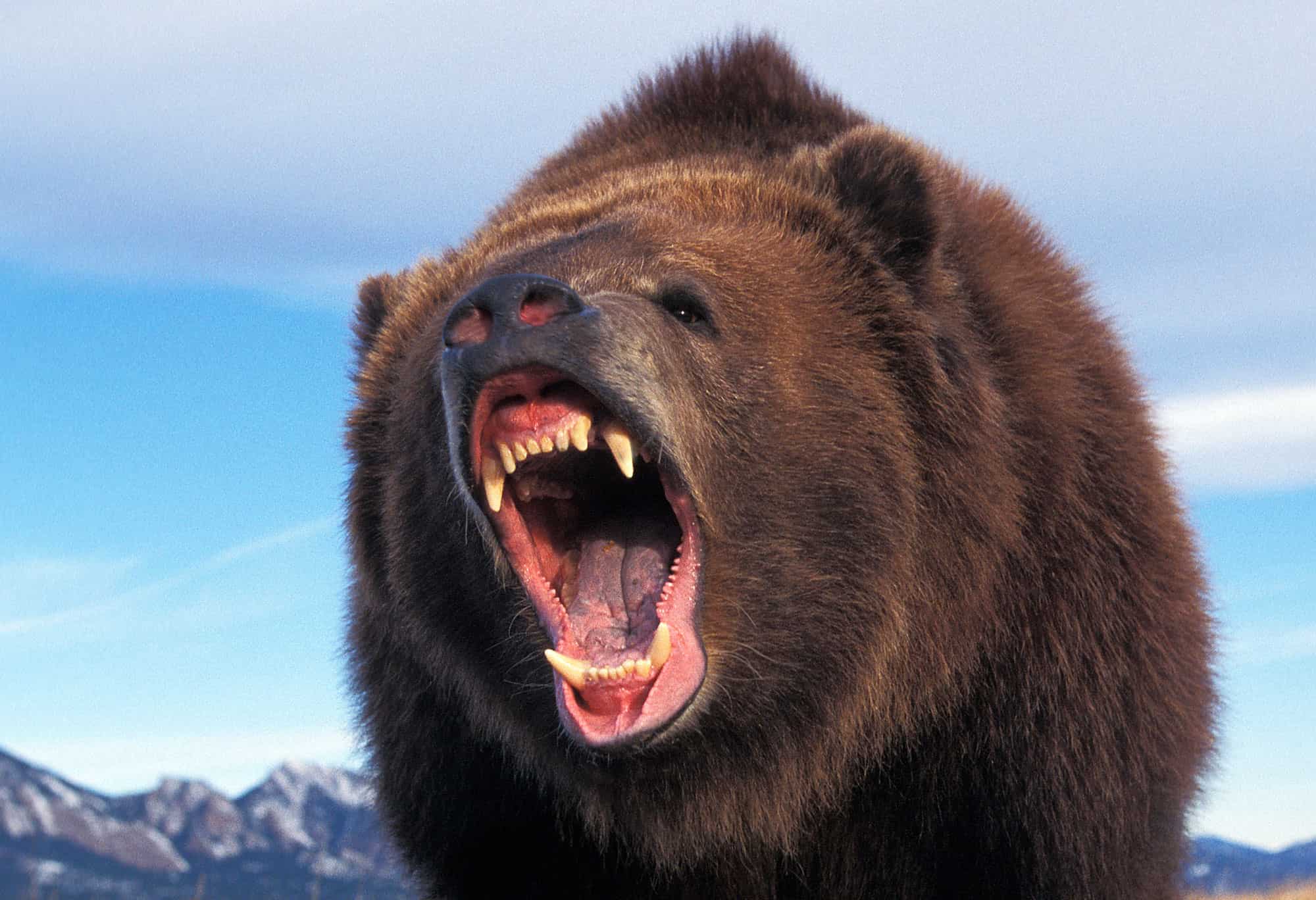

If you are camping or on a long hike, you probably hope you don’t run into any bears. Although polar bears are generally considered the largest bear species, some brown bears are nearly as big. Kodiak bears are the largest brown bear subspecies and can only be found on the Kodiak Archipelago of Alaska. Some of these bears can grow to absolutely incredible sizes, but how large do they actually get? Keep reading to discover the largest Kodiak bear ever recorded.
What Is a Kodiak Bear?
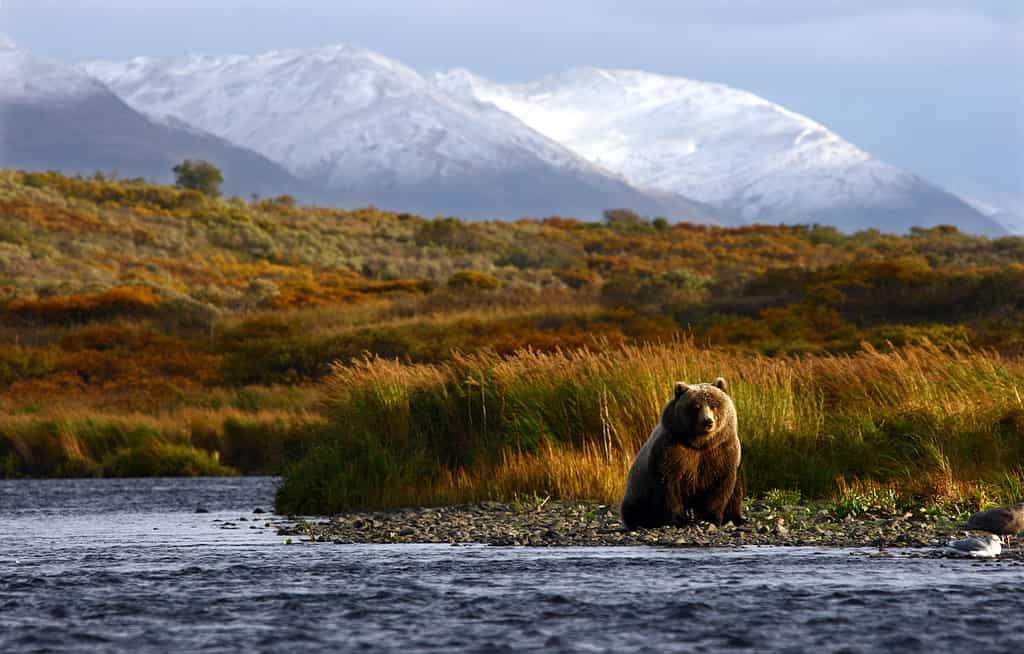
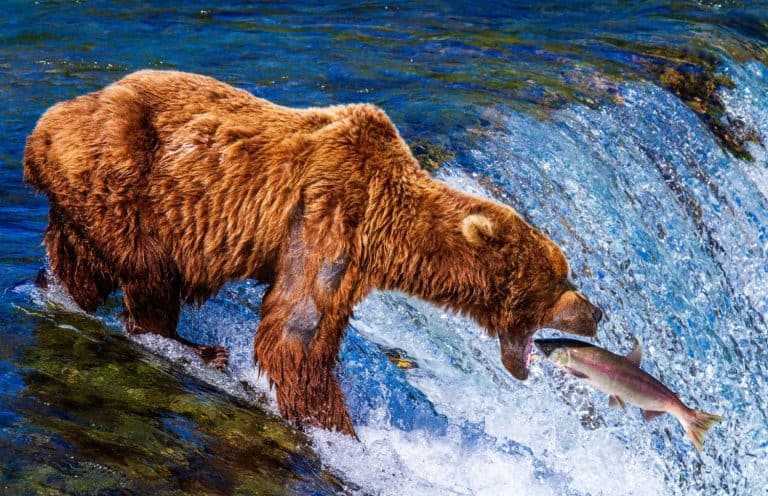
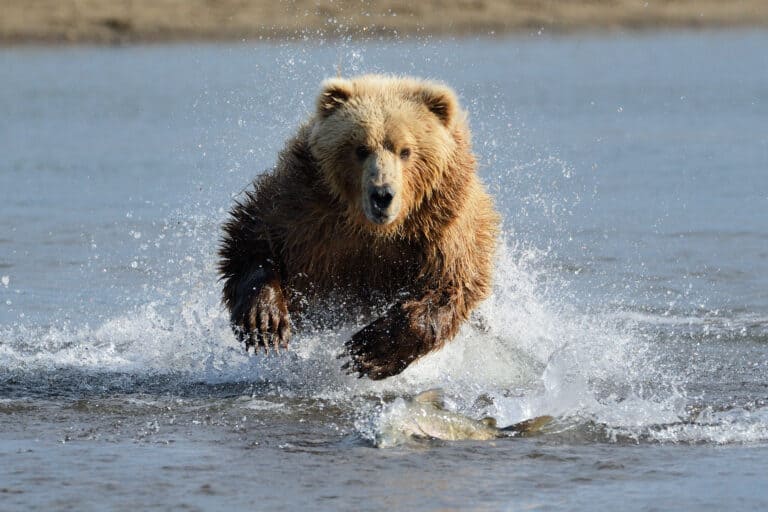
Kodiak brown bears only live on the Kodiak Archipelago off the coast of southwestern Alaska.
©bergsbo/iStock / Getty Images Plus via Getty Images
Kodiak bears live on the islands off the coast of southwestern Alaska. Although Kodiaks (Ursus arctos middendorffi) are closely related to grizzlies (Ursus arctos horribilis), researchers believe they have been isolated from mainland bear populations for about 12,000 years. There are around 3,500 Kodiak bears in the wild, which is considered a healthy population. There are even some areas where their numbers are increasing.
Kodiak bears are measurably larger than other brown bears. When they stand upright, they can reach over 10 feet. The most common ceiling height is around 8 feet, so imagine a bear 2 feet taller than your ceiling. Even on all fours, these bears can reach 5 feet tall, which is only about 3.5 inches shorter than the average U.S. female. Mature male Kodiaks can weigh up to 1,500 pounds, but females typically weigh about 30% less. Female Kodiaks are also around 20% shorter.
How Do Kodiak Bears Compare to Other Brown Bears?
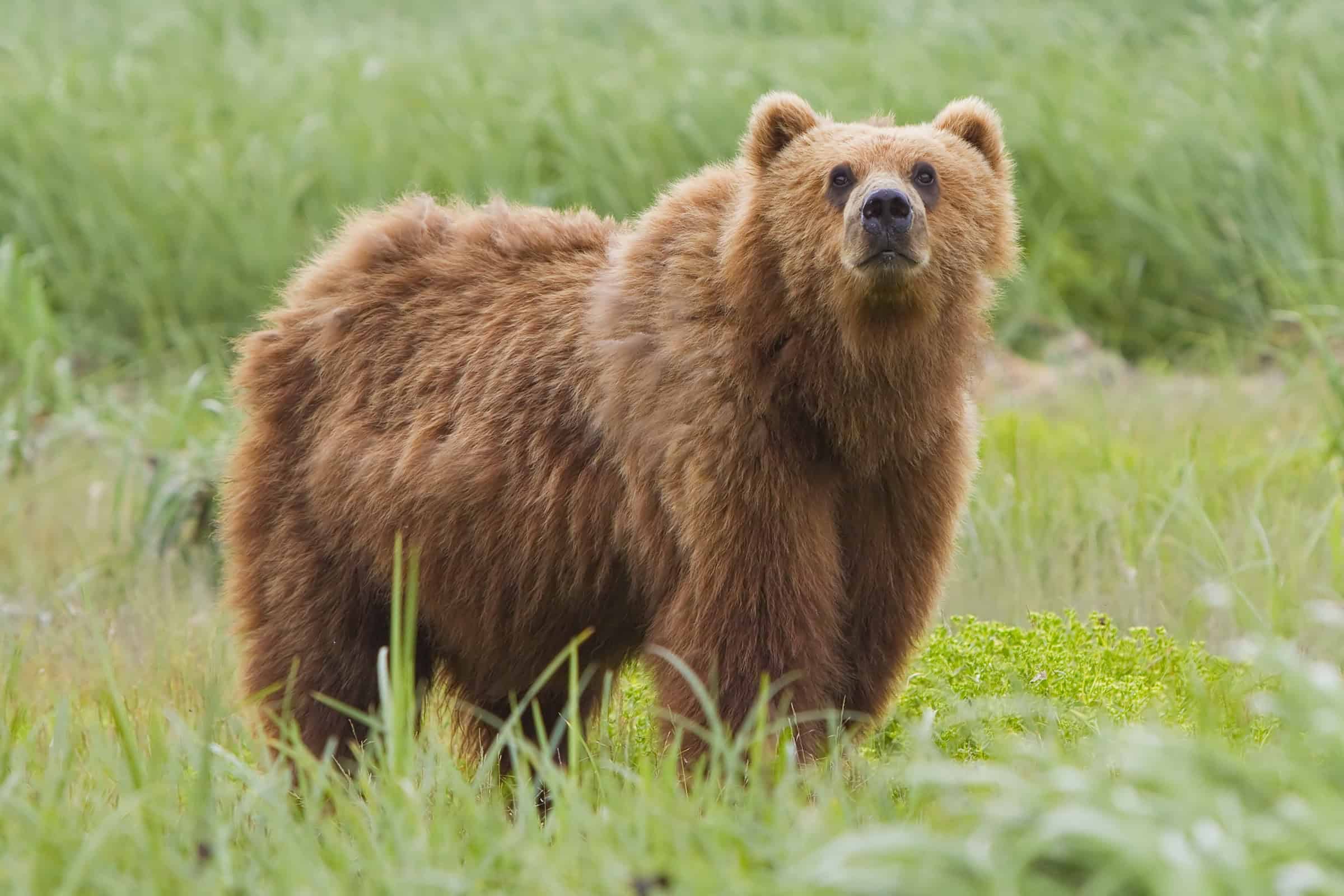
Kodiak bears are the largest brown bear subspecies.
Most biologists agree that all brown bears in North America, Europe, and Asia belong to a single species, Ursus arctos. However, because Kodiak bears have been isolated from their mainland cousins for thousands of years, many view them as a separate subspecies of brown bear. In North America, the bears that live along coast of Alaska are called “brown bears” or “coastal brown bears.” The bears that live in the interior of Alaska and the lower 48 states are called grizzlies. However, both coastal brown bears and grizzlies are the same species, Ursus arctos horribilis. For many researchers, any differences are primarily due to geography, although most acknowledge that there are some physical and behavioral distinctions.
So, what makes Kodiaks different? All brown bears look very similar, but the major difference is size. Kodiak bears have abundant food and little competition for resources, allowing them to grow much larger than their kin. Kodiak bears generally weigh between 900-1,500 pounds. Coastal brown bears typically range from 500-900 pounds, although some may reach over 1,000 pounds prior to hibernation. Grizzlies average around 400-700 pounds. Coastal and grizzly bears stand 3.5 feet at the shoulder and just over 7 feet on their hind legs.
The Kodiak diet is also different. Not only do Kodiaks tend to eat more plant matter, but the Kodiak Archipelago is also rich in salmon, providing them with a high-protein diet to build up fat reserves. Plentiful food has also made Kodiaks more social. During salmon runs, Kodiak bears have been observed gathering in large groups. However, because there is abundant food, there is less competition, and thus, less aggression. Researchers note that Kodiaks have developed a complex social structure and language to communicate when they congregate together.
The Largest Kodiak Bear Ever Recorded
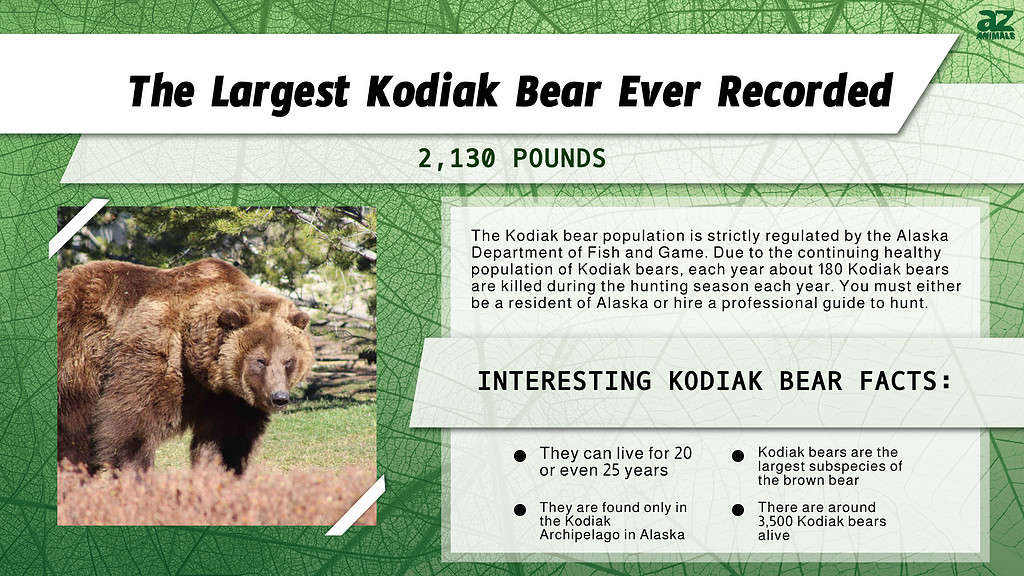
The largest Kodiak bear on record was a bear that lived at the Dakota Zoo in Bismarck, North Dakota. Clyde was reportedly 9 feet tall and weighed 2,130 pounds at the time of his death in June of 1987. He was 22. Sources claim the bear weighed as much as 2,400 pounds the year before his death. Clyde was said to have been the main attraction at the zoo for many years, along with his companion bear named Bonnie.
Bears in captivity typically weigh more than wild bears, which gives Clyde an advantage over wild bears. The largest wild male was reportedly killed by hunter J.C. Tolman in 1894. The 1,656-pound male was shot at English Bay on Kodiak Island, Alaska. Its hind foot was reported to be 18 inches long.
According to the Boone and Crockett Club big game records, the world-record bear is a Kodiak. The bear’s skull measured 17-15/16 inches long and 12-13/16 inches wide. The bear was killed on Kodiak Island, Alaska during a scientific expedition in 1952. No height or weight is provided. The bear was procured for the Los Angeles County Natural History Museum by an employee of the U.S. Fish and Wildlife Service.