
Quick Take
- The largest hognose snake is the Madagascar giant hognose snake.
- The Madagascar giant hognose reaches six feet long, compared with one to three feet for other hognose snake species.
- Hognose snake’s diet consists of approximately 80% toads.
- Hognose snakes live in North America, including Mexico and Canada, as well as South America and Madagascar.
With their upturned snouts, hognose snakes are easily recognizable. However, they are not among the largest snakes in the world, which makes them more vulnerable to predators such as birds of prey, raccoons, possums, foxes, and other snakes. This raises the question: What is the largest hognose snake ever recorded?
What Is the Largest Hognose Snake Ever Recorded?
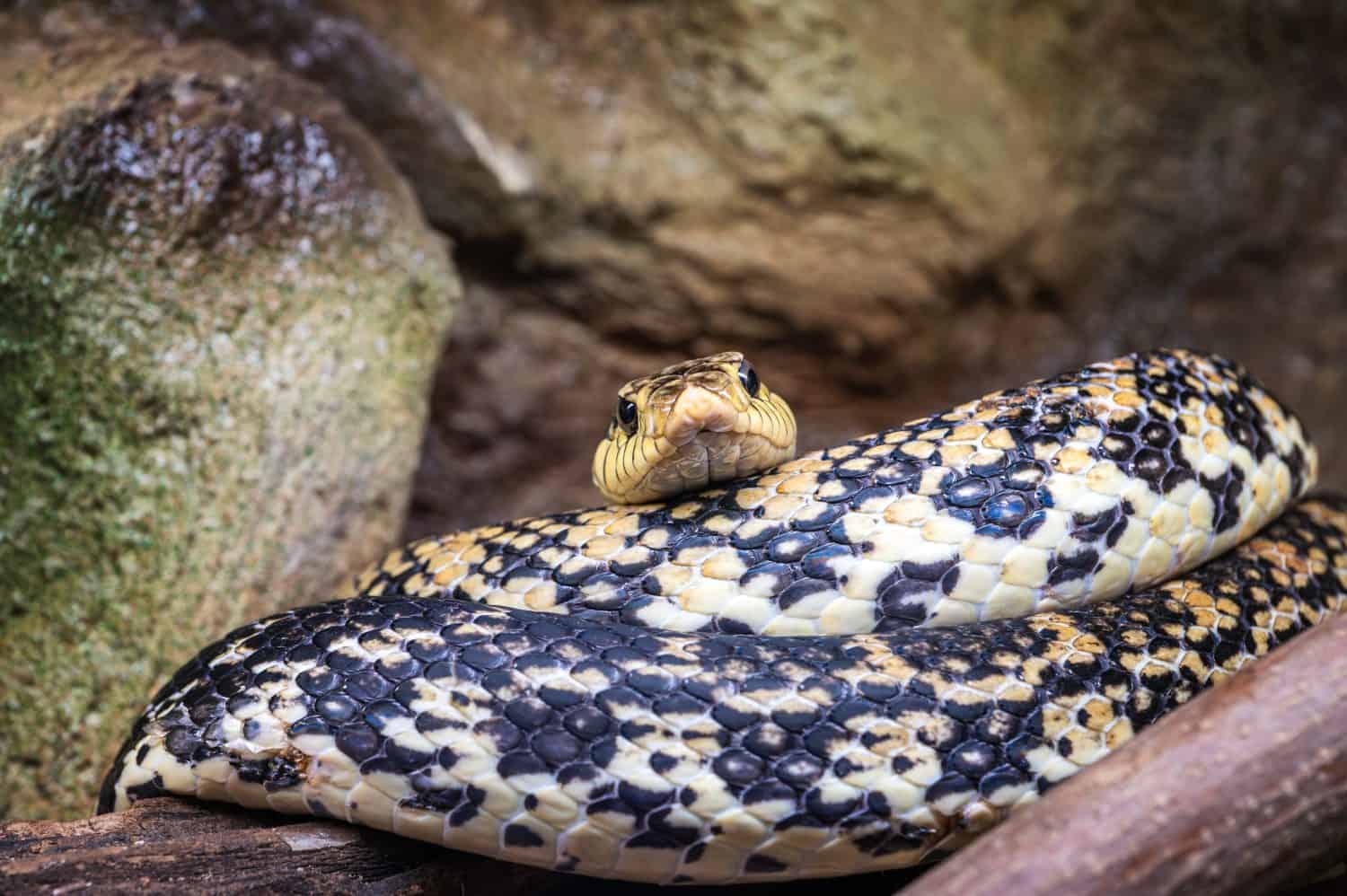
Hognose snakes are not among the larger snake species. While there is no individual record-holder, one species stands out for its size: the Madagascar giant hognose snake, which is significantly larger than other hognose species.
The Madagascar giant hognose snake can reach up to six feet long. Compared to other hognose snake species, it is nearly twice or even three times as large.
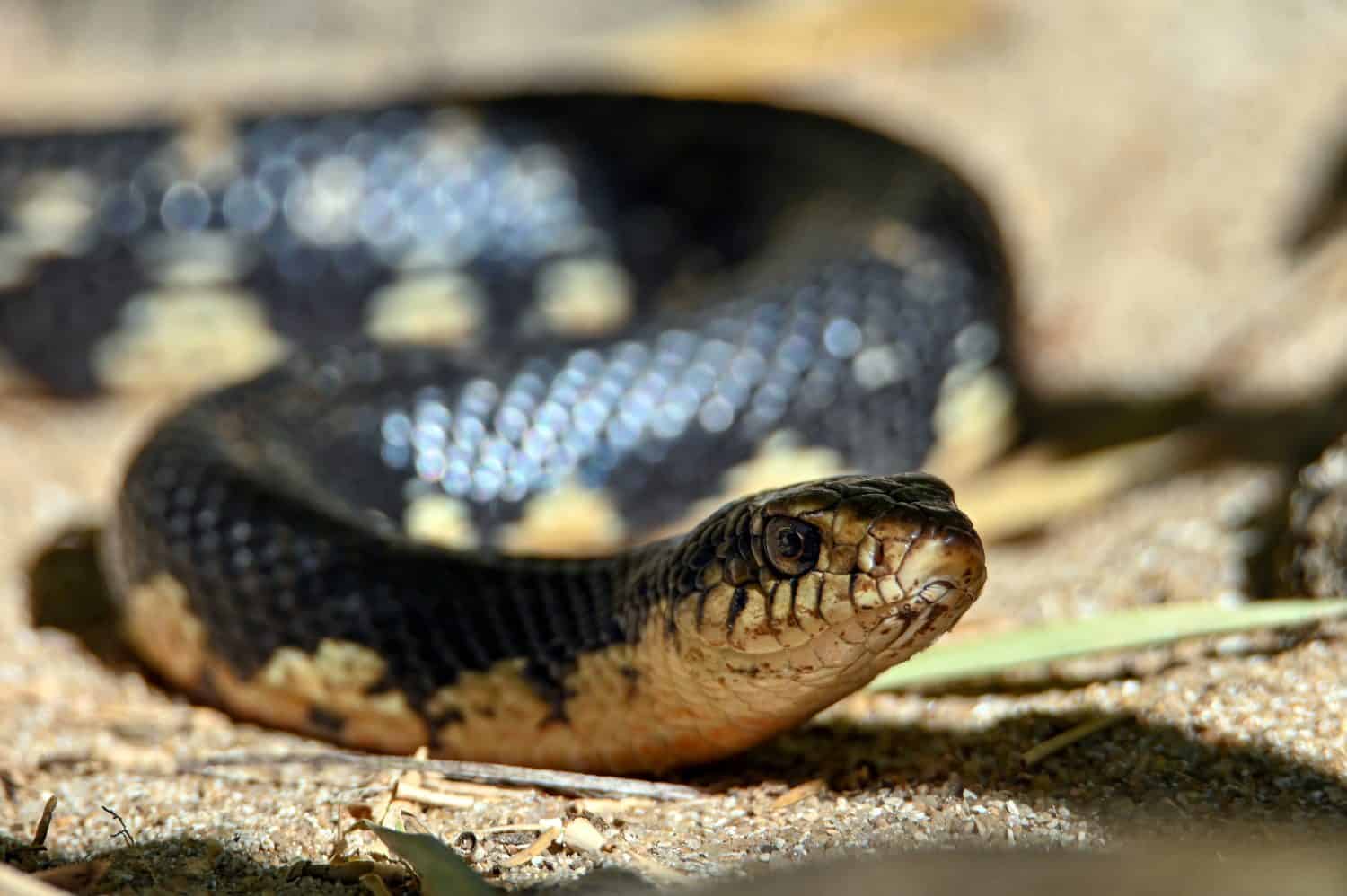
The Madagascar giant hognose snake can grow up to six feet long.
©Miroslav Halama/Shutterstock.com
The other species of hognose snakes measure as follows:
- Western hognose snake: Two to three feet
- Eastern hognose snake: Two to three feet
- Southern hognose snake: One to two feet
- Mexican hognose snake: Two to three feet
- Gloyd’s hognose snake: One to two feet
When it comes to weight, the Madagascar giant hognose is heftier as well. It weighs 5.5 pounds, whereas the other species weigh 0.1 to 1.1 pounds. While they are similar in appearance, there is a significant difference in length and weight between the species.
Where Do Hognose Snakes Live?
Hognose snakes are found in South America, Madagascar, and North America. In North America, they are one of the most common snakes. Because of this, nearly every state and part of Canada has at least one species of hognose snake.
The distribution of hognose snakes in North America is as follows:
- Eastern hognose snake: From Minnesota and South Dakota, east to New England, and then south to Florida and Texas. The species is also found in Ontario, Canada.
- Western hognose snake: Great Plains through the central U.S. and Midwest, and into Northern Mexico. The species is also found in Manitoba and Alberta, Canada.
- Southern hognose snake: From Mississippi to North Carolina and south to Florida
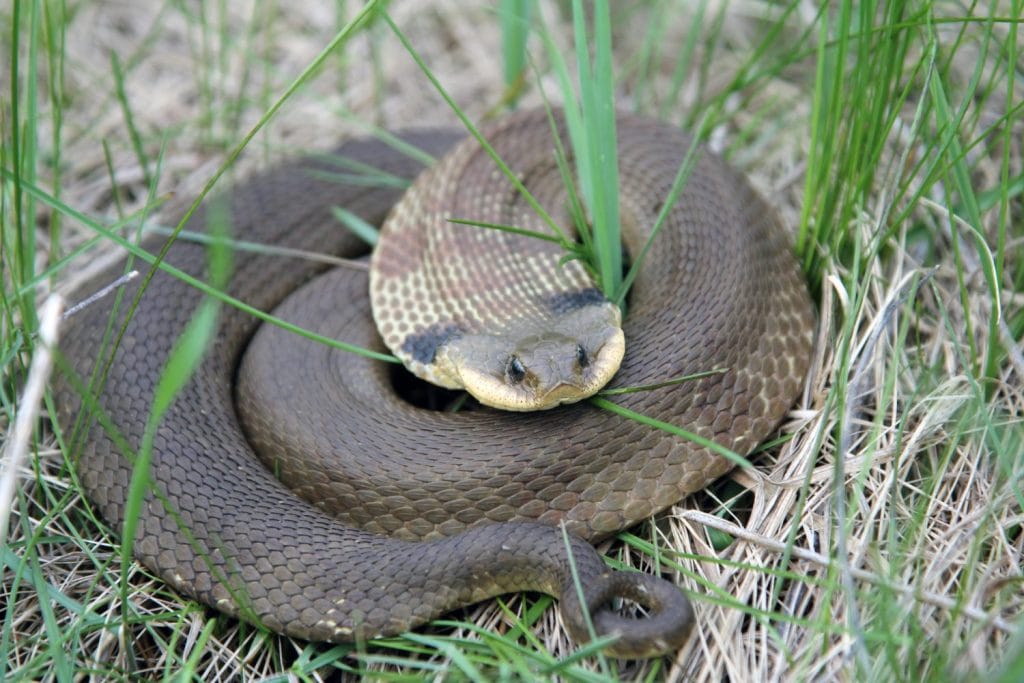
Hognose snakes live in virtually every U.S. state, as well as in Canada, Mexico, South America, and Madagascar.
©Wxchsr/Shutterstock.com
Hognose snakes also enjoy different habitats. Those habitats include:
- Grasslands
- Forests
- Deserts
Hognose snakes also prefer habitats with loose sand or soil for burrowing, as well as abundant shrubbery or vegetation for shelter.
Are Hognose Snakes Venomous?
Hognose snakes are venomous snakes. They use their venom to subdue their prey, which is injected through continuous chewing. Once the prey is no longer able to fight back, the hognose snake will consume it whole.
Despite hognose snakes being venomous, they rarely bite humans. When it does happen, it is usually because the snake feels threatened or is being handled.
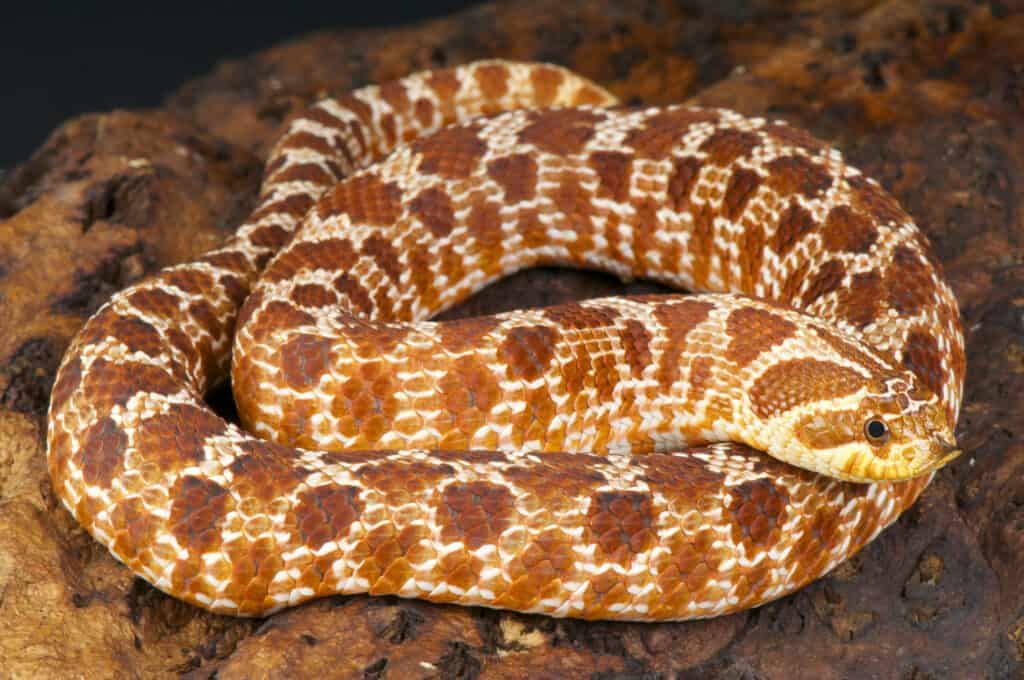
Hognose snakes are venomous, but there has never been a human fatality reported after being bitten.
©reptiles4all/Shutterstock.com
If bitten, there is typically nothing to worry about. The venom triggers a localized reaction in the body, akin to a bee sting or a non-poisonous spider bite. In most instances, the reaction to the venom includes:
- Swelling
- Redness
- Minor pain
- Slight bruising
If there is an allergic reaction to the venom, symptoms such as nausea or dizziness may occur. However, no fatalities have been recorded after being bitten by a hognose snake.
Prey Hognose Snakes Prefer
Hognose snakes have a diverse diet. However, the snakes’ main source of sustenance is amphibians, specifically toads.
Up to 80% of the hognose snake’s diet is comprised of toads. This may seem curious, given that toads have a neurotoxin in their skin called bufotoxin. Hognose snakes, however, have immunity to it. Because of this, hognose snakes are able to make toads a large part of their diet.
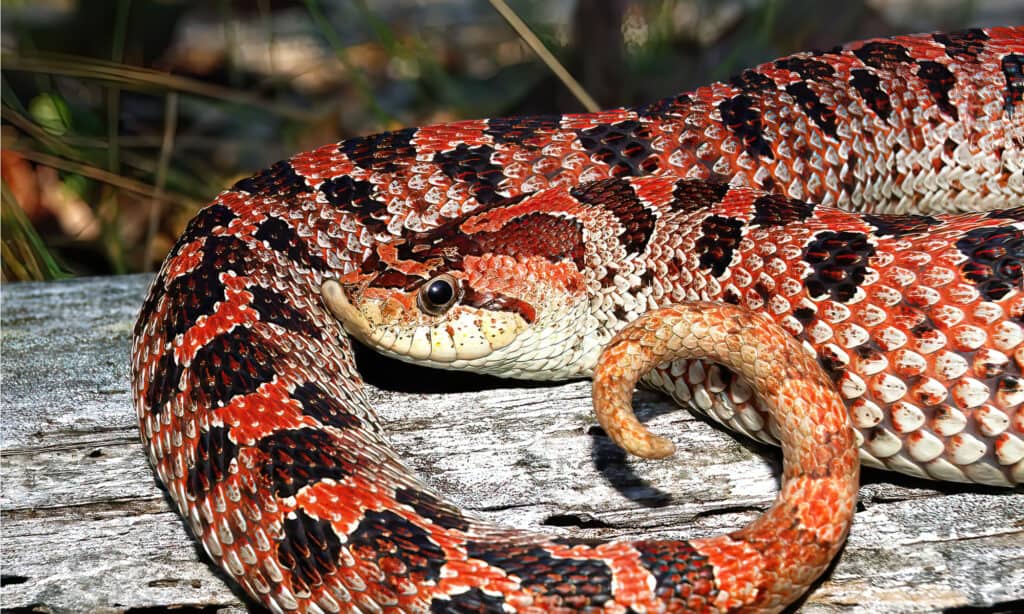
Hognose snakes prefer a diet of toads over anything else.
©Chase D'animulls/Shutterstock.com
Toads are not the only prey that make up the hognose snake’s diet. The snakes are opportunistic feeders. Therefore, they will also eat the following:
- Frogs
- Salamanders
- Small rodents
- Lizards
- Small snakes
- Reptile eggs
- Birds
- Insects
It should be noted that while hognose snakes will consume various prey, anything other than toads is considered a secondary food source. Hognose snakes vary in size, and larger individuals require more prey to survive. As the populations of their prey and suitable habitats have declined, so too have hognose snake populations. For this reason, some hognose snake species are being considered for threatened status under the Endangered Species Act, in hopes of preventing their extinction.