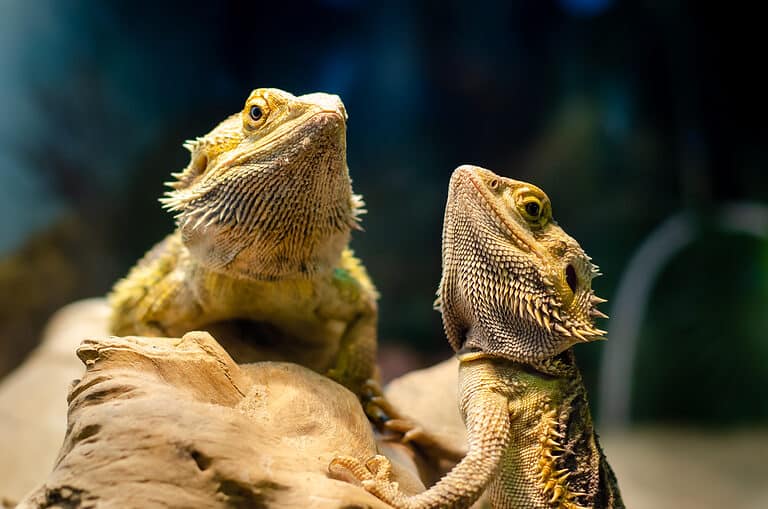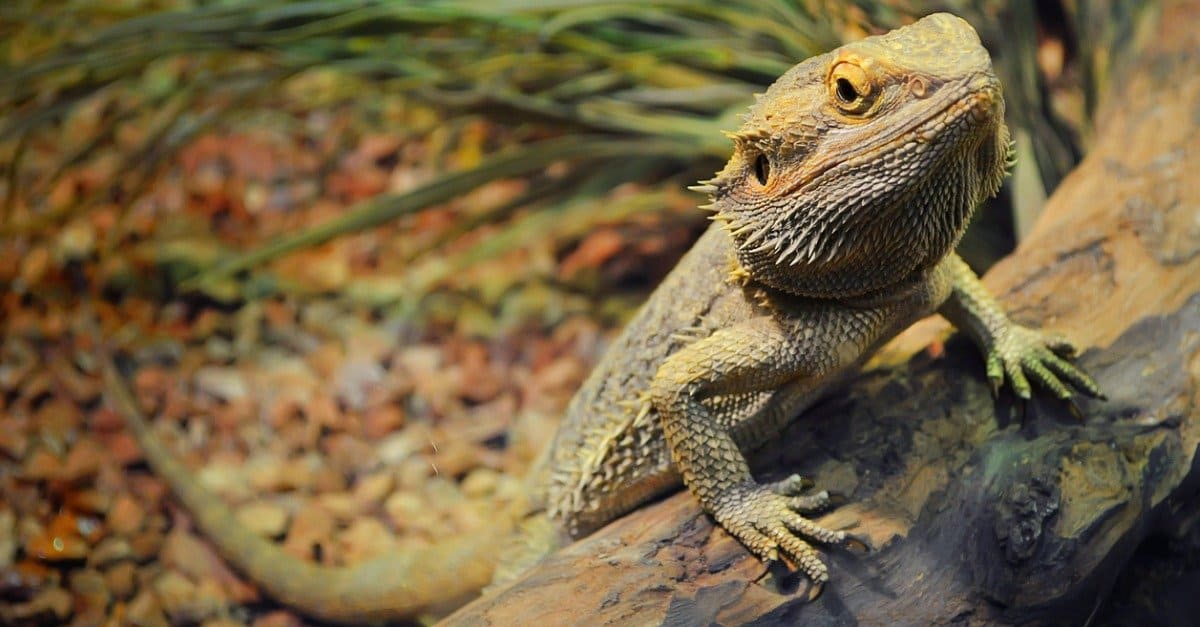

Bearded dragons are native to Australia, living in the deserts and savannas. Their name comes from the spiky scales along their jaws and chins. Bearded dragons are the most popular reptile pet in the U.S. The average bearded dragon grows from a 3-inch hatchling to an adult measuring 18 to 24 inches long and weighing 10 to 20 ounces. There are eight recognized species of bearded dragons, each varying in size. Continue reading to learn about some of the largest bearded dragon species.
4. Western Bearded Dragon
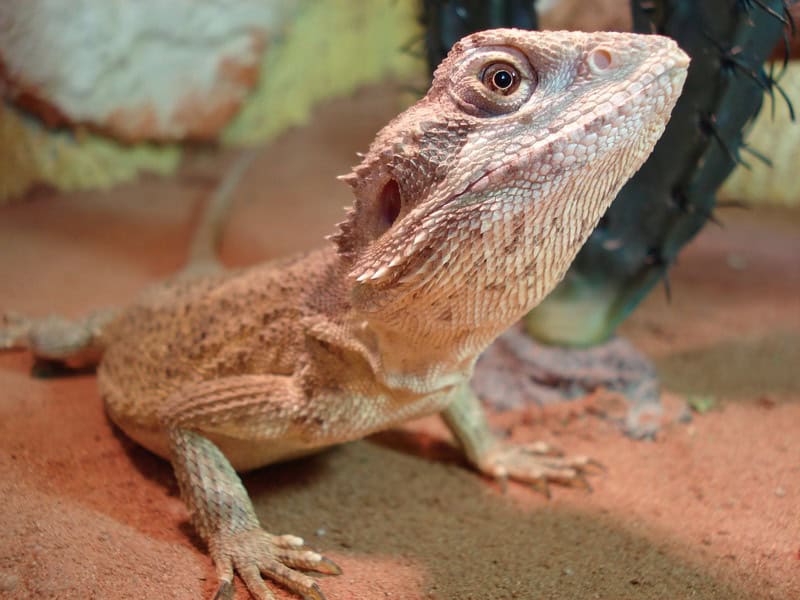
Mitchell’s bearded dragon (Pogona minor mitchelli) is native to northwestern Australia.
The Western bearded dragon (Pogona minor) and its three subspecies can be found along the coast and in the interior of Western Australia and into the Northern Territory and South Australia. They are not common as pets but can be found in deserts, coastal dunes, and semi-tropical woodlands. These dragons can grow to be 14-18 inches long and are believed to weigh up to 15 ounces. Like most bearded dragons, they like to bask in the sun. Researchers believe they are generalist feeders with widely-foraging behavior. These lizards are also believed to have high reproductive potential.
3. Central Bearded Dragon
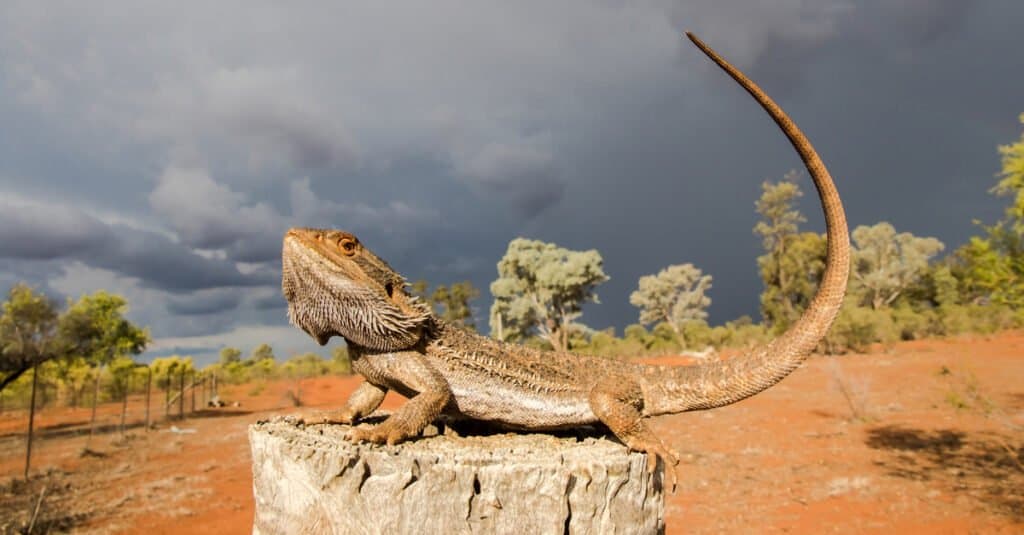
The Central bearded dragon is the most common bearded dragon species found as a pet.
©Ken Griffiths/Shutterstock.com
As of 2025, Central bearded dragons (Pogona vitticeps) remain the most commonly available bearded dragon species in pet stores across the United States. They are endemic to Central Australia, specifically New South Wales, Queensland, Northern Territory, and South Australia. They prefer rocky desert regions and arid woodlands, spending time both in trees and on the ground. These dragons can grow to lengths of up to 24 inches, but most are closer to 20 inches, with females being smaller. They generally weigh from 10 to 18 ounces. Central bearded dragons are omnivorous, but their diet consists mostly of plant matter.
2. Eastern Bearded Dragon
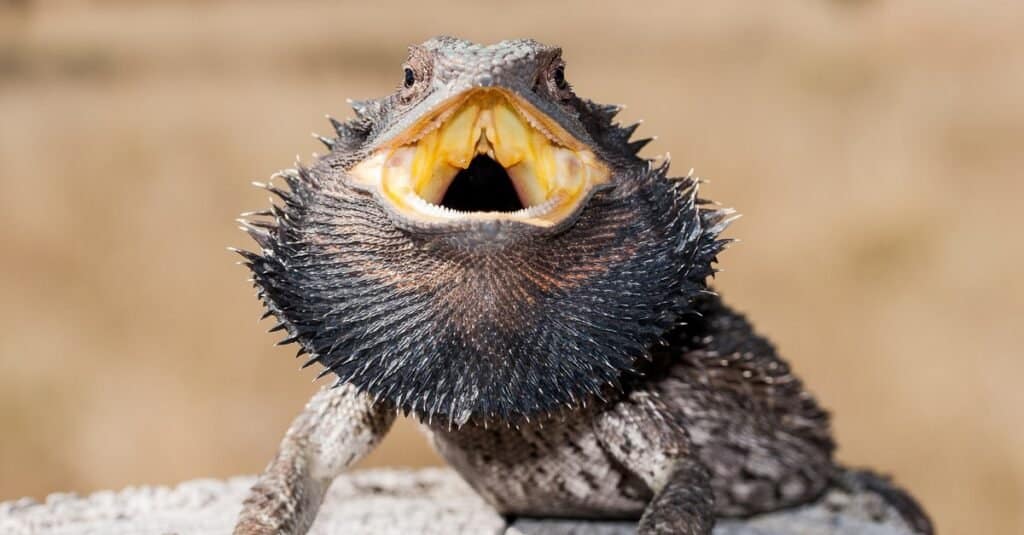
Eastern bearded dragons are generally slightly larger and darker in color than central bearded dragons.
©Ken Griffiths/Shutterstock.com
The Eastern bearded dragon (Pogona barbata), also known as the common bearded dragon, can be found in a variety of habitats in New South Wales, South Australia, Queensland, and Victoria. They can be found in forests, scrublands, and even in agricultural areas. These bearded dragons prefer habitats with access to trees for nesting and escaping predators. Eastern bearded dragons can weigh 10 to 20 ounces and grow to be 24 inches long, with females reaching about 20 inches. They can be more aggressive than their central bearded dragon kin and are uncommon as pets. Eastern bearded dragons primarily eat small rodents, reptiles, and insects.
1. German Giant Bearded Dragon
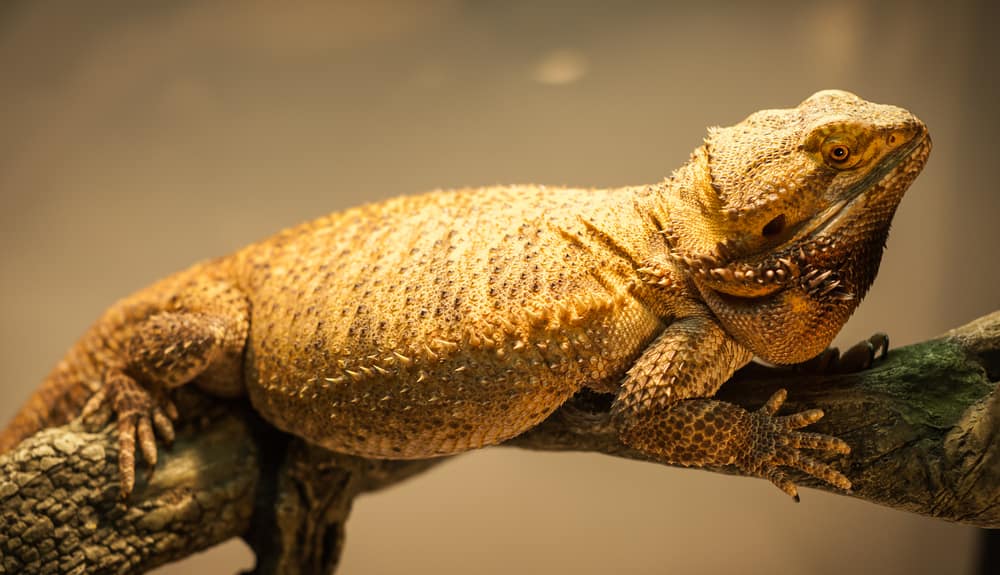
The German giant bearded dragon was bred to be large, reaching lengths of up to 28 inches.
©valleyboi63/Shutterstock.com
German giant bearded dragons are some of the largest bearded dragons, but they are not a separate species. The morph was developed when Central bearded dragons were selectively bred for larger sizes. They are typically 20-24 inches long, with some rare individuals reaching up to 28 inches. German giants were originally bred by selecting the largest bearded dragons and breeding them to increase the likelihood of larger offspring. However, the original German giant lineage is now considered extinct or no longer distinct due to extensive cross-breeding with standard-sized bearded dragons.