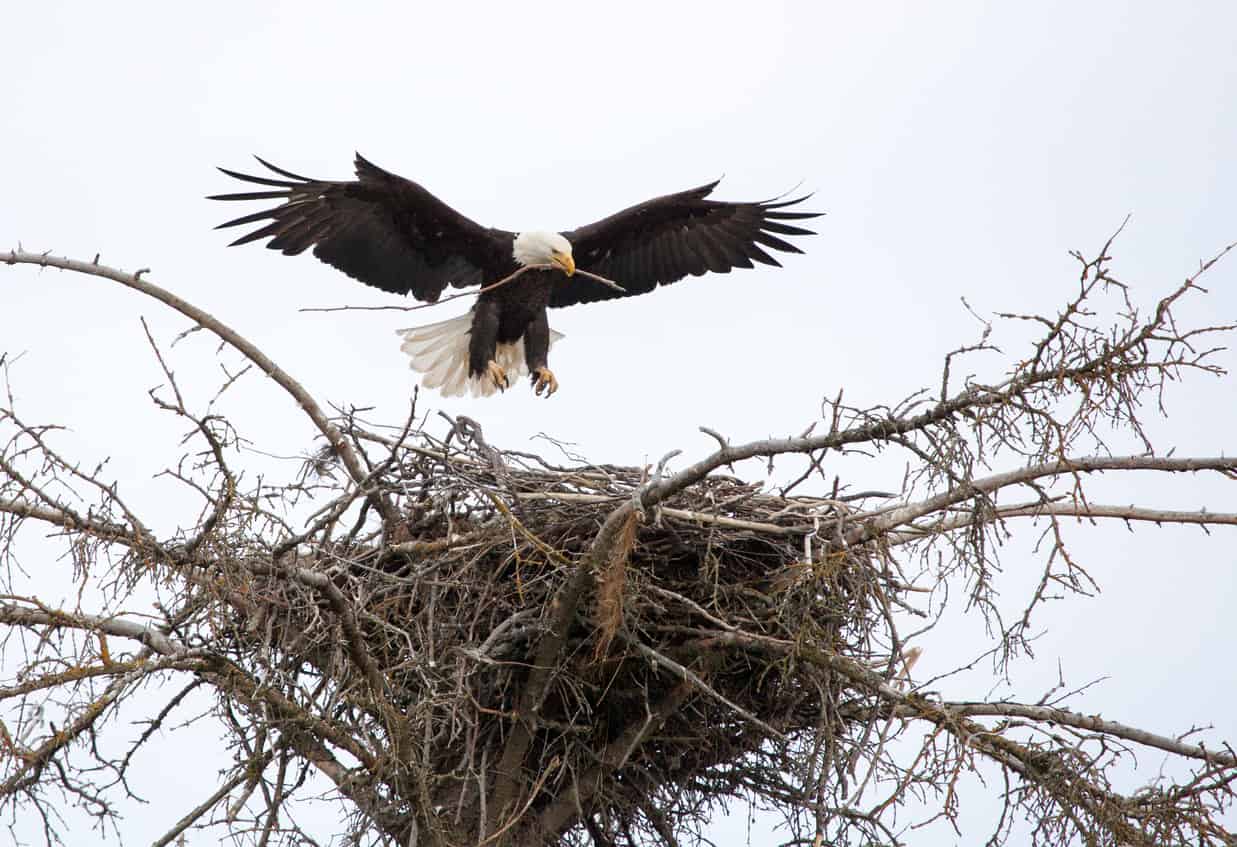

Bird nests can look like many different things: scrapes in the soil, rocky ledges, and old woodpecker holes in dead trees. But what about those gigantic structures that rest on magnificently tall trees? Or elaborate huts that look like they’re straight out of Architectural Digest? Continue reading to discover nine birds that build the largest nests, and where they build them.
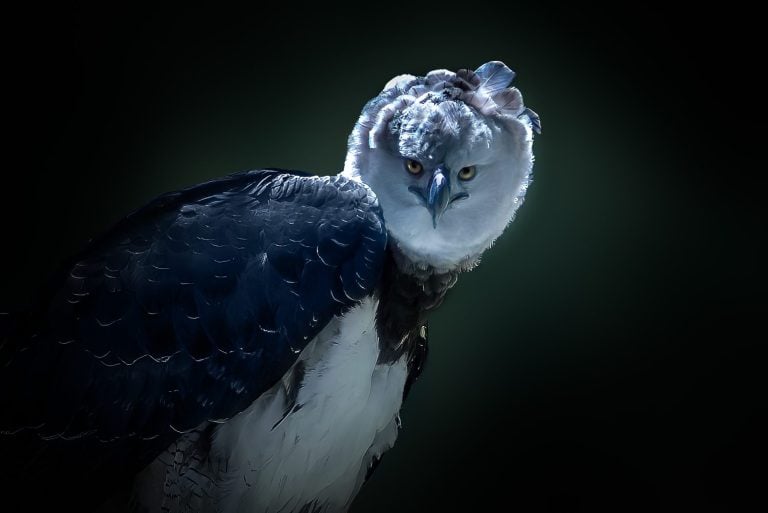
Harpy Eagle
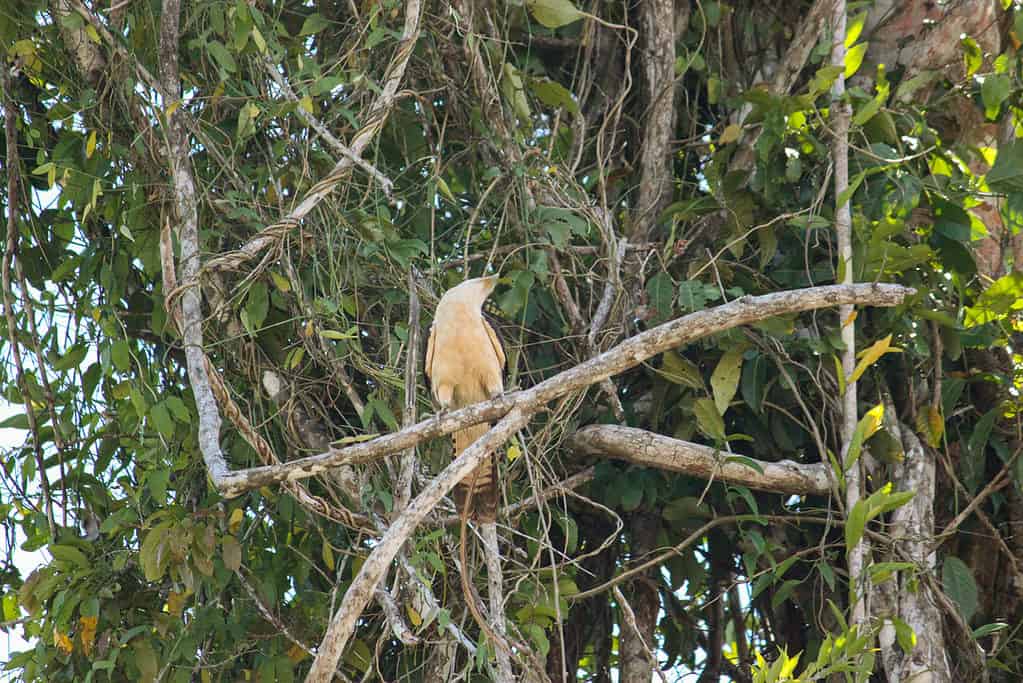
Harpy eagles reuse their nests which measure four feet high and five feet wide.
©iStock.com/Seckin Ozturk
The harpy eagle is a magnificent creature with bold and elegant features. They have a seven-foot wingspan and huge talons. Their nests, which measure four feet by five feet, reflect their giant stature. Harpy eagles reuse the same nest for many seasons. The harpy’s nest consists of sticks and branches lined with soft materials such as fur or flower petals, which both males and females help construct.
Bowerbird
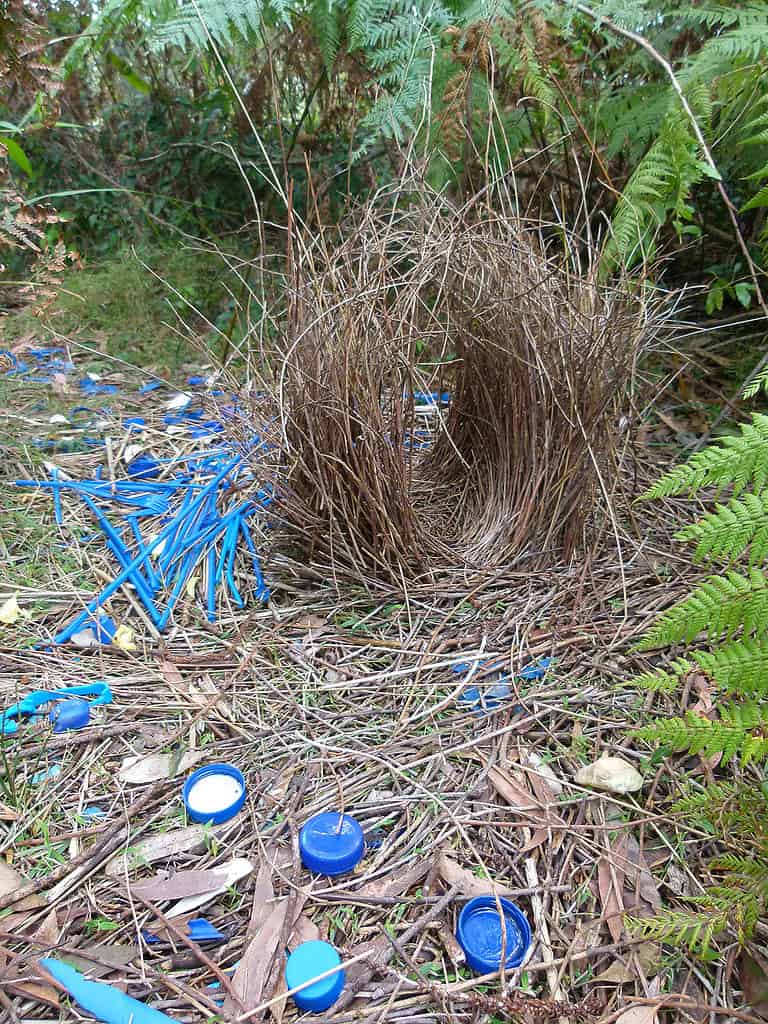
Bowerbirds create elaborate hut-like structures decorated with brightly colored objects, chosen based on the female’s preference.
©iStock.com/skeat
The bowerbird is a unique species known for its courtship behavior. These large birds, endemic to Australia, have a very traditional approach to mating. The males create elaborate hut structures, which they decorate with brightly-colored objects, such as shells, flowers, and stones. They arrange their collections in piles, often selecting colors based on the female’s preference. Females will visit the huts of multiple males before choosing a mate. Sometimes the best decorator will receive interest from multiple females. These hut-like structures can reach over five feet high and six feet in diameter.
Stork
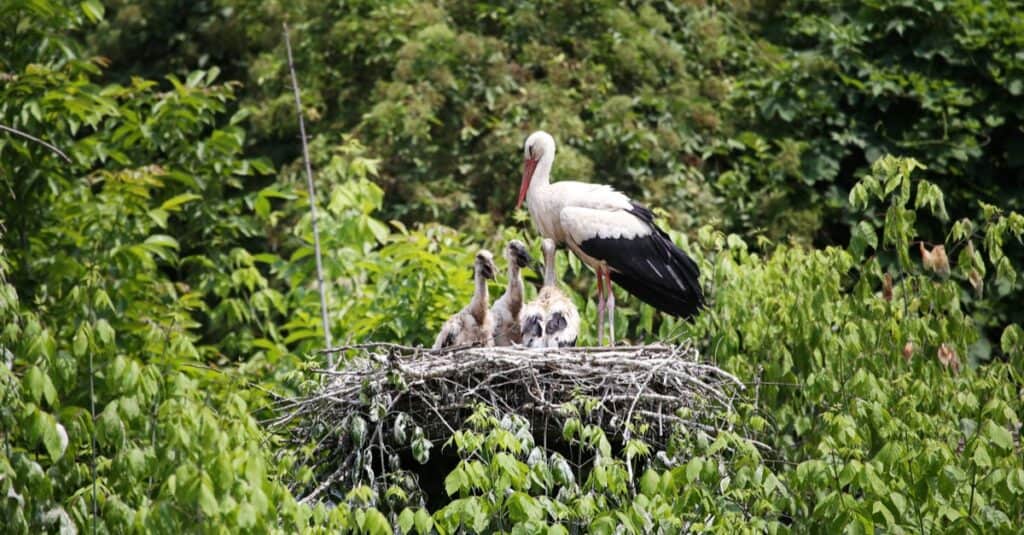
Stork nests are enormous platform structures made of twigs and grass, measuring more than 9 feet deep and 6 feet wide.
©MikeDotta/Shutterstock.com
Storks are heavy-wading birds with long necks, long legs, and long bills. Stork nests are made of twigs and grass, and often become substantial structures over time as they are reused and added to each year. Some nests can grow to be over 6 feet in diameter and 10 feet deep, often weighing thousands of pounds. Stork nests are so large that smaller birds, like starlings and sparrows, make their nests in the spaces between the sticks.
Osprey
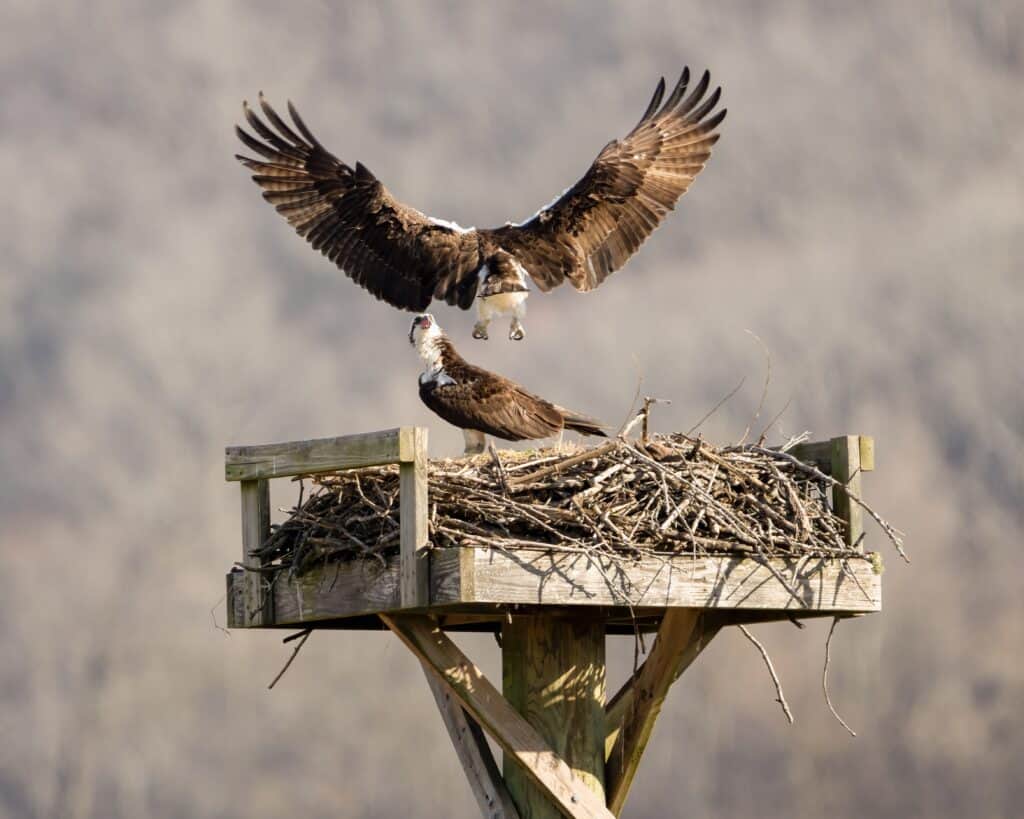
Ospreys breed near freshwater lakes and rivers and build their nests in tree forks, rocky outcrops, or artificial structures.
©Wirestock Creators/Shutterstock.com
Ospreys are large sea hawks found on every continent except Antarctica. Raptors with a sprawling six-foot wingspan, ospreys breed near freshwater lakes and rivers. They build their nests in tree forks, rocky outcrops, or artificial structures. Their nests are made from sticks, driftwood, and seaweed, and many are reused each season, with some lasting over 70 years.Osprey nests can reach up to 10 feet deep and six feet in diameter.
Trumpeter Swan
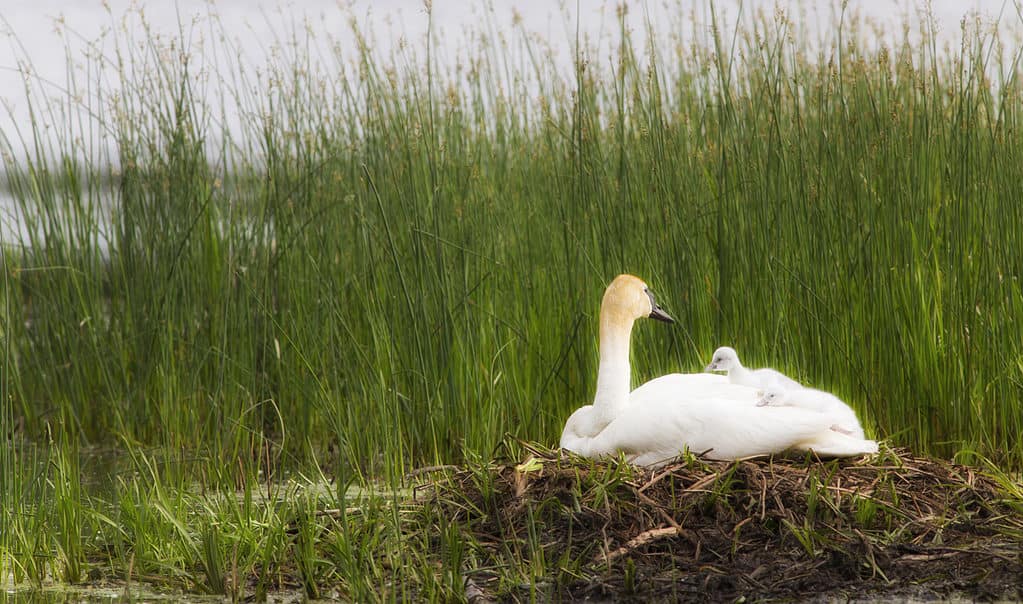
Aquatic vegetation is used to shape the trumpeter swan’s bowl-shaped nest.
©iStock.com/JackVandenHeuvel
Trumpeter swans are the largest waterfowl native to North America. Six feet long and weighing over 25 pounds, they breed in remote Alaskan wetlands and place their nests in areas surrounded by water, such as beaver dens and floating vegetation mats. They use aquatic vegetation to shape the nest into a mound with a bowl-shaped structure on top. Once completed, the mound can reach 11 feet across and 3 feet high.
Golden Eagle
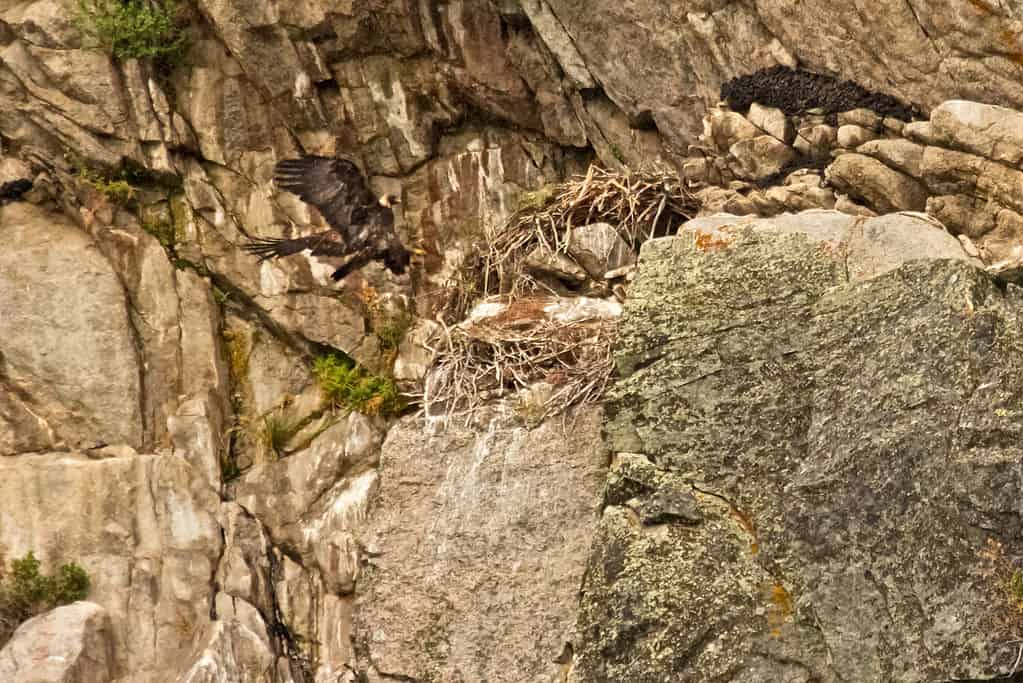
Golden eagle nests can reach 15 feet tall and nine feet wide. They place their platform on cliffs or other inaccessible places.
©iStock.com/Jack R Perry
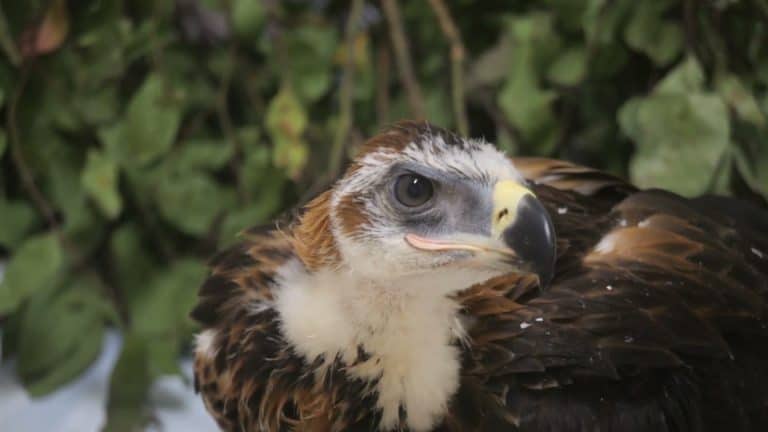
Golden eagles are exceptional creatures. They are one of the fastest, largest, most agile birds in the world, with a wingspan reaching close to eight feet. So it’s no surprise that such a large, majestic bird would need an equally impressive nest. On average, their nests are six feet wide and two feet high, but they can get much larger. The largest golden eagle nest on record was 15 feet deep and over eight feet wide. Couples build their platform nests on cliffs or other inaccessible places, using coarse branches and lining the inside with grass, lichen, twigs, and moss.
Orange-Footed ScrubFowl
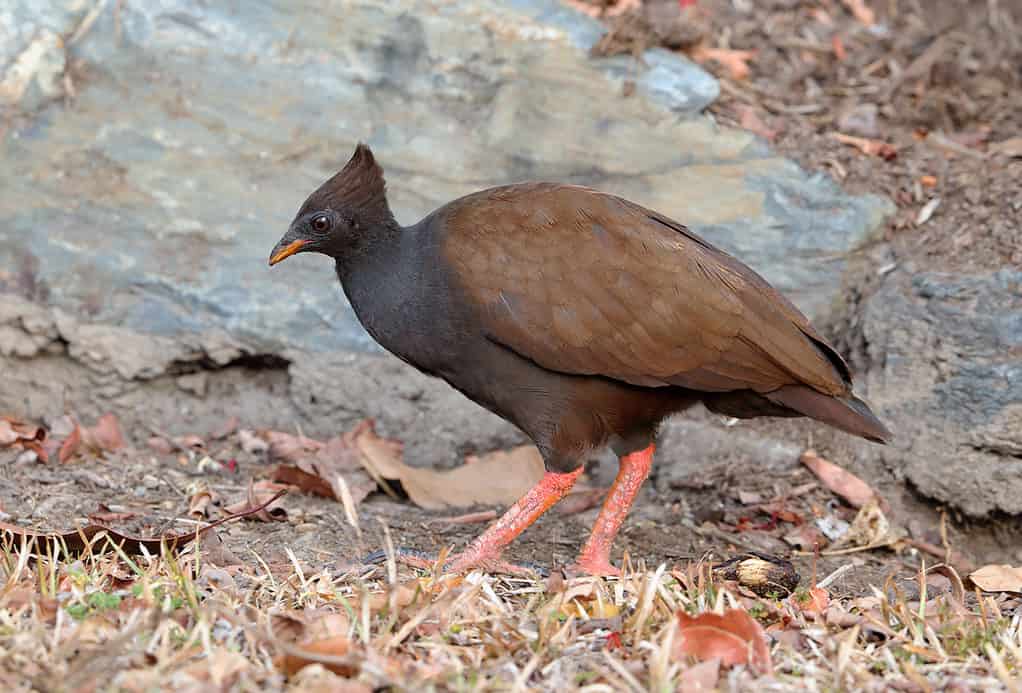
Orange-footed scrubfowls build impressive incubator mounds using dead leaves, soil, and sand.
©iStock.com/AGAMI Stock
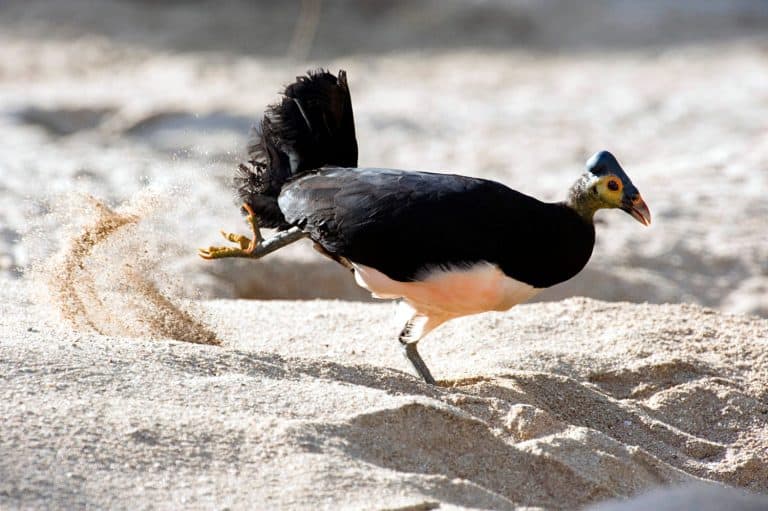
The orange-footed scrubfowl is a medium-sized ground-dwelling bird native to Australia. These birds are notable for building impressive incubator mounds consisting of dead leaves, soil, and sand. The decomposition of organic material within the mound generates heat, which successfully incubates the orange-footed scrubfowl’s eggs. Construction of the nests takes place throughout the year, and the final product can reach 15 feet high and 30 feet in diameter.
Sociable Weaver
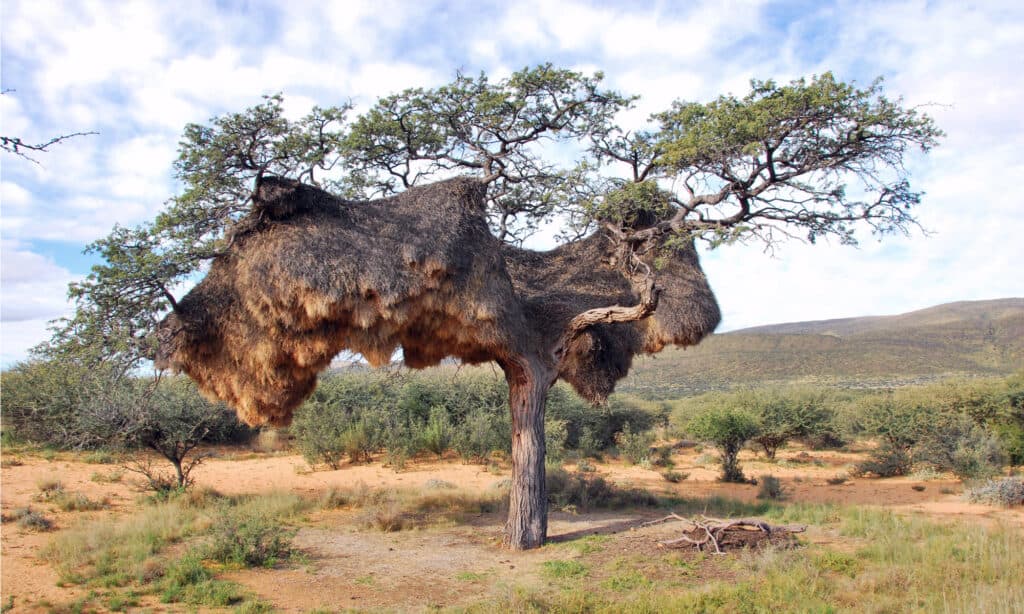
Their nests look like giant haystacks. The underside has circular openings leading into inner chambers. The structure can measure 23 feet wide.
©Michael Potter11/Shutterstock.com
Sociable weavers are relatively small birds. However, what they lack in size, they make up for in teamwork. These sparrow-sized birds weave one giant nest for their entire colony. The nest can house up to 100 families (or around 400 birds) and last over 100 years.
At first glance, the nest resembles a large haystack perched on bare branches. Upon closer examination, many circular holes are visible on the underside of the structure. The circular holes open to separate chambers within the massive, communal nests, where each family lives independently. Each chamber is accessible through its own entrance tunnel, providing a degree of privacy within the larger communal structure.
Bald Eagle
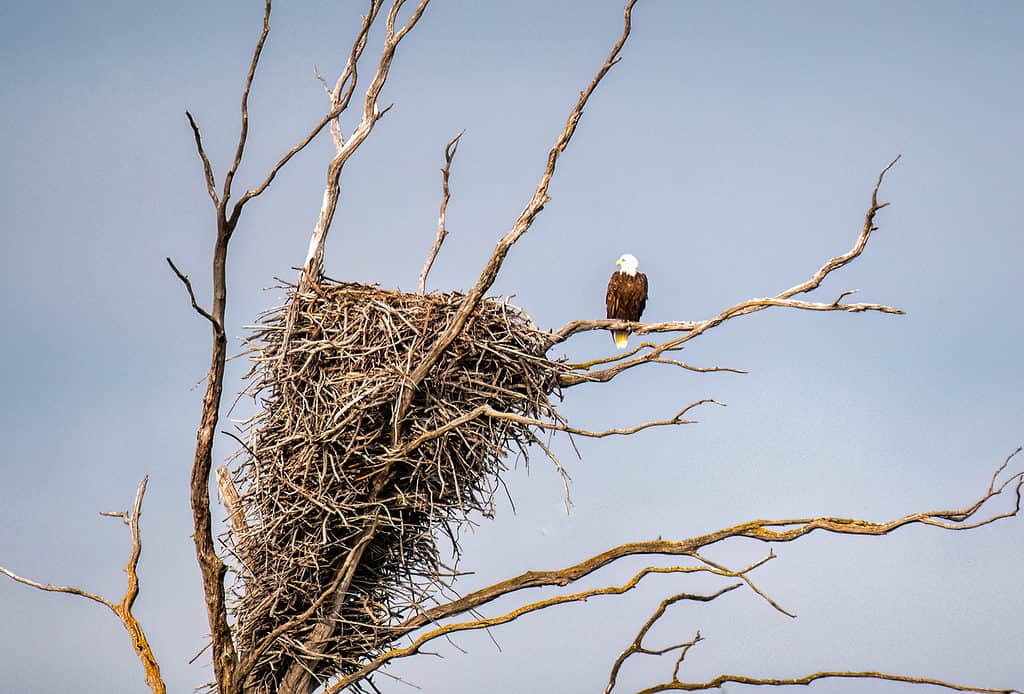
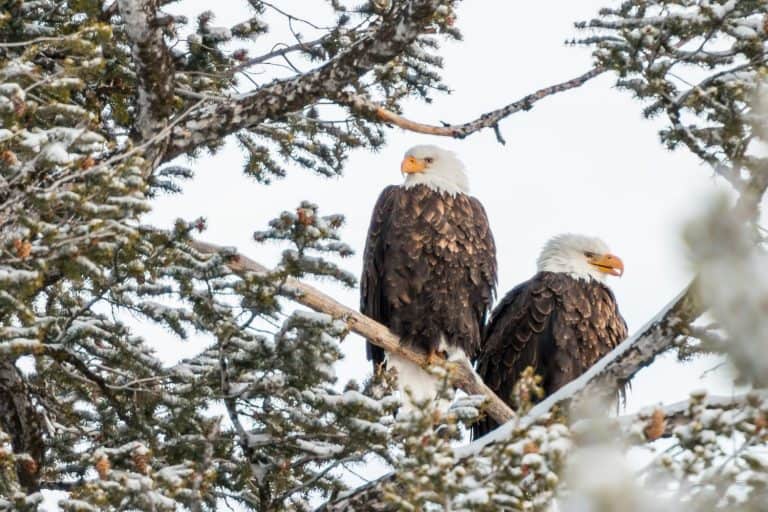
The largest bald eagle nest on record was 9 feet wide, 20 feet deep, and weighed over 4,400 pounds! Eagle pairs reuse the same nest for decades, adding new material every breeding season.
©iStock.com/Tammi Mild
Bald eagles are enormous, powerful birds of prey native to North America. They are known for their considerable wingspans, reaching up to seven feet. But they are also famous for their gigantic nests. The largest bald eagle nest on record was near St. Petersburg, Florida. It measured 9 feet 6 inches wide, 20 feet deep, and weighed over 4,400 pounds. Another in Ohio was used by a pair of 34-year-old bald eagles, which weighed over 4,000 pounds. Their nests are huge because eagle pairs reuse the same nest for decades, adding new material every breeding season. They construct them using large sticks and then line the inside with moss, grass, seaweed, and other plant material. The average bald eagle’s nest is six feet wide and three feet deep.