
Quick Take
- The father does all the construction work, yet when the chicks finally hatch, they don't stick around for even a moment. See the father's role →
- Megapode chicks skip the helpless baby stage entirely, and what they can do minutes after hatching defies how we think bird development works. See chicks after hatching →
- More than half of all megapode species are endangered. Explore the real threats →
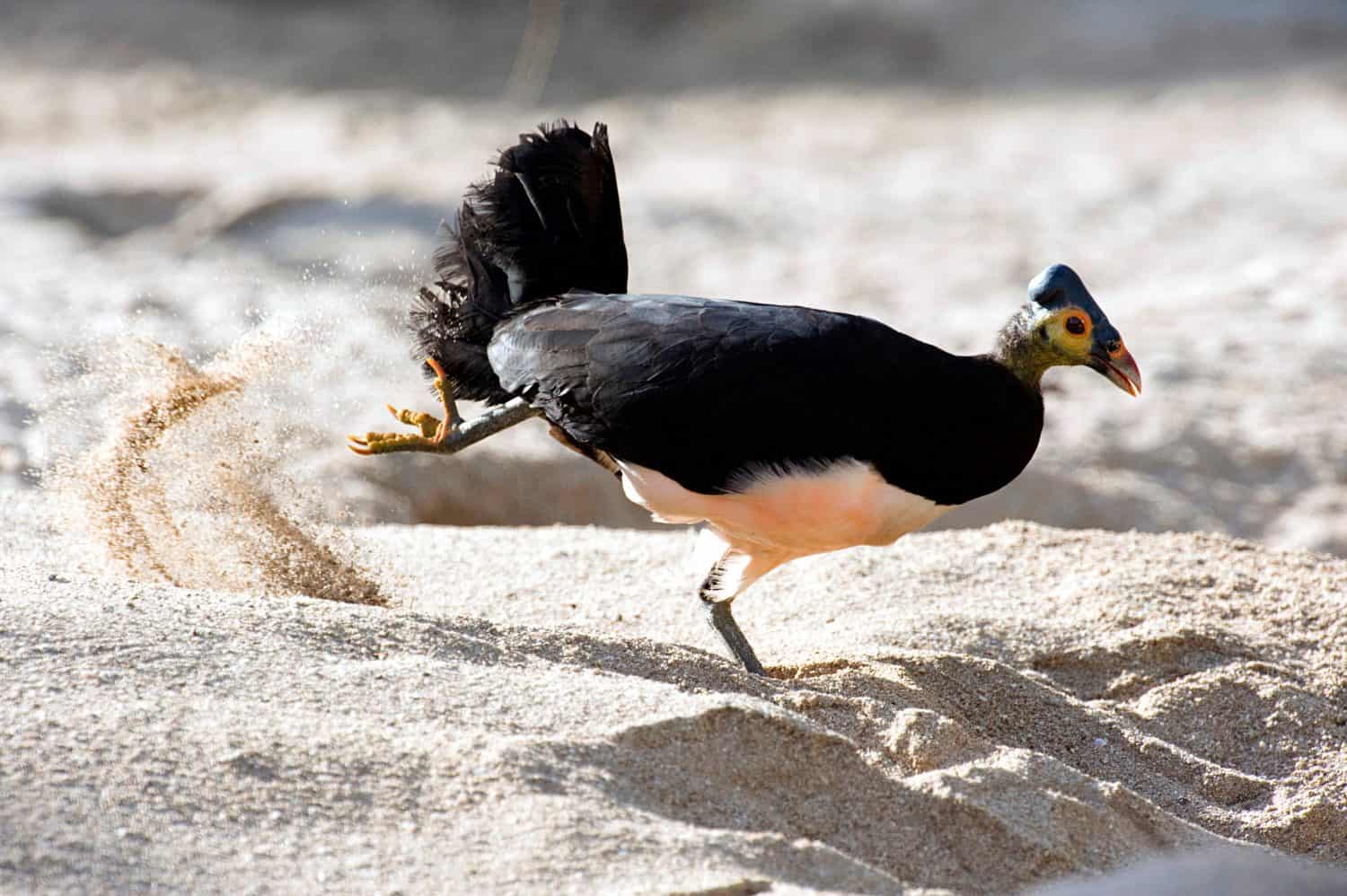
Did you know that megapodes create natural incubators for their chicks? That’s right, these chicken-like birds are known as incubator birds or mound-builders. Rather than sitting on their eggs themselves, they rely on external heat sources for incubation. Once the chicks emerge from their eggs, they’re basically self-sufficient, meaning megapode parents rarely tend to their young
Keep reading to hear experts’ takes on how megapodes assist in the egg incubation process.
What Are Megapodes?
Megapodes are stocky birds that are known for their unique reproductive habits. They primarily live in the broader Australasian region.
“First, let’s understand that Megapodes are relatively isolated birds with only 22 species of them existing in Papua, New Guinea, Australia-Asia (Australasian), the Philippines, Nicobar Islands, and a few other islands in the Western Pacific,” says August Abbott, a Certified Avian Specialist from the Pet Advocacy Network. “Their name, Megapodes, comes from the Greek for ‘big feet,’ and given that all species of Megapodes have stocky, chicken or turkey-like bodies, they are basically odd-looking birds, like a chicken mainly, with great big feet.”
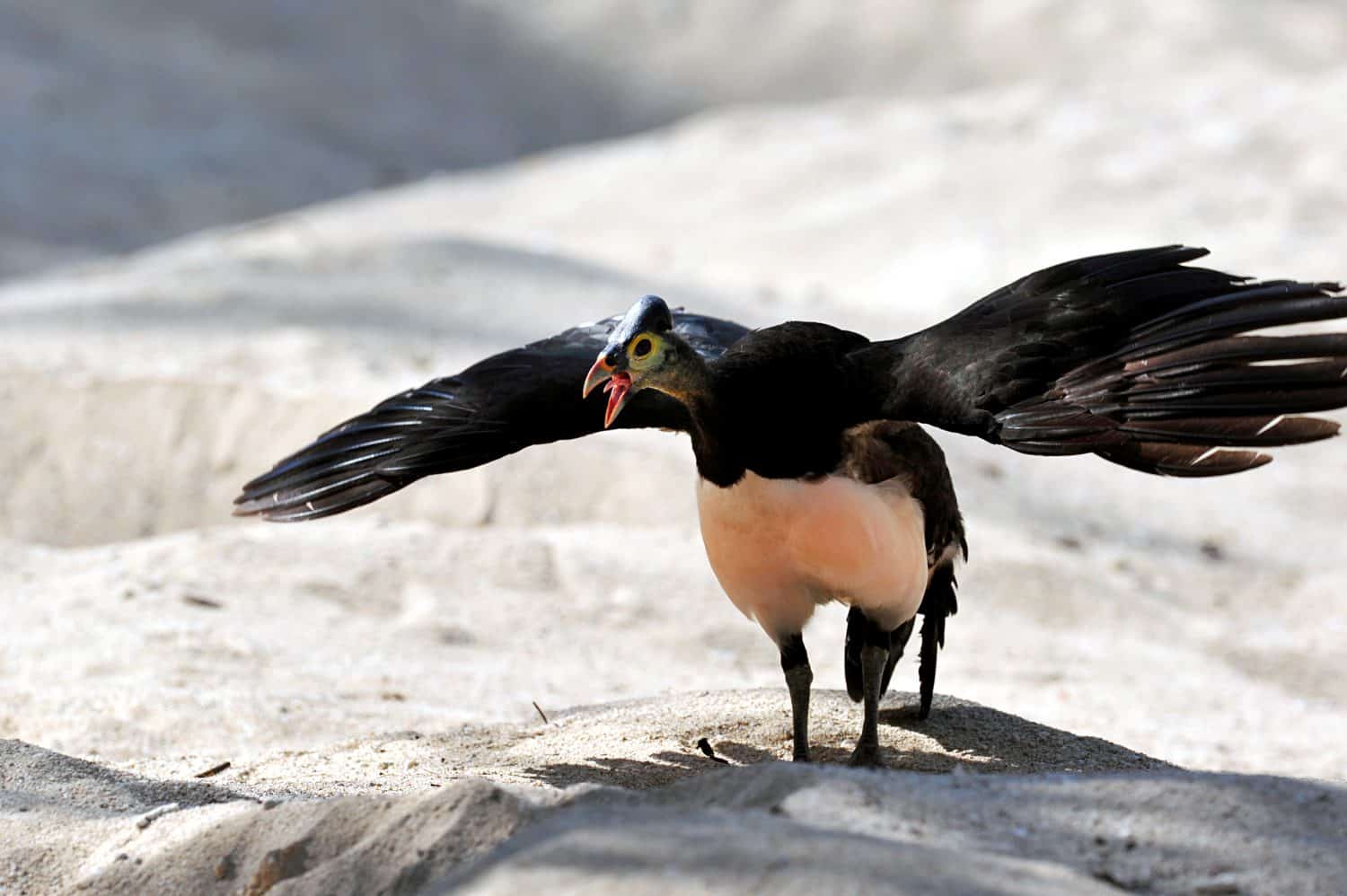
Many people label megapodes as “chicken-like” birds.
©Riza Marlon/Shutterstock.com
However, unlike chickens, they do not sit on their eggs for incubation. Rather, they rely on alternative sources of heat, building natural incubators for their eggs—which are a highly sought-after food source for many people. In fact, many Indo-Pacific communities consider them to be a delicacy, as they contain large, nutrient-dense yolks.
“Sadly, more than half of the Megapodes on earth are endangered,” Abbott explains. “Their eggs are sought out by certain societies of people who, for generations, have included these eggs in their diet. Unfortunately, human encroachment into Megapode territories rarely thinks about their need for nesting (mound or chamber building) sites.”
Unfortunately for the birds, humans aren’t the only ones consuming megapodes and their eggs.
“Animals that come along with humans (dogs, cats) tend to find newly hatched chicks an easy meal,” Abbott says. “Beaches populated by tourists looking for more and more places to venture to in their world travels mean that once private, non-traveled areas are now booming with humans, which rarely means well for native life.”
Unfortunately, human encroachment into Megapode territories rarely thinks about their need for nesting (mound or chamber building) sites.
August Abbott, a Certified Avian Specialist from the Pet Advocacy Network
The Megapode’s Natural Incubation Process
Now that we have covered the basics of megapodes, it’s time to discuss their unique incubation process. These chicken-like birds use natural incubators for their eggs, relying on external environmental heat rather than body heat. For example, many megapodes will bury their eggs in hot sand.
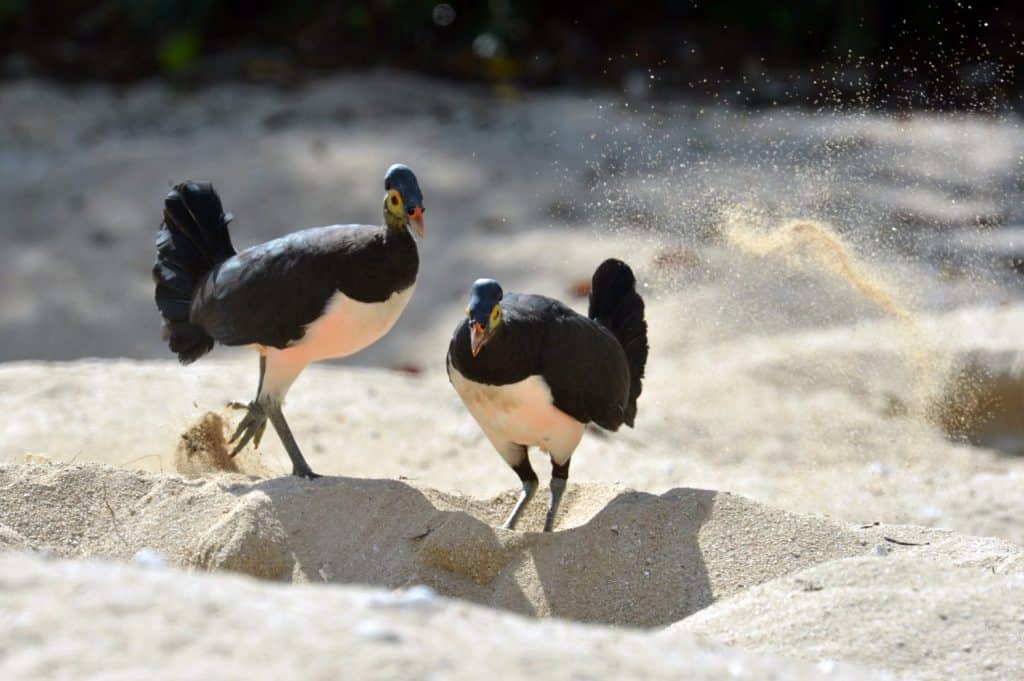
Megapodes often lay their eggs in hot sand before abandoning them.
©Riza Marlon/Shutterstock.com
“While looking very chicken-like, megapodes don’t nurture their eggs like poultry by sitting on them,” says Abbott. “Instead, they use naturally occurring environments in nature such as geothermal-heated grounds in the vicinity of volcanoes; or the sun-heated sandy soil in arid environments; and finally, in soil where organic materials are decomposing and producing natural heat.”
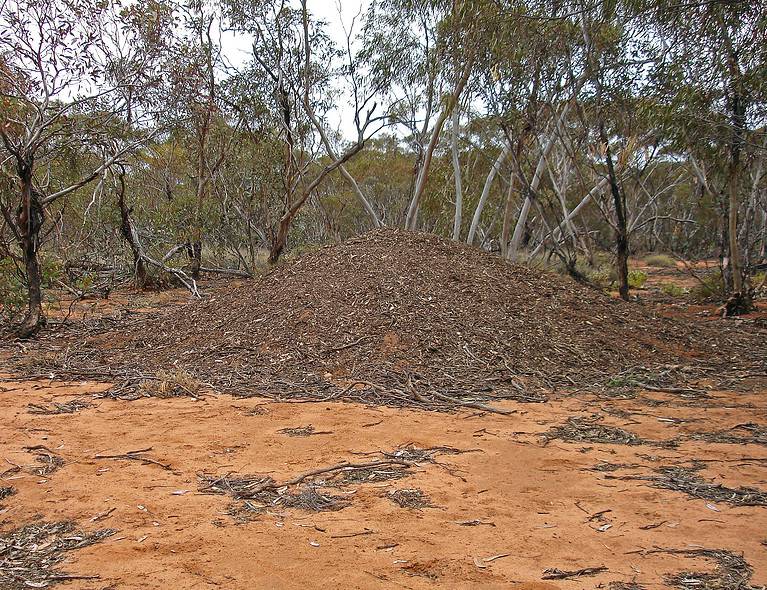
“Megapodes bury their eggs in mounds or burrows for incubation,” adds Brianna Crane, Senior Aviculturist at the National Aviary. “Different species use different materials, including sand and vegetation. The male works to regularly add to and remove said materials both as they break down as well as in order to help regulate incubation temperatures.”
According to Abbott, for most megapode species, the male does most of the heavy lifting when it comes to nest-building and incubation.
“He’s the one who builds the nesting mound, adds organic, decomposing vegetation, leaves, sticks, anything that will produce heat as it decomposes,” Abbott says. “He’s the guy who digs just deep enough for geothermal heat to nurture the eggs and not cook them. And yet, with a father so dutiful and a mom that lays some 35 eggs, more or less, when the eggs hatch, the babies climb out of their incubator and leave the area.”
What Happens to Megapodes After Hatching?
Megapode chicks don’t receive parental care after hatching, just as they don’t receive much parental attention during the natural incubation process. They are highly independent and well-developed, able to fly almost immediately after emerging from their natural incubator.
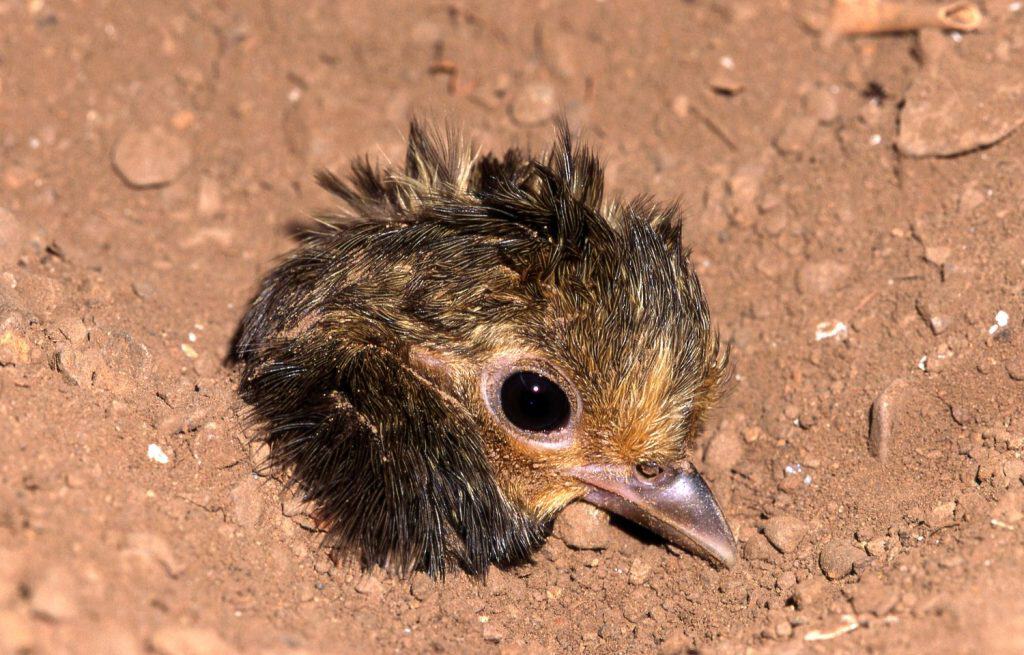
Megapode chicks emerge from the sand or dirt after hatching.
©Riza Marlon/Shutterstock.com
“Megapode chicks have no parental care after hatching,” Crane explains. “They hatch fully feathered; some species can fly immediately after emerging from the nest. Some species tend to the nest during incubation (such as the males adjusting the burrow materials as stated above) and others leave permanently after the eggs are buried.”
According to Abbott, the chicks can fend for themselves. Their diet consists mainly of seeds, fruits, plant material, snails, and insects, as well as protein-rich invertebrates. This diet supports their growth as the independent chicks begin life on their own.