



H
Species Profile

Harpy Eagle

Harpia harpyja

Power of the rainforest canopy
Beker Yepez/Shutterstock.com

At a Glance

Wild Species
Also Known As Harpy, Harpy hawk, gavilán real, águila arpía, harpia, gavião-real, harpie féroce
Diet Carnivore
Activity Diurnal+
Lifespan 30 years
Weight 9 lbs
Did You Know?

It's one of the heaviest eagles: females typically ~6-9 kg, males ~4-5 kg (Ferguson-Lees & Christie, 2001; HBW).

Scientific Classification

The harpy eagle (Harpia harpyja) is a massive Neotropical forest raptor and one of the most powerful eagles, adapted for hunting arboreal mammals in tropical rainforest canopies.

Kingdom
Animalia
Phylum
Chordata
Class
Aves
Order
Accipitriformes
Family
Accipitridae
Genus
Harpia
Species
Harpia harpyja

Distinguishing Features

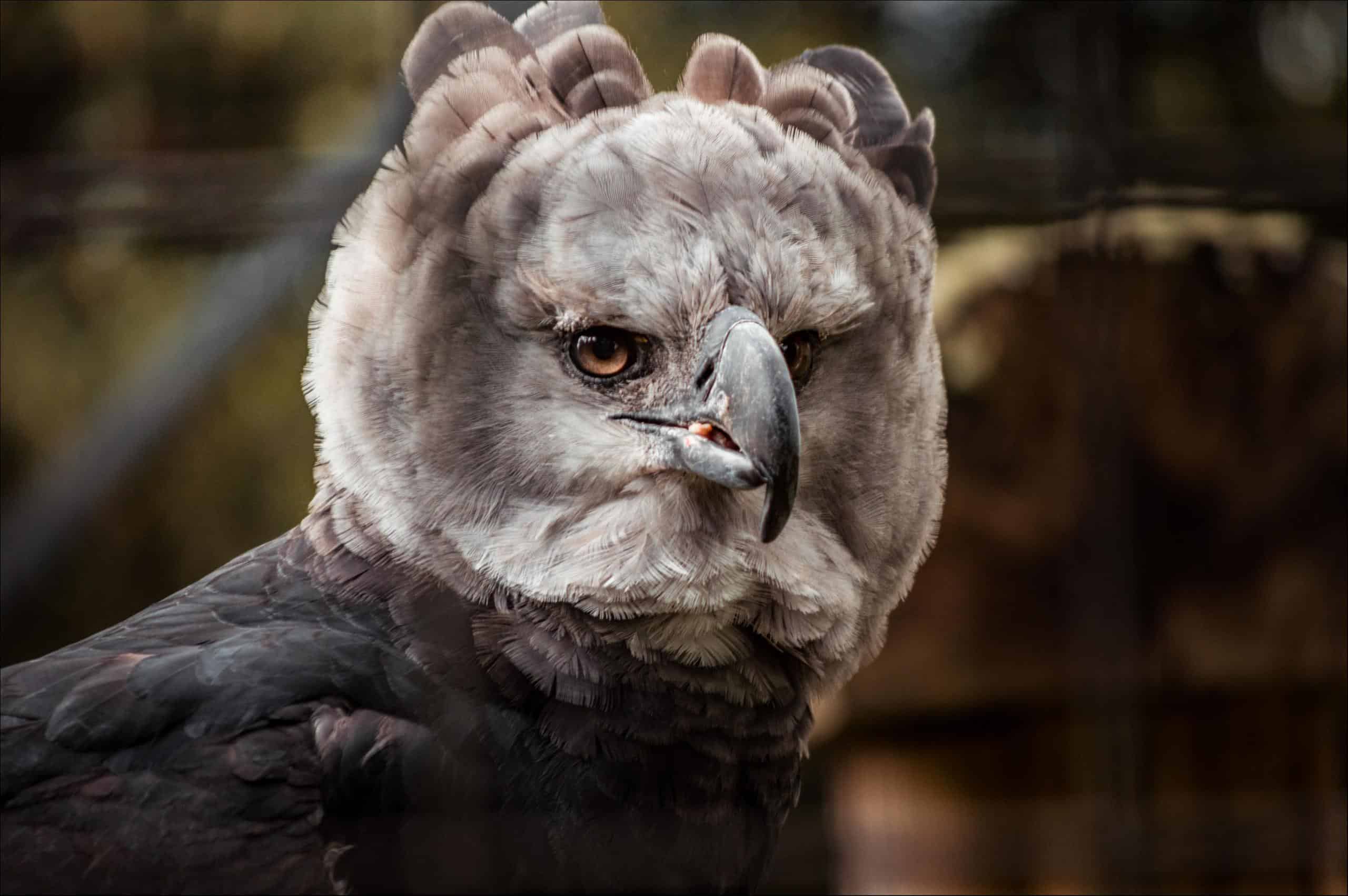
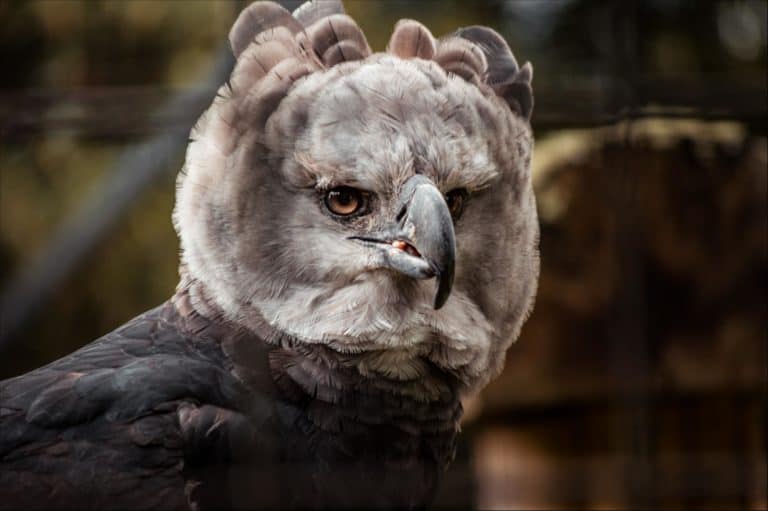
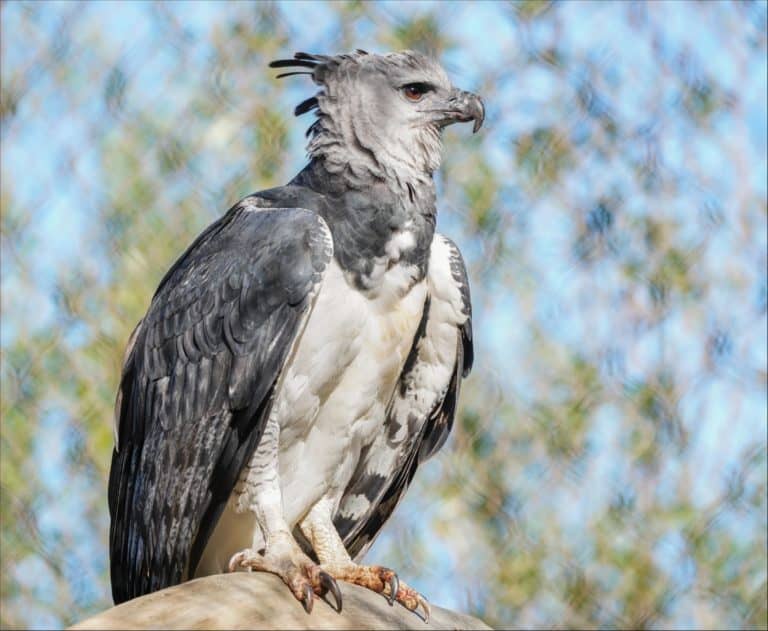
  • Prominent double crest that can be raised into a ‘crown’
  • Very large, deep bill and extremely robust legs and talons
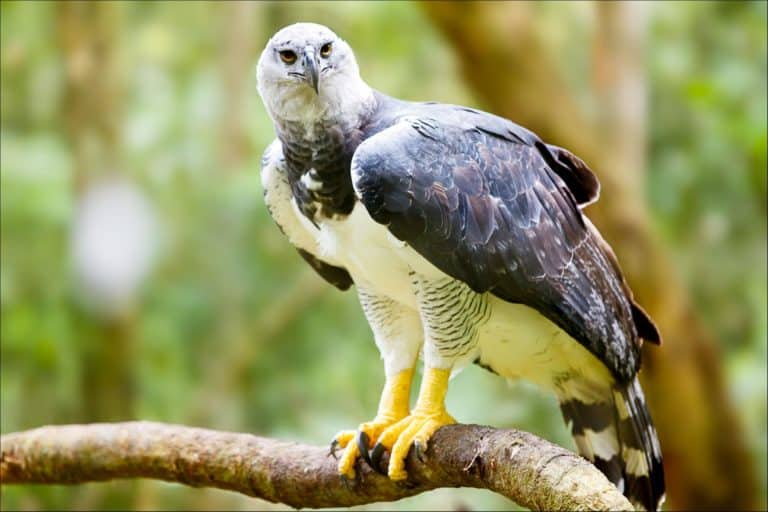
  • Bold black-and-white to slate-gray patterning with a dark band across the chest
  • Broad wings and relatively long tail suited for maneuvering through forest

Physical Measurements

Males and females differ in size

Length
♂ 2 ft 12 in (2 ft 10 in – 3 ft 2 in)
♀ 3 ft 3 in (3 ft – 3 ft 5 in)
Weight
♂ 10 lbs (9 lbs – 11 lbs)
♀ 17 lbs (13 lbs – 20 lbs)
Tail Length
♂ 1 ft 3 in (1 ft 2 in – 1 ft 4 in)
♀ 1 ft 4 in (1 ft 3 in – 1 ft 5 in)
Top Speed
50 mph
Approximate burst speed; not measured

Appearance

Primary Colors
Secondary Colors
Skin Type Body covered in dense contour feathers; legs are heavily feathered down to the tarsus with bare, scaly yellow toes; bill is keratinous with a large hooked culmen; talons are keratinous and black.
Distinctive Features
  • Massive, erectile double crest on the crown that can be raised into a prominent 'crown/helmet' profile (adult field mark; HBW).
  • Exceptionally robust feet and tarsi adapted for seizing arboreal prey; hallux (rear) talon reported up to about 12.7 cm in length in standard raptor references (e.g., Ferguson-Lees & Christie).
  • Very broad wings and long tail suited to maneuvering within Neotropical rainforest canopy and subcanopy rather than long-distance soaring in open habitats (behavioral ecology described in HBW and raptor monographs).
  • Adult size (exact ranges commonly cited): total length ~86.5-107 cm; wingspan ~176-224 cm (HBW; Ferguson-Lees & Christie).
  • Apex canopy predator specialization: primary prey frequently includes sloths (Bradypus/Choloepus) and arboreal monkeys; typically hunts by sit-and-wait/perch ambush inside intact forest rather than open-country pursuit (HBW).
  • Nesting is in very tall emergent trees in mature forest; large stick nest used repeatedly, consistent with dependence on extensive, intact rainforest structure (HBW).
  • In captivity, Harpy Eagles often live into their mid-20s to around 30 years; some zoo records report up to about 35 years. Wild life spans are less well known.

Sexual Dimorphism

Strong reverse size dimorphism typical of Accipitridae: females are substantially larger/heavier than males, while plumage pattern is broadly similar between sexes (HBW; Ferguson-Lees & Christie).

♂
  • Typical adult mass commonly cited ~4.0-4.8 kg (HBW/raptor references).
  • Overall slightly slimmer body and narrower-looking tarsi/feet compared with females, though still extremely powerful.
♀
  • Typical adult mass commonly cited ~6.0-9.0 kg (HBW/raptor references).
  • Noticeably bulkier body and proportionally more massive legs/feet; larger overall frame at nest and on perch (consistent with reverse dimorphism in species accounts).

Did You Know?

It's one of the heaviest eagles: females typically ~6-9 kg, males ~4-5 kg (Ferguson-Lees & Christie, 2001; HBW).

Adult length is about 86.5-107 cm and wingspan about 176-224 cm (HBW; Ferguson-Lees & Christie, 2001).

The rear (hallux) talon can reach about 12.7 cm in length-among the largest recorded for any eagle (museum and field measurements summarized in raptor references including Ferguson-Lees & Christie, 2001).

Harpy eagles often prey on arboreal mammals-especially sloths and monkeys-making them a true canopy apex predator (e.g., Rettig, 1978; later diet studies across the range).

They usually raise only one chick and often breed only every 2-3 years because the young remain dependent for many months after fledging (species accounts: HBW; field studies).

Incubation is about 56 days, and the chick may not fledge until roughly 6-7 months-exceptionally slow for a bird (HBW species account).

Panama named the harpy eagle its national bird (official designation in the early 2000s), highlighting its role as a flagship for rainforest conservation.

Unique Adaptations

  • Exceptionally robust feet and thick tarsi paired with oversized talons-adapted to restrain strong, climbing prey (monkeys, large sloths) in a three-dimensional canopy.
  • Short, broad wings plus a long tail: a classic rainforest raptor design that maximizes maneuverability and braking in tight forest spaces (contrasts with open-country soaring eagles).
  • Power-focused body plan: deep chest and large leg musculature support high-force gripping and short-burst attacks rather than extended high-speed chases.
  • Cranial feather "ruff" and prominent facial structure: often described as giving an 'owl-like' look, potentially aiding sound focus/communication in dim forest (not a true owl facial disk, but a notable ruff/crest specialization).
  • Huge platform nests built high (often ~30-40+ m) in emergent trees-placing the chick above much of the canopy and reducing many ground-level threats (heights vary by forest structure; reported widely in field accounts).

Interesting Behaviors

  • Sit-and-wait ambush hunting: adults perch quietly and strike through the canopy with a short, explosive flight rather than long pursuits-well-suited to dense rainforest.
  • Prey handling in trees: large prey may be carried to a nearby perch or partially plucked/dismembered before transport, reducing load and maneuvering risk in foliage.
  • Crest signaling: the double crest is raised when alert or agitated, likely functioning in communication during territorial or nest defense interactions.
  • Long parental investment: pairs feed and guard a single chick for many months; juveniles may remain in the parents' territory and beg for food long after fledging (supports multi-year breeding intervals).
  • Nest-site fidelity: pairs tend to reuse or rebuild in the same emergent-tree area across years when forest remains intact, maintaining a long-term territory.
  • Territorial vocalizing: adults give loud, far-carrying calls around the nesting area, especially during courtship and early chick-rearing.

Cultural Significance

The Harpy Eagle (Harpia harpyja) is seen as a symbol of rainforest power and wilderness. It is Panama's national bird, used in conservation education, and its feathers feature in some Indigenous ceremonies.

Myths & Legends

Greek mythology's Harpies-storm-wind spirits depicted as fierce, winged beings that snatch and carry off-gave the harpy eagle its scientific name (harpyja), chosen for its imposing, 'harpy-like' appearance.

Natural-history naming lore: early European describers and collectors emphasized the bird's formidable claws and 'monster-bird' aspect, reinforcing the classical Harpy association in popular storytelling about the species.

In Panama, the Harpy Eagle (Harpia harpyja) is a national emblem and is now told about as a rainforest guardian, a living symbol asking people to protect and keep jungle areas whole.

Conservation Status

NT Near Threatened

Likely to qualify for a threatened category in the near future.

Population Decreasing

Protected Under

  • CITES Appendix I (international commercial trade generally prohibited, with limited exceptions).
  • Protected under national wildlife protection regulations in multiple range states (varies by country; typically prohibits hunting/capture and protects nests).
  • HUBS (large forest eagles/'harpy-eagle' guild incl. Harpia/Morphnus/Harpyopsis and other large tropical Accipitridae): conservation statuses span LC to CR; the most pervasive threats are habitat_loss (deforestation/fragmentation from agricultural_expansion/logging/infrastructure) and persecution (hunting/human_wildlife_conflict). Notable highly threatened analogs in the broader tropical large-eagle group include the Philippine Eagle (Pithecophaga jefferyi; CR) driven by severe forest loss and very low reproductive output; several other large forest eagles are NT/VU where lowland forest conversion is rapid.

Life Cycle

Birth 2 chicks
Lifespan 30 years

Lifespan

In the Wild
25–35 years
In Captivity
30–40 years

Reproduction

Mating System Monogamy
Social Structure Socially Monogamous
Breeding Pattern Long Term
Fertilization Internal Fertilization
Birth Type Internal_fertilization

Behavior & Ecology

Social Pair Group: 2
Activity Diurnal, Matutinal, Vespertine
Diet Carnivore Arboreal mammals-especially sloths (Bradypus and Choloepus) and medium-sized monkeys (notably Alouatta/howler monkeys)-are repeatedly reported as the dominant prey in nest-remain and camera-based diet studies across the species' range (e.g., Touchton et al., 2002, Journal of Raptor Research; species account in Birds of the World).

Temperament

Strongly territorial around the nest; adults may respond aggressively to perceived threats in the nesting area (variation: intensity of defense differs by individual and human exposure).
Generally wary and cryptic in intact forest; tends to avoid open areas and prolonged exposure, contributing to low detectability.
Pair-bond oriented during the breeding cycle (mutual tolerance, coordinated nest attendance and provisioning).
Juveniles show prolonged dependency and reduced ranging early post-fledging; dispersal is gradual as hunting skills develop.

Communication

Loud, far-carrying calls used in territorial advertisement and pair contact Described in field guides/species accounts; call structure varies by context
Nest-area contact calls between mates during provisioning/shift changes.
Nestling/juvenile begging calls that elicit prey deliveries and attendance.
Aerial displays/soaring over territory Visual signaling; often associated with territorial presence
Perch-based visual signaling near nest Posture/orientation toward intruders
Physical interactions within the pair (e.g., close perching, nest relief behavior) supporting pair coordination.
Spatial communication via consistent use of nest tree and core-use areas; repeated prey-delivery routes can function as predictable activity 'hubs' around the nest during chick rearing, with reduced ranging compared to nonbreeding periods.

Habitat

Biomes:
Tropical Rainforest Tropical Dry Forest Wetland
Terrain:
Plains Hilly Valley Riverine
Elevation: Up to 6561 ft 8 in

Ecological Role

Apex/near-apex predator of Neotropical lowland rainforest canopies, specializing on arboreal mammals.

Top-down regulation of arboreal mammal populations (e.g., sloths and monkeys), influencing browsing/folivory pressure and trophic dynamics Maintains prey community structure by selectively removing vulnerable individuals (predation pressure shaping behavior and habitat use) Indicator of large, contiguous, structurally complex forests (presence signals high habitat integrity and supports conservation planning)

Diet Details

Main Prey:
Sloth Two-toed sloth Howler monkey Capuchin monkey Saki monkey Porcupine Kinkajou Coatis Opossum Rodents Iguanas and other large arboreal lizards Large forest birds +6

Human Interaction

Domestication Status

Wild

The Harpy Eagle (Harpia harpyja) has never been domesticated. People mostly come across it through being shot, habitat loss, and rare conservation or captive-breeding in zoos and raptor centers. Taming is not practical: they breed slowly (about one fledgling, often every 2–3 years), are very territorial, and young depend on parents up to 10–12 months.

Danger Level

Moderate
  • Physical injury from defensive strikes, especially near an active nest: puncture/laceration risk is high due to very large talons (hallux talon reported up to ~12.7 cm).
  • Handling/transport risk for rehabilitators and keepers: powerful grip and beak can cause severe hand/arm injuries without proper restraint and PPE.
  • Overall attacks on uninvolved people are rare; the species does not hunt humans and typically avoids direct contact away from nests.

As a Pet

Not Suitable as Pet

Legality: Harpia harpyja is not legal as a pet. International trade is banned under CITES Appendix I and needs many permits. Keeping them privately is basically not allowed; only zoos or licensed breeding or raptor centers may have them.

Care Level: Expert Only

Purchase Cost: $15,000 - $50,000
Lifetime Cost: $200,000 - $600,000

Economic Value

Uses:
Ecotourism/flagship species value Conservation and research funding magnet (umbrella predator in Neotropical forests) Zoo/education display value (licensed institutions) Negative economic interaction: occasional perceived threat leading to persecution (typically not evidence-based for livestock) Illegal wildlife trade risk (rare but high conservation impact)
Products:
  • Non-consumptive services: ecotourism (birdwatching/forest wildlife viewing), education programming, conservation branding
  • No legitimate commodity products; any feathers/talons/eggs/skins would be illegal in most jurisdictions and under CITES controls

Relationships

Related Species 5

Philippine Eagle Pithecophaga jefferyi Shared Family
Crowned Eagle Stephanoaetus coronatus Shared Family
Crested Eagle Morphnus guianensis Shared Family
Papuan Eagle Harpyopsis novaeguineae Shared Family
Ornate Hawk-Eagle Spizaetus ornatus Shared Family

Ecological Equivalents 5

Animals that fill a similar ecological role in their ecosystem

Philippine Eagle Pithecophaga jefferyi Very large forest raptor and top predator in closed-canopy tropical forests, hunting medium-to-large arboreal prey by perch-and-pounce or short flights. Produces few young per year (usually one chick) and has prolonged parental care.
Crowned Eagle Stephanoaetus coronatus Africa's functional analogue: a powerful forest eagle that regularly takes medium-sized arboreal mammals (notably primates), using ambush strikes from forest perches. Like Harpia harpyja, it has robust legs and large talons adapted for subduing struggling prey in trees.
Crested Eagle Morphnus guianensis Sympatric Neotropical rainforest eagle with overlapping habitat and hunting mode as a forest-interior/canopy predator. Although generally less massive, it targets similar prey categories (arboreal mammals and birds) and often co-occurs in the same landscapes, partitioning prey size and microhabitat.
Papuan Eagle Harpyopsis novaeguineae Rainforest canopy eagle with convergent adaptations for powerful short-distance strikes and handling prey in trees; fills the 'harpy-eagle' ecological role as the apex raptor of tall tropical forests, albeit restricted to New Guinea.
Ornate Hawk-Eagle Spizaetus ornatus Neotropical forest raptor occupying the same broad guild (large woodland/forest raptors that hunt arboreal birds and mammals). It is smaller and tends to take more birds, but overlaps in habitat (humid forest) and hunting behavior (rapid acceleration through canopy openings).

The harpy eagle is a fearsome predator, a loyal partner, and a nurturing parent.

Residing deep within the rainforests of the Western Hemisphere, the harpy eagle cuts a striking figure. With its black and white colors, the regal crown of feathers, and its long, elegant tail, this species provides an unmistakable sight in its native habitat.

Despite decreasing population numbers, it is currently widespread throughout a wide swath of territory around the southern Americas. However, continued habitat loss and hunting may put it at risk of permanent extinction.

5 Amazing Harpy Eagle Facts
Largest Birds of Prey - Harpy Eagle

The majestic Harpy Eagle can live up to 35 years in the wild.

  • The harpy eagle is an important cultural symbol of some Latin American countries. It has even been adopted as the national bird of Panama.
  • The species is named after a creature from Greek mythology that was half-human and half-bird.
  • The harpy eagle has the biggest talons of any eagle species. They are about 3 to 4 inches long, or about the same size as a grizzly bear’s claws. This allows them to lift large prey clear of the ground.
  • It can manually raise its iconic feather crown when threatened.
  • The harpy eagle is a bird with extraordinary visual senses that it can use to locate small prey from hundreds of feet away.

You can check out more incredible facts about harpy eagles.

Additionally, the American and Papuan harpy eagles are the two varieties of harpy eagles.

Evolution and Origins

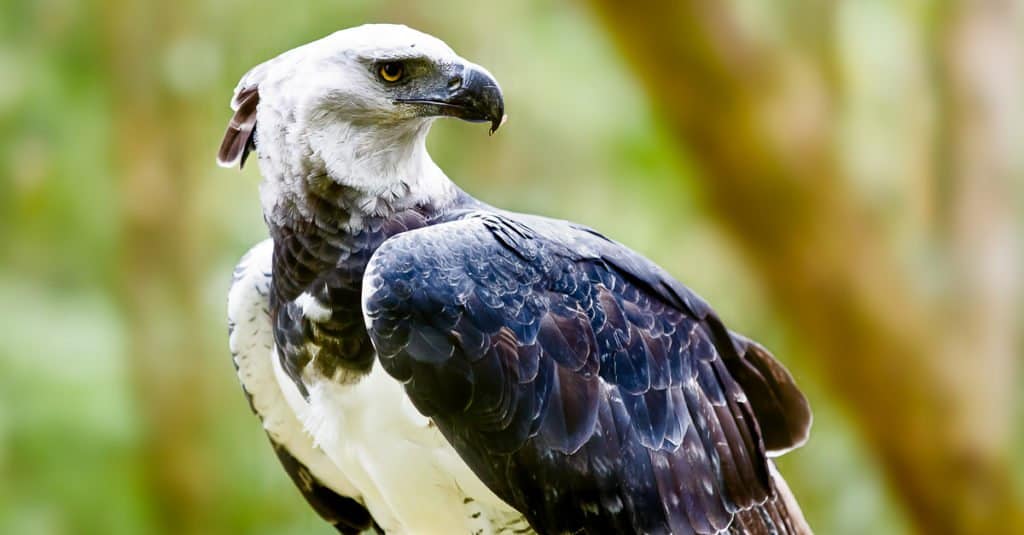
Harpy Eagle looking back to the left
The Harpy Eagle is the most powerful bird of prey in the world.

In what way did harpy eagles develop? The unique evolution of the harpy eagle, not much is known. At 50–60 million years ago, the ancestors of the animal most likely arrived on the American continent. They diverged from related species many million years ago.

It is a native of Central and South America and got its name from the horrific ladies with bird bodies known as the Harpies in Greek mythology. The harpy has long been regarded as a sacred being by people all over the Americas. Harpies, who are the top predators in their food chain, eat sloths, opossums, and monkeys.

Harpy eagles catch and consume their prey with the aid of several adaptations. They have a fantastic vision. They can see objects less than an inch in size from approximately 220 yards away. They can fly at up to 50 mph, allowing them to quickly swerve through the woods and pounce on their huge prey.

Scientific Name
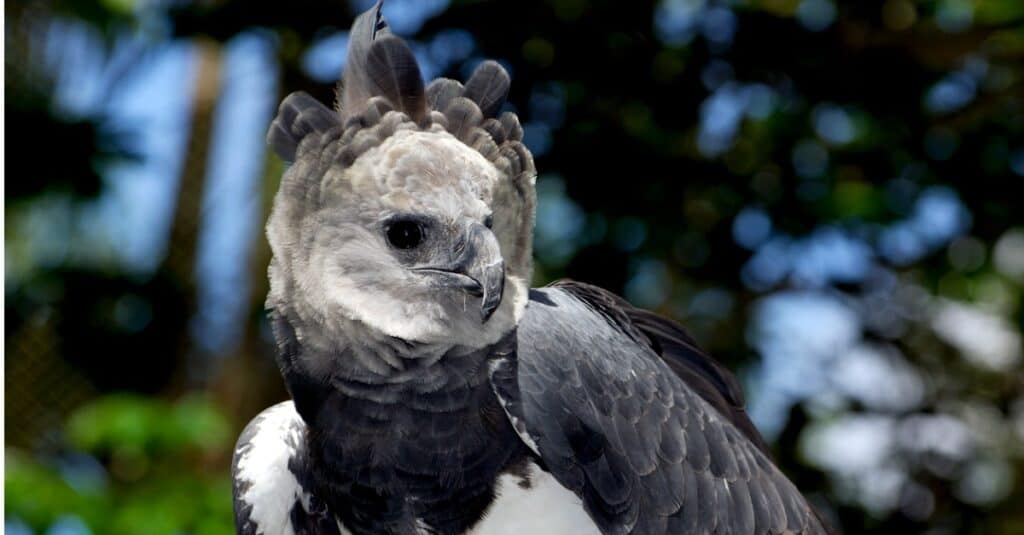
deadliest bird on earth: harpy eagle

With talons that can extend up to six inches, the harpy eagle can catch prey as large as sloths and monkeys.

The scientific name of the harpy eagle is Harpia harpyja. Alternate names for this species include the American harpy eagle and the royal hawk. The species is named after the half-human and half-bird creatures of ancient Greek mythology, perhaps because it provided such a unique sight to biologists and explorers.

The harpy eagle is the only living member of the genus Harpia. It is most closely related to the crested eagle (whose territory partially overlaps) and the New Guinea harpy eagle. More distantly, it is part of the same family of the Accipitridae, including the hawks, kites, harriers, vultures, and other eagles.

Appearance and Behavior
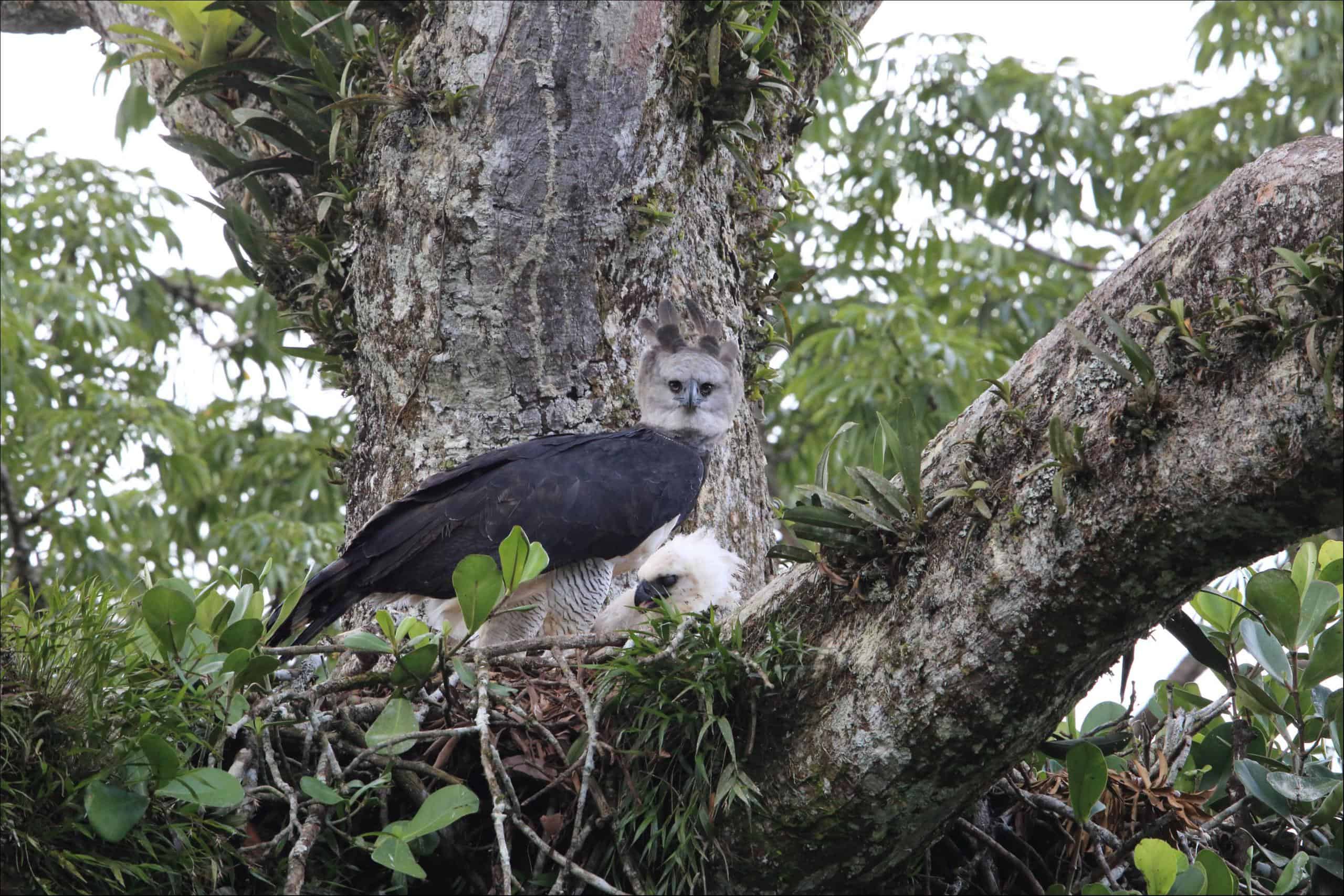
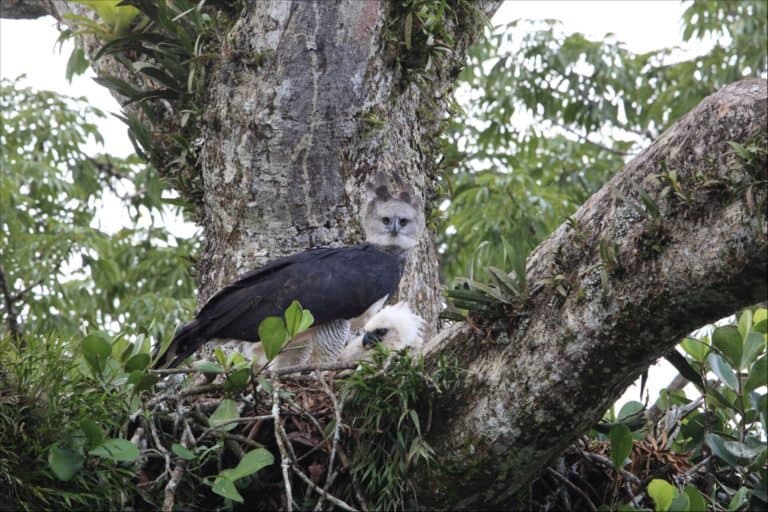
Harpy Eagle (Harpia Harpyja) harpy eagle in nest with chick

Harpy eagles are birds that are easily recognized by their distinctive coloration, including gray heads, white undersides, black back, wings, and breasts. The legs are largely white in color with black stripes. The beak, eyes, and talons are also black or reddish in color, while their feet are yellow. The top of the head contains a rich crown of long black features that it can manually raise when threatened. Some scientists also believe that the crown feathers may help direct sound to the bird’s ears.

The harpy eagle is among the largest species of eagle in the world. An individual can measure up to 40 inches and weigh up to 20 pounds — or about the size of a medium dog. Females are quite a bit heavier than males, but otherwise, there is little physical difference between the sexes.

Harpy eagles are extremely skilled hunters with sharp eyesight and the ability to carefully maneuver through dense forests with their wings. Their remarkable eyesight allows them to see prey less than an inch large from about 650 feet away. They also have good hearing to make up for their relatively poor sense of smell. Harpy eagles can achieve top speeds of around 50 mph for short periods of time, but pure speed is not their forte. Their long tail feathers have evolved primarily to help them steer and navigate around trees and vegetation.

Harpy eagles are solitary creatures that prefer to hunt alone or with a breeding partner. Sometimes a growing juvenile will assist as well. They can attack prey from either above or below, preferring to strike quickly before the victim is aware of their presence. Harpy eagles communicate with each other through a limited range of different vocalizations and visual displays, including whistles, clicks, and croaks. They tend to be more vocal around the nest and almost completely silent during hunts.

Habitat
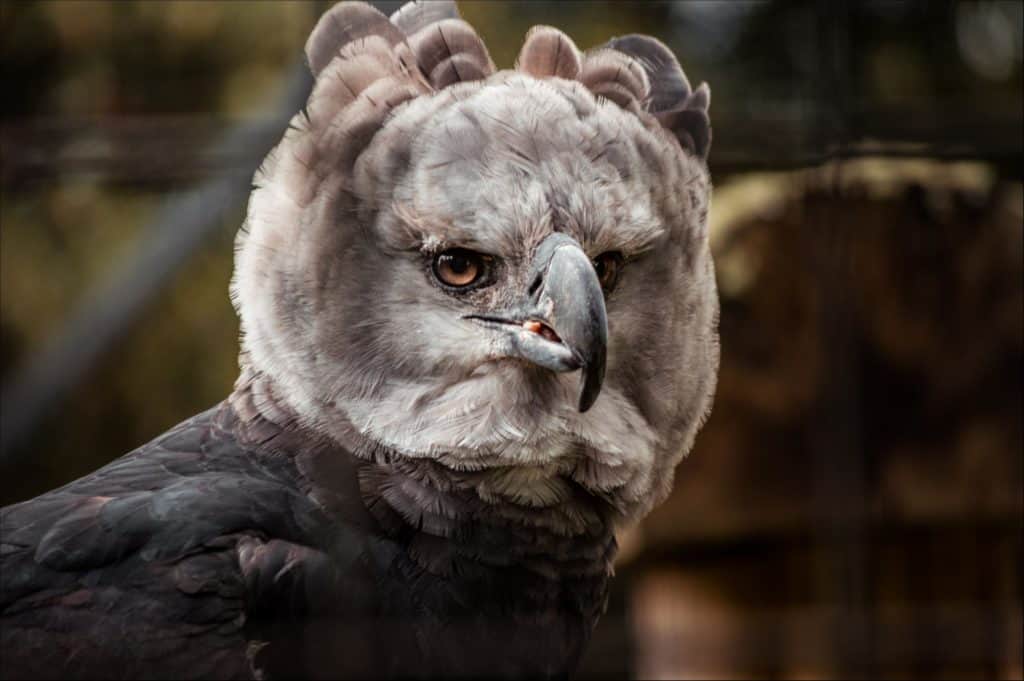
The harpy eagle prefers to inhabit the upper canopy layers of dense lowland tropical rainforests in the Western Hemisphere. It will also traverse open plains or sparse forests in search of food. This species has a sparse and discontinuous range in Mexico and Central America.

Its main range stretches across almost all of Brazil and some surrounding countries such as Venezuela, Colombia, Bolivia, and Peru (minus the mountainous regions of the Andes). Harpy eagles build nests 90 to 140 feet above the ground primarily in kapok or silk-cotton trees where the young chicks are safe from almost all potential predators except for other birds.

Diet
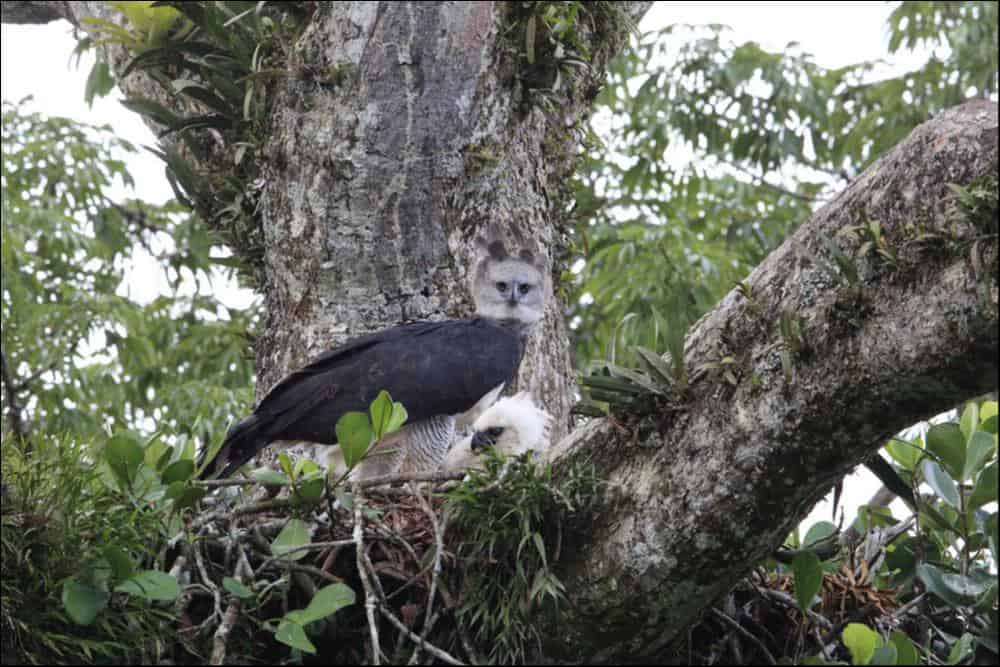
The diet of the harpy eagle largely consists of sloths and monkeys — including capuchins, howler monkeys, and spider monkeys — perhaps because these animals are easier to spot from a perch in the trees. They can also supplement their diet with lizards, rodents, small deer, and other birds.

Their remarkably long and sharp talons enable them to quickly subdue and kill prey by exerting enormous pressure of several hundred pounds at a time. They can also snatch a victim weighing up to 17 pounds straight off the ground in a single diving motion and carry it in the air for short distances. If the prey is too heavy to carry, then the eagle will partially eat it before returning to the nest.

These patient hunters can remain perched at the same location for up to a full day while waiting for prey to appear. This species can afford to be this patient. It can go up to a week before needing to feed again. And when it does make a kill, it can feast on the remains for a few days at a time. Harpies play an important role in controlling local prey populations, which could threaten other species if left unchecked.

Predators and Threats
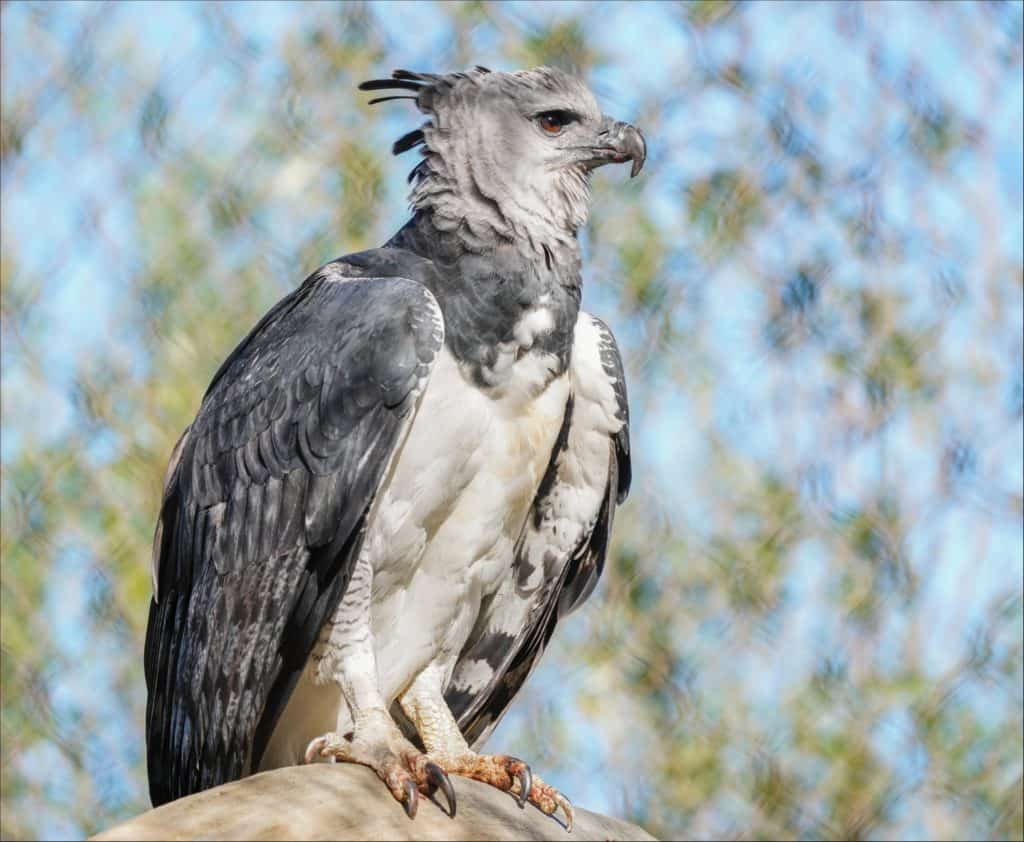
A full-grown adult harpy eagle is an apex predator that has few other natural threats in the wild. Young chicks, on the other hand, are almost entirely defenseless and may make a tempting target for other birds of prey.

That is why one of the parents must remain constantly vigilant in defense of the nest at all times of the day. The sheer height of the nest above the ground provides an almost impregnable defense against large cats and other terrestrial predators.

The greatest threat to the continued survival of the harpy eagle remains the destruction of the tropical rainforests from logging and agriculture. Given the amount of space required for its natural hunting territory, this species is particularly vulnerable to habitat loss.

Harpy eagles may also fall victim to a hunter or local farmer, who may consider them pests or easy targets (even though they only rarely feed on domestic livestock).

Reproduction, Babies, and Lifespan
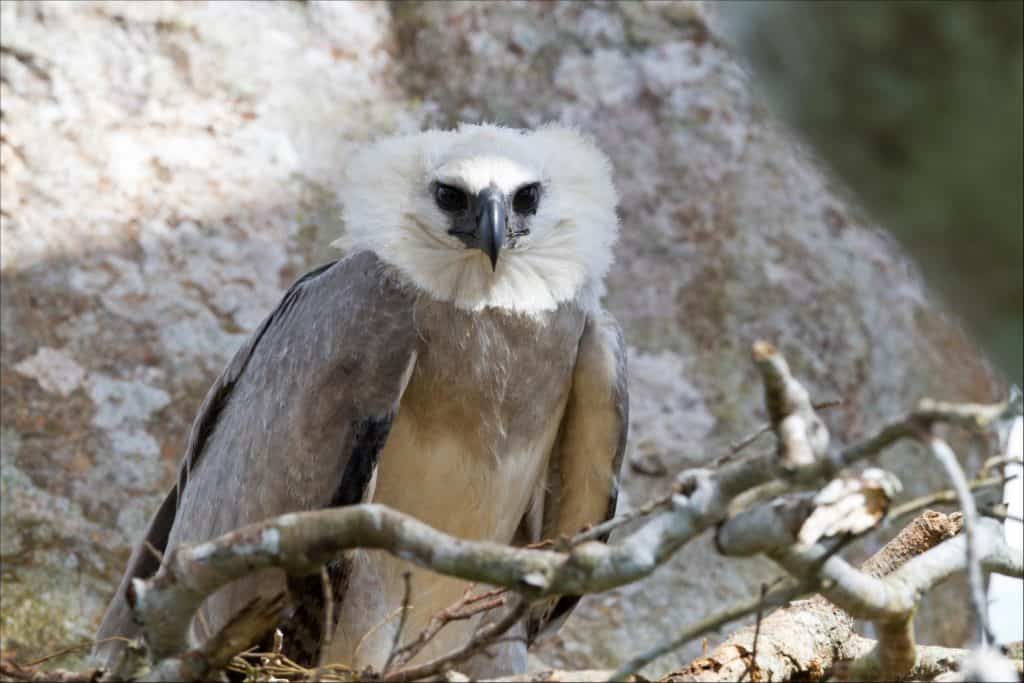
Harpy eagles are a monogamous species that appear to form lifelong bonds with their chosen mates. Their highly intimate displays of affection — including their habit of chirping at each other or rubbing their bills together. It is believed this may serve to promote a deeper bond between the couple. Together they share or split many of the duties of a married pair.

One of the most important tasks is the construction of a nest consisting of sticks, vegetation, and animal fur about five feet in diameter. Some pairs may use multiple nests throughout the years, but most pairs will prefer to reuse the same nest every year and constantly repair and rebuild it as needed.

The mating season begins with the rainy season around April or May. At some point, during this period the pair will choose to mate several times over the course of a few days. After mating, the female will typically lay two eggs at a time but raise only a single chick. If two chicks hatch, then the parents will usually leave the second one to starve.

If the first chick dies, however, then there is a good chance the second one will survive. It takes nearly two months to fully incubate an egg. The female takes on the majority of the incubation duty, while the male mostly searches for food.

The newborn chick will remain all-white for the first part of its life. After six or seven months, the chick will become fully-fledged and acquire all of its feathers. Both parents will continue to take care of the chick for the first 10 months of its life. But even after they learn to fend for themselves, the young birds may remain near their original nest for quite some time. Due to the long development time of the chick, the female only lays eggs once every two or three years.

It usually takes around three years to achieve full adult coloration. After four or five years, the eagle will finally reach full maturity and usually stay within the area of their birth. A harpy eagle can live anywhere between 25 and 35 years in the wild.

Population

The International Union for the Conservation of Nature (IUCN) Red List, which ranks the conservation status of many species on the planet, currently lists the harpy eagle as near threatened.

The population numbers, though not precisely estimated, appear to be decreasing throughout much of Central America. The species remains more robust in the interior and more remote parts of Brazil — though less common near the coasts. One study suggests there are less than 50,000 individuals remaining in the wild.

The continued loss and degradation of the Brazilian Amazon for human development could put the species under greater pressure in its main range. In a 50-year span, the species may have already lost up to half of its natural habitat.

Experts worry that at some point the loss of the Amazon may become irreversible. And given the immense amount of effort required to raise a single chick, numbers may be slow to recover again once they start decreasing.

Efforts are underway by many conservation organizations such as the Peregrine Fund to prevent the further loss of population numbers and reintroduce the species into its former habitat. In order to bolster harpy eagle numbers, however, local governments will need to make greater strides in the preservation of the remaining rainforest habitat from further destruction. They will also need to restore what’s been already lost.

FAQ

How big is a harpy eagle?

Harpy eagles can measure anywhere between 35 and 40 inches long with a wingspan of around six feet. There is some variability in the size difference between individuals and even the sexes. Whereas males can weigh anywhere between 11 and 17 pounds on average, females can weigh between 15 and 20 pounds on average.

What does a harpy eagle eat – are they carnivores, herbivores, or omnivores??

Harpy eagles primarily feed on sloths and monkeys and less commonly, rodents, deer, and other birds. Thanks to its sharp eyesight and remarkable flight ability, the animal can spot potential prey in the canopy and snatch it right out of a tree with its talons.

Where do harpy eagles live?

The harpy eagle lives in the lowland tropical forests throughout Central and South America. Its range extends in a somewhat uneven distribution from southern Mexico to northern Argentina.

How did the harpy eagles evolve?

Not a whole lot is understood about the evolution of the harpy eagle, specifically. The ancestors of the species probably reached the American continent around 50 to 60 million years ago. They split off from similar species a few million years ago.

View all 288 animals that start with H
Rebecca Bales

About the Author

Rebecca Bales

Rebecca is an experienced Professional Freelancer with nearly a decade of expertise in writing SEO Content, Digital Illustrations, and Graphic Design. When not engrossed in her creative endeavors, Rebecca dedicates her time to cycling and filming her nature adventures. When not focused on her passion for creating and crafting optimized materials, she harbors a deep fascination and love for cats, jumping spiders, and pet rats.
Connect:

Thank you for reading! Have some feedback for us?


Harpy Eagle FAQs (Frequently Asked Questions)

Harpy Eagles are Carnivores, meaning they eat other animals.