
Quick Take
- The most venomous snake in the world is surprisingly docile, and it is not the one most people fear. Meet the docile record-holder →
- One snake on this list gives its victims a false sense of safety, and that false sense of safety is exactly what makes it lethal. See the deceptive delay →
- The most venomous snake and the deadliest snake to humans are not the same animal, and that distinction matters. Understand the deadly distinction →
- One bite from a snake ranked outside the top five can theoretically kill 65 people, yet most people have never even heard of it. Discover the 65-person bite →
Did you know that there are more than 3,000 types of snakes on the planet? Of those, about 600 are venomous, and an even smaller number of venomous snakes are dangerous to humans. Scientists use the LD50 (Lethal Dose, 50%) test to rank snake venom potency. The smaller the number, the deadlier the snake. This measurement determines the exact amount of venom needed to kill half of a test group of mice. Because a lower number indicates that a microscopic drop is fatal, a smaller score represents a much more concentrated and highly toxic venom. Using this standard eliminates variables such as snake size or aggression and ranks them purely on chemical strength. Continue reading to learn about the 10 most venomous snakes in the world.
10. Fer-De-Lance / Terciopelo
| LD50 Amount | Average Venom Injected per Bite |
|---|---|
| 3 mg | 500-1500 mg |
Located in Central and South America and Mexico, the fer-de-lance (Bothrops asper) is one of the most dangerous pit vipers.
Reaching lengths of 8 feet and weighing an average of 10-13 pounds, the Fer-De-Lance is considered one of the most dangerous snakes in the Americas because it lives in proximity to humans.
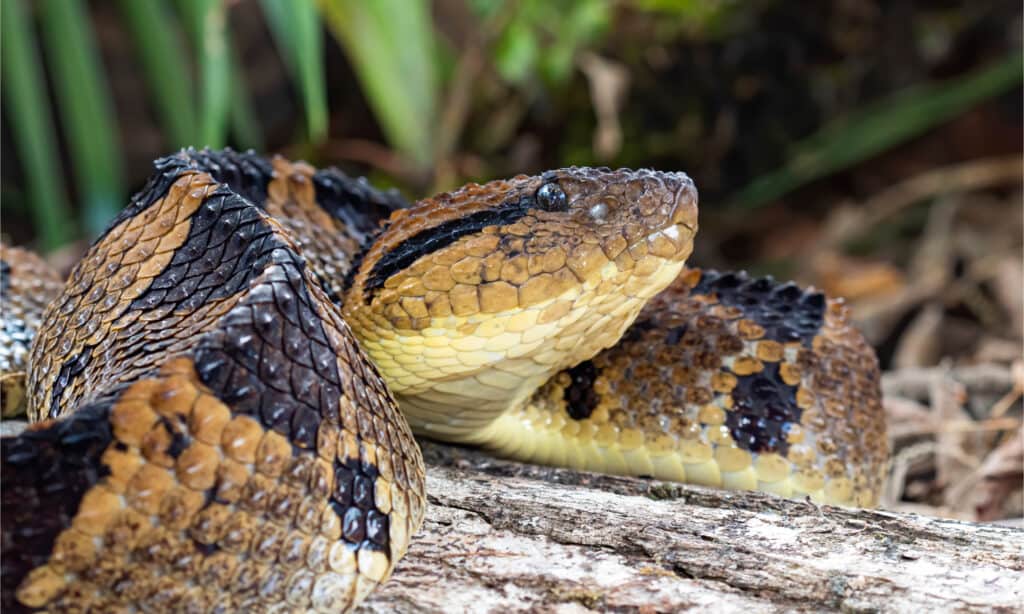
The fer-de-lance injects a large amount of venom per bite.
©Jim Cumming/Shutterstock.com
The fer-de-lance delivers an average of 500-1500 mg of venom in a single bite. Left untreated, a fer-de-lance bite has a mortality rate of between 5% and 10%. Victims die from severe internal complications, including intracranial hemorrhaging (bleeding in the brain), acute kidney failure, blood poisoning (sepsis), or hemorrhagic shock caused by massive blood loss.
Even when a bite is not fatal, the severe tissue-destroying nature of the venom results in long-term disabilities or amputations for approximately 6% of survivors. However, antivenom significantly lowers the risk of death.
9. King Cobra
| LD50 Amount | Average Venom Injected per Bite |
|---|---|
| 1 mg | 400-1000 mg |
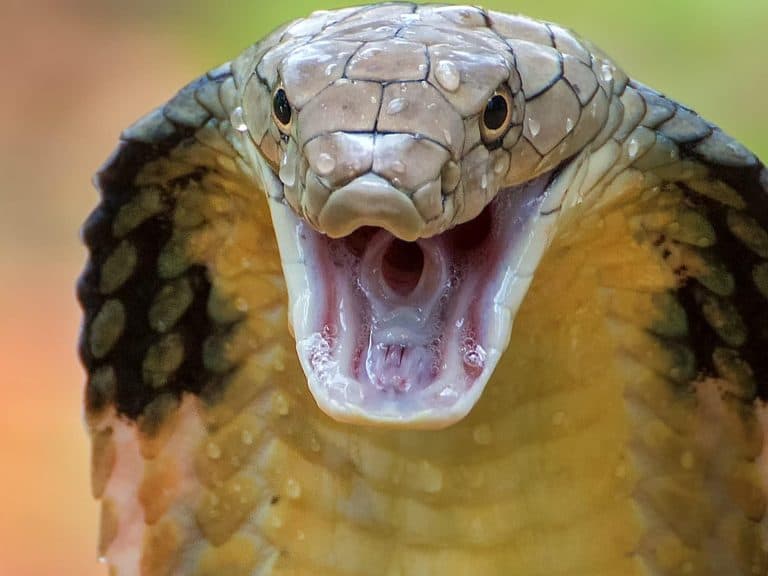
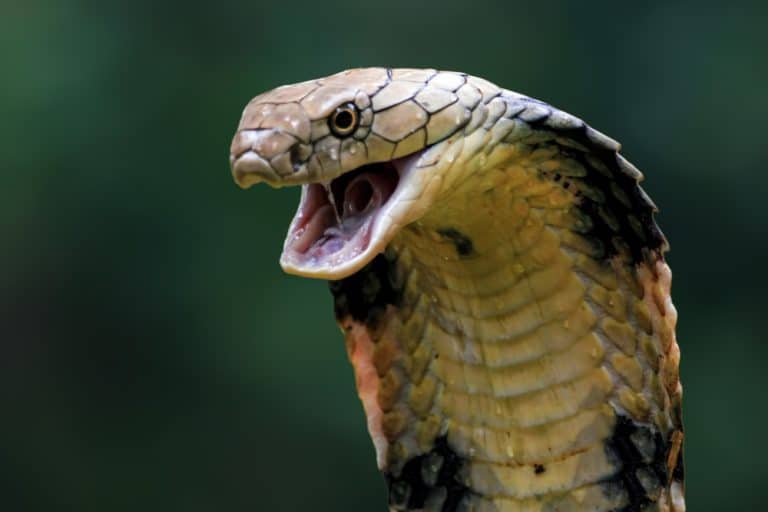
No one would argue that the king cobra (Ophiophagus hannah) is among the most venomous snakes in the world, and for good reason.
Not only does the king cobra inject an average of 400-1000 mg of venom per bite, but its venom is potent enough that it could kill approximately 11 humans in one bite. Native to Southern Asia, the king cobra reaches lengths of 10-13 feet, far longer than any other venomous snake.
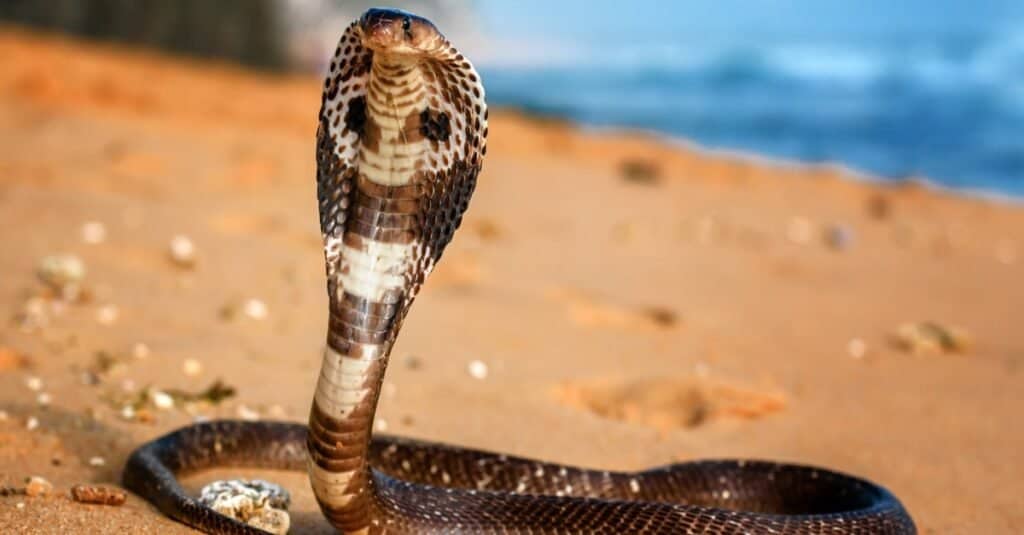
Known as the longest venomous snake in the world, the king cobra has a fearsome reputation.
©Vova Shevchuk/Shutterstock.com
Research suggests that king cobra bites can kill a person in as little as 30 minutes, given the high level of neurotoxins and cytotoxins present.
Given the long length of the king cobra, it often bites higher up on the body. Bites to the upper body, especially the chest or neck, are far more dangerous and fast-acting. When venom is injected closer to the heart, lungs, and central nervous system, it enters the primary bloodstream and reaches vital organs much more quickly.
8. Boomslang
| LD50 Amount | Average Venom Injected per Bite |
|---|---|
| 0.1 mg | 1-8 mg |
An arboreal snake found throughout most of Africa, especially Swaziland, Botswana, Namibia, Mozambique, and Zimbabwe, the boomslang (Dispholidus typus) has an incredibly potent bite. Although the boomslang does not inject a large volume of venom per bite, its LD50 amount is so low that its bite is still deadly.
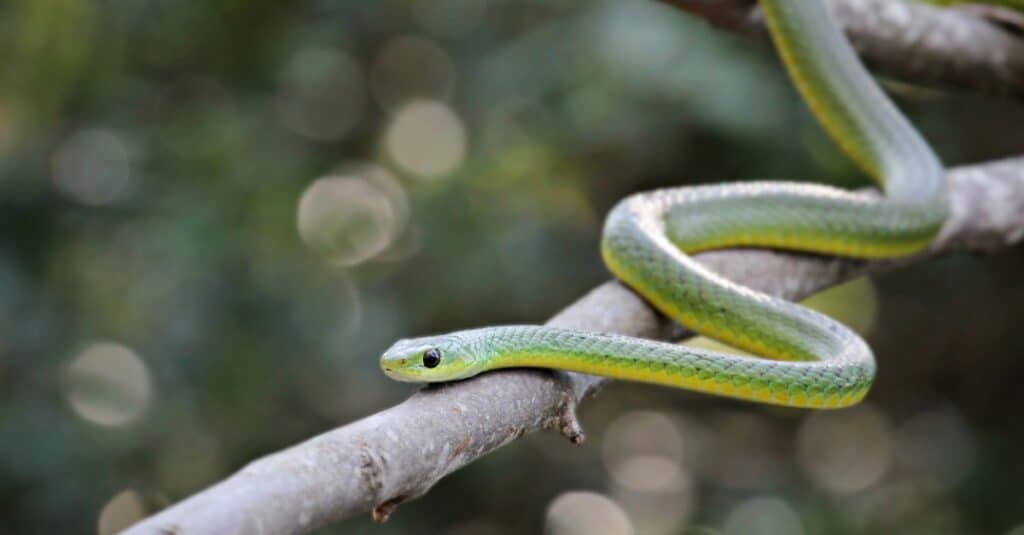
Despite belonging to the Colubridae family, the boomslang is extremely venomous, capable of opening its jaw 170 degrees to bite.
©iStock.com/FroeMic
But what’s even more dangerous than the venom from the boomslang? The false sense of security it gives people after they have been bitten.
Many boomslang snakebite victims assume that they have been bitten by a dry bite or received a nonlethal dose of venom because the symptoms do not appear immediately. However, once the symptoms of the bite are evident, it is already too late: boomslang venom prevents blood from coagulating inside the body, resulting in internal bleeding, and hemorrhaging in vital organs.
7. Russell’s Viper
| LD50 Amount | Average Venom Injected per Bite |
|---|---|
| 0.16 mg | 130-250 mg |
Considering the fact that 40-70 mg of Russell’s viper (Daboia russelii) venom is enough to kill the average person, the bite of this snake is particularly dangerous. In fact, Russell’s vipers kill more people in Sri Lanka, Burma, and India than any other snake.
Russell’s vipers are found in open grasslands across the Indian subcontinent, hunting in highly populated areas, making Russell’s vipers a considerable danger.
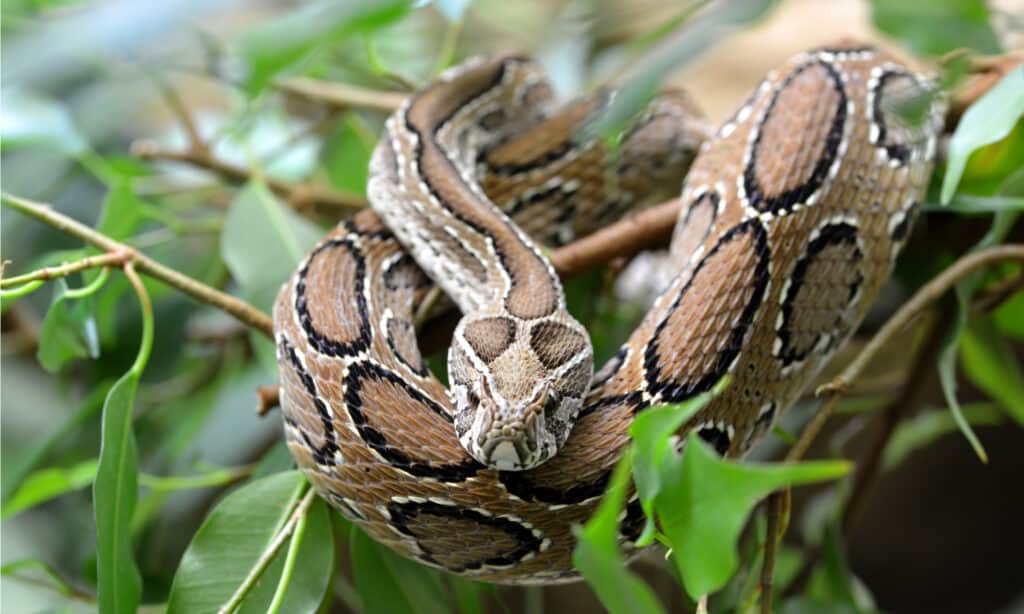
Rusell’s vipers are so venomous that they have a mortality rate of around 2.6% in India.
©jaroslava V/Shutterstock.com
Localized swelling and bleeding are common with the bite of Russell’s viper, and this snake’s envenomation can have adverse side effects for as long as two weeks, depending on severity. Statistics for untreated bites show that over 30% of victims die from kidney failure.
6. Black Mamba
| LD50 Amount | Average Venom Injected per Bite |
|---|---|
| 0.3 mg | 100-400 mg |
You’ve likely heard about the black mamba (Dendroaspis polylepis) in terms of its dangerous qualities and fearsome reputation. And it is well-deserved. Native to sub-Saharan Africa, the Black Mamba has a bite to rival just about any other snake on this list.
The black mamba is the largest venomous snake in Africa, often reaching 10 feet. Black mambas can raise their bodies in the air like a cobra, and frequently bite more than once, snapping quickly before fleeing at speeds of up to 12 miles per hour.
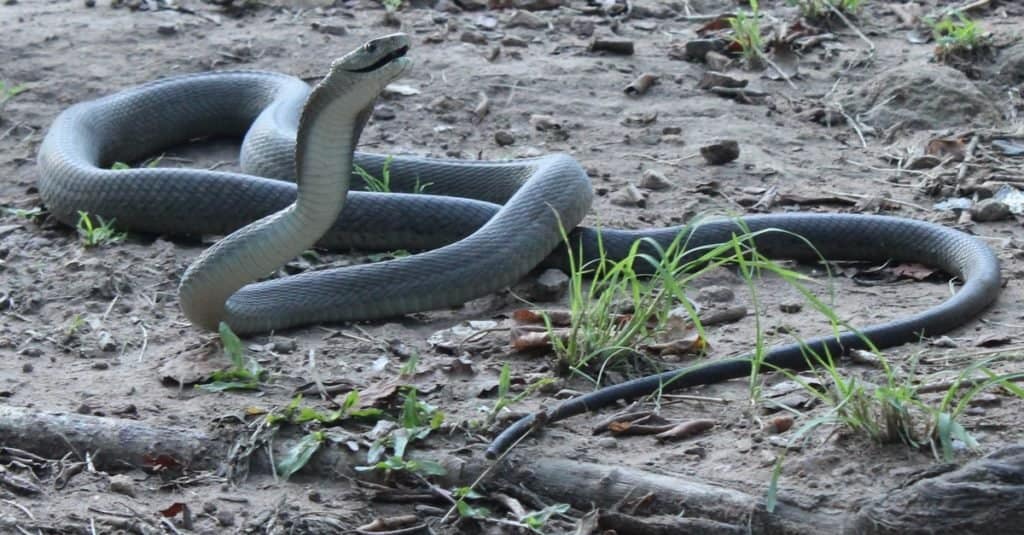
One of the most feared snakes in the world, the black mamba has aggression and a potent bite behind it.
©Cormac Price/Shutterstock.com
The black mamba has an extremely lethal type of venom and can inject between 100 and 400 mg of venom in a single bite. Most symptoms begin in as little as ten minutes, and the average person perishes within 6-14 hours of being bitten.
The black mamba’s bite also has analgesic properties that make its victims feel as if they haven’t been bitten, or perhaps the bite isn’t as extreme as it actually is. The black mamba’s bite has a mortality rate of 100% without treatment, but it drops significantly when antivenom is administered promptly.
3. Eastern Brown Snake
| LD50 Amount | Average Venom Injected per Bite |
|---|---|
| 0.03 mg | 5-75 mg |
Considered the second-most venomous terrestrial snake due to its venom potency, the eastern brown snake (Pseudonaja textilis) has a bite to be feared. Native to Australia, this snake is responsible for the most snakebite deaths on the continent.
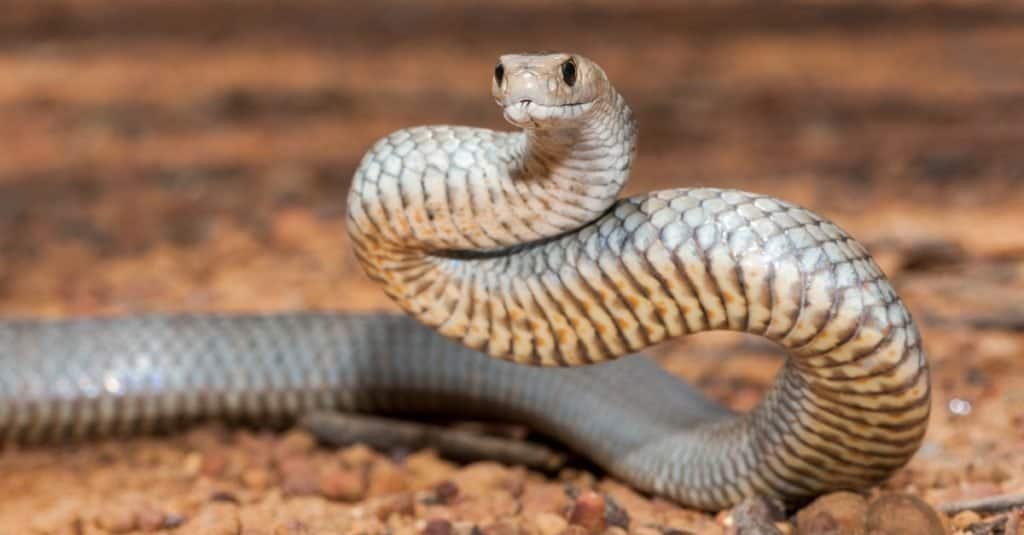
The venomous Australian Brown Snake is responsible for about 60% of snake-bite deaths in Australia.
©Ken Griffiths/Shutterstock.com
As little as 3 mg of Eastern brown snake venom kills the average human, which tends to live in densely populated areas.
While the size of the Eastern brown snake affects the amount of venom it injects, it doesn’t make a juvenile bite any less potent; even though a smaller snake injects a lower overall volume of venom, its still enough to be lethal. Eastern brown snake venom specifically targets coagulation factors in the body, altering the blood’s ability to clot. Internal bleeding and cardiac arrest are common causes of death.
Thanks to antivenom, deaths from the Eastern brown snake’s bite are rare, resulting in one or two fatalities per year.
4. Dubois’s Sea Snake
| LD50 Amount | Average Venom Injected per Bite |
|---|---|
| 0.04 mg | 1-10 mg |
Living among coral reef flats in the Indo-Pacific, inhabiting the coastal areas of Papua New Guinea, New Caledonia, and Australia, the Dubois’ sea snake (Aipysurus duboisii) is considered the most venomous aquatic marine snake.
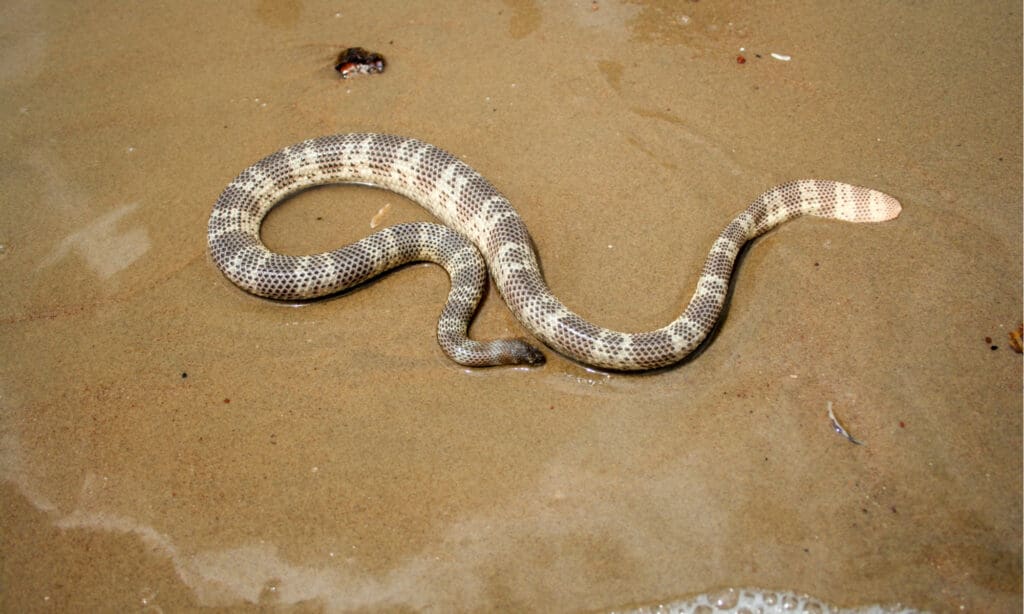
The most venomous sea snake in the world, the Dubois’ sea snake is a docile creature.
©IHX/Shutterstock.com
Although there are no records of human fatalities from the Dubois sea snake’s bite, with an LD50 amount of 0.04mg, this sea snake would be lethal were it to strike.
3. Forest Cobra
| LD50 Amount | Average Venom Injected per Bite |
|---|---|
| 0.22 mg | 570-1100 mg |
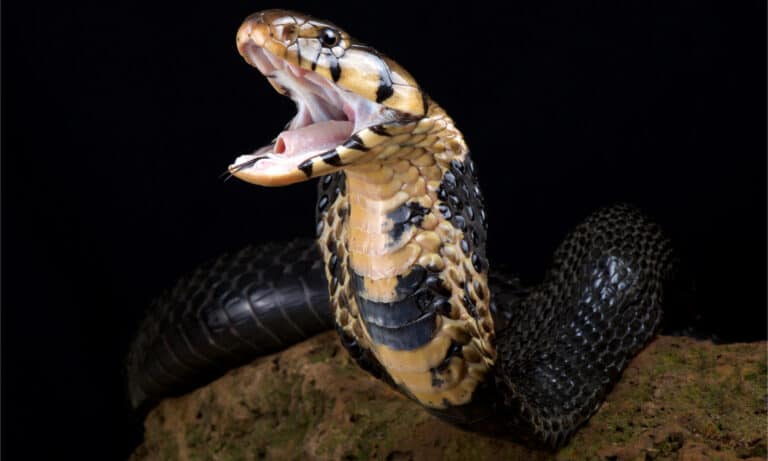
The forest cobra (Naja melanoleuca) has a potent enough bite and a high enough venom yield to kill 65 fully-grown people in a single bite!
Because of its LD50 score (0.22), as well as the high volume of venom (570-1100 mg) it is capable of injecting, the forest cobra rivals a great number of venomous snakes in terms of its potency.
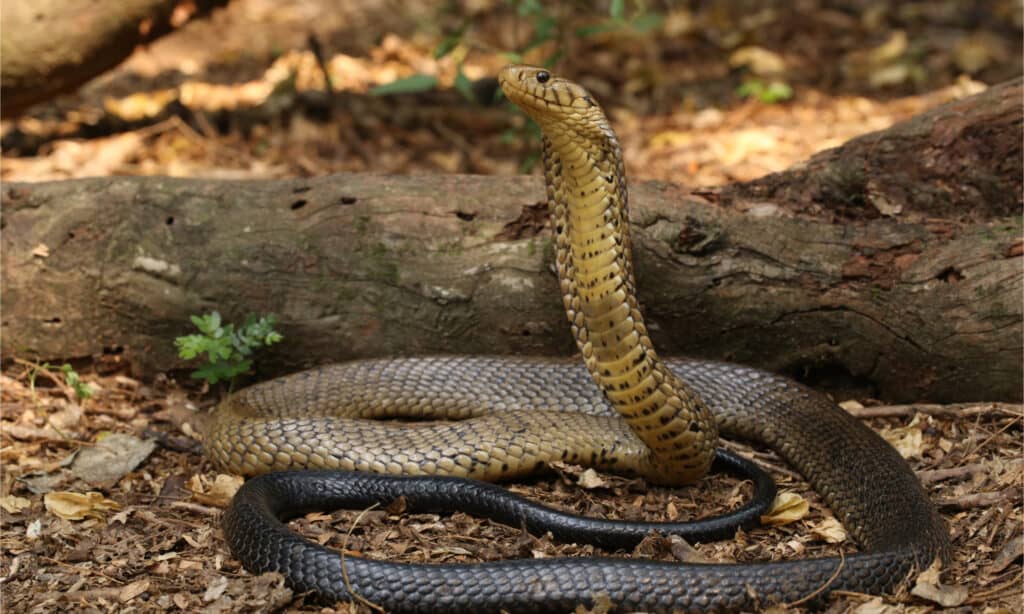
Considered the largest true cobra species, the forest cobra reaches lengths of up to ten feet.
©NickEvansKZN/Shutterstock.com
Native to Africa, the forest cobra is highly adaptable in both its diet and behavior. The forest cobra doesn’t come into contact with humans often; however, its bite can cause severe symptoms in as little as 30 minutes, including drowsiness, organ failure, and paralysis.
2. Coastal Taipan
| LD50 Amount | Average Venom Injected per Bite |
|---|---|
| 0.1 mg | 100-400 mg |
While the name might suggest that this snake only lives near the ocean, the coastal taipan (Oxyuranus scutellatus) is found throughout Australia. Also known as the common taipan, this highly venomous snake could kill as many as 56 people with a single bite!
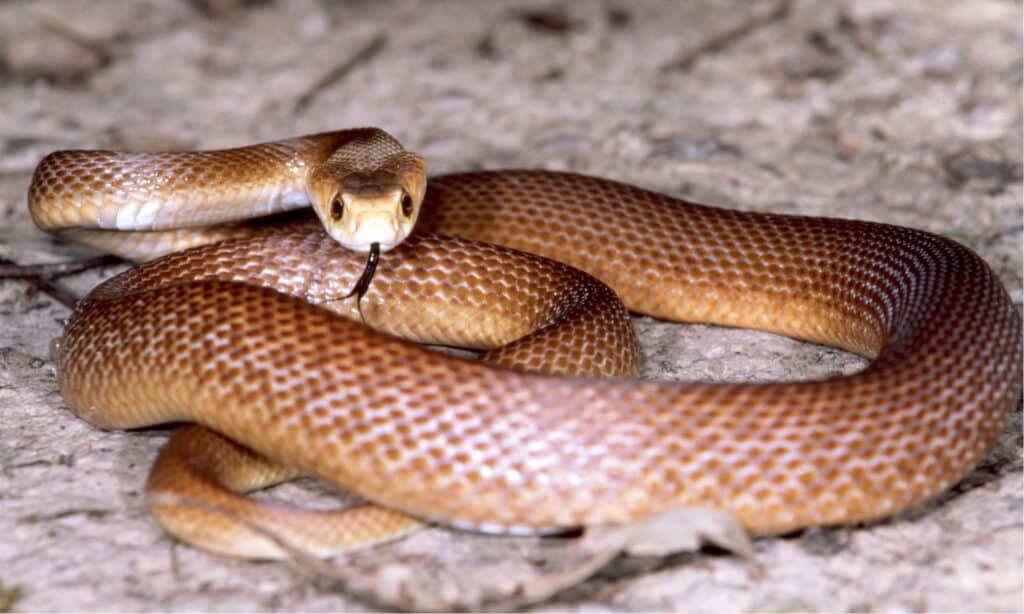
Among the taipan snake varieties, the coastal taipan is one of the most venomous snakes in Australia.
©Ken Griffiths/Shutterstock.com
If you are bitten by a coastal taipan, the neurotoxins found in the venom may alter your body for the rest of your life. Even those who receive medical treatment within 2 hours of being bitten still have the potential for respiratory paralysis and kidney injury. With antivenom widely available, deaths from the coastal tipan bite have become rarer, averaging one fatality per year.
1. Inland Taipan
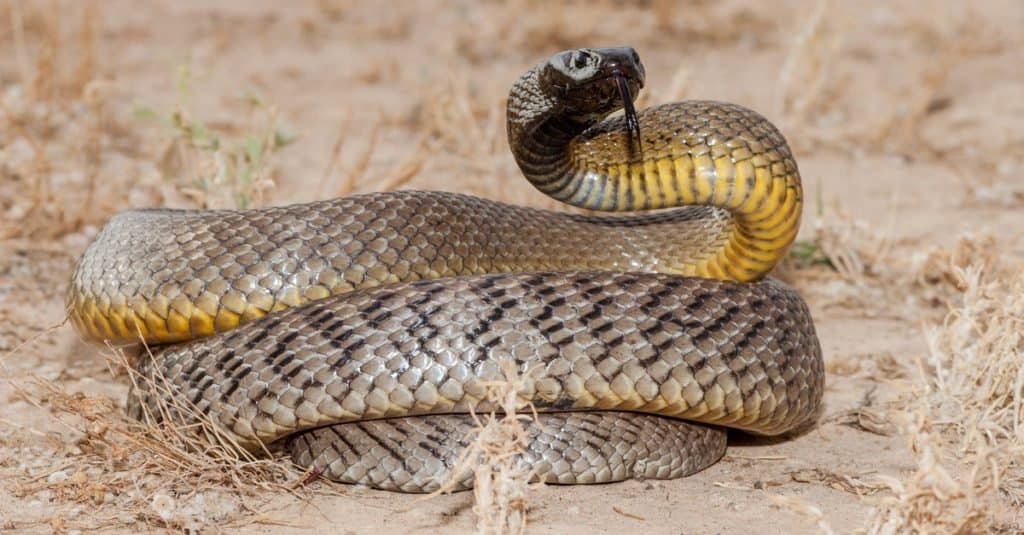
The very venomous Inland Taipan is an agile snake that is able to bite 8 times in a single attack.
©Ken Griffiths/Shutterstock.com
| LD50 Amount | Average Venom Injected per Bite |
|---|---|
| 0.01 mg | 44-110 mg |
Arguably the most venomous and the deadliest snake in the world, the inland taipan has the lowest LD50 rating out of all of the snakes found here: a whopping 0.01mg. In fact, the inland taipan bites with only 44-110mg of venom per bite, and this is still enough to kill 289 humans! Not only does it envenomate more than 80% of the time, it also has the capability of biting repeatedly.
However, despite this potency, the inland taipan is regarded as docile, preferring to be left alone by humans at all costs. If you happen to get bitten by this taipan, seeking an emergency medical center is a must. There are enough potent neurotoxins in this snake’s venom to kill a fully grown person in as little as 45 minutes. Symptoms include paralysis, muscle damage, internal bleeding, and kidney failure.
Just like all of the other venomous snakes on this list, it is important to always maintain respect for the inland taipan. All snake species prefer to be left alone, and it’s likely that you want to keep it that way too!
The Deadliest Snake in the World to Humans: Saw-scaled Viper
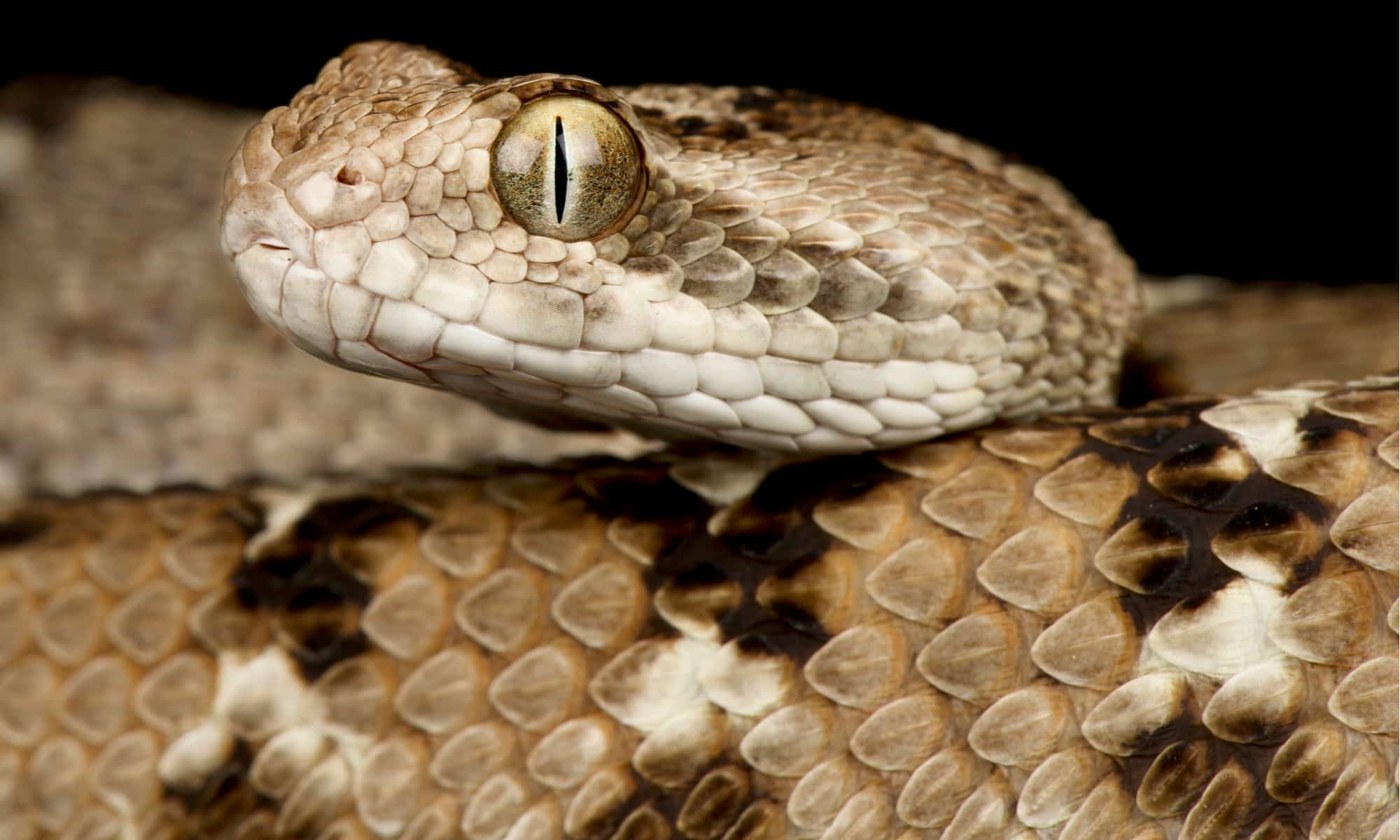
The saw-scaled viper kills 4,000-5,000 people annually in India alone.
©reptiles4all/Shutterstock.com
While we’ve covered the most venomous snakes in the world, it bears mentioning that just because their venom is the most toxic, these snakes aren’t necessarily the most deadly to human beings. Actually, the one snake that takes the prize as the deadliest snake in the world to humans is considered to be the saw-scaled viper, which is responsible for the most human snake deaths on the planet.
Found in dry regions of Africa, the Middle East, India, Sri Lanka, and Pakistan, this pit viper often dwells in areas highly populated by humans. Couple that with the fact that there’s a lack of antivenom in many rural places where humans become victims to their bites, and you have a snake that should possibly be feared by humans above all others.