
Quick Take
- Over 400 bird species have been recorded in Nebraska, including over 200 breeding species.
- Nebraska is also a crucial stop on the Central Flyway from Canada to South America.
- The Platte River Valley is the best place to see hundreds of thousands of sandhill cranes during migration.
Birders from across the country come to Nebraska each spring to see the sandhill crane migration, which is often considered one of the most incredible nature experiences in North America. Nebraska has many habitats that are attractive to birds, including prairies, wetlands, and hardwood forests. The state is also a crucial stop on the Central Flyway from Canada to South America, which spans the Great Plains Region. Over 400 bird species have been recorded in Nebraska, including over 200 that breed in the state. Read on to find out the best places to see Nebraska’s migratory and resident birds.
Spring Creek Prairie Audubon Center
Spring Creek Prairie Audubon Center is a 1,160-acre tallgrass prairie sanctuary in southeast Nebraska. Once a ranch, these grasslands are now home to an Audubon visitor center featuring interactive exhibits and miles of trails winding through the prairie. In spring, listen for the booming calls of male greater prairie-chickens. You can also spot nesting birds such as northern bobwhite, bobolinks, and upland sandpipers. In winter, northern harriers hunt over the prairie. Visitors can even see wagon-wheel ruts left by travelers on the Oregon Trail in the mid-19th century.
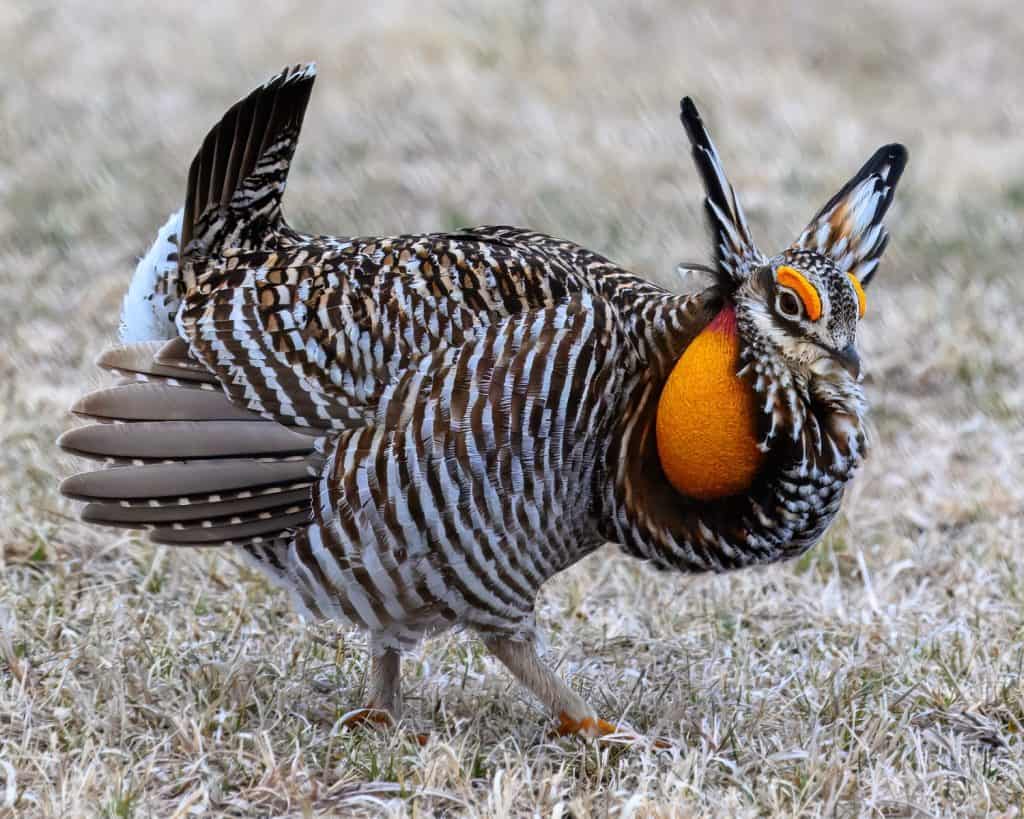
Greater prairie-chickens nest in the tallgrass prairies of the Spring Creek Prairie sanctuary.
©Aaron J Seltzer/Shutterstock.com
Some of the birds you may see at the Spring Creek Prairie Audubon Center include:
- Eastern and western meadowlark
- Northern shrike
- Grasshopper sparrow
- Henslow’s sparrow
- Dickcissel
- Sprague’s pipit
- Le Conte’s sparrow
- Rough-legged hawk
- Smith’s longspur
- Harris’s sparrow
Iain Nicolson Audubon Center at Rowe Sanctuary
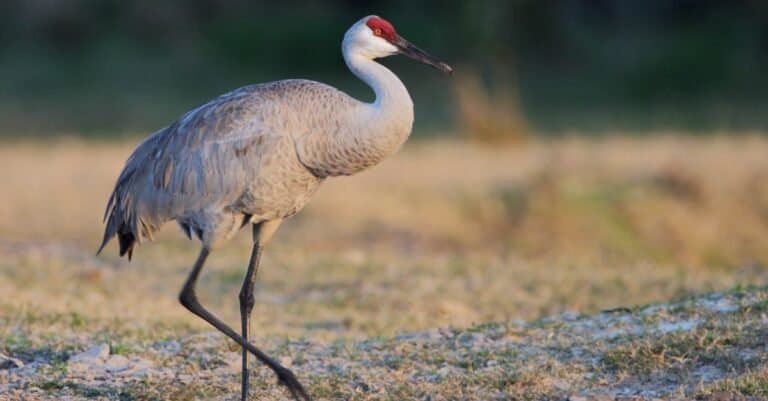
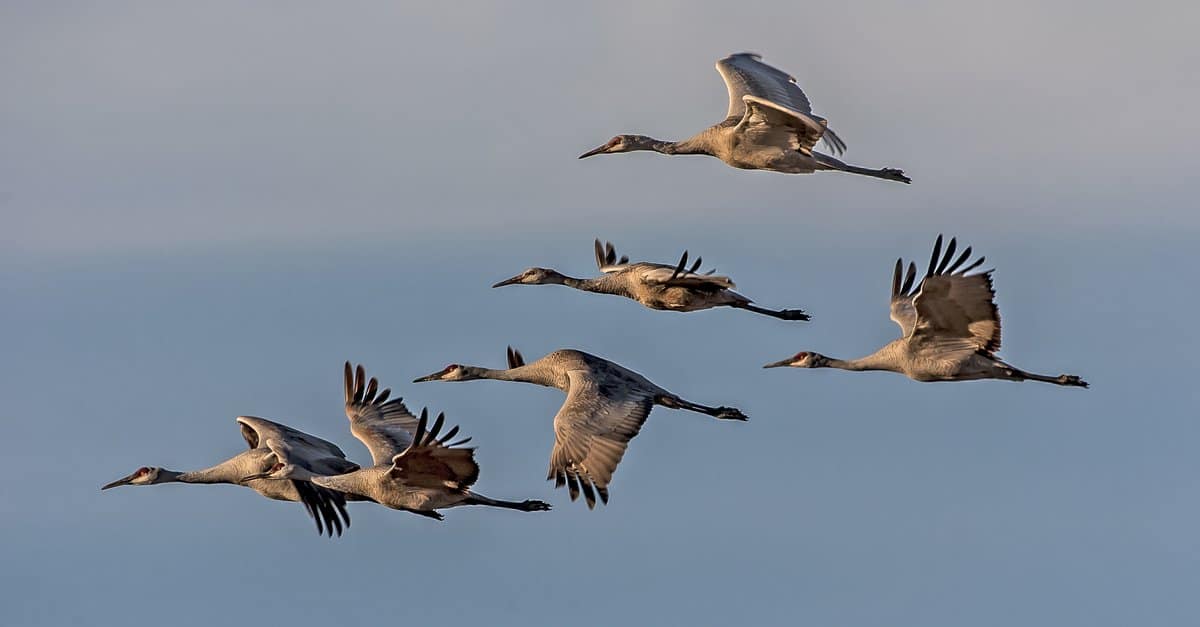
Located along the Platte River, the Iain Nicolson Audubon Center at the Lillian Annette Rowe Sanctuary is one of the best bird-watching locations in Nebraska and all of North America. About 80% of the world’s population of sandhill cranes congregate in the Platte River Valley each spring. Some cranes remain through the winter, but peak numbers are generally between early March and early April. Small groups of migrating whooping cranes may also be seen, typically in early April. The center offers guided crane tours and other special programs and events.

Sandhill cranes gather along the Platte River on their northward migration each spring.
©David Grimes/Shutterstock.com
Other birds you may see at the Rowe Sanctuary include:
- Interior least tern
- Grey catbird
- Bald eagle
- Sedge wren
- Common yellowthroat
- Swainson’s hawk
- Bobolink
- Western and eastern meadowlark
- Brown thrasher
- Yellow warbler
Branched Oak State Recreation Area
The Branched Oak State Recreation Center is a popular spot for boating, fishing, and camping. It is also a well-known destination for birders hoping to view bald eagles in the spring. Waterfowl are abundant on and around the 1,800-acre Branched Oak Lake. Many snow geese gather here during the spring. From fall through spring, visitors can expect to see ducks, gulls, loons, terns, and grebes. Shorebirds abound when mudflats are exposed, particularly in the western part of the lake.
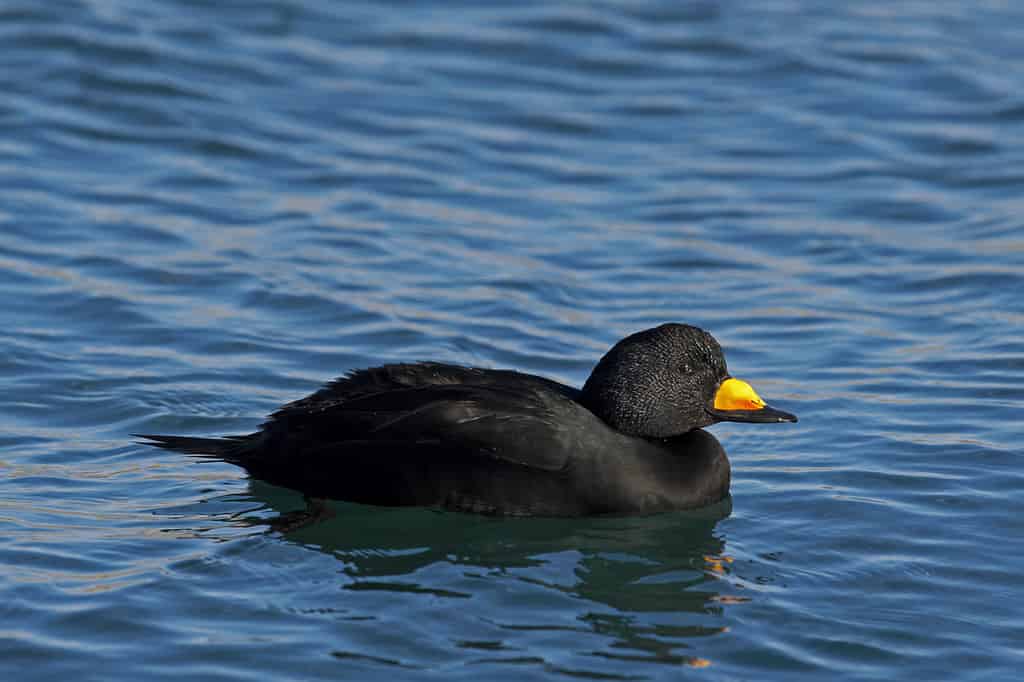
Black scoters (shown above), neotropic cormorants, red-throated loons, and California gulls are a few of the rare birds seen at Branched Oak.
©rock ptarmigan/Shutterstock.com
Other bird species you may see at Branched Oak State Recreation Area include:
- American white pelican
- Osprey
- Northern bobwhite
- Red-headed woodpecker
- Wild turkey
- Bell’s vireo
- Willow flycatcher
- Orchard oriole
- Dickcissel
- Grasshopper sparrow
Crescent Lake National Wildlife Refuge
Crescent Lake National Wildlife Refuge is located at the southwestern end of the Nebraska Sandhills, which is the largest ecosystem of sand dunes in the Western Hemisphere. The refuge has 45,800 acres of rolling, grass-covered hills, interdunal valleys, and 21 wetland complexes overseen by the U.S. Fish and Wildlife Service. Visitors can see nesting shorebirds and a wide variety of waterbirds during migration and nesting seasons. Birds such as burrowing owls, northern harriers, loggerhead shrikes, and many others breed in the extensive grasslands.
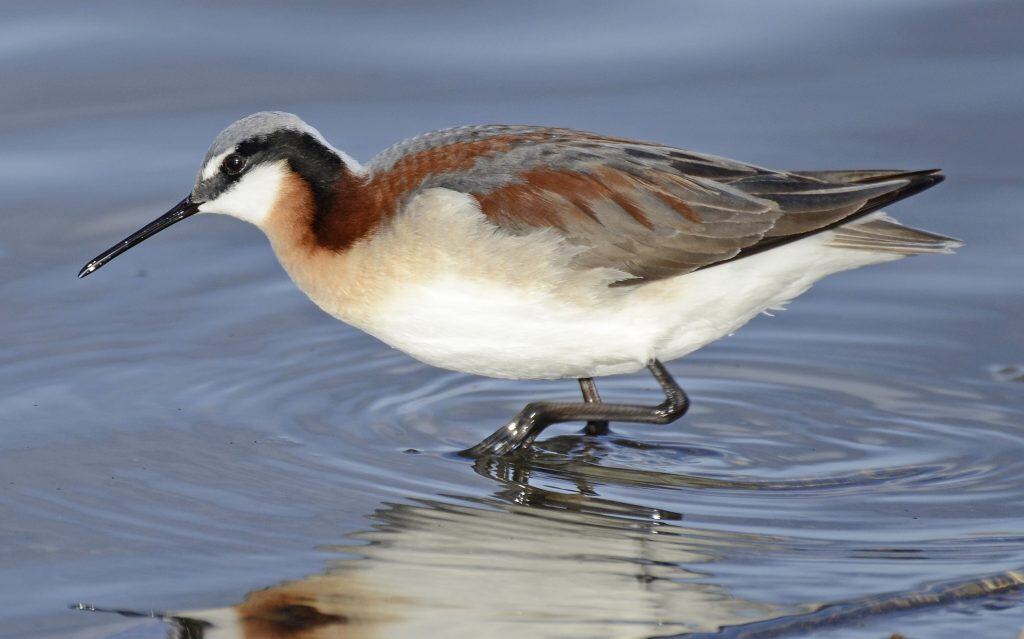
Wilson’s Phalarope is often seen spinning in the water, creating whirlpools to pull invertebrates to the surface.
Other birds commonly seen at the Crescent Lake National Wildlife Refuge include:
- Pied-billed grebe
- Black-crowned night-heron
- White-faced ibis
- Sora
- American bittern
- Virginia rail
- American avocet
- Willet
- Black tern
- Yellow-headed blackbird
Ponca State Park
Ponca State Park is located along the Missouri River in northeastern Nebraska. Its forested bluffs, grasslands, woodlands, and wetlands attract a wide variety of birds. In fact, the park’s bird list has recorded more than 260 species. The wetlands are a popular stopover for many migrating bird species, such as the bald eagle, double-crested cormorant, osprey, and American white pelican, which use the Missouri River as a flyway in the spring and fall.
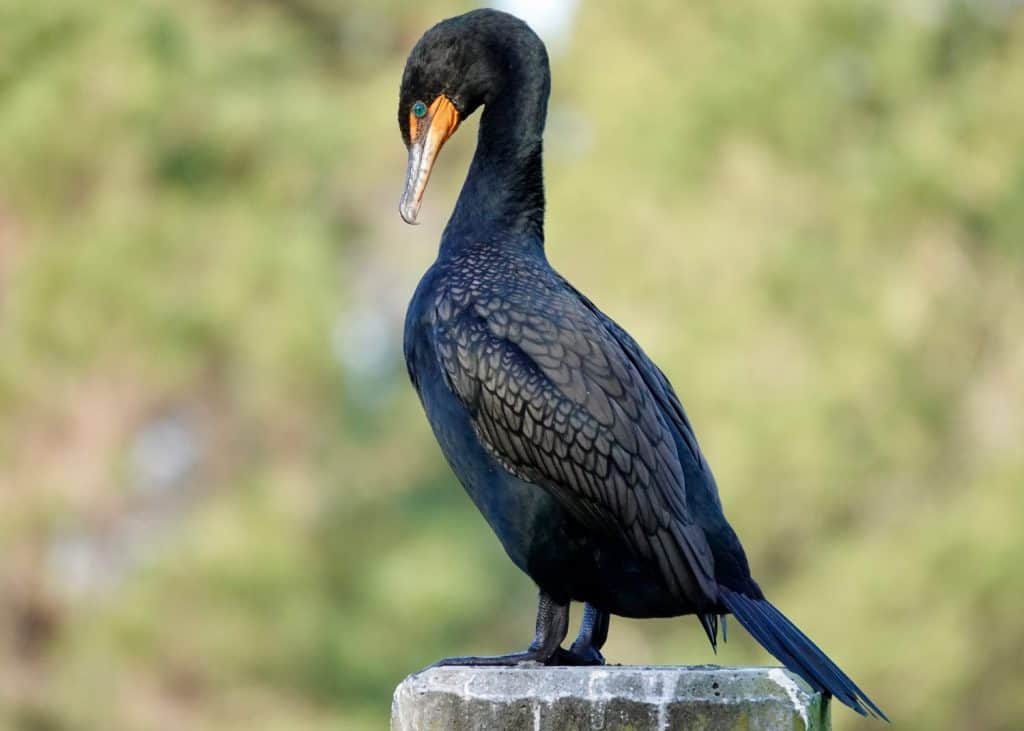
Migrating birds such as the double-crested cormorant stop at Ponca State Park on their way north in the spring.
©Chris Klonowski/Shutterstock.com
Other birds commonly seen at Ponca State Park include:
- Least tern
- Eastern whip-poor-will
- Ovenbird
- Eastern towhee
- Red-headed woodpecker
- Yellow-throated vireo
- Rose-breasted grosbeak
- American redstart
- Scarlet tanager
- Baltimore oriole
Indian Cave State Park
Bordering the Missouri River in southeastern Nebraska, Indian Cave State Park encompasses 3,052 acres of diverse habitats, including sandstone bluffs, grasslands, hardwood forests, and the large sandstone Indian Cave. Spring and summer are the best seasons to see eastern songbirds, while May and June are recommended for migrant and resident warblers including the Kentucky warbler, American redstart, and northern parula.
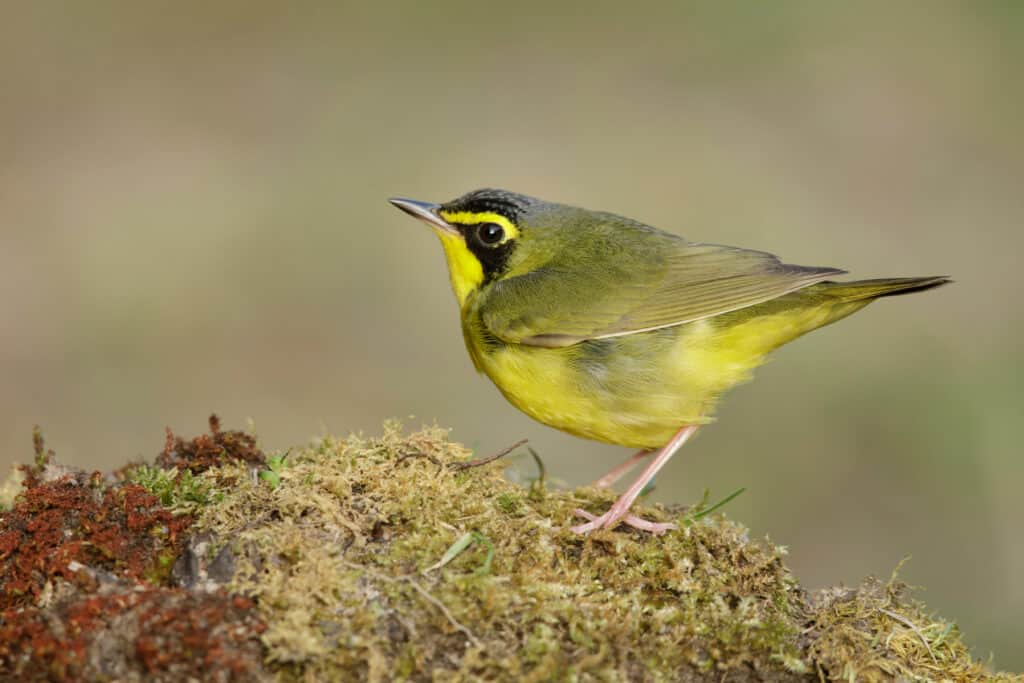
Kentucky warblers are an uncommon sight in Nebraska, but they can be found nesting at Indian Cave State Park.
©Agami Photo Agency/Shutterstock.com
Other birds seen at Indian Cave State Park include:
- Louisiana waterthrush
- Scarlet tanager
- Summer tanager
- Chuck-will’s-widow
- Acadian flycatcher
- Pileated woodpecker
- Ovenbird
- Wood thrush
- Black-and-white warbler
- Barred owl
Whether you live in Nebraska or are planning a bird-watching trip to the state, you will find many excellent locations for bird watching. Other great locations for bird watching include Chadron State Park, Lake McConaughy, Fontenelle Forest, and Funk Waterfowl Production Area. To learn more about the popular bird watching spots above, click the link in each section.