
Quick Take
- North Dakota is situated along the Central Flyway, a major North American route for migrating birds.
- The Western meadowlark is the official state bird of North Dakota.
- Lake Sakakawea, the third-largest man-made reservoir in the United States sustains a large variety of resident and migratory birds.
North Dakota is a crucial stopover along the Central Flyway for migratory shorebirds, hosting over 370 species. It offers prime breeding habitat for grassland birds and boasts 63 national wildlife refuges, more than any other state, making it a top location for finding species like the upland sandpiper and the official North Dakota state bird, the Western meadowlark. The state’s prairie potholes and mixed-grass prairies are critical for nesting migratory waterbirds and shorebirds. The state serves as a breeding ground for many species, including the ferruginous hawk, marbled godwit, and Sprague’s pipit. Continue reading to discover everything you need to know about birding in North Dakota.
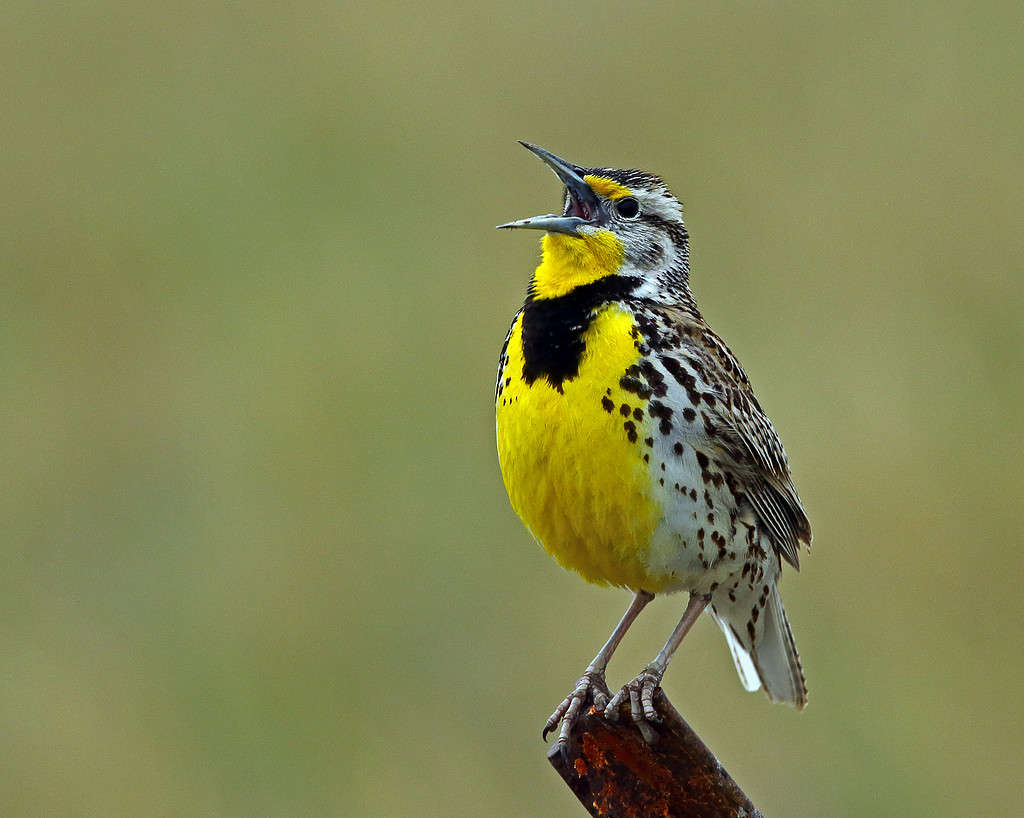
The Western meadowlark is the official state bird of North Dakota.
©photographybyJHWilliams/iStock via Getty Images
Theodore Roosevelt National Park
Theodore Roosevelt National Park hosts over 185 bird species in the North Dakota Badlands. Riparian woodlands and prairies provide habitats for migratory birds, including flycatchers, warblers, and swallows, as well as resident species like golden eagles, sharp-tailed grouse, and meadowlarks.
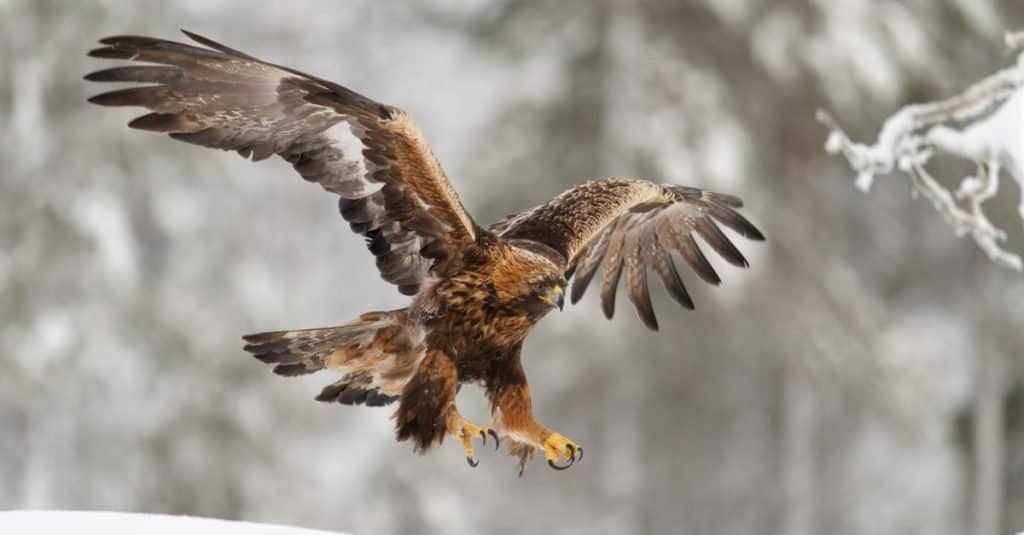
Birders flock to Theodore Roosevelt National Park to view golden eagles.
©Vladimir Kogan Michael/Shutterstock.com
The park is divided into three distinct units: the North Unit, the South Unit, and the Elkhorn Ranch Unit. Although the South Unit hosts more visitors, the North Unit is a popular alternative for birders seeking a quieter experience. Each unit offers prime birding opportunities, although the North Unit is less developed and has more rugged terrain.
The best times for birding at Theodore Roosevelt National Park are during the spring and fall migration periods. Late spring and early summer are also excellent for spotting nesting species.
Birds commonly seen at Theodore Roosevelt National Park include:
- Western Meadowlark
- Spotted Towhee
- Field Sparrow
- Grasshopper Sparrow
- Mourning Dove
- Horned Lark
- Common Nighthawk
- Mountain Bluebird
- Black-capped Chickadee
- White-breasted Nuthatch
- Cedar Waxwing
- Yellow-breasted Chat
- American Redstart
- Northern Flicker
- Black-headed Grosbeak
- Bullock’s Oriole.
- Golden Eagle
- Ferruginous Hawk
- Swainson’s Hawk
- Northern Harrier
- American Kestrel
- Merlin
- Great Horned Owl
Lostwood National Wildlife Refuge
Lostwood National Wildlife Refuge protects one of the largest remaining tracts of native Northern mixed-grass prairie, offering critical habitat for rare, grassland-dependent birds, migratory waterfowl, and shorebirds in the heart of North Dakota’s Prairie Pothole Region.
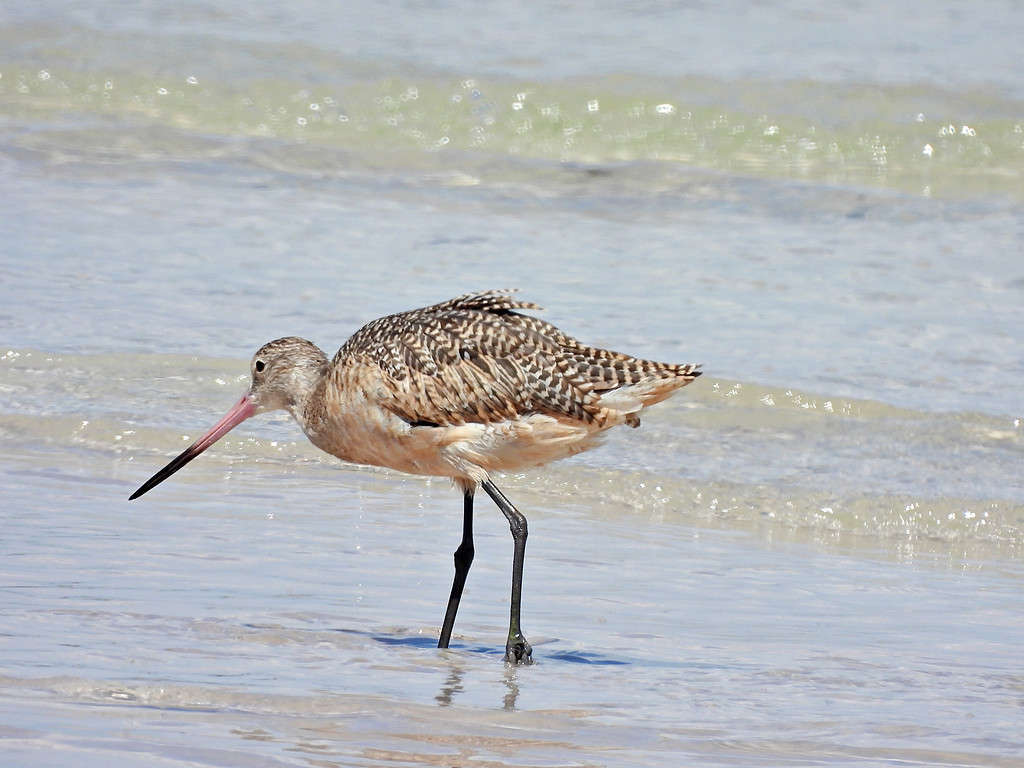
Marbled godwits can be seen in North Dakota from mid-April to August, with peak breeding season occurring from early May to late June.
©passion4nature/iStock via Getty Images
The refuge supports large populations of nesting ducks, as well as species like the marbled godwit, upland sandpiper, willet, and piping plover. Along with the mixed-grass prairie, the refuge has rolling hills and numerous wetlands, colloquially known as potholes.
Birds to look for at Lostwood National Wildlife Refuge include:
- Sprague’s pipit
- Baird’s sparrow
- Chestnut-collared longspur
- Upland sandpiper
- Willet
- Marbled godwit
- Sharp-tailed grouse
- Redhead duck
- Ring-necked duck
- Northern shrike
- Red-headed woodpecker
- Yellow rail
Long Lake National Wildlife Refuge
Long Lake National Wildlife Refuge is a critical migratory bird stopover and breeding habitat within the Prairie Pothole Region. Recognized as a top birding site, the refuge supports thousands of sandhill cranes, shorebirds, and waterfowl, including the endangered whooping crane.
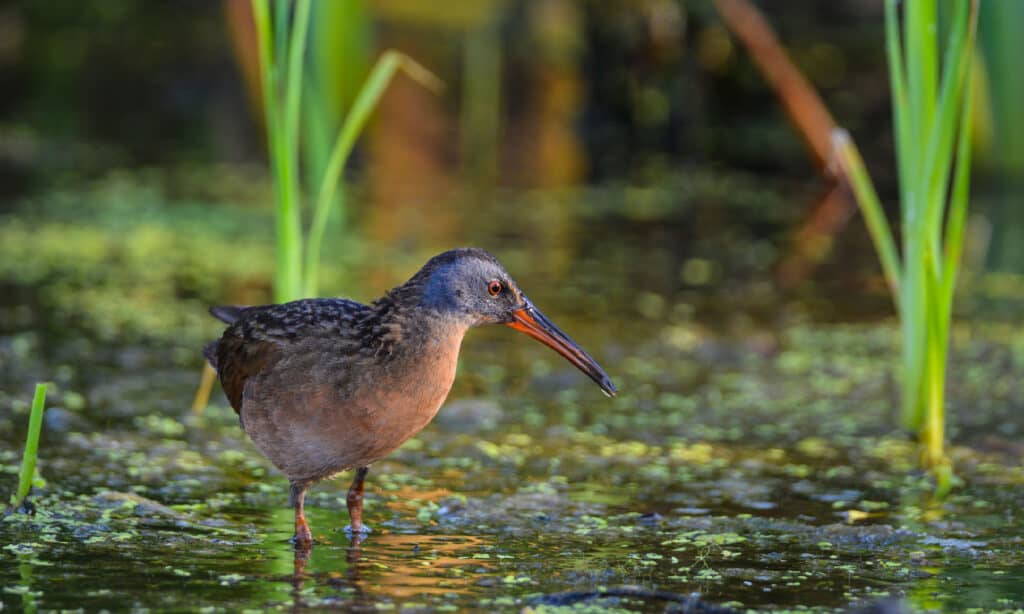
Virginia rails are often heard, but rarely seen.
©iStock.com/Carol Hamilton
The refuge is designated as a Globally Important Bird Area (GIBA) and a Western Hemisphere Shorebird Reserve Network site, providing essential habitat for over 20,000 migratory shorebirds annually. The refuge uses water-level management to maintain sago pondweed, a crucial food source for migrating birds.
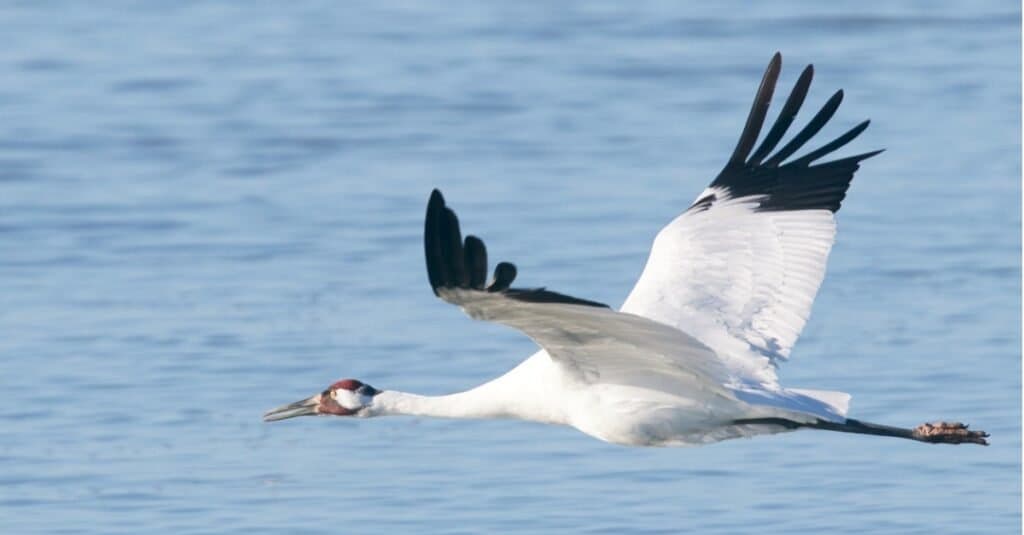
The whooping crane, an endangered species, passes through North Dakota during spring and fall.
©iStock.com/kellington1
Common birds at the Long Lake National Wildlife Refuge include:
- Black-crowned Night Heron
- Virginia Rail
- Franklin’s Gull
- Ring-billed Gull
- Black Tern
- Marsh Wren
- Sora
- Northern Harrier
- Upland Sandpiper
- Bobolink
- Clark’s Grebe
Icelandic State Park: Gunlogson Nature Preserve
Located within Icelandic State Park, the Gunlogson State Nature Preserve is a 200-acre mature woodland and wetland habitat along the Tongue River. It is renowned for harboring rare species, including the pileated woodpecker and Western wood pewee. The preserve serves as a sanctuary for many birds, including the rarely seen Mourning Warbler, northern waterthrush, and Western Wood-Pewee.

Rose-breasted Grosbeaks visit the Gunlogson Nature Preserve during breeding season and migration.
©Jayne Gulbrand/Shutterstock.com
Common birds at the Gunlogson Nature Preserve
- Eastern Phoebe
- Great Crested Flycatcher
- Black-and-White Warbler
- Scarlet Tanager
- Rose-breasted Grosbeak
- Purple Finch
- Ruby-throated Hummingbird
- Yellow-throated Vireo
- Northern Waterthrush
- Yellow-bellied Sapsucker
- Eastern Wood Pewee
Garrison Dam
Garrison Dam at Lake Sakakawea is a prime birding location for viewing waterfowl, gulls, and migratory species. The area, including the nearby Garrison Dam National Fish Hatchery, offers excellent viewing of bald eagles, ducks, and gulls in winter, supported by diverse aquatic and prairie habitats.
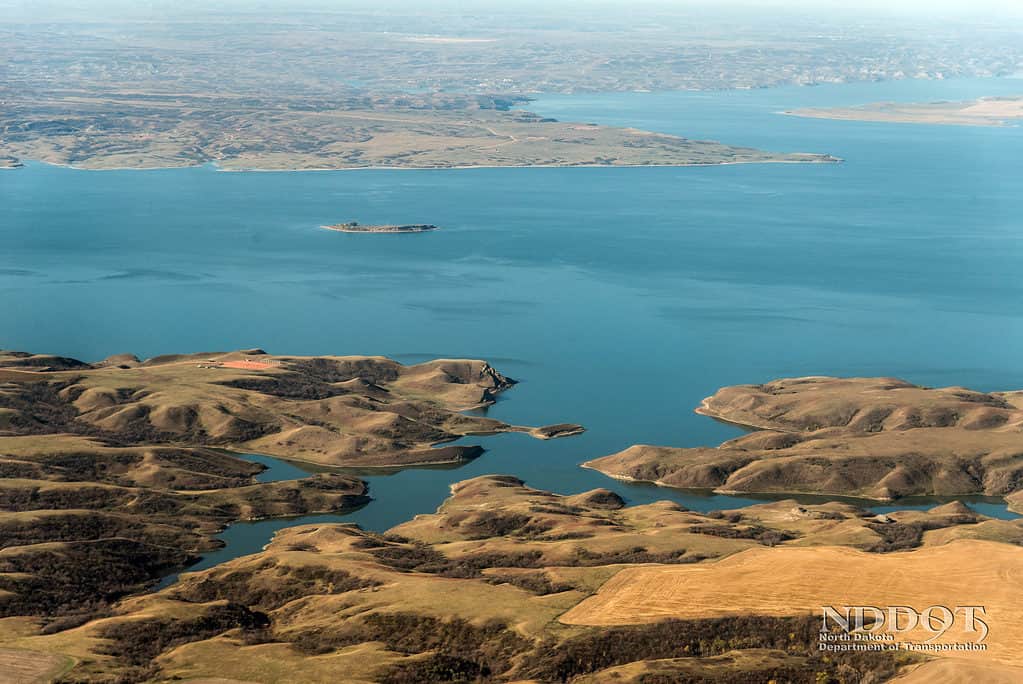
Lake Sakakawea is the third-largest man-made reservoir in the United States.
The dam creates a 178-mile-long reservoir, which provides extensive water, shoreline, and adjacent marshland habitats that attract over 250 bird species.
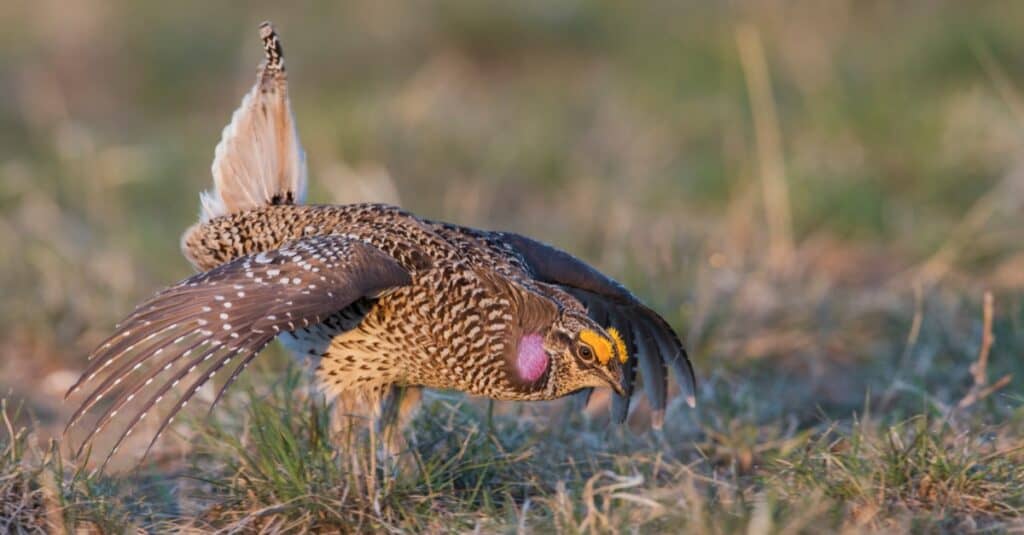
A male Sharp-tailed grouse during a courtship display.
©Danita Delimont/Shutterstock.com
The area also provides a stopover for migratory birds, including shorebirds and ducks. Surrounding prairie habitats support nesting species like Grasshopper Sparrows, Vesper Sparrows, and Marbled Godwits.
In winter, the open water below the dam is a splendid spot to find unusual gull species, including Iceland and lesser black-backed gulls, alongside large numbers of wintering bald eagles.
Birds that can be found at Garrison Dam include:
- Mallard
- Canada Goose
- Bald Eagle
- Western Grebe
- Piping plover
- Marbled Godwit
- American Avocet
- Western Meadowlark
- Sharp-tailed grouse
- Ring-billed Gull
- Franklin’s Gull
- Caspian Tern
- Herring Gull
- California Gull
Sheyenne National Grassland
The Sheyenne National Grassland, covering 70,000+ acres in Southeastern North Dakota, is the largest public grassland in North Dakota, containing significant areas of tallgrass prairie. It is a vital refuge for the greater prairie-chicken and offers habitats for grassland species like sharp-tailed grouse, dickcissels, and bobolinks. The grassland consists of sandy soils, rolling dunes, and tallgrass prairie, which support species that prefer open habitats. The area also contains a mix of oak savannahs and wetlands, providing habitat for a variety of woodland species and songbirds, such as vireos and orioles.

As one of the most colorful members of the vireo family, yellow-throated vireos have yellow throats, white bellies, and olive heads.
©JoshuaGoddard/Shutterstock.com
Sheyenne National Grassland is home to a significant population of greater prairie-chickens, a chunky, brown-barred grouse species considered threatened. Although they are strong flyers, they are ground-dwelling and non-migratory.
Common birds at the Sheyenne National Grassland include:
- American Woodcock
- Le Conte’s Sparrow
- Yellow-Throated Vireo
- Black-and-white Warbler
- Scarlet Tanager
- Rose-breasted Grosbeak
- Orchard Oriole
- Black-billed Cuckoo
- Upland Sandpiper
- Marbled Godwit
- Grasshopper Sparrow
Kellys Slough National Wildlife Refuge
Kellys Slough National Wildlife Refuge, located just west of Grand Forks, serves as a vital stopover for over 35,000 migratory shorebirds and supports nesting for over 12 duck species and 22 shorebird species. Peak migration occurs from July to early August when low water levels create ideal mudflats for shorebirds.
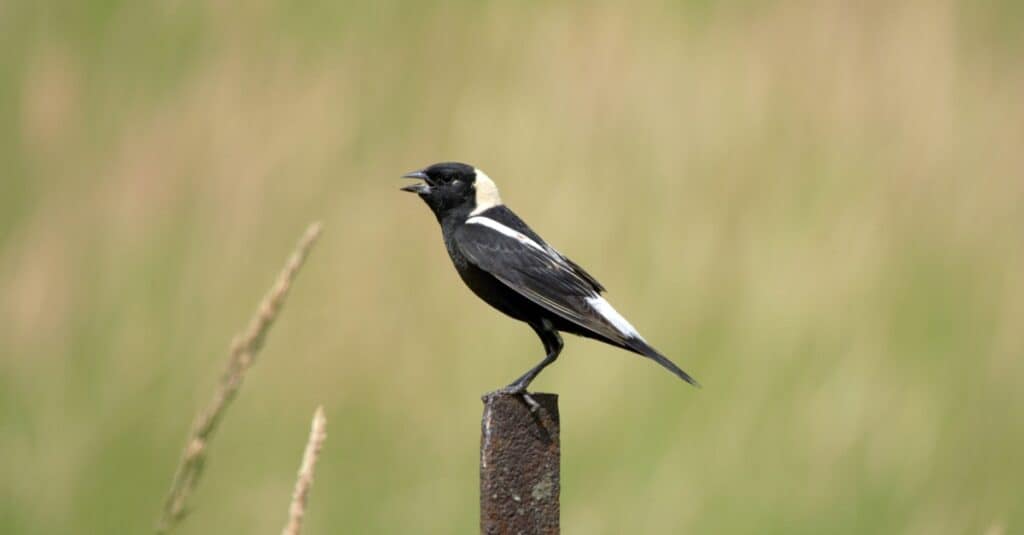
Bobolinks are present at Kellys Slough National Wildlife Refuge during their summer breeding season.
©iStock.com/Carol Hamilton
Semipalmated sandpipers are the most abundant bird species at Kellys Slough National Wildlife Refuge during the fall migration, which occurs between July and September. The refuge is a critical migratory stopover, hosting over 35,000 shorebirds.
Common birds at the Kellys Slough National Wildlife Refuge include:
- Wilson’s Phalarope
- American Avocet
- Willow Flycatcher
- Least Flycatcher
- Le Conte’s Sparrow
- Bobolink
- Franklin’s Gull
- Bald Eagle
- Marbled Godwit
- Eared Grebe
- Sora