
Quick Take
- The Dust Bowl devastated Great Plains ecosystems by removing native grasses and collapsing soil stability.
- Wildlife declined sharply, with birds, small mammals, and predators losing habitat and food sources.
- Conservation programs and refuges helped restore parts of the land and supported partial wildlife recovery.
- The region has improved, but native prairie remains fragmented, and some species have not fully recovered, showing lasting ecological change.
The Dust Bowl of the 1930s left a deep mark on the Great Plains, not only for farming families but also for wildlife. Images of dark skies and abandoned homes often define the event, yet the ecological damage reached just as far. Years of drought combined with intensive plowing removed the natural systems that had supported life for thousands of years.
Native prairie once held soil in place and provided shelter for many species. When that system broke down, animals lost food, cover, and stable ground. Dust storms then carried away topsoil, leaving behind a harsher landscape with fewer resources.
Looking at how wildlife responded to these changes reveals how tightly land, climate, and living systems connect. The Dust Bowl was not only a weather event; it was a testament to how human decisions can reshape entire ecosystems.
Grassland Life Before Large Scale Farming
Before widespread mechanized farming, the Great Plains supported a broad range of plant and animal life. Native grasses such as big bluestem and switchgrass formed thick root systems that held soil together and retained moisture during dry periods.
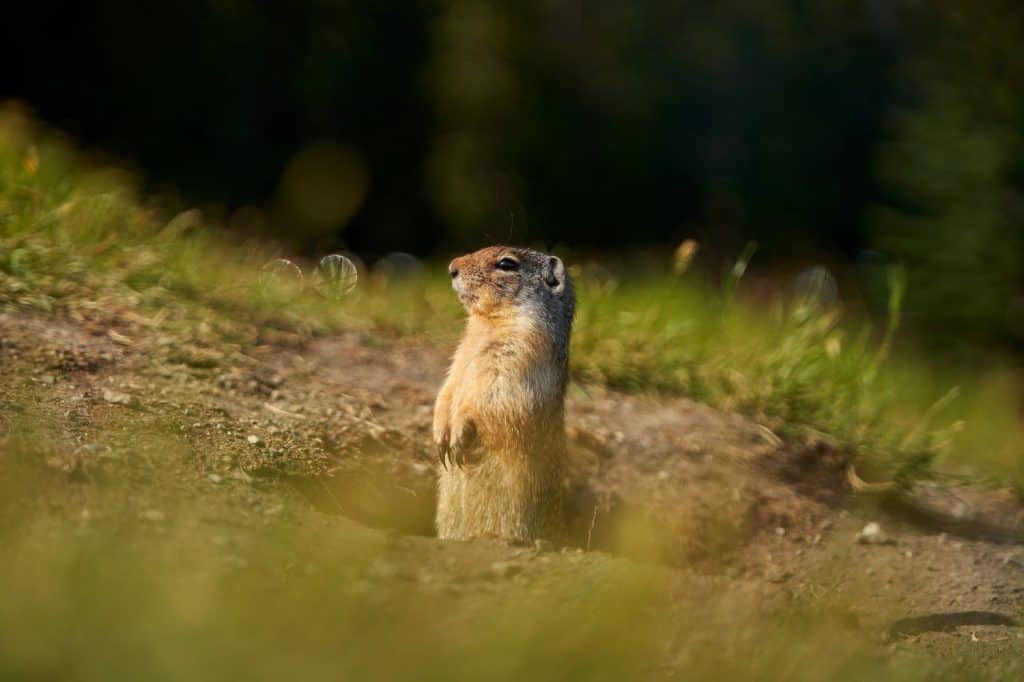
Prairie dogs are one of the indigenous species of the American Great Plains.
©Try_my_best/Shutterstock.com
These grasslands supported birds, mammals, and insects that depended on varied plant cover. Prairie chickens gathered in open areas for mating displays, while songbirds nested in taller grasses. Small mammals such as prairie dogs and ground squirrels built burrows that shaped the landscape and supported predators.
Fire, grazing, and seasonal droughts helped maintain balance in this system. The land could recover from natural stress because its structure remained intact. This stability began to weaken when large areas of prairie were converted into cropland.
Farming Expansion and Soil Exposure
During the early twentieth century, high crop prices encouraged rapid expansion of farming across the Great Plains. New machinery allowed farmers to plow large areas quickly, turning native grasslands into fields of wheat and other crops.
This transformation removed deep rooted plants that had stabilized the soil for generations. Crops with shallow roots replaced them, leaving the land more exposed to dry conditions. For a time, favorable weather masked the risks associated with this change.
When drought struck in the early 1930s, the soil lacked the support it once had. Without plant cover, the top layer dried out and broke apart. Winds across the plains lifted this loose soil into the air, creating the massive dust storms that defined the period.
Loss of Bird Habitat Across the Plains
Ground nesting birds faced severe challenges as their habitat disappeared. Species such as prairie chickens depended on large areas of grassland for nesting and raising young. As vegetation declined, nests became exposed to wind and predators.
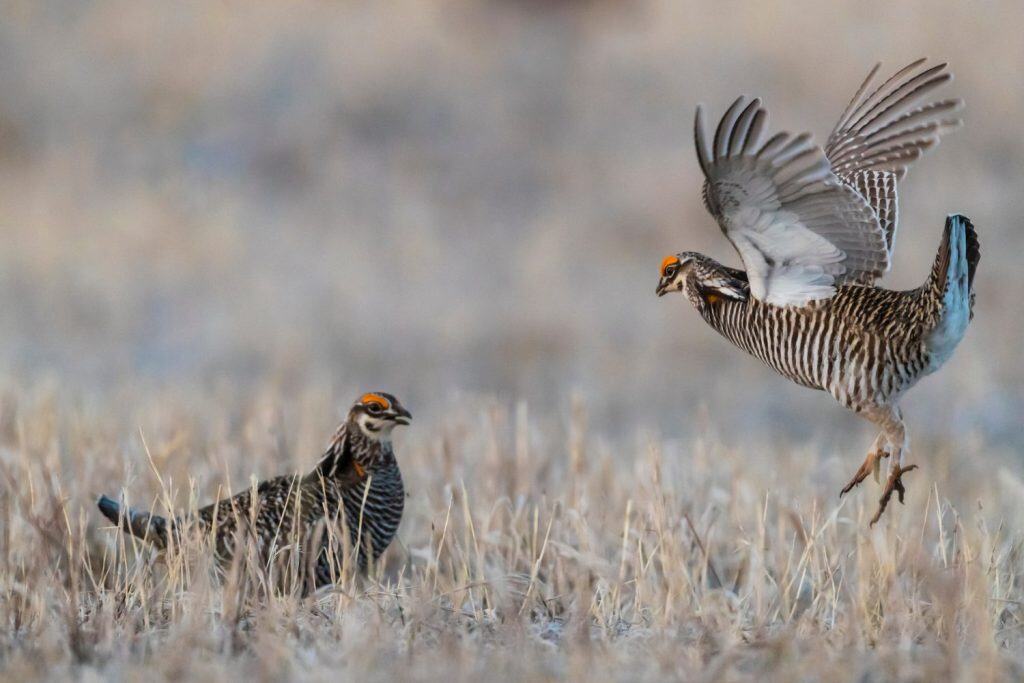
Greater prairie chickens in Nebraska.
©Danita Delimont/Shutterstock.com
Songbirds also struggled to survive. They needed a balance of plant height and density for protection and movement. Dust storms buried nests and reduced the availability of insects that many birds relied on for food.
The loss of connected habitat created additional problems. Birds often require separate areas for feeding, nesting, and shelter. When these spaces became scattered or destroyed, populations declined and recovery became difficult.
Effects on Small Mammals and Predators
Small mammals played a key role in the prairie ecosystem, and they experienced major disruption during the Dust Bowl. Burrowing animals depend on stable soil and plant cover. As conditions worsened, many lost their homes or were forced into less suitable areas.
Some species did show short-term increases in visible numbers as they crowded into the few areas that still had food. Jackrabbits are one of the best-known examples. During the Dust Bowl, their numbers surged in parts of the Plains, especially in remaining croplands and weedy patches, leading to large “rabbit drives” where farmers tried to control them. These increases reflected concentration and displacement rather than true population health across the region.
Predators such as hawks, owls, and coyotes faced shifting food supplies. When prey populations became unstable, predator survival also declined. This change showed how the loss of one part of the ecosystem affects many others.
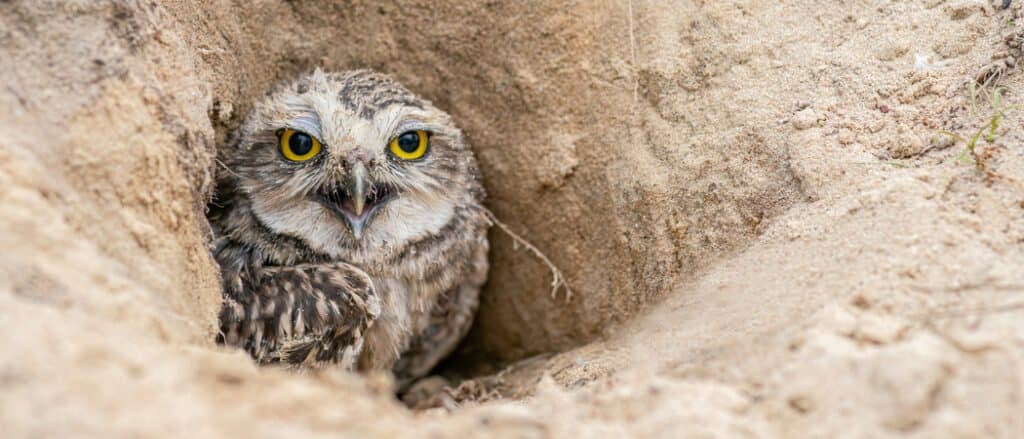
Burrowing owls are a ground-nesting species of the Plains, often taking over prairie dog burrows.
©Albert Beukhof/Shutterstock.com
Land Management Practices
Native grasses formed the base of the Great Plains ecosystem, with deep root systems that held soil in place and stored moisture below the surface. These roots allowed the land to withstand dry periods and recover when rain returned. They also created small pockets of moisture that supported insects and other wildlife while reducing the force of wind at ground level. When farmers removed these grasses, the land lost much of its natural protection. Crops planted in rows could not replace these functions. Their shallow roots and seasonal growth left the soil exposed, and when drought hit, nothing remained to keep the ground stable.
Human land use decisions made these weaknesses far worse. Continuous planting of single crops drained soil quality and left fields bare between growing seasons, which increased erosion risk. In some areas, overgrazing reduced the remaining grass cover and slowed recovery. Windbreaks and other protective measures were rare, leaving large stretches of land fully exposed. When drought began, these combined factors led to rapid soil loss. Dust storms swept across the plains, burying crops, damaging property, and creating dangerous conditions for people and animals.
Decline of Wetlands and Water Sources
Water systems across the plains also suffered during this period. Without grass cover, rainfall did not soak into the ground as effectively. Instead, it carried loose soil into streams and ponds, reducing water quality.
Wetlands that supported birds and amphibians began to shrink or disappear. Sediment buildup filled shallow areas, while drought reduced water levels. Animals that depended on these habitats lost important feeding and breeding grounds. Migrating birds faced fewer safe places to rest along their routes. The combined loss of land and water habitats placed additional pressure on wildlife populations already struggling to survive.
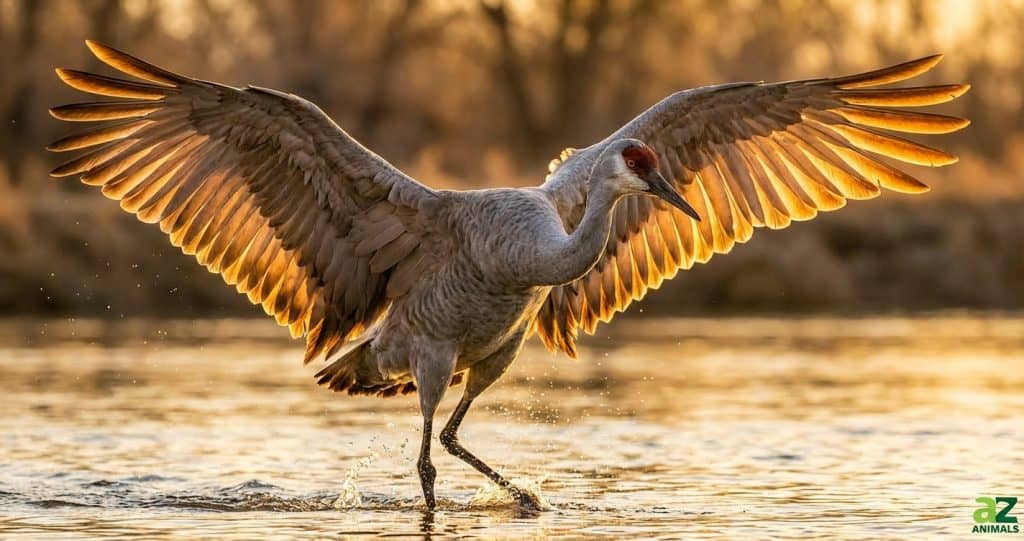
Millions of birds, like this sandhill crane, migrate through the Great Plains every year.
©A-Z Animals
Human Movement and Its Impact on Wildlife
As farming conditions collapsed, many families left the Great Plains, but the wildlife they left behind could not escape the disaster. Abandoned farms often remained stripped of vegetation, with broken fences and exposed soil that offered little shelter for animals. In some areas, species such as pronghorn and mule deer moved through these spaces in search of food, only to find limited forage. Ground-nesting birds like prairie chickens and meadowlarks continued to decline as suitable grass cover remained scarce. The absence of stable plant life meant that even without heavy human presence, the habitat could not support the same range of animals as before.
At the same time, people who stayed on the land often increased pressure on wildlife out of necessity. Thousands of jackrabbits and prairie dogs were shot or poisoned because they competed with crops or damaged fields. Deer, quail, and other small game were hunted more heavily in some areas as families struggled to feed themselves. These actions reduced already stressed populations and further disrupted the food chain.
Development of Soil Conservation Programs
The scale of the Dust Bowl led to major changes in national policy. In 1935, the government established the Soil Conservation Service to promote better land management practices. Farmers received guidance on methods that protected soil and reduced erosion. Techniques such as contour plowing and planting cover crops helped keep soil in place. Replanting grass on vulnerable land restored some of the natural protection that had been lost. Windbreaks reduced the force of strong plains winds. These efforts improved conditions for agriculture and created better habitats for wildlife. The programs marked a shift toward recognizing the connection between land use and environmental stability.
Creation of Protected Wildlife Areas
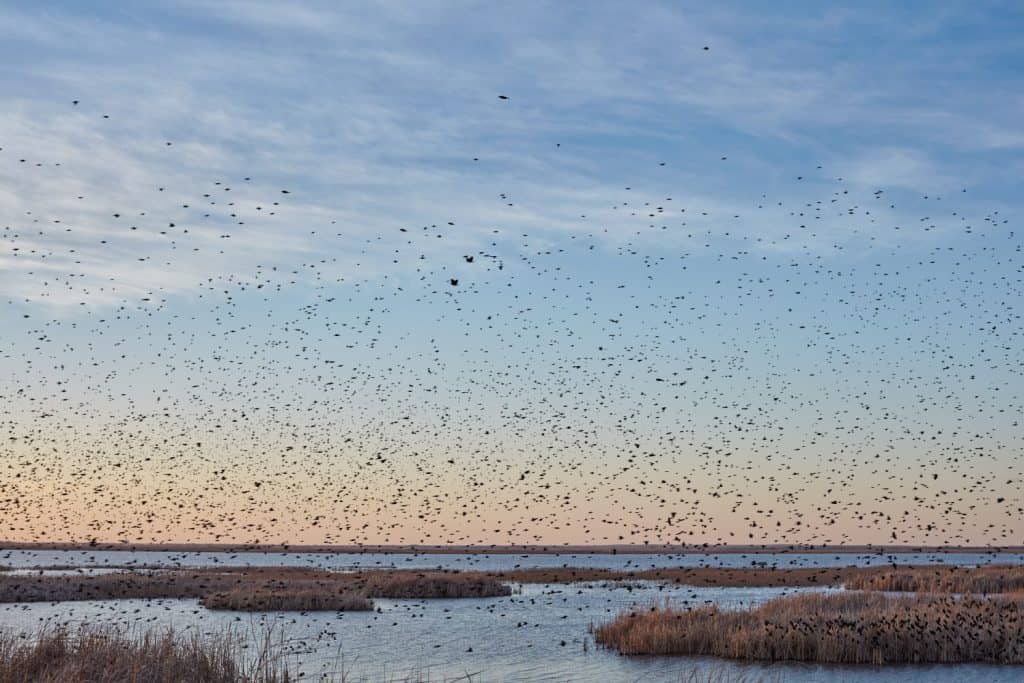
A large flock of migrating birds in the Cheyenne Bottoms wetlands of Kansas.
©CLP Media/Shutterstock.com
Along with soil conservation efforts, the federal government created a network of protected lands to help wildlife recover. In 1935, the Migratory Bird Conservation Act led to the expansion of national wildlife refuges, especially in areas important for waterfowl. Places like the Sand Lake National Wildlife Refuge in South Dakota and the Cheyenne Bottoms area in Kansas became key stopping points for ducks, geese, and shorebirds traveling along the Central Flyway. These locations protected remaining wetlands that had survived the worst of the Dust Bowl and provided reliable food and water for migrating species.
In addition to wetlands, grassland restoration took place on former cropland across the Plains. Projects supported by New Deal programs helped reseed native grasses and establish shelterbelts, long rows of trees planted to reduce wind erosion. The Prairie Pothole Region in the northern Plains also received attention, as its shallow wetlands supported large numbers of breeding ducks. Workers planted grasses, restored small water basins, and stabilized soil to rebuild habitat.
An Incomplete Recovery
So, can we say that the Great Plains have now fully recovered from the Dust Bowl? In the sense that the topsoil is no longer blowing away in great billowing clouds… yes. In the sense that the lands are restored to what they were? No, and sadly, the region will likely never return to the healthy ecosystem it was before.
The land itself has improved in many areas thanks to soil conservation practices, prairie restoration, and better farming methods, which have reduced erosion and improved soil health. However, more than 60% of the original native prairie has been permanently converted to agriculture, and those deep-rooted ecosystems are only partially restored today.
Wildlife shows a similar pattern of partial recovery. Some adaptable species like deer and coyotes have rebounded, and waterfowl populations have increased in protected wetlands. However, many grassland specialists, including prairie chickens and numerous songbirds, have experienced steep declines—grassland bird populations have dropped by over 70% since 1970—because they require large, unbroken habitats that are now fragmented. The system is healthier than during the Dust Bowl, but it remains fundamentally changed and far from fully restored.
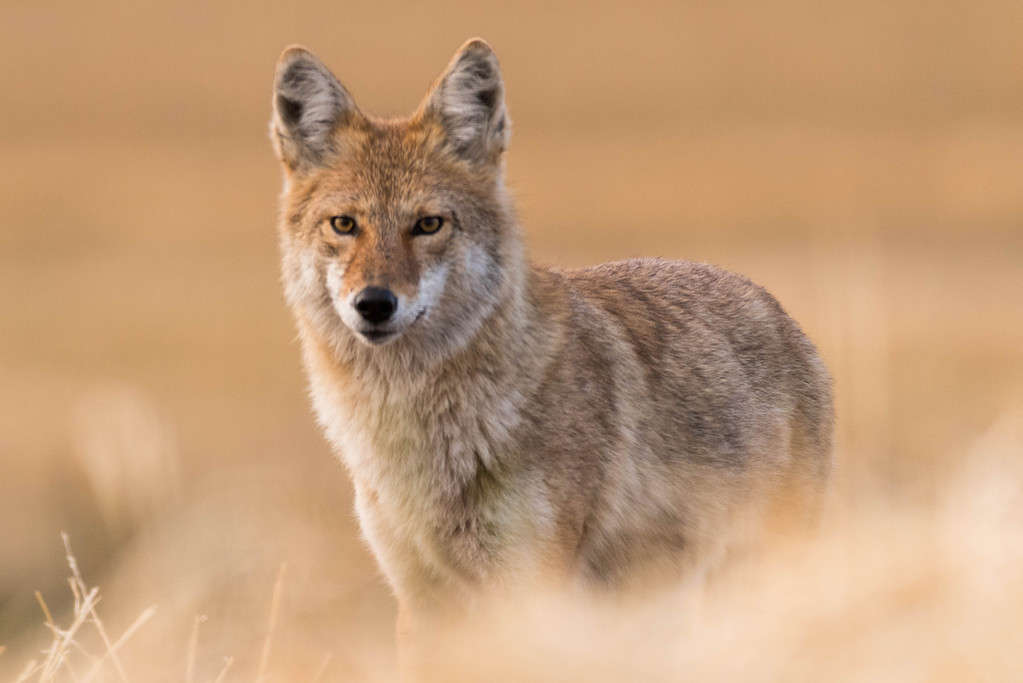
A wild coyote stands on the prairies. This is one of the species that has recovered well from the Dust Bowl catastrophe.
©hartmanc10/iStock via Getty Images
Could It Happen Again?
The conditions that created the Dust Bowl have not disappeared, and a similar event could happen again under the right circumstances. The Great Plains continue to experience severe and widespread droughts, and climate projections indicate that long dry periods may become more frequent and intense in the future. If conservation practices were relaxed and large areas of land were stripped of protective vegetation and left exposed, strong winds could once again lift and carry away topsoil. Modern farming has reduced this risk in many places, but the danger has not been eliminated.
Today, improved land management practices—such as widespread adoption of no-till planting, cover crops, and windbreaks—help protect against another Dust Bowl by reducing erosion and retaining soil moisture. Native grasslands also play a crucial role in stabilizing the ground during dry years. However, these protections require consistent and widespread application; if economic pressures or poor land management lead to overuse, the risk of severe soil loss could return.
A Lasting Environmental Warning
The Dust Bowl stands as a clear example of how environmental and human systems interact. Removing native vegetation and ignoring soil health created conditions that allowed drought to cause widespread damage.
The response to the crisis showed that change is possible. Conservation programs improved land management and helped restore some ecosystems. These efforts continue to guide modern approaches to agriculture and conservation.
The story remains relevant as climate conditions shift. Decisions made today about land use and resource management will shape how ecosystems respond to future challenges.