
Butterflies are common throughout the world; however, there is more to them than meets the eye. From optical illusions in their wings to generation-spanning migrations and caterpillars committing subterfuge in ant colonies, there is a world of wonder in the lives of these delicate creatures. Continue reading to learn more surprising butterfly facts.
1. Zebra Longwings Eat Pollen
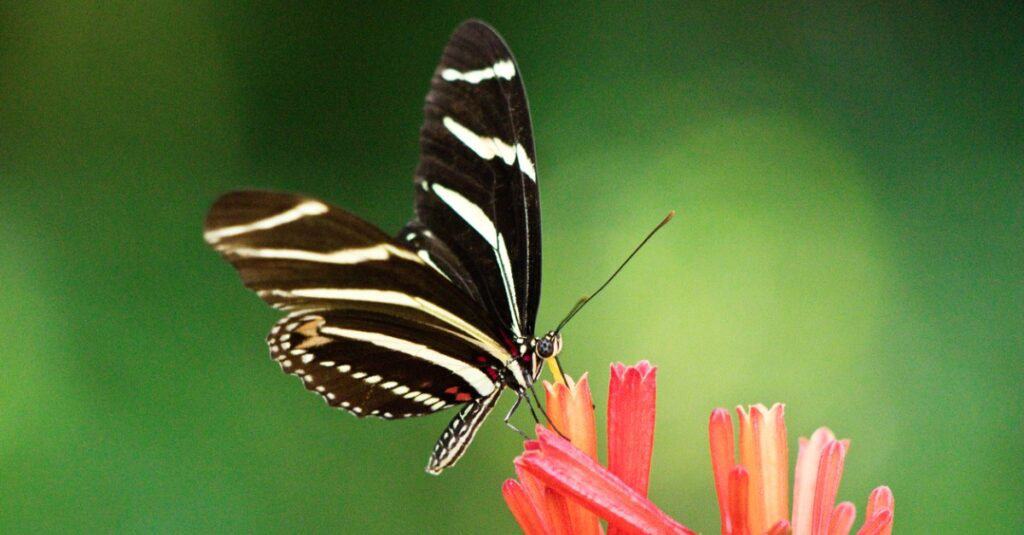
Because it can eat pollen, the zebra longwing lives longer than most other butterflies.
©iStock.com/ktreffinger
According to biologists, the zebra longwing butterfly (Heliconius charithonia) is one of the few butterflies that eat pollen. It inserts its proboscis into the flower and moves it around to make sure that the pollen sticks to it. The butterfly’s saliva instantly digests the pollen, freeing up amino acids, the building blocks of protein. Because it can eat pollen, the zebra longwing lives longer than most other butterflies. Not only this, the pollen is turned into a type of cyanide in the butterfly’s body, which makes it toxic to predators.
This beautiful butterfly, which is the state butterfly of Florida, is unmistakable because of its long, oval wings striped in black and white like a zebra’s coat. It is also found in the Caribbean and South America. It lays its eggs on passionflower plants, but also takes nectar from lantanas, verbenas, and asters.
2. Some Butterfly Colors are Optical Illusions
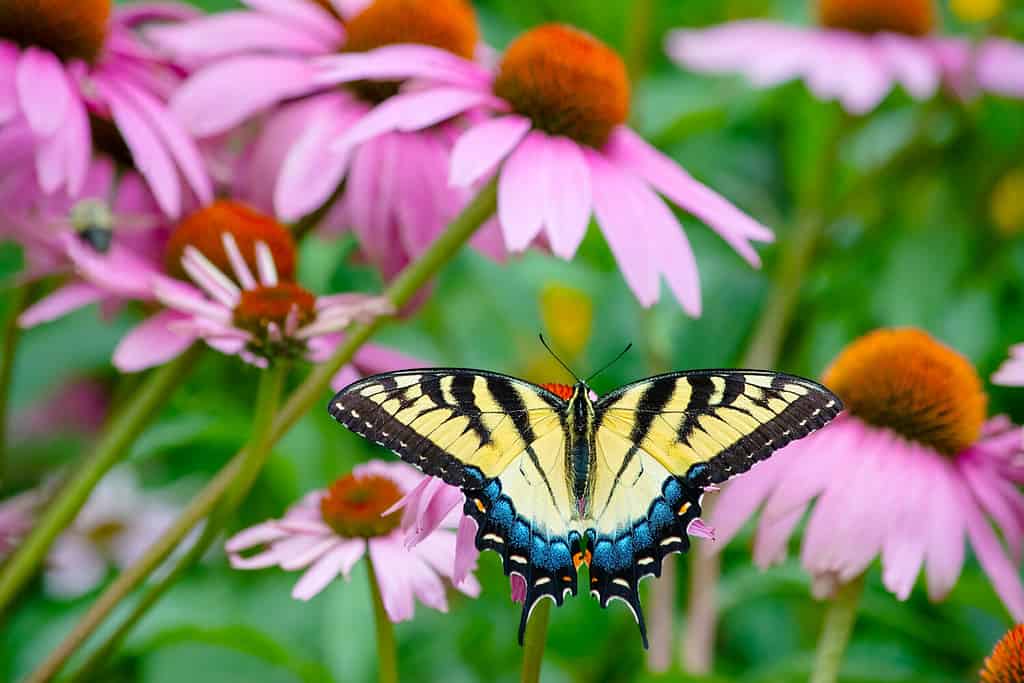
Scales create colors because of how light interacts with them.
©K Quinn Ferris/Shutterstock.com
Butterflies have vibrant colors and intricate patterns. Pigments in the butterfly’s wings make up reds, browns, yellows, and more. New research, however, has shown that some of the brilliant tones are due to structural coloration.
Scales cover butterfly wings, which gives the order its name. Lepis means scale, and pteron means wing in ancient Greek. Scales create colors because of how light interacts with them. The scales bend and reflect light through structural coloration. These colors tend to be blue, green, and sometimes iridescent or ultraviolet.
3. Some Butterflies Have Long Migrations
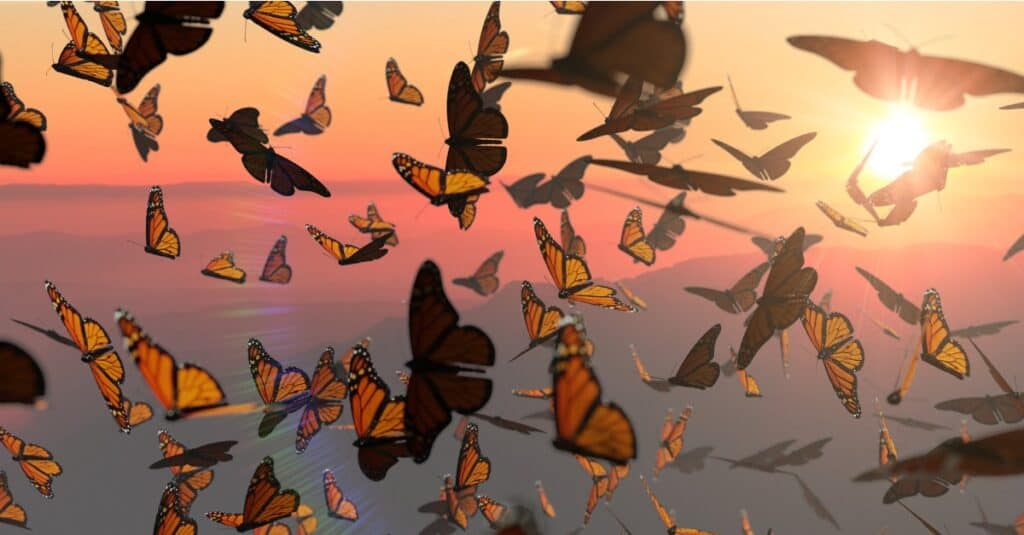
The Monarch butterfly migration is a highly anticipated annual event.
©Dotted Yeti/Shutterstock.com
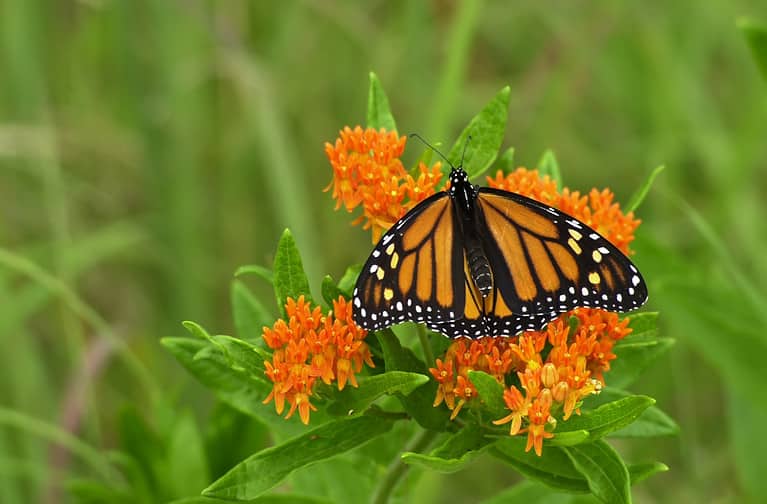
Butterflies such as the monarch (Danaus plexippus) and the painted lady (Vanessa cardui) travel for thousands of miles. They navigate by orienting themselves to the sun, and since they can see polarized light, they can travel even on cloudy days. Due to butterflies’ fragility and short lifespans, these migrations take generations to accomplish. A round trip between Africa and northern Europe embarked upon by a painted lady will be completed by its sixth-generation descendant.
The monarch butterfly migrates to Mexico to overwinter in a suitable climate. While they do not reproduce during their stay in Mexico, they become reproductive and begin laying eggs as they start their journey north in the spring. Butterflies can’t fly well if their body temperature is less than 85 degrees Fahrenheit, and can’t fly at all if the air temperature is below 55 degrees Fahrenheit.
4. The Longest-Lived Butterfly Lives for About a Year
A caterpillar’s prolegs disappear before it becomes an adult butterfly.
©Ian Grainger/Shutterstock.com
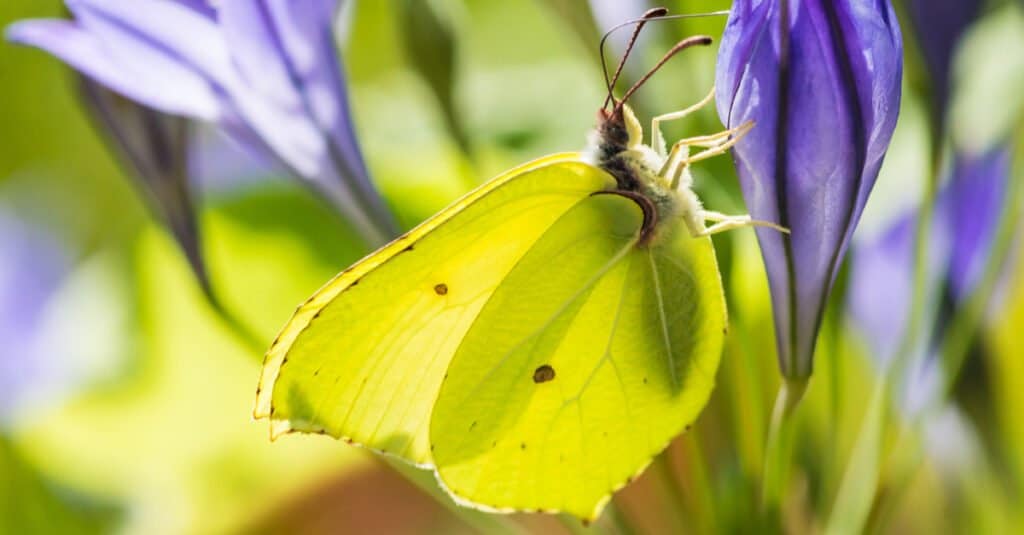
Although the zebra longwing butterfly (Heliconius charithonia) has a long life because it eats pollen, the longest-lived butterfly is the brimstone butterfly (Gonepteryx rhamni). The brimstone takes close to two months to develop from an egg to a caterpillar, then to a pupa, and finally to an adult. The adult spends seven months of its life hibernating. Because its wings resemble leaves, the brimstone can cling to a tree branch while hibernating and not be noticed by predators. It is found in North Africa, Asia, and Europe.
5. Some Butterflies Make Sounds
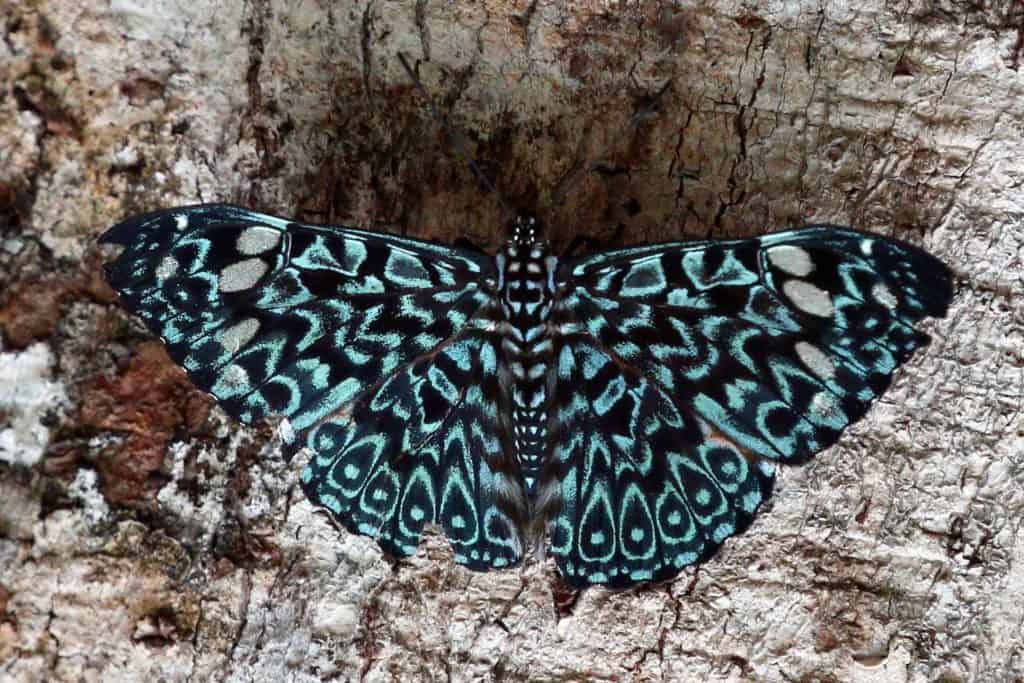
Some butterflies, like the cracker butterfly, make noise.
Though most butterflies are wonderfully silent, a surprising fact about butterflies is that some do make noises. The cracker butterfly (Hamadryas spp.) is noteworthy because the male makes a cracking sound when he’s defending his territory or trying to attract a mate. The male has rounded, dark wings spotted with metallic blue, and he makes a unique sound by clapping them together. The females are larger and have a white band on their forewings as well as metallic blue markings.
6. Butterfly vs. Moth
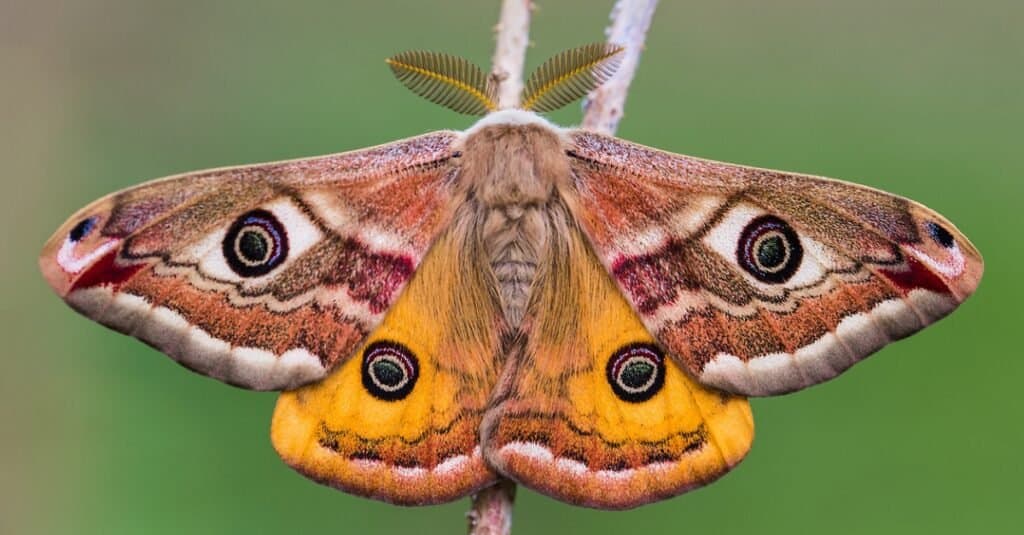
Moths evolved long before butterflies. In fact, moth fossils have been found that are thought to be 190 million years old.
©iStock.com/Simon002
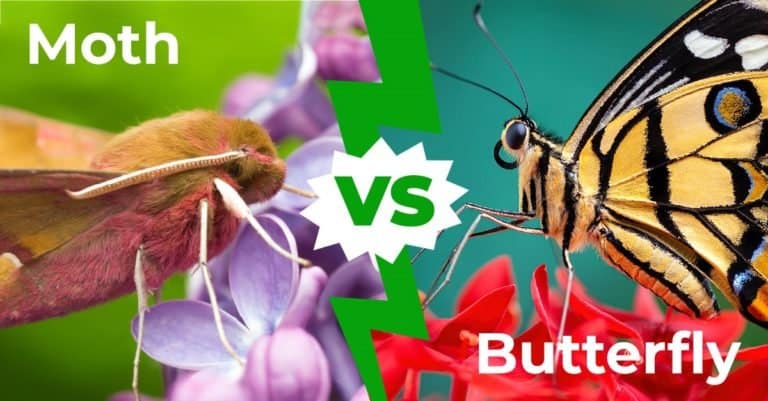
Butterflies can be distinguished from moths because their antennae are slender and knobbed at the tips. The antennae of most moths are furry or resemble threads and lack knobs. Moths are nocturnal, while most butterflies are diurnal.
Butterflies also tend to have more slender bodies than moths, whose bodies tend to be hefty and furry. There are exceptions. The Koh-i-Noor (Amathuxidia amythaon) flies at dusk, and Uraniidae moths, which resemble butterflies, fly during the day, as does the male tau emperor moth (Aglia tau). The female tau emperor moth flies at night. The bodies of some Nymphalidae butterflies are also fuzzy and fat, including the jeweled nawab (Polyura delphis) of Oceania and Southeast Asia and the large blue charaxes (Charaxes bohemani) of Africa.
7. Taste Receptors in the Feet
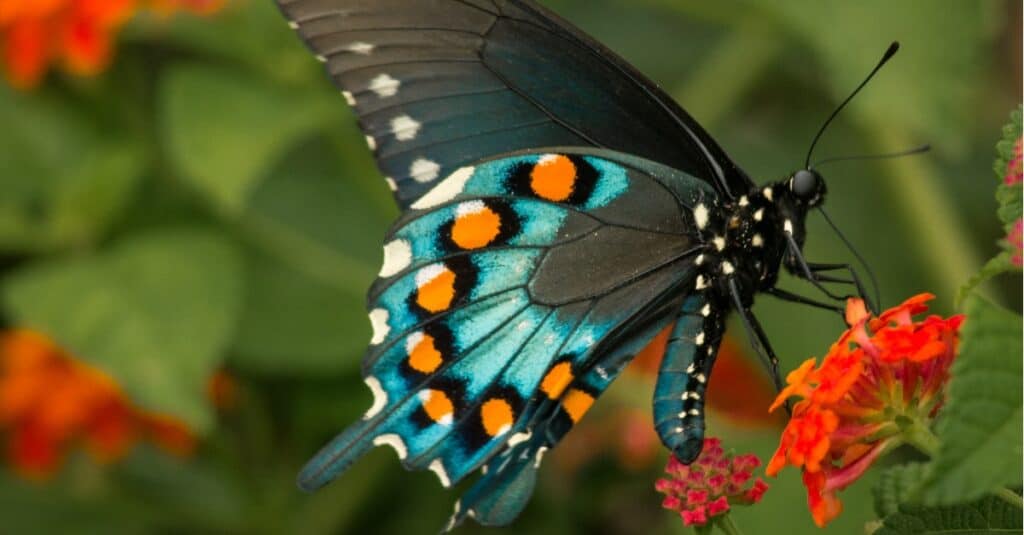
A butterfly’s sense of taste is in its feet.
©iStock.com/SW_Olson
A butterfly’s sense of taste is found in its feet, not in its proboscis. To taste the plant, the female scratches at it with her feet. This is important because a female butterfly needs to taste a plant and identify it before she lays her eggs on it. Some caterpillars only feed on one type of plant. These caterpillars include the monarch that eats milkweed and the zebra longwing that eats passionflowers. Butterflies use their antennae to smell and check the wind.
8. Ants Raise Most Lycaenidae Caterpillars
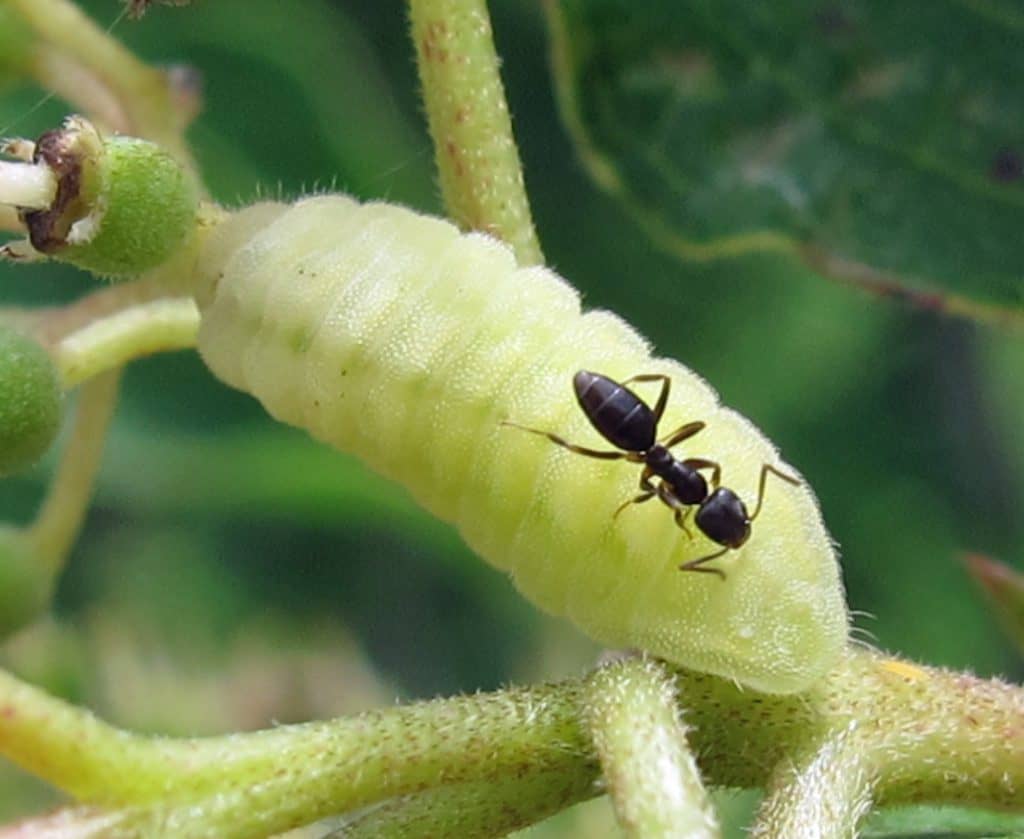
Because the caterpillar releases pheromones that mimic the pheromones of ant larvae, the ants want to take care of the caterpillar.
Lycaenidae butterflies are a huge family of butterflies, many of which use ants to raise their caterpillars. After the large blue butterfly (Phengaris arion) lays her eggs on a plant, the caterpillar falls to the ground, where it’s picked up by ants. The ants don’t kill and eat the caterpillar because the caterpillar releases pheromones that mimic the pheromones of ant larvae. This makes the grown ants want to take care of the caterpillar. So, they carry the caterpillar to their colony and feed it. Other caterpillars make a noise that mimics the sound the queen ant would make. This not only causes the ants to take care of it but also prioritizes its care above all else in the colony.
A third, more sinister strategy is for the caterpillar to mimic an ant larva while feasting on real ant larvae. Sometimes the ants realize the subterfuge and then kill and eat the caterpillar.
9. Butterflies Don’t Defecate
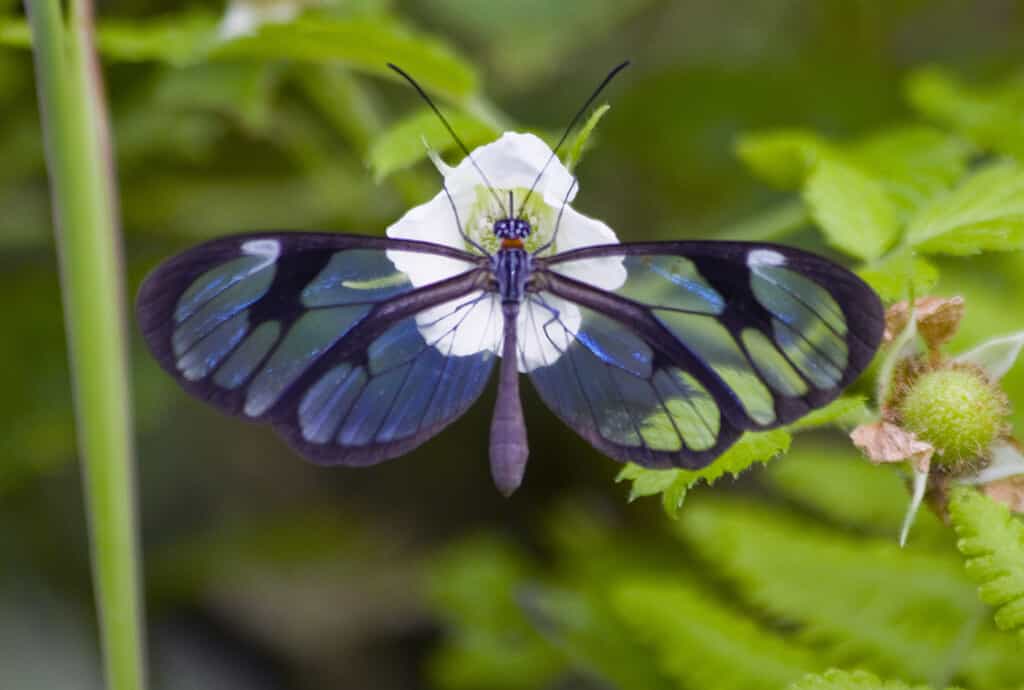
A butterfly’s digestion is so efficient that every bit of what it ingests turns into energy.
Most butterflies drink nectar (or drink blood or sweat or urine or tears), but they don’t defecate. One reason for this is that nectar is a liquid, and it’s difficult to get any solid waste out of it. Also, the butterfly’s digestion is so efficient that it uses every bit of what it ingests for energy. However, if it eats too much, it might expel the excess, but most of that liquid is nothing but water.
10. Butterflies are Slow
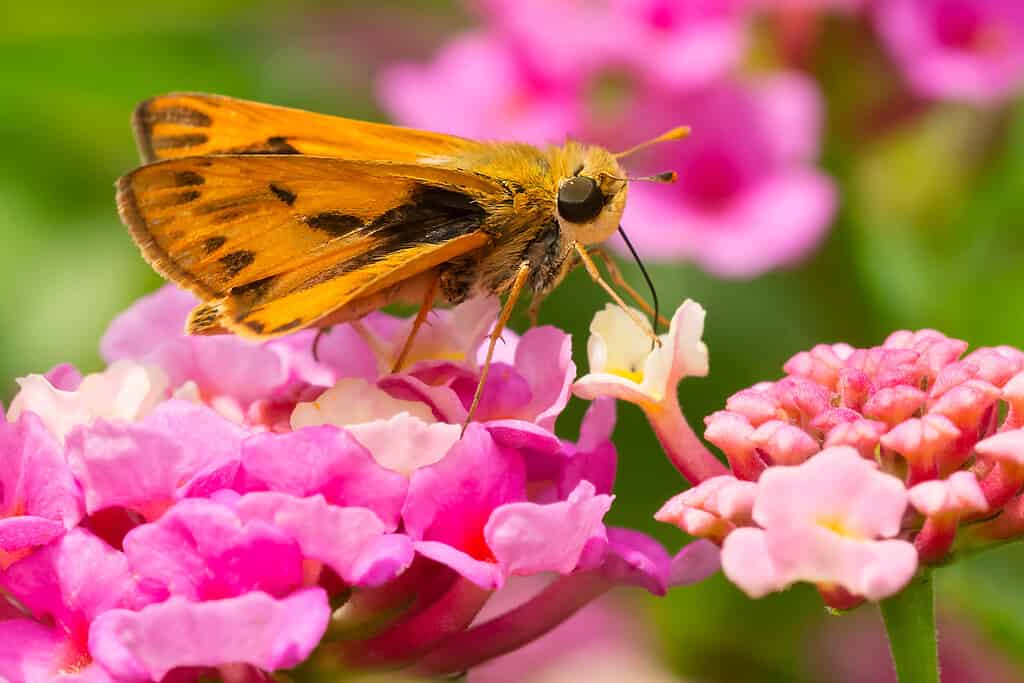
The fiery skipper butterfly is faster than most.
©Paul Reeves Photography/Shutterstock.com
Skipper butterflies fly as fast as 37 miles an hour, but most butterflies are slow fliers that don’t go faster than 12 miles an hour. Butterfly wings also move in a figure-eight pattern, causing their flight path to be viewed as erratic.
11. Some Butterflies Have Transparent Wings
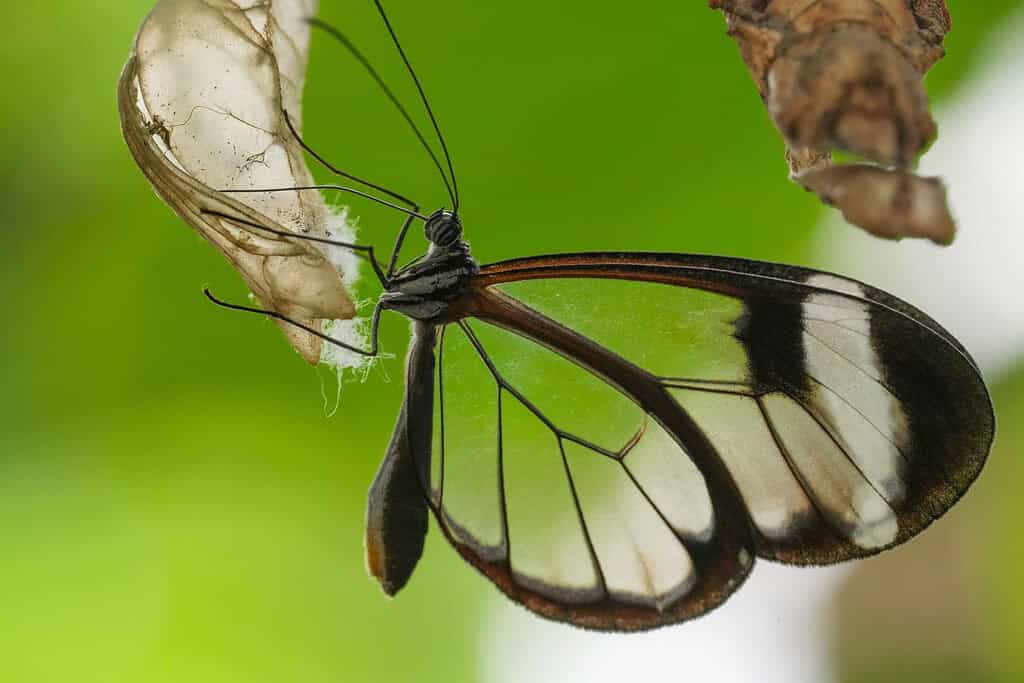
A clearwing butterfly (Greta morgane) is one of many butterfly species with transparent wings.
©Wirestock Creators/Shutterstock.com
If a butterfly does not have scales on part of its wing, that part of the wing is transparent like a windowpane. There are several types of butterflies with transparent wings, one is the big greasy (Cressida cressida) of Oceania and Southeast Asia. The forewings of the male are almost completely transparent, and the hindwings have large areas of transparency. Females emerge with gray scales on their wings, but they soon wear off, and the wings have a greasy appearance that gives the butterfly its name.
Other butterflies with transparent wings include the black-veined white (Aporia) of northern Asia, Europe, and North Africa, and the Melantho tigerwing (Thyridia psidii) of Central and South America.