Tennessee is a beautiful, pastoral state full of sweeping grasslands, thick forests, and lush rivers. It’s also home to a large collection of creatures. Mammal-wise, the Volunteer State is home to black bears, white-tailed deer, and groundhogs. Its ample foliage and abundant water sources, however, also make it home to a large collection of insects.
Indeed, the state has hundreds of different types of insects, with some sources cataloging over 1,000 species. Surprisingly, only two of them, the brown recluse and black widow spider, are considered significantly venomous to humans. Tennessee is America at its best, and it has some sizeable insects. As such, let’s learn more about the largest insects in Tennessee.
Ash Sphinx Moth

Ash sphinx moths are closely related to other members of the Sphingidae family, including privet hawk moths and lime hawk moths.
©Shimmer Photo/Shutterstock.com
Arguably, the biggest insect found in Tennessee is the ash sphinx moth (Sphinx chersis). It’s characterized by greyish forewings with a series of black dashes interspersed, including one that reaches its wing tip. These wings can reach almost five inches across. It’s found in Northern Mexico and across most of the United States. Ash sphinx moth larvae eat plants in the olive family, including lilacs, ashes, and privets. As for the adults, they feed on deep-throated flowering plants, including honeysuckle, primrose, and dogbane. They are members of the Sphingidae moth family and emerge during the summer months. They aren’t a danger to anyone and carry no venom.
Pleasing Picture-Winged Antlion

The pleasing picture-winged antlion is named for its dynamic, colorful wings.
©Debby Lowe/Shutterstock.com
Another one of the biggest insects in Tennessee is the pleasing picture-winged antlion (Glenurus gratus). A member of the Myrmeleontidae family, this species of antlion is often mistaken for a dragonfly because it becomes active and flies just after dark. It’s characterized by long (up to 2 inches wide) membranous wings that coalesce in watercolor-like splotches of black, white, and pastel pink. This pleasing-looking antlion insect primarily feeds on aphids and caterpillars. Its larvae, often called doodlebugs, live at the foot of hollowed-out tree trunks where they eat ants, termites, and even beetle larvae. They thrive in hot climates and are most active during late-summer evenings. Plleasing picture-winged antlions are non-toxic and pose no threat to humans.
Atlantis Fritillary Butterfly

Butterflies like the Atlantis fritillary butterfly are threatened by global warming.
©Heather Metts/Shutterstock.com
Easily recognizable by its black, orange, and white-splotched wings, the Atlantis fritillary butterfly (Speyeria atlantis) can be found across most of Tennessee. Its striking wings can reach a length of nearly three inches. While its larvae live amongst violets, adult Atlantis fritillary butterflies feed on a variety of plants including common milkweed, burdock, ox-eye daisy, mint, and mountain laurel. Like the previous species, Atlantis fritillary butterflies emerge in late spring and are most active during the summer months. They prefer habitats with meadows, bogs, forest edges, and pastures. While they thrive in the warmer temperatures that Tennessee summers afford, many butterfly species, including fritillaries, are experiencing significant population declines due to climate change. They pose no danger to humans.
Attentive Crocus Soldier Moth

Attentive crocus soldier moth larvae take on the appearance of twigs to disguise themselves from predators.
©Putra bunda/Shutterstock.com
Xanthotype attenuaria, commonly known as the attentive crocus soldier moth, is a species of geometrid moth in the family Geometridae. This family includes 23,000 species of moths. It’s characterized by striking grey, yellow, and white wings that reach a length of nearly two inches. Its larvae camouflage themselves with a distinctive twig-like appearance. If threatened, they stiffen their bodies to resemble a twig, hoping to go unnoticed by predators. Adult attentive crocus soldier moths feed on various plants, including elm and maple leaves, as well as rose and goldenrod bushes. They are most active at night and easily blend in with the surrounding foliage. While they are sizable, they pose no threat to humans.
Autumn Meadowhawk

Expert fliers, Autumn Meadohawks live alongside bodies of water where they hunt almost every type of flying, soft-bodied insect.
©Brier Mitchell/Shutterstock.com
Autumn meadowhawks (Sympetrum vicinum) are a type of dragonfly in the Libellulidae family, which includes over 450 types of dragonfly in the Odonata order. They are characterized by slim bodies with a brownish-red color that reach up to one and a half inches long, as well as yellow legs and transparent wings. This species is widespread throughout the United States, where it perches on rocks near bodies of water, waiting for prey.
While naiads eat mosquito larvae, freshwater shrimp, and small tadpoles, adult autumn meadowhawks eat almost any soft-bodied flying insect. Expert fliers, autumn meadowhawks spend most of their time skimming water surfaces looking for food. They are most active during the late summer and early fall. Autumn meadowhawks usually hunt throughout the day, biding their time by sunning on rocks. Not only do they not pose a danger to humans, but they also aren’t territorial with their lakeside hunting grounds.
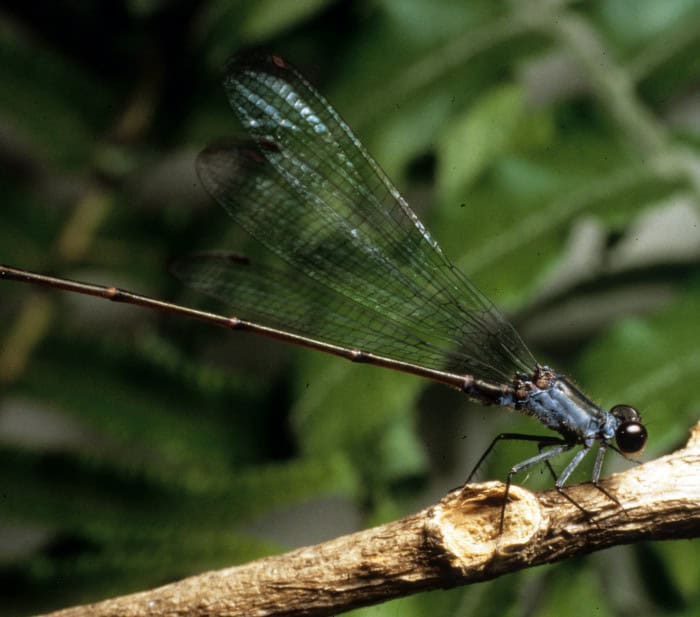
Azure Bluet Damselfly

Another type of dragonfly, the azure bluet damselfly, has a striking blue body with thick, black stripes.
©F.Demonsant/Shutterstock.com
Like its relative, the autumn meadowhawk, azure bluet damselflies (Enallagma aspersum) are a type of damselfly found in Tennessee. While autumn meadowhawks have a reddish coloring, azure bluet damselflies are distinctly blue, with baby blue coloring interspersed with black stripes along their thin, one-and-a-half-inch bodies. They also live near bodies of water, where they bask on rocks when not hunting soft-bodied flying insects with remarkable agility. They become most active during the summer months into early fall. All in all, azure bluet damselflies have a pretty good life. They are not considered threatened and have few natural predators, including fish and birds.
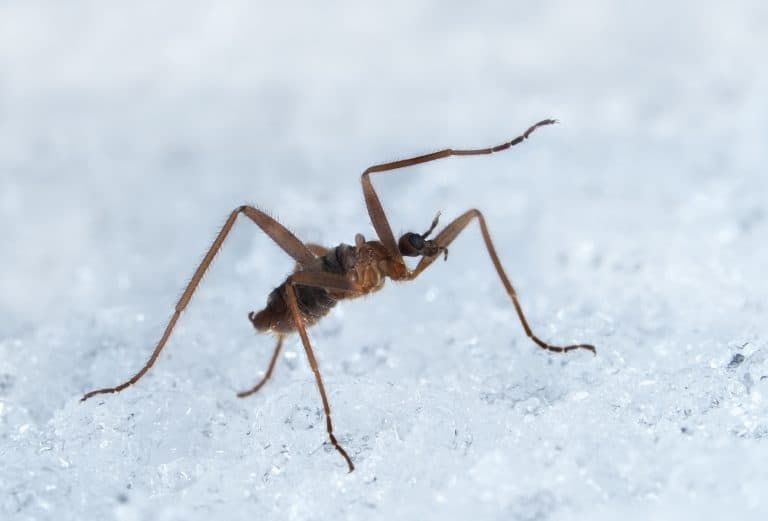
Band-Winged Crane Fly

A common misconception about crane flies is that they feed on blood like mosquitoes. In truth, they don’t eat anything at all.
©Monic249/Shutterstock.com
Epiphragma fasciapenne, or the band-winged crane fly, is widely distributed in the eastern United States, including in places like Tennessee. Like other crane flies, band-winged crane flies resemble oversized mosquitoes, with long, slender bodies, thin stilt-like legs, and wings up to two inches long. They prefer moist environments near water and have some unique behaviors. Though some adult band-winged crane flies feed on nectar, most do not eat at all. Instead, they spend most of their brief adult lives mating and laying eggs. A common misconception concerning crane flies is that they bite and feed on blood like mosquitoes. The truth is that they pose no harm to humans. They are incapable of biting or feeding due to their physiology. While crane fly larvae can sometimes damage lawns, in Tennessee, they are generally not considered a major pest.
Banded Hairstreak Butterfly

Banded hairstreak butterflies pose no danger to humans, but they will charge other butterflies invading their territory.
©ChandraPhoto/Shutterstock.com
Another one of the largest insects found in Tennessee is the banded hairstreak butterfly (Satyrium calanus). Despite its name, it is actually a butterfly in the Lycaenidae family. The banded hairstreak butterfly is characterized by brownish wings, about one and a half inches wide, with orange and black splotches at the tips. In places like Tennessee, it lives in forests and fields along their edges. There, it feeds on various trees, including hickory, oak, and walnut trees. It also loves nectar from flowers like milkweed and daisies. After producing one brood annually, banded hairstreak butterflies become active in mid-summer, and after mating, females lay eggs on host plants where the eggs overwinter. While banded hairstreak butterflies pose no danger to humans, they are quite territorial. They are known to challenge any butterfly that invades their territory.