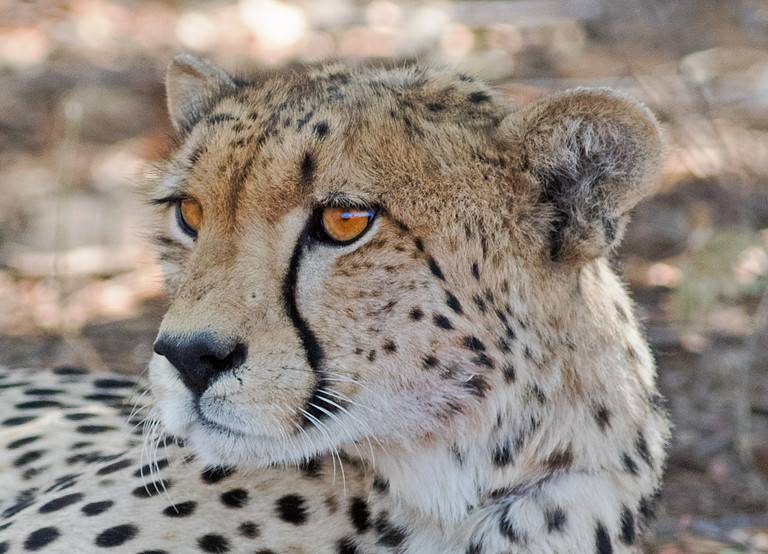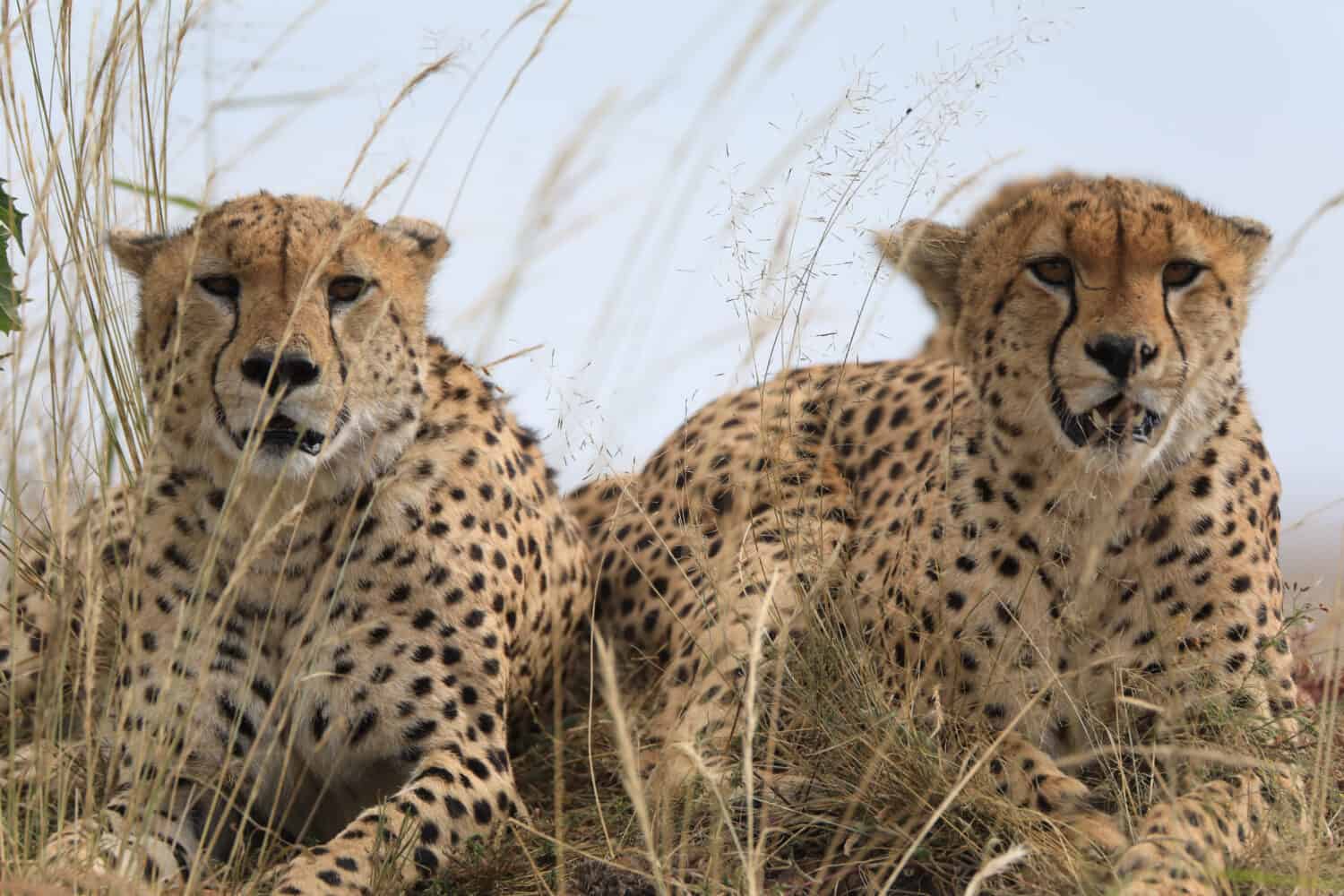

Cheetahs are beautiful, powerful felines known for their unique 2,000 to 3,000 spots. Residing in remote areas of Africa and Iran (and previously other parts of Asia and Europe), cheetahs are the fastest land animals. But did you know that male and female cheetahs are actually quite different from each other? From size to social behavior, here are six key differences between male and female cheetahs.
1. Male Cheetahs Are Larger
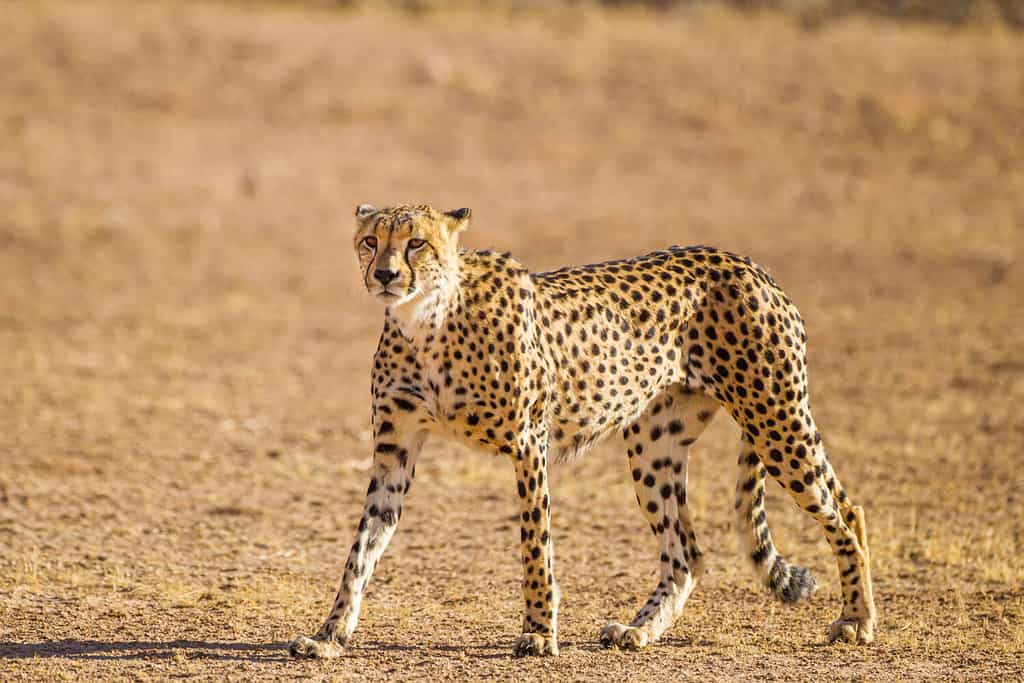
Adult male cheetahs are slightly larger than adult female cheetahs and may have larger heads.
©Wayne Marinovich/Shutterstock.com
Male cheetahs are larger than females, but they do not exhibit sexual dimorphism to the extent that other big cats do. The differences in size are often subtle. On average, cheetahs weigh between 75 and 140 pounds, with males tending to be heavier due to their more muscular build. They stand 24 to 32 inches tall at the shoulder and measure 45 to 55 inches in body length, not including the tail, which can add up to another 33 inches. Males may also have slightly larger heads.
2. Female Cheetahs Are More Solitary
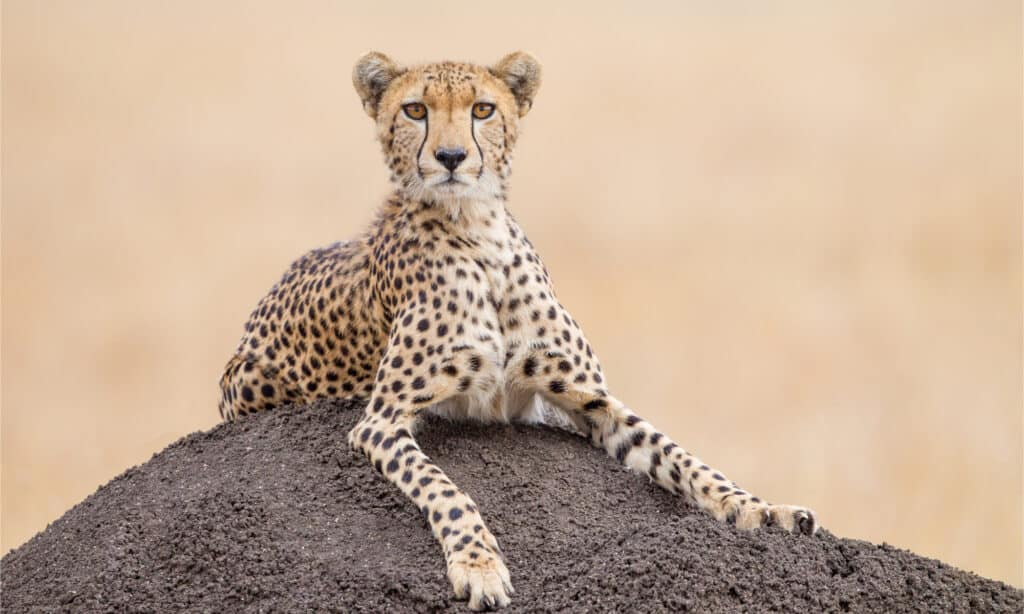
Female cheetahs are solitary unless they are raising cubs.
©iStock.com/StuPorts
Male cheetahs are known to be social. Males typically travel and hunt in groups, often forming lifelong coalitions of two to three brothers. However, female cheetahs are solitary unless they are raising cubs. When the cubs reach around 18 months old, the mother leaves them to return to her solitary life. The cubs may remain together for another six months, but once females reach maturation at around 2 years of age, they split off from the rest of their littermates to start their own independent lives.
3. Females Raise Cubs Alone
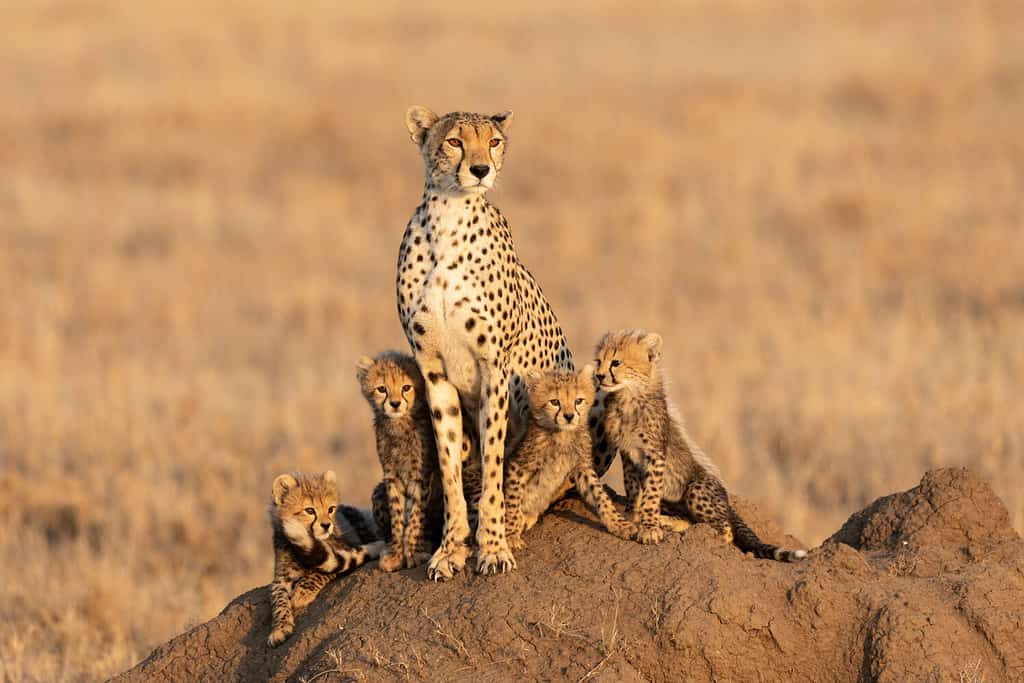
The average litter size for a cheetah is between 3 and 6 cubs.
©Stu Porter/Shutterstock.com
Female cheetahs also raise their cubs on their own. Male cheetahs do not take a role in raising their cubs. The only reason male and female cheetahs even interact is to mate. After breeding, the male will go back to live with his coalition, leaving the babies with their mother. The female cheetah raises the cubs, hunts for them, and keeps them safe from predators until the cubs are independent. Mother cheetahs may leave their cubs alone for up to two days while they hunt for enough food to sustain themselves and their offspring.
4. Females Have Larger Home Ranges
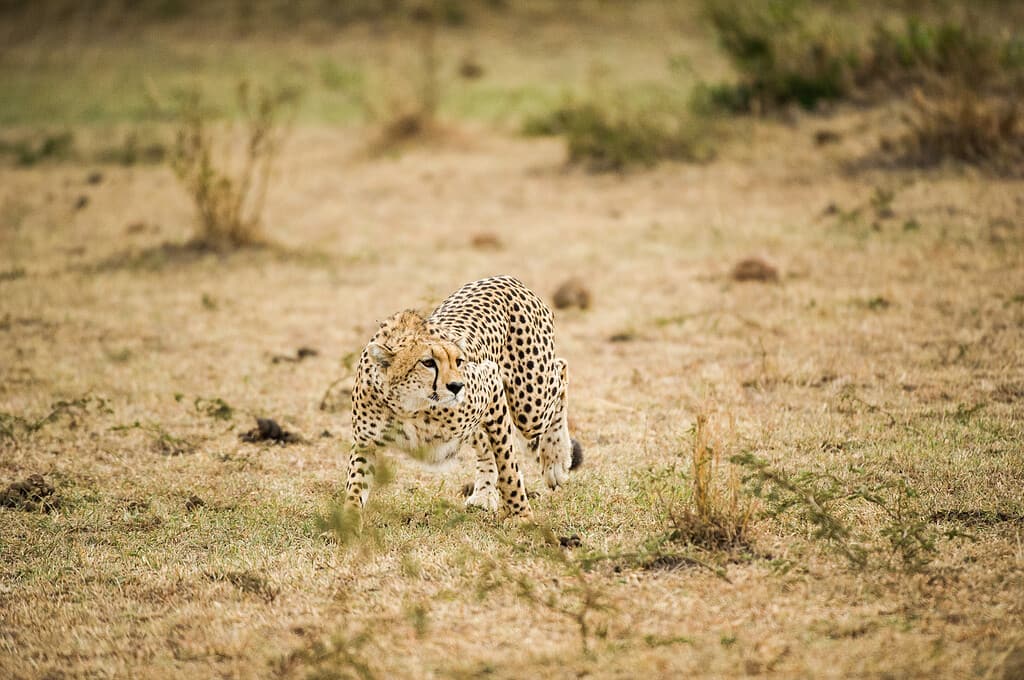
Female cheetahs have a home range between 322 and 370 square miles.
©edeag3/iStock via Getty Images
When males reach sexual maturity, two or three male littermates form a coalition and set out to find their own territory. They generally search for an area that is far from their natal territory, sometimes as far as 300 miles away. The size of their territory is typically only between 5 and 10 square miles; however, the coalition may claim a territory as large as 50 square miles. Males tend to be more sedentary and establish small territories in areas that are highly populated with prey.
Females’ territories are much larger and often overlap with their mother’s territory, as well as with the territories of several male coalitions. A solitary female’s territory is generally between 322 and 370 square miles. Females are nomadic and require a large area to find enough food to feed themselves and their cubs. By including the territories of several male coalitions within their own range, females have more opportunities to mate.
5. Males Are More Territorial
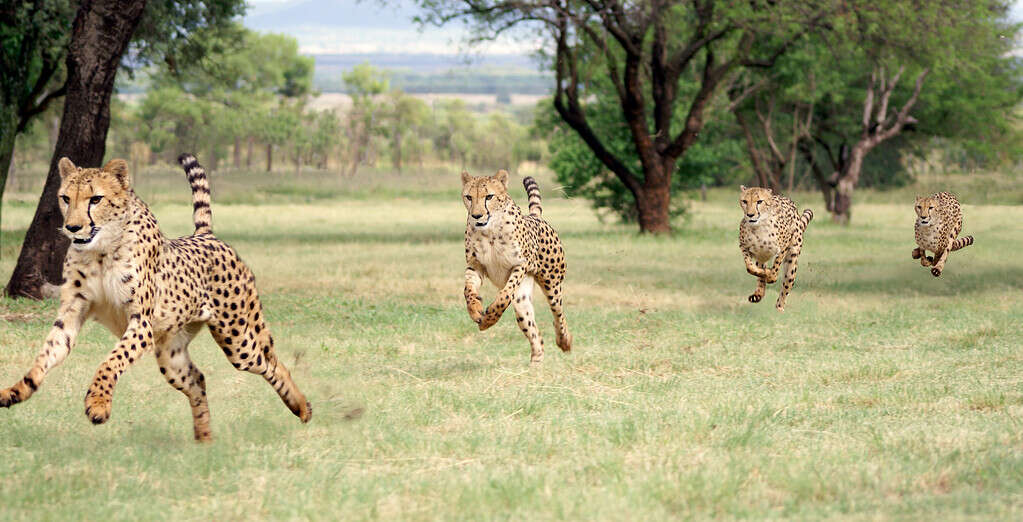
Male cheetahs typically live in packs of two to three males.
©photosfromafrica/iStock via Getty Images
Although females have large territories, they do not defend them. If they encounter other females, they are typically not aggressive toward one another. Cheetahs are also generally more wary around other large predators, such as lions, and tend to defer to them. However, male cheetahs will fiercely defend their home range and fight each other over territory and females. Males frequently patrol and mark their territory by defecating or spraying urine, often in the same locations.
6. Female Cheetahs Are Faster Than Males
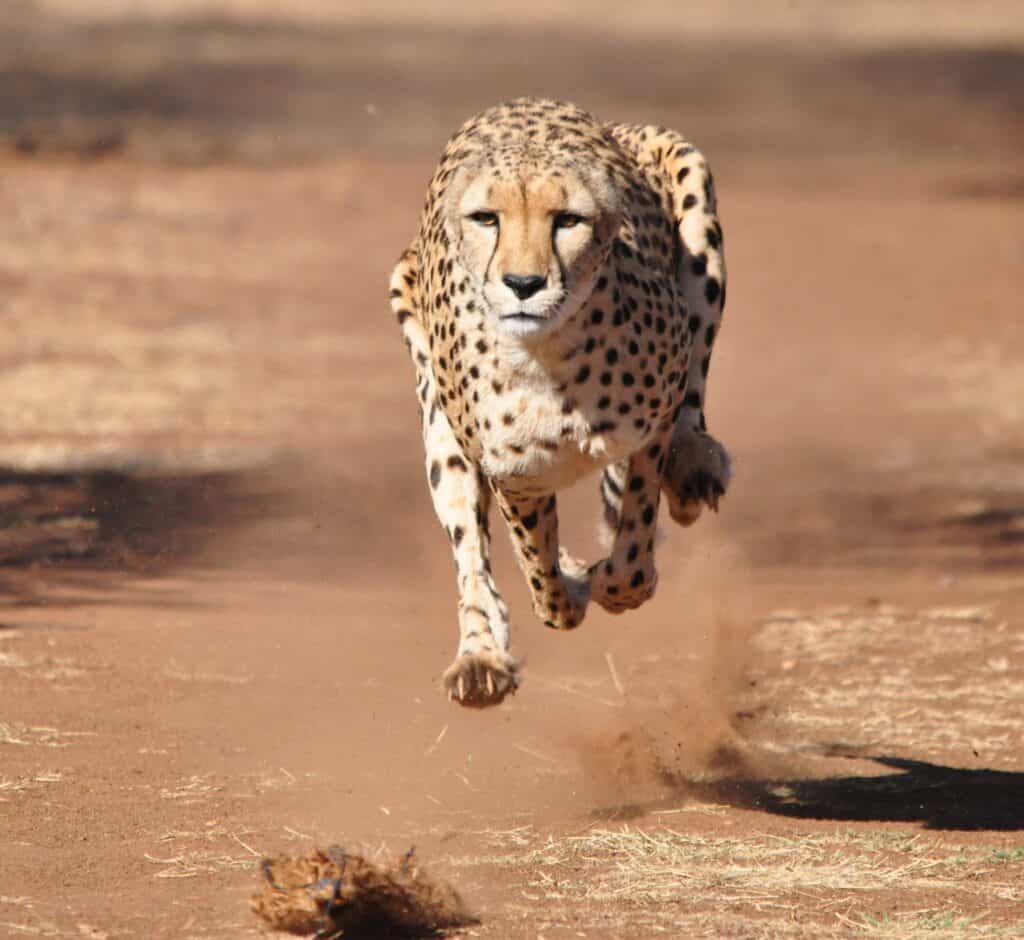
Studies of cheetah running speeds have shown that females are typically faster than males.
©Marcel Brekelmans/Shutterstock.com
Comparative studies of trained and untrained cheetah running speeds have shown that female cheetahs are generally faster than males. This is likely because they are lighter and not as bulky as males. Females may also be more motivated. They are often not just hunting for themselves — they must also have enough food to feed their cubs.
The fastest cheetah ever officially recorded was an 11-year-old female named Sarah, who lived at the Cincinnati Zoo until her death in 2016. In 2012, Sarah’s time of 5.95 seconds obliterated the world record for the 100-meter dash. She was clocked at nearly 4 seconds faster than the world’s fastest human, Usain Bolt, whose record is 9.58 seconds for the same distance. Sarah’s top speed was 61mph, but researchers believe cheetahs in the wild can reach speeds of 70 mph when hunting or fleeing danger.