
Quick Take
- Male bluegills are fiercely territorial, yet they deliberately nest shoulder-to-shoulder with rivals, and there is a calculated reason why they do so. See colonial nesting behavior →
- Some male bluegills never build a nest, never court a female, and still manage to pass on their genes with success. Meet the sneaker males →
- Even the dominant male guarding his own nest can't claim every egg in it as his own. Explore egg fertilization rivals →
- One type of male bluegill pulls off its mating strategy by looking exactly like a female. Discover the female mimics →
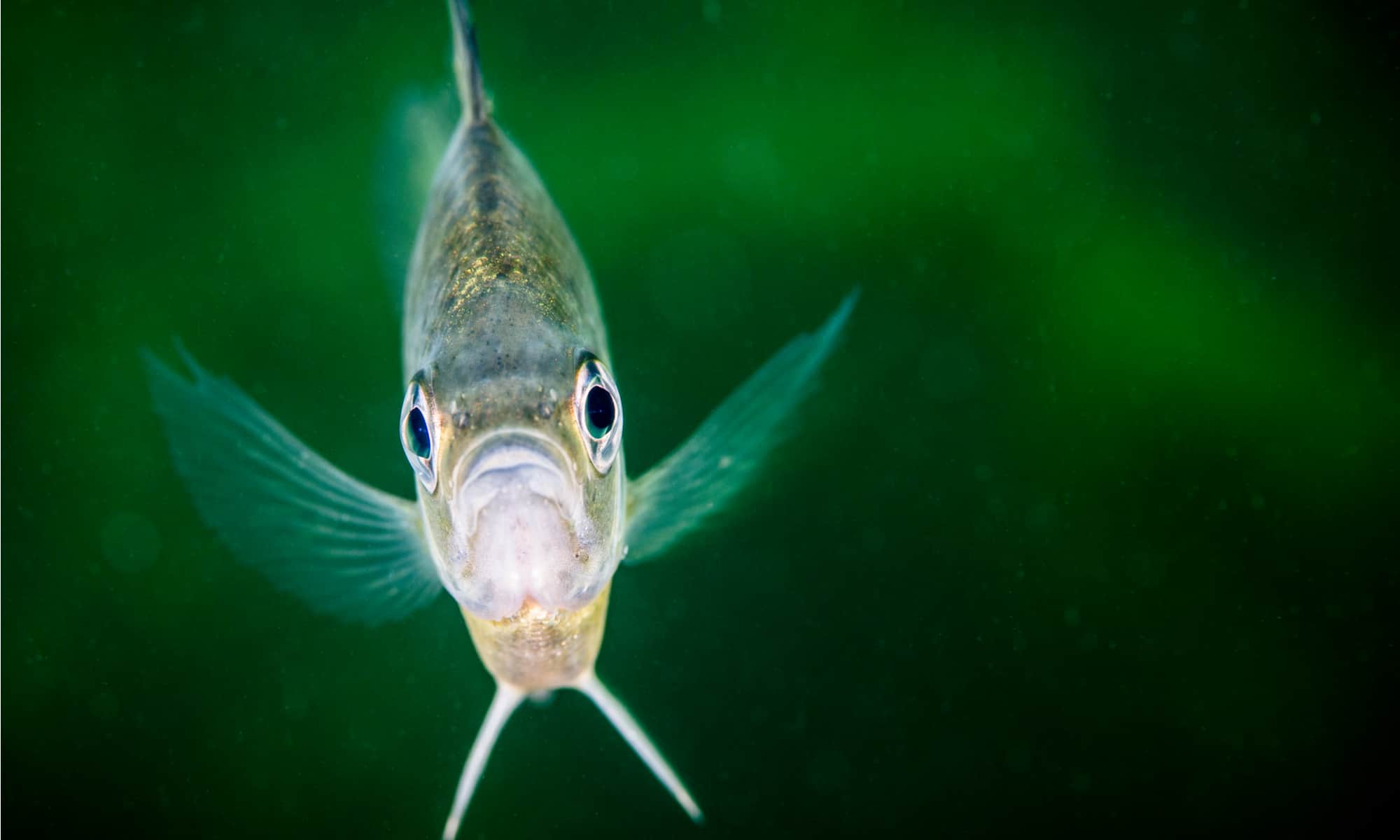
To many people, the bluegill fish might be nothing more than a child’s first catch off a sunny dock with a tiny bait, pole, and plastic bobber. But if you peer beneath the surface where these sunfish live, you’ll find that fierce parental care and relentless devotion define how bluegills live. For example, during the spawning season, males aggressively defend their nests from rival males and predators well past the initial spawn. Far from a peaceful catch, these summer months breed a frenzy that underlines the sheer complexity of these freshwater fish.
Spring of Spawning

Blairs Valley Lake is a small but popular lake managed by the DNR primarily as a warm-water fishery for bluegill, largemouth bass, and tiger muskie.
©Susan Barklow/Shutterstock.com
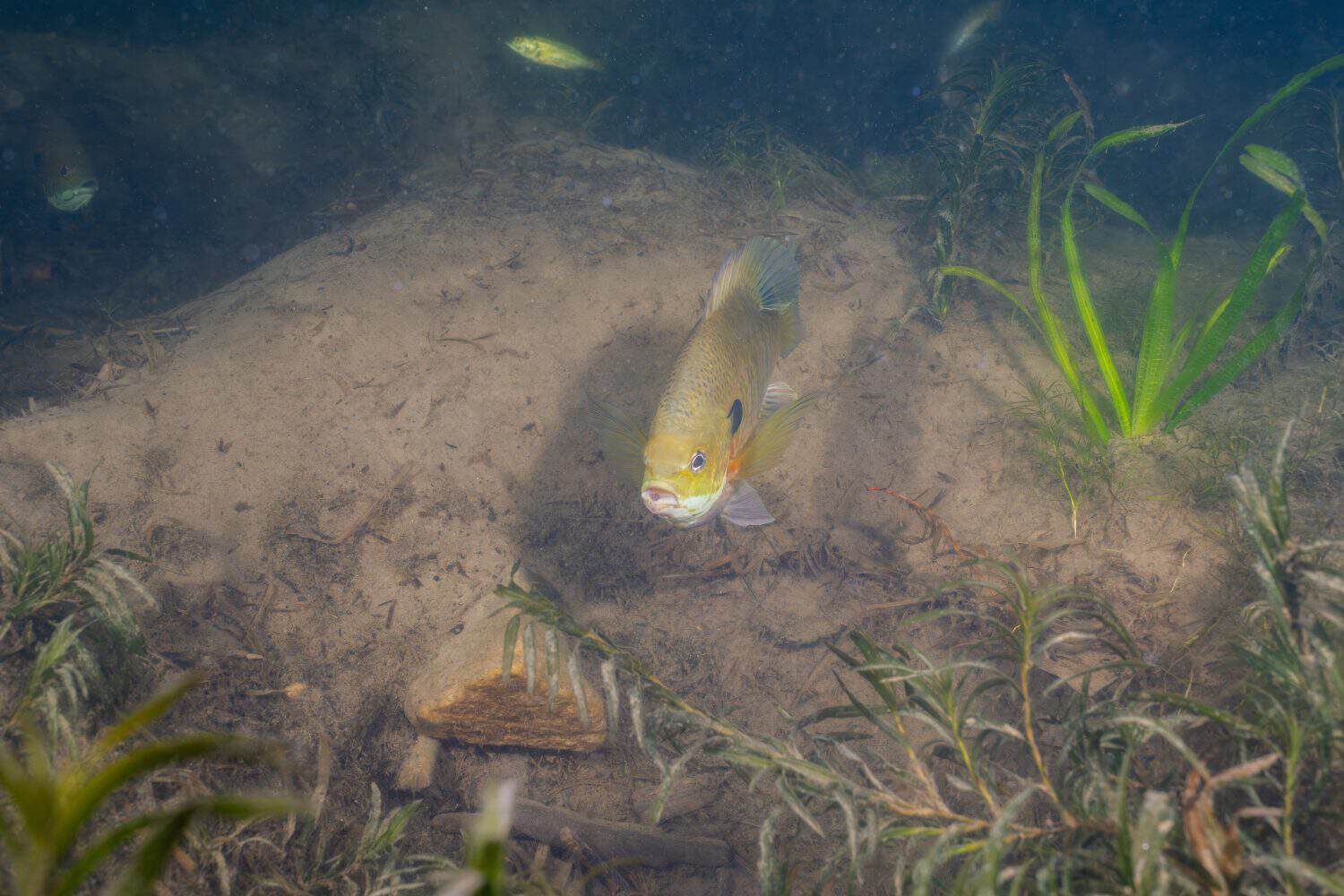
The mating season begins when nests are constructed by the males. Nests are typically saucer-shaped, resembling a circular depression in the sand approximately 8 to 18 inches in diameter. Males head into the weed beds and sandy freshwater flats to build nests in dense colonies, similar to an apartment complex. Using their broad tail fins, they swiftly sweep away silt and debris to clear room for their nests. Clustering these nests so closely together encourages strife among these aggressively territorial males. So why spawn as a colony amongst a cluster of rivals? Bluegill eggs are a highly prized prey item among many other fish and even some aquatic insects. Exemplifying the idiom “it takes a village to raise a child,” multiple fish guarding the eggs leaves less opportunity for predation.
Parental, Satellite and Sneaker Hierarchy
The parental male builds a nest for its mate and eggs.
©Griffin Gillespie/Shutterstock.com
Bluegills are polygynous. This means one male can mate with multiple females. Females arrive to the nest after it is built. Afterward, a mating ritual ensues in which males circle their nests and grunt. Some salmon species perform similar mating rituals. There are also multiple types of bluegill males. They can be separated into three categories with varying lifespans depending on the type: satellite, sneaker, and parental. Parental males are larger than both females and sneaker or satellite males. These males are more colorful when compared to the other types and develop a large black tab on the back of their gill. Parental males take longer to reach maturity. When they do, they get most of the females’ attention.
Satellite males mimic female bluegills with their lack of color and smaller size. When a parental male is mating with a female, satellite males can sneak in and fertilize the eggs that are unattended. Sneaker males do not mimic females. Instead, they take their chances by quickly swimming over the mating pair, releasing their sperm, and then swimming away. Satellite and sneakers forgo investing in building a nest and defending it. Instead, they rely on these tactics to pass their genes to the next generation. Both tactics, though deceptive, are successful. Parental males, while dominant, fertilize roughly 75% of the eggs in their nests, leaving about 25% to be fertilized by the sneaky males.
Parental Care in Bluegills
After fertilization, females leave, and the sunfish eggs are guarded by parental males for approximately 15 days. The duties of parental males cease once the fish are able to swim. Fry, or juvenile fish, start by eating small prey like zooplankton and gradually move on to larger prey as they grow and mature. As adults, bluegills begin the process again each spring, passing their genes to the next generation.