
Quick Take
- During rut season, Yellowstone's bison herds do more than just grow. They transform into something far larger and more dangerous than most visitors expect. See how herds swell →
- Even a calm bison is faster than you think, and during rut season that gap becomes even more alarming. Check the speed risk →
- What you do in the first few seconds of a bison encounter can make all the difference. Learn safer escape steps →
- There's a narrow biological window during rut that determines everything, and this is the very reason bulls become dangerously unpredictable for weeks at a time. Understand the rut window →
Bison are among the largest animal attractions at Yellowstone National Park. Unfortunately, massive interest in the animals can lead to poor decisions by visitors, the biggest of which is getting too close to the creatures.
Getting too close to bison is never advised. This is especially true as males become more aggressive, a pattern that is about to emerge as Yellowstone’s bison rut begins.
July Is Peak Bison Rut Season in Yellowstone
Yellowstone is entering one of the busiest seasons for its resident bison. This is because the bison rut season begins in July and continues through August.
Rut season occurs during the summer when male bison experience a surge in testosterone. Females will have a window that lasts up to 72 hours, during which they will be receptive to the bulls’ advances. Because the females enter this period, also known as estrus, at different times, the bachelor bulls remain near the established herd for several weeks.
To make their presence known, bulls will bellow to the females. They will also rub their scent and urinate in the area of the herd.
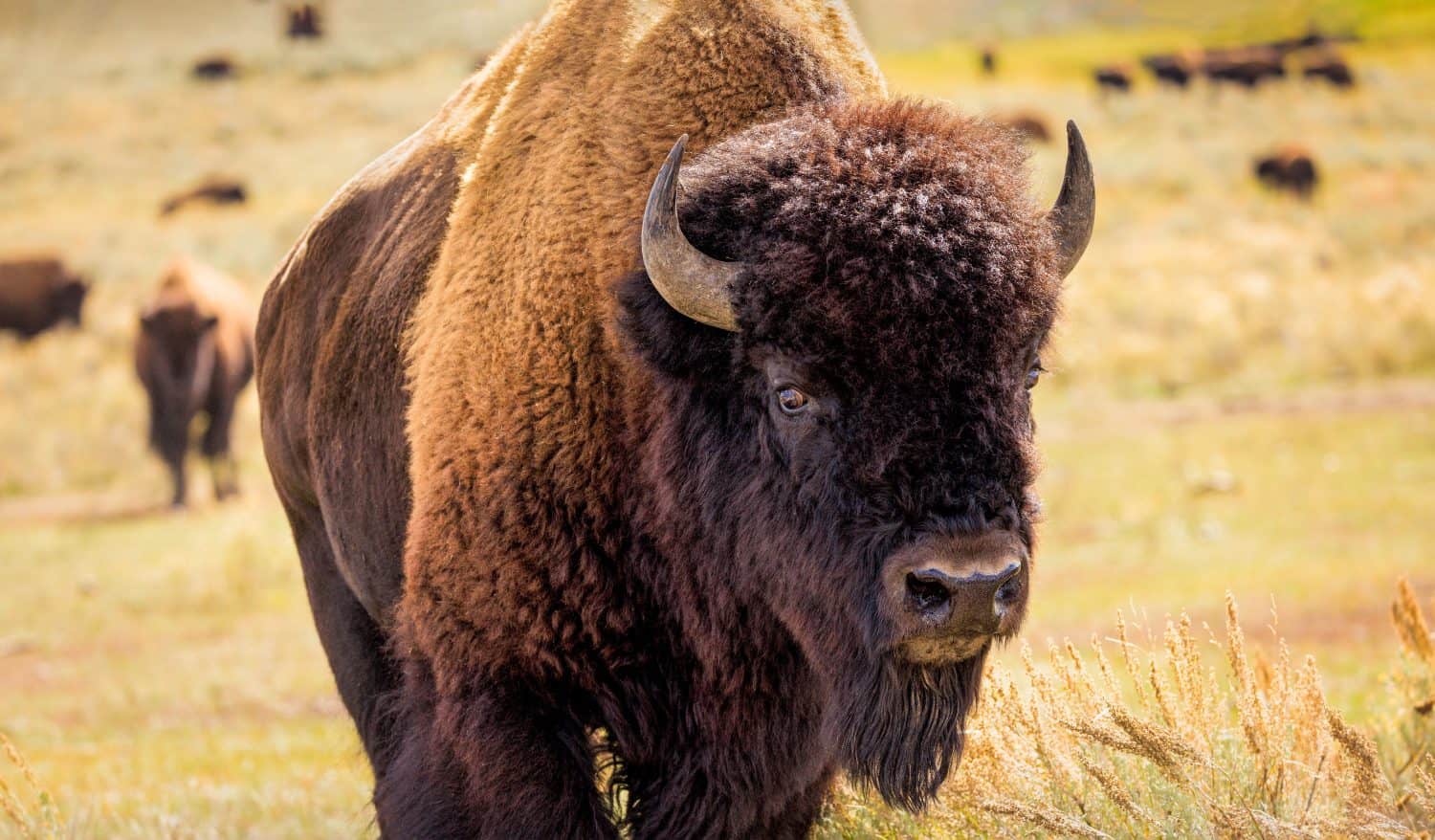
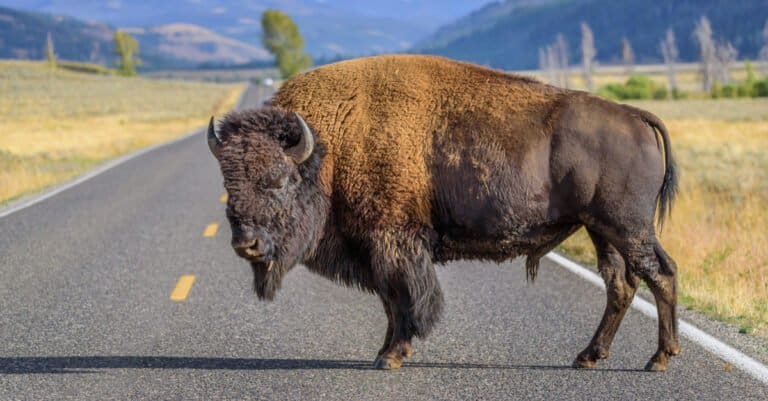
Male bison will join female herds to compete for the attention of a mate during rutting season.
©John Boland/Shutterstock.com
Once females show interest, the males work to impress them. Bulls will engage in activities such as head-butting. The winners of these battles establish dominance and become the sought-after bulls for mating.
If the rutting season is successful, the females will become pregnant. Their gestational period is between nine and 9.5 months, with calves being born between April and May. Given that this is shortly before rutting season begins, females who have recently had calves may not participate in it, potentially joining the following year.
Bison Herds Surge in Yellowstone During Rutting Season
Outside rut season, both the Northern Range herd and the Hayden Valley herd in Yellowstone will be approximately 200 strong. The larger herds are female-led as they tend to their calves, some of which may have been born between April and May. Other calves from the previous year’s rut may still be part of the herd. Additionally, there may be a few younger bulls in bachelor herds wandering through the national park. However, when rut season begins, they and the solitary bulls join herds, causing the population to soar.
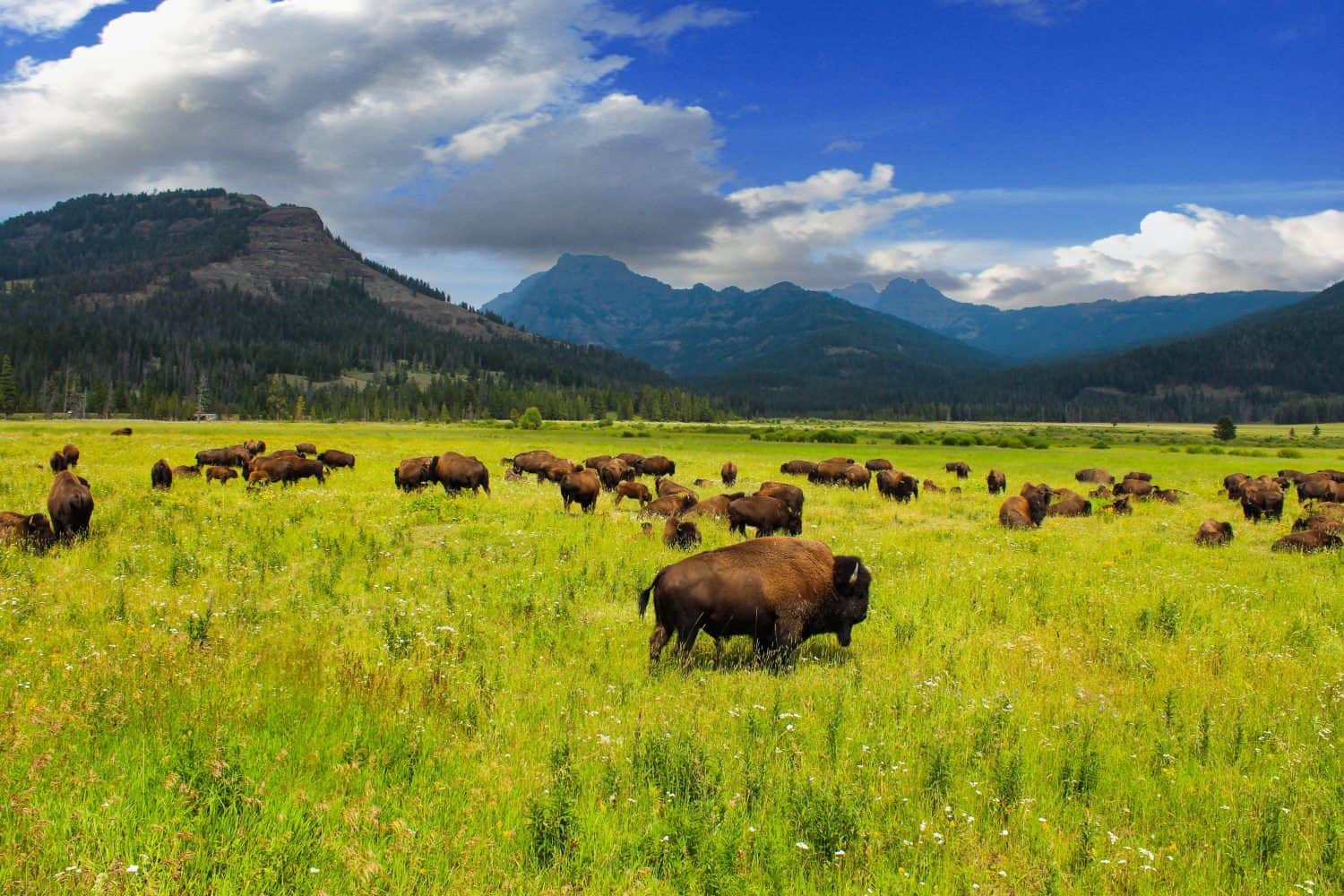
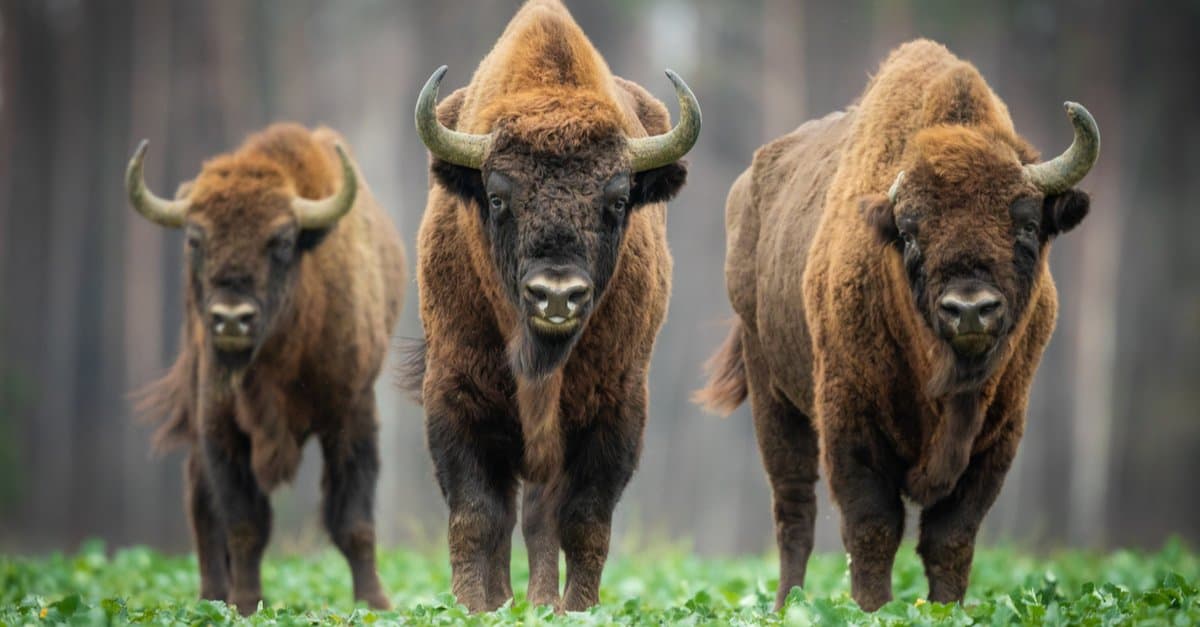
Bison herds get dramatically larger during rutting season in Yellowstone.
©MisterStock/Shutterstock.com
As the male bison join the herds, the population will spike to nearly 1,000 heads of bison per herd. In some years, the number has reached much higher peaks, with a total of 5,300 in 2025. The males will mate with multiple females, but the females will only choose one mate per rut season. This means the more bulls in the group, the better the chances of a successful rut season. It is also likely that more bulls will lead to greater aggression toward one another.
With the herds growing up to 10 times their original size, it becomes much easier to spot bison in Yellowstone, both up close and from afar—the latter being recommended by national park employees.
Why Is Rutting Season the Most Dangerous Time to Approach Bison?
To be clear, there is never a good time to approach bison. However, rut season is the most dangerous, given the aggressiveness of mating males.
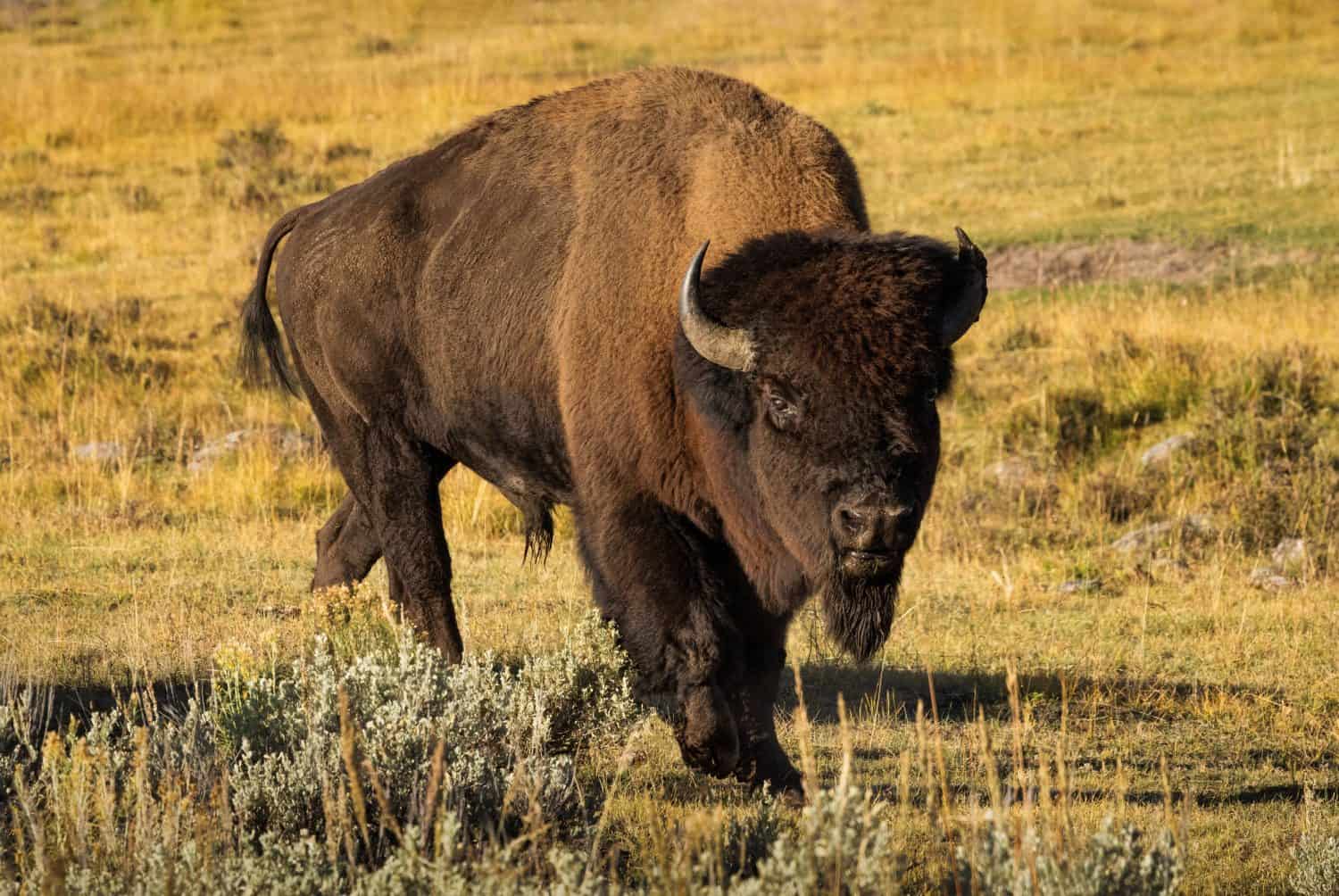
Male bison become more aggressive during rutting season due to increased testosterone.
©John Boland/Shutterstock.com
As rut season ramps up, male bison experience a surge of testosterone. Because of this, they become more restless, more alert, and significantly more aggressive. This behavior tends to be saved for other bulls. However, if the bulls come across a person they perceive as a threat, they will attack. Even without increased testosterone, bison can run significantly faster than people. Consequently, a minimum distance of 75 feet from bison should always be maintained, if not more.
How to Avoid Contact with Bison Without Getting Harmed
Approaching bison or any other wildlife in Yellowstone is illegal. However, there are times when an encounter happens accidentally. When this happens, de-escalating the situation is key to ensuring both people and bison walk away without injury.
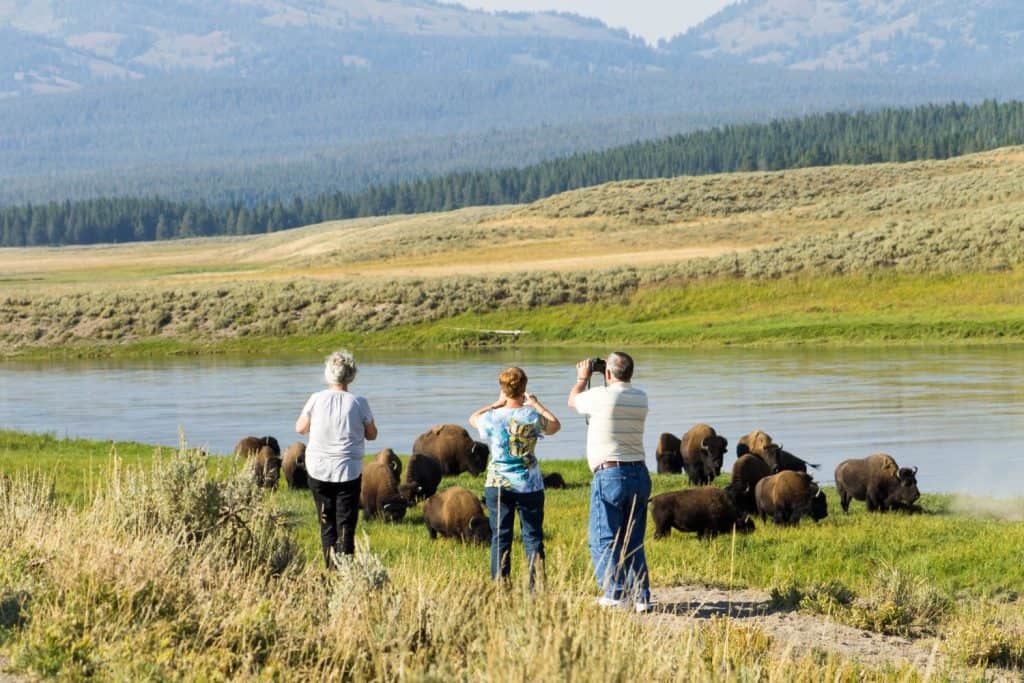
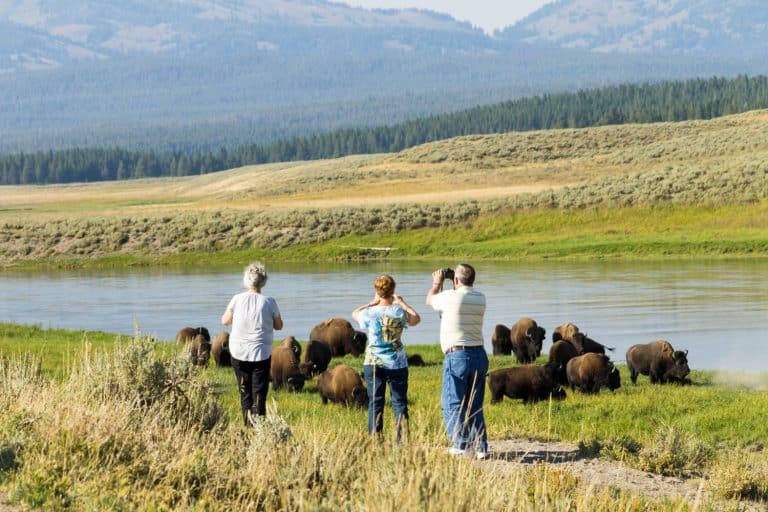
To avoid getting injured by bison, they should be given a wide berth of 75 feet when observing.
©Brian Karczewski/Shutterstock.com
The steps to take when a bison encounter occurs to keep from being harmed include:
- Know the signs of bison being provoked, which include a raised tail, head shaking, pawing the ground, snorting, and bellowing.
- Retreat slowly, walking sideways or diagonally and never turning your back to the bison
- Never come between a mother and her calf.
- If in a vehicle, back away slowly to ensure the bison does not get injured.
For those who want to observe bison during the rut, make sure to stay at least 75 feet away from the animals. They are best observed with binoculars or telephoto lenses to ensure that close encounters, especially when testosterone levels are at their seasonal peak, do not occur.