Quick Take
- One crab on this list can legally have its claw harvested and then be thrown back alive, which is exactly what drives its price. See the claw harvest →
- The world's largest land-dwelling arthropod is also a luxury seafood, though catching one may soon become impossible. Meet the coconut crab →
- A crab that never sees sunlight commands one of the highest prices on this list, and its appearance tells you exactly why. Discover the deep-sea price →
- Not all king crabs are created equal, and the differences in price between them will surprise even seafood lovers. Compare king crab prices →
While many crab species come at reasonable prices and are easily available worldwide, certain species of crab can be expensive and difficult to find. Scarcity and over-harvesting due to high demand can lead to even higher price tags. In this article, we will venture into the world of luxury seafood and explore some of the most expensive types of crab. Learn why these crabs cost so much and what makes them worth the price to crab lovers. All prices are listed per pound unless otherwise noted.
The Dungeness Crab ($25+)
The coastal areas of North America and the Pacific Northwest boast a thriving population of the Dungeness crab (Metacarcinus magister). Their habitats are close to the shoreline where sand or mud is present alongside eelgrass beds and other forms of submerged vegetation. These crabs have a high meat-to-shell ratio and they are prized for their sweet flavor profile. High market demand, plus a limited or fluctuating supply due to ecological pressures, can drive up the cost of this crab.
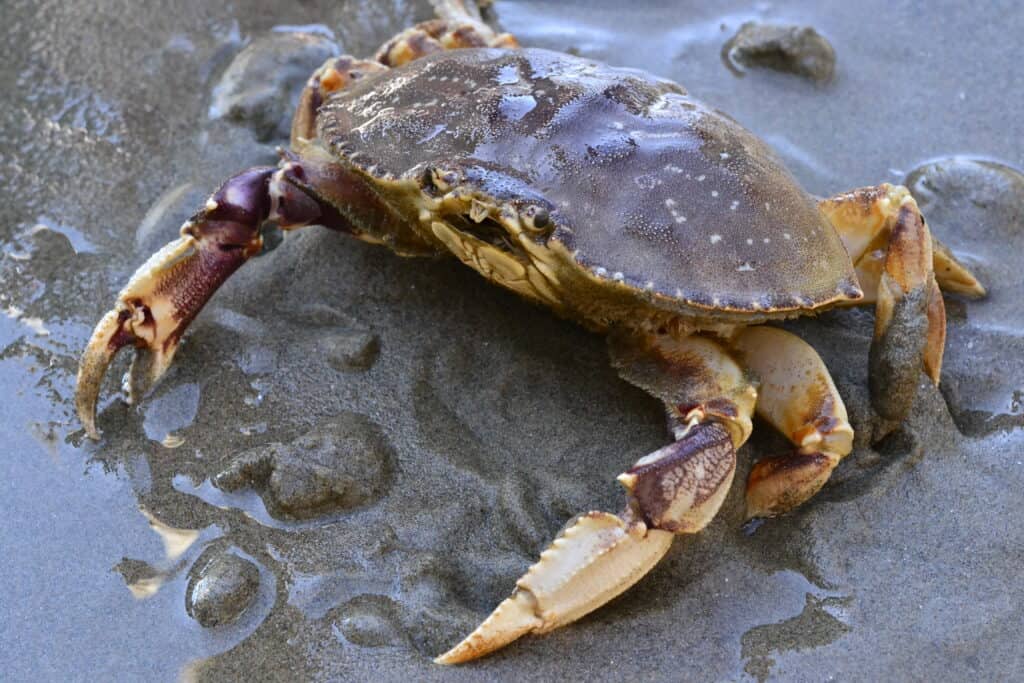
Dungeness crabs are prized for their sweet flavor profile.
©Jennifer Nicole Buchanan/Shutterstock.com
The Coconut Crab ($35+)
The coconut crab (Birgus latro) inhabits tropical areas throughout the Indian and Pacific Oceans. The size of the coconut crab sets them apart from other crabs. They weigh up to 10 pounds with a leg span of up to 3 feet. This makes them the largest land-dwelling arthropods and terrestrial crustaceans on Earth. Coconut crab is a regional delicacy. The abdomen fat and eggs are some of the most prized parts of these crabs. Unfortunately, they are considered vulnerable by the IUCN red list due to over-harvesting and habitat destruction. Many regions enforce harvesting limits and have legal protections. This contributes to their high price tag.

The coconut crab is the largest land-dwelling arthropod.
©Tomas Kotouc/Shutterstock.com
Golden King Crab ($40-$65+)
The golden king crab (Lithodes aequispinus) can be found along steep-sided ocean bottoms from British Columbia to the Aleutian Islands and Japan. They are typically caught in the waters around the Aleutian Islands. They are smaller than red and blue king crabs, only averaging 5–8 pounds. Golden king crab tastes similar to red and blue king crab, but some connoisseurs say the meat is sweeter. The high costs stem from the same reasons as red and blue king crab. However, since golden king crab is more abundant and has a lower meat-to-shell ratio, it is generally less expensive overall.
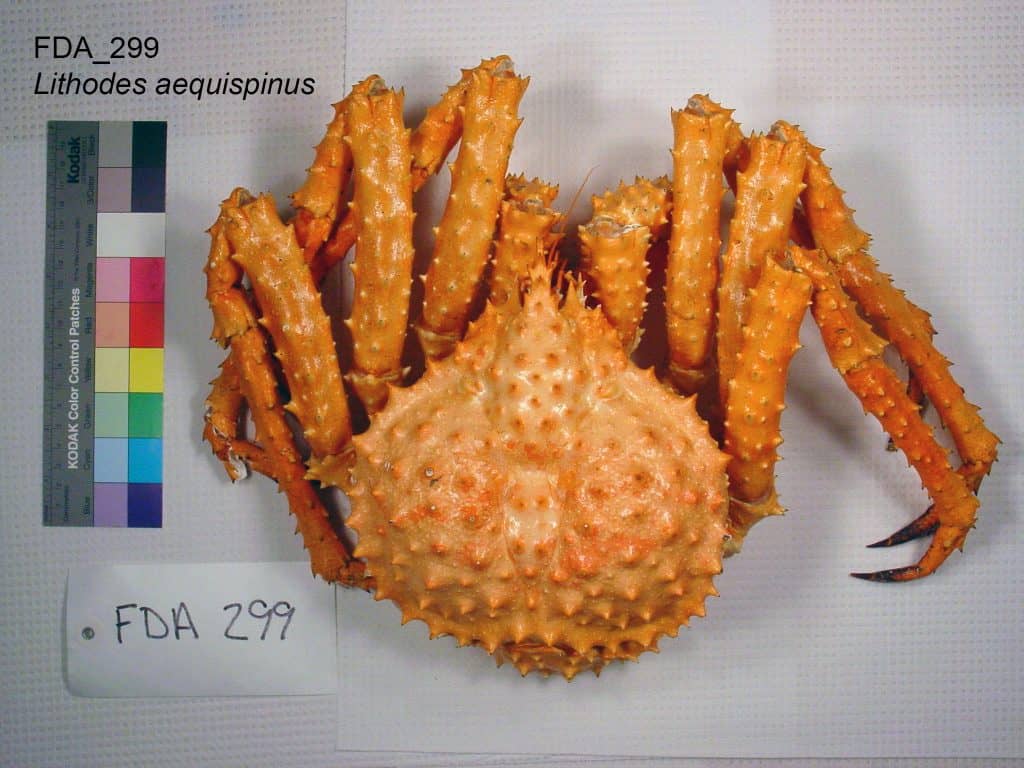
Golden king crabs are much smaller than red or blue king crabs, averaging only 5-8 pounds.
©The U.S. Food and Drug Administration / Public Domain – Original / License
West Australian Crystal Crab ($68 to $75+)
Deep-sea-dwelling West Australian crystal crabs (Chaceon albus) have been observed exclusively along the western coastline of Australia. They have been found at depths of about 1,400 to 4,000 feet. This species of crab lives in the depths of the ocean where they are not exposed to light, resulting in their pale white color. The crab is prized for its sweet, delicate flavor and juicy, firm meat. Limited supply, extreme deep-sea fishing conditions, and high export demand are just a few of the reasons behind the high price tag.

Crystal crabs are found along the western coast of Australia.
©John-Crux/ via Getty Images
Stone Crab ($30-$80, Depending on Market Price)
The stone crab (Menippe mercenaria) spans across North Carolina down to Florida before stretching out into the Gulf of Mexico region. They prefer waters close to oyster reefs, seagrass beds, and rock jetties. Stone crabs are relatively small compared to other crab species. Its shell measures about 5.1–5.7 inches across in width. However, it has a large crusher claw that fishermen harvest, putting the crab back in the water to regenerate that limb over time. This species’ bulky and juicy limbs are often described as tasting like a cross between shrimp and lobster.
Florida’s stone crab season only runs from October 15th to May 1st, and there are minimum legal claw lengths. Claws are graded by weight and are sold at market price, as landings are much more weather-dependent than other seafood, so prices can change week to week.

Stone crab claws are said to taste like a cross between lobster and shrimp.
©iStock.com/connect11
Blue King Crab ($90-$100+)
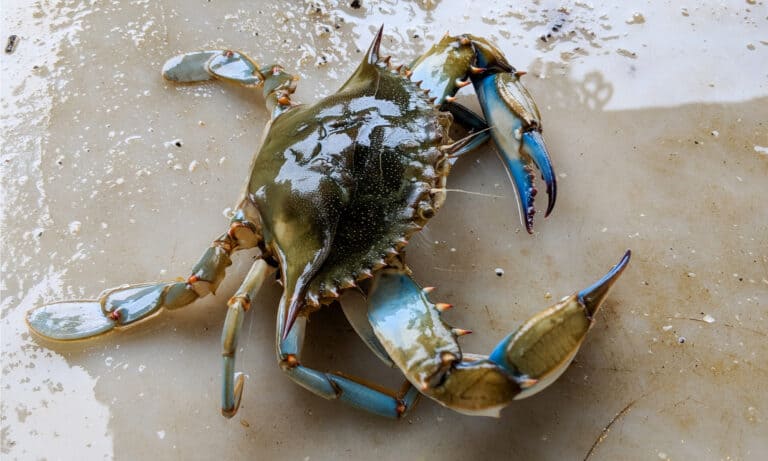
The blue king crab (Paralithodes platypus) inhabits the bottom of icy North Pacific waters in Alaska near the Bering Sea and Aleutian islands. Mature male blue king crabs can weigh up to 18 pounds. The blue king crab is prized for its delicious taste, juicy texture, and for some, its remarkable blue appearance. However, due to limited distribution ranges and fishing regulations that limit harvests, this crab is rare, making it one of the more expensive crabs.
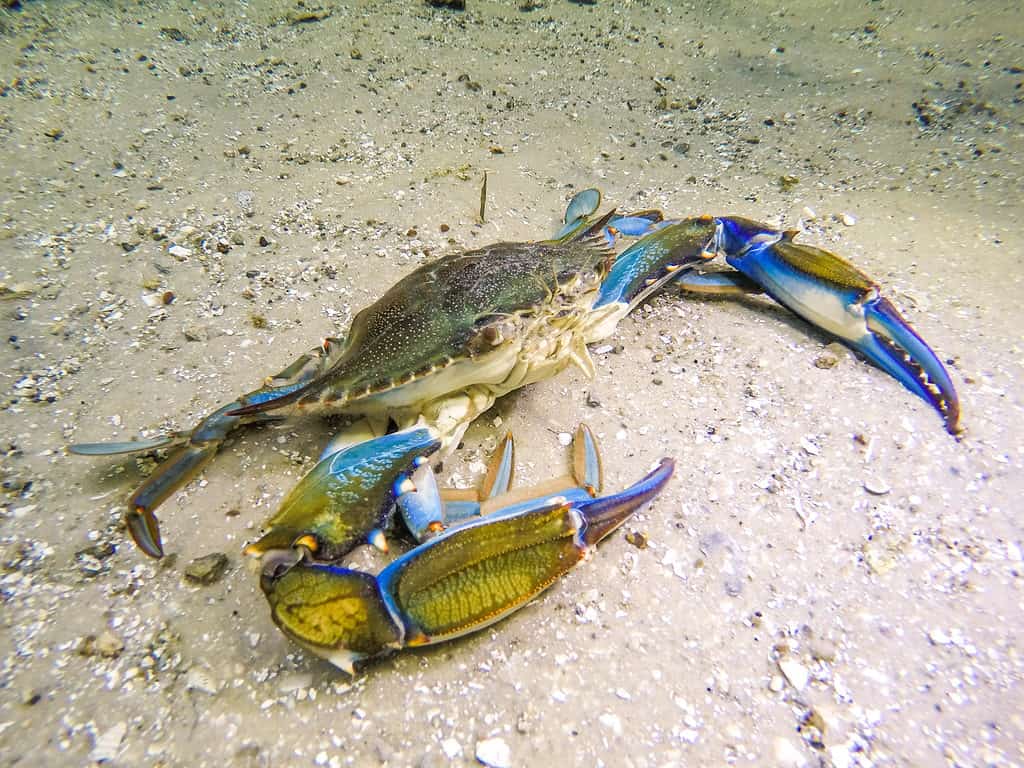
The blue crab is prized for its delicious taste and juicy texture.
©Jen Helton/Shutterstock.com
Red King Crab ($100-$140+)
The red king crab (Paralithodes camtschaticus) lives in Arctic conditions in the North Pacific from British Columbia to Japan and north to the Bering Sea. Male crabs can weigh up to 24 pounds, with leg spans exceeding 5 feet. Females can reach up to 10.5 pounds. Alaskan red king crab is prized for its thick, tender chunks of meat, which crab lovers describe as having a rich, sweet, buttery flavor. Limited availability, highly regulated (and sometimes dangerous) harvesting, and high demand drive up prices.
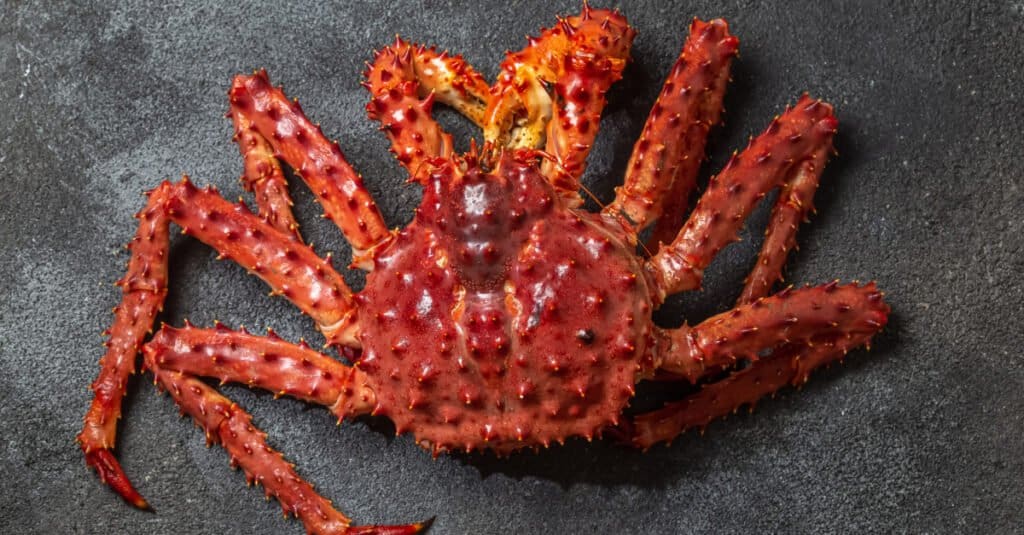
Male red king crabs can weigh up to 24 pounds.
©Larisa Blinova/Shutterstock.com