
Shrimp is the most consumed seafood in the U.S., followed by salmon, which is the most popular finfish. Globally, salmon is among the most popular food fish, but rankings can vary by region and year. The average American eats a little over three pounds of salmon per year. Atlantic salmon is the most widely available and consumed variety in the U.S. due to its mild flavor and year-round availability from aquaculture. However, there are six varieties of food-grade salmon: Atlantic (Salmo salar), Chinook (Oncorhynchus tshawytscha), sockeye (O. nerka), coho (O. kisutch), pink (O. gorbuscha), and keta (O. keta). Sockeye salmon, sometimes called red salmon, and pink salmon are two of the most commonly consumed Pacific salmon. Continue reading to learn about their key differences.
The Key Differences Between Red Salmon and Pink Salmon
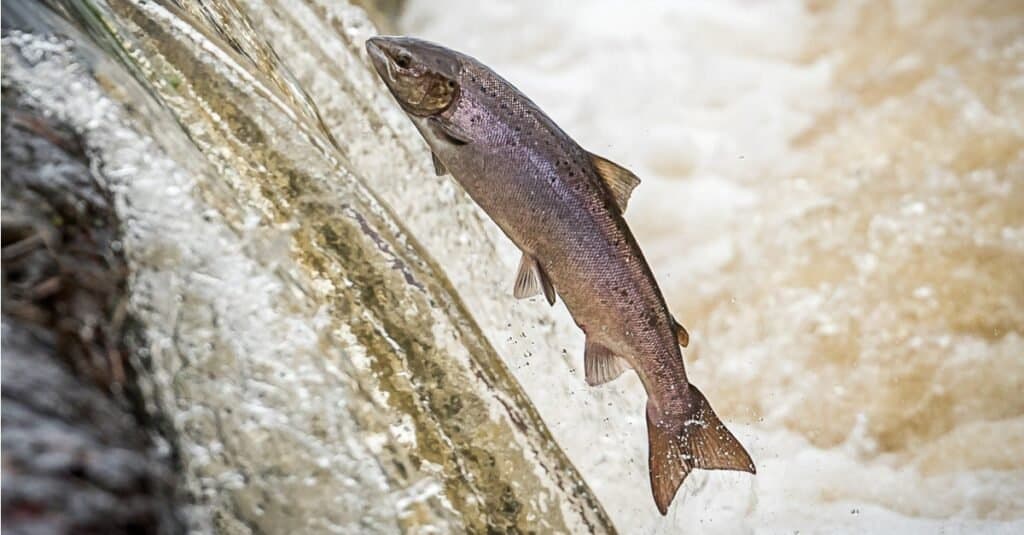
Red salmon and pink salmon are both Pacific salmon, but they have significant differences.
©iStock.com/PerfectStills
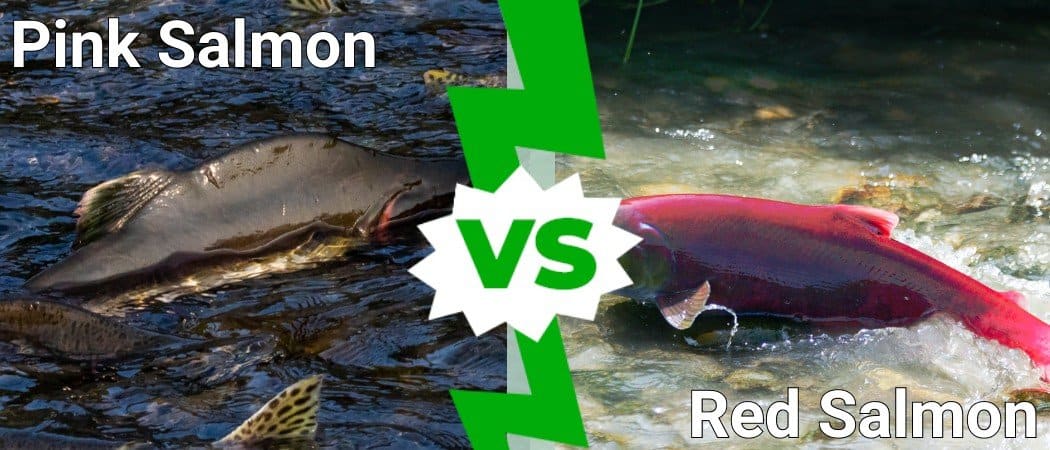
Red (sockeye) and pink salmon are the most eaten Pacific salmon, largely because they are the most abundant and widely harvested. Pink salmon are caught in the largest numbers due to their abundance and are often canned, while red salmon are highly prized for their rich flavor, though they are caught in smaller numbers than pinks. The primary differences between red salmon and pink salmon are in their size, scale color, and filet color.
Physical Characteristics
Sockeye salmon are medium-sized fish with a streamlined body that changes color depending on their life stage. In the ocean, they are silver with a metallic green-blue back, but they turn bright red with a green head during the spawning season, especially the males, who also develop a humped back and hooked jaws. Their flesh is a distinct, deep red color due to their diet of krill and plankton.
Pink salmon are the smallest Pacific salmon, typically weighing 3-5 pounds and reaching 20-25 inches in length. They are easily identified by large black spots on their back and tail, a white mouth with a black gum line, and a small body with very small scales. In their marine phase, they have silvery sides, a blue-green back, and white bellies, but spawning males develop a prominent hump, a hooked jaw, and a reddish-brown color.
Size

Brown bear eating a pink salmon in Brooks River, Alaska.
©iStock.com/Mark Kostich
Red salmon are larger than pink salmon in terms of length and weight. On average, red salmon weigh between 5 and 15 pounds, and are between 18 and 30 inches long. Pink salmon, the smallest salmon species, weigh as 3 to 5 pounds and are rarely more than 25 inches long. The size difference is noticeable but not significant.
Red Salmon vs. Pink Salmon: Fish Color
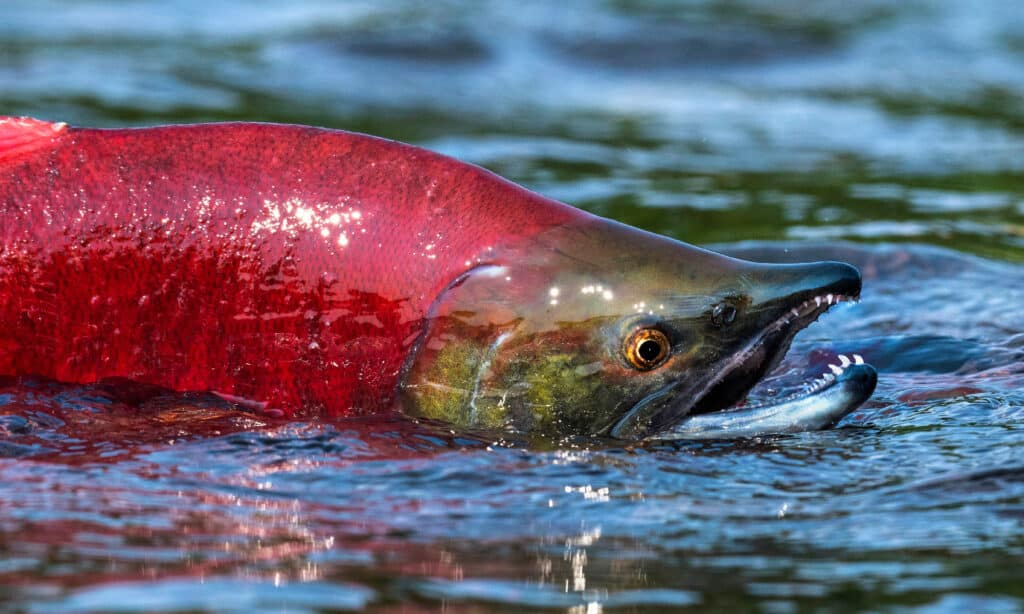
Sockeye (red) salmon change colors depending on their environment.
©Sergey Uryadnikov/Shutterstock.com
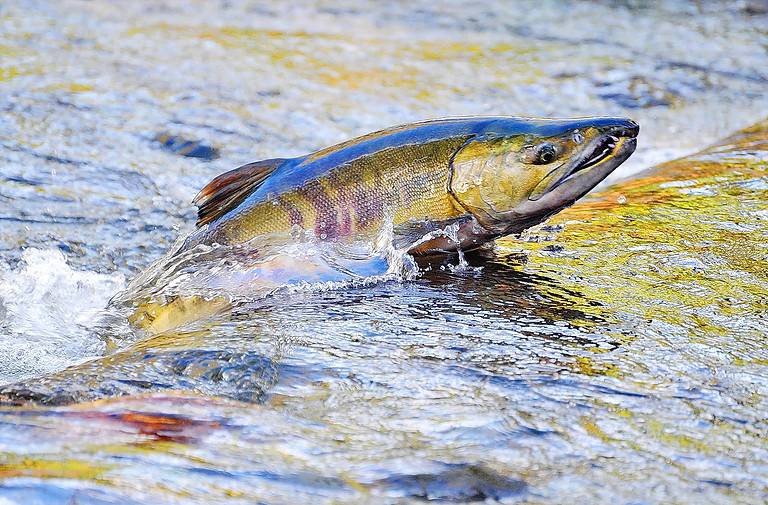
When they are alive and in the water, red salmon are blue and silver when living in the ocean. However, they turn red with green heads when they return to freshwater spawning locations. Pink salmon are silver, but they turn gray with a light-yellow underbelly when they return to their spawning areas. It’s easy to tell these fish apart.
Fillet Color
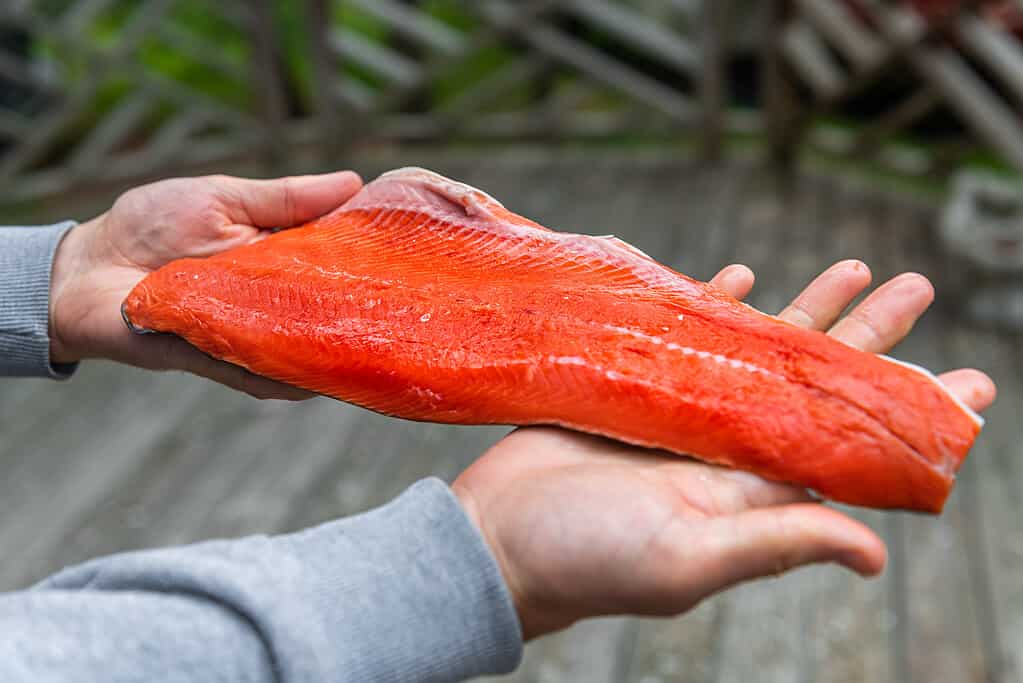
Sockeye salmon flesh is red.
©krblokhin/iStock via Getty Images
Red salmon have a red fillet, but pink salmon have a pink fillet. The red salmon’s meat is deep red when it is fresh, but it can fade when it is canned. The red color is not the only difference between the fillets of these two fish, however.
Red salmon has a richer flavor and makes for a firmer yet fattier meal. Pink salmon is known for its mild flavor and softer texture. These differences in freshness, safety, taste, and texture often result in people developing a preference for one fish over the other.
Aquaculture
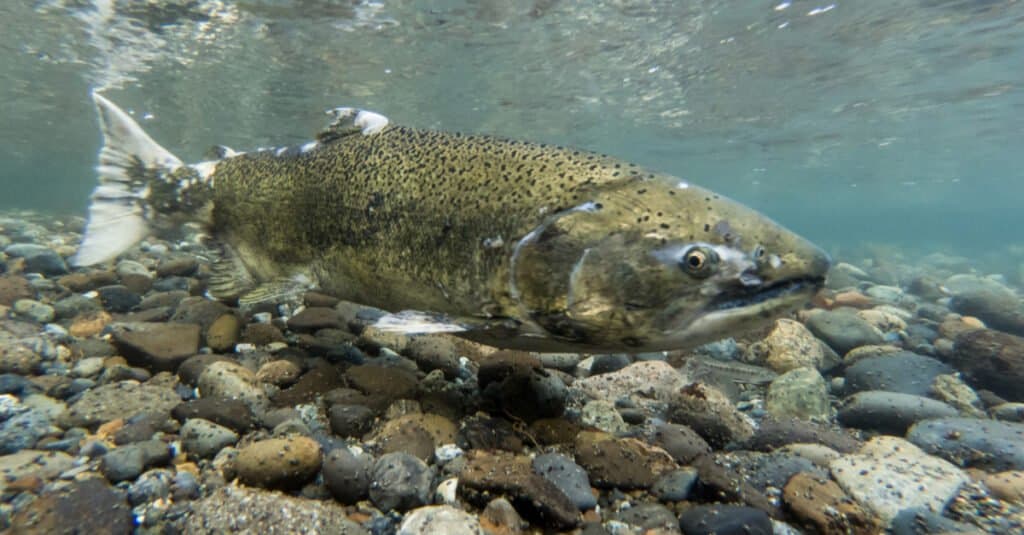
Most commercially available salmon are raised in large aquaculture farms.
©Kevin Cass/Shutterstock.com
Red salmon live only in the Pacific Ocean, with spawning areas along the West Coast of North America from Washington to Alaska.
Pink salmon are found in Pacific and Arctic waters and are also farmed in various locations worldwide. Pink salmon spawning areas exist in Washington and California in the U.S., as well as Canada, Korea, and Japan.
Sockeye (red) salmon are not farmed commercially due to biological and economic challenges in replicating their natural life cycle and habitat that produce their unique red flesh. As a result, farming red salmon is out of the question. Red salmon tend to be caught by commercial fishermen during salmon runs, when sockeye salmon return to their spawning grounds.
Cost
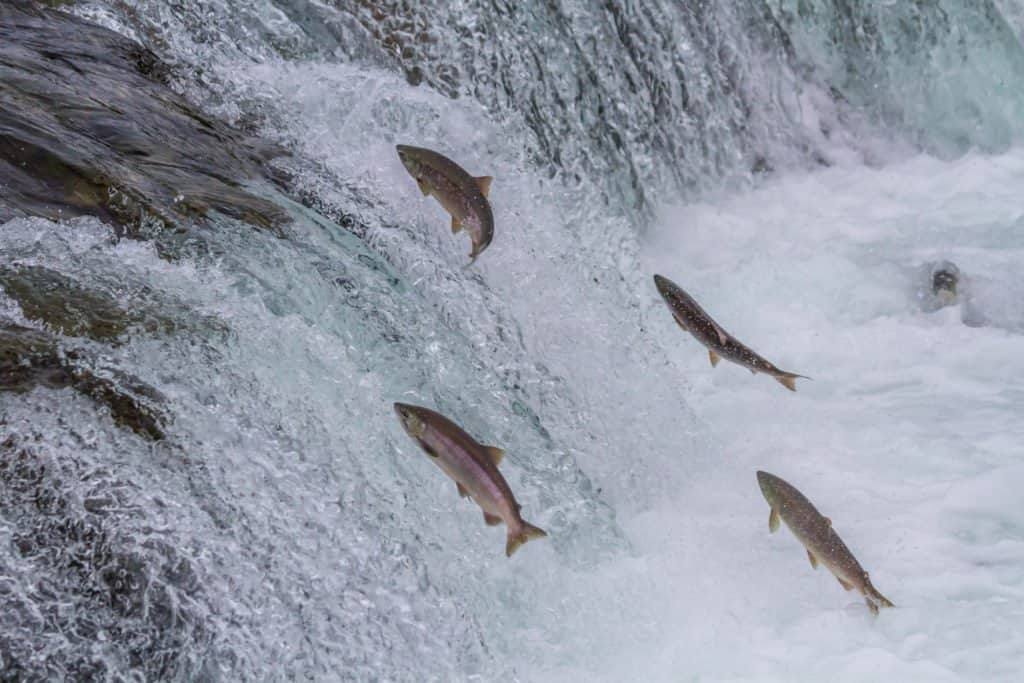
Red salmon returning home to spawn.
©Sekar B/Shutterstock.com
Because it cannot be farmed, red salmon is less abundant and more expensive than pink salmon. In 2025, retail prices for sockeye (red) salmon range from about $16 to $57 per pound, while pink salmon is typically priced under $10 per pound.
Both red salmon and pink salmon are excellent culinary choices. Salmon are highly nutritious and provide vitamins and minerals not commonly found in other foods, such as long-chain omega-3 fatty acids (EPA and DHA) and vitamin D.
Other nutrients found in high amounts in salmon include selenium (an antioxidant trace mineral that supports thyroid function), vitamin B12 (which supports brain and nervous system health), astaxanthin (a powerful antioxidant that gives salmon its pink color and is linked to reduced inflammation and improved heart and skin health), and iodine (which is especially important during pregnancy for neurological development).
Is Red Salmon High in Mercury?
Salmon has low mercury content, with both wild and farmed Atlantic salmon containing significantly lower mercury levels than many other fish species. Farmed Atlantic salmon generally has even lower mercury levels than wild salmon.
Salmon is recognized as one of the safest fish species to eat, and farmed Atlantic salmon have notably lower mercury levels compared to other fish.
On average, farmed Atlantic salmon contains about 0.05 micrograms of mercury per gram.the FDA suggests a weekly intake of at least 8 ounces of a variety of seafood, so you can enjoy salmon daily if you eat it in smaller portions.
The FDA recommends that pregnant and nursing individuals consume 8 to 12 ounces of a variety of seafood per week from choices that are lower in mercury.