
It is not every day that you watch a small act of care change the course of a sea creature’s life. In a widely shared Instagram clip, an octopus lies stranded at the waterline. A beachgoer gently lifts the animal, carries it to safer water, and steadies it until it can breathe and move again. When the octopus recovers, it reaches out with an arm and touches the person’s hand. Viewers called it a “high five.” The footage provides a glimpse into how octopuses end up ashore, what helps them survive, and why they draw such interest from scientists and divers alike.
Sensitive Creatures
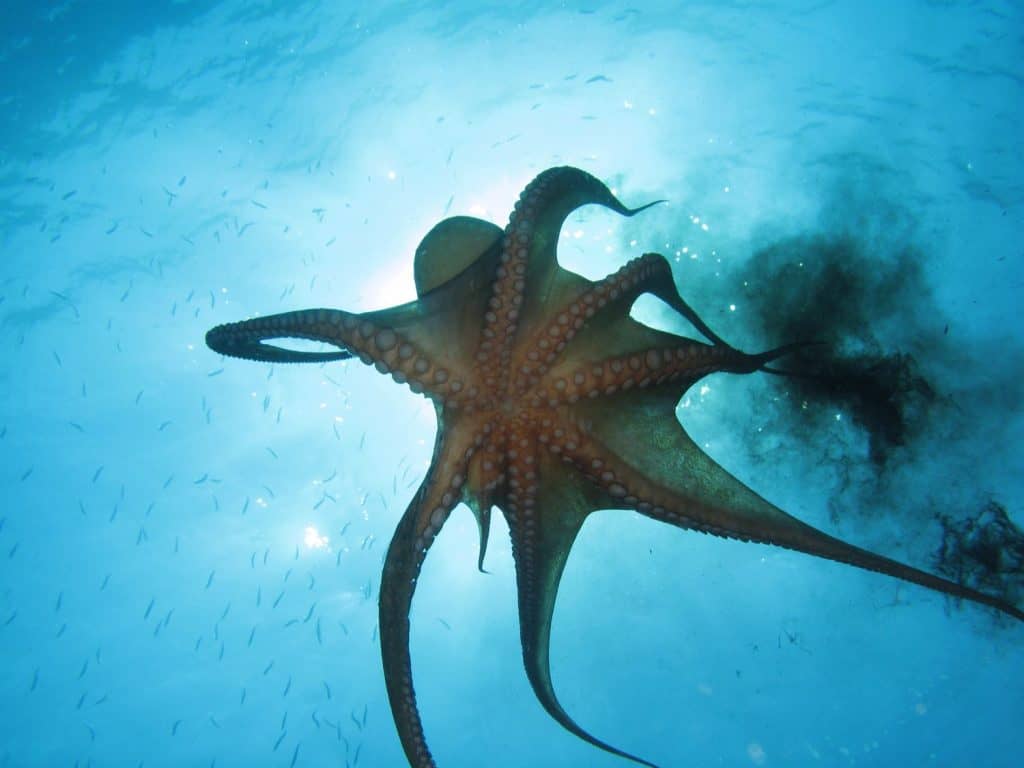
Octopuses have remarkable adaptations for exploring their environment.
©Vittorio Bruno/Shutterstock.com
Octopuses are renowned for their adaptability and intelligent behavior. They have a complex nervous system with roughly 500 million neurons distributed throughout their bodies. A large central brain sits between the eyes, while vast numbers of neurons are spread through the arms and the neural ring. This arrangement gives each arm a degree of local control. Arms can sample textures and tastes through thousands of suckers, pass objects along, and coordinate with one another seamlessly. Experiments show rapid learning, quick problem-solving, and sophisticated use of color and texture changes for camouflage and signaling. These abilities help explain why encounters with octopuses feel so personal.
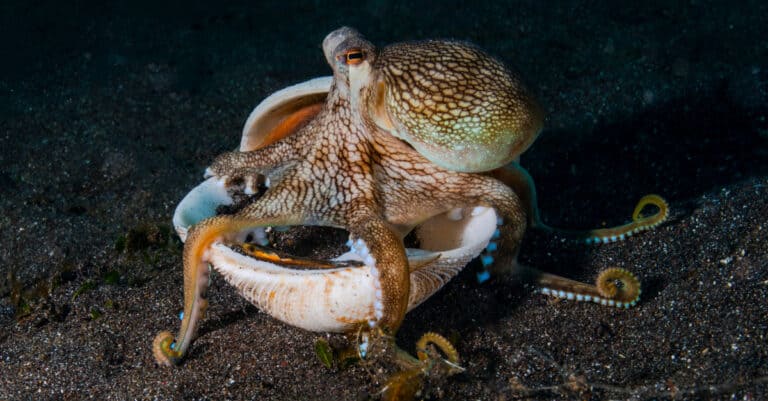
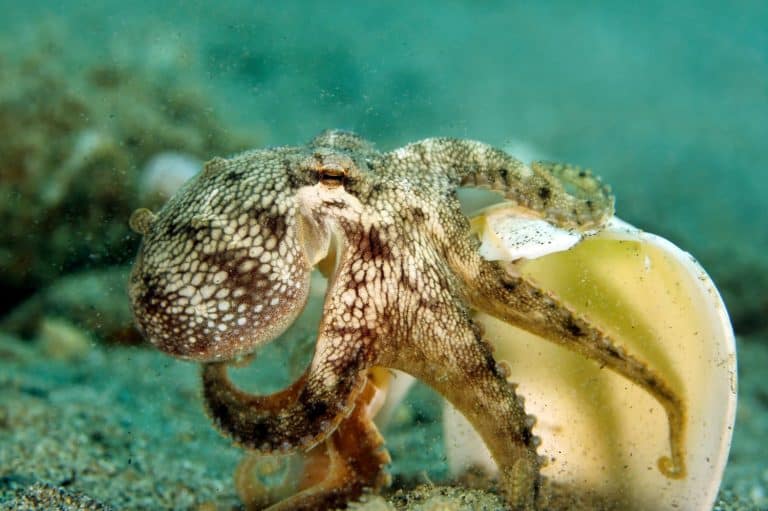
Laboratories and field studies show strong learning skills. Octopuses can open jars, solve mazes, and remember solutions for weeks. In the wild, the veined octopus, Amphioctopus marginatus, collects coconut shells and stacks them like nested bowls. The animal then carries the shells under its body and assembles them into a shelter when needed. Researchers view this as tool use because the shells are gathered, transported, and deployed for later protection. Octopuses also display long-term memory, adapting more quickly when they face a challenge for the second time. Their mix of caution and curiosity lets them probe new objects, then change tactics when the first attempt fails.
Why Do Octopuses Get Stranded?
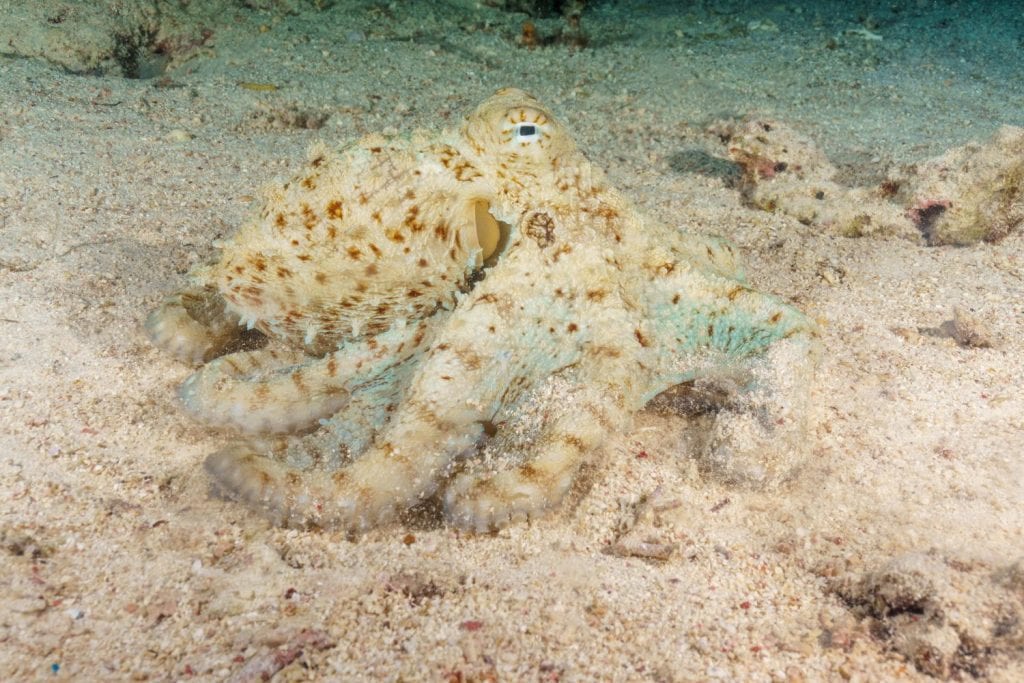
Octopuses spend most of their lives in shallow water, so strandings are not uncommon.
©Artur_Sarkisyan/Shutterstock.com
Strandings surprise many beachgoers, yet they are not rare. Octopuses spend much of their lives in tide pools, rocky ledges, and shallow seafloors, where the line between sea and land shifts every hour. Some species spend more time at the edge than others. The algae octopus, Amphioctopus aculeatus, often hunts in the intertidal and has been filmed “walking” from pool to pool during very low tides. A strong ebb tide can recede faster than expected, leaving animals of any species isolated in tiny puddles. Powerful waves during storms toss shells and driftwood ashore, and sometimes living creatures with them. Pollution, warm-water spikes, or low oxygen can push animals toward the margins as well. In these moments, the intertidal becomes a gauntlet. If the sun and wind dry out an octopus’s exposed skin, it can quickly face dehydration and suffocation if it cannot reach water.
Many autumn strandings are linked to the octopus life cycle. Most shallow-water species live only one to two years. After mating, females guard their eggs without feeding until the hatchlings drift away. Males also decline after reproduction. This last phase is called senescence. The nervous system changes, coordination drops, and animals wander during daylight when they would normally hide. Senescent individuals may become less responsive to predators or waves, increasing the likelihood of strandings.
The Hazards of the Waterline
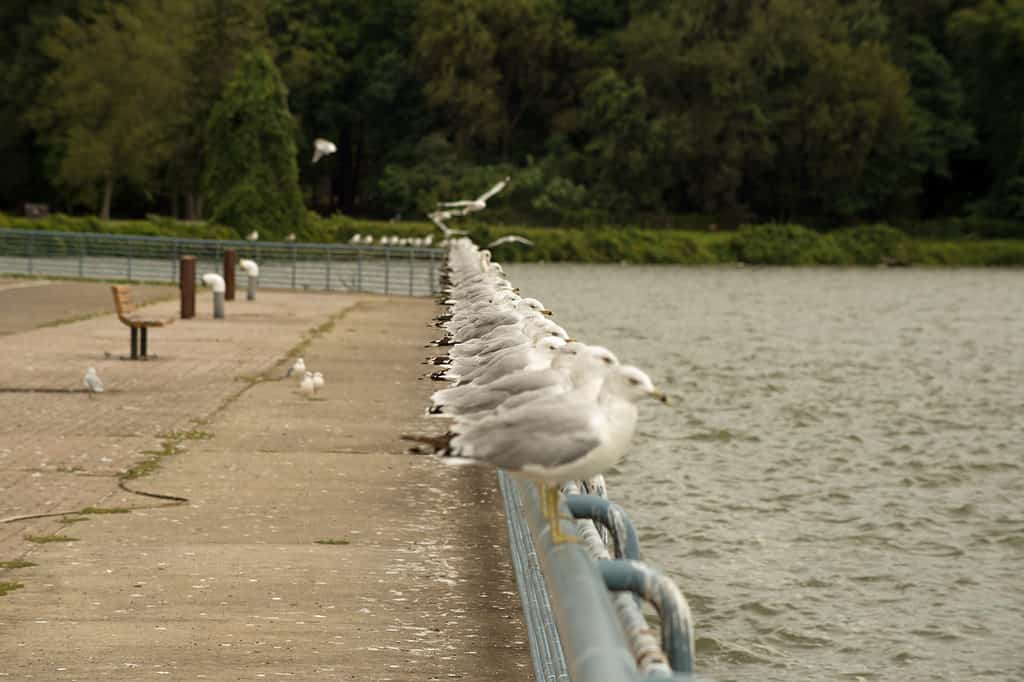
Water birds are a great threat to stranded marine life.
©Patrick baehl de Lescure/Shutterstock.com
Out of water, an octopus can keep its skin wet for a short time, but its gills must have water moving across their surfaces to exchange gases. Without that flow, oxygen drops and stress mounts. Even shore-savvy species pay a steep price if left on sand or rocks too long, which is why a quick return to a calm pool can mean the difference between life and death.
An octopus out of cover becomes a target. Gulls patrol beaches and pick up stranded marine life with little effort. Wading birds like herons will strike at moving arms in shallow water. On rocky shores, raccoons search crevices at night. In the water, larger fish and some crabs prey on small or weakened octopuses, especially in pools that offer few hiding spots. Heat is another danger. Sunlight can raise tide pools to uncomfortable temperatures within minutes. Shade, depth, and weeds provide refuge. For a stranded animal, every minute in the open adds risk from predators, heat, and drying winds.
What Happened in the Video
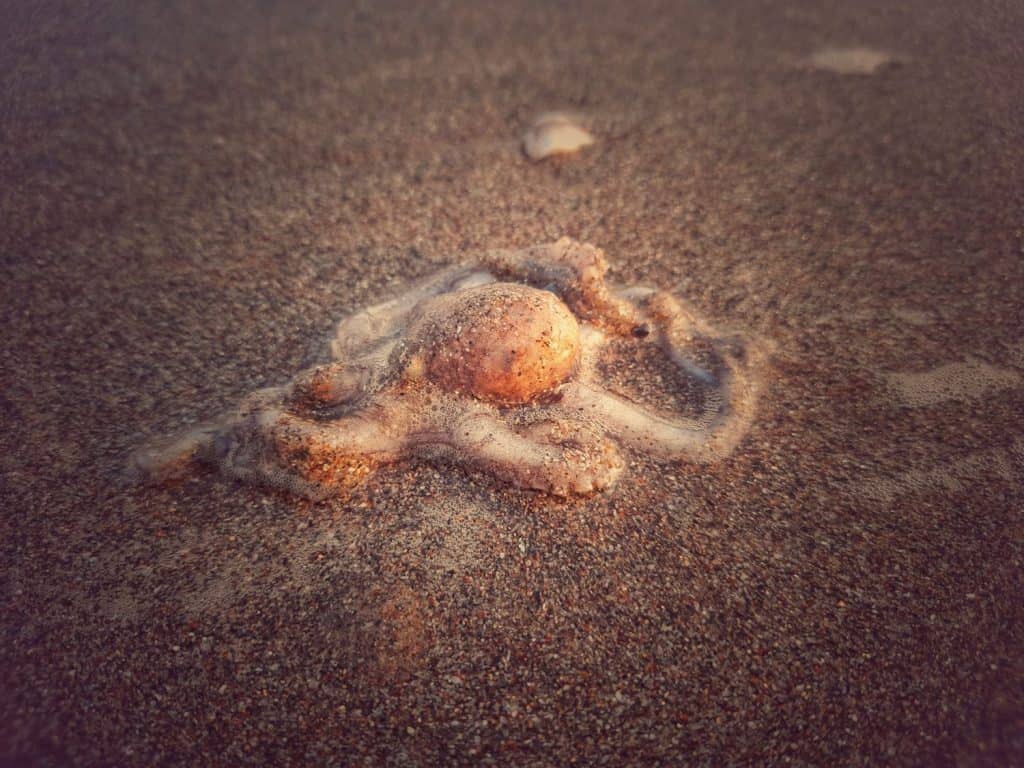
Octopus on the beach.
©Anjana B Raj/Shutterstock.com
The footage shows an octopus in very shallow, receding water. The rescuer supports the animal on a piece of driftwood, then sets it in a tide pool instead of the open surf. That choice matters. Pools offer calmer water, fewer immediate predators, and time to re-oxygenate the gills. The octopus darkens and lightens its skin as it regains control of its body. A few moments later, it extends one arm and makes contact with the rescuer’s fingers. Marine biologists caution that such contact is usually exploratory touch, not a human-style greeting. Still, the clip captures the natural behavior of a curious animal and the careful handling that gives a stranded octopus a much better chance to live.
What Will an Octopus Do If You Pick It Up?
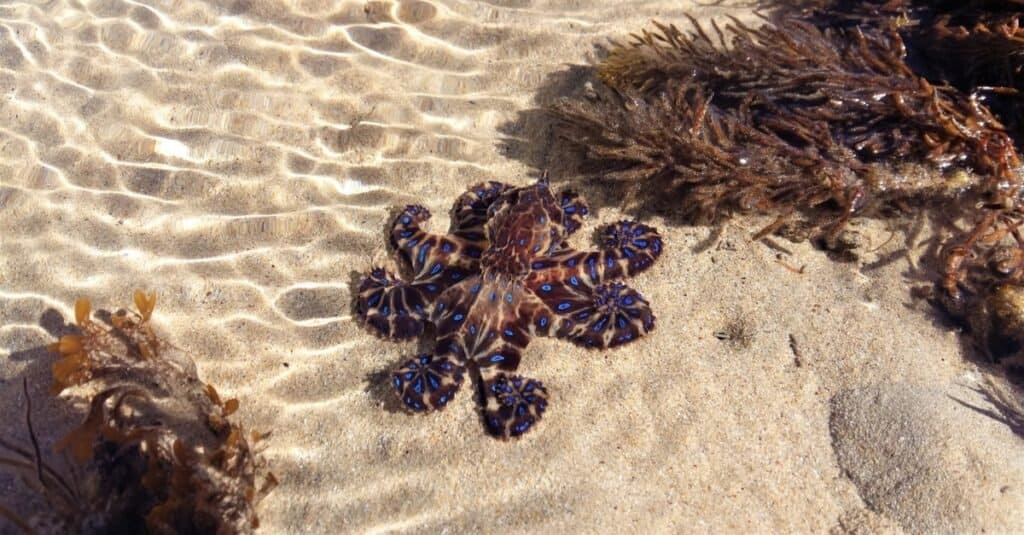
Vivid blue-ringed octopus: a highly toxic species.
©K.Pock Pics/Shutterstock.com
Touching a normal octopus usually means feeling its suckers latch on like little plungers, sometimes with a few arms wrapping around you while it investigates. That’s one major reason not to pick them up: once they attach, removing them requires calm patience. If someone panics and shakes their arm, the octopus tightens its grip automatically, which can make the moment feel much more dramatic than it actually is. They can bite, since every octopus has a beak, but most common species almost never do. A bite feels like a sharp pinch and may swell a bit from their mild venom, but it’s usually a “you scared me” reaction, not an attack.
The only octopus that’s truly dangerous to touch is the blue-ringed octopus, because its venom can cause paralysis even though the animal itself is tiny and beautiful. With most species, the key is to stay calm, let them explore, and gently release them by sliding a finger under each sucker rather than pulling away. Treated with respect, they’re curious, grabby, and occasionally a little too enthusiastic, but not trying to hurt you—and the more relaxed you are, the more relaxed they are.
How to Handle a Stranded Octopus
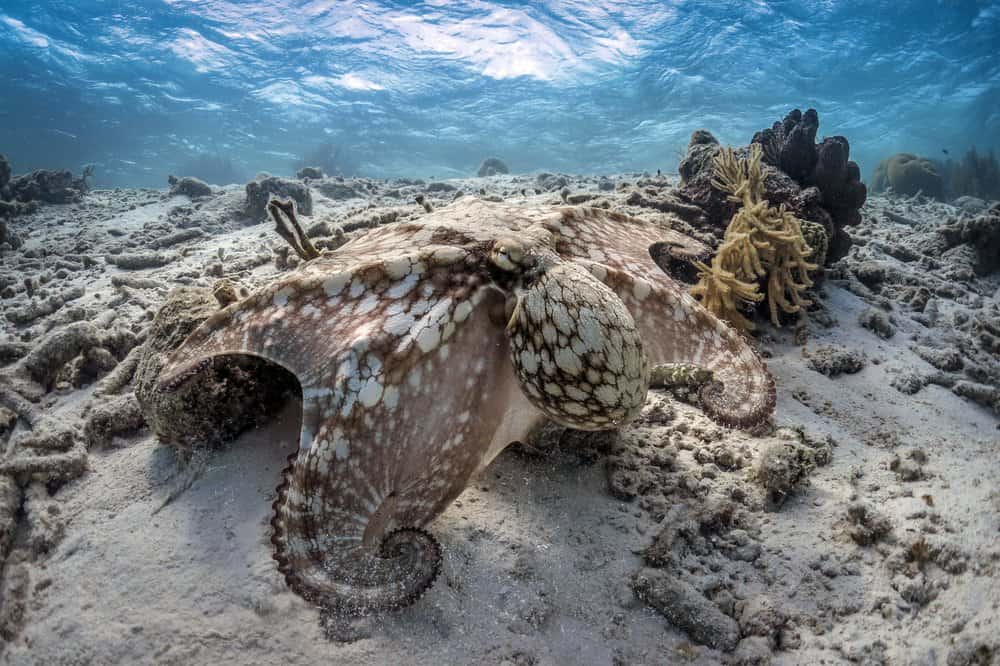
Move a stranded octopus carefully to get it back to calm water.
©NaturePhoto/Shutterstock.com
In the video, the rescuer used a piece of wood to support the octopus while moving it. Alternatively, you could use a beach towel or shirt to scoop it up, preventing the tentacles from sticking to you. Avoid pulling on the arms, as they contain dense networks of nerves and muscles. Support the main part of the body and guide the animal into a nearby tide pool deep enough to cover it. Do not release it into heavy surf, which can batter a weakened animal before it has time to recover or dash it against rocks. Local wildlife groups often share hotlines or guidance for marine strandings. When in doubt, call for advice, then act quickly and carefully.
Do They Recognize People?
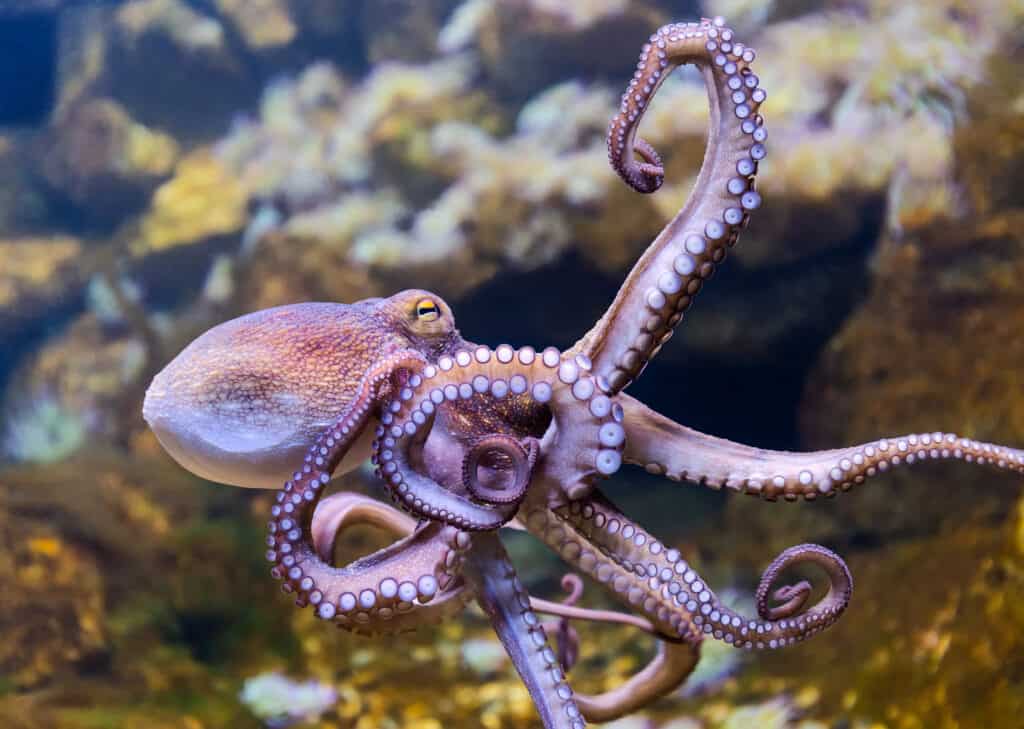
Octopuses may recognize people who have been non-threatening and helpful to them.
©Henner Damke/Shutterstock.com
Evidence suggests octopuses can distinguish between individuals. In aquariums, animals learn to avoid keepers who disturb them and approach people who feed them. Divers report repeated encounters in which a wild octopus appears to treat a familiar visitor differently from a stranger. Rigorous, controlled studies are fewer in number, yet they point in the same direction. Recognition likely relies on smell and touch through the suckers, sight at close range, and memory of prior outcomes. The “high five” in the viral clip is hard to label as gratitude, but it does fit the pattern of investigative touch toward a known, non-threatening presence.
It is easy to project human motives onto behavior that looks friendly. Reaching out may be a test for texture, taste, or movement. It may also be a defensive check for threats. The safest reading is the most modest one. Octopuses are capable learners that form associations between people and outcomes. Gentle handling and safe water could become a cue that reduces fear. That possibility is interesting enough on its own. We do not need to force the moment into a human handshake to appreciate what the animal is likely experiencing, which is relief, oxygen, and a chance to hide again.
Conservation Actions That Matter
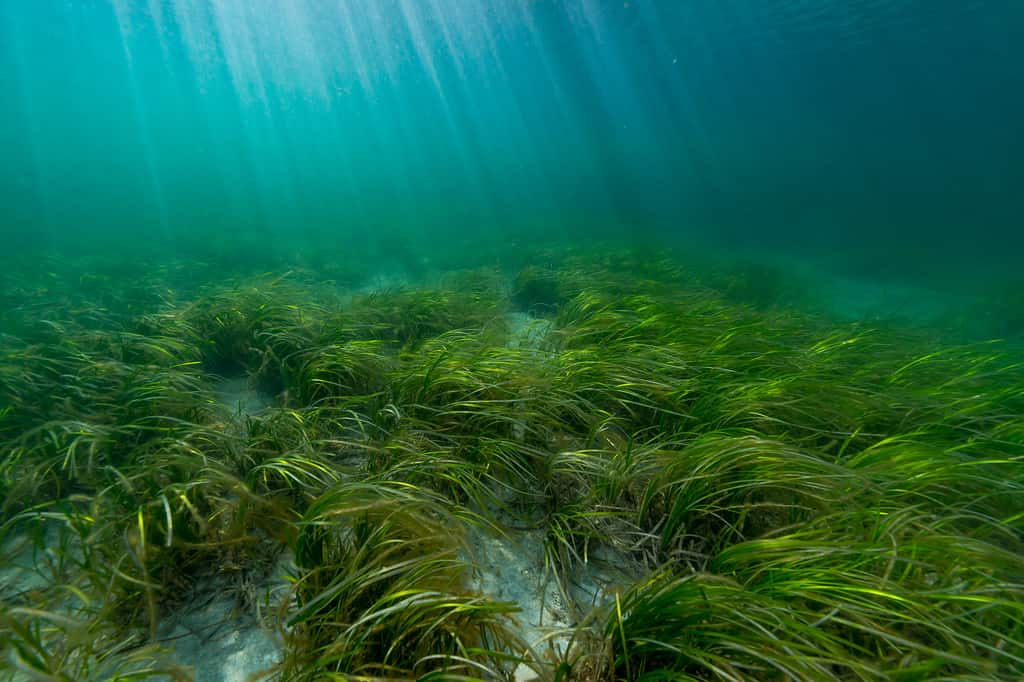
Protecting eelgrass beds is one way to help conserve octopuses and other marine life.
©inusuke/iStock via Getty Images
Preventing strandings outright is hard, yet there are steps that help octopuses and their neighbors. Protecting eelgrass and rocky habitats keeps hunting grounds intact. Reducing pollution improves oxygen levels and water quality in shallow bays. Responsible harvest rules help limit pressure on octopus populations, and on the crabs and shellfish they depend on for food. Citizen science groups log strandings and water conditions, which helps researchers spot patterns tied to heat waves or storms. Public signs at popular beaches can offer quick tips on safe handling and on when to call for expert help. Small changes close to shore often have the greatest effect.
When Curiosity Meets Kindness
The viral rescue clip is more than an internet novelty. It shows how a calm, informed response can turn a bad moment into a second chance. It also highlights the power of observation. One person paid attention to the tide, to the animal’s posture, and to the safest place to set it down. Another person recorded the scene, and millions learned something about life at the water’s edge. The contact between hand and arm, whatever we call it, serves as a reminder. Minds very different from ours move through the same world, testing, learning, and choosing. Meeting them well begins with patience.
In the end, the rescued octopus did what most of its kind do when stress passes. It breathed, flushed its colors, and slid into cover. Tide pools act as waiting rooms where strength returns. When the next tide arrives, the animal can slip back to deeper water and resume the quiet routines of hunting and hiding. This one scene will not solve large-scale problems, yet it can inspire a few hearts to care. Oceans are shaped by local actions, both human and otherwise. Every careful lift, every shaded pool, every animal restored to the sea—all of it matters.