
The types of crabs you typically see at the beach may be small hermit crabs or other small species, but people in some areas are lucky enough to have regular encounters with the largest crabs in the U.S. To find crabs, look in tide pools, under logs, seaweed, and rocks during low tide. How do we determine the largest crabs? Scientists typically measure the carapace, which is the upper section of the exoskeleton, to compare species sizes. In this article, we will rank the crabs by carapace size and weight. Here are some of the largest crabs you might find on a beach in the United States.
5. Blue Crab
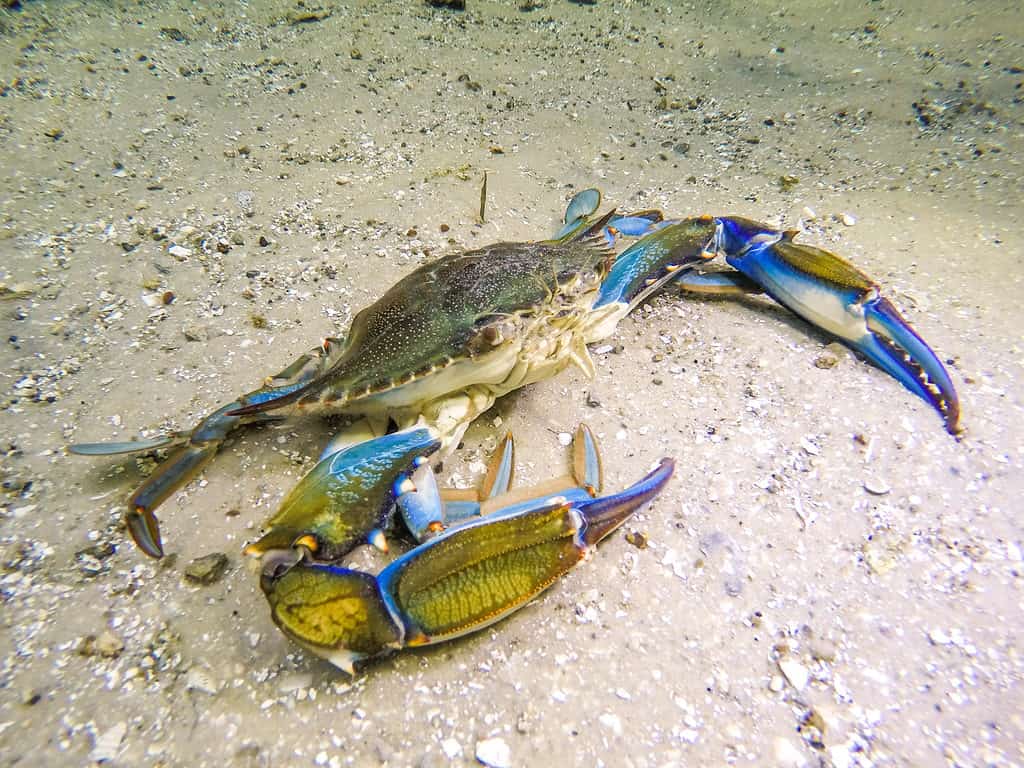
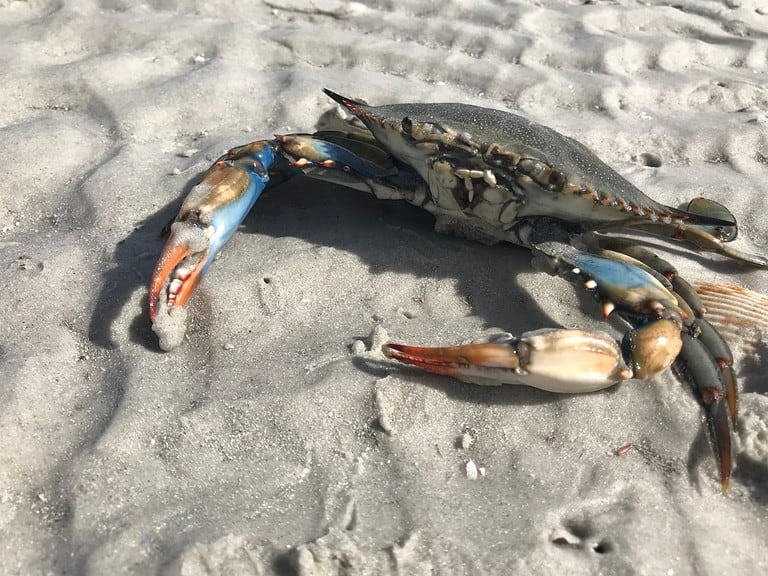
Mature female blue crabs have red tips on their claws.
©Jen Helton/Shutterstock.com
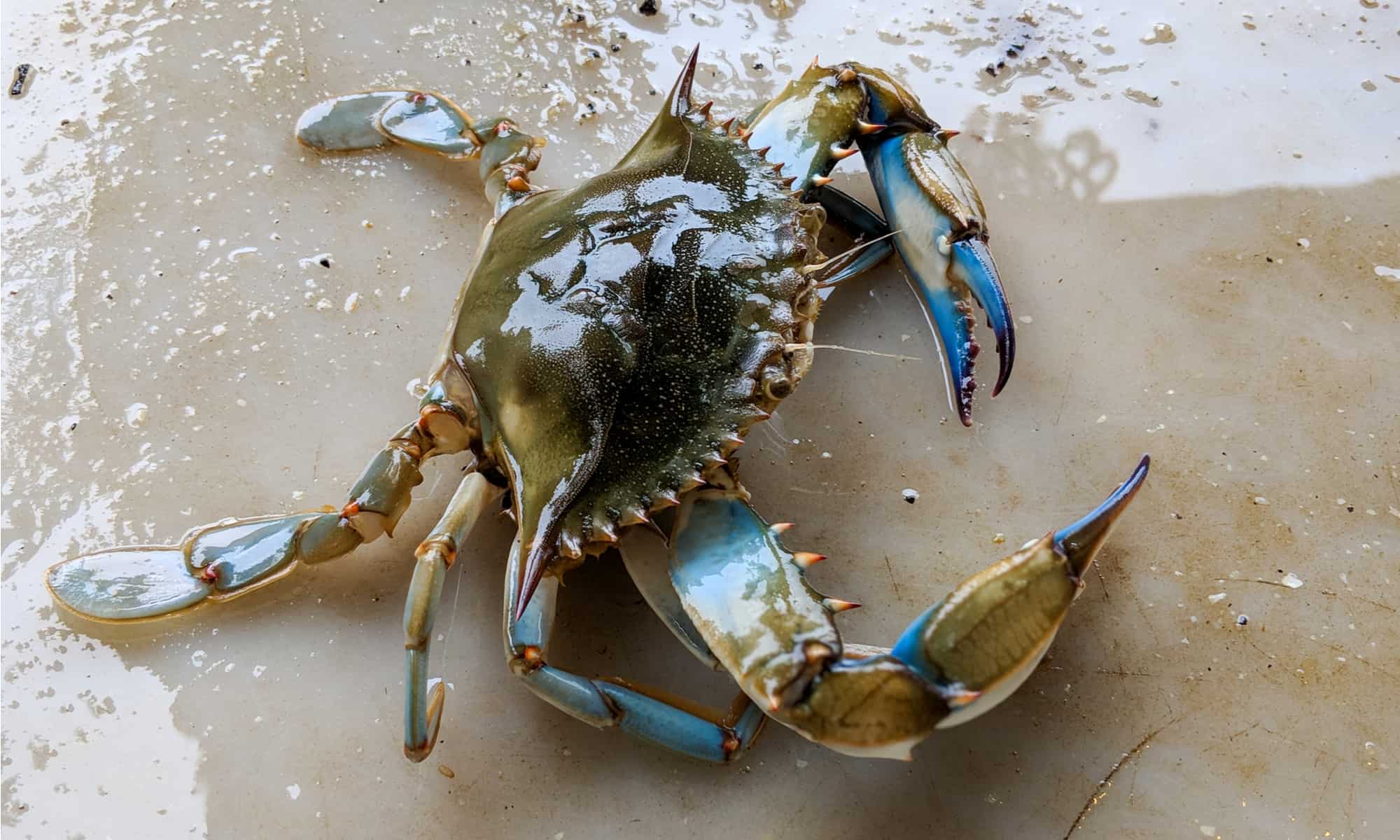
Blue crabs (Callinectes sapidus) are also called Atlantic blue crabs or Chesapeake blue crabs. They are found on the East coast of the U.S. ranging from Cape Cod all the way to the Gulf. They have a smooth carapace that ranges from blue to olive green, with bright blue claws. These crabs have three pairs of walking legs and paddle-shaped swimming legs in the rear.
The carapace of the blue crab can be as large as 9 inches wide. They can weigh between 1-2 pounds, but they are typically only around one-third of a pound at maturity. One can easily tell male and female blue crabs apart. The females have a broader, rounder abdominal flap, while the males have a narrower, more angular flap. Mature female blue crabs can also be recognized by the red tips on their claws.
4. Dungeness Crab
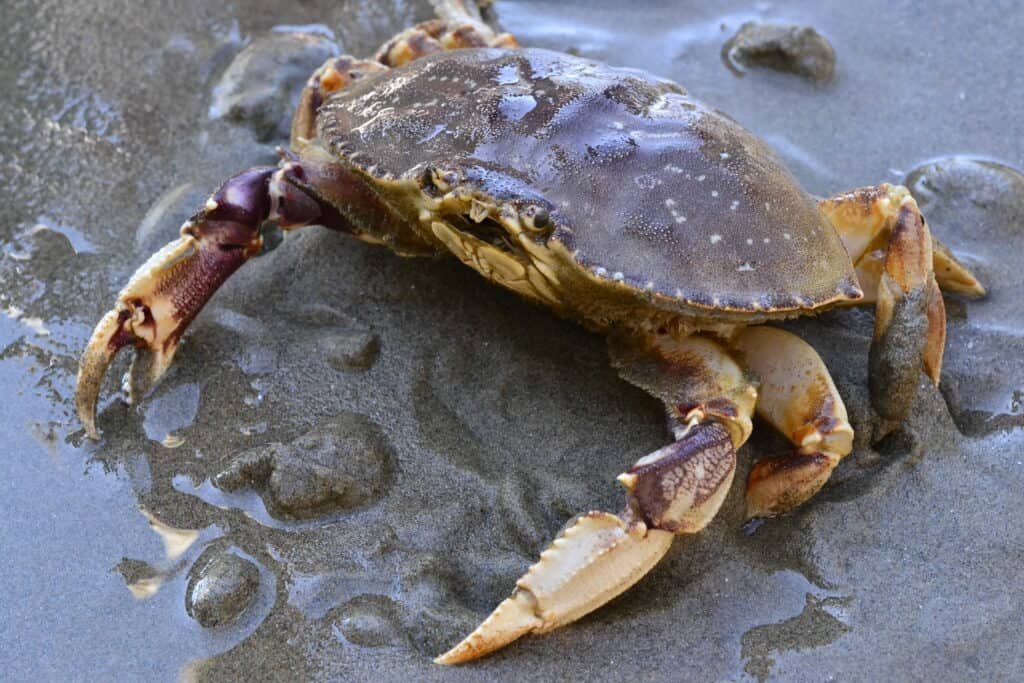
Dungeness crabs can reach up to 10 inches across the carapace.
©Jennifer Nicole Buchanan/Shutterstock.com
The Dungeness crab (Metacarcinus magister) can be found along the west coast of the United States from Alaska to Santa Barbara, California. They were named after the Dungeness Spit near Sequim, Washington. They have a smooth shell that ranges in color from brownish yellow to purple. These crabs have small, short legs in relation to their size. They have one pair of claws and four pairs of walking legs. When threatened by predators, Dungeness crabs use a unique survival technique: they can fully bury themselves in the sand.
Dungeness crabs have a carapace width of up to 10 inches. They can weigh about 4 pounds maximum, but most are between 2-3 pounds on average. Male crabs are larger than females, and only the males above a minimum size are allowed to be harvested. Male and female Dungeness crabs can be distinguished by the shape of their abdomens. Females have more rounded abdomens, while males have triangular-shaped abdomens.
3. Bairdi Tanner Crab
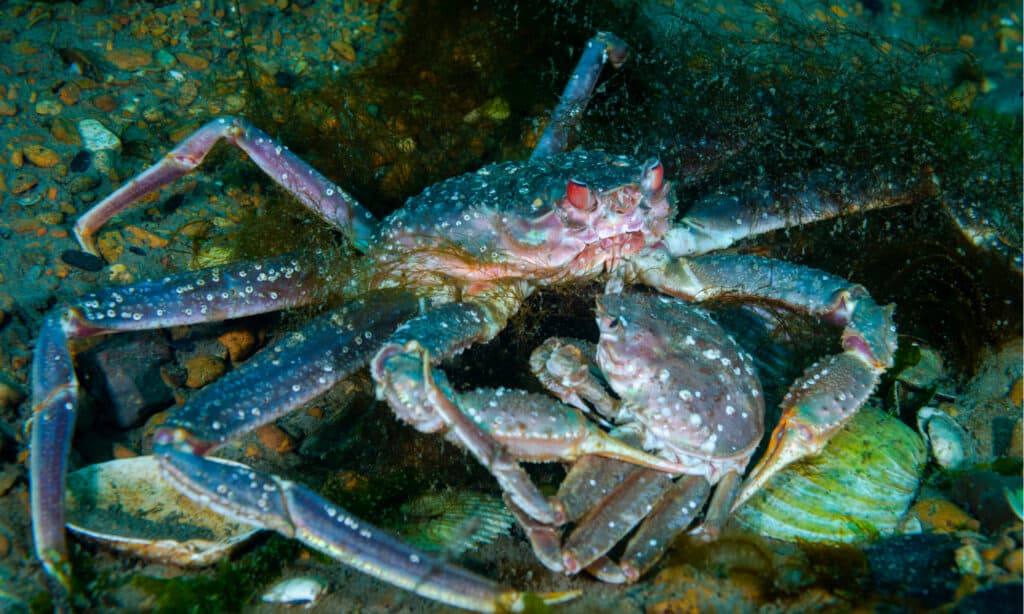
Bairdi tanner crabs can be found in Alaska and the Pacific Coast.
©Shpatak/Shutterstock.com
The Alaska bairdi, or Tanner crab (Chionoecetes bairdi), can be found from southeastern Alaska to the Bering Sea and south to Oregon. Some records suggest their range may be as far south as California. They have a flat, greenish-brown to brown, chitinous carapace that is generally wider than it is long. These crabs have five pairs of long legs, with the first pair ending in pincers.
The carapace of the bairdi Tanner crab can measure up to 8 inches. The male crabs are larger than the females, weighing a maximum of about 6 pounds. However, most males weigh between 2-4 pounds. Females also have a noticeably wider abdominal flap compared to males.
2. Blue King Crab
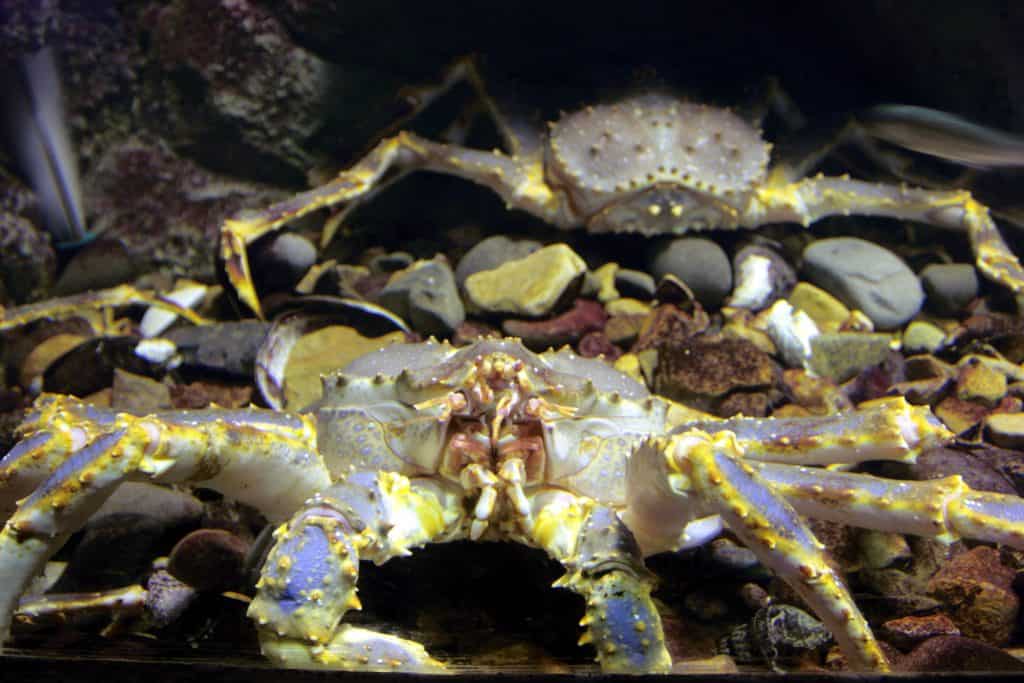
The blue king crab can weigh up to 18 pounds.
Blue king crabs (Paralithodes platypus) are found in Alaska, primarily in the Pribilof Islands and St. Matthew Island regions. They are blue to brownish-yellow with spiny exoskeletons. These crabs have five pairs of legs. The first pair has claws, with the right claw being larger. The next three pairs are walking legs. The fifth pair is used during reproduction, and these small legs are normally tucked up under the carapace.
The carapace of the blue king crab can reach 8.7 inches wide with a leg span of over 5 feet. Mature males can weigh up to 18 pounds, with females being smaller. Male blue king crabs have a narrow, more pointed abdominal flap, while females have a wide, round abdominal flap.
1. Red King Crab
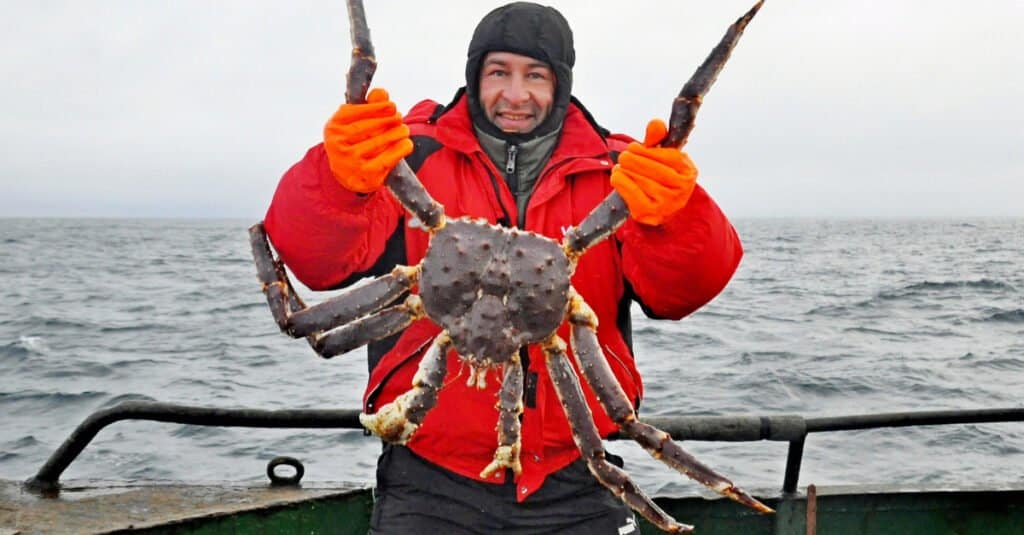
The red king crab, which turns red after cooking, is the largest crab in the United States.
©Don Serhio/Shutterstock.com
Red king crabs (Paralithodes camtschaticus), also called Alaskan king crabs, are the largest crab species found in the U.S. They inhabit the Gulf of Alaska, the Bering Sea, and the Aleutian Islands. These crabs have a spiny carapace of brownish-red to bluish-red. Like blue king crabs, they have five pairs of legs, with three pairs used for walking. The first pair has claws, with the right claw usually the largest. The small fifth pair is only used in the reproductive process and is typically tucked under the rear of the carapace.
The red king crab’s carapace can grow up to 11 inches wide with a leg span of over 5 feet. Males can weigh up to 24 pounds, with females generally weighing around 10 pounds. Like most crabs, sex can be determined by their abdominal flaps. Males have a narrow, triangular abdominal flap, while females have a wide, rounded flap that covers most of their undersides.